
Mathematical thinking Worksheets for Ages 3-4
4 filtered results
Difficulty Level
Grade
Age
-
From - To
Subject
Activity
Standards
Introduce your little ones to the magical world of numbers with our "Mathematical Thinking Worksheets for Ages 3-4". Designed by early childhood educators, these printable worksheets combine engaging activities with colorful illustrations to spark curiosity and build foundational math skills. Your child will explore patterns, shapes, counting, and simple problem-solving in a way that's both fun and educational. Perfect for preschoolers, these worksheets create a strong mathematical foundation and inspire a love of learning. Whether at home or in the classroom, give your child a head start in math with these delightful and developmental exercises. Start their journey into mathematical thinking today!
Favorites
With answer key
Interactive
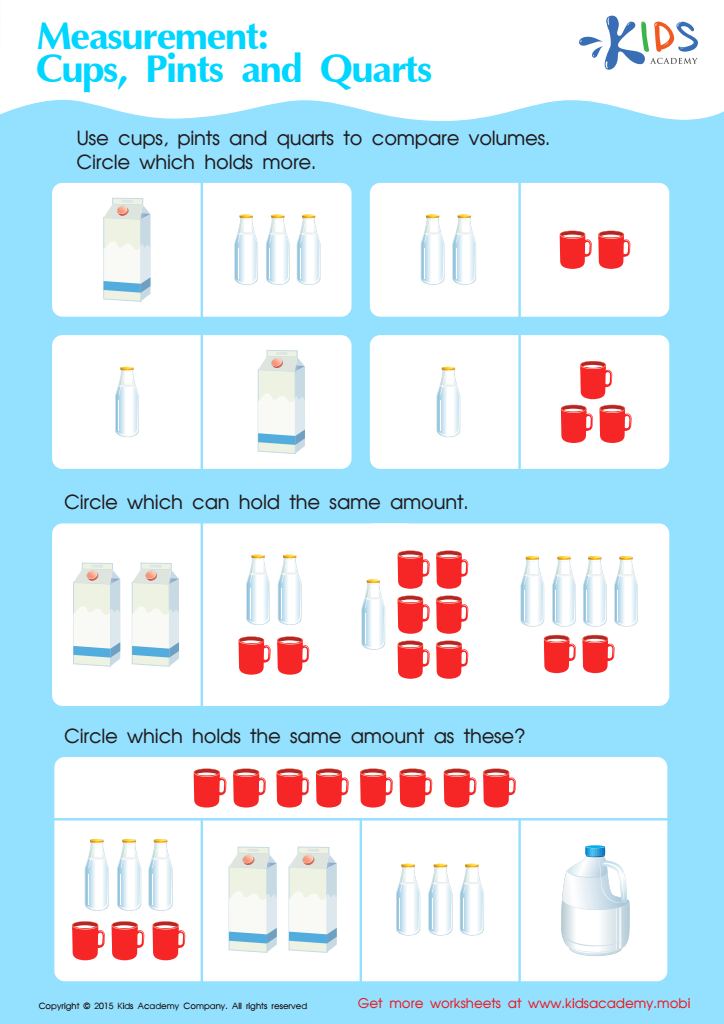
Measurement: Compare Volumes Worksheet
Compare volumes with Kids Academy and have fun! (80 words)
Practice measuring with Kids Academy and have fun! Compare volumes in pictures and circle which holds more. Keep learning with free math worksheets available on our website. Enjoy the process and have fun!
 Assign to My Students
Measurement: Compare Volumes Worksheet
Worksheet
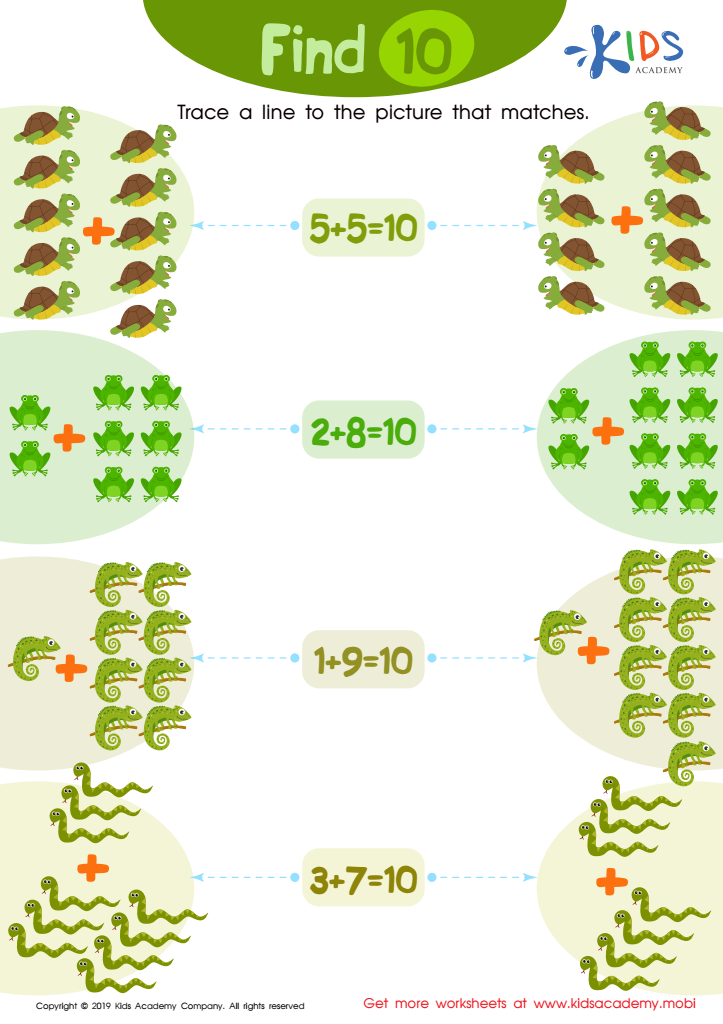
Find 10 Worksheet
Counting can be tricky, but your kids can master it with regular practice. Here's a fun activity to help: count the animals, then trace a line to the pictures that matches. With these tips, math will be an easy walk in the park.
Find 10 Worksheet
Worksheet
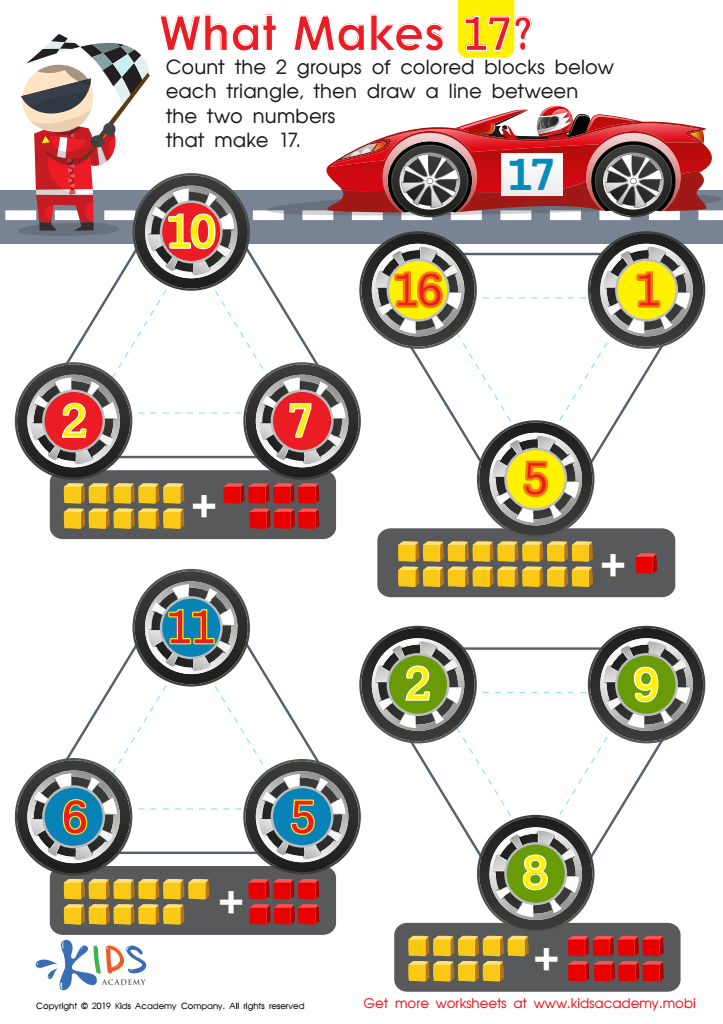
What Makes 17 Worksheet
Practice makes perfect! Let your kindergartners explore addition using this worksheet. Count the blocks in each triangle to reach the same total of 17, and draw a line between the two numbers. Once they get the hang of it, nothing will be too difficult!
What Makes 17 Worksheet
Worksheet
Join Kids Academy for Free
Who is primarily going to use this learning content?








Mathematical thinking in children aged 3-4 is foundational for their cognitive development and future academic success. During these critical early years, introducing basic mathematical concepts helps children develop essential problem-solving skills, logical reasoning, and spatial awareness. Parents and teachers who nurture mathematical thinking in young children are setting the stage for lifelong learning and curiosity.
At this age, mathematical thinking goes beyond just numbers; it includes recognizing patterns, understanding shapes, and making comparisons. When children engage in activities like sorting objects by size or color, they are practicing critical classification skills. Counting games and simple puzzles help them grasp sequences and order, which are vital for more complex mathematical concepts later on. Moreover, early exposure to math helps build confidence, as children often feel a sense of achievement when they solve problems or notice patterns.
Creating a math-rich environment doesn't mean sitting children down with worksheets. Instead, incorporate math into daily routines — counting steps as you climb, identifying shapes around the house, or measuring ingredients during cooking. By making math interactive and enjoyable, parents and teachers can instill a positive attitude toward the subject. This early foundation not only supports formal education but also empowers children to tackle real-world challenges effectively.








