Money addition skills Worksheets for Ages 3-4
3 filtered results
-
From - To
Enhance your child's understanding of money with our engaging Money Addition Skills Worksheets for ages 3-4. Designed to introduce young learners to basic addition concepts using fun visual aids, these worksheets make learning enjoyable. Your little one will master counting coins and adding values through vibrant illustrations and interactive exercises. Perfect for preschoolers, these activities help build foundational math skills while also introducing the concept of money management. Encourage learning through play and ensure your child develops confidence in their abilities. Explore our collection of easy-to-follow worksheets and watch your child enjoy the journey of learning about money addition!
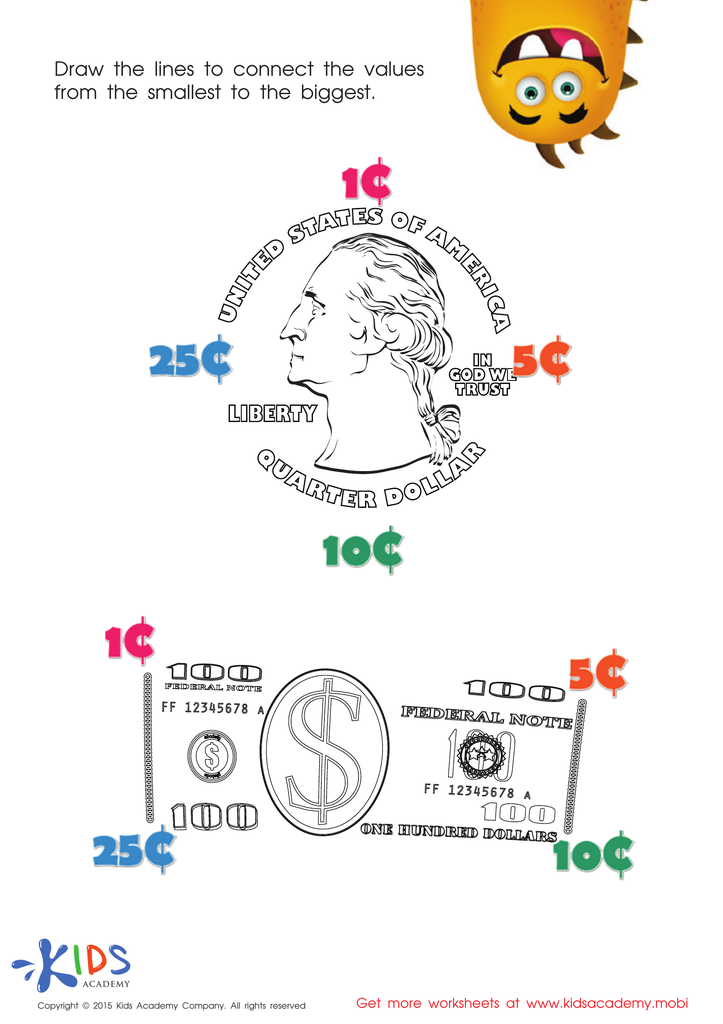
Connecting the Values Money Worksheet
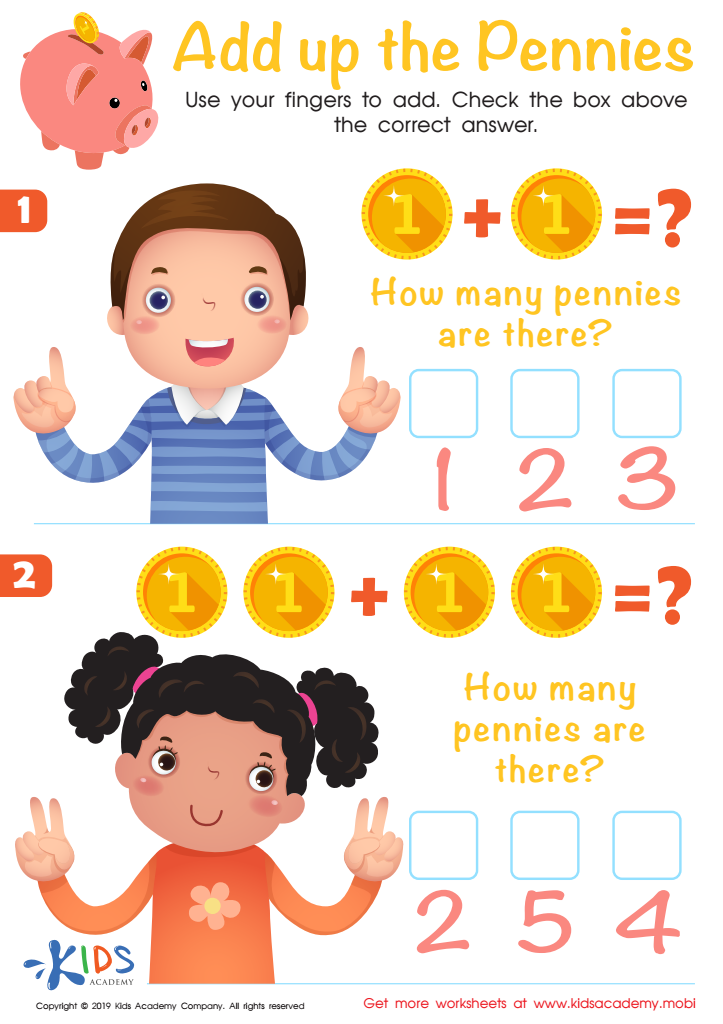
Add up the Pennies Worksheet
 Assign to My Students
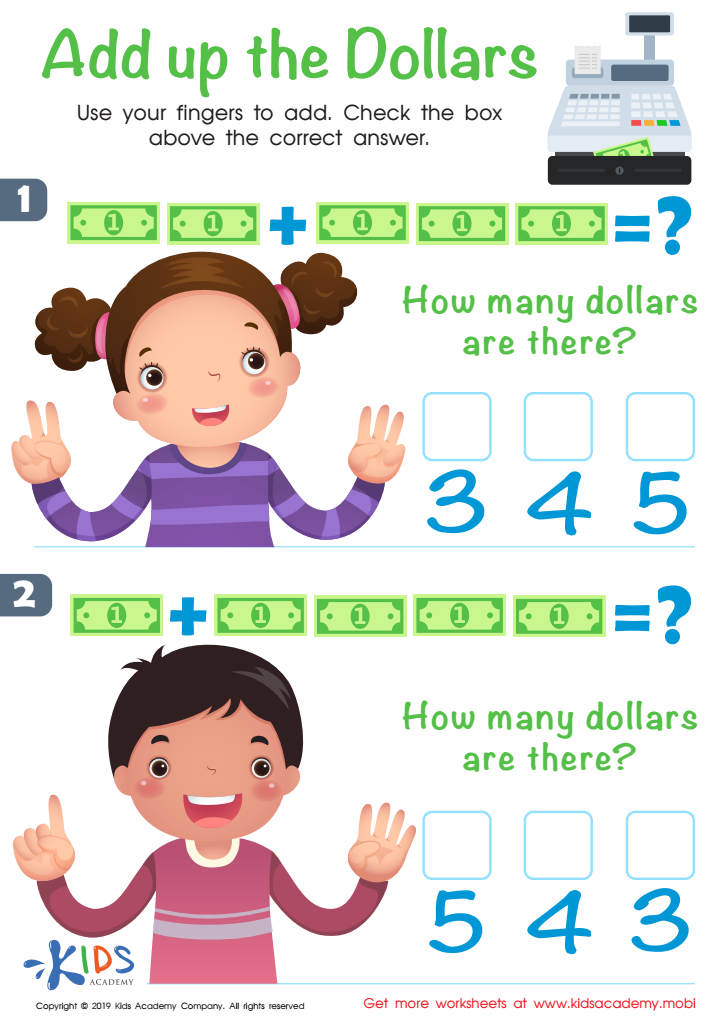
Add up the Dollars Worksheet







Teaching money addition skills to children aged 3-4 is crucial for instilling foundational math concepts and fostering financial literacy early on. At this developmental stage, children are naturally curious and keen to explore their surroundings. By introducing money addition, educators and parents can harness this curiosity to develop essential skills.
Engaging young learners in activities involving counting coins or playing store enhances their understanding of numbers in a practical context. This not only lays the groundwork for arithmetic but also cultivates problem-solving abilities and critical thinking. Learning to add money reinforces concepts of value and quantity, enabling children to grasp mathematical ideas in a tangible way.
Additionally, these activities promote everyday life skills. Children become familiar with handling money, which builds confidence in financial scenarios they will encounter later. It creates opportunities for discussions about saving, spending, and even sharing, fostering social and emotional growth.
Ultimately, money addition skills prepare children for future academic success while promoting responsible habits early. Parents and teachers should prioritize these lessons, as they help shape well-rounded individuals equipped with the skills necessary to navigate the complexities of everyday financial decisions. Fostering a positive relationship with math from a young age will benefit children throughout their lives.








