
Observational skills Worksheets for Ages 3-4
12 filtered results
Difficulty Level
Grade
Age
-
From - To
Subject
Activity
Standards
Enhance your child's learning journey with our engaging Observational Skills Worksheets designed for ages 3-4. These worksheets are perfect for developing critical observation abilities, helping your little ones sharpen their focus and attention to detail. Through fun and interactive activities, children will engage in identifying objects, matching items, and exploring patterns, laying a strong foundation for future learning. Tailored to spark curiosity and promote cognitive growth, our worksheets encourage creativity and imaginative thinking. Subscribe now to access a variety of carefully crafted worksheets that make learning an enjoyable experience for young minds! Start building observational skills today!
Favorites
With answer key
Interactive
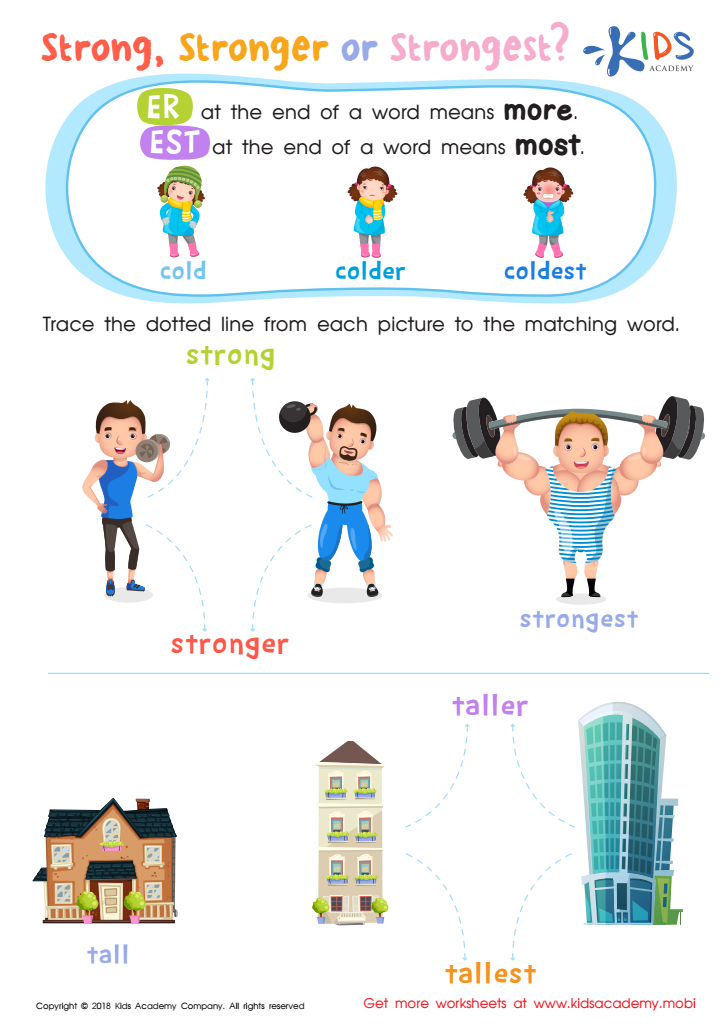
Strong or Stronger? Worksheet
Help your child understand the concept of size gradients with a fun worksheet. Explain to them that adding "-er" to words means "more" and "-est" means "most". Point to the pictures and have your little one trace the dotted line to the corresponding words to learn the concept of highest and lowest.
Strong or Stronger? Worksheet
Worksheet
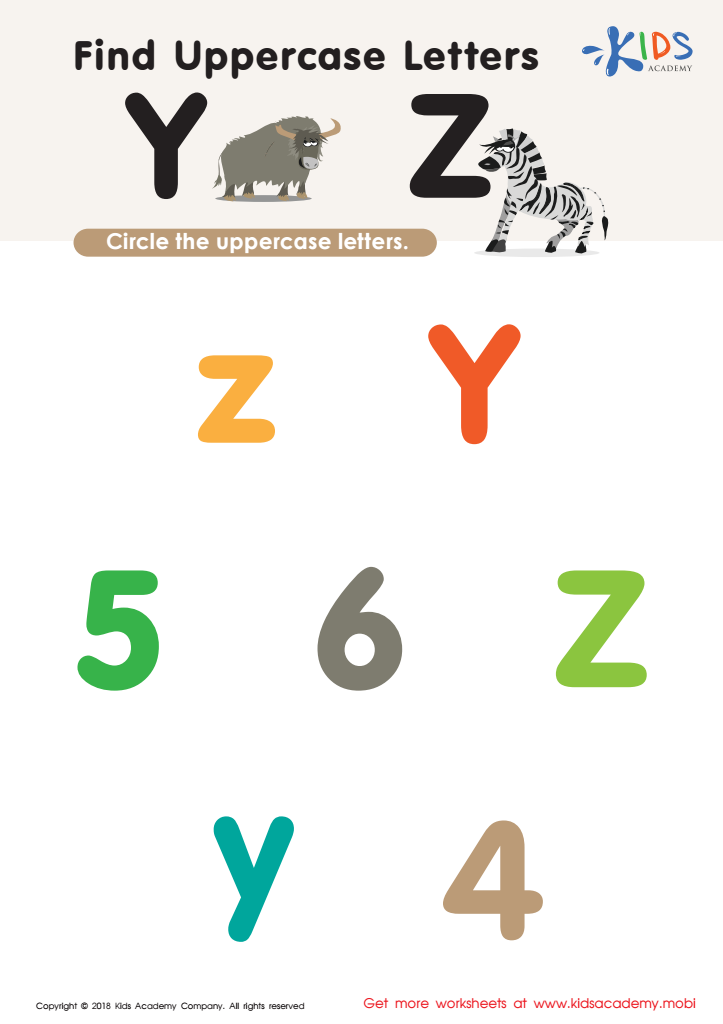
Find Uppercase Letters Y Z Worksheet
Download the worksheet! Help your youngster to learn the alphabet and distinguish uppercase from lowercase letters by having them circle the uppercase ones. It's an important first step towards reading and writing success!
Find Uppercase Letters Y Z Worksheet
Worksheet
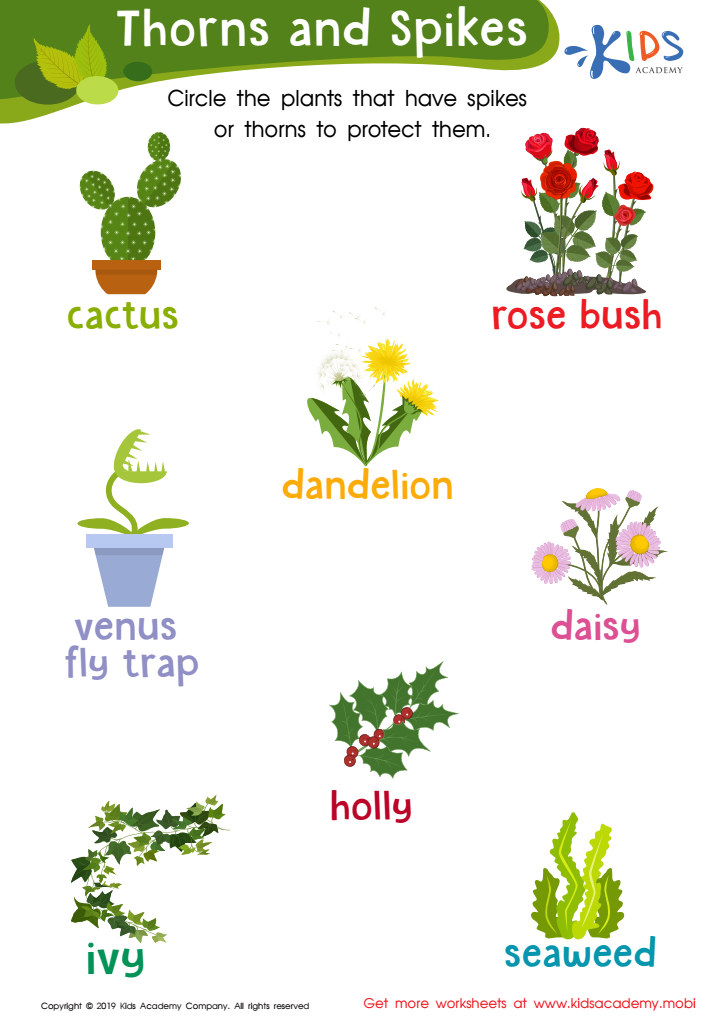
Thorns and Spikes Worksheet
Can your students name and identify the plants and flowers in this worksheet? Ask them to read out the names and circle the ones with spikes or thorns. Help them appreciate nature's beauty and understand how plants protect themselves.
Thorns and Spikes Worksheet
Worksheet
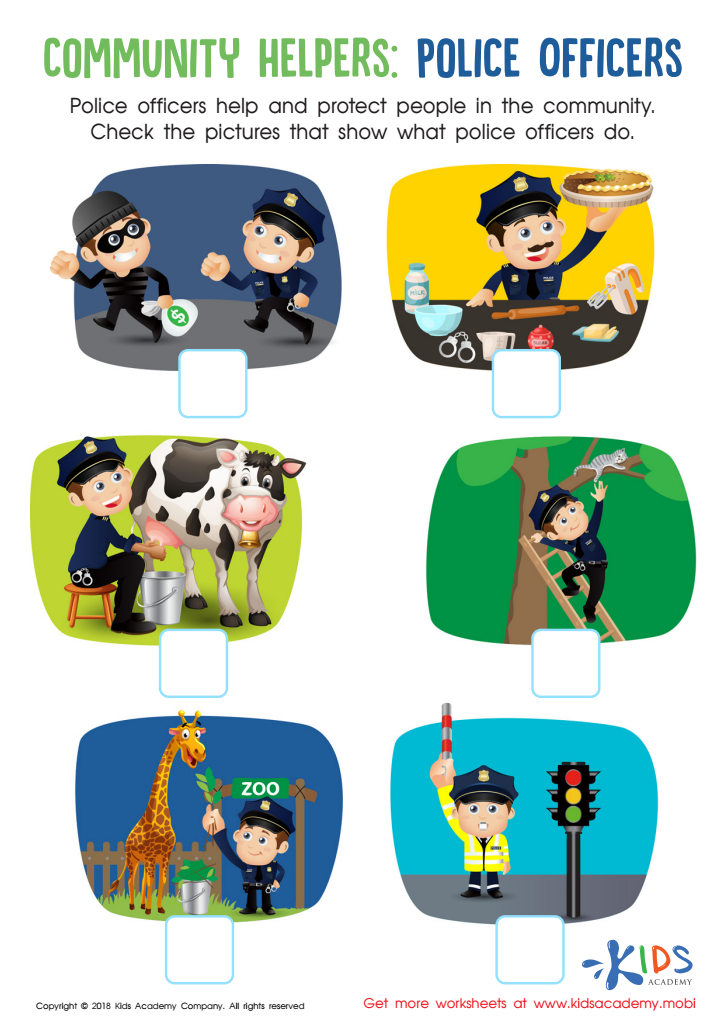
Police Officers Community Helpers Worksheet
Ask your child about police officers and how they help the community. Reference this worksheet to test their knowledge of police duties by asking them to name what the officers are doing in the pictures. Check which pictures correctly depict the duties of a police officer. Answering these questions together can help your child understand how police officers keep the community safe.
Police Officers Community Helpers Worksheet
Worksheet
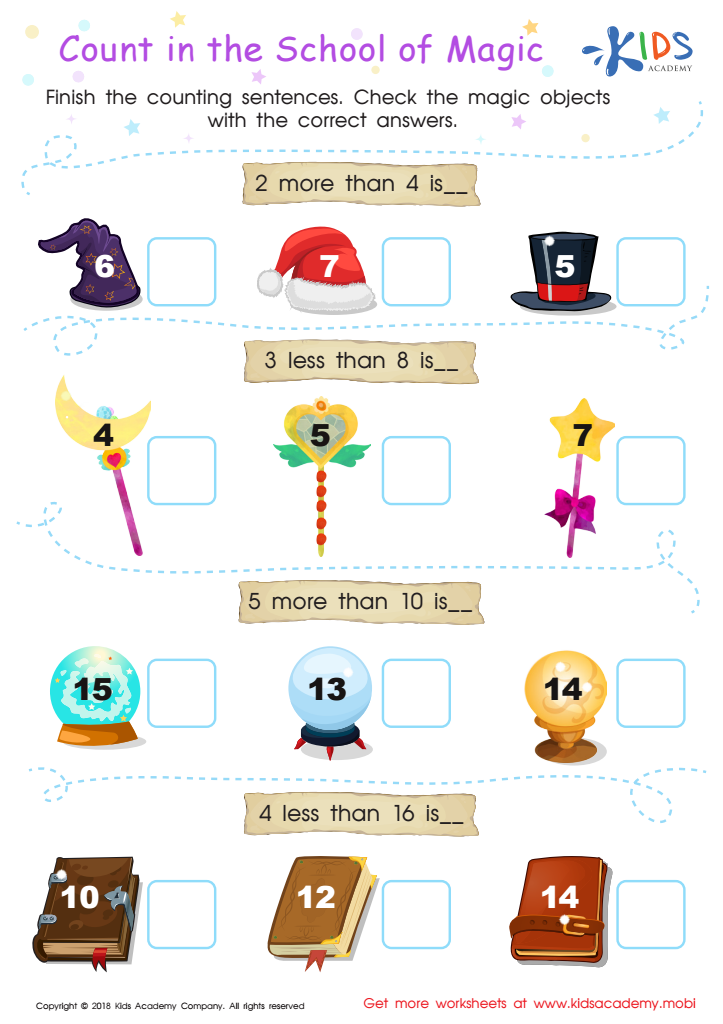
Count in the School of Magic Worksheet
Your math learners can explore the School of Magic with this worksheet. They'll read equations with addition and subtraction numbers under 20, count back and forth to find the answer, then complete the counting sentences. Fun pictures and easy accuracy make it an enjoyable and successful learning experience.
Count in the School of Magic Worksheet
Worksheet
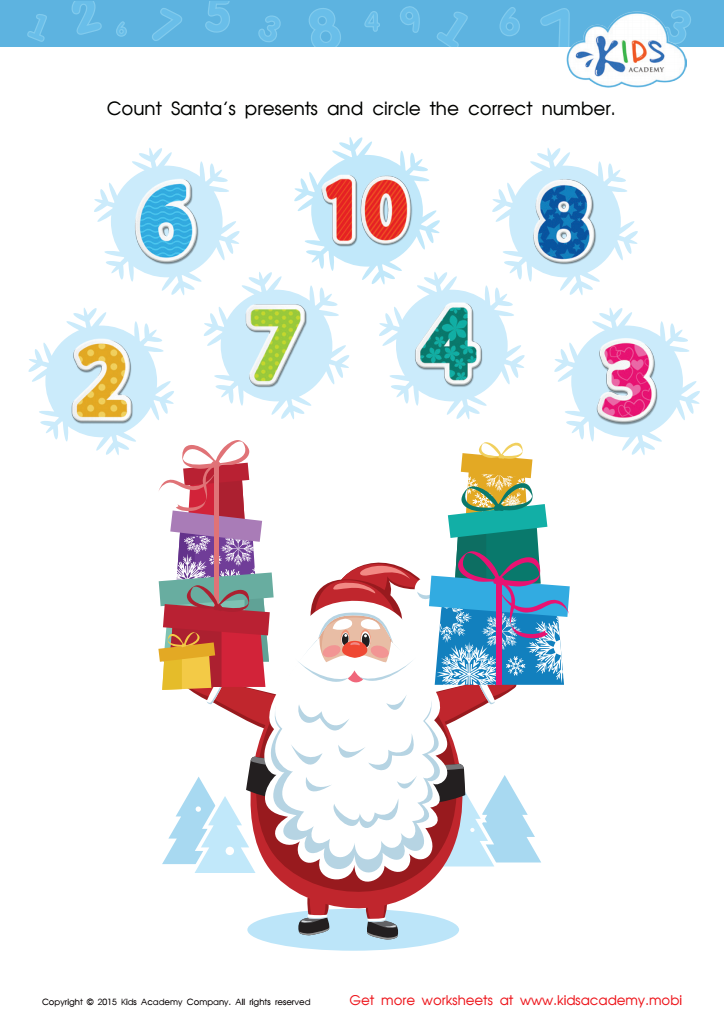
Count Santa's Presents Worksheet
With Kids Academy's free Christmas math worksheet, your kindergartener can help Santa count presents. The worksheet encourages recognizing and counting numbers, fostering the Christmas spirit. Print it out, have fun, and get ready to circle the right number! Get more math printables to learn numbers in a fun way.
Count Santa's Presents Worksheet
Worksheet
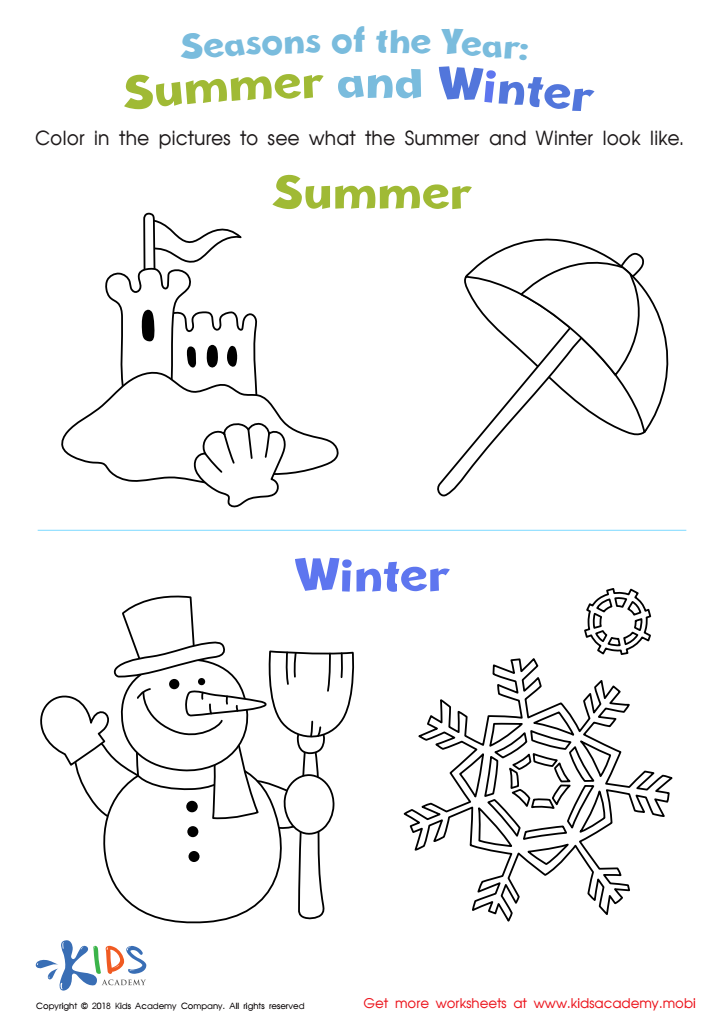
Summer and Winter Worksheet
Ask your child what they associate with winter and summer. What do they look forward to in winter? What colors do they see most? What do they love doing in summer? Help them color in the pictures of winter and summer in the worksheet, choosing the colors they think best represent each season.
Download (PDF)
 Assign to My Students
Assign to My Students
Summer and Winter Worksheet
Worksheet
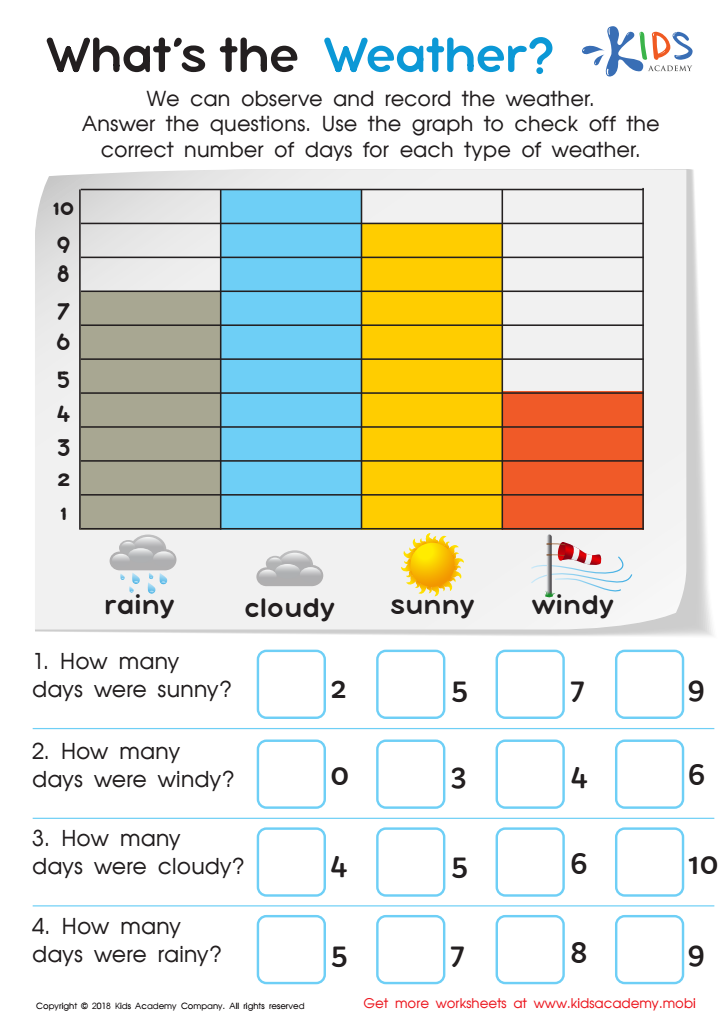
What's the Weather? Worksheet
Check the weather outside. Help kids learn and practice science and math by tracking different types of days using this printable worksheet. Have them count bars next to weather types like cloudy, sunny, windy, and rainy. Answer the questions and take the lesson further by creating a bar graph to show the monthly weather.
What's the Weather? Worksheet
Worksheet
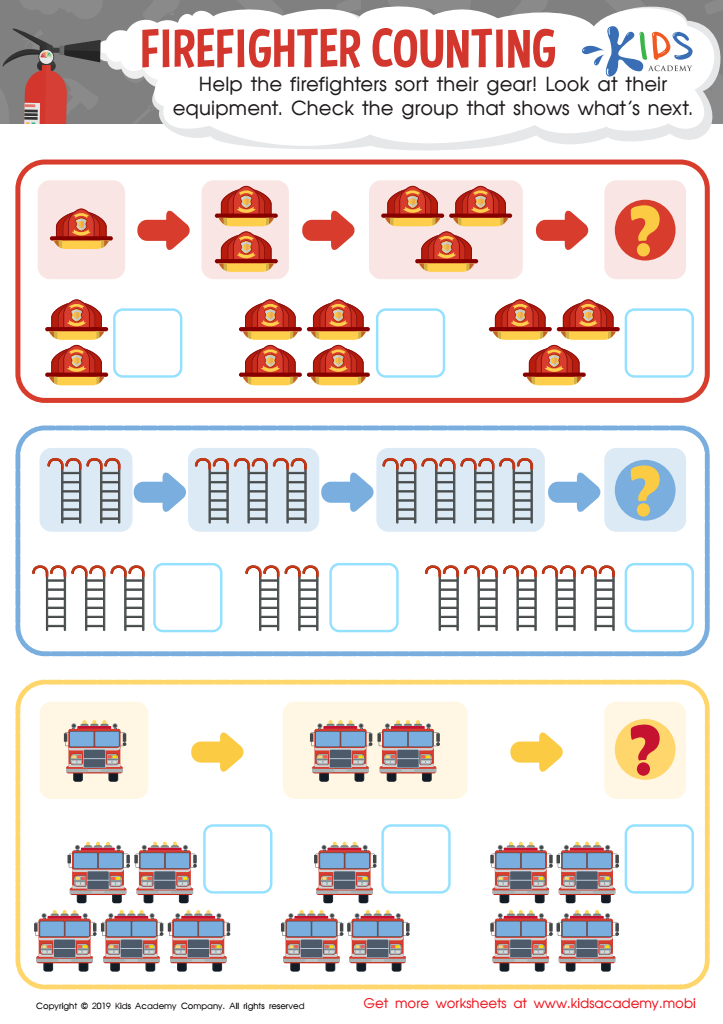
Firefighter Counting Worksheet
Firefighters are a vital part of any community. When a fire breaks out, they respond promptly to protect citizens and extinguish the blaze. Wearing specialized gear, they not only make the job easier, but safer too. Get your kids involved and help the firefighters sort their gear. Count the equipment, and check the group for the next steps.
Firefighter Counting Worksheet
Worksheet
Join Kids Academy for Free
Who is primarily going to use this learning content?








Observational skills are crucial for children ages 3-4 as they serve as a foundation for cognitive, social, and emotional development. During these formative years, children are naturally curious and learn about their environment through observation. Enhancing these skills helps them better understand cause-and-effect relationships, identify patterns, and make connections in their world.
For parents and teachers, fostering observational skills is essential. Children who can accurately observe their surroundings are more likely to develop critical thinking skills, improve their vocabulary, and enhance their problem-solving abilities. These skills also support their social competence; children learn to interpret non-verbal cues and foster empathy by observing others' emotions and actions.
Engaging in activities that promote observation—like nature walks, role-playing, or group discussions—encourages mindful participation in learning. By modeling good observational practices themselves, parents and teachers can influence children to ask questions, think deeply, and explore creatively.
Ultimately, prioritizing observational skills prepares children for lifelong learning, equipping them with the tools to navigate their world. When caregivers actively promote these abilities, they contribute to the child’s holistic development and readiness for future educational experiences.








