Practice addition Worksheets for Ages 3-4
3 filtered results
-
From - To
Welcome to our Practice Addition Worksheets for Ages 3-4! Designed to foster early math skills, these engaging printables provide a fun and interactive way for young learners to grasp the basics of addition. With colorful illustrations and child-friendly layouts, your little ones will enjoy counting objects and solving simple equations. Our worksheets promote essential cognitive skills while encouraging a love for numbers. Parents and educators can easily access and print these resources to enhance learning at home or in the classroom. Start your child's mathematical journey today and watch them gain confidence as they master the art of addition!
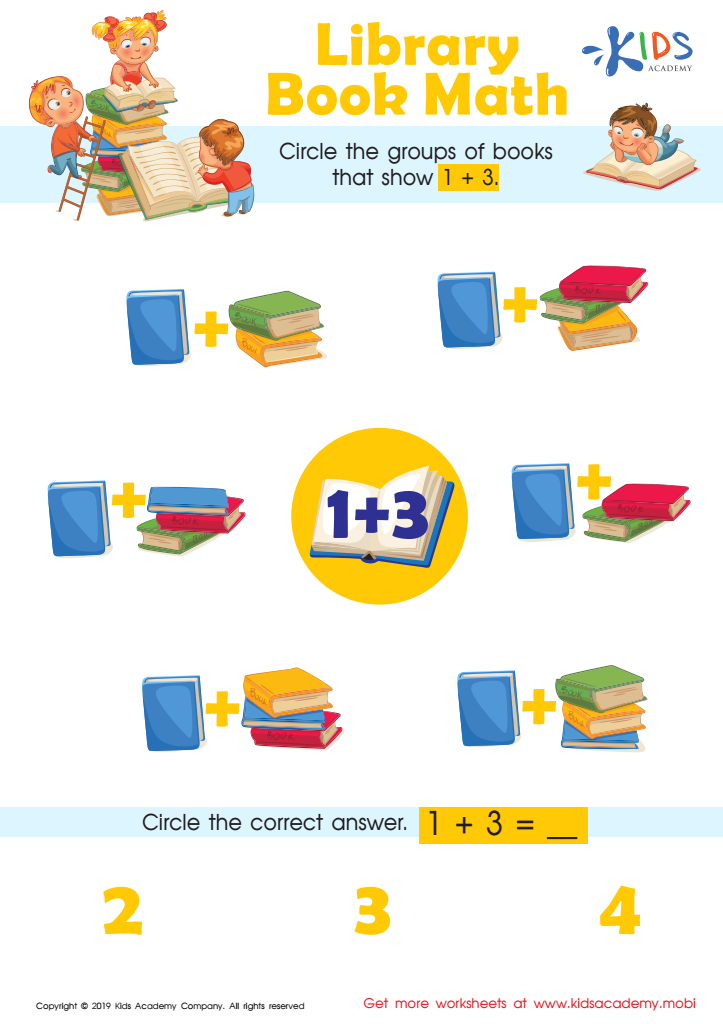
Library Book Math Worksheet
 Assign to My Students
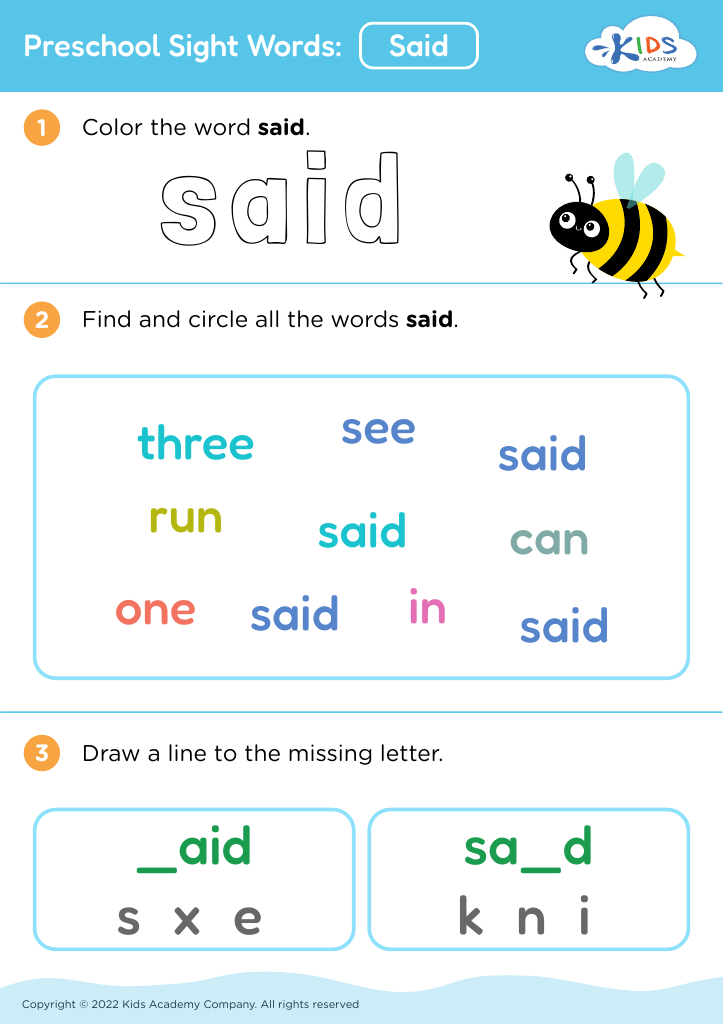
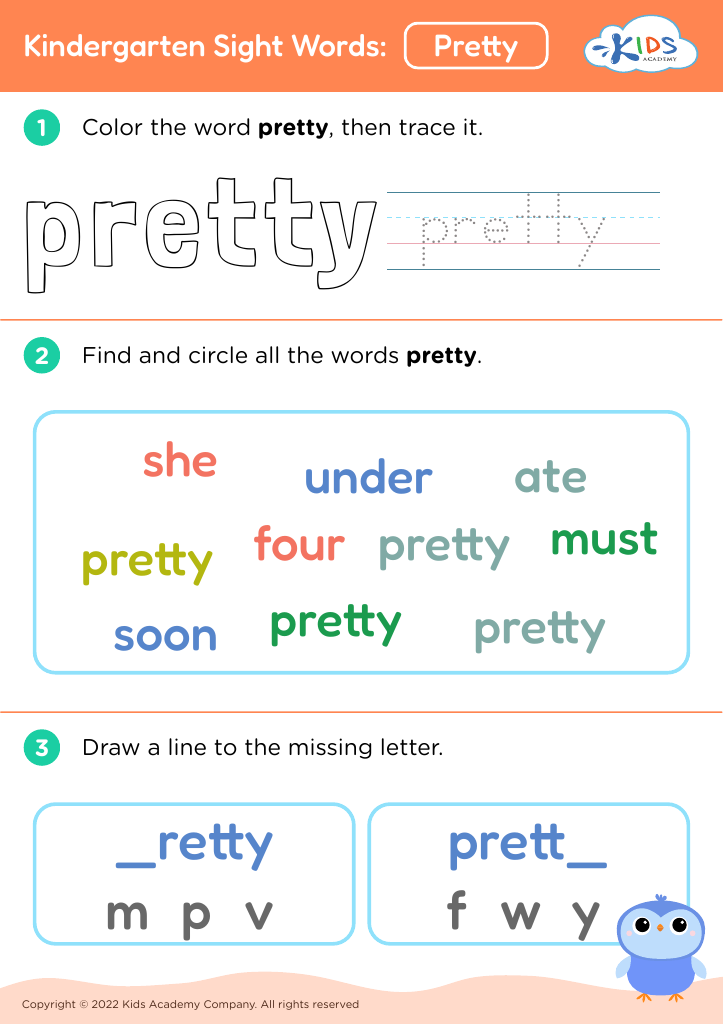








Practicing addition for children aged 3-4 is crucial for their cognitive development and foundational math skills. At this early age, children are naturally curious and eager to learn, making it an ideal time to introduce basic mathematical concepts like addition. Engaging in addition activities helps children develop their number sense, which is the ability to understand and manipulate numbers.
By focusing on addition, parents and teachers can enhance children’s problem-solving skills, critical thinking, and overall readiness for later mathematical concepts. Simple addition exercises—like counting objects, using fingers, or playing number games—make learning fun and interactive, fostering a positive attitude toward math from an early age.
Moreover, early math skills are closely linked to academic success. Research indicates that children who develop a solid understanding of basic math in pre-school often excel in higher grades. Introducing addition in playful, hands-on ways can also strengthen the home-school connection, encouraging parental involvement in their child's education.
Ultimately, practicing addition not only equips young learners with essential skills for future learning but also promotes confidence through mastery of concepts, laying a strong groundwork for lifelong mathematical understanding.








