Recognize shapes Worksheets for Ages 3-4
4 filtered results
-
From - To
Explore our engaging Recognize Shapes Worksheets designed specifically for ages 3-4. These interactive worksheets help young learners discover and identify various shapes in a fun and stimulating way. Our colorful activities capture children's attention, making learning an enjoyable experience as they practice recognizing squares, circles, triangles, and more. Each worksheet features age-appropriate exercises that encourage kids to sharpen their analytical skills while promoting motor control through tracing and coloring. Perfect for home or classroom use, our Recognize Shapes Worksheets provide an excellent foundation for future math skills. Start your child's journey towards shape recognition today and watch their confidence grow!
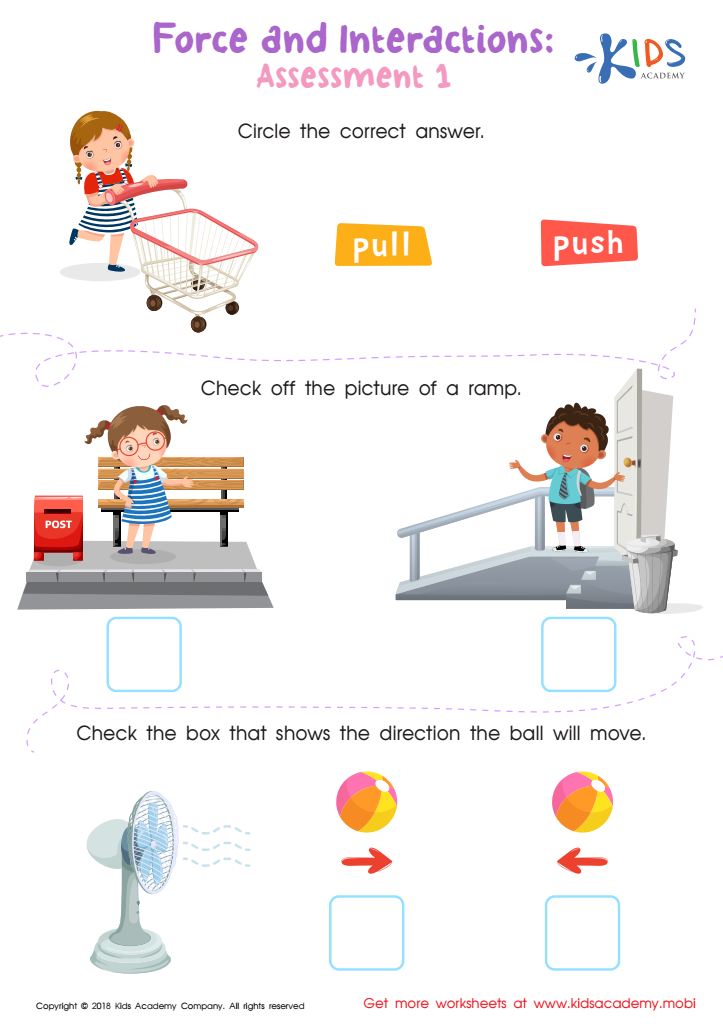
Force and Interactions: Assessment 1 Worksheet
 Assign to My Students
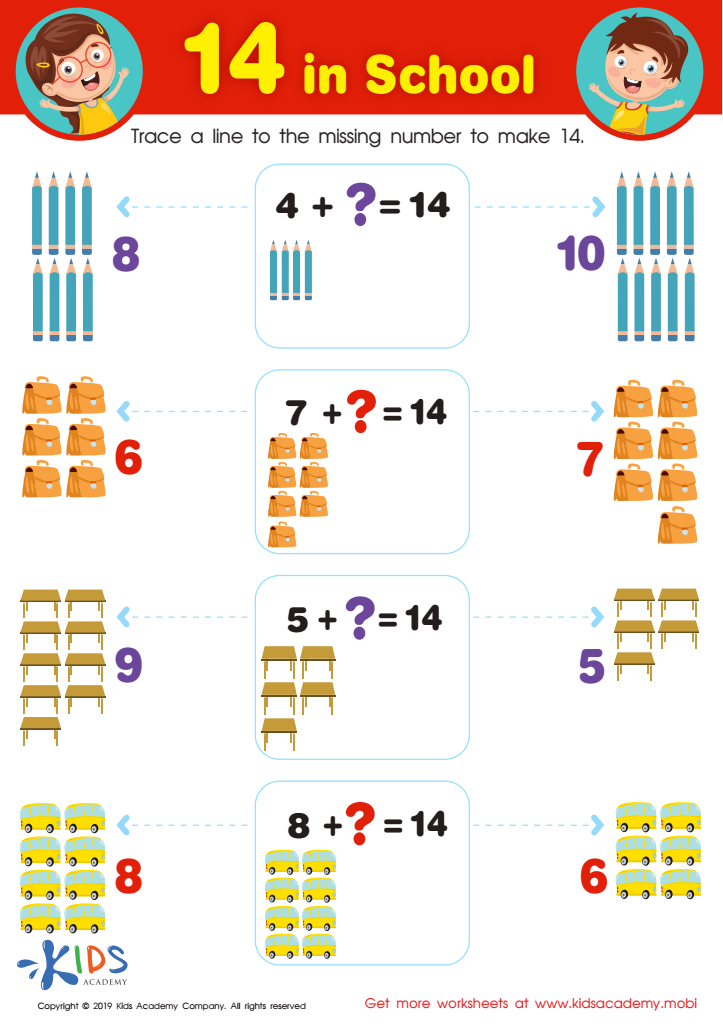
14 in School Worksheet








Recognizing shapes is a crucial developmental milestone for children ages 3 to 4, laying the foundation for later math, science, and spatial skills. At this age, children are naturally curious and eager to explore their environment. Learning about shapes enhances their cognitive development by introducing concepts of classification, pattern recognition, and problem-solving.
For parents and teachers, fostering shape recognition can bolster a child’s critical thinking and reasoning capabilities. By engaging in shape-related activities, such as sorting toys or reading books with pictures of different shapes, children learn to identify and differentiate various geometric forms, fostering observation skills.
Additionally, understanding shapes supports early literacy skills through vocabularies such as “circle," “square,” and “triangle.” These terms not only enrich their vocabulary but also prepare them for geometric terms they will encounter in later education.
Moreover, recognizing shapes connects to everyday life, helping children make sense of the world around them—such as identifying road signs, recognizing patterns in nature, or even understanding the structure of buildings. By prioritizing shape recognition, parents and teachers can create a strong foundation for a child’s academic journey, ensuring they develop necessary skills for future learning and understanding.








