Sentence structuring Worksheets for Ages 3-4
3 filtered results
-
From - To
Introduce your child to the exciting world of sentence structuring with our engaging worksheets designed specifically for ages 3-4! These versatile printables offer a fun and interactive way for your little one to develop essential language skills. Through colorful illustrations and simple prompts, children will learn how to construct basic sentences, enhancing their vocabulary and understanding of grammar. Each worksheet is crafted to boost creativity while providing a solid foundation in language development. Ideal for at-home learning or classroom activities, our sentence structuring worksheets make learning enjoyable and foster a love for words. Start your child on their vocabulary journey today!
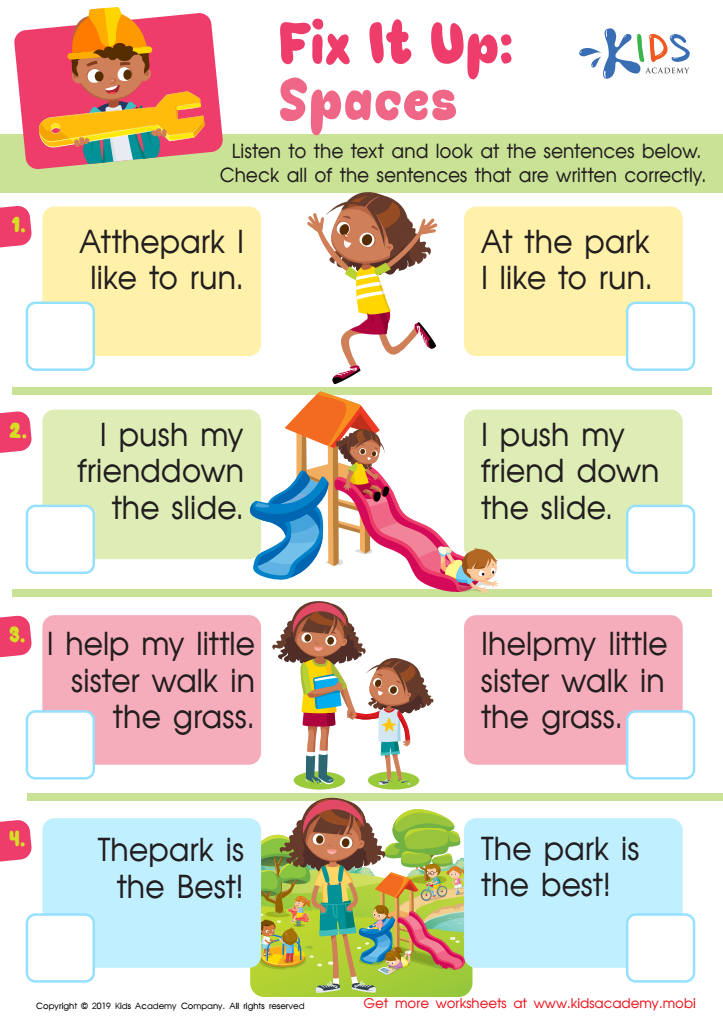
Fix Spaces Worksheet
 Assign to My Students
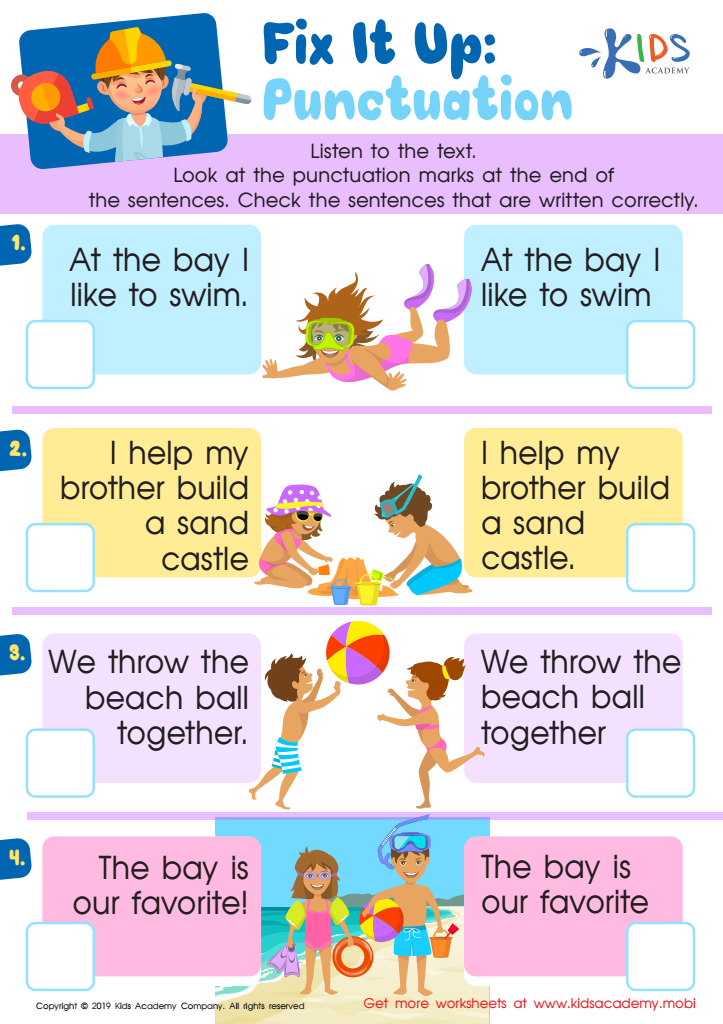
Fix Punctuation Worksheet
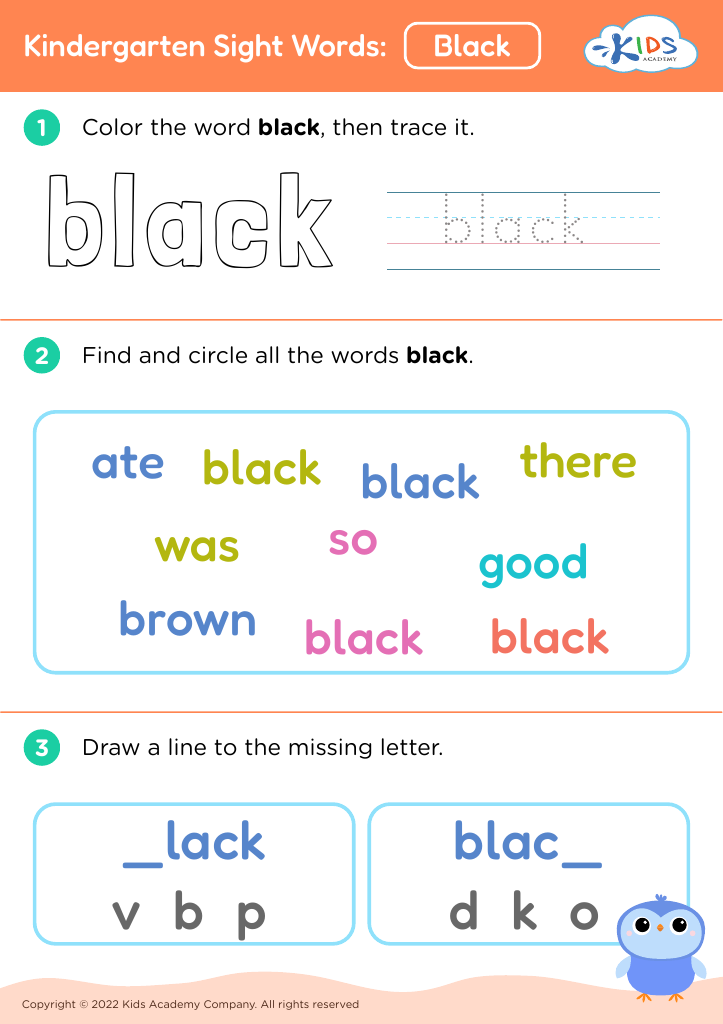








Sentence structuring is a fundamental skill that significantly benefits children aged 3-4 in their early language development. At this stage, children are rapidly expanding their vocabularies and beginning to understand how to communicate effectively. Teaching them sentence structure helps them express their thoughts and feelings more clearly and confidently, fostering better social interactions and relationships with peers and adults.
Moreover, developing sentence structure lays the groundwork for literacy skills. As children learn to form sentences, they also learn to identify parts of speech, such as nouns and verbs, which are essential for reading and writing later on. This foundation is crucial for their success in school and lifelong learning.
Additionally, when parents and teachers invest time in teaching sentence structure, they enhance children's cognitive skills—improving their ability to think critically, organize their thoughts, and follow directions. Engaging children in activities that promote sentence formation, such as storytelling and role-play, not only makes learning enjoyable but also strengthens their comprehension and memory.
In summary, caring about sentence structuring for young children is vital for their social, emotional, and cognitive development, setting the stage for academic success and effective communication in the future.








