Sound Association Worksheets for Ages 3-4 - Page 2
27 filtered results
-
From - To
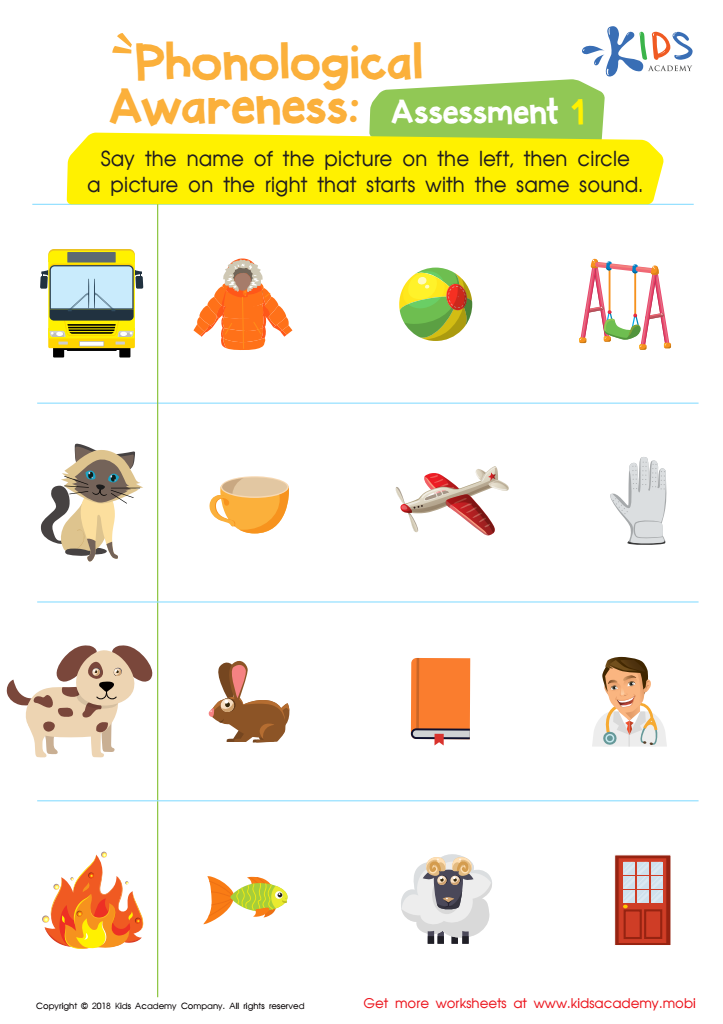
Phonological Awareness: Assessment 1 Worksheet
 Assign to My Students
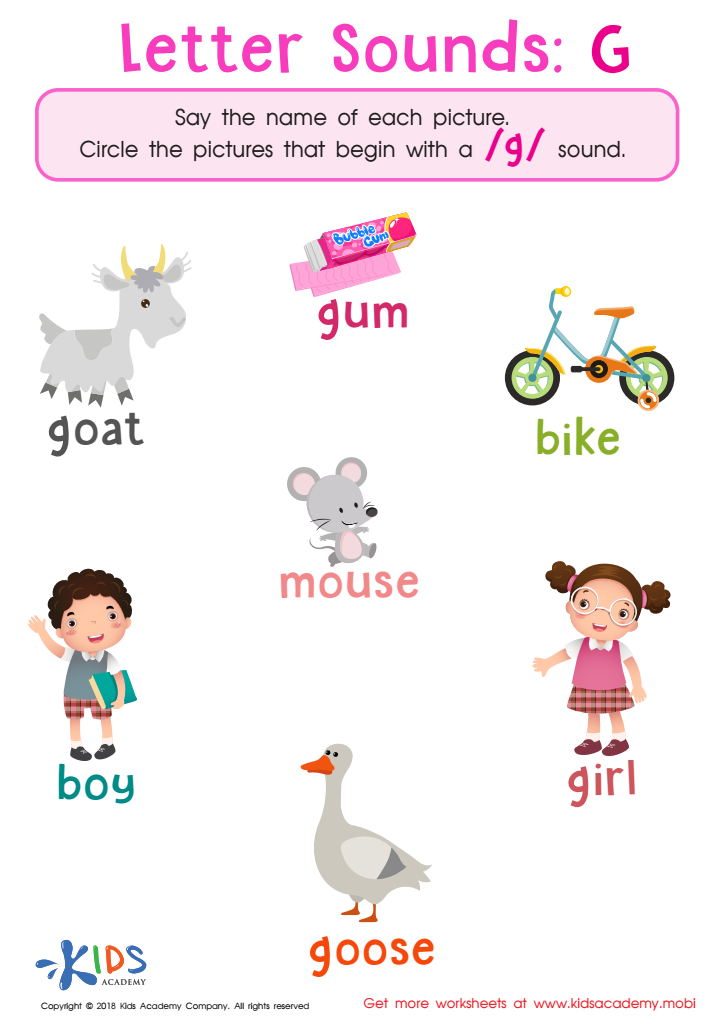
Letter G Sounds Worksheet
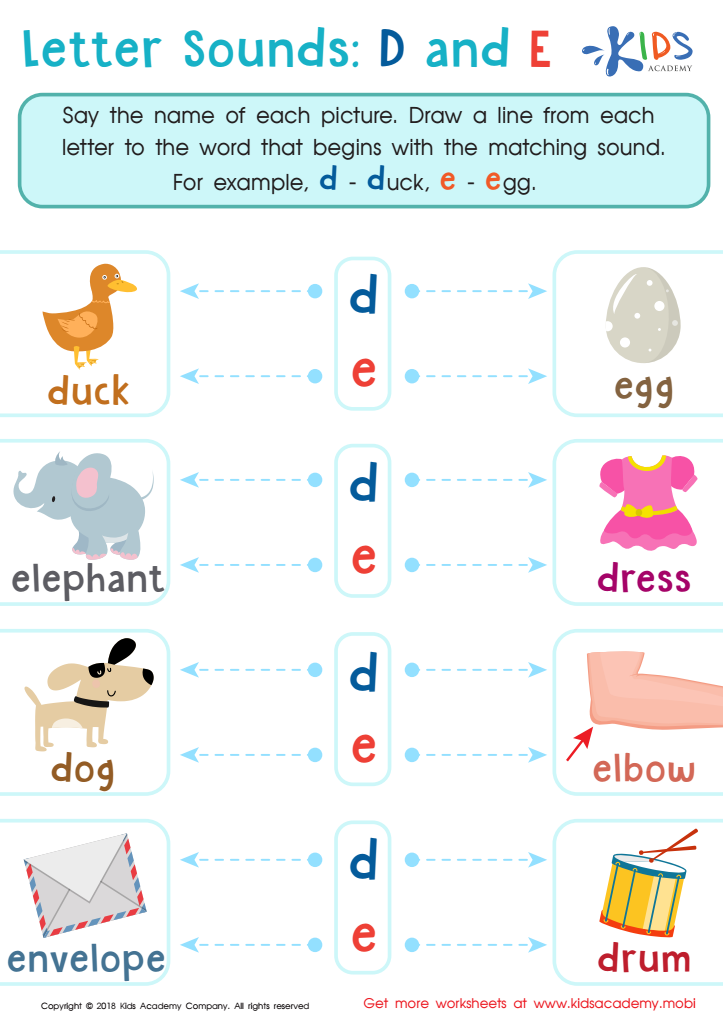
Letter D and E Sounds Worksheet








Sound association is a crucial component of early literacy development for children ages 3-4. At this stage, children are honing their listening skills, which serve as the foundation for reading and writing. By recognizing and associating sounds with letters or words, children begin to understand the relationships between spoken and written language.
Parents and teachers should care about sound association because it enhances phonemic awareness—the ability to hear, identify, and manipulate individual sounds in spoken words. This skill is predictive of future reading success. Engaging in activities that promote sound association, such as singing songs, reading rhymes, or playing sound-matching games, can make learning enjoyable and interactive.
Furthermore, early sound association practices support cognitive development, improve vocabulary, and enhance communication skills. When children can connect sounds to letters, they become more proficient at recognizing and decoding words, which fosters a lifelong love for reading. As essential caregivers, parents and teachers play a pivotal role in facilitating these experiences, ensuring that children are equipped with the skills they'll need to succeed academically. Prioritizing sound association now sets the stage for stronger literacy abilities, building confidence and a solid foundation for future learning.








