Understanding subtraction Worksheets for Ages 3-4
5 filtered results
-
From - To
Introduce your 3-4-year-old to the world of subtraction with our engaging worksheets designed specifically for early learners. Kids Academy offers a collection of fun, colorful, and easy-to-follow printables that make mastering the basics of subtraction a delightful experience. With age-appropriate images and simple instructions, children can develop their understanding of this fundamental math skill through playful exercises. Our worksheets support cognitive development and problem-solving abilities, laying a strong foundation for future math success. Download now to help your little ones confidently take their first steps in the exciting journey of learning subtraction.
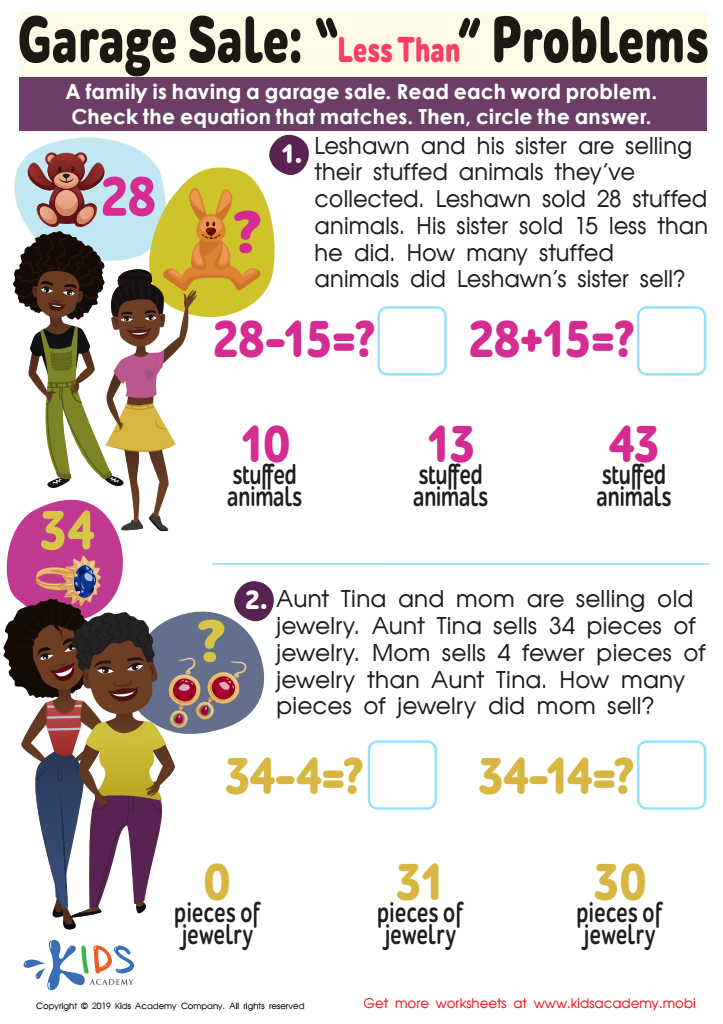
Garage Sale Less Than Worksheet
 Assign to My Students
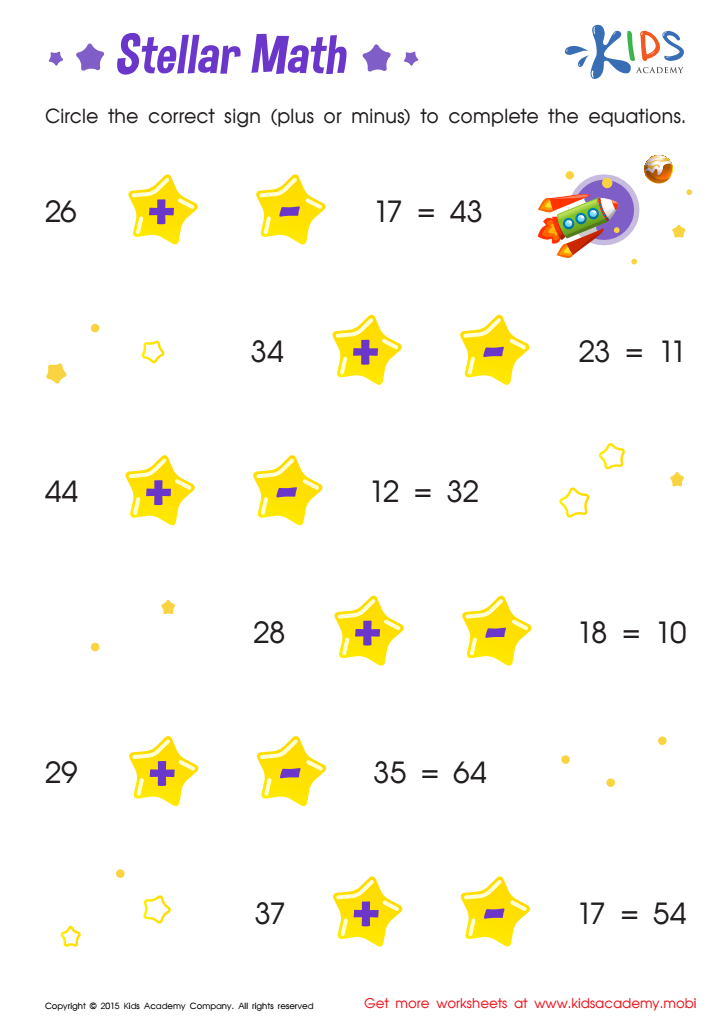
Stellar Math Substraction Worksheet
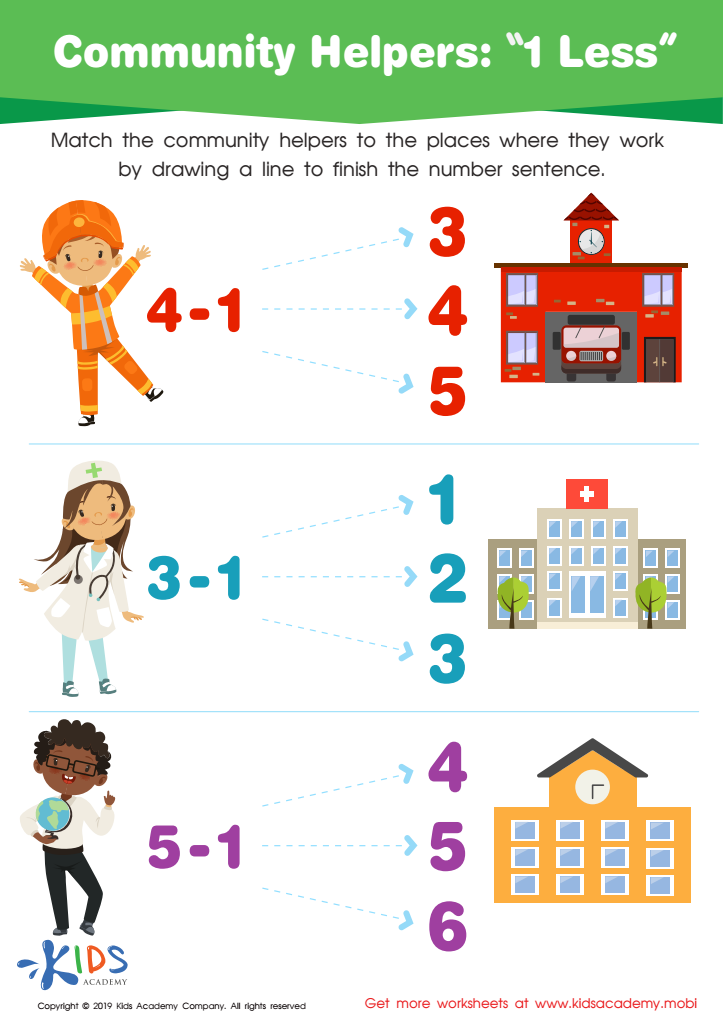
Community Helpers: 1 less Worksheet
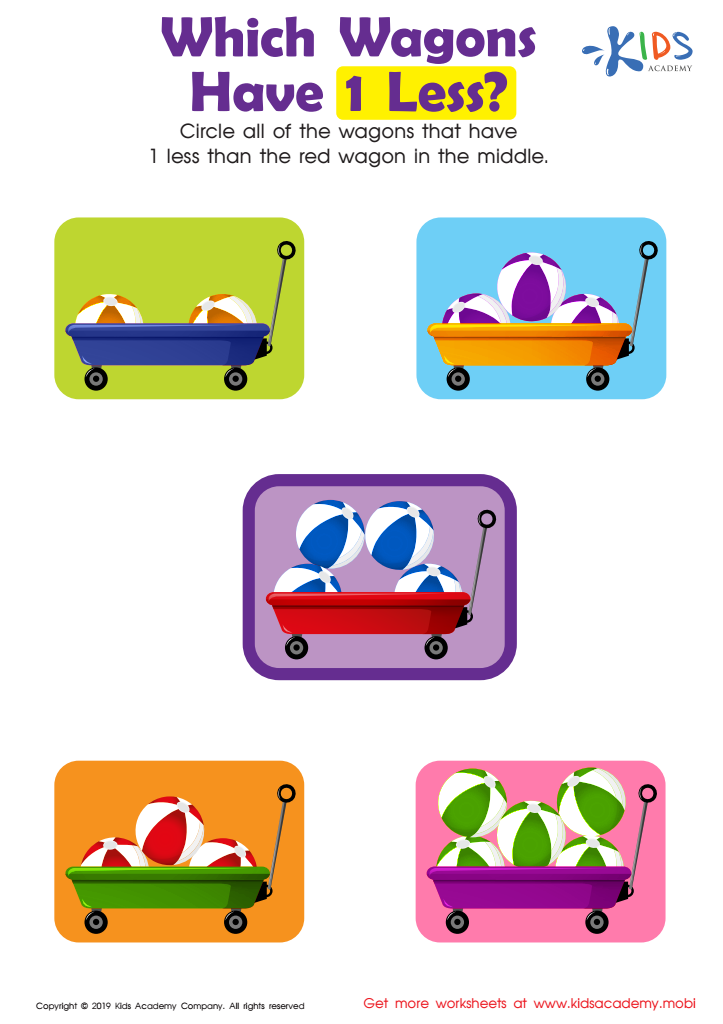
Which Wagons Have 1 Less? Worksheet








Understanding subtraction at an early age is vital for several reasons. For one, it lays the foundation for future math skills, allowing children to grasp more advanced concepts as they progress in their education. At ages 3-4, kids are in a critical period for cognitive development, making this a prime time to introduce basic arithmetic in playful, stress-free ways.
Engaging with subtraction helps develop problem-solving abilities and logical thinking early on. It's not just about numbers; it also teaches children to recognize patterns and understand relationships between different objects and quantities. Using simple, relatable examples—like taking away one apple from a group of three—enables children to visualize math operations, making the abstract concept of subtraction more concrete.
Parents and teachers who prioritize understanding subtraction foster a child's confidence with math. This early positive experience is crucial; kids who feel confident are more likely to enjoy math later on, achieving higher academic outcomes in the long run. Moreover, early math skills are often predictive of later success, not just in math but in all subjects, as they underpin vital analytical and reasoning abilities. Therefore, integrating subtraction into everyday activities can enhance both academic performance and critical life skills.








