
Vocabulary improvement Worksheets for Ages 3-4
4 filtered results
Difficulty Level
Grade
Age
-
From - To
Subject
Activity
Standards
Boost your child's language development with our Vocabulary Improvement Worksheets for Ages 3-4. These engaging, printable worksheets are designed to enhance early vocabulary skills through fun, interactive activities. Our carefully crafted resources include colorful illustrations and playful exercises, helping young learners associate words with images and build a strong language foundation. Perfect for preschoolers, these worksheets cover a range of themes and everyday vocabulary, fostering early literacy skills and preparing your child for future academic success. Visit Kids Academy to explore our collection and give your child a head start in language learning today!
Favorites
With answer key
Interactive
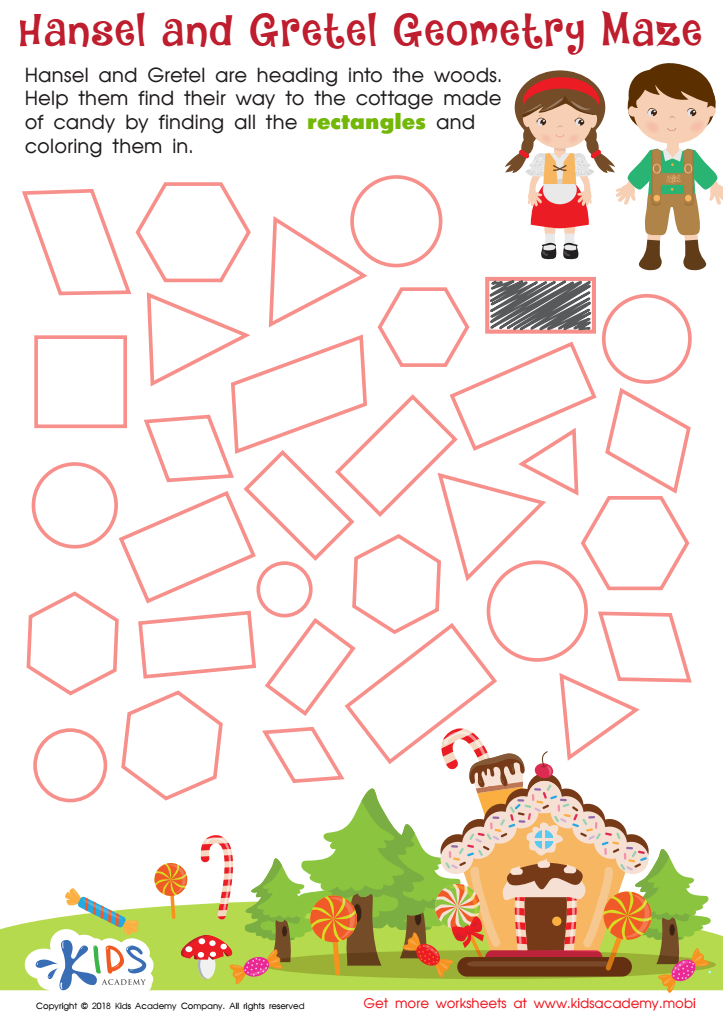
Hansel and Gretel Geometry Maze Worksheet
Your kids will have fun helping Hansel and Gretel get through a colorful forest of shapes! This free PDF reinforces the properties of rectangles, building skills in visual discernment and laying the foundations for geometry. They'll be too busy enjoying the story to realize they're learning!
 Assign to My Students
Hansel and Gretel Geometry Maze Worksheet
Worksheet
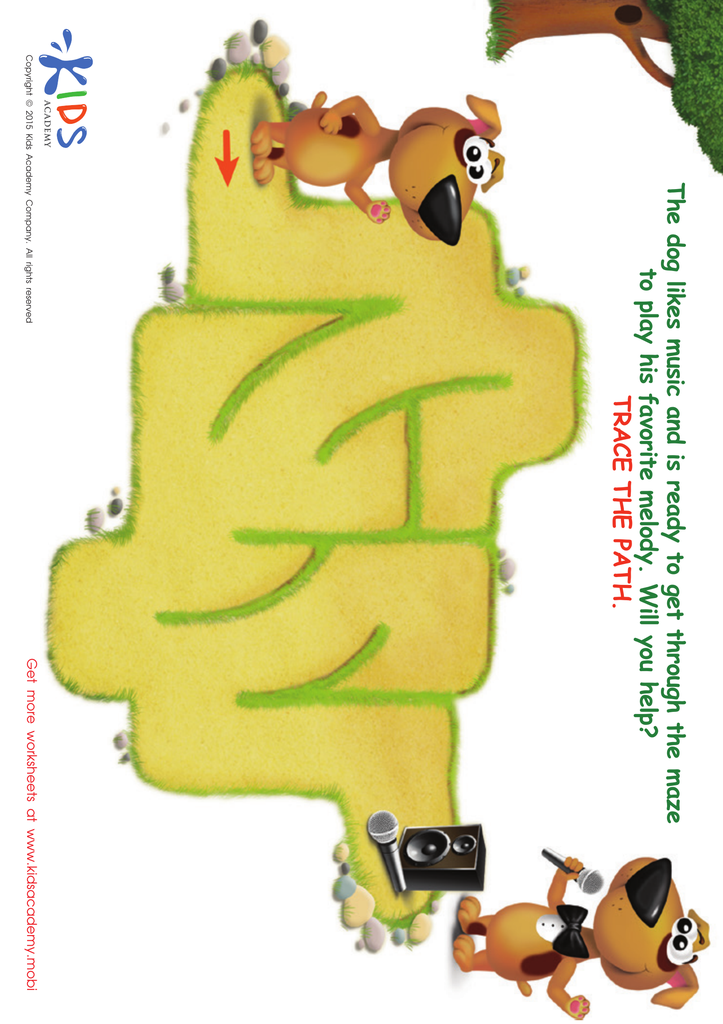
Singer Maze Worksheet
Download our printable maze worksheet and help the little dog find its way to the stage. Trace the path and have fun singing together!
Singer Maze Worksheet
Worksheet
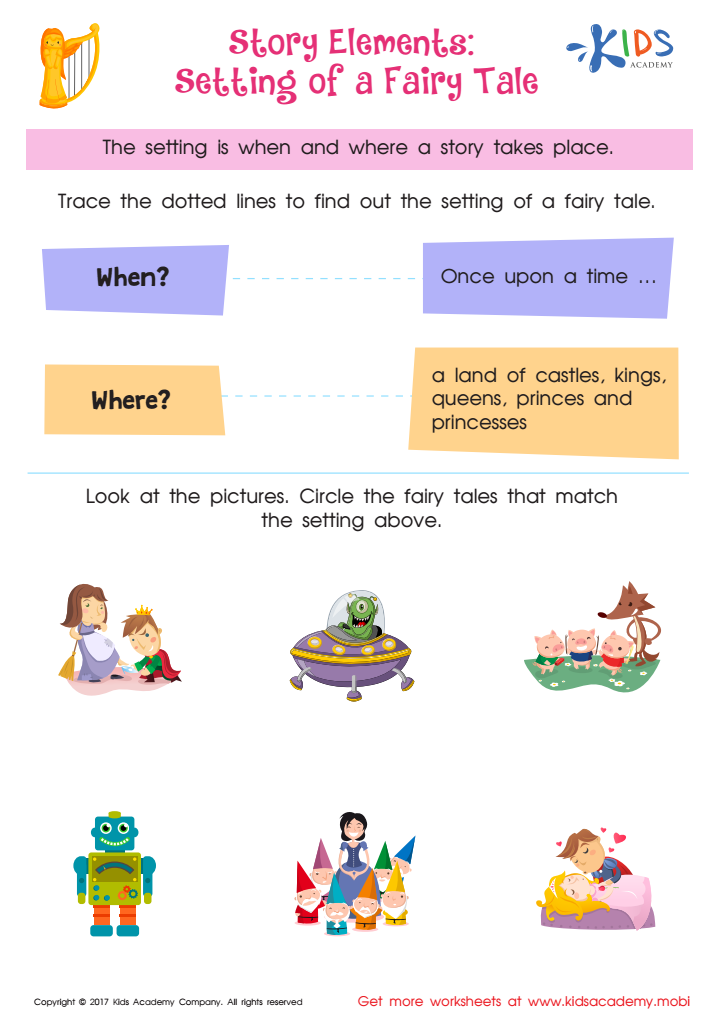
Story Elements: Setting of a Fairy Tale Printable
Help your child learn to analyze stories starting with setting. Use Story Elements worksheet to break down setting into two parts. This will help your child recognize setting quickly and understand its importance in the plot.
Story Elements: Setting of a Fairy Tale Printable
Worksheet
Join Kids Academy for Free
Who is primarily going to use this learning content?








Fostering vocabulary improvement in children aged 3-4 is crucial for their overall development and future success. At this age, children's brains are highly receptive and able to absorb new information rapidly. Vocabulary growth during this period lays the foundation for effective communication, cognitive development, and academic achievement.
Firstly, a robust vocabulary enables children to express their thoughts, emotions, and needs more clearly, reducing frustrations and fostering better social interactions. Effective communication skills also boost their confidence in engaging with peers and adults.
Secondly, vocabulary is closely linked to reading skills. The more words a child understands, the easier it will be for them to comprehend written language, setting the stage for advanced literacy skills. Early vocabulary development is a strong predictor of later academic success, as children with a larger vocabulary tend to perform better in reading and writing tasks.
Furthermore, improving vocabulary enhances cognitive abilities such as memory, problem-solving, and critical thinking. It encourages curiosity and a love for learning, as children exposed to diverse words tend to ask more questions and explore new concepts.
In summary, parents and teachers should prioritize vocabulary improvement in young children, as it plays a vital role in their emotional, social, academic, and cognitive development, ultimately preparing them for a successful future.








