Filters

20 filtered results

Clear all filters
Favorites
With answer key
Interactive

20 filtered results

Difficulty Level

Grade


Welcome to our "Addition Skills: Adding at the Zoo Worksheets" for ages 3-4! Designed to make learning fun, these engaging worksheets introduce young learners to basic addition through the delightful theme of zoo animals. Children will practice counting and adding through playful illustrations that capture their imagination. Each worksheet focuses on simple addition problems to help build foundational math skills while fostering a love for learning. Whether at home or in the classroom, these worksheets are a perfect tool for developing early arithmetic abilities. Let your little learners embark on a mathematical adventure at the zoo today!
Check out this FREE Trial Lesson on Adding at the Zoo for age 3-4!

Exactly the Same, or Not

Favorites
With answer key
Interactive
  • 3-4
  • Addition skills
  • Adding at the Zoo
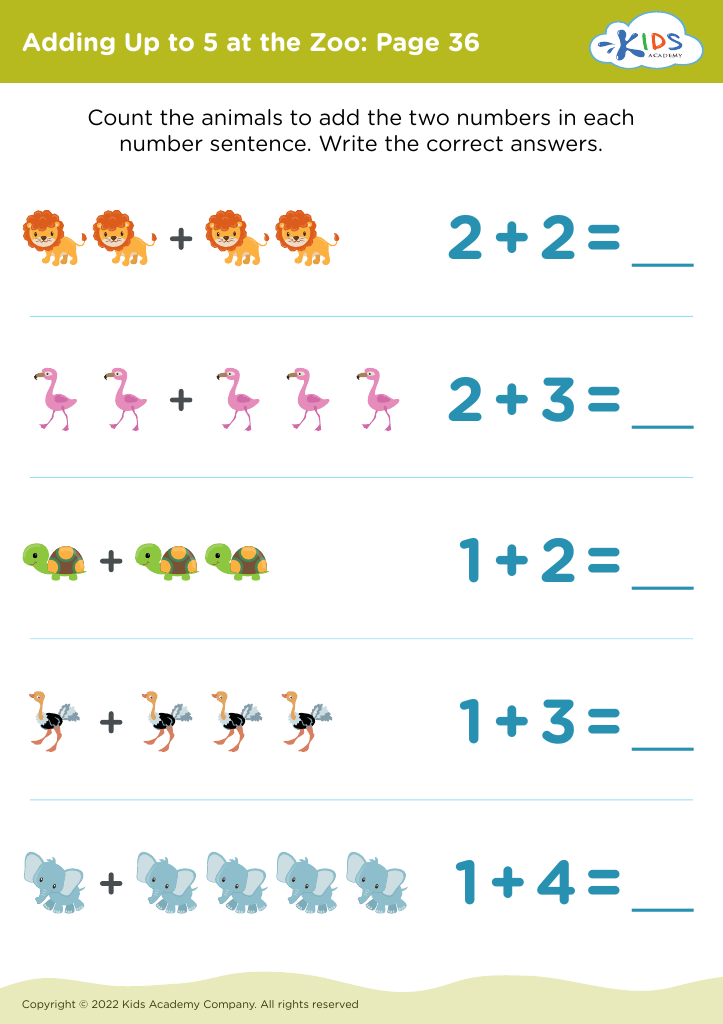
Adding Up to 5 at the Zoo: Page 36
Worksheet
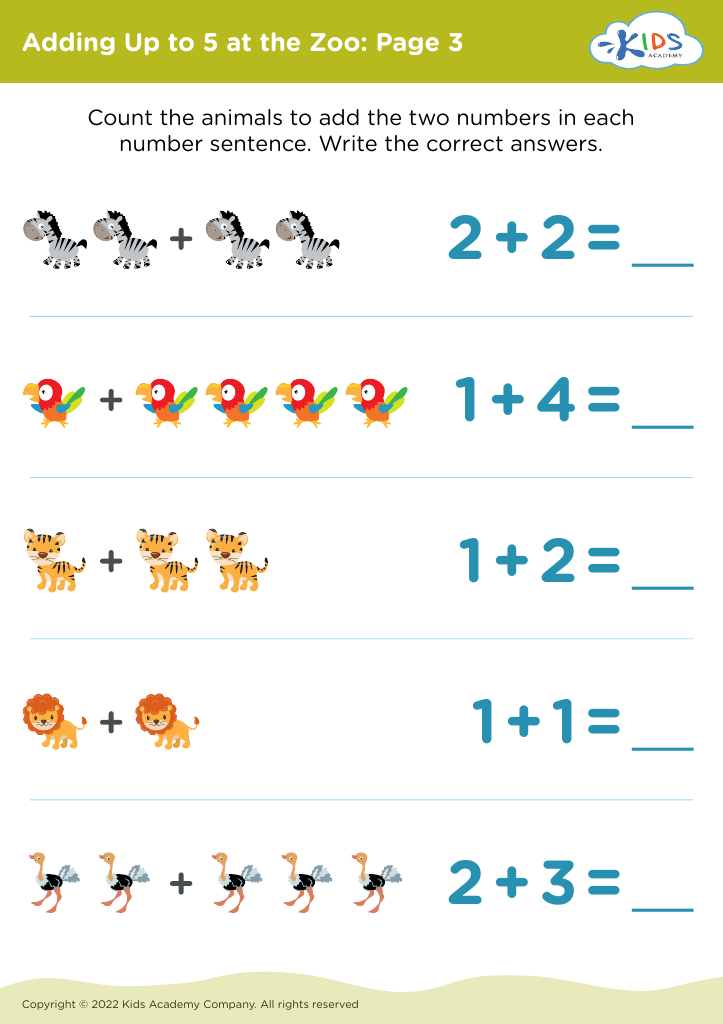
Adding Up to 5 at the Zoo: Page 3

Adding Up to 5 at the Zoo: Page 3

Adding Up to 5 at the Zoo: Page 3
Worksheet
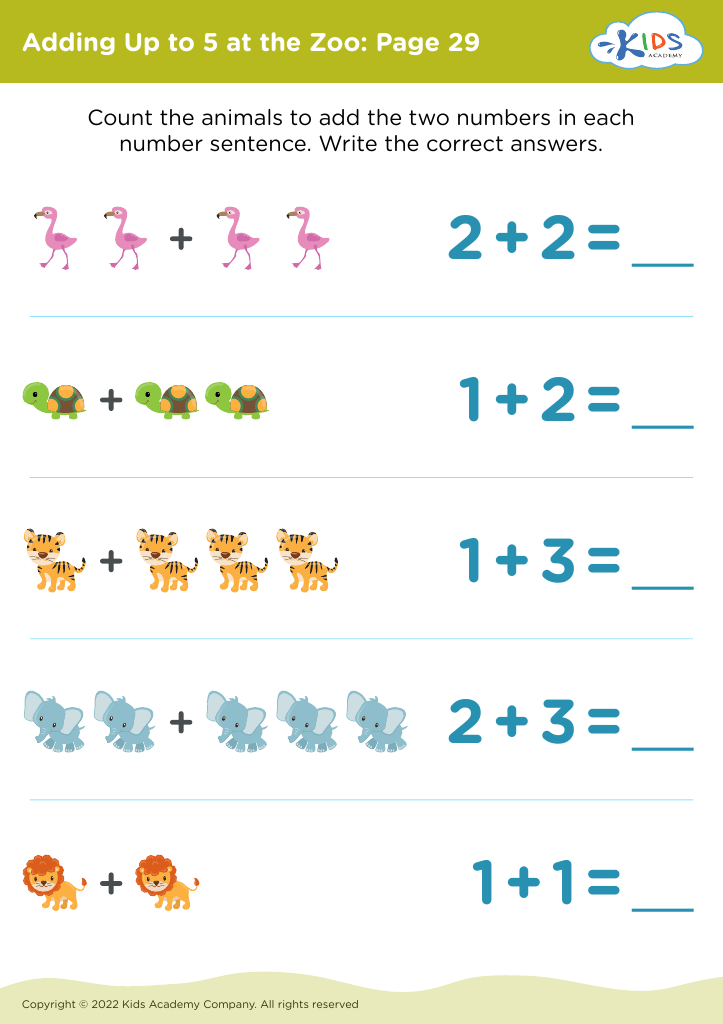
Adding Up to 5 at the Zoo: Page 29
Worksheet
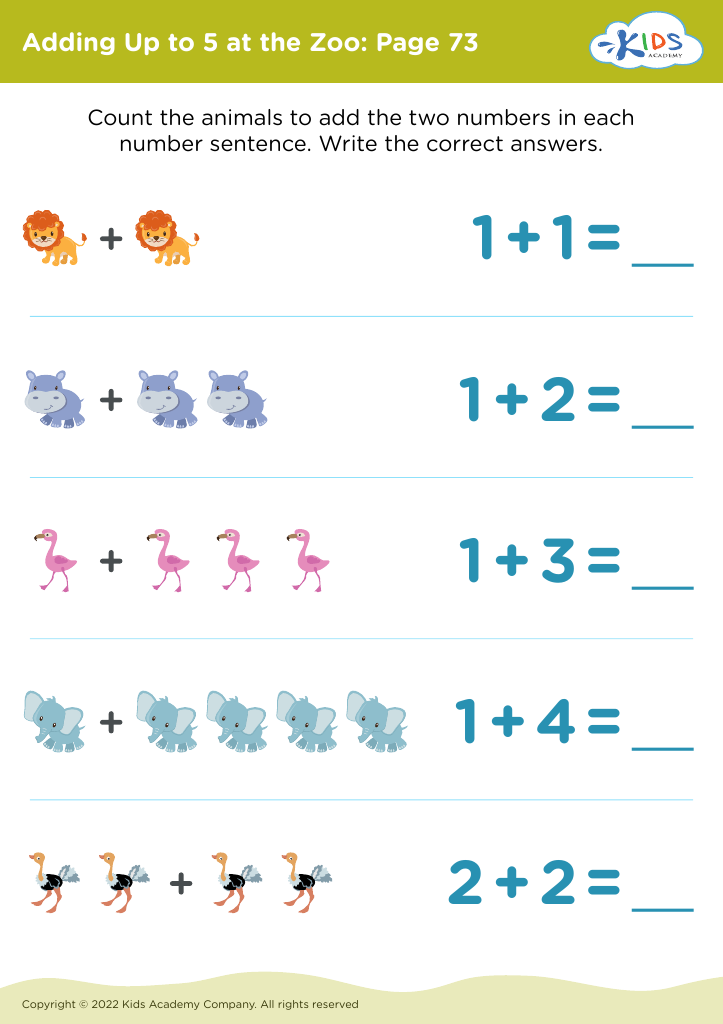
Adding Up to 5 at the Zoo: Page 73
Worksheet
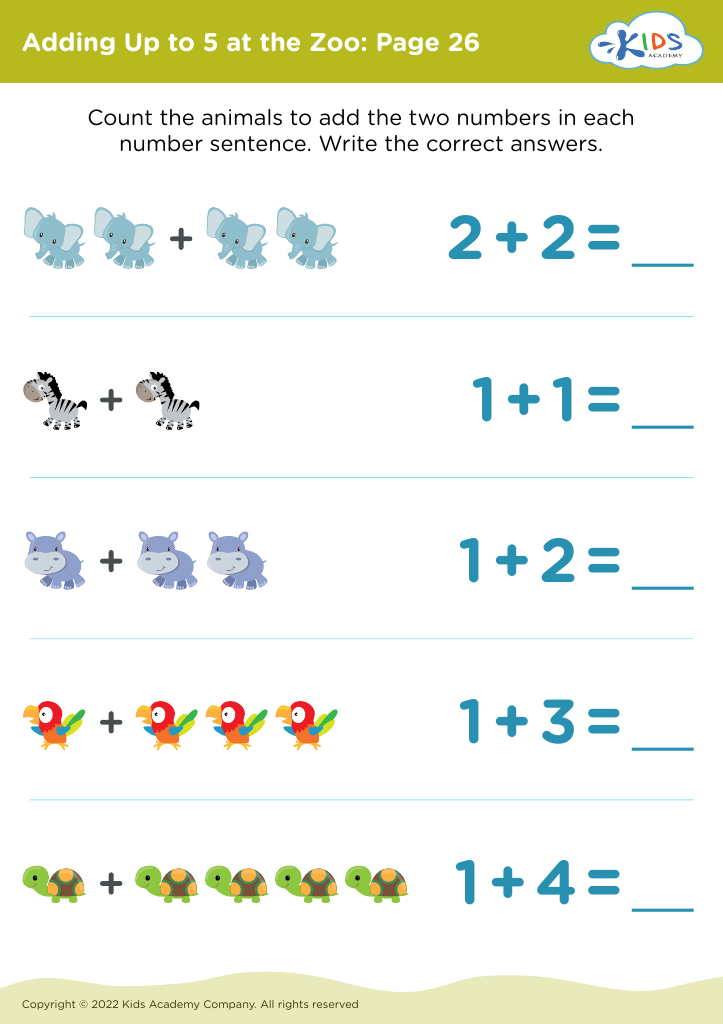
Adding Up to 5 at the Zoo: Page 26
Worksheet
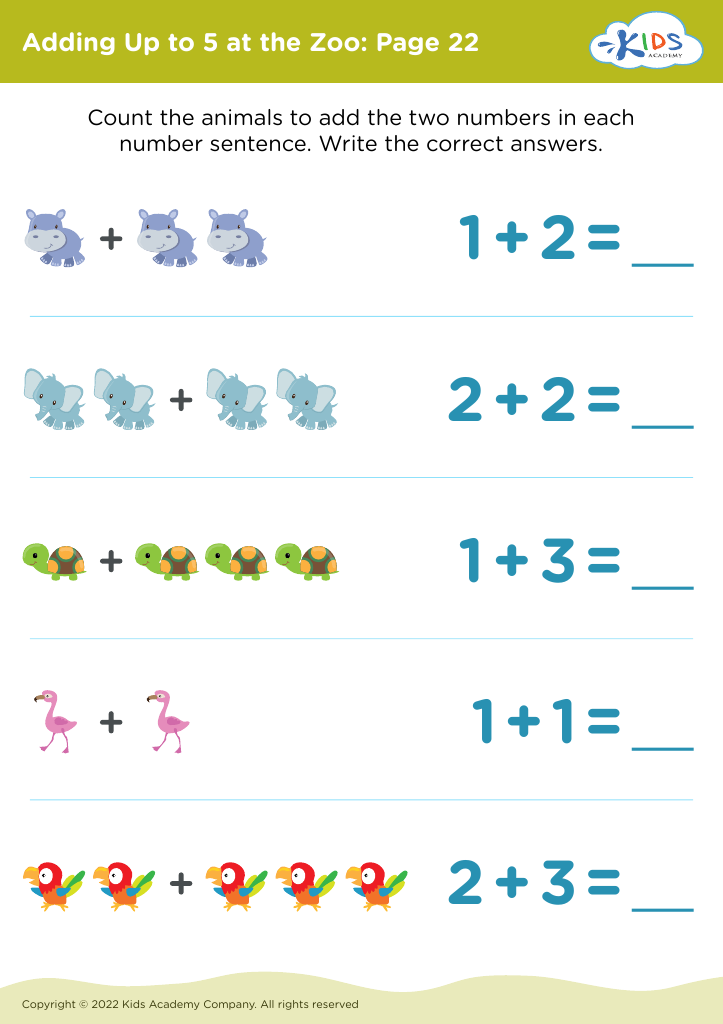
Adding Up to 5 at the Zoo: Page 22
Worksheet
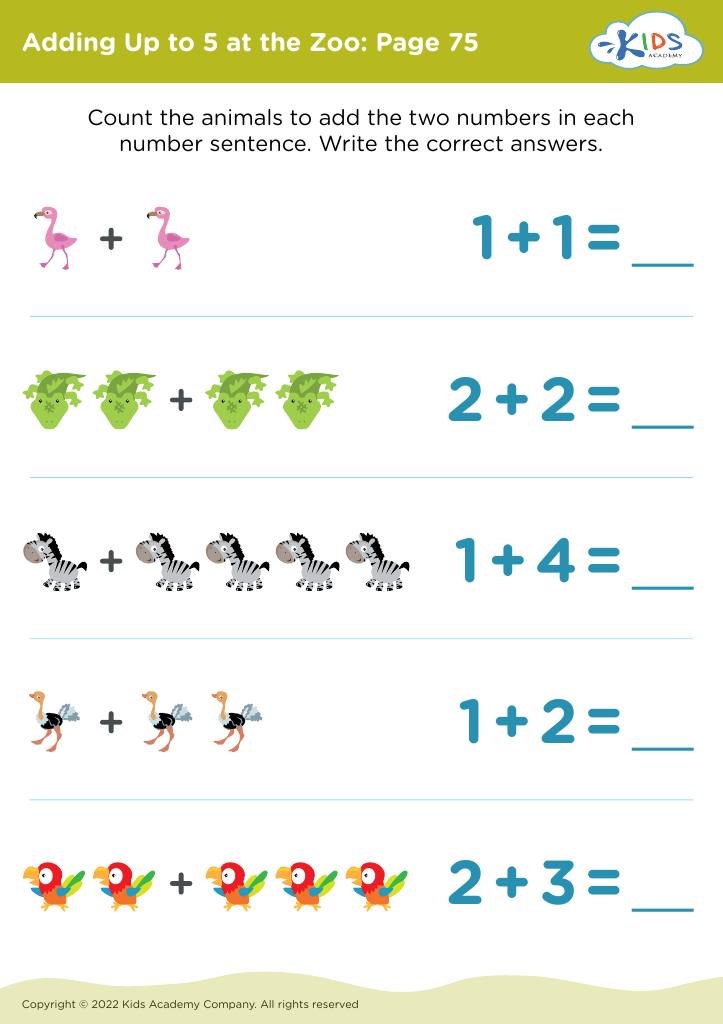
Adding Up to 5 at the Zoo: Page 75
Worksheet
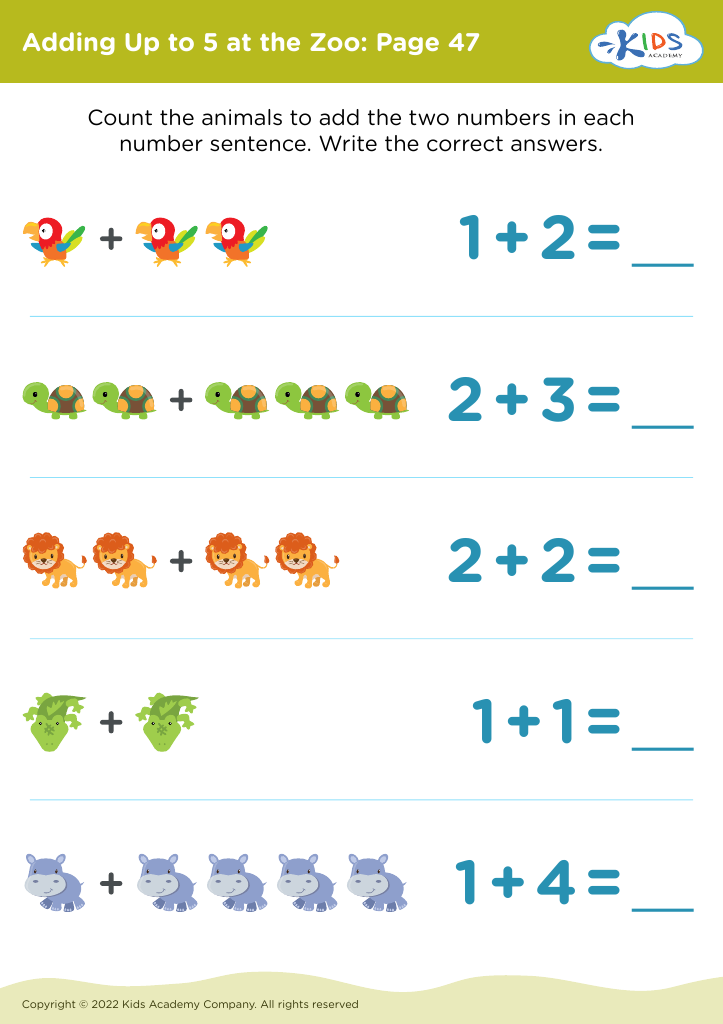
Adding Up to 5 at the Zoo: Page 47
Worksheet
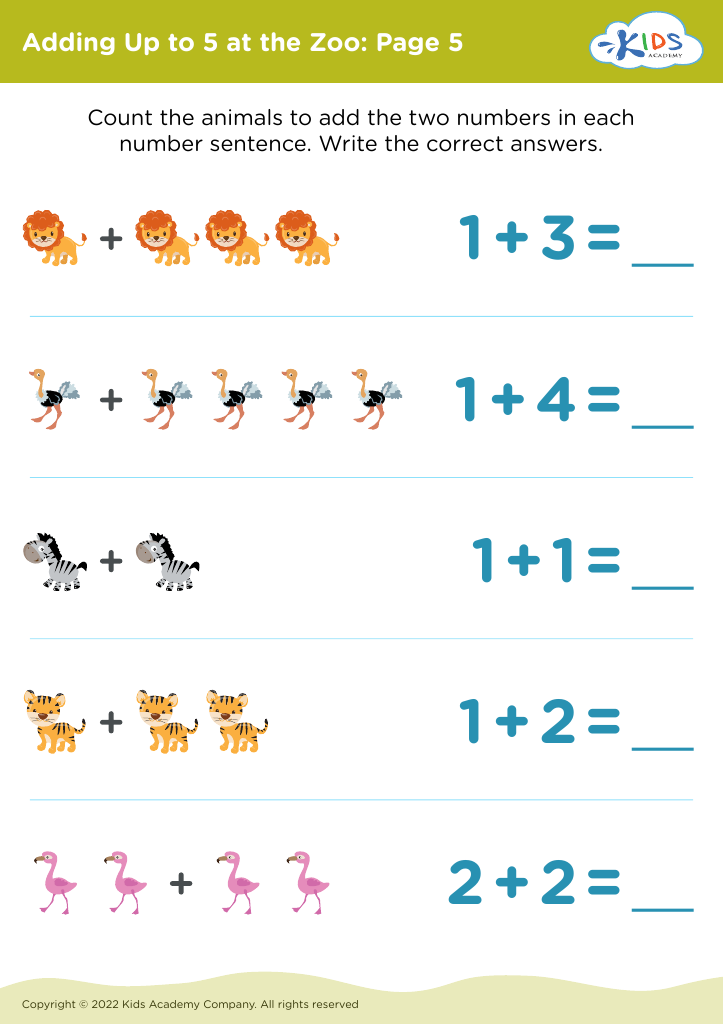
Adding Up to 5 at the Zoo: Page 5

Adding Up to 5 at the Zoo: Page 5

Adding Up to 5 at the Zoo: Page 5
Worksheet
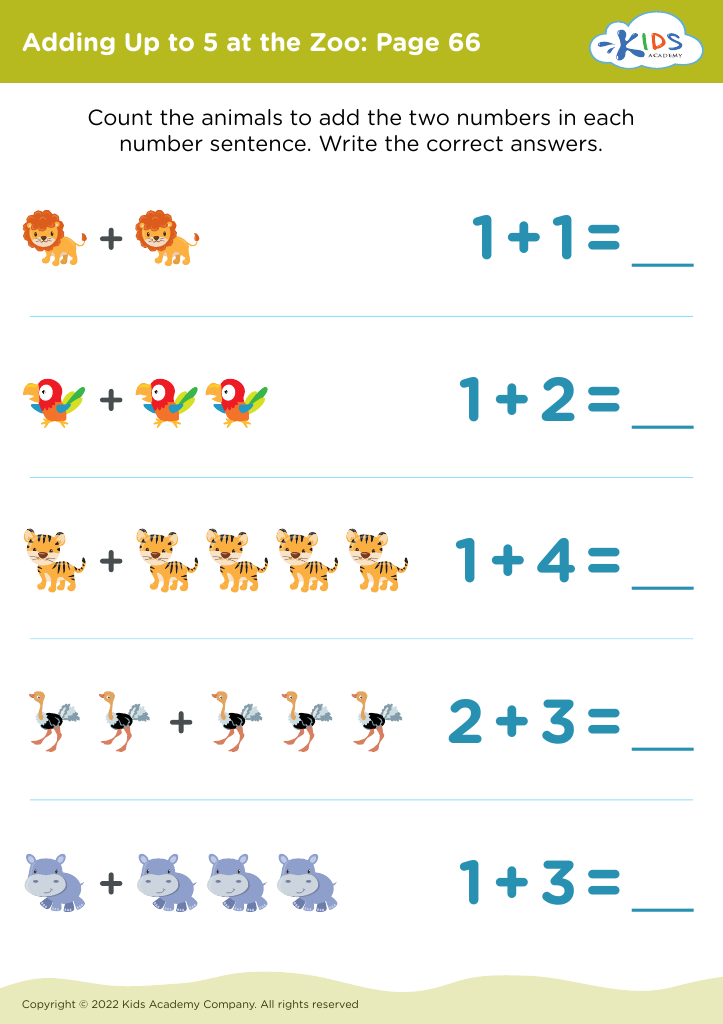
Adding Up to 5 at the Zoo: Page 66
Worksheet
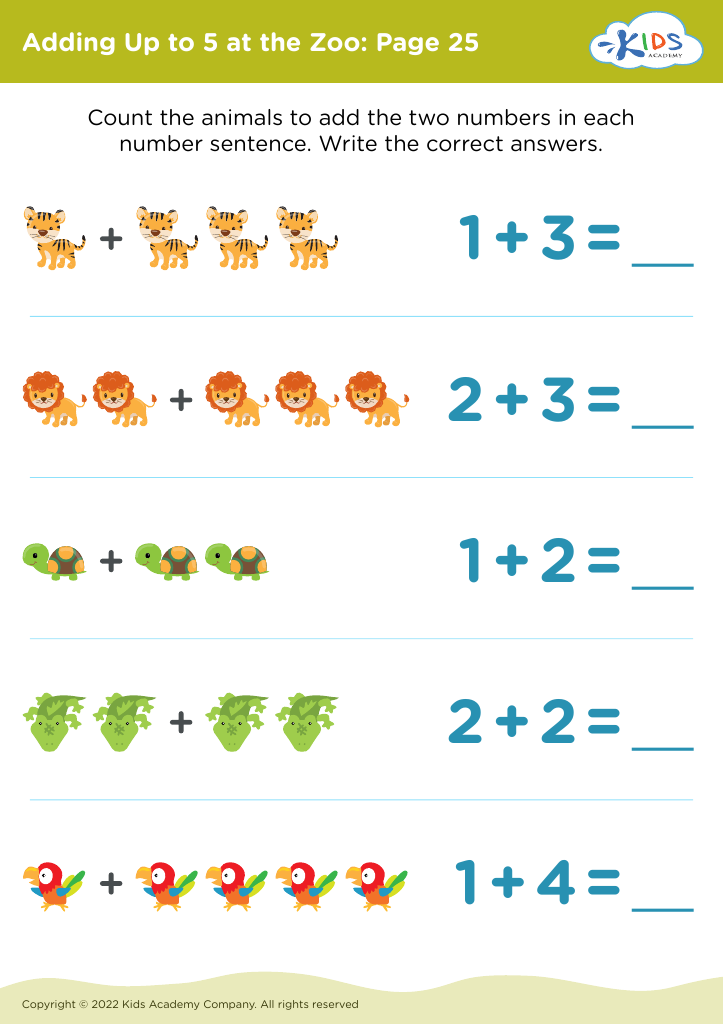
Adding Up to 5 at the Zoo: Page 25
Worksheet
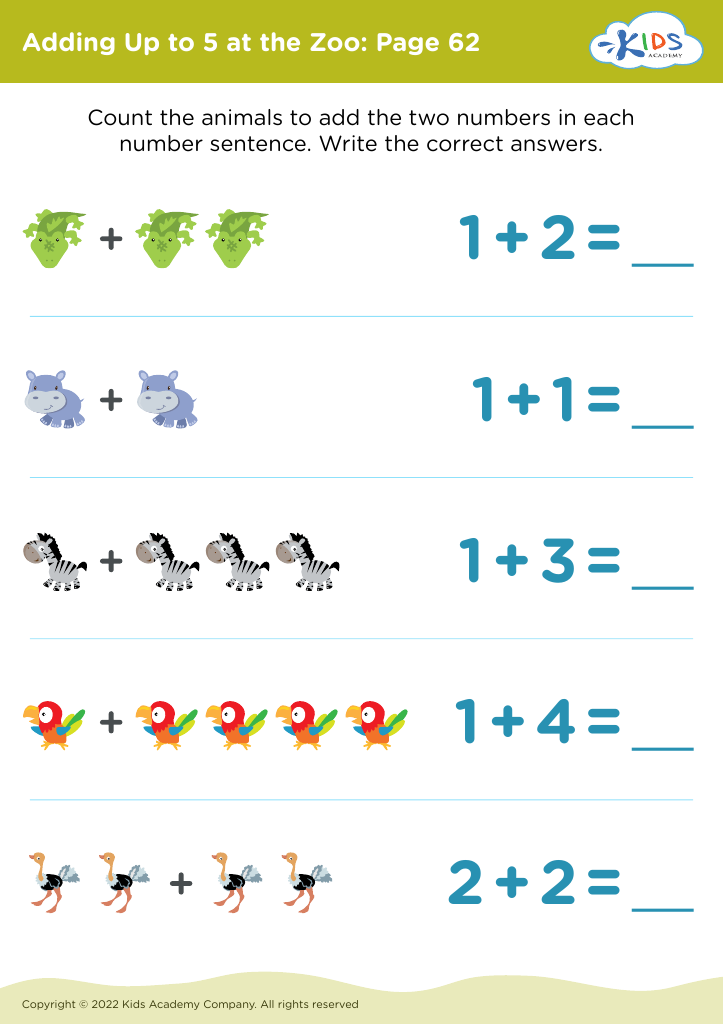
Adding Up to 5 at the Zoo: Page 62
Worksheet
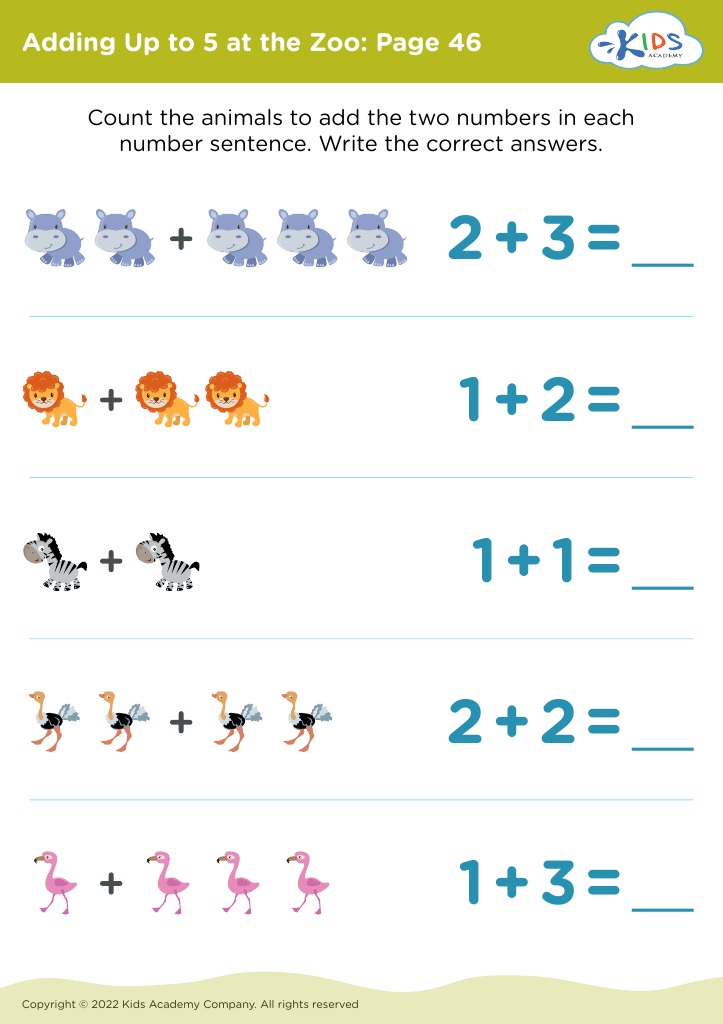
Adding Up to 5 at the Zoo: Page 46
Worksheet
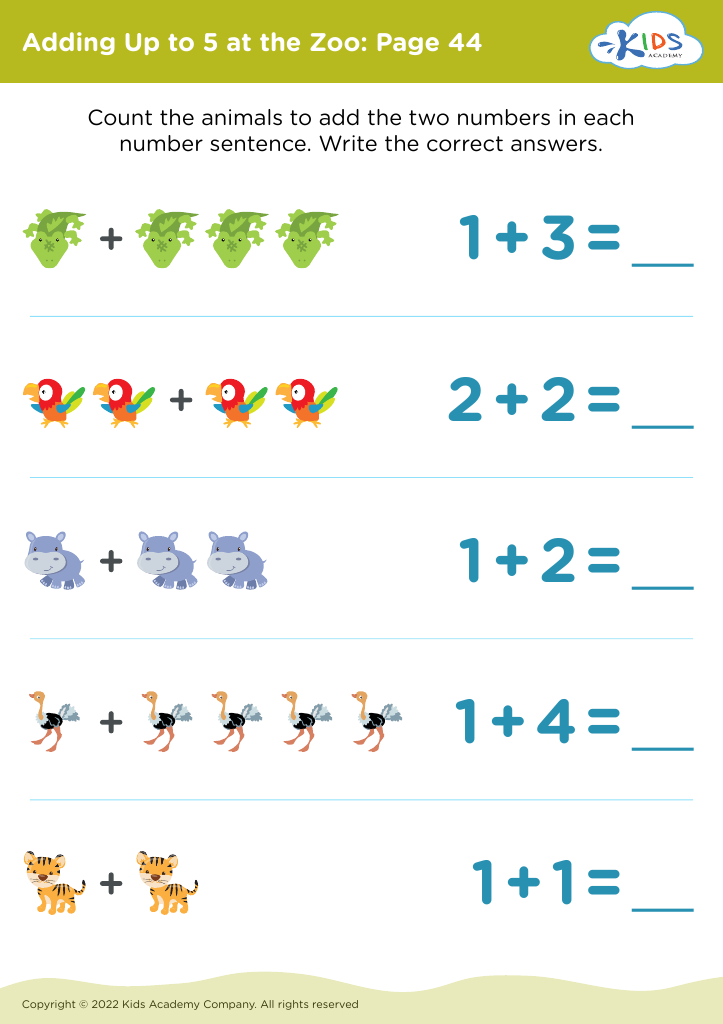
Adding Up to 5 at the Zoo: Page 44
Worksheet
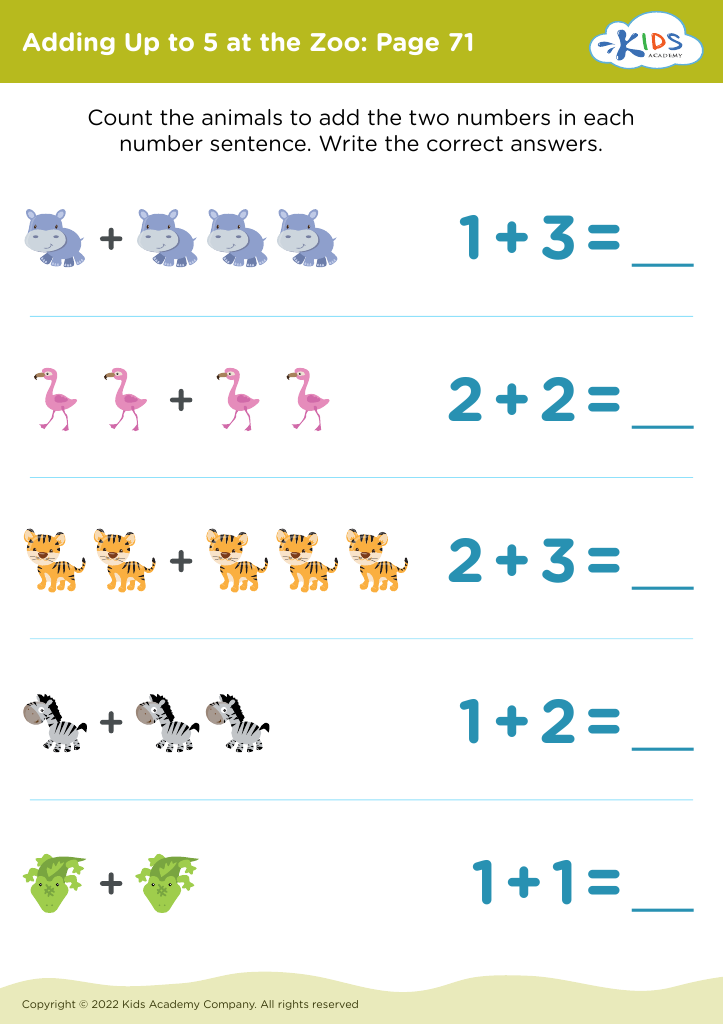
Adding Up to 5 at the Zoo: Page 71
Worksheet
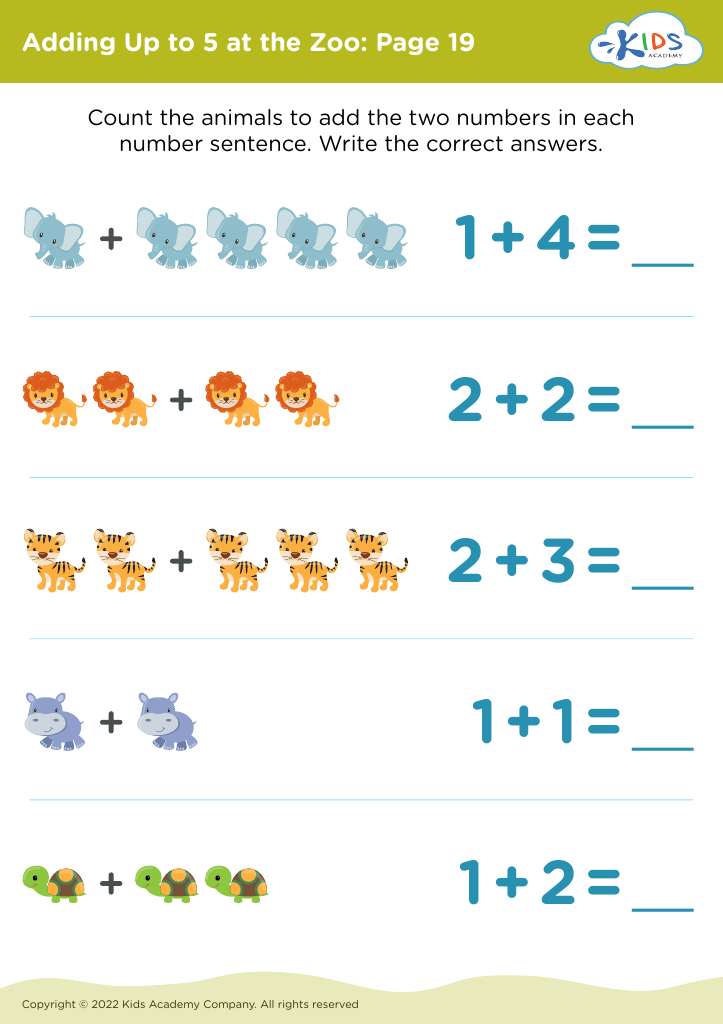
Adding Up to 5 at the Zoo: Page 19
Worksheet
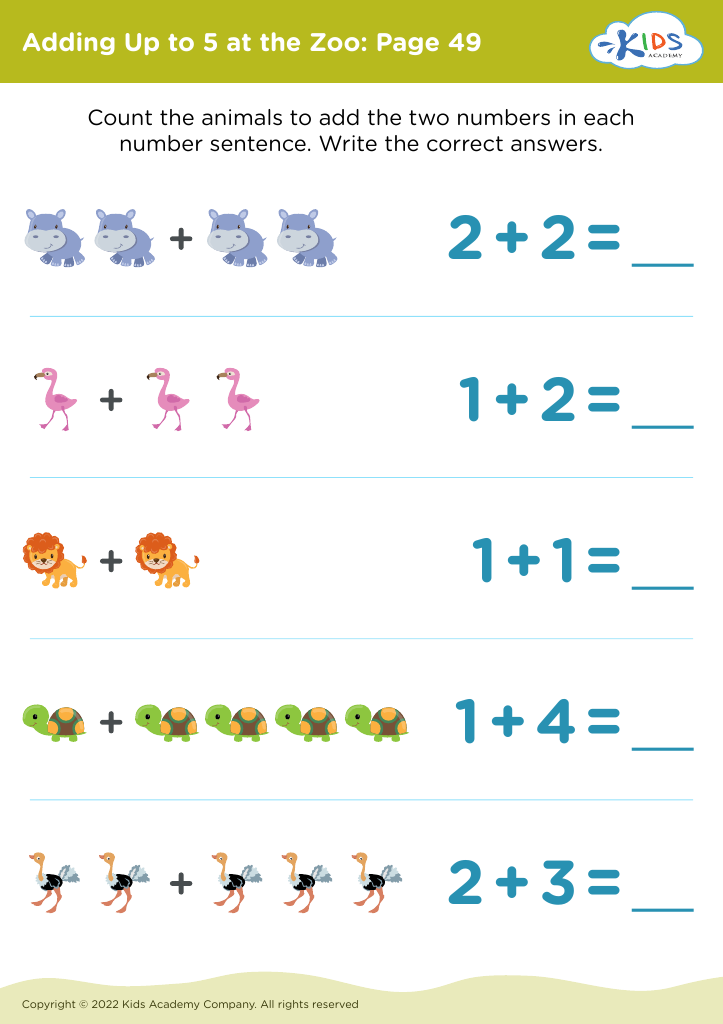
Adding Up to 5 at the Zoo: Page 49
Worksheet
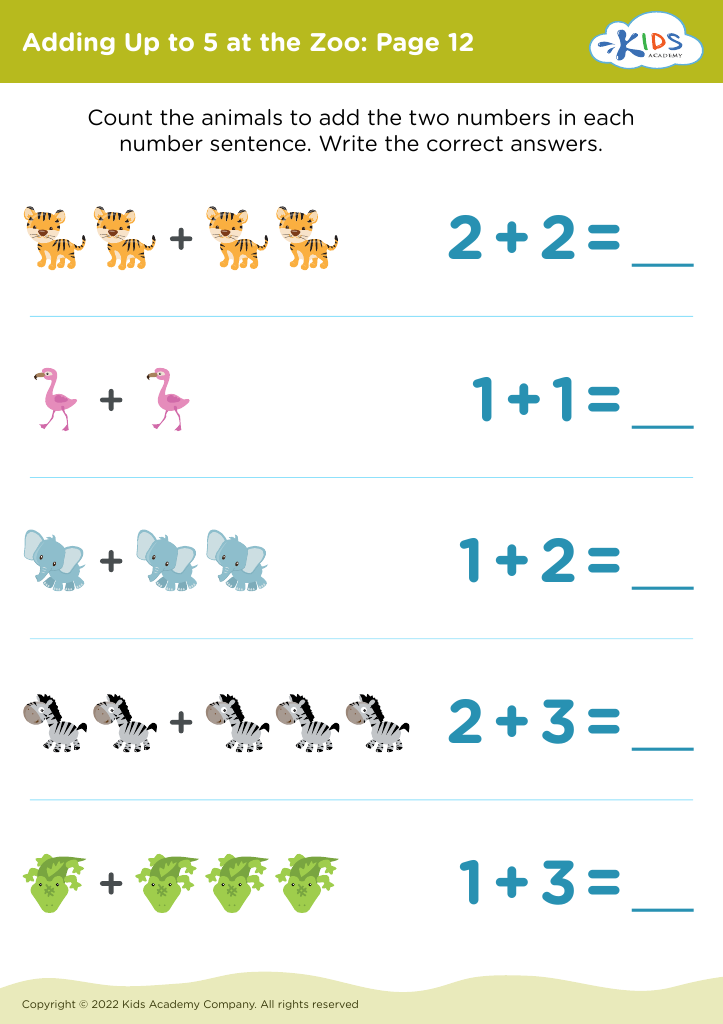
Adding Up to 5 at the Zoo: Page 12
Worksheet
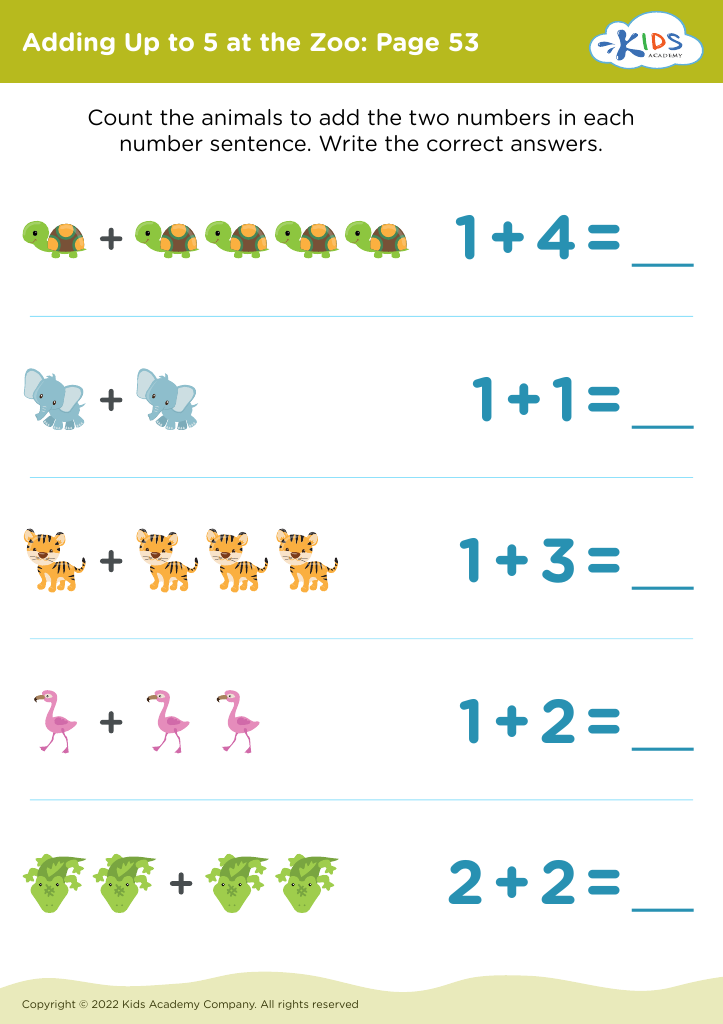
Adding Up to 5 at the Zoo: Page 53
Worksheet
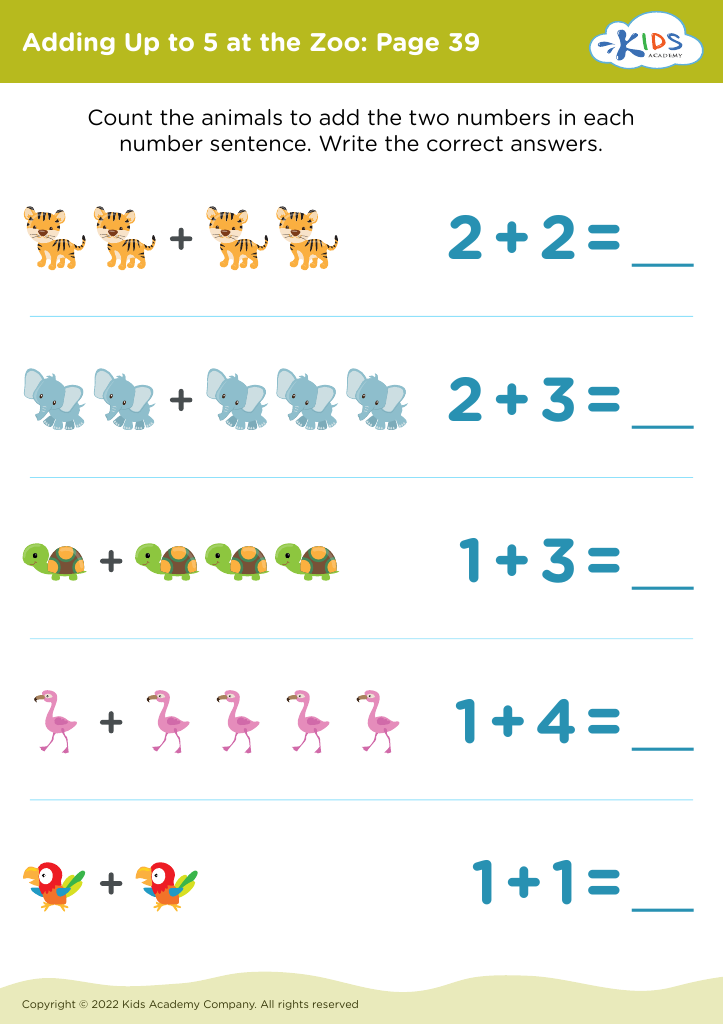
Adding Up to 5 at the Zoo: Page 39
Worksheet


Parents and teachers should prioritize addition skills, especially through engaging activities like "Adding at the Zoo," for children aged 3-4 because these foundational skills are critical for a child’s cognitive development. Integrating math into fun settings, such as a zoo-themed activity, makes learning enjoyable and exciting. This fosters a positive attitude towards math at an early age.

Additionally, learning addition develops critical thinking and problem-solving skills, laying the groundwork for later mathematical concepts. By associating numbers with real-world contexts, such as counting animals, children can better understand and relate to math, leading to greater retention and interest.

Moreover, these activities encourage social skills and cooperation since children often work in groups or pairs, enhancing their ability to communicate and collaborate. Parents and teachers can also use these opportunities to reinforce language development as children learn to express their ideas and reasoning about addition.

Lastly, early mastery of addition sets the stage for academic success. The competencies gained from such interactive learning experiences will not only promote a love for learning but also instill confidence in children as they transition to more complex math concepts. In summary, fostering addition skills at such a young age benefits development holistically.