Filters

45 filtered results

Clear all filters
Favorites
With answer key
Interactive

45 filtered results

Difficulty Level

Grade


Check out this FREE Trial Lesson on Adding in the Sea for age 3-4!

Exactly the Same, or Not

Favorites
With answer key
Interactive
  • 3-4
  • Counting practice
  • Adding in the Sea
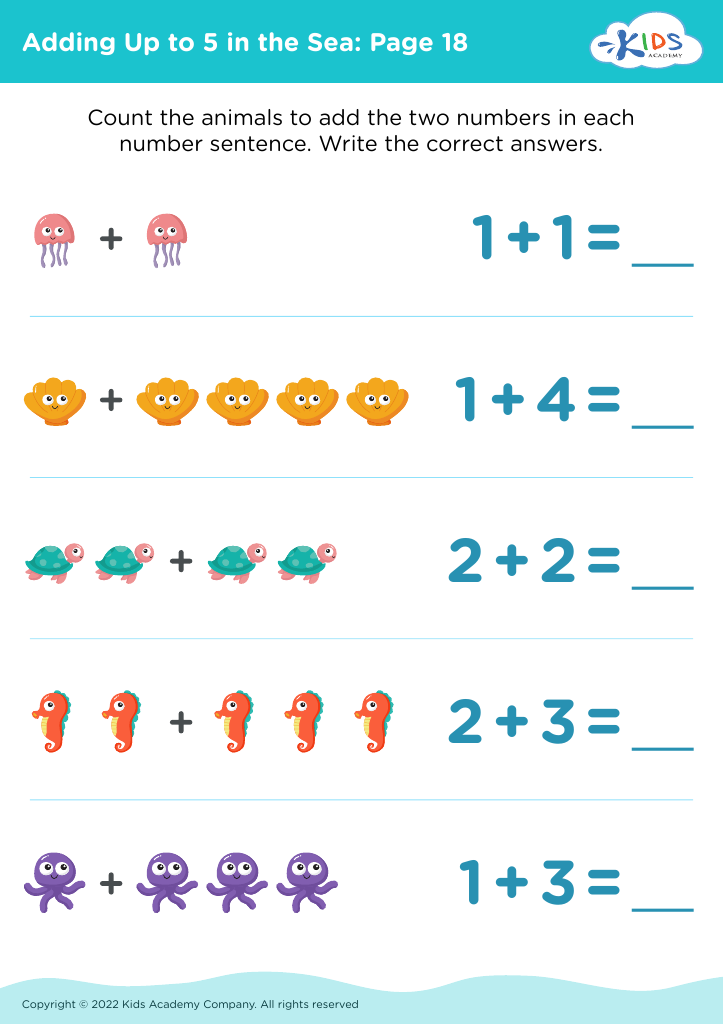
Adding Up to 5 in the Sea: Page 18
Worksheet
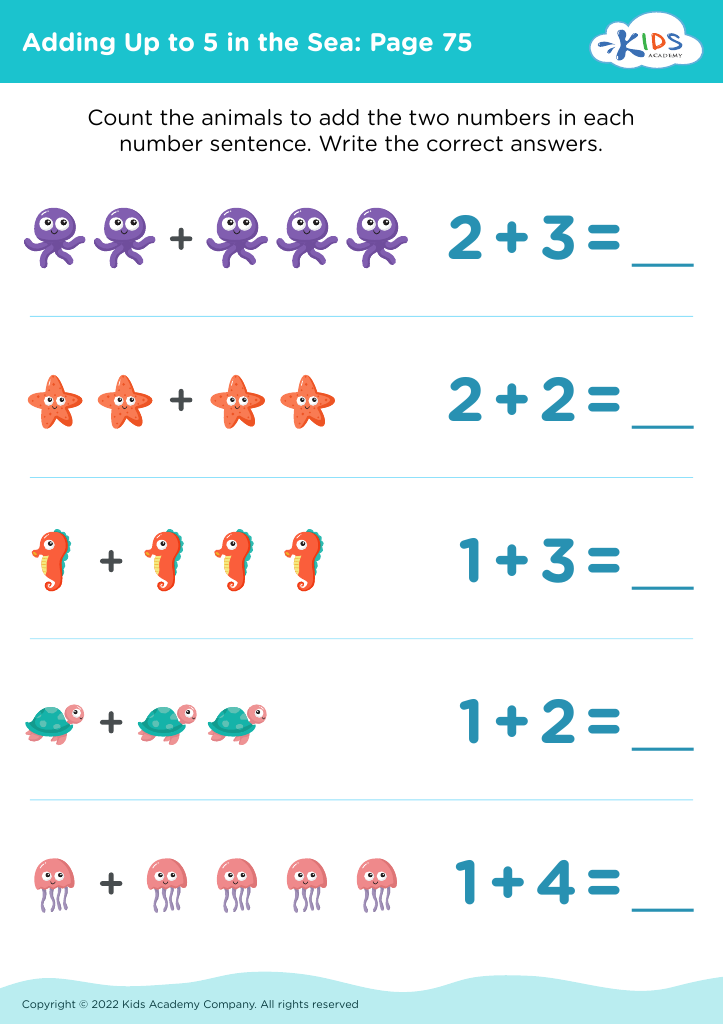
Adding Up to 5 in the Sea: Page 75
Worksheet
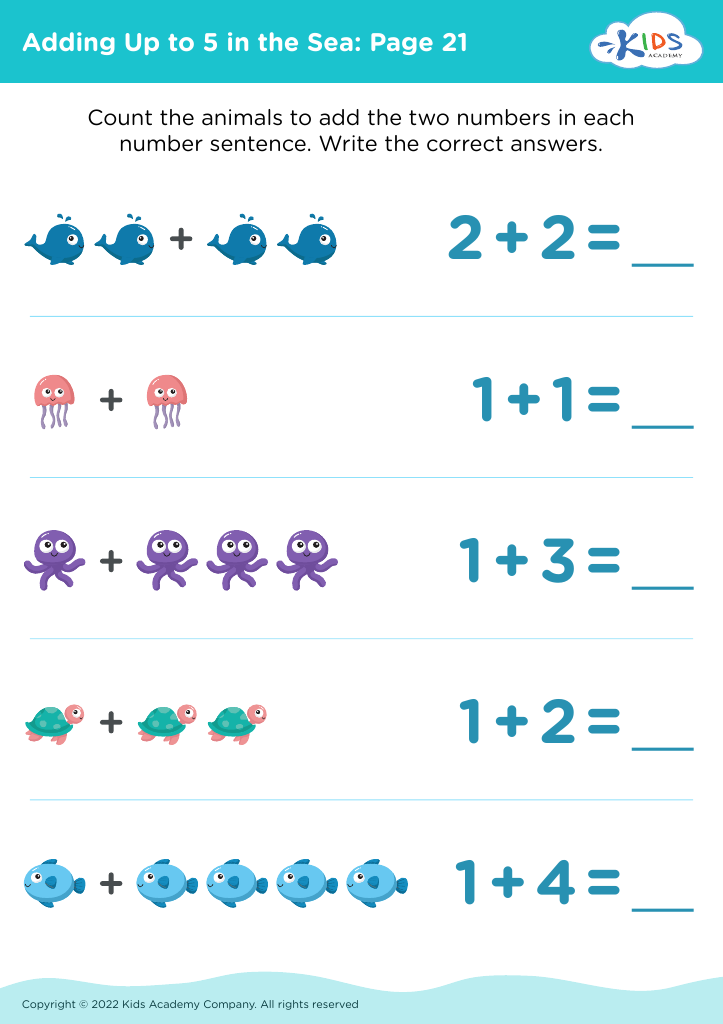
Adding Up to 5 in the Sea: Page 21
Worksheet
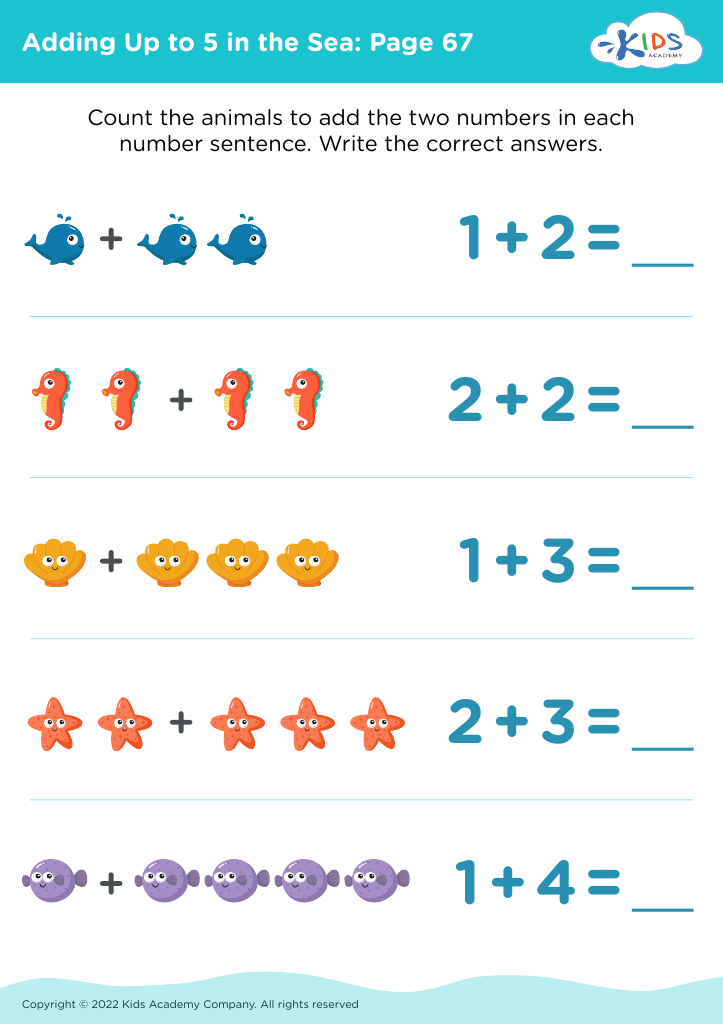
Adding Up to 5 in the Sea: Page 67
Worksheet
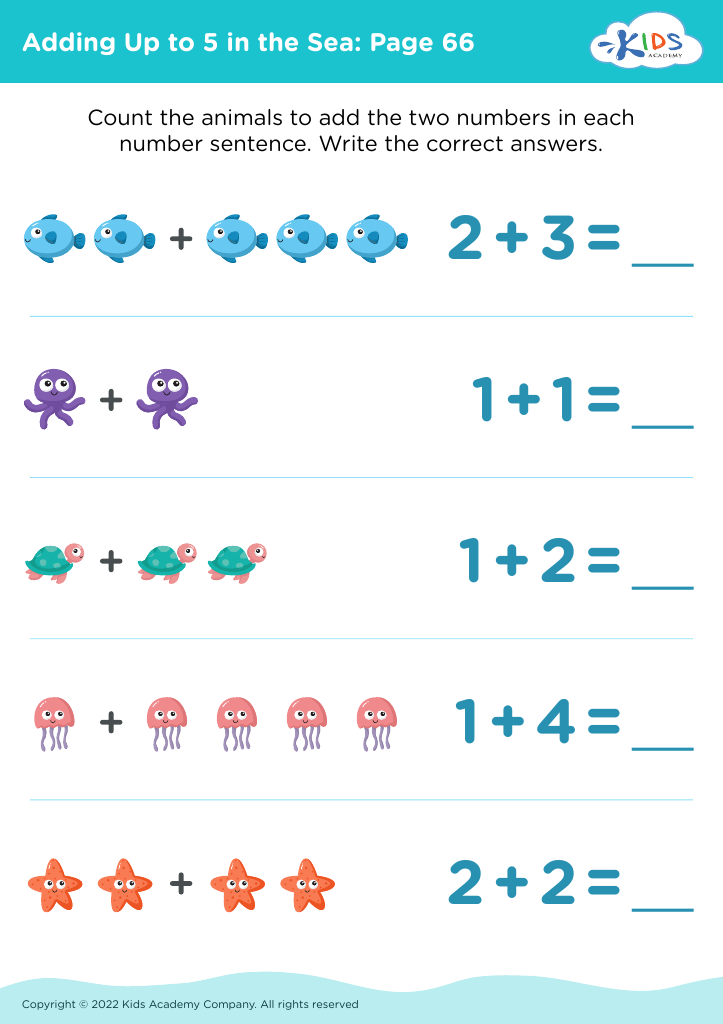
Adding Up to 5 in the Sea: Page 66
Worksheet
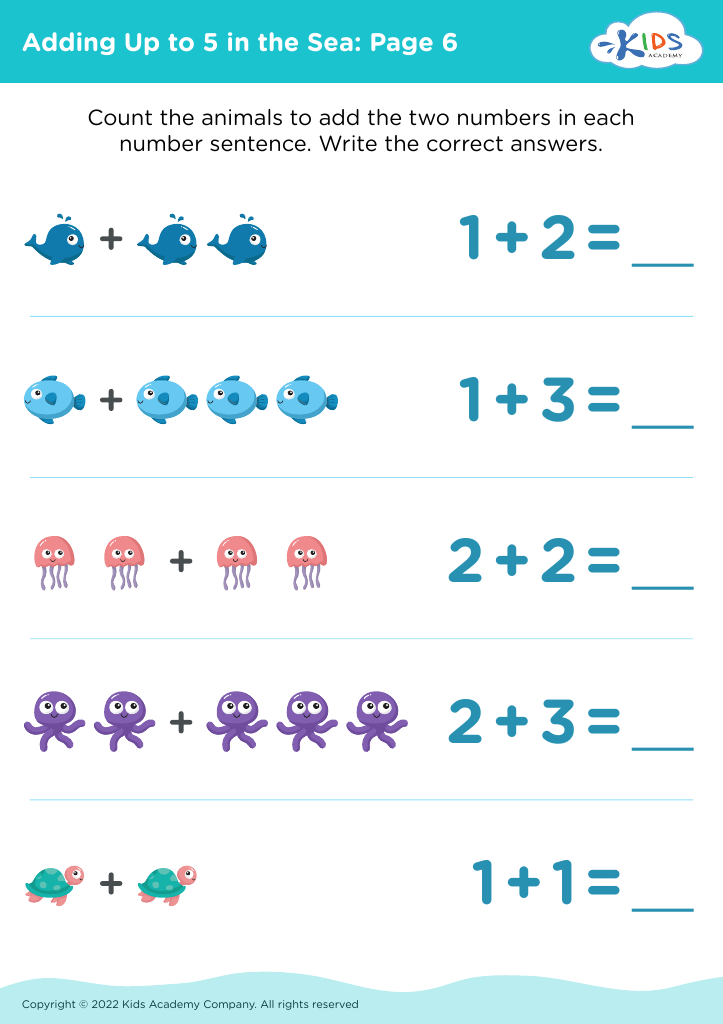
Adding Up to 5 in the Sea: Page 6

Adding Up to 5 in the Sea: Page 6

Adding Up to 5 in the Sea: Page 6
Worksheet
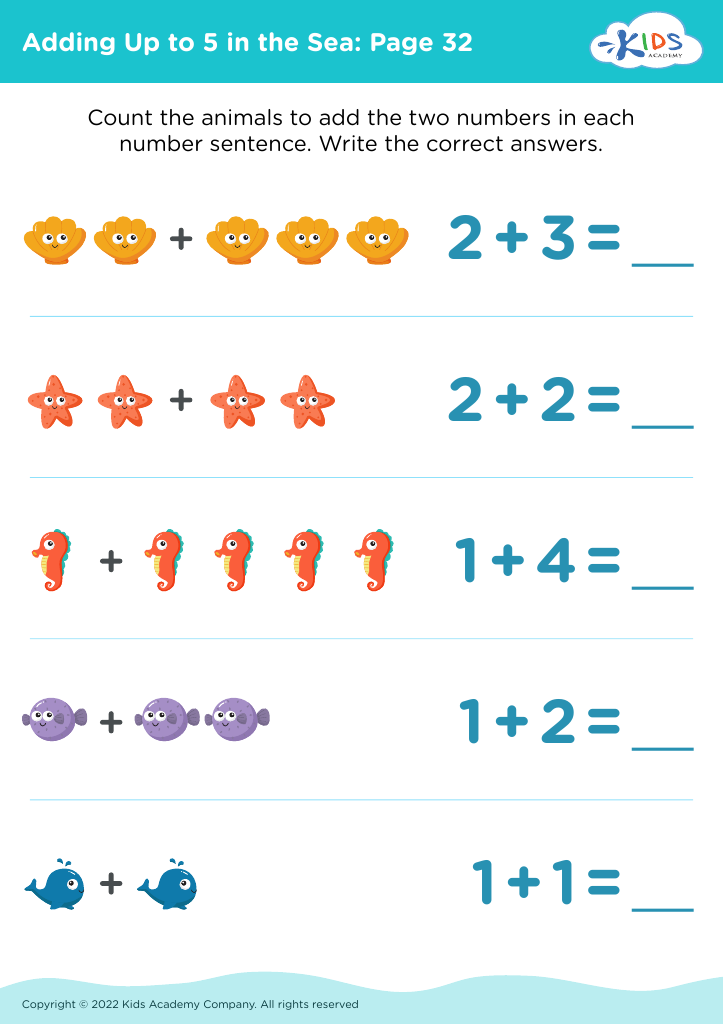
Adding Up to 5 in the Sea: Page 32
Worksheet
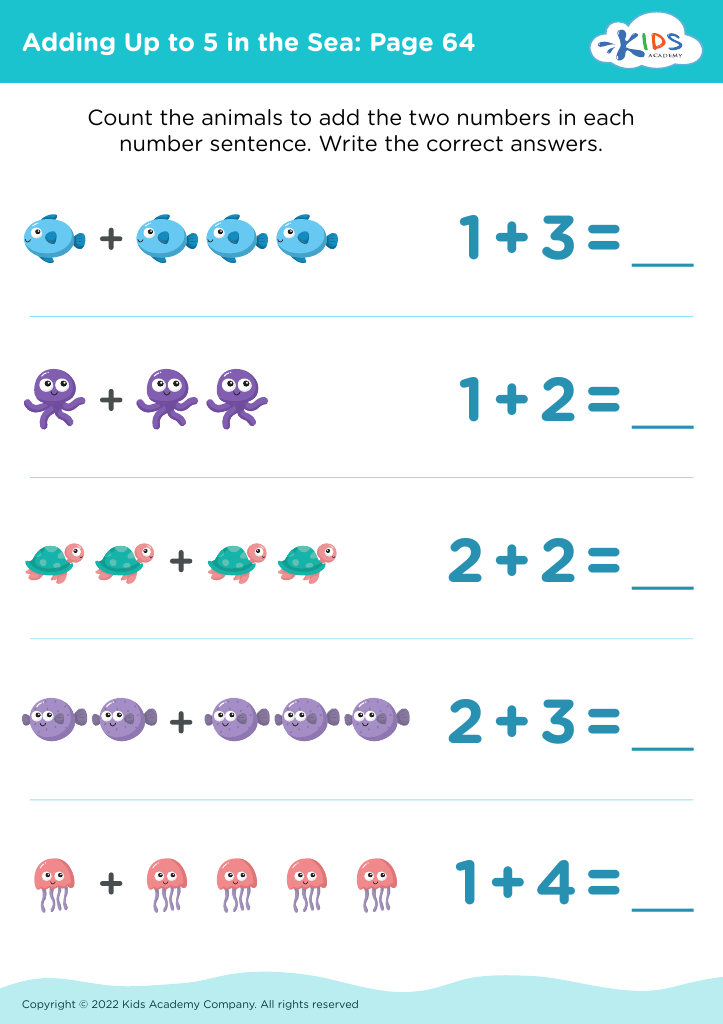
Adding Up to 5 in the Sea: Page 64
Worksheet
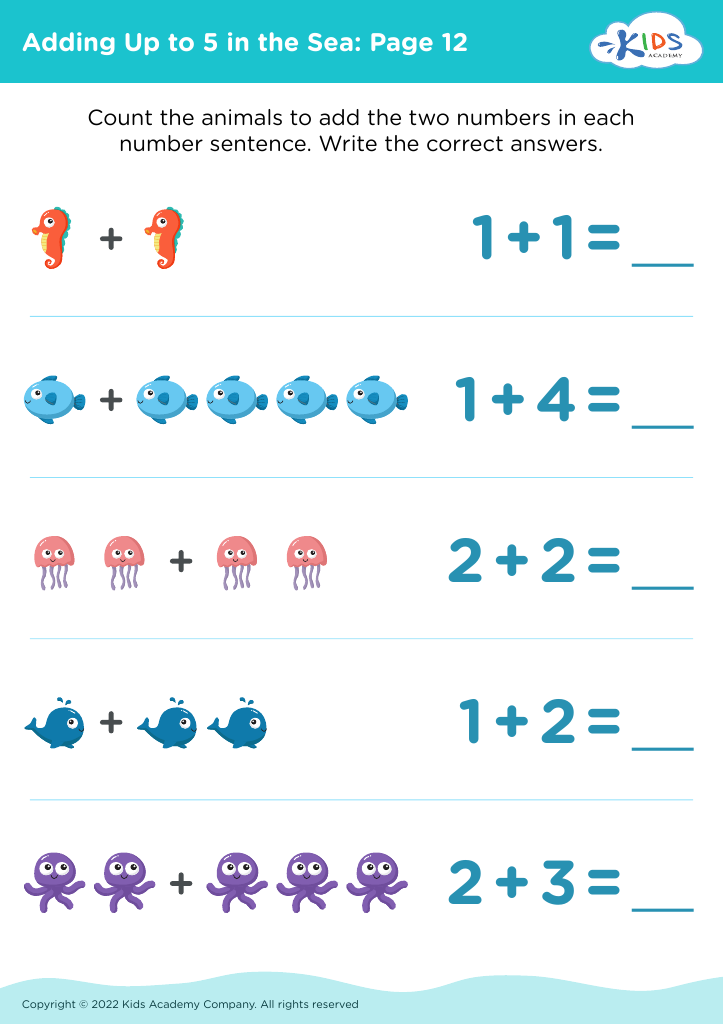
Adding Up to 5 in the Sea: Page 12
Worksheet
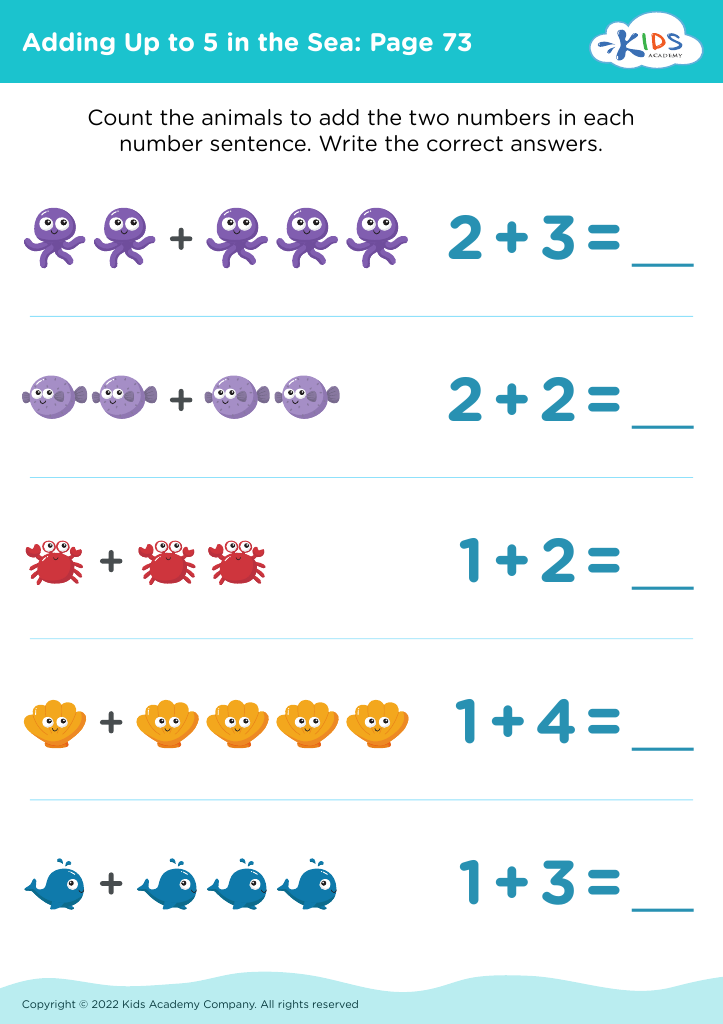
Adding Up to 5 in the Sea: Page 73
Worksheet
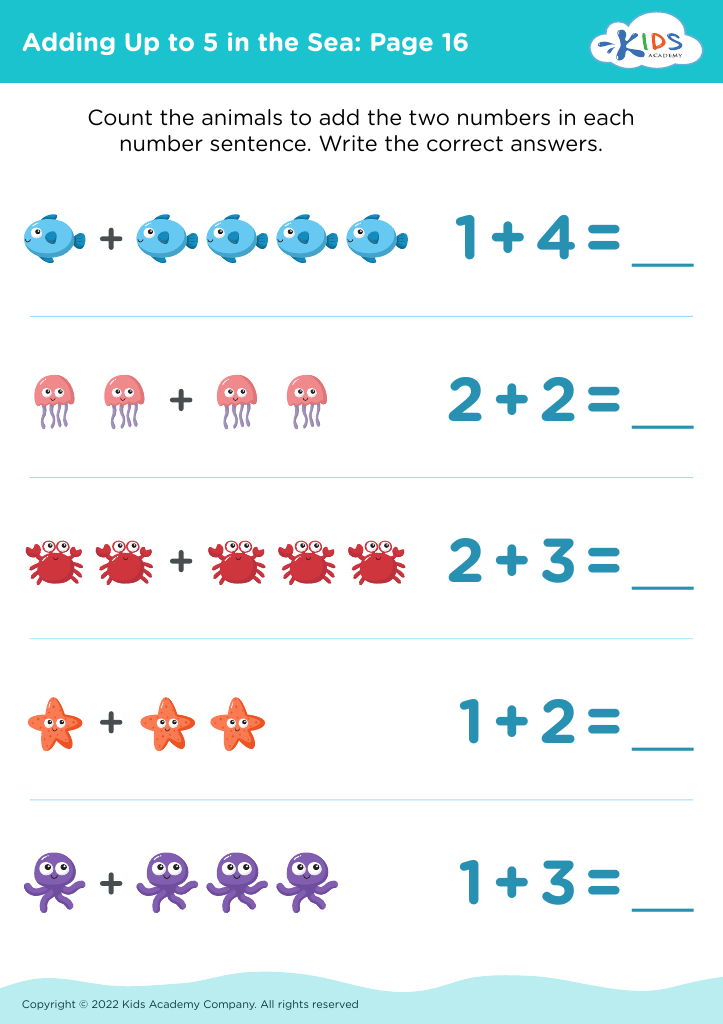
Adding Up to 5 in the Sea: Page 16
Worksheet
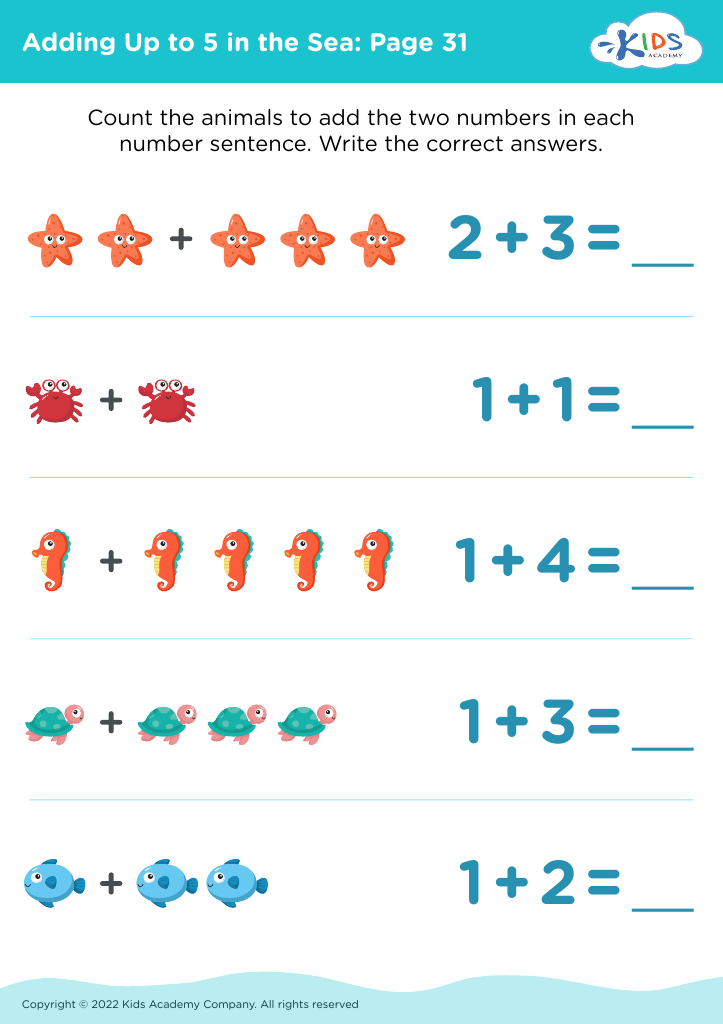
Adding Up to 5 in the Sea: Page 31
Worksheet
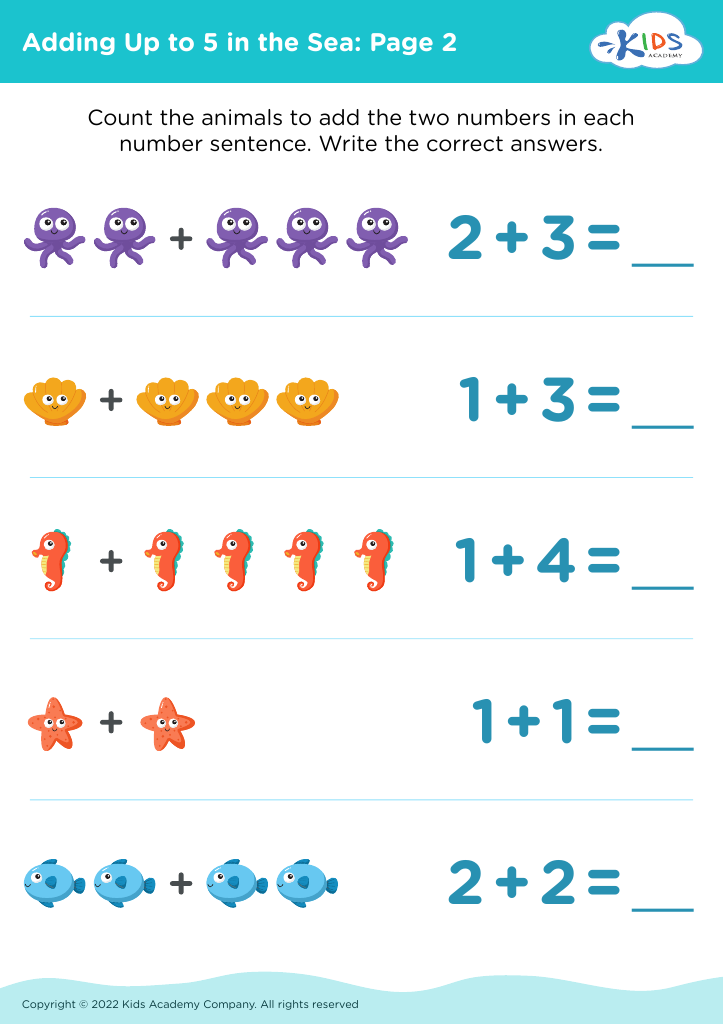
Adding Up to 5 in the Sea: Page 2

Adding Up to 5 in the Sea: Page 2

Adding Up to 5 in the Sea: Page 2
Worksheet
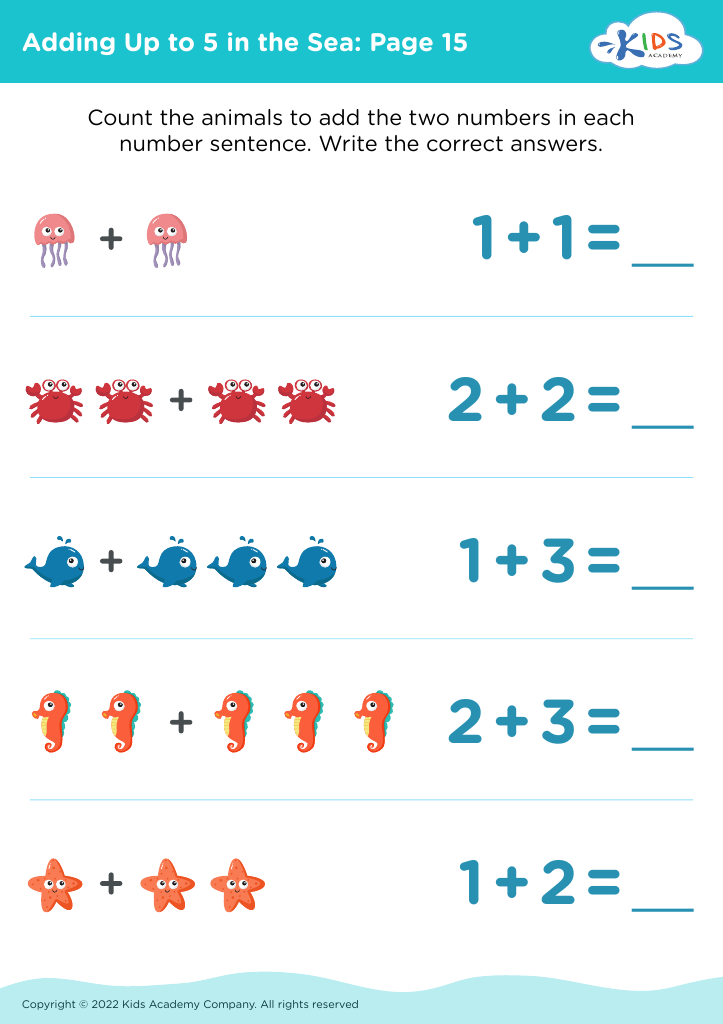
Adding Up to 5 in the Sea: Page 15
Worksheet
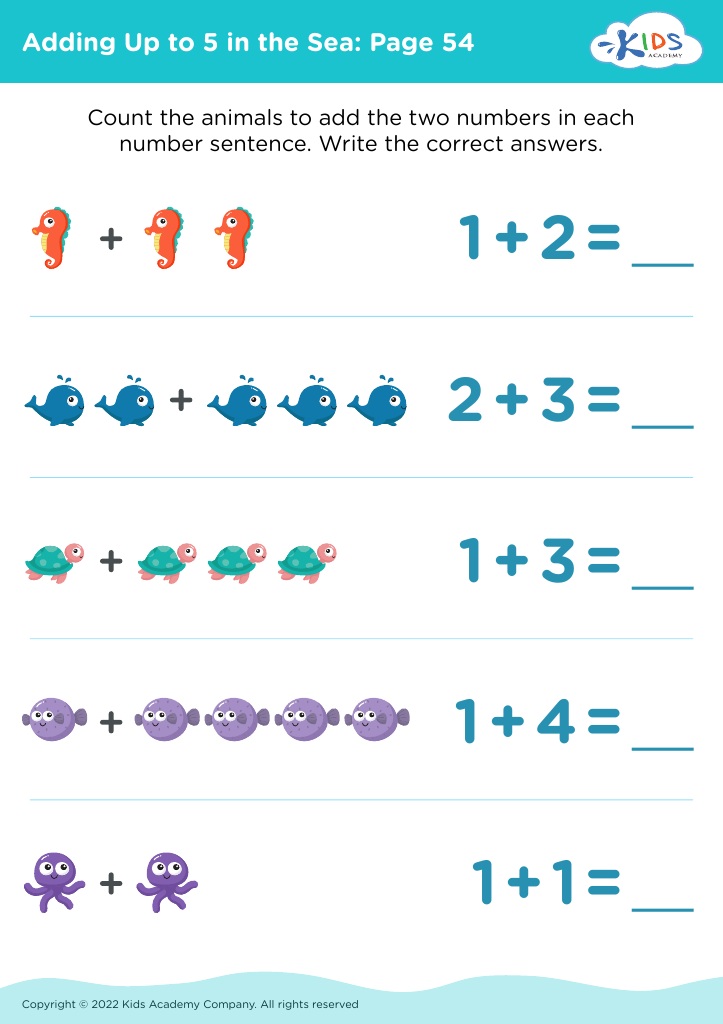
Adding Up to 5 in the Sea: Page 54
Worksheet
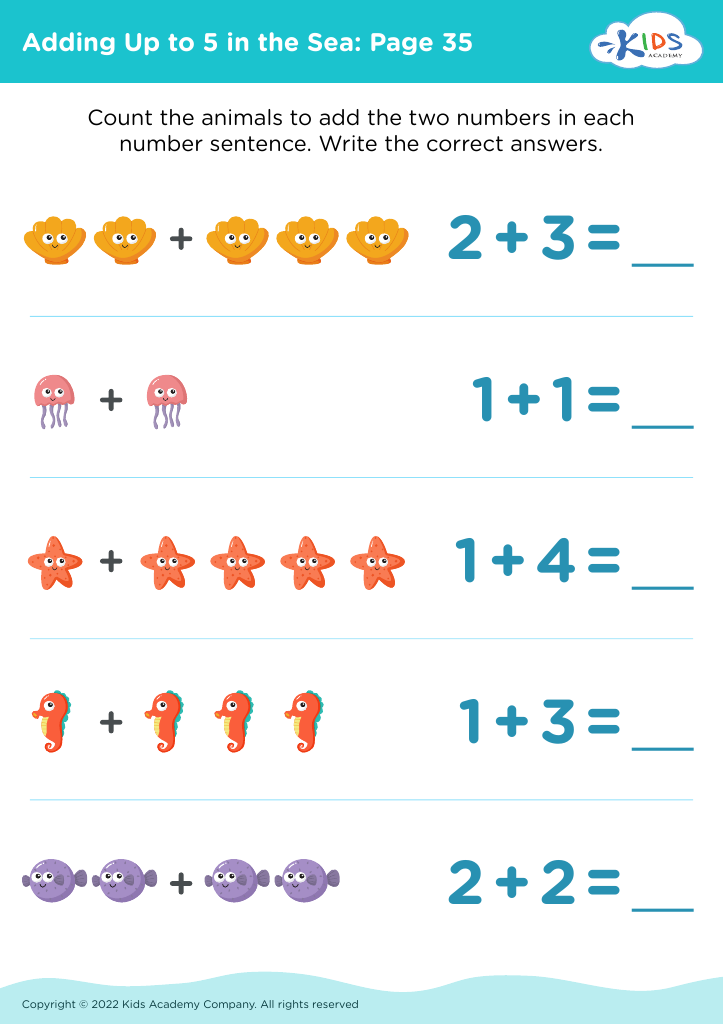
Adding Up to 5 in the Sea: Page 35
Worksheet
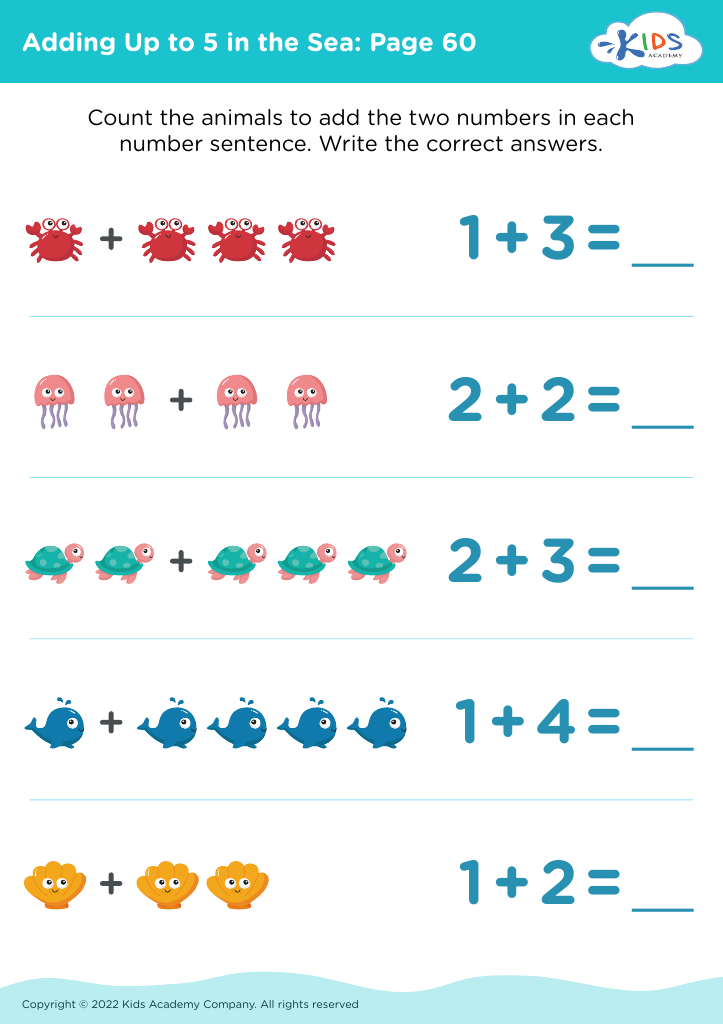
Adding Up to 5 in the Sea: Page 60
Worksheet
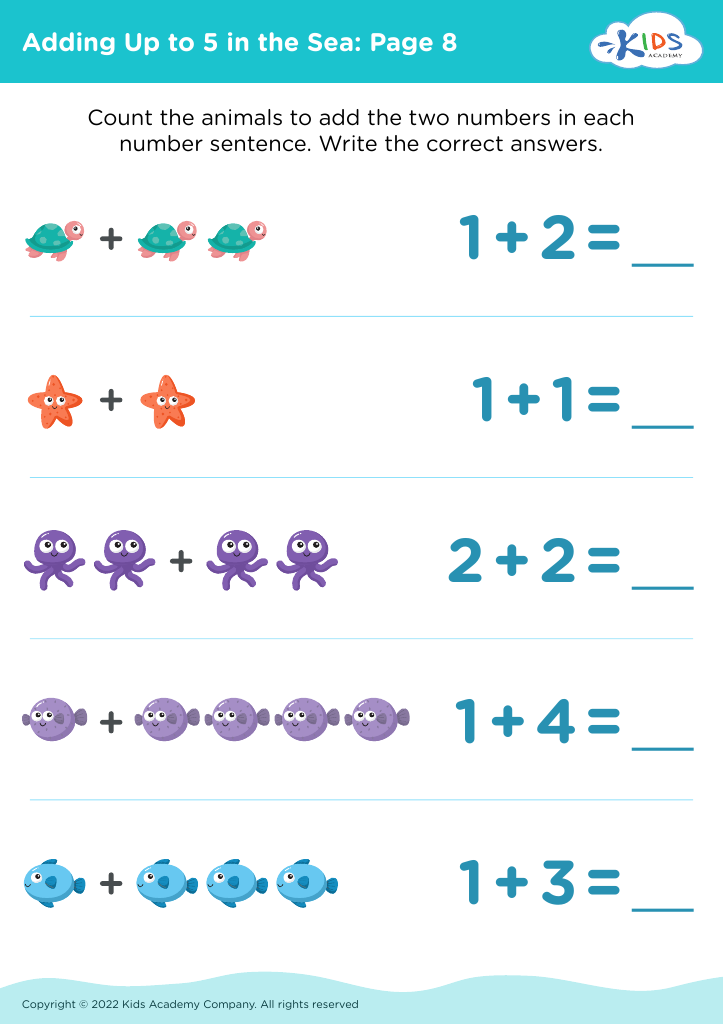
Adding Up to 5 in the Sea: Page 8

Adding Up to 5 in the Sea: Page 8

Adding Up to 5 in the Sea: Page 8
Worksheet
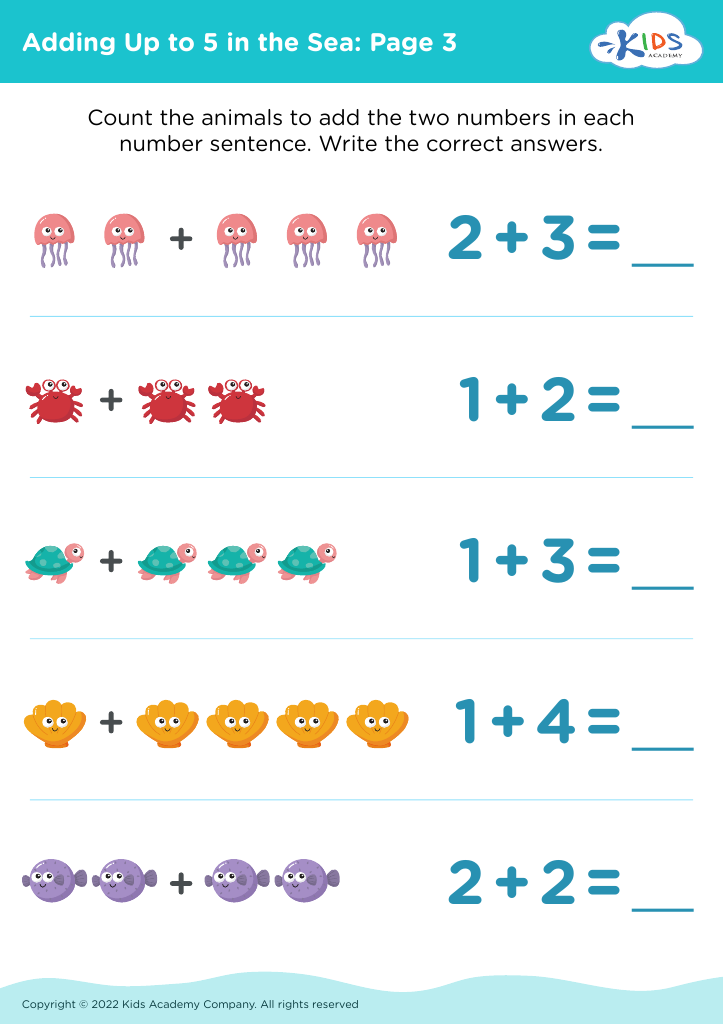
Adding Up to 5 in the Sea: Page 3

Adding Up to 5 in the Sea: Page 3

Adding Up to 5 in the Sea: Page 3
Worksheet
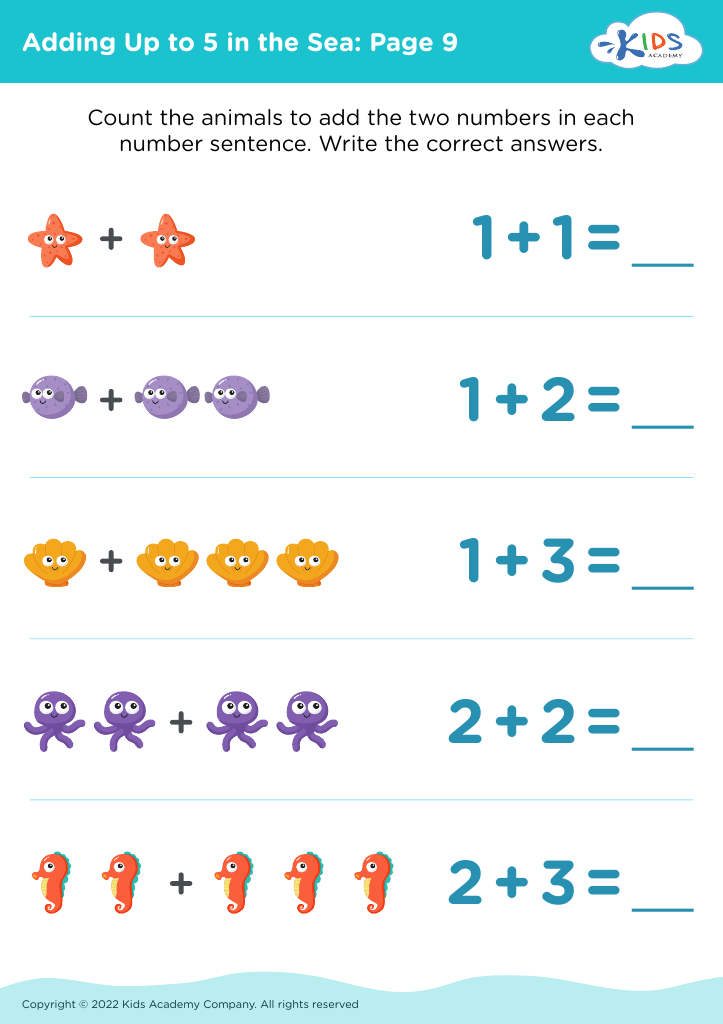
Adding Up to 5 in the Sea: Page 9

Adding Up to 5 in the Sea: Page 9

Adding Up to 5 in the Sea: Page 9
Worksheet
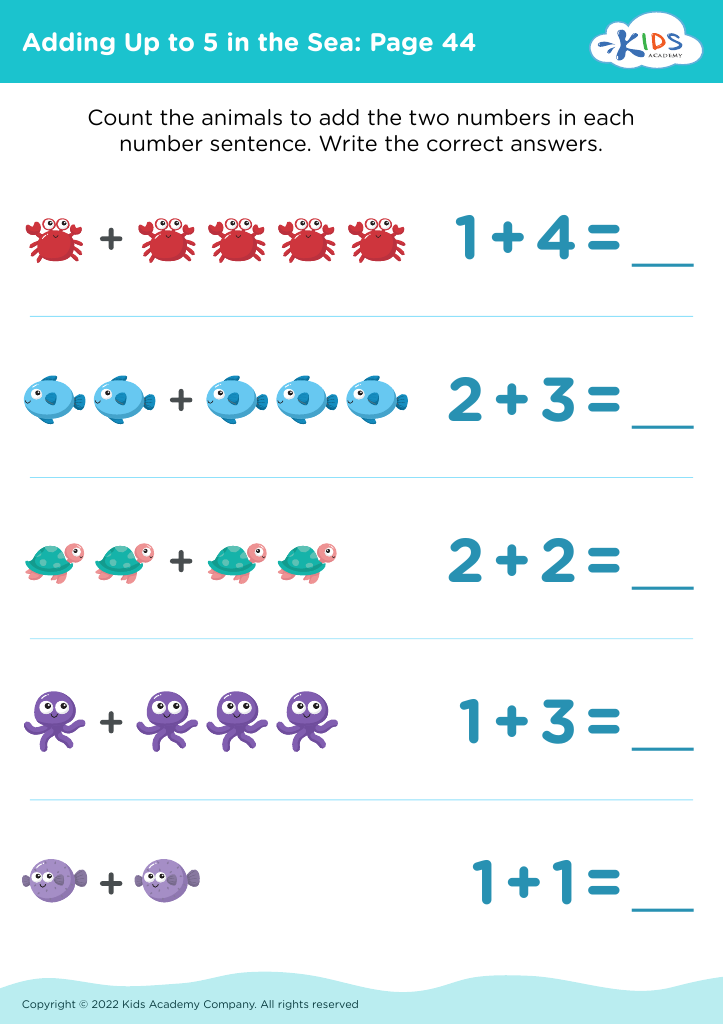
Adding Up to 5 in the Sea: Page 44
Worksheet


Counting practice through activities like "Adding in the Sea" for ages 3-4 is crucial for early childhood development. At this tender age, children are laying the foundation for their numeracy skills, and interactive, engaging activities stimulate their interest in numbers. When parents and teachers invest time in such exercises, they help children develop a fundamental understanding of counting, which is an essential mathematical concept.

Activities like "Adding in the Sea" incorporate fun elements, such as sea creatures and an underwater theme, making learning enjoyable rather than a task. This enjoyment fosters a positive attitude toward math, reducing anxiety and building confidence from an early age. Furthermore, using visual aids and physical objects during count and add sessions helps children develop fine motor skills alongside cognitive abilities.

Practical counting exercises strengthen children's grasp of number sequences and simple addition concepts. These early math skills are not isolated educational pursuits; they interconnect with other developmental areas, like problem-solving, logical thinking, and even language skills. By prioritizing counting practice, parents and teachers equip children with the tools they need for future academic success, laying a strong numerical foundation that will support more advanced math learning in the years to come.