Animal identification Adding on the Farm Worksheets for Ages 3-4
15 filtered results
Difficulty Level
Grade
Age
-
From - To
Subject
Activity
Standards
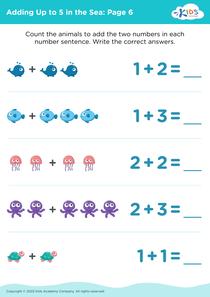
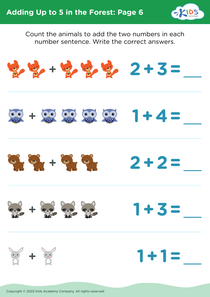
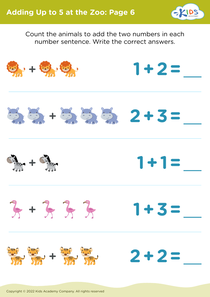
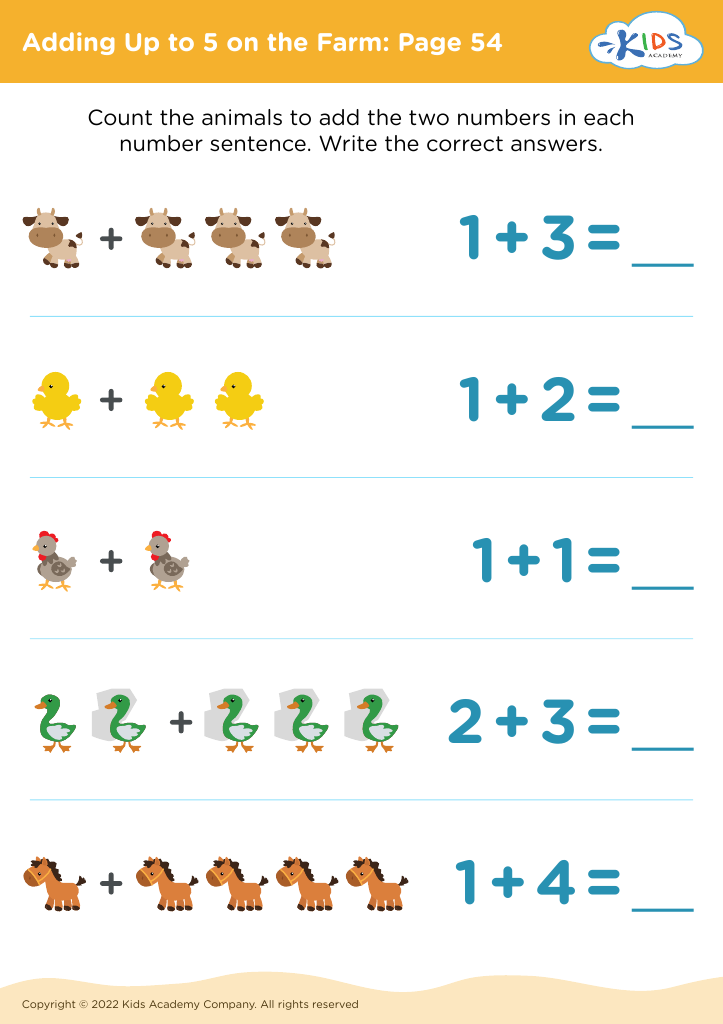
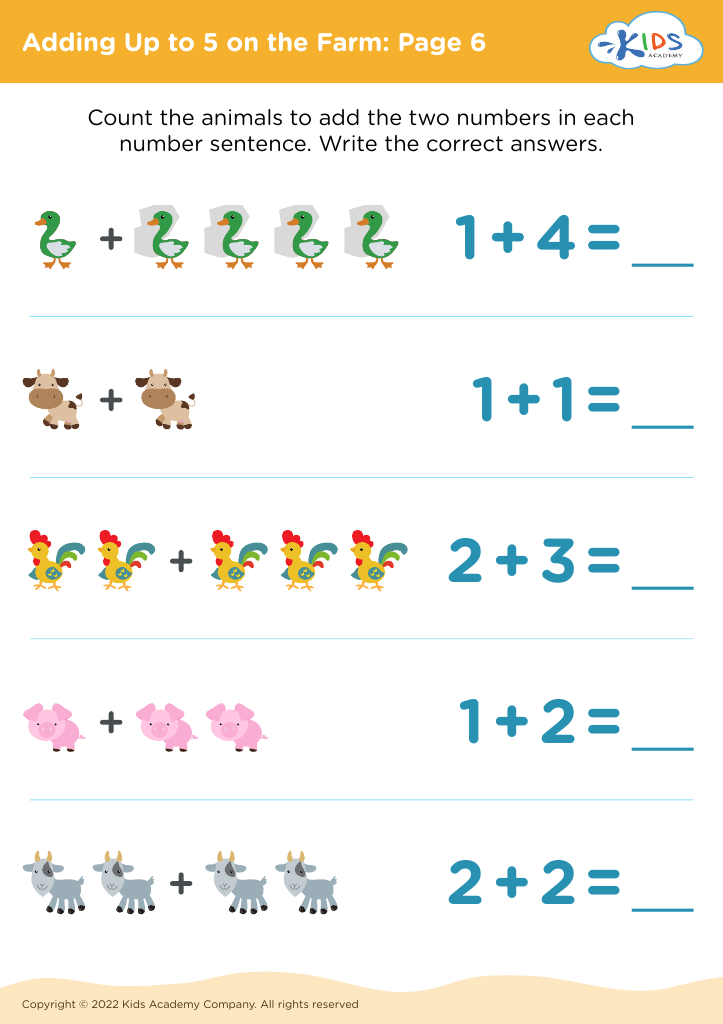
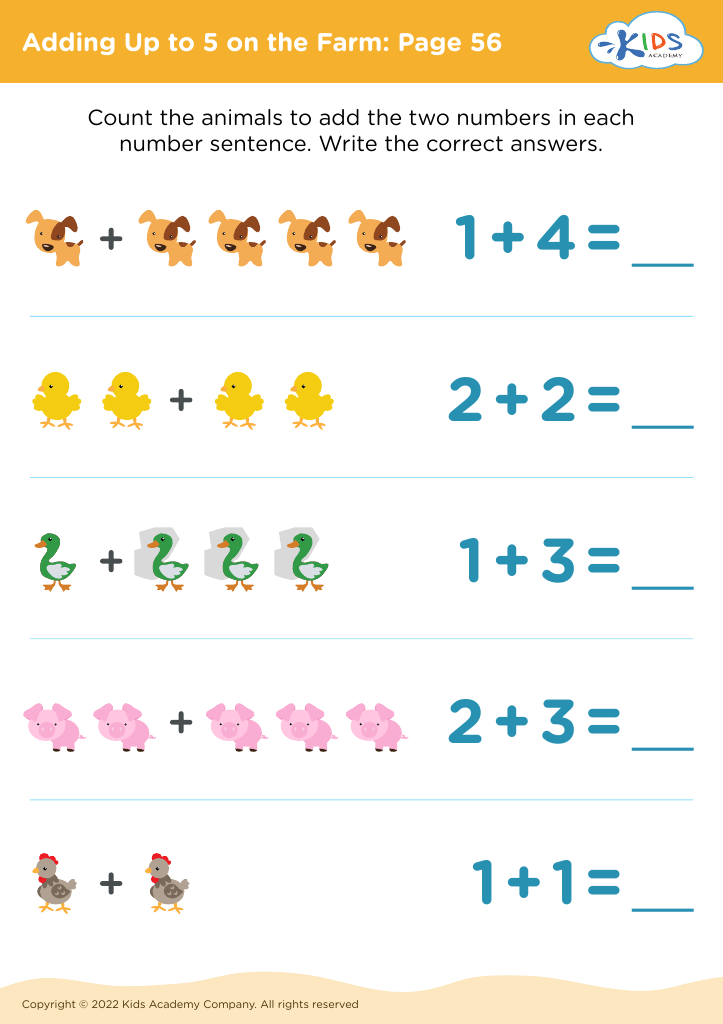
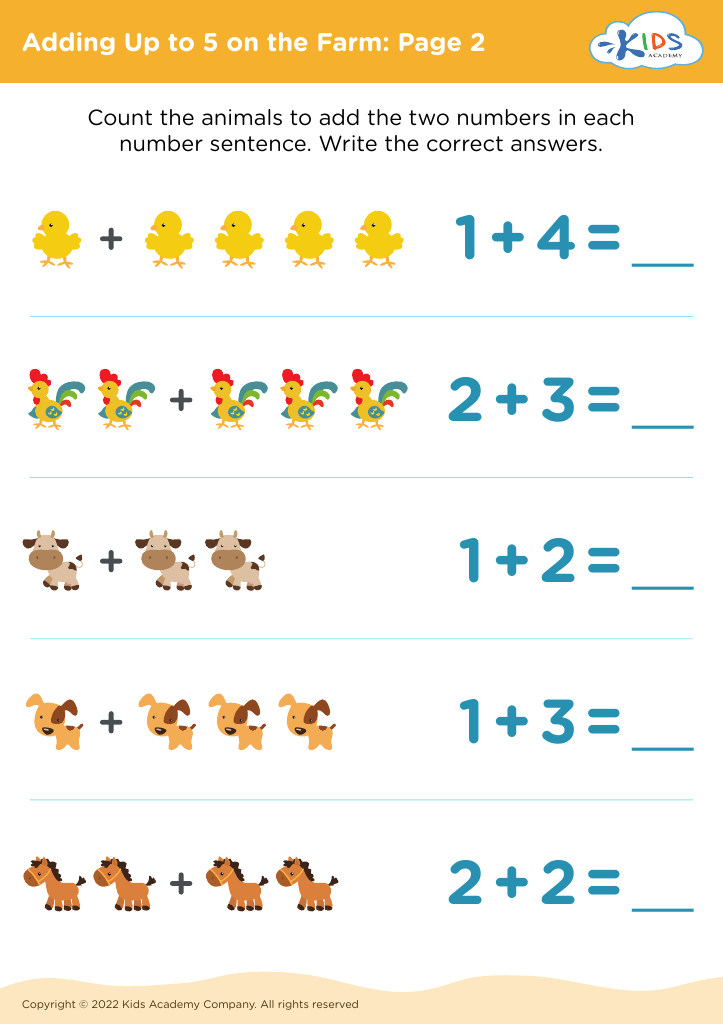
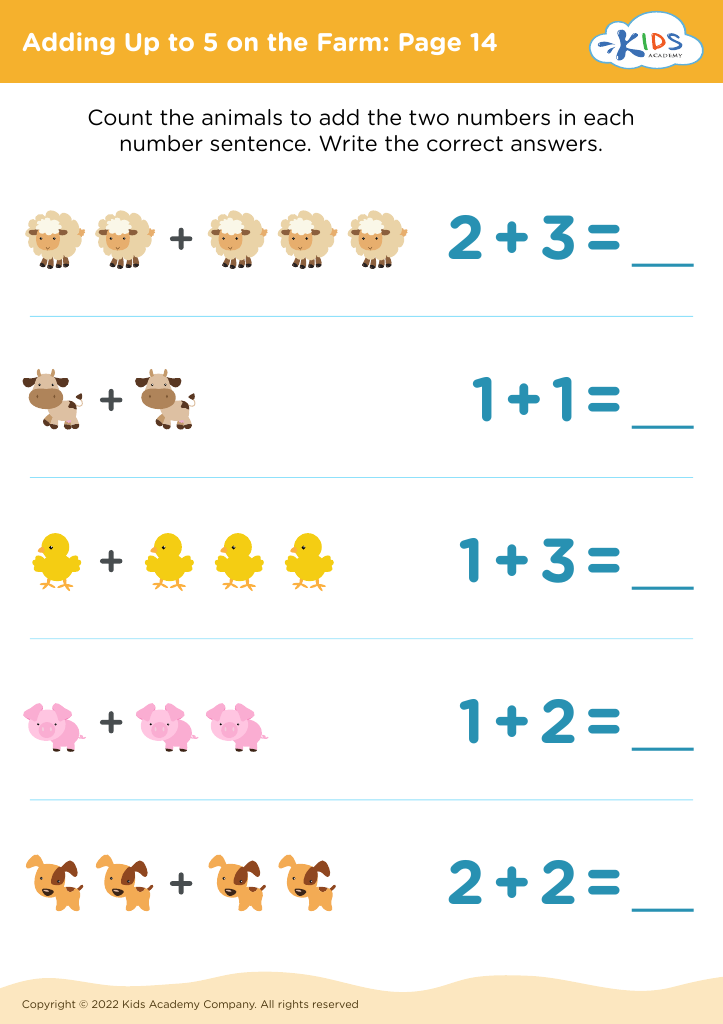
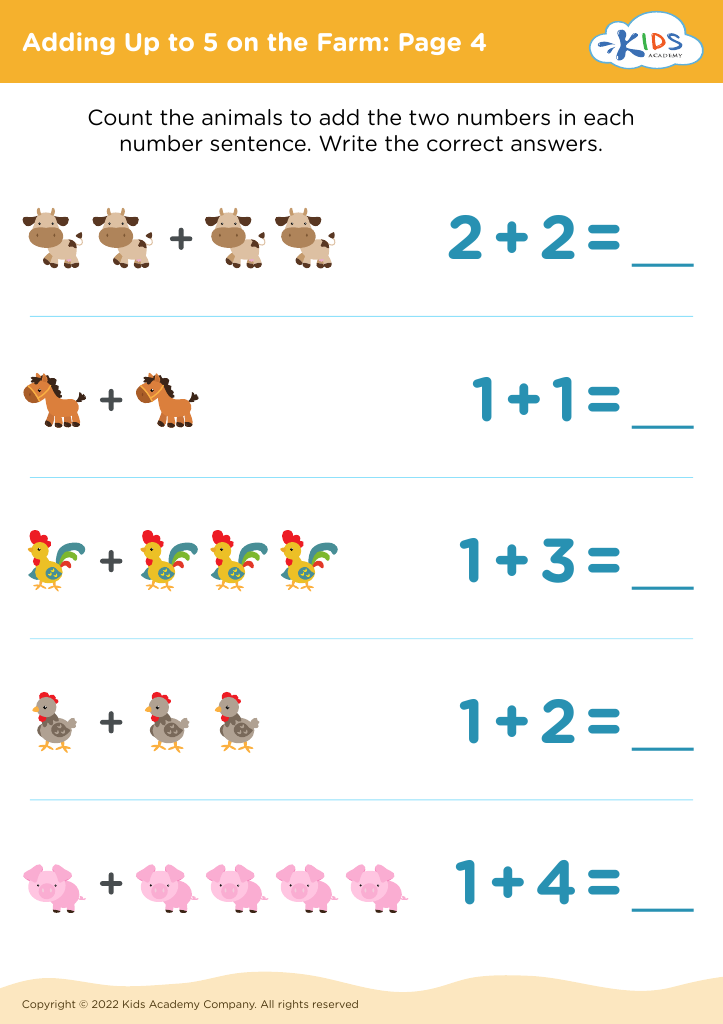
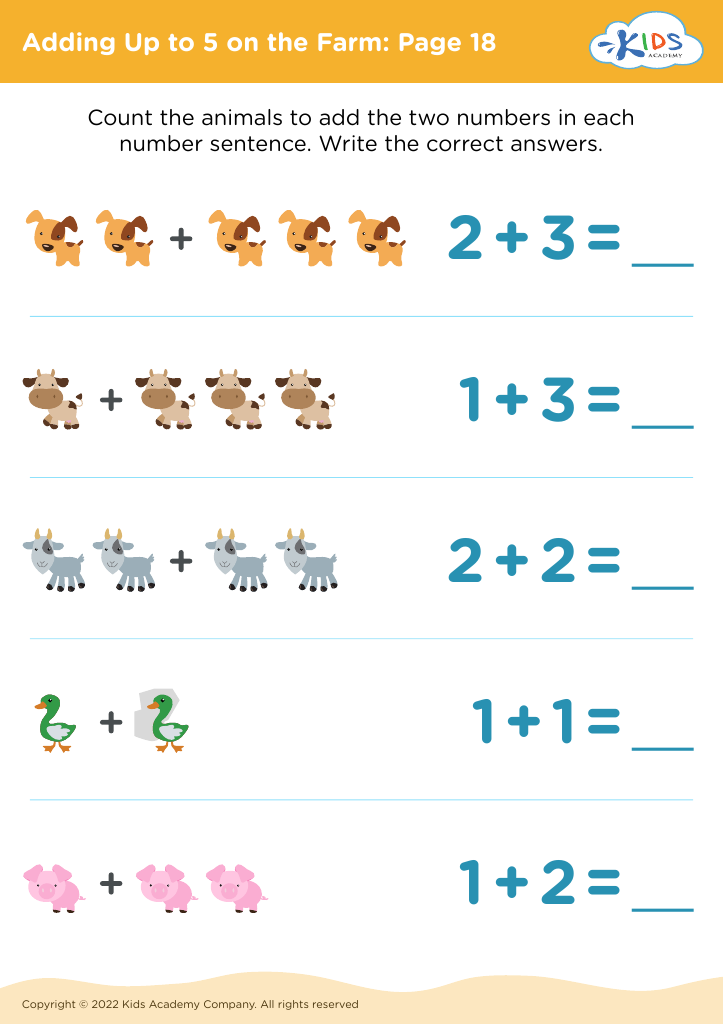
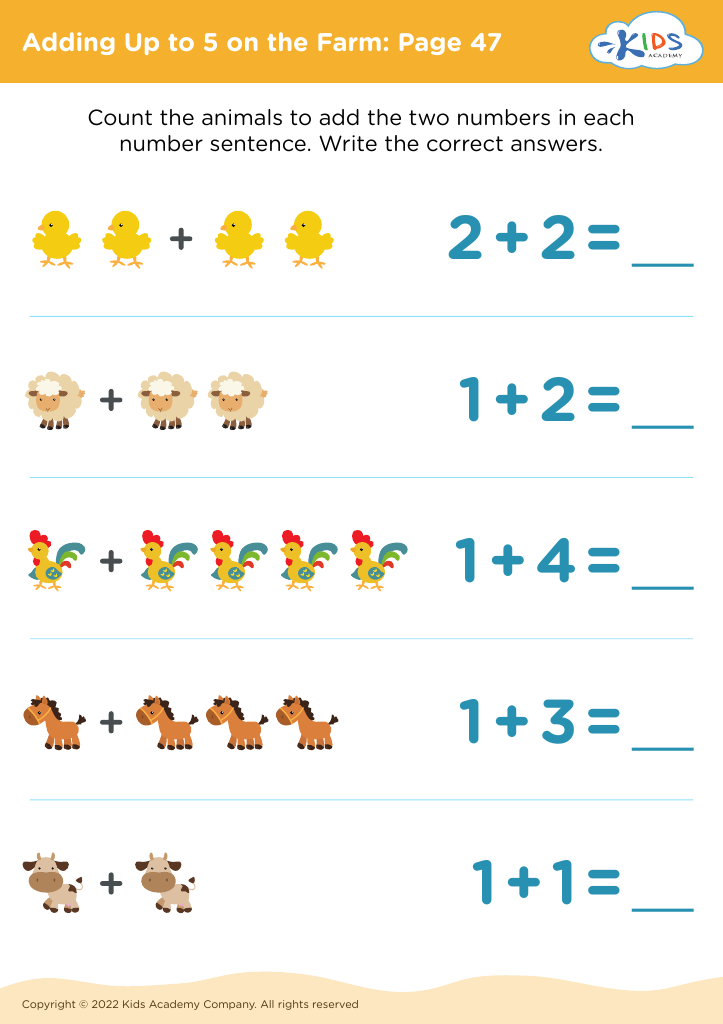
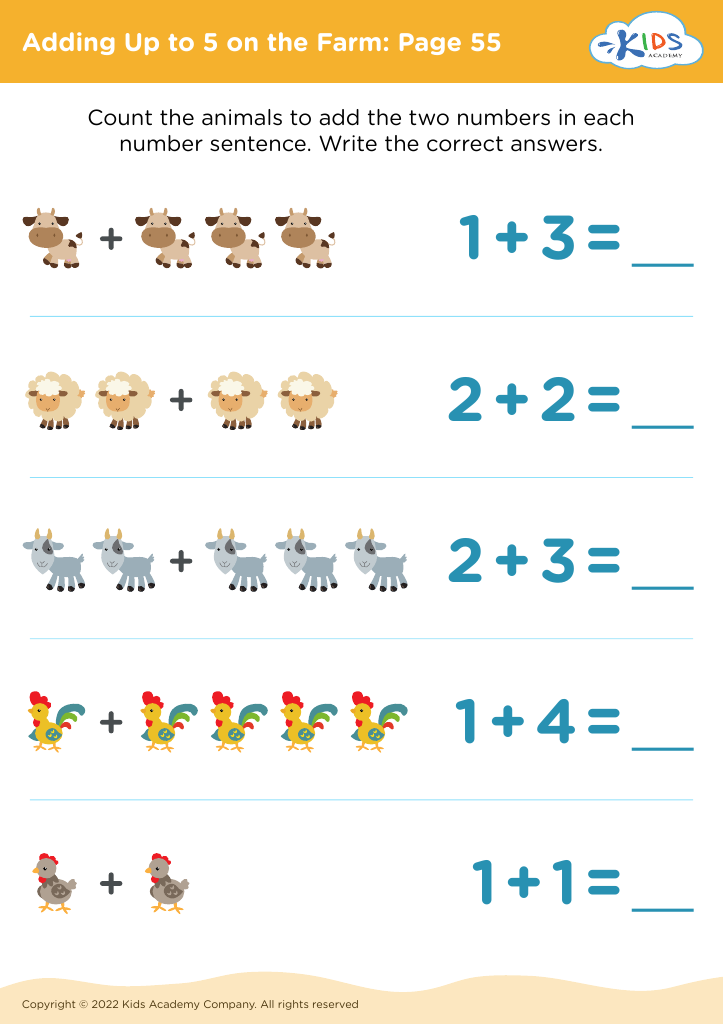
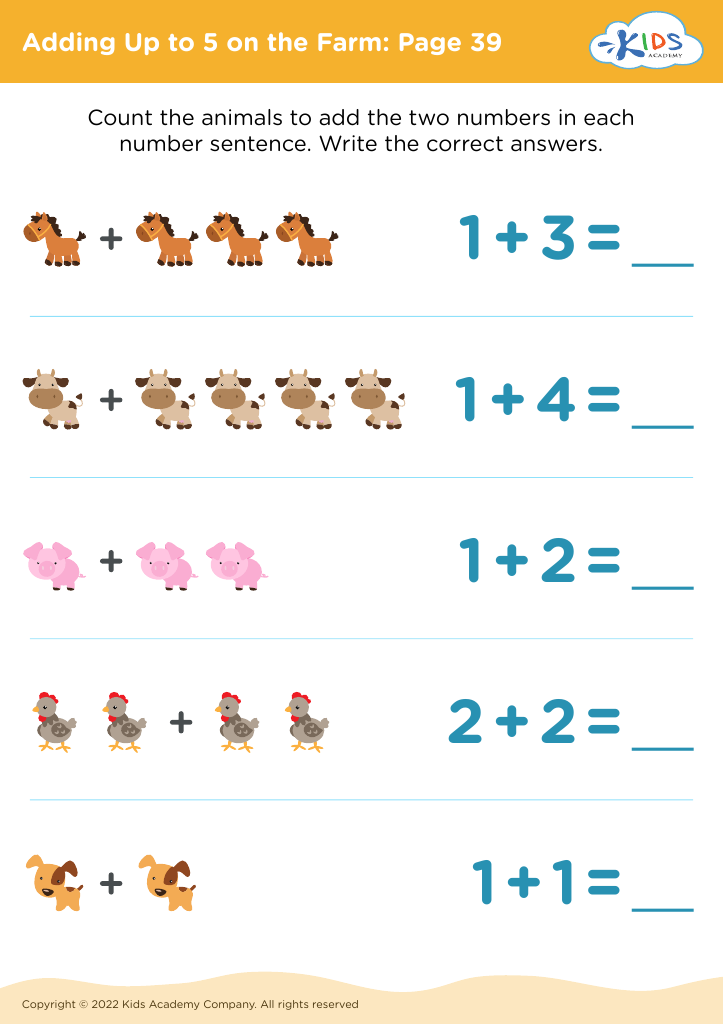
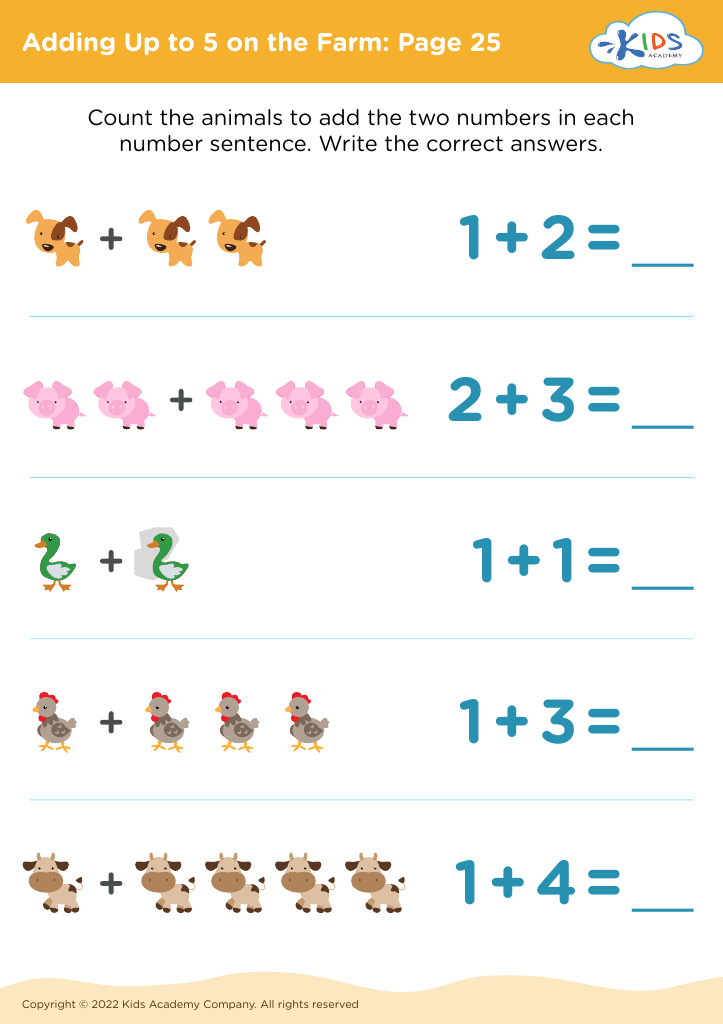
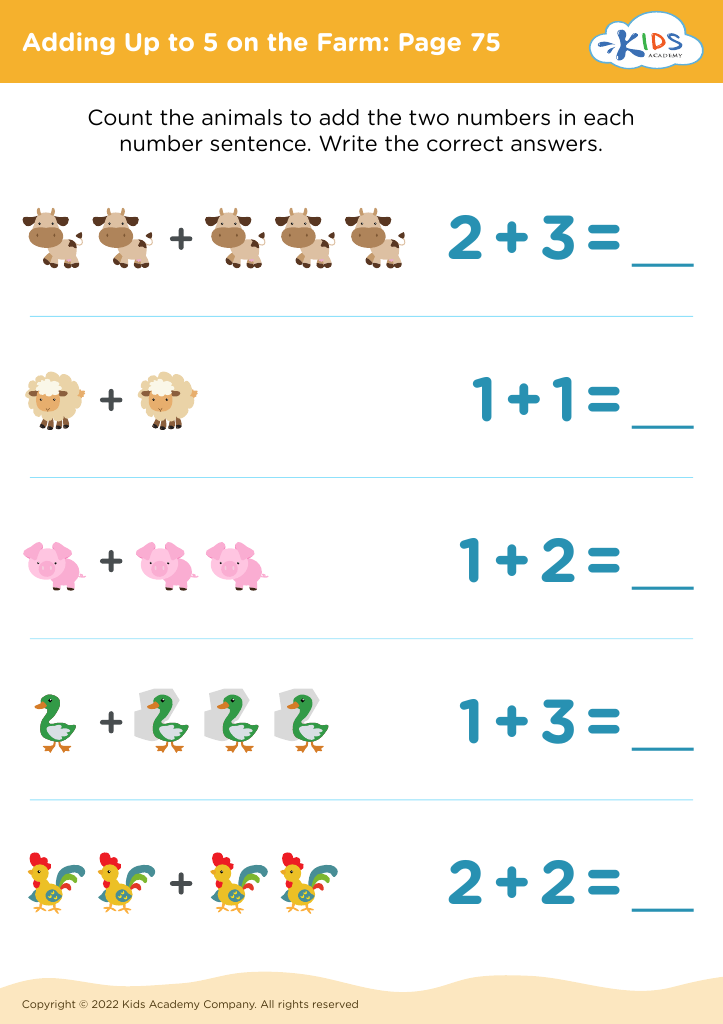
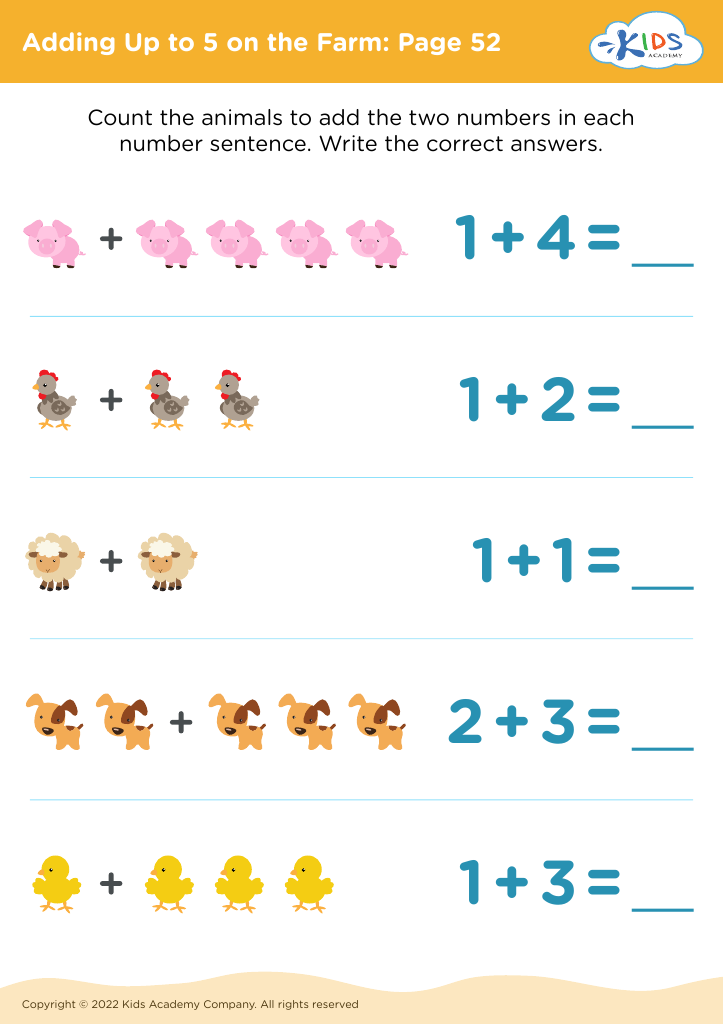
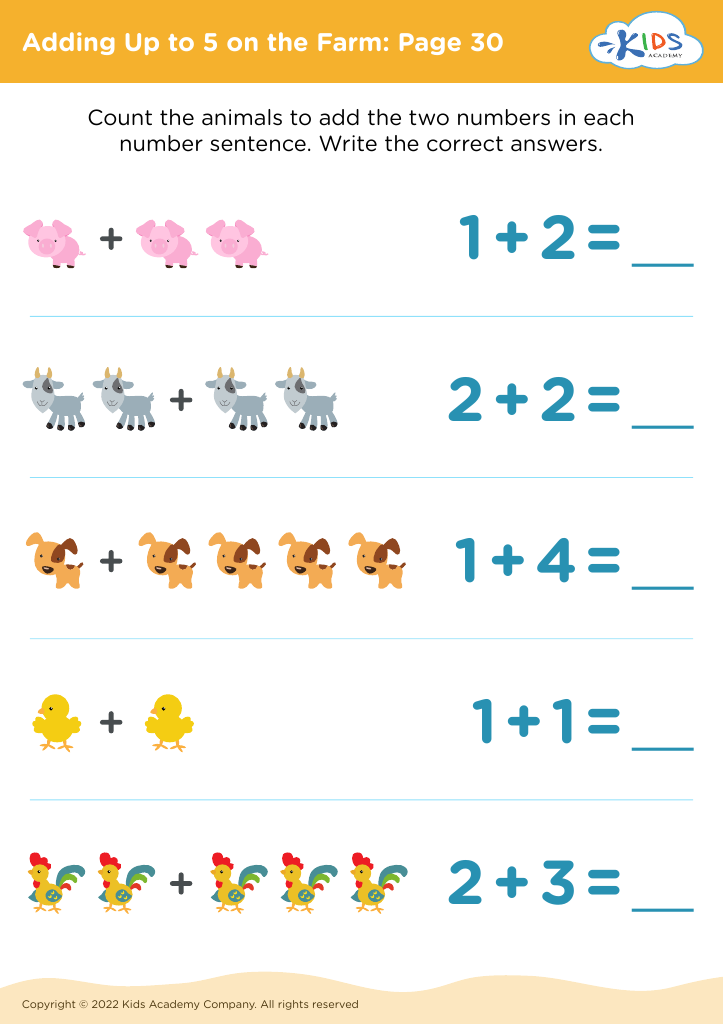
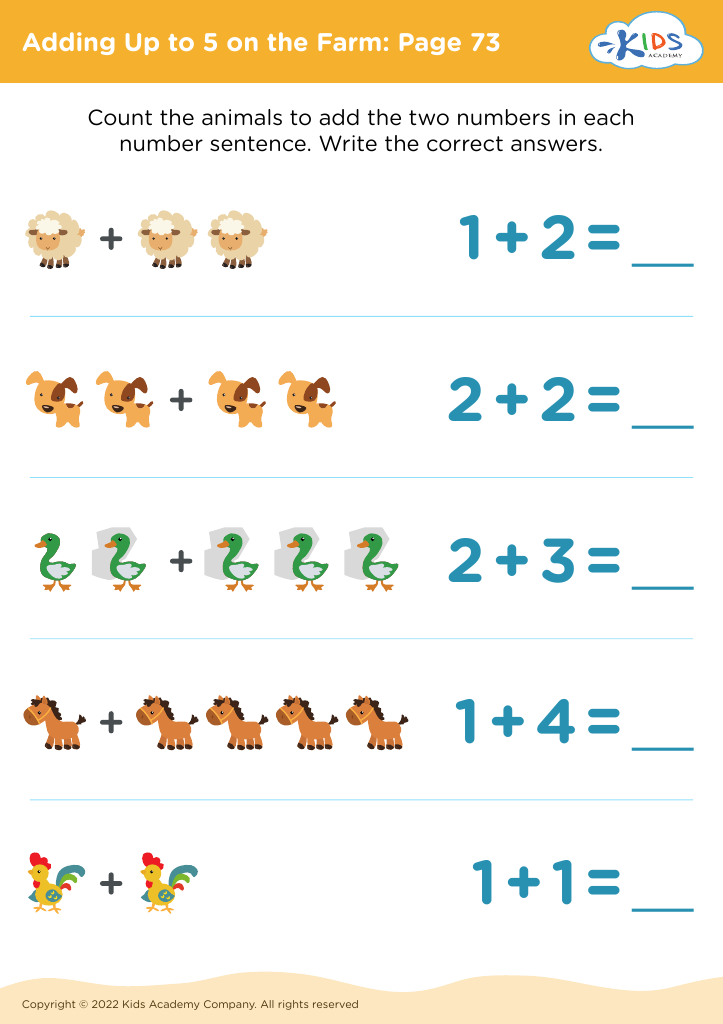
Discover our engaging "Animal Identification Adding on the Farm" worksheets designed for ages 3-4! These fun, educational printables combine basic math skills with farm animal recognition, providing an interactive and enjoyable learning experience. Children will enhance their counting abilities while familiarizing themselves with common farm animals. Perfect for early learners, these worksheets support cognitive development and fine motor skills, making math practice delightful. Whether for homeschooling or classroom use, our worksheets offer a fantastic resource for young minds to explore the world of numbers and animals on the farm. Download now and watch little ones thrive as they add and identify!
Favorites
With answer key
Interactive
Join Kids Academy for Free
Who is primarily going to use this learning content?



Caring about animal identification and farm-related math activities for young children (ages 3-4) is essential because it lays a strong foundation for both cognitive and socio-emotional development. Recognizing and naming different farm animals not only builds vocabulary but also enhances observational skills and memory. For instance, knowing the difference between a cow and a sheep engages children in categorization and pattern recognition, which are crucial for early cognitive development.
Incorporating basic math, such as adding farm animals, further strengthens numerical understanding. Simple activities like counting sheep or adding more chicks foster early numeracy skills, making math feel practical and grounded in real-world contexts. This hands-on learning cultivates curiosity and a positive attitude toward math, setting the stage for more complex concepts in later years.
Additionally, engaging with farm-related content introduces children to important aspects of daily life and environmental awareness. Learning about animals and their roles on a farm can spark empathy and appreciation for nature and agriculture.
On a socio-emotional level, discussing farm animals and participating in related group activities help children develop communication skills and cooperative behaviors. Sharing toys, taking turns, and working together to solve problems such as dividing or counting animals builds a sense of community and teamwork.
Overall, combining animal identification with simple math exercises provides a holistic approach to early childhood education, benefiting diverse areas of development.