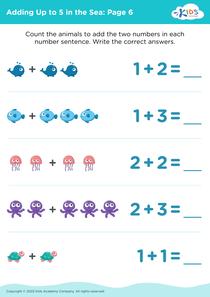
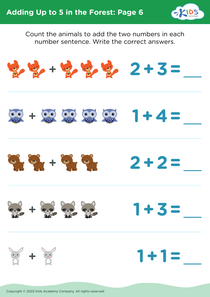
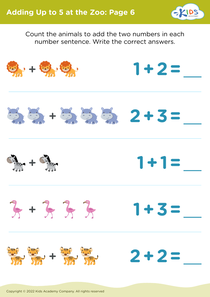
Counting skills Adding on the Farm Worksheets for Ages 3-4
10 filtered results
-
From - To
Welcome to our "Counting Skills: Adding on the Farm" worksheets designed for children aged 3-4! These engaging, colorful activities introduce early math concepts in a fun, farm-themed setting. Young learners will delight in counting and adding farm animals while enhancing their number recognition and basic addition skills. Our carefully crafted worksheets encourage hands-on learning, making math enjoyable and accessible. These printable resources are perfect for teachers and parents seeking to foster counting skills in a playful, interactive way. Explore the joy of learning with your little ones as they embark on their mathematical journey in a lively farm environment!
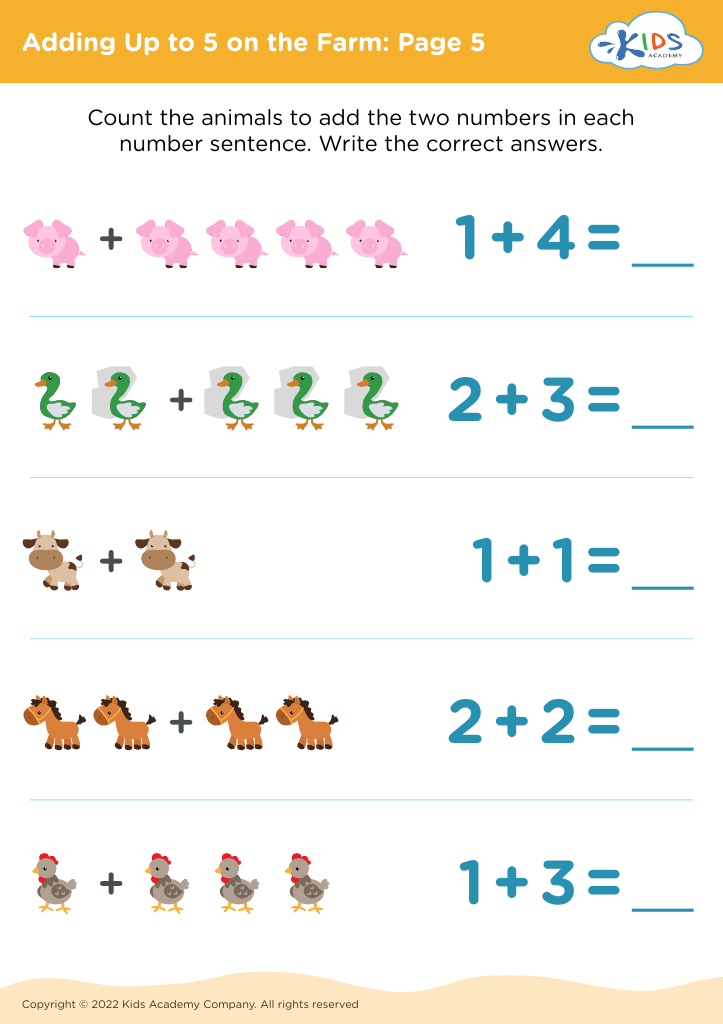
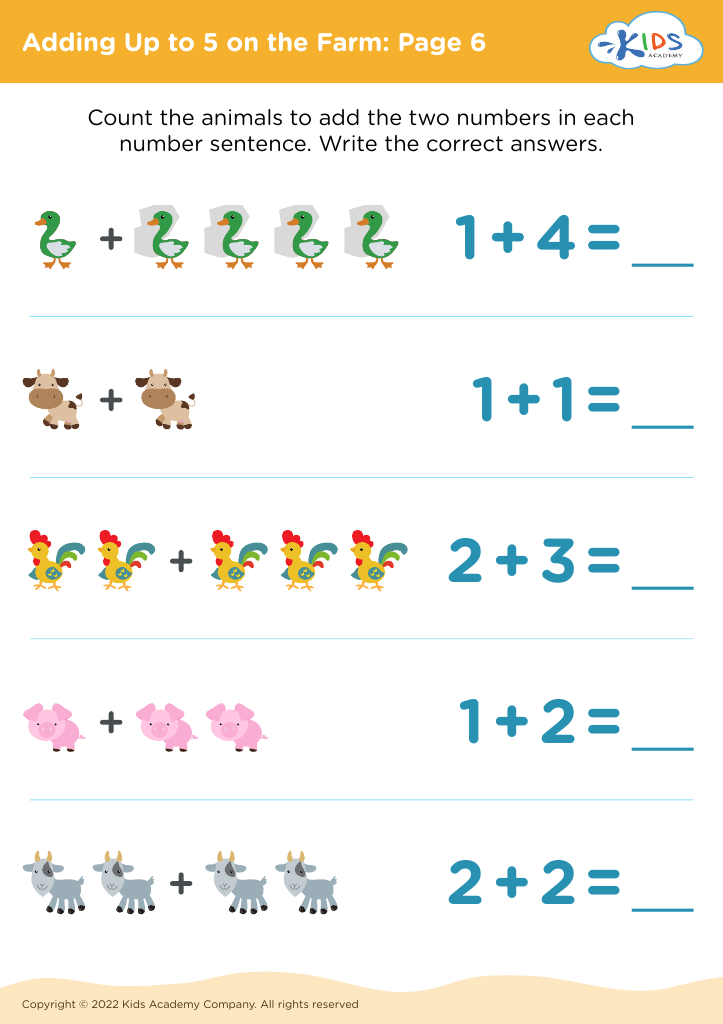
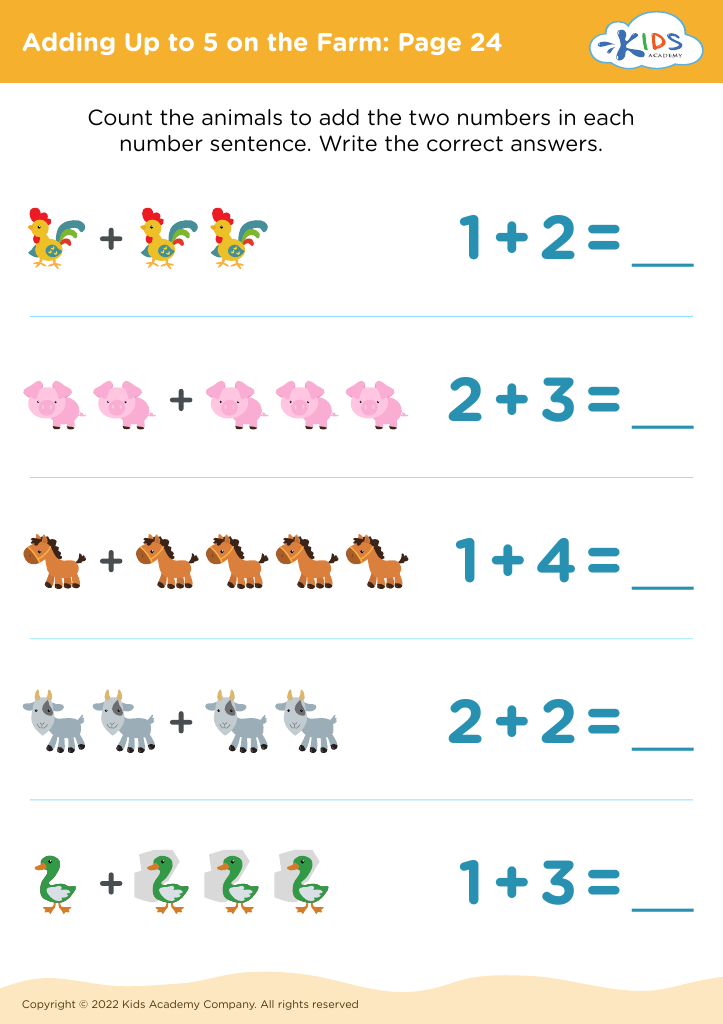
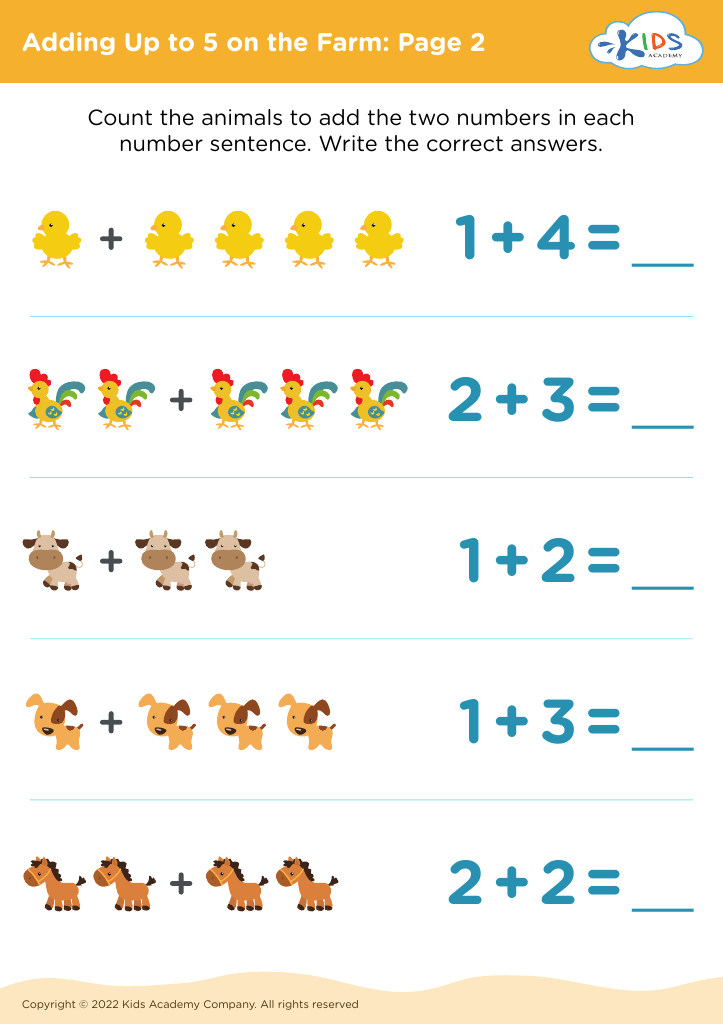
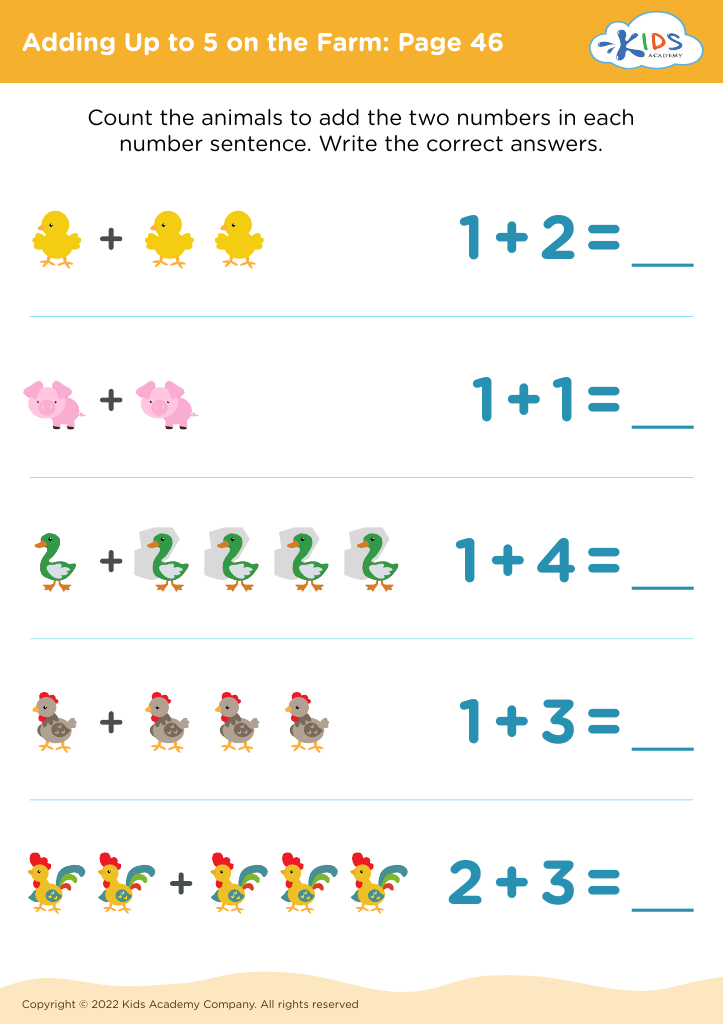
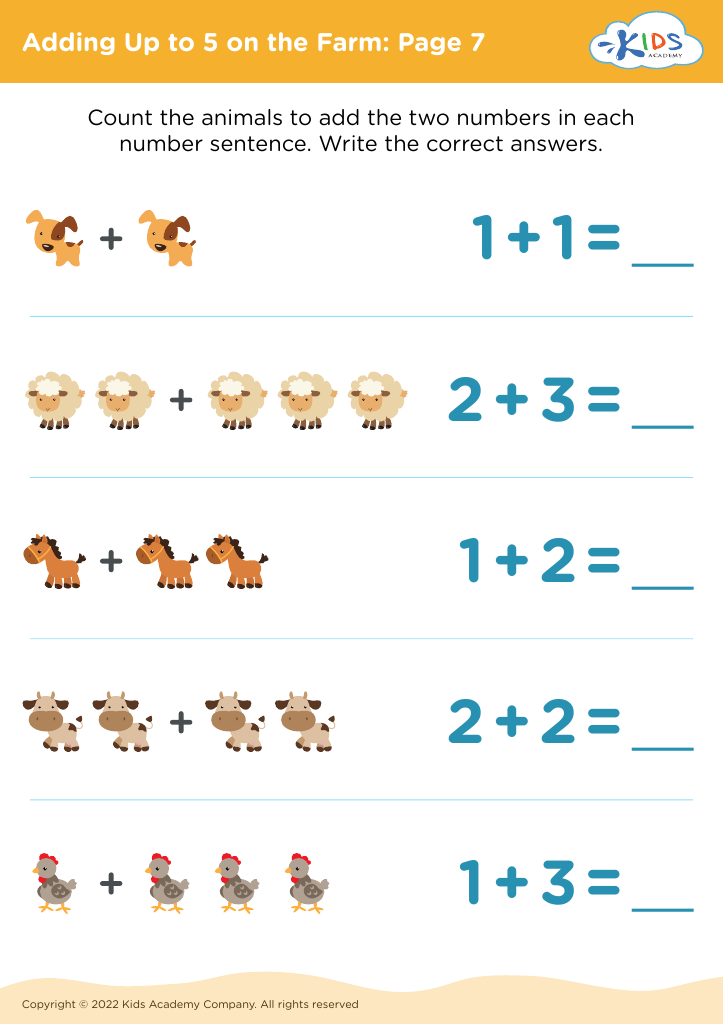
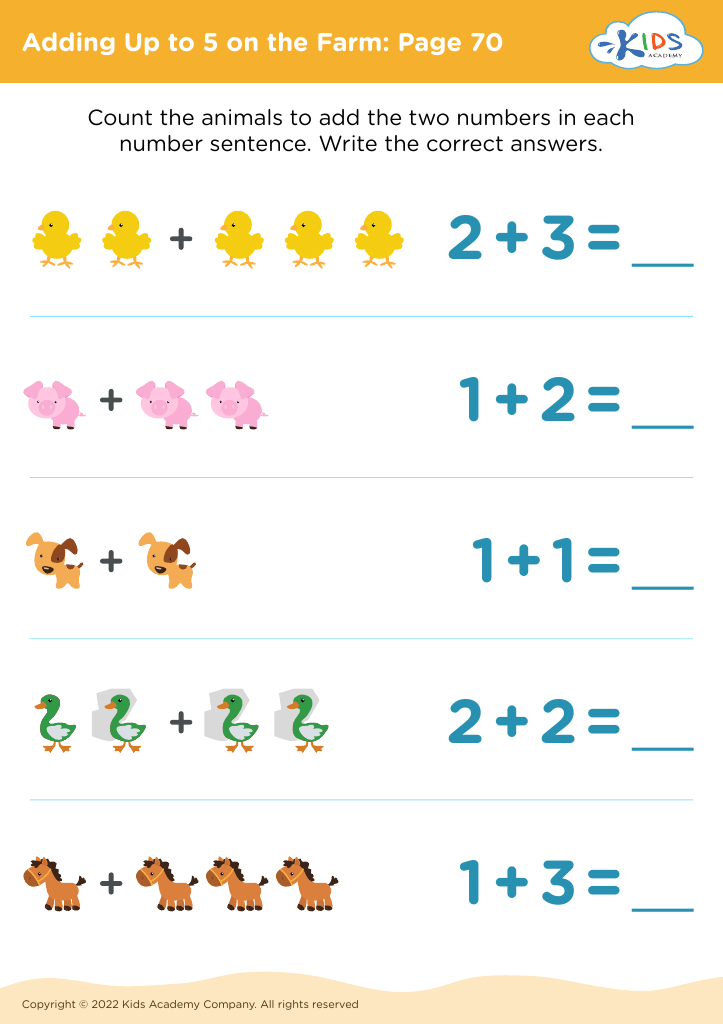
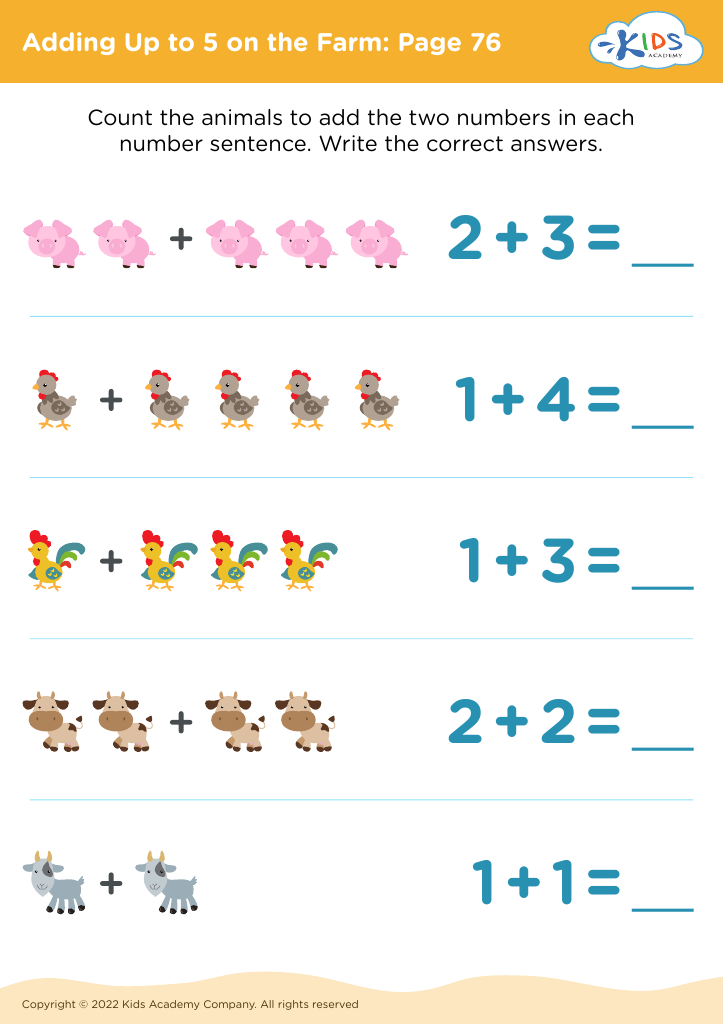
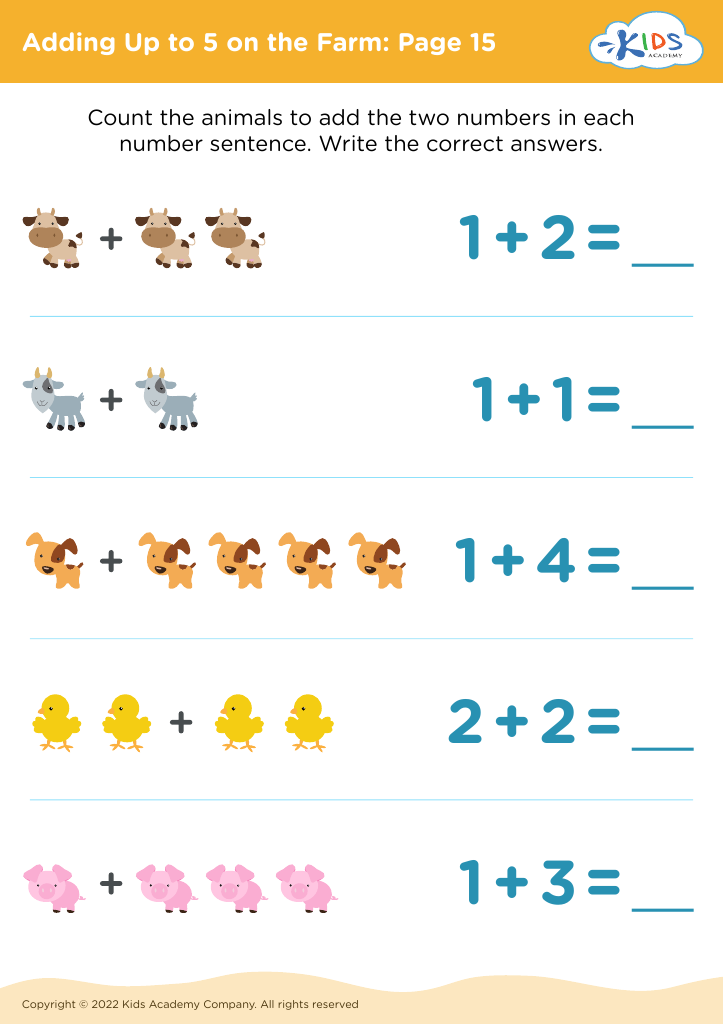
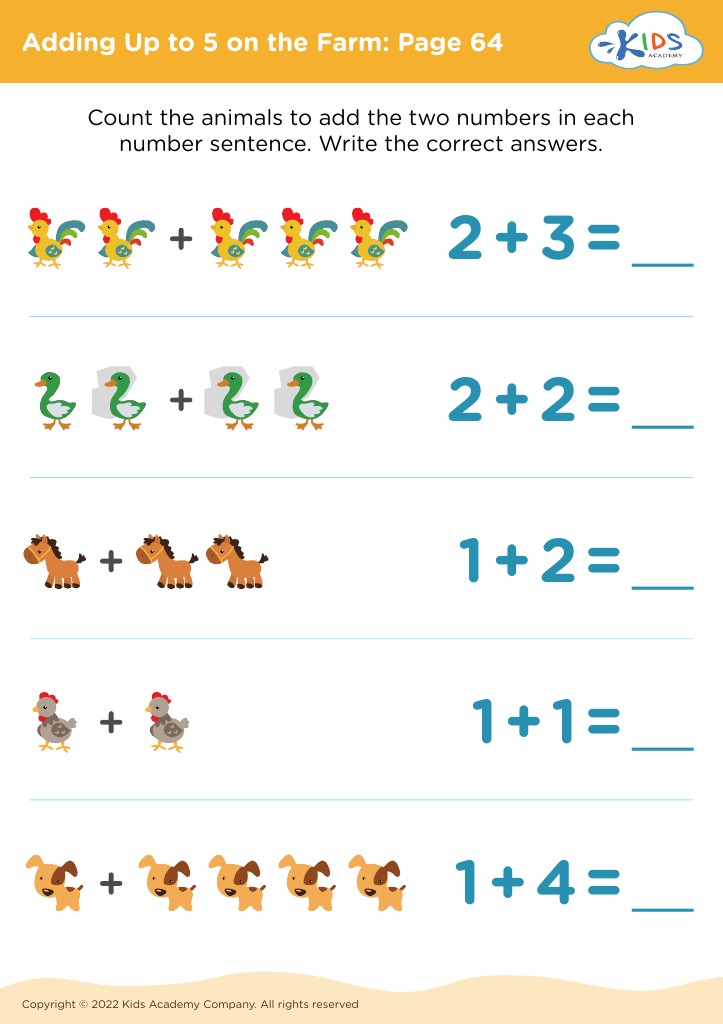



Counting skills, especially in engaging contexts like "Adding on the Farm," are vital for preschool-aged children (3-4 years). Developing these skills at an early age sets a strong foundation for future math proficiency. Such activities not only promote basic counting but also help children understand the concepts of addition and quantity through practical, interactive experiences.
Farm-themed counting activities can introduce children to numbers in a relatable context, making learning fun and memorable. For instance, counting animals, crops, or equipment fosters a sense of curiosity and encourages exploration, which enhances cognitive growth. Additionally, these activities can improve fine motor skills, as children engage with physical objects.
Moreover, counting and adding encourage critical thinking and problem-solving abilities. As children work through simple addition problems in a farm setting, they learn to assess different quantities, fostering early mathematical thinking. Parents and teachers can boost children's confidence and a positive attitude towards math, which will benefit them in their future education.
Overall, nurturing counting skills through engaging themes like "Adding on the Farm" ensures that children are not only prepared for academic challenges ahead but also develop a love for learning in a supportive environment. This can ultimately lead to a greater interest in STEM subjects later in life.