Filters

50 filtered results

Clear all filters
Favorites
With answer key
Interactive

50 filtered results

Difficulty Level

Grade


Check out this FREE Trial Lesson on Adding Up to 5 for age 3-4!

L

Favorites
With answer key
Interactive
  • 3-4
  • Addition Practice
  • Adding Up to 5
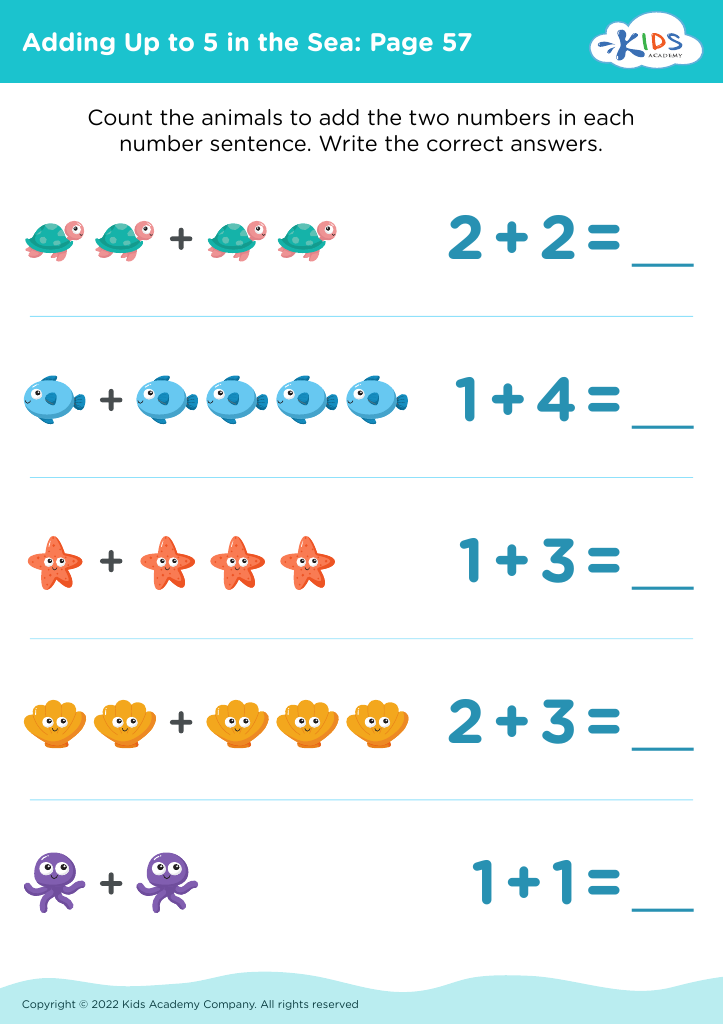
Adding Up to 5 in the Sea: Page 57
Worksheet
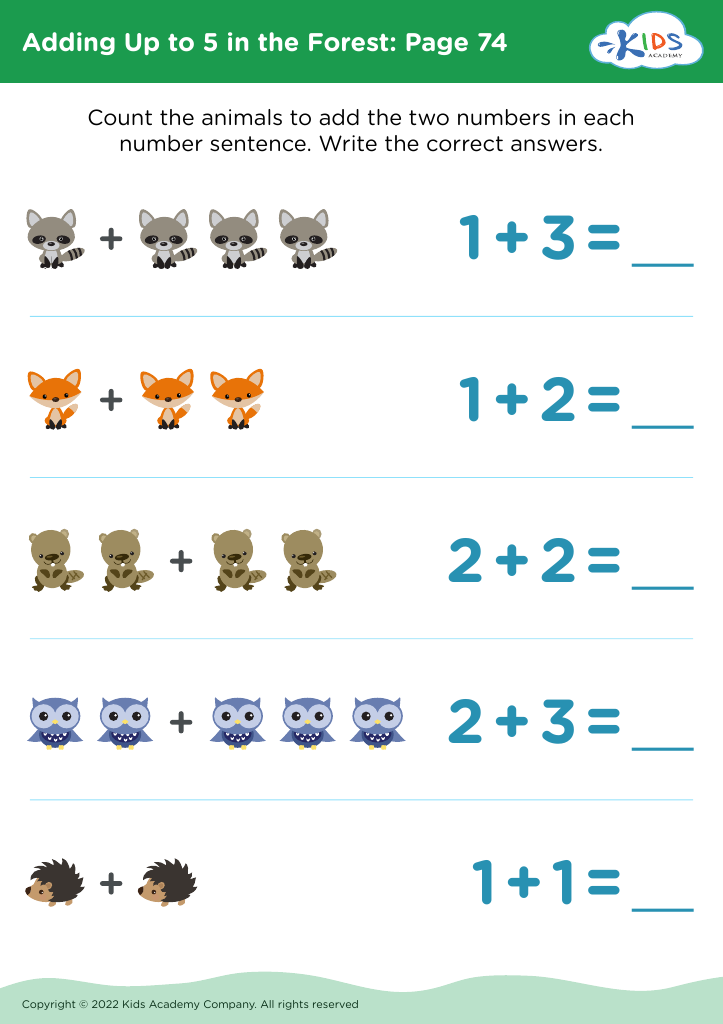
Adding Up to 5 in the Forest: Page 74
Worksheet
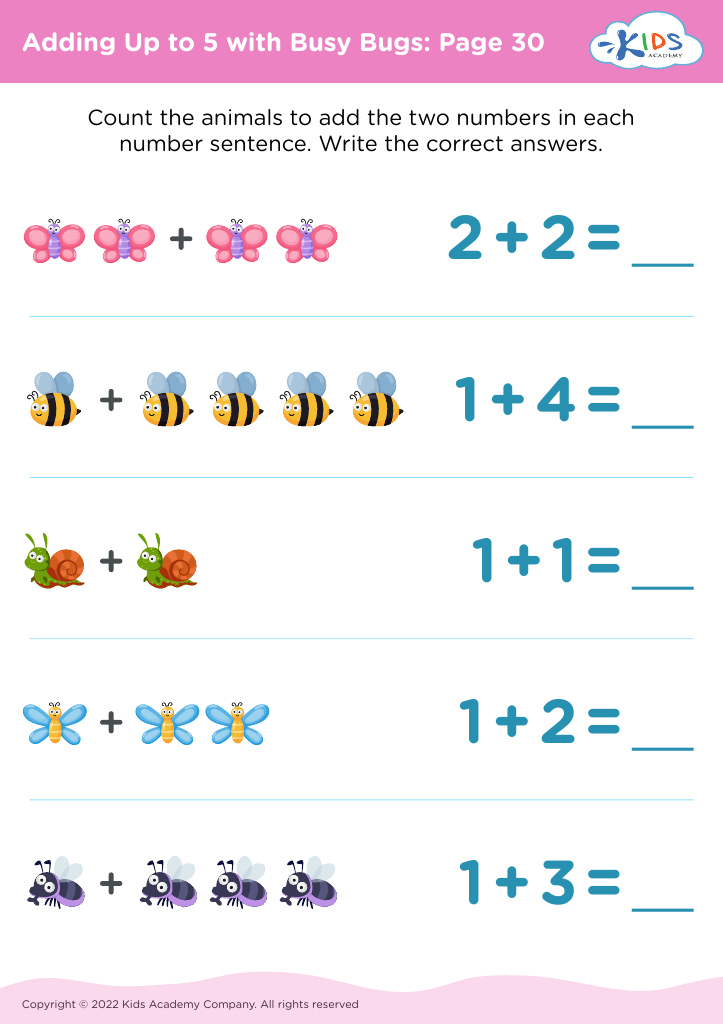
Adding Up to 5 with Busy Bugs: Page 30
Worksheet
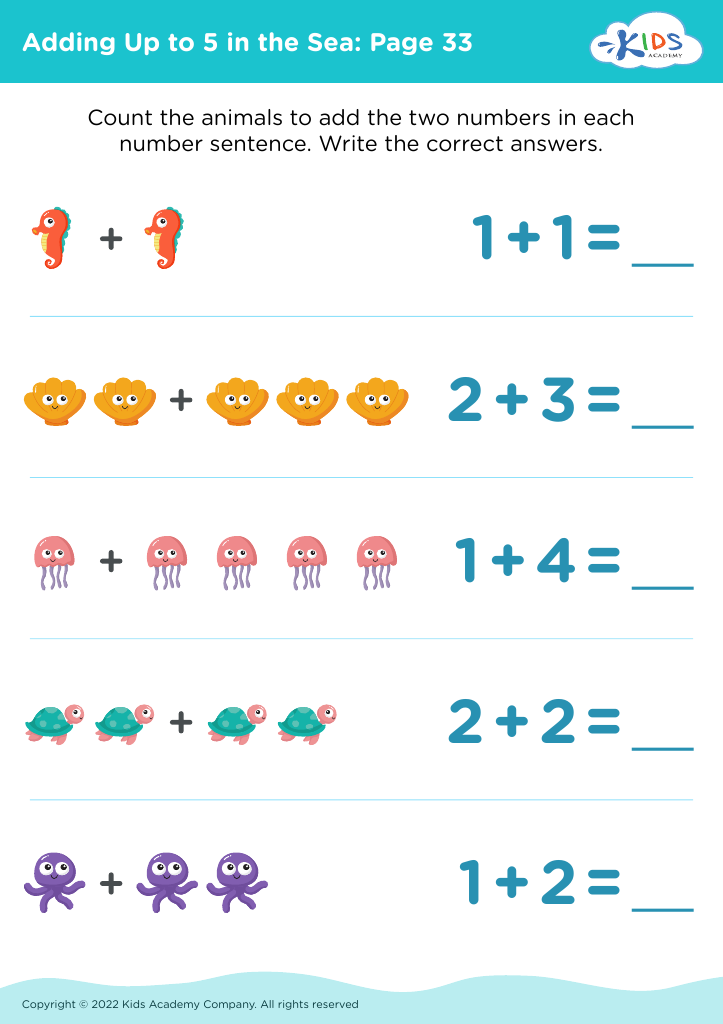
Adding Up to 5 in the Sea: Page 33
Worksheet
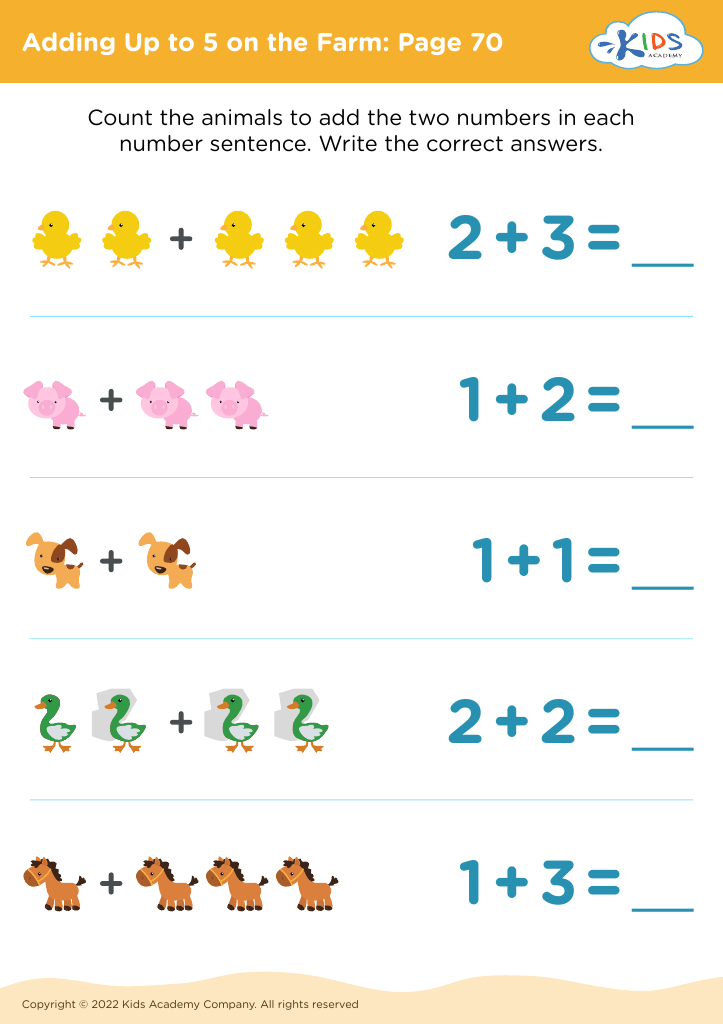
Adding Up to 5 on the Farm: Page 70
Worksheet
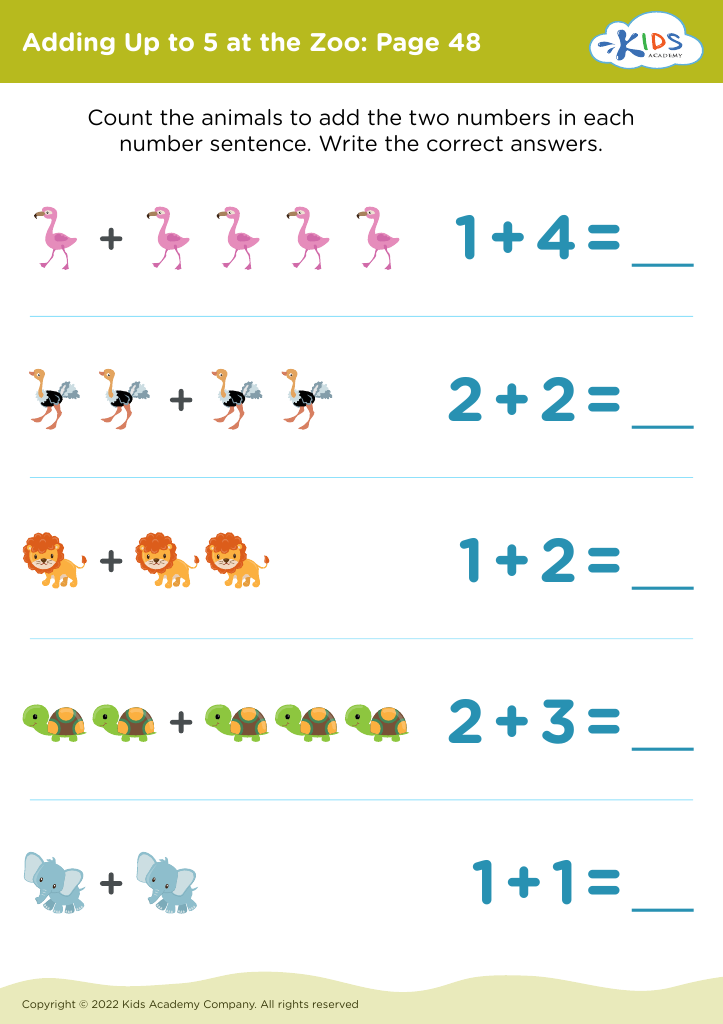
Adding Up to 5 at the Zoo: Page 48
Worksheet
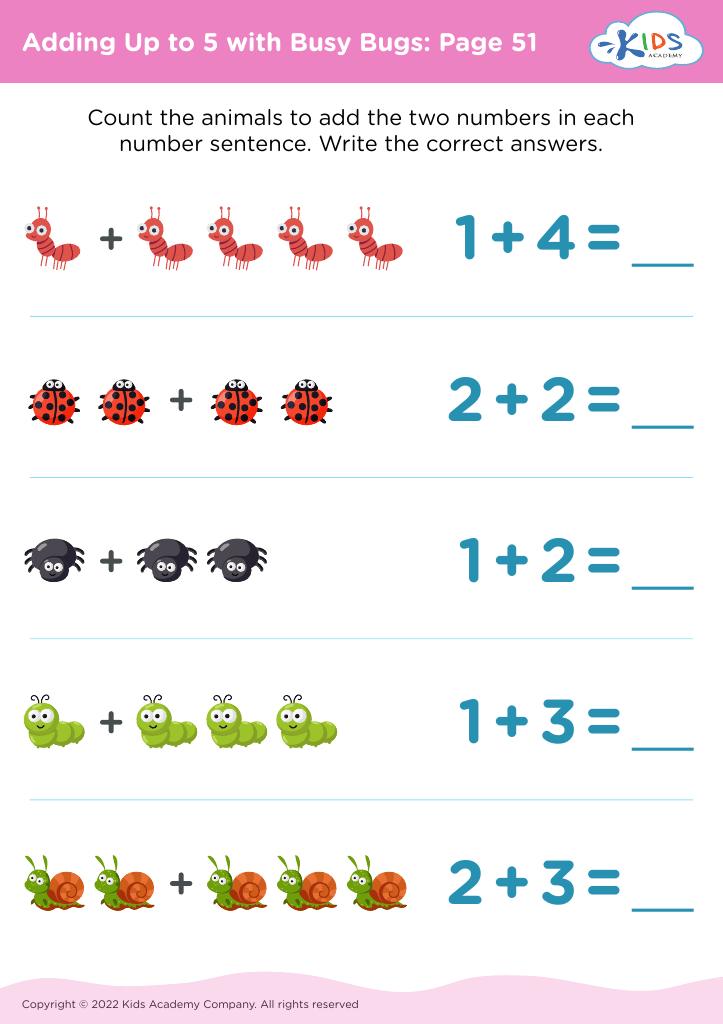
Adding Up to 5 with Busy Bugs: Page 51
Worksheet
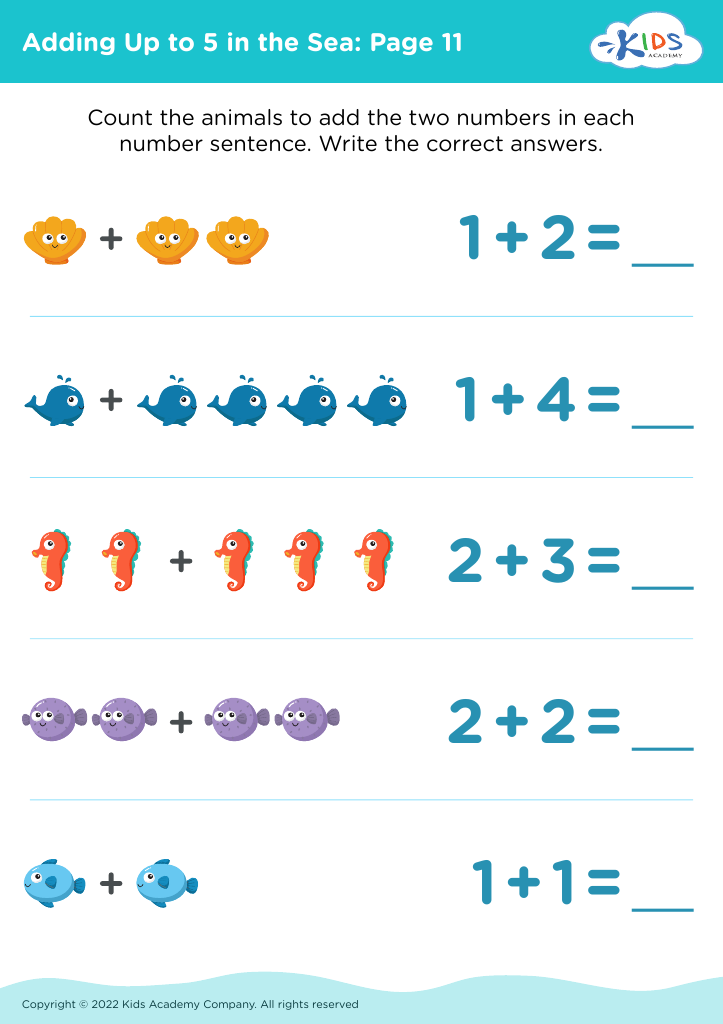
Adding Up to 5 in the Sea: Page 11
Worksheet
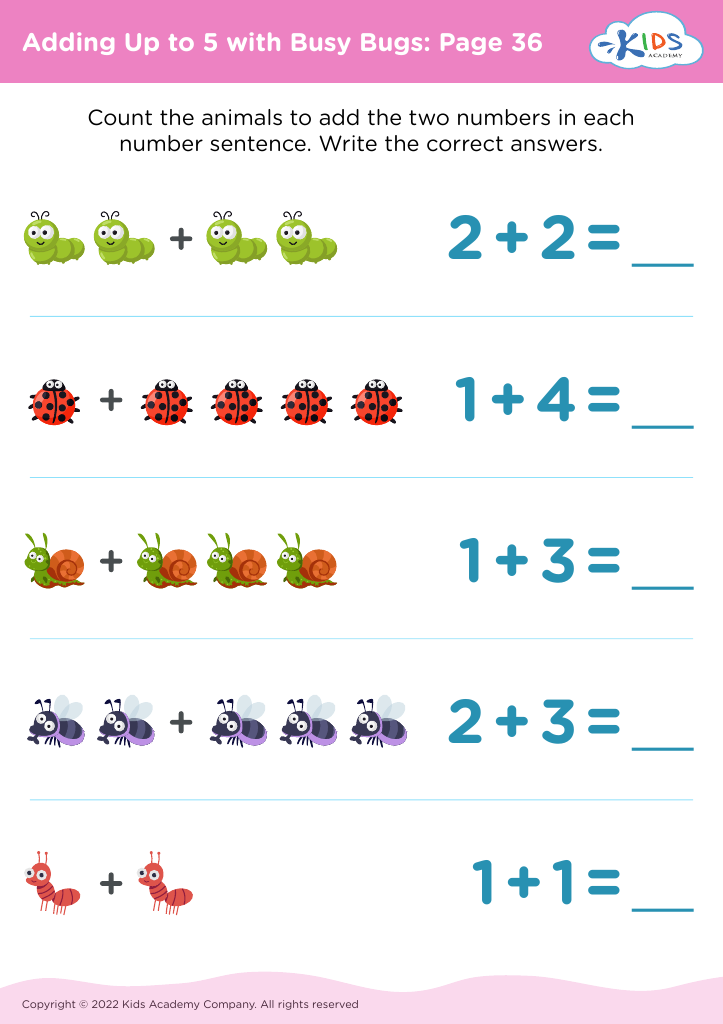
Adding Up to 5 with Busy Bugs: Page 36
Worksheet
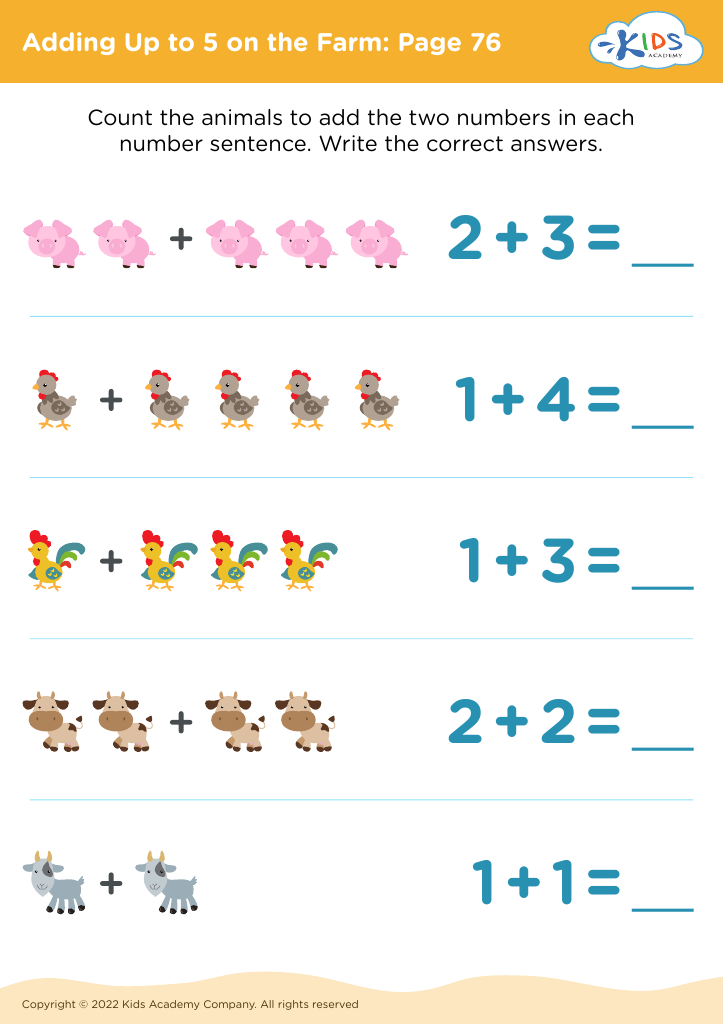
Adding Up to 5 on the Farm: Page 76
Worksheet
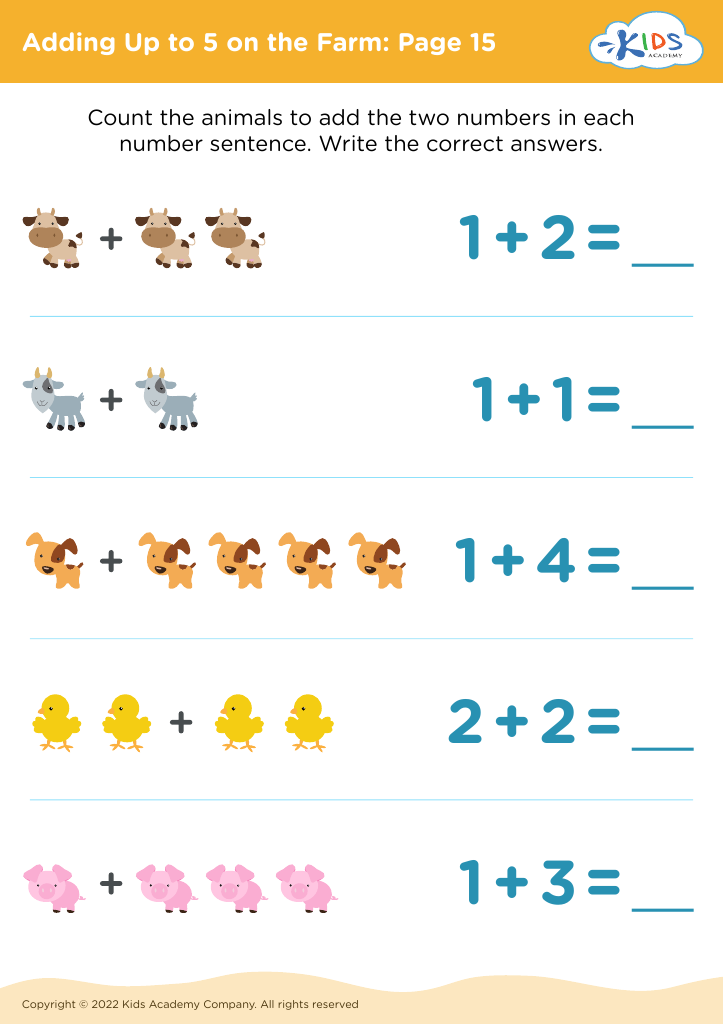
Adding Up to 5 on the Farm: Page 15
Worksheet
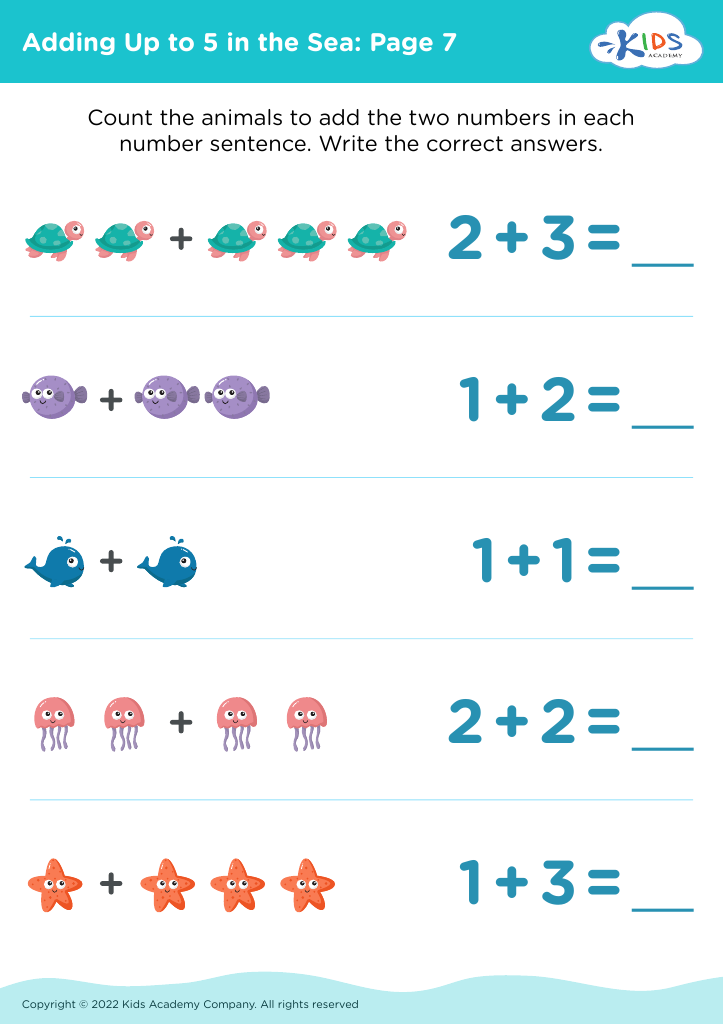
Adding Up to 5 in the Sea: Page 7

Adding Up to 5 in the Sea: Page 7

Adding Up to 5 in the Sea: Page 7
Worksheet
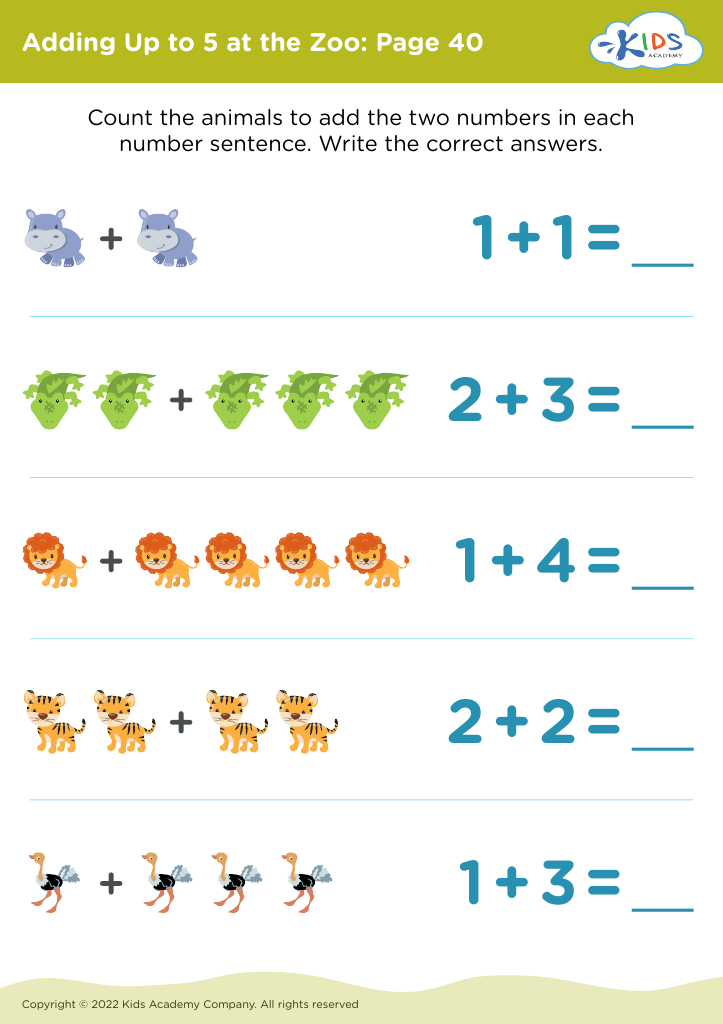
Adding Up to 5 at the Zoo: Page 40
Worksheet
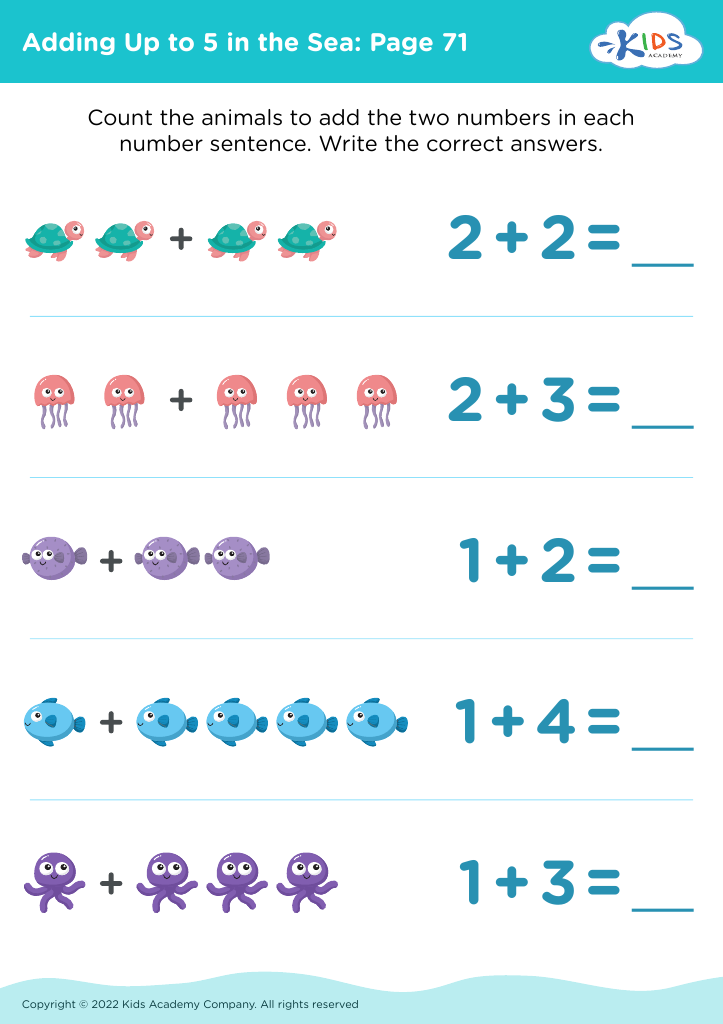
Adding Up to 5 in the Sea: Page 71
Worksheet
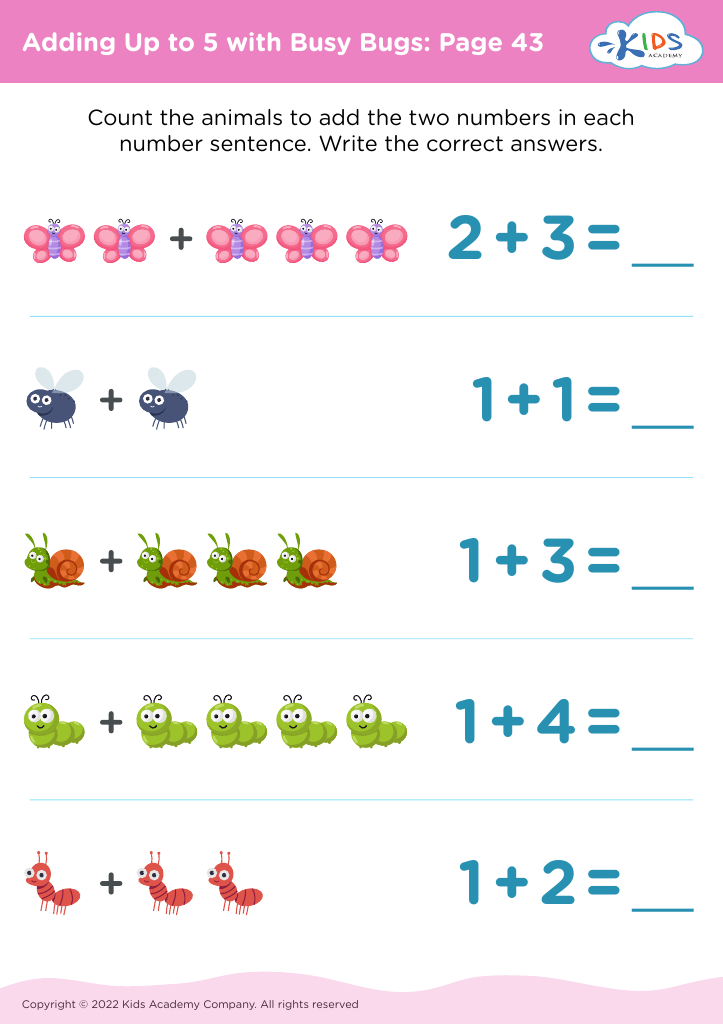
Adding Up to 5 with Busy Bugs: Page 43
Worksheet
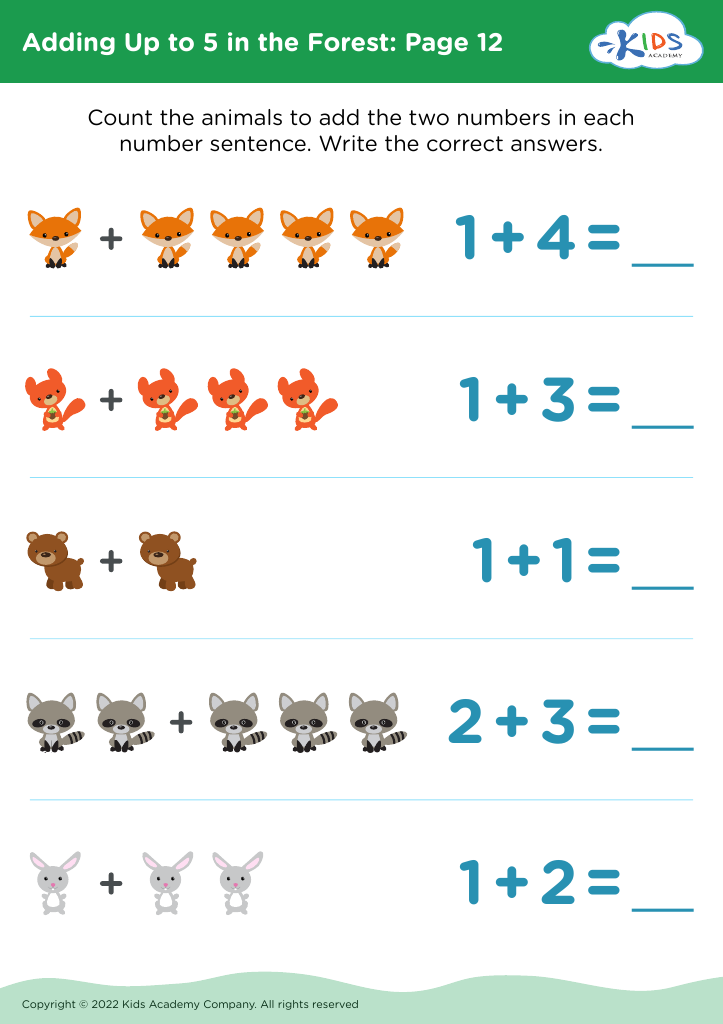
Adding Up to 5 in the Forest: Page 12
Worksheet
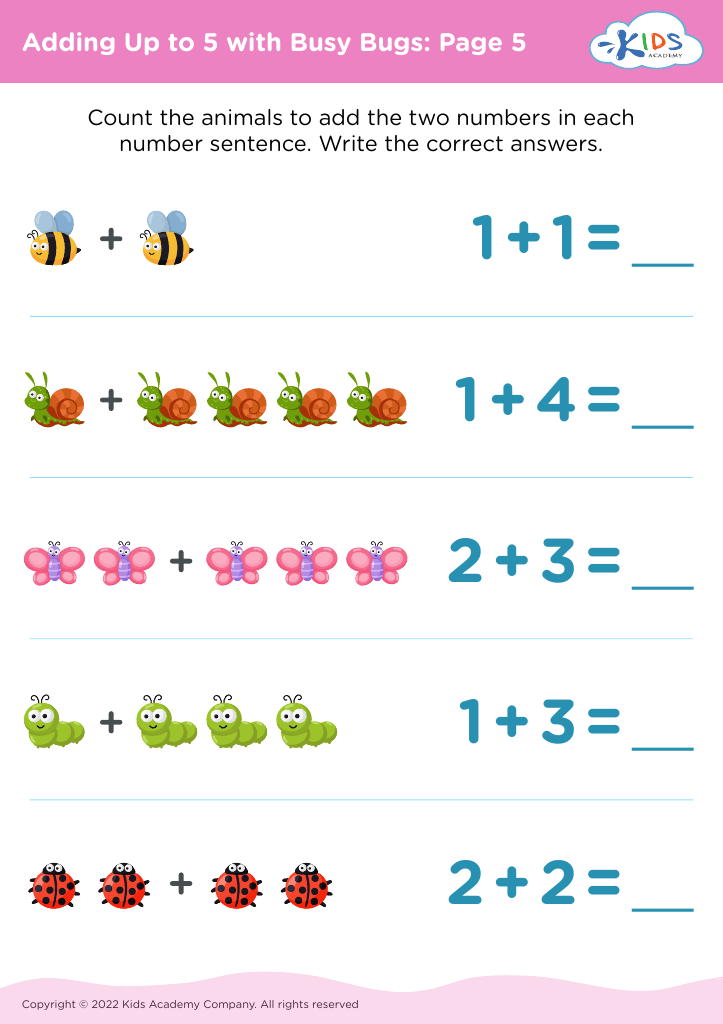
Adding Up to 5 with Busy Bugs: Page 5
Worksheet
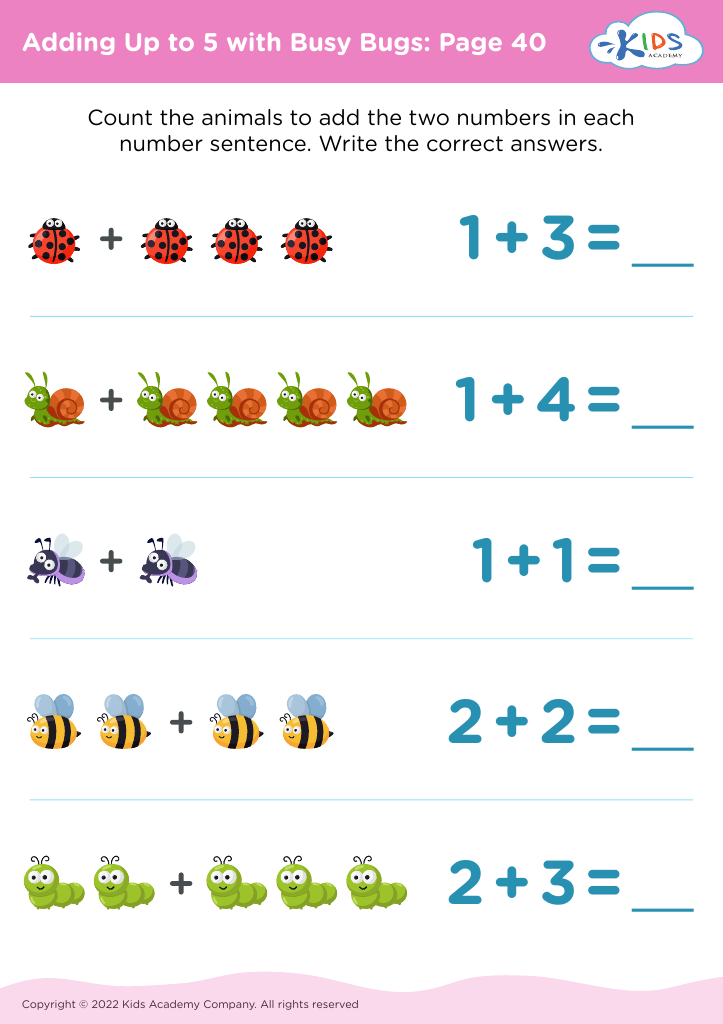
Adding Up to 5 with Busy Bugs: Page 40
Worksheet
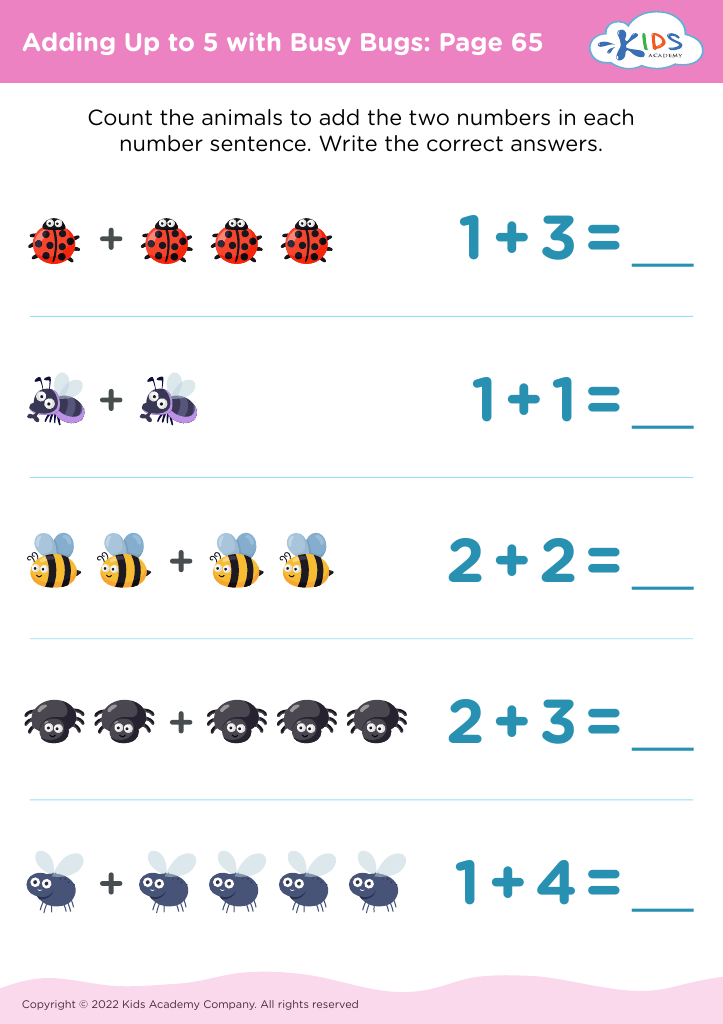
Adding Up to 5 with Busy Bugs: Page 65
Worksheet
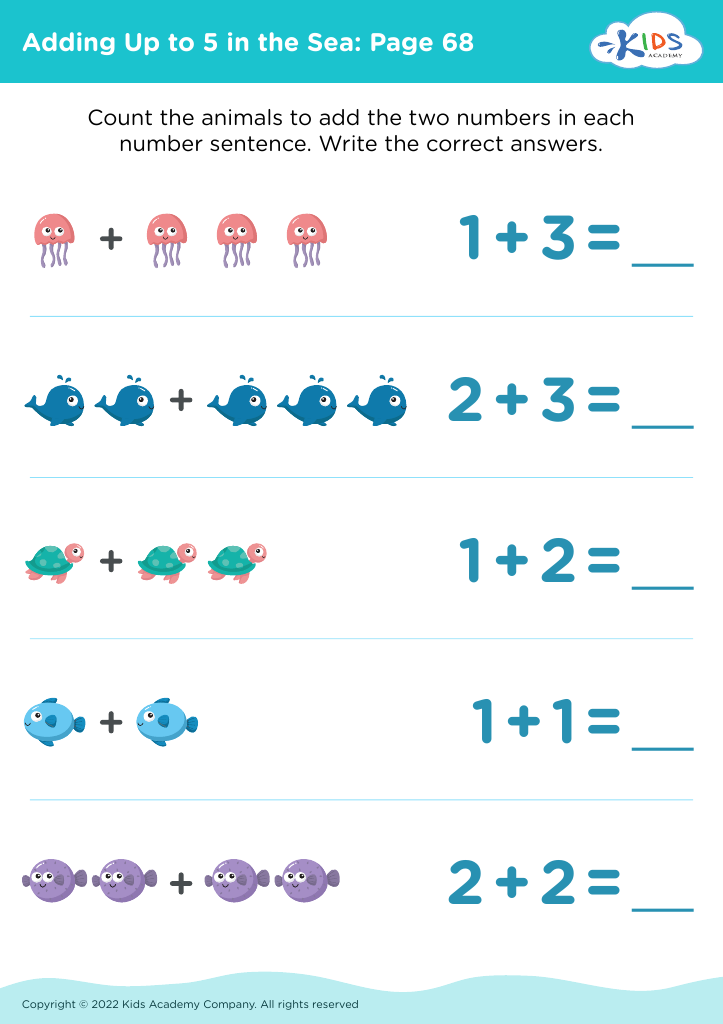
Adding Up to 5 in the Sea: Page 68
Worksheet
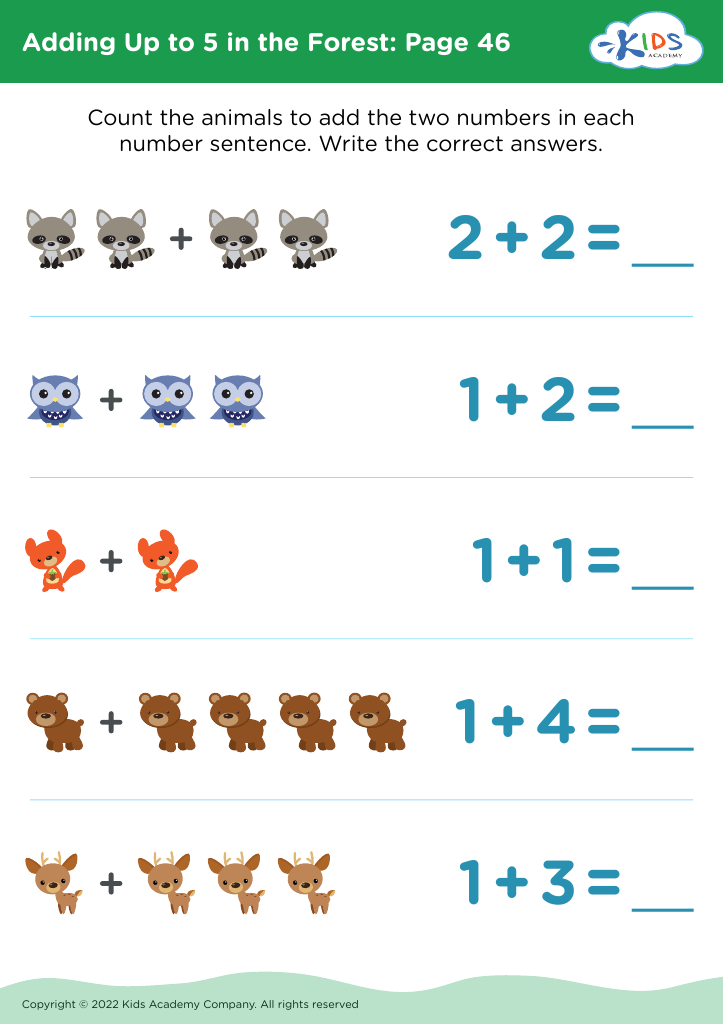
Adding Up to 5 in the Forest: Page 46
Worksheet
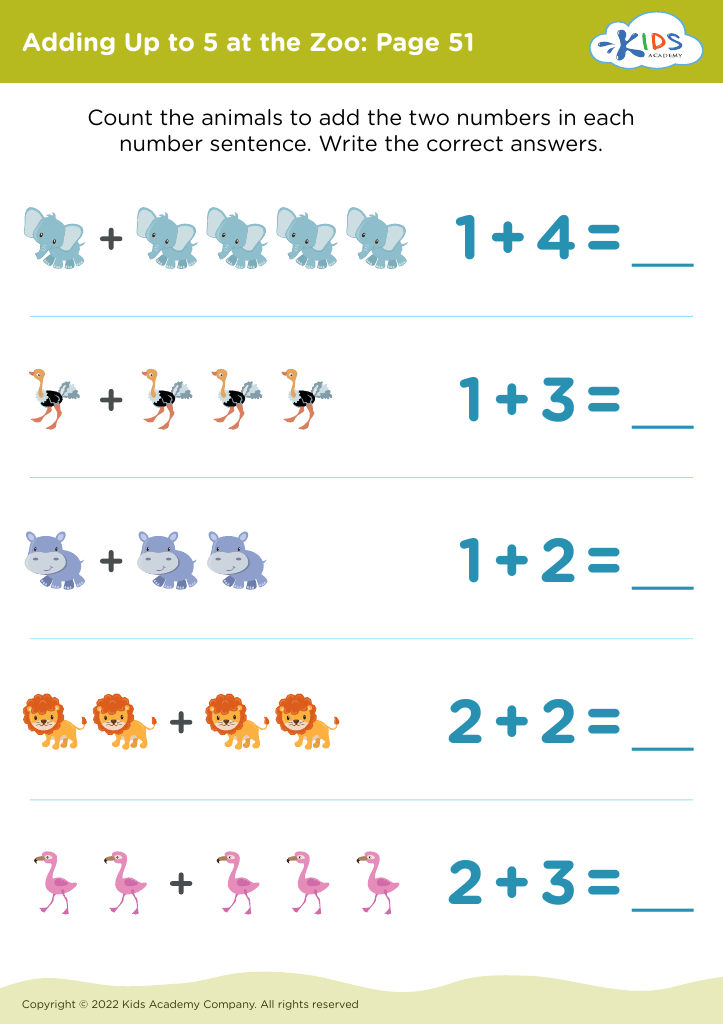
Adding Up to 5 at the Zoo: Page 51
Worksheet
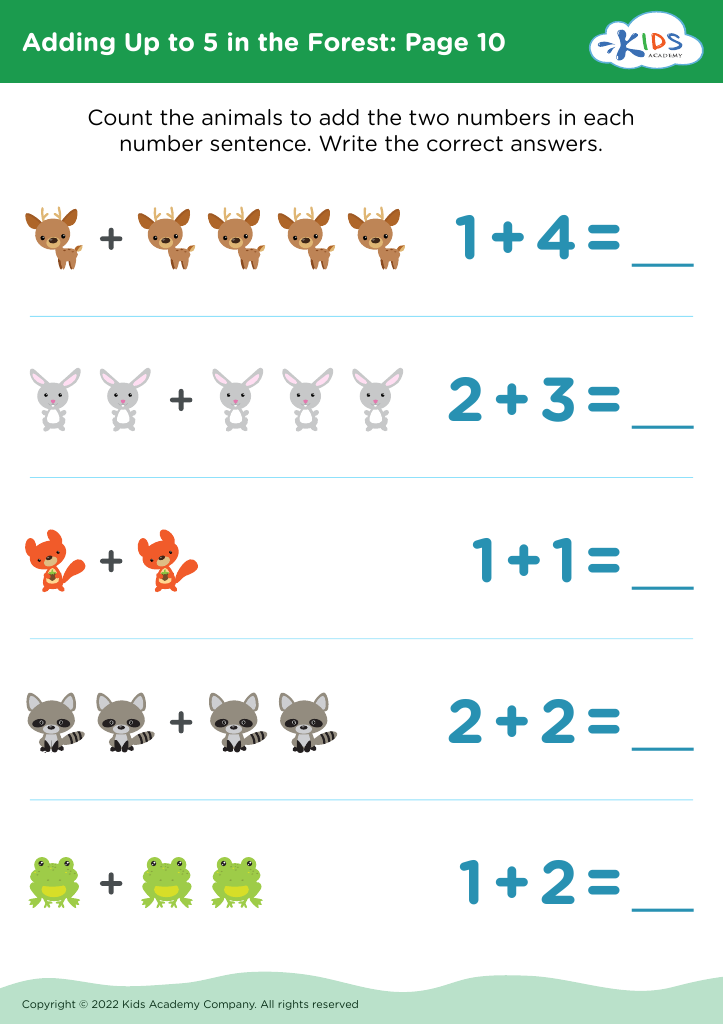
Adding Up to 5 in the Forest: Page 10
Worksheet
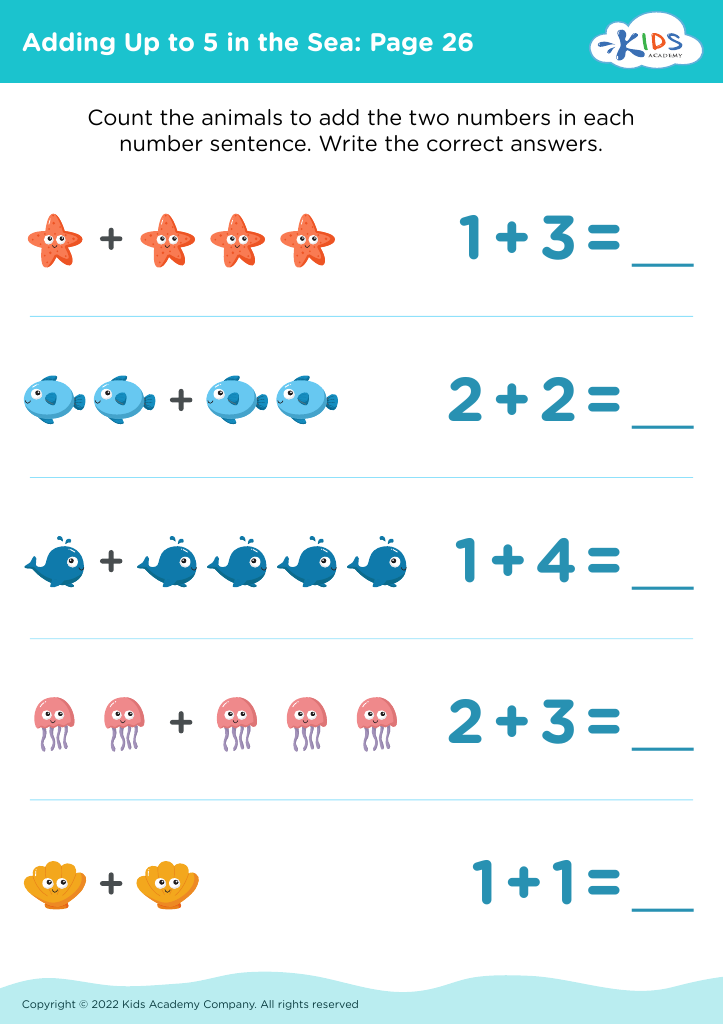
Adding Up to 5 in the Sea: Page 26
Worksheet


Addition practice, specifically focusing on adding up to 5 for children aged 3-4, is essential for several reasons. Firstly, it lays the foundation for early mathematical understanding. At this age, young learners are naturally curious and absorb information quickly, making it an ideal time to introduce basic math concepts like addition. Mastering addition to 5 provides a crucial stepping stone, helping children recognize numbers, understand quantity, and enhance their problem-solving skills.

Additionally, early math skills are linked to later academic success. Engaging in simple addition activities can boost a child's confidence and encourage a positive attitude toward math, minimizing anxiety around the subject as they grow. These skills also promote critical thinking and cognitive development, paving the way for more complex calculations in the future.

Moreover, addition practice can be both fun and interactive, involving games, manipulatives, or storytelling, making learning enjoyable for young children. This can foster cooperation and dialogue between parents, teachers, and children, strengthening their bond. Ultimately, investing time in addition practice encourages a lifelong love for learning and equips children with fundamental skills that will benefit them academically and personally.