


%20(1).jpg)




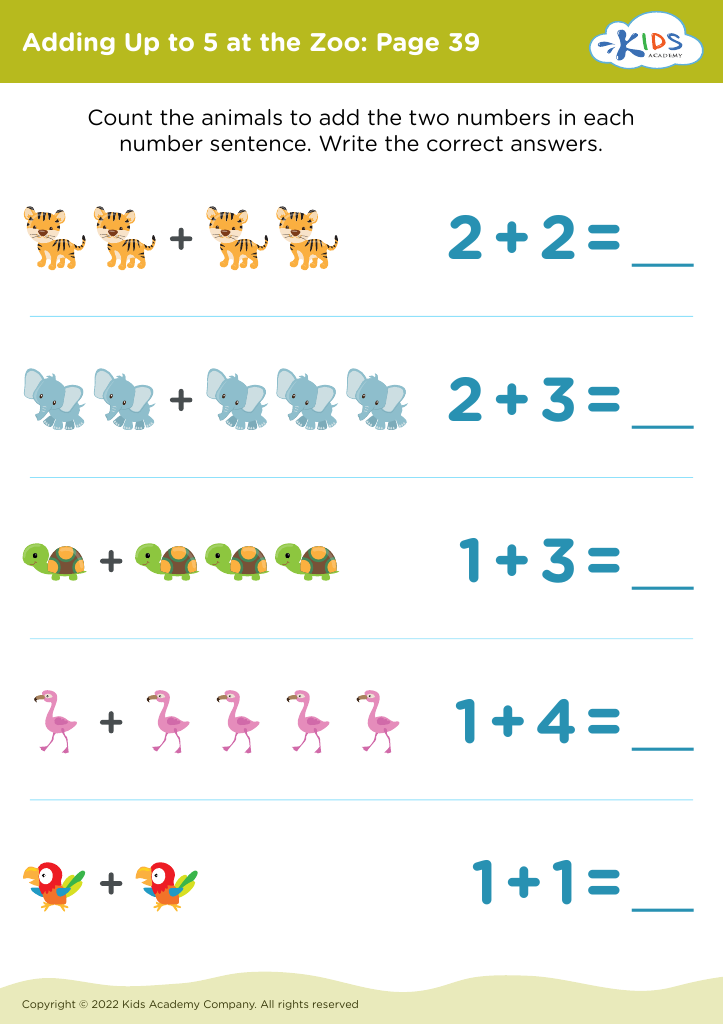
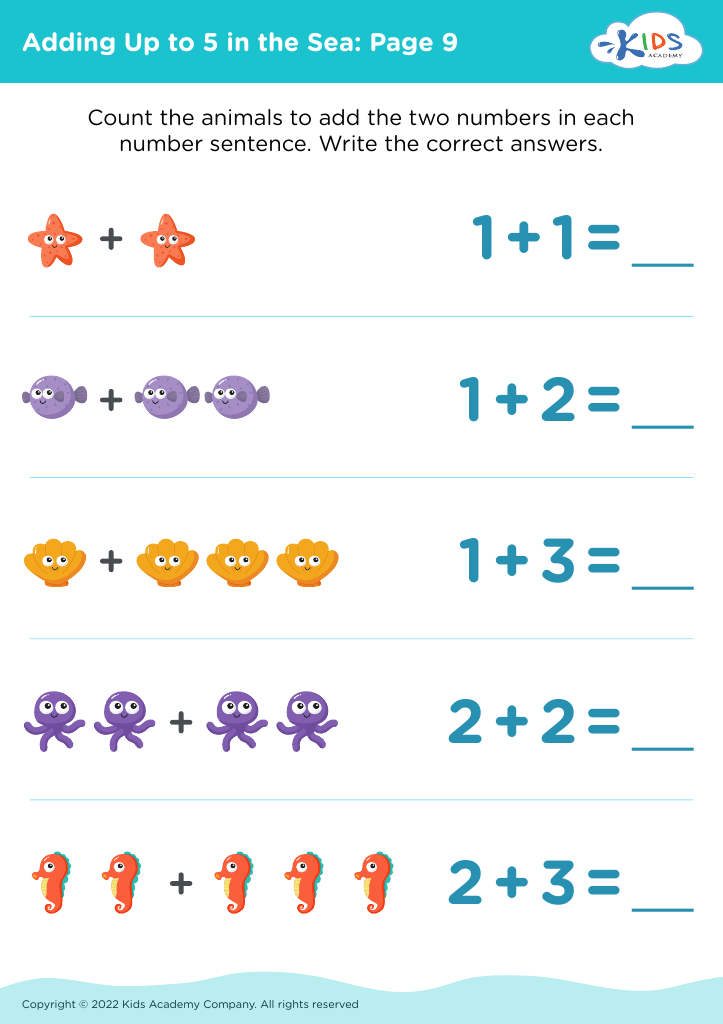
Addition skills, particularly the ability to add up to 5, are foundational for young children, especially those aged 3-4. At this stage of development, children are beginning to understand numbers and gain a sense of quantity. Mastering basic addition helps build their mathematical framework and fosters a positive attitude toward math as they progress in their education.
For parents and teachers, developing these skills with activities like counting objects, playing simple math games, and using everyday situations helps nurture a child’s natural curiosity about numbers. Adding up to 5 provides a manageable target that encourages confidence and competence. Furthermore, these early skills support cognitive development, enhancing problem-solving abilities and critical thinking.
Additionally, early mastery of addition forms the building blocks for more complex mathematical concepts that will be learned later on. It also allows children to connect math to real-life situations, such as sharing toys or snacks, promoting social skills and teamwork. By investing time in teaching and supporting these skills, parents and teachers play a crucial role in ensuring that children not only succeed in mathematics but cultivate a lifelong love for learning and exploration in this essential area of knowledge.








