Filters

90 filtered results

Clear all filters
Favorites
With answer key
Interactive

90 filtered results

Difficulty Level

Grade


Check out this FREE Trial Lesson on Adding Up to 5 for age 3-4!

My Family

Favorites
With answer key
Interactive
  • 3-4
  • Animal recognition
  • Adding Up to 5
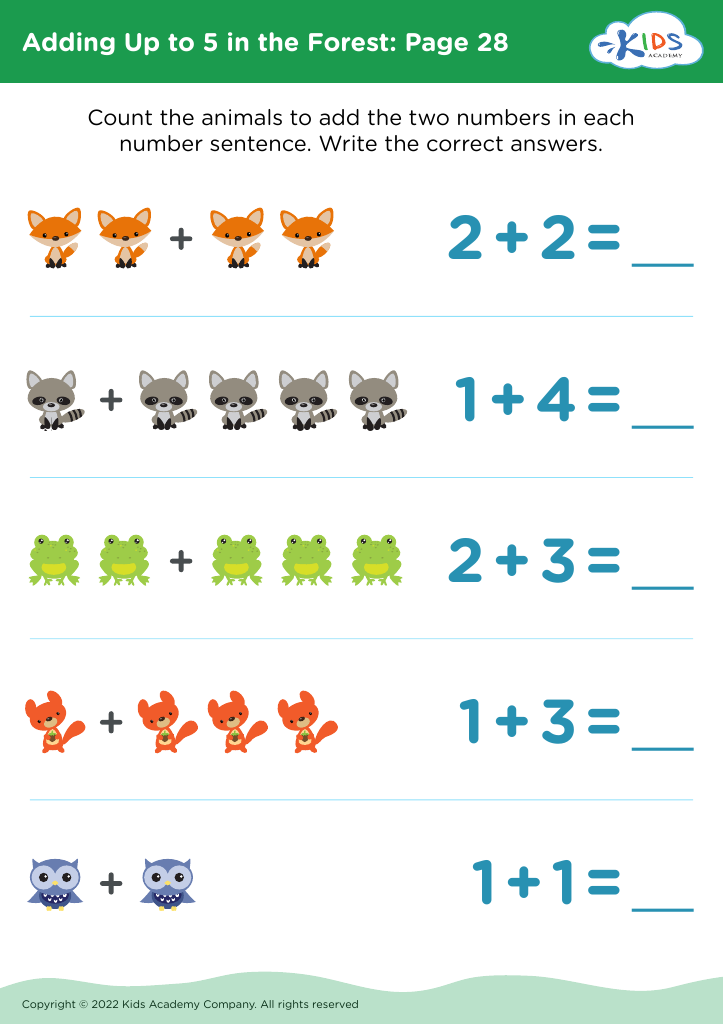
Adding Up to 5 in the Forest: Page 28
Worksheet
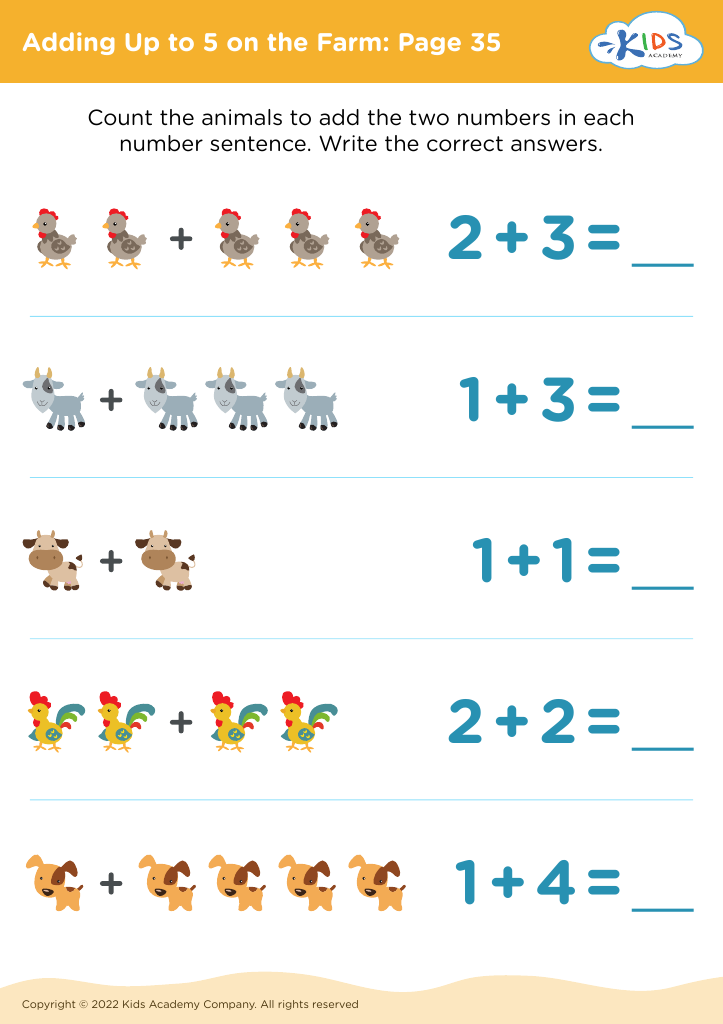
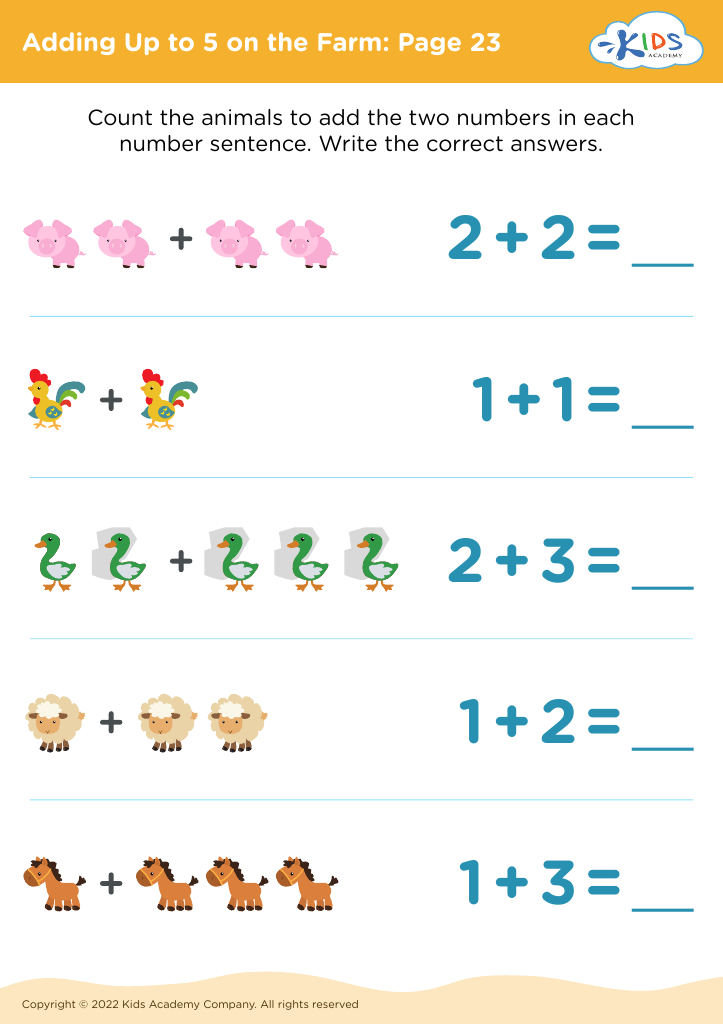
Adding Up to 5 on the Farm: Page 35
Worksheet
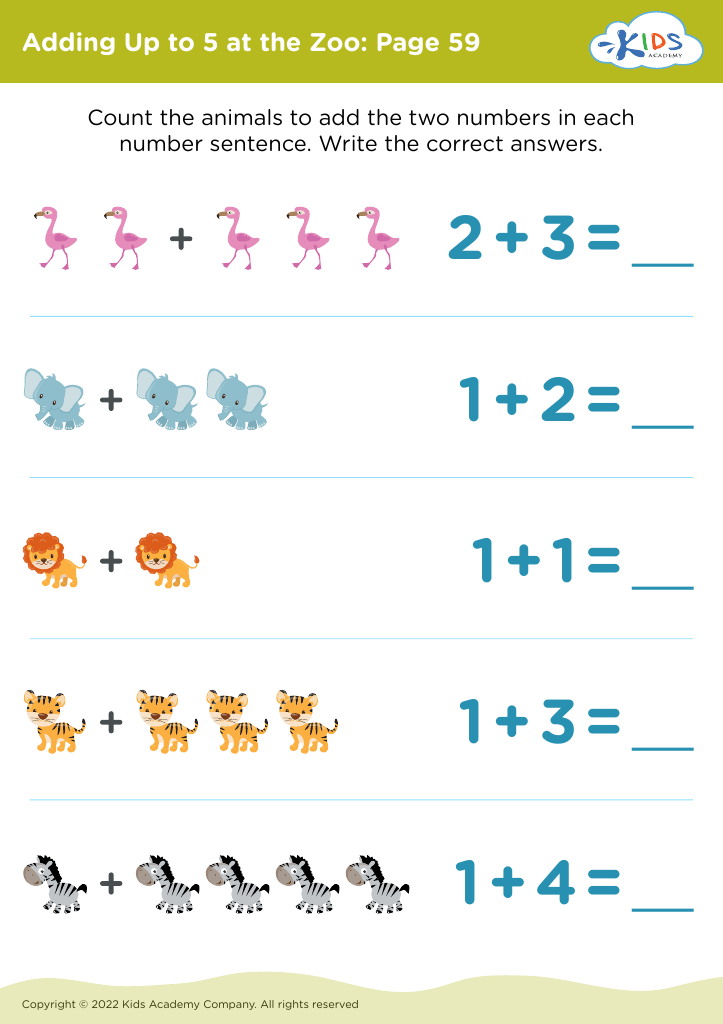
Adding Up to 5 at the Zoo: Page 59
Worksheet
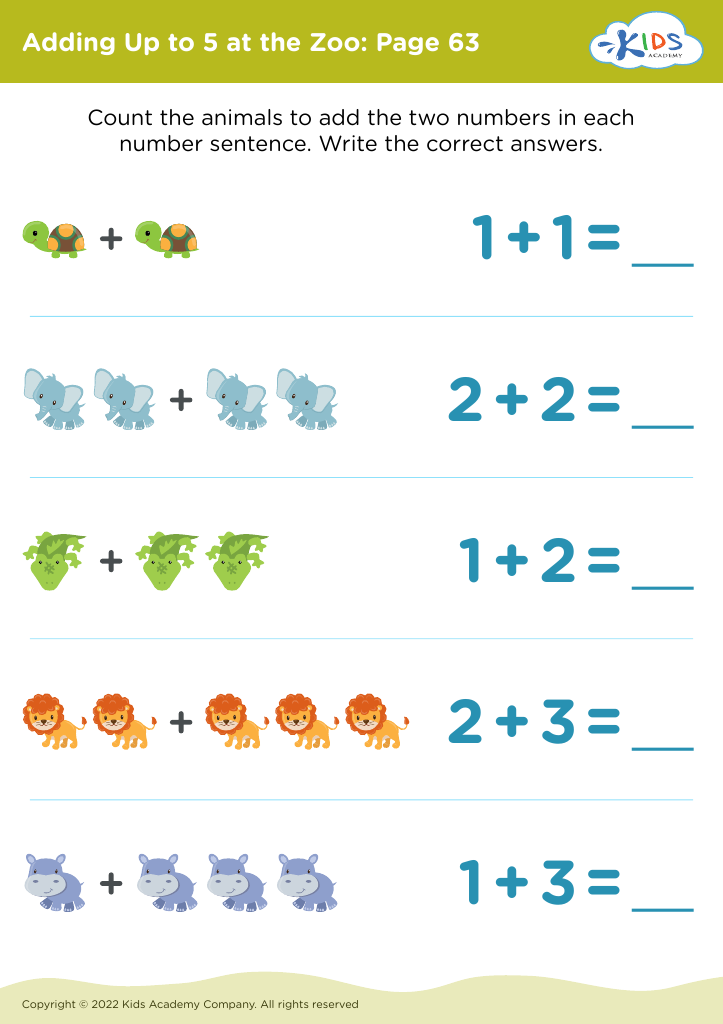
Adding Up to 5 at the Zoo: Page 63
Worksheet
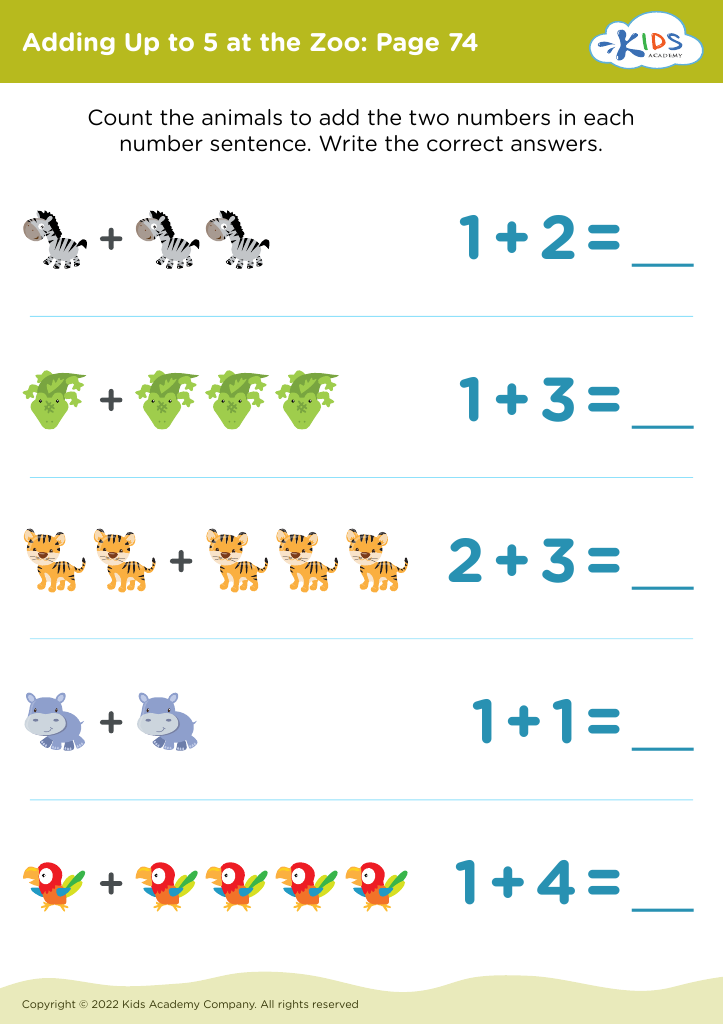
Adding Up to 5 at the Zoo: Page 74
Worksheet
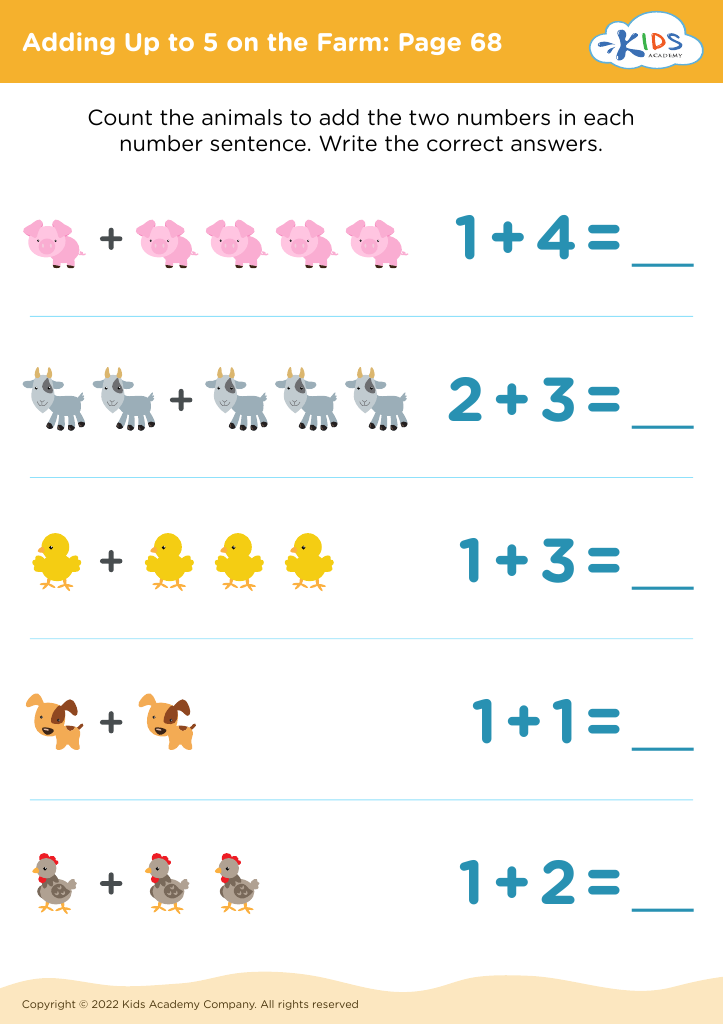
Adding Up to 5 on the Farm: Page 68
Worksheet
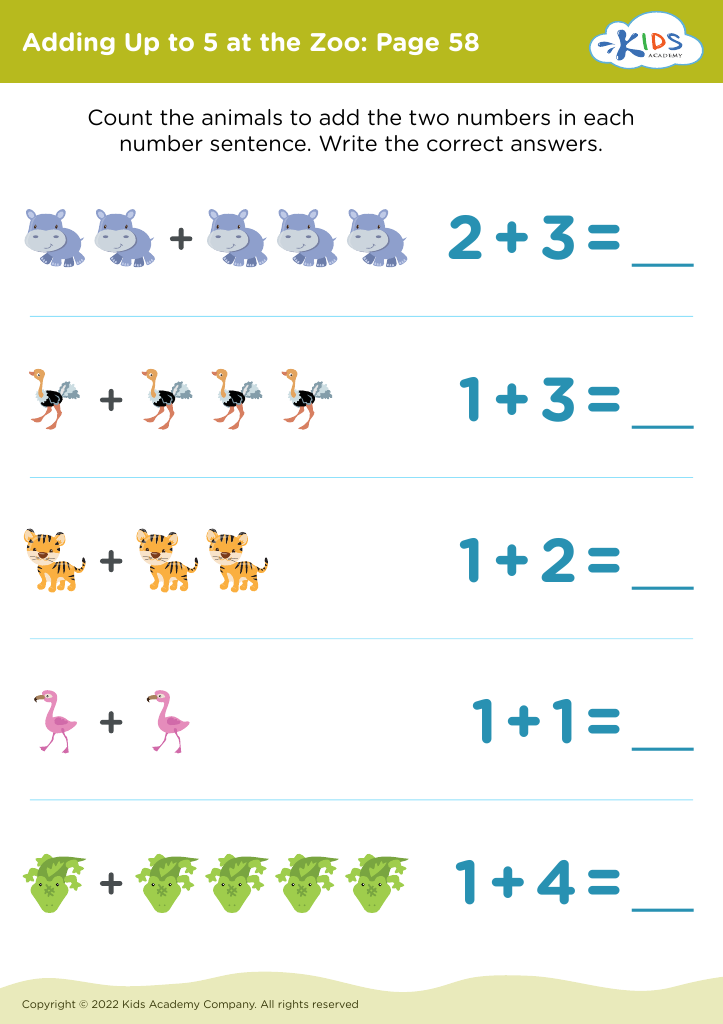
Adding Up to 5 at the Zoo: Page 58
Worksheet
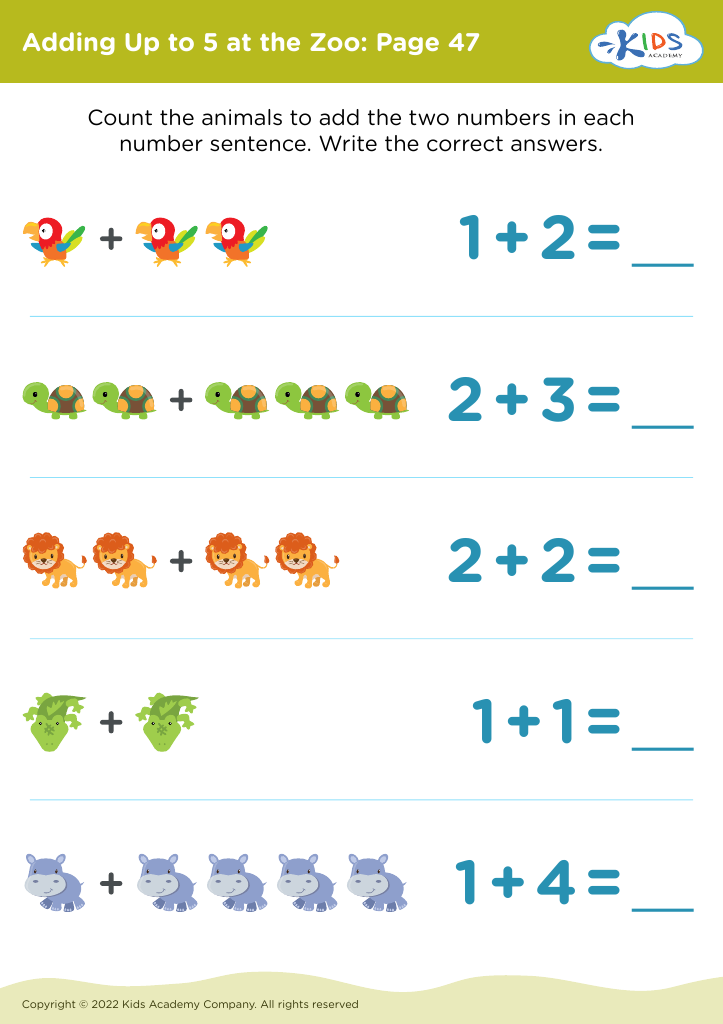
Adding Up to 5 at the Zoo: Page 47
Worksheet
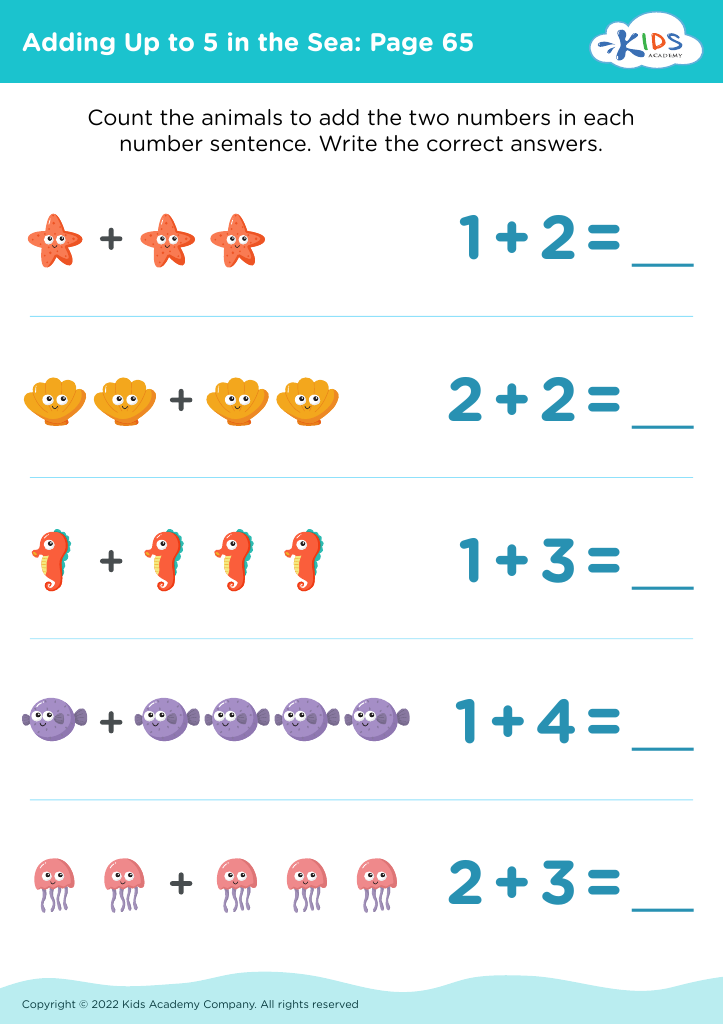
Adding Up to 5 in the Sea: Page 65
Worksheet
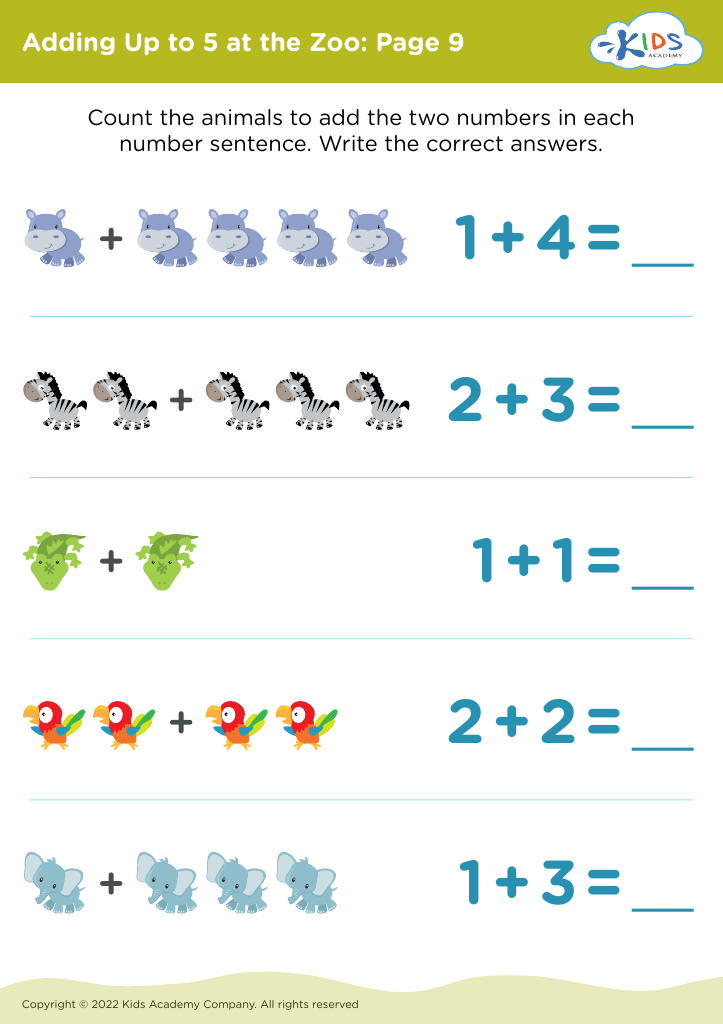
Adding Up to 5 at the Zoo: Page 9

Adding Up to 5 at the Zoo: Page 9

Adding Up to 5 at the Zoo: Page 9
Worksheet
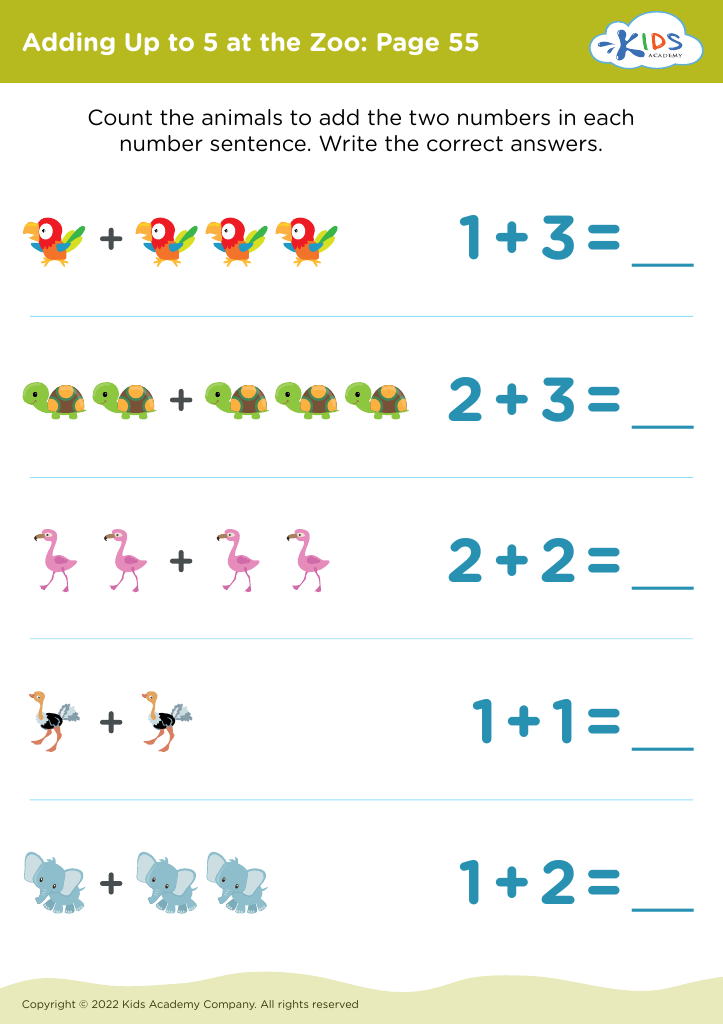
Adding Up to 5 at the Zoo: Page 55
Worksheet
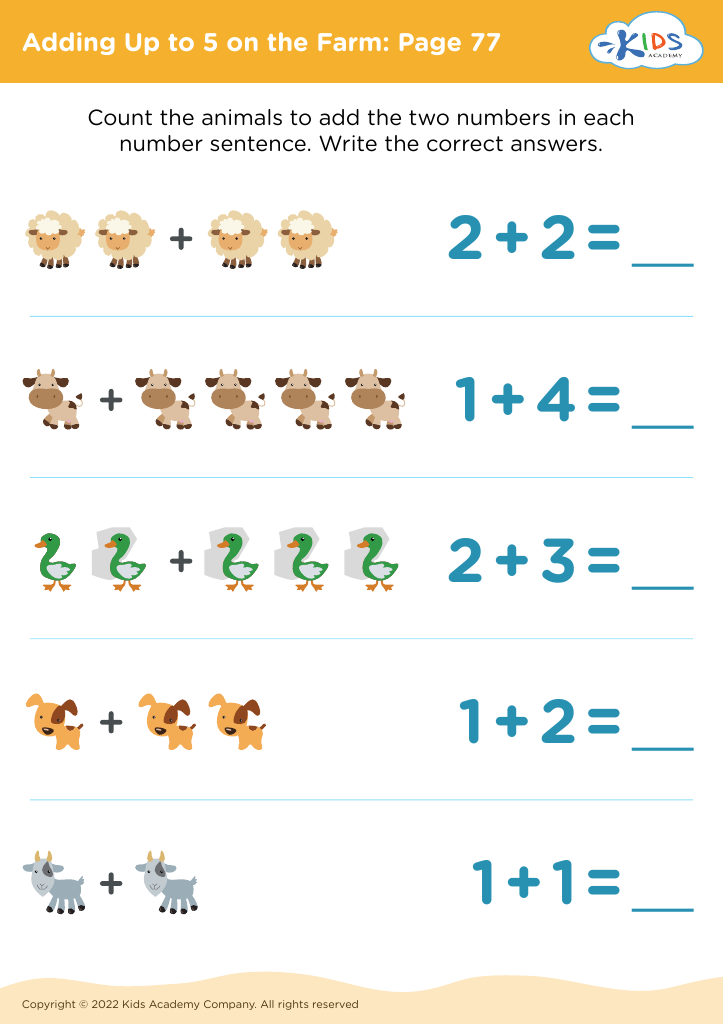
Adding Up to 5 on the Farm: Page 77
Worksheet
Adding Up to 5 on the Farm: Page 23
Worksheet
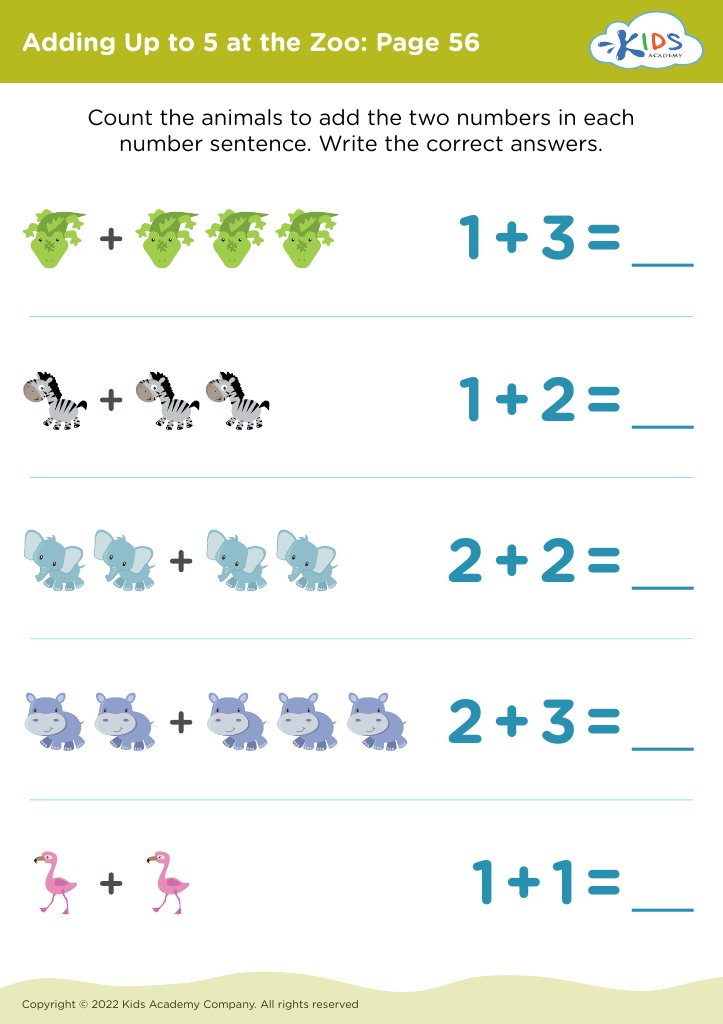
Adding Up to 5 at the Zoo: Page 56
Worksheet
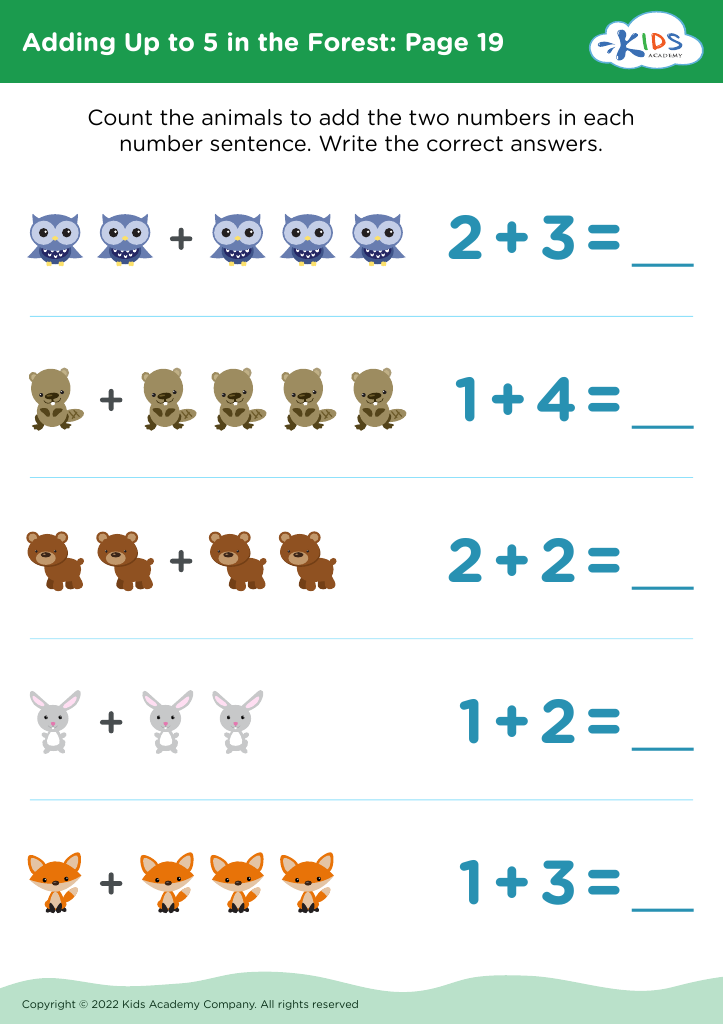
Adding Up to 5 in the Forest: Page 19
Worksheet
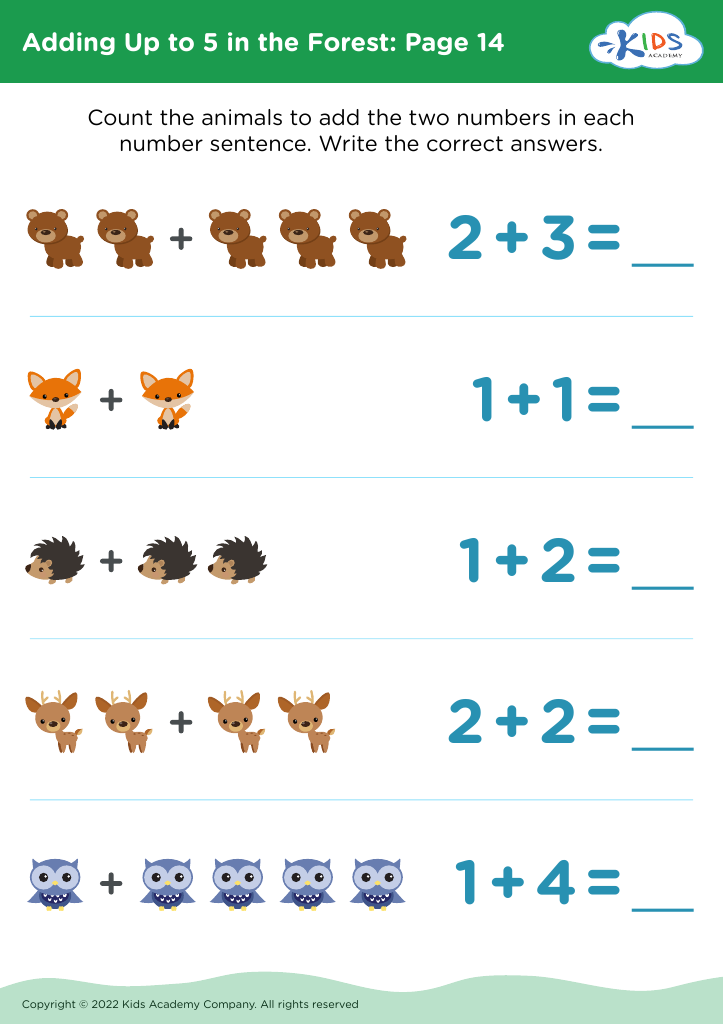
Adding Up to 5 in the Forest: Page 14
Worksheet
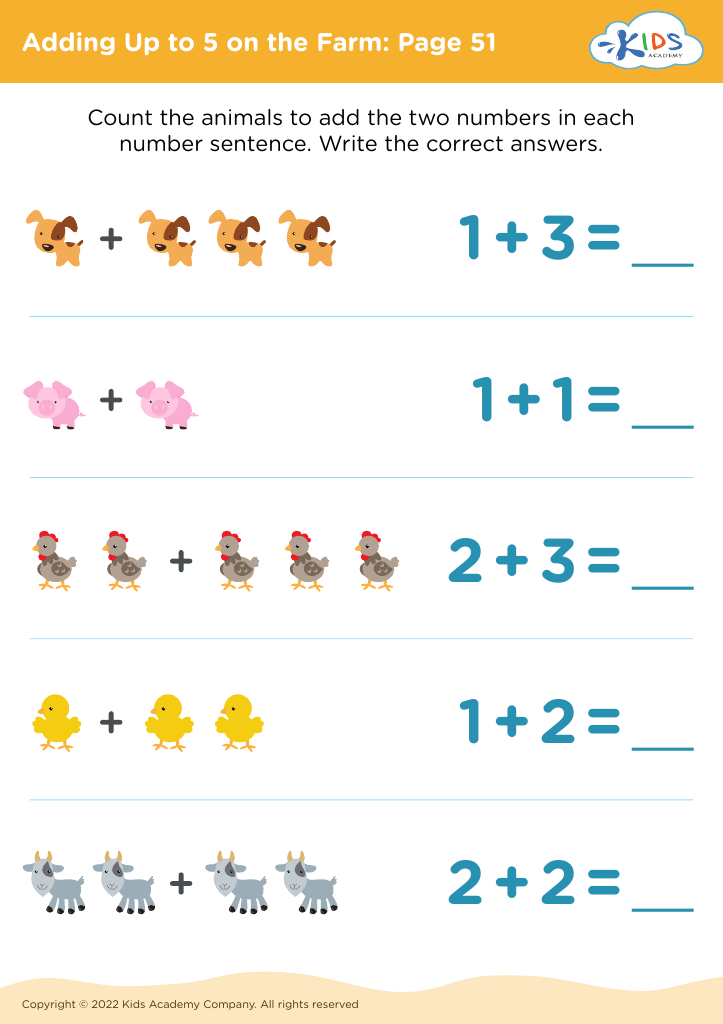
Adding Up to 5 on the Farm: Page 51
Worksheet
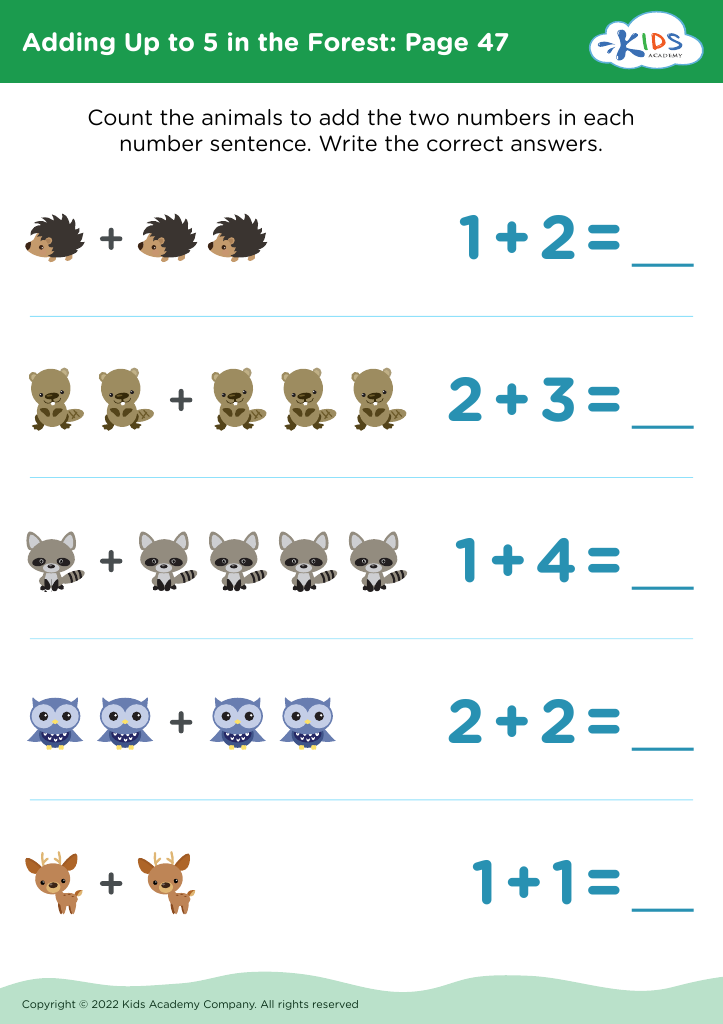
Adding Up to 5 in the Forest: Page 47
Worksheet
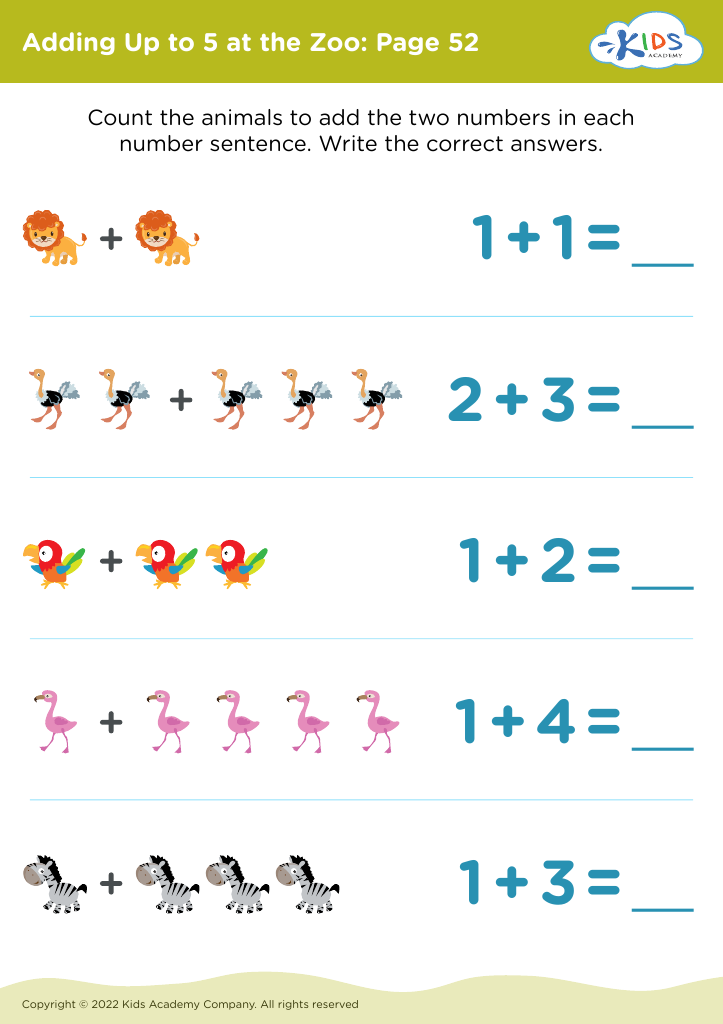
Adding Up to 5 at the Zoo: Page 52
Worksheet
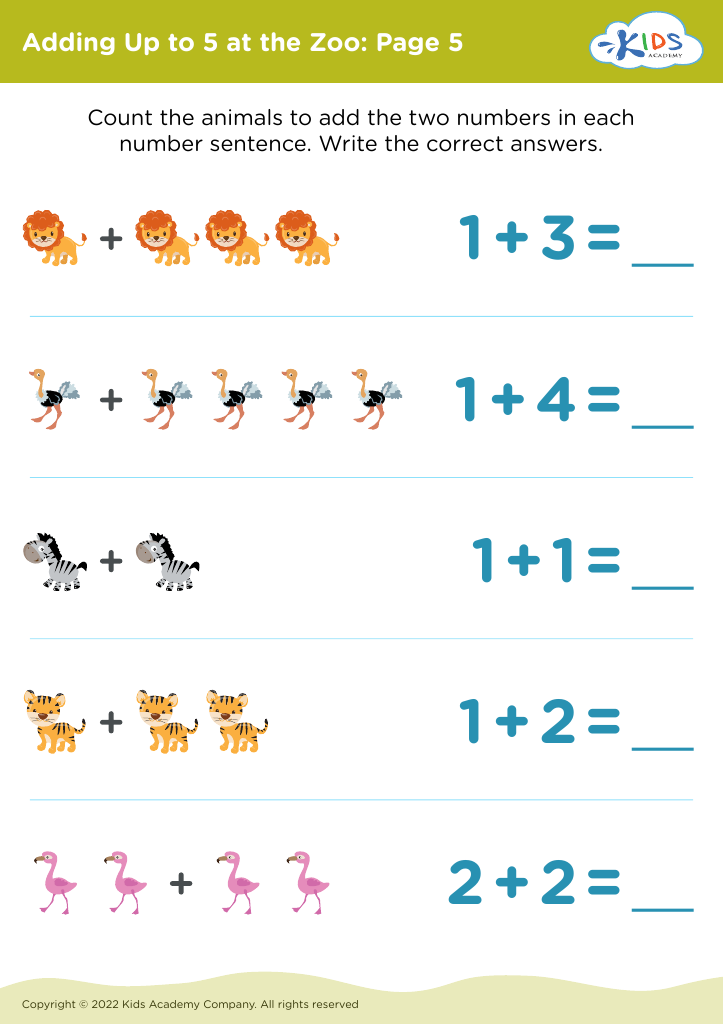
Adding Up to 5 at the Zoo: Page 5

Adding Up to 5 at the Zoo: Page 5

Adding Up to 5 at the Zoo: Page 5
Worksheet
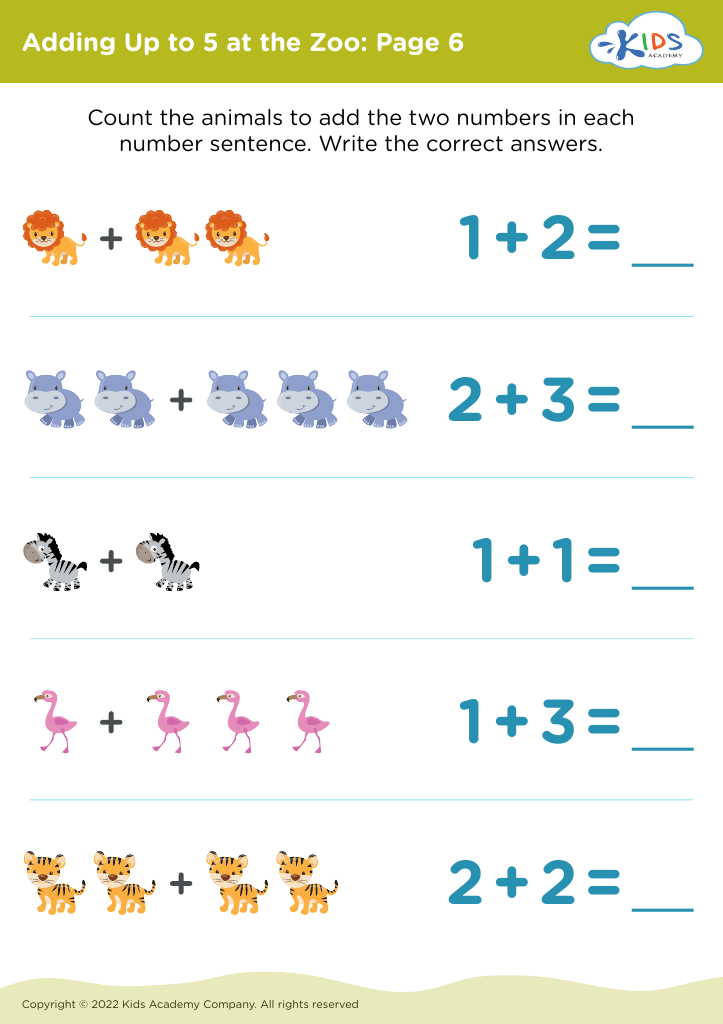
Adding Up to 5 at the Zoo: Page 6

Adding Up to 5 at the Zoo: Page 6

Adding Up to 5 at the Zoo: Page 6
Worksheet
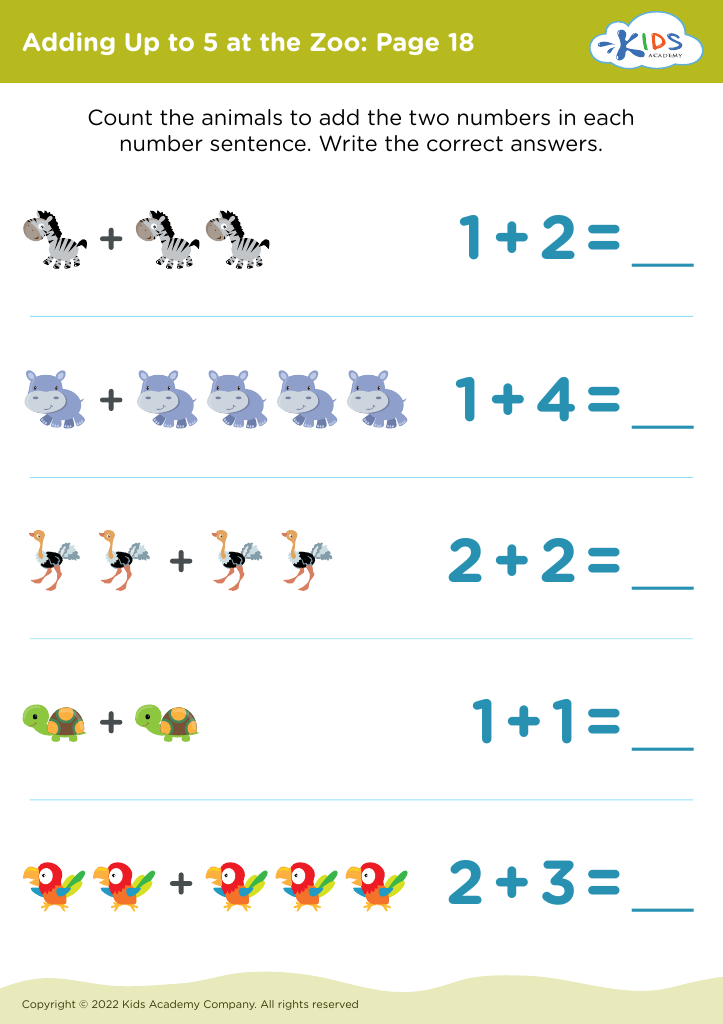
Adding Up to 5 at the Zoo: Page 18
Worksheet
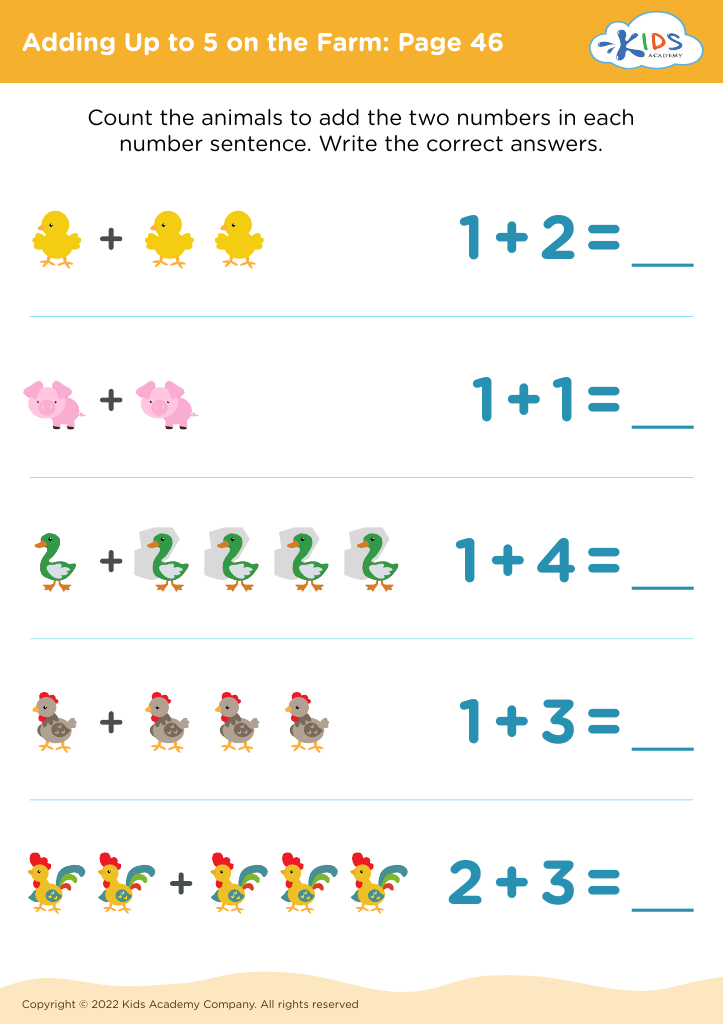
Adding Up to 5 on the Farm: Page 46
Worksheet
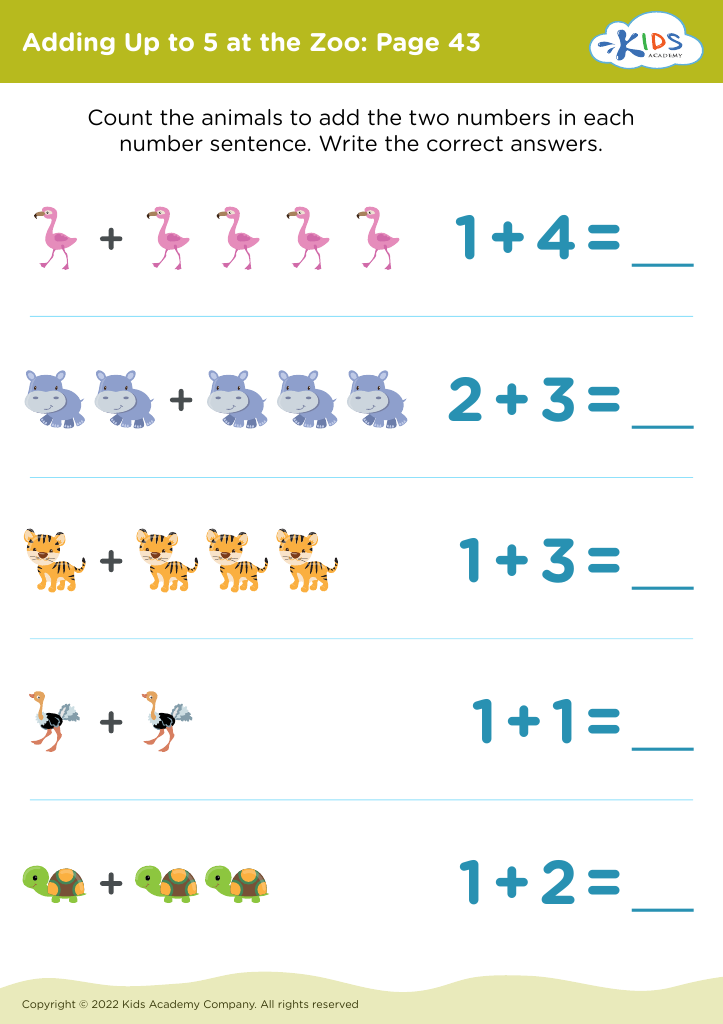
Adding Up to 5 at the Zoo: Page 43
Worksheet


Animal recognition and basic math skills, such as adding up to 5, are crucial components of early childhood education for ages 3-4. First, recognizing animals helps children make connections with the natural world, enhancing their vocabulary and fostering curiosity about different species. Engaging with animals in stories, songs, and games introduces them to concepts of diversity, habitats, and behaviors, promoting empathy and solidarity for living beings.

When combined with foundational math skills like counting and addition, learning about animals becomes an interactive and memorable experience. Parents and teachers can utilize animal-themed exercises—like counting paws, tails, or legs—to make learning engaging. For instance, using toy animals to physically add up to 5 allows children to visualize the math concepts, making the lessons tangible.

Furthermore, these early experiences build problem-solving skills and reinforce critical thinking. As children learn to identify animals and perform simple addition, they develop the confidence needed for future educational challenges.

In essence, integrating animal recognition with basic math fosters holistic development—encouraging cognitive, social, and emotional growth. Thus, parents and educators should prioritize these learning experiences to provide children with a well-rounded foundation for lifelong learning.