Check out this FREE Trial Lesson on Adding Up to 5 for age 3-4!

Z

Favorites
With answer key
Interactive
  • 3-4
  • Basic Addition Skills
  • Adding Up to 5
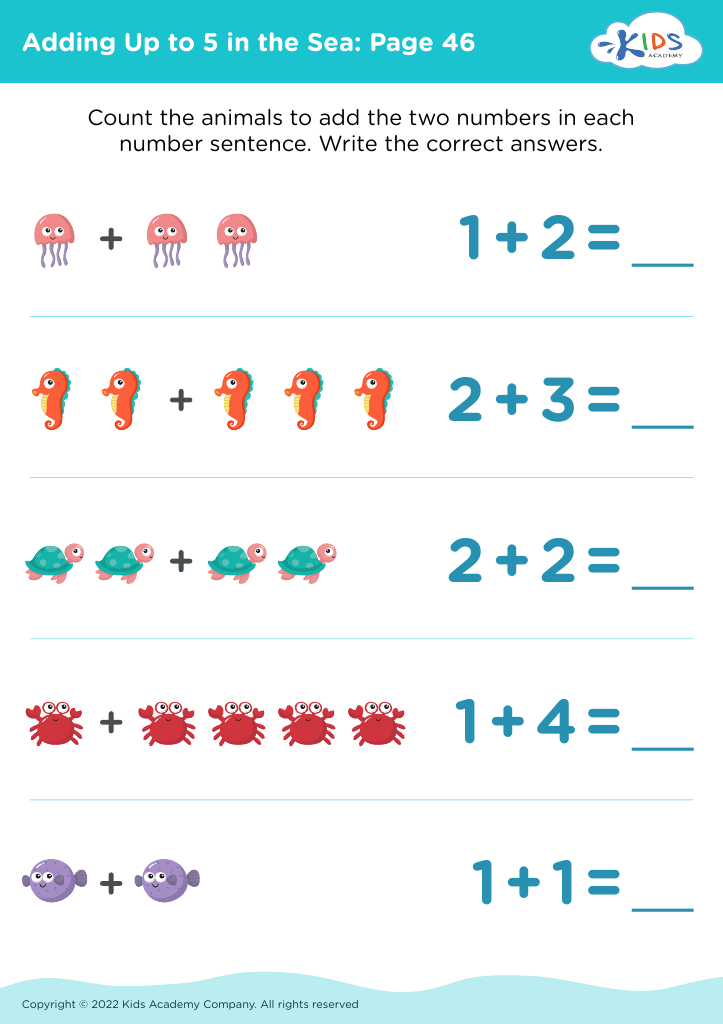
Adding Up to 5 in the Sea: Page 46
Worksheet
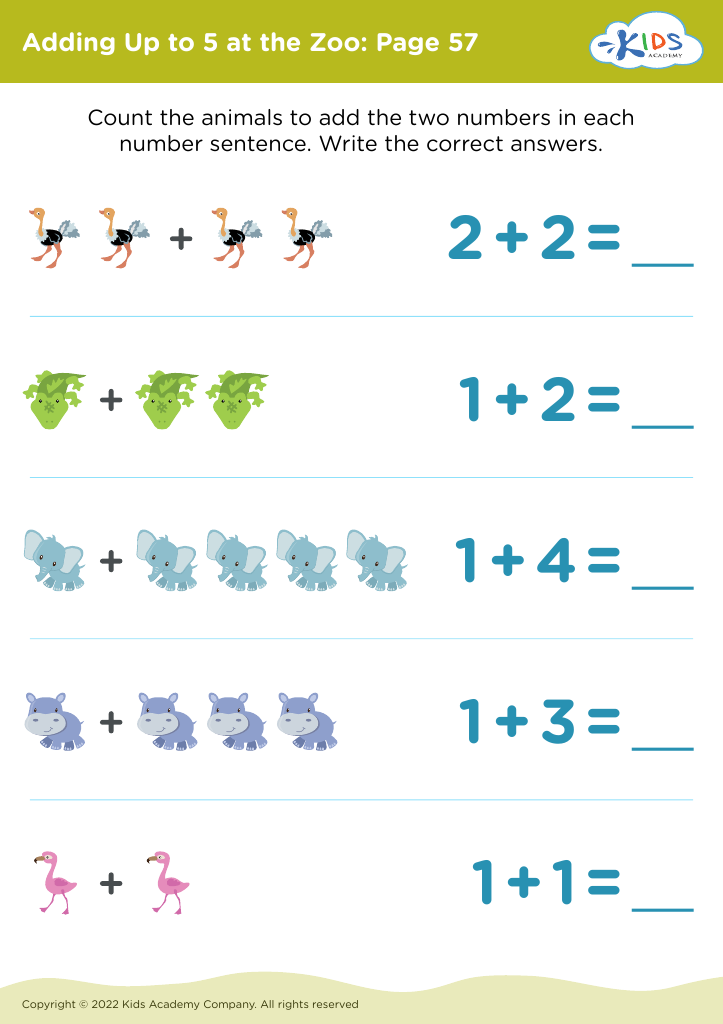
Adding Up to 5 at the Zoo: Page 57
Worksheet
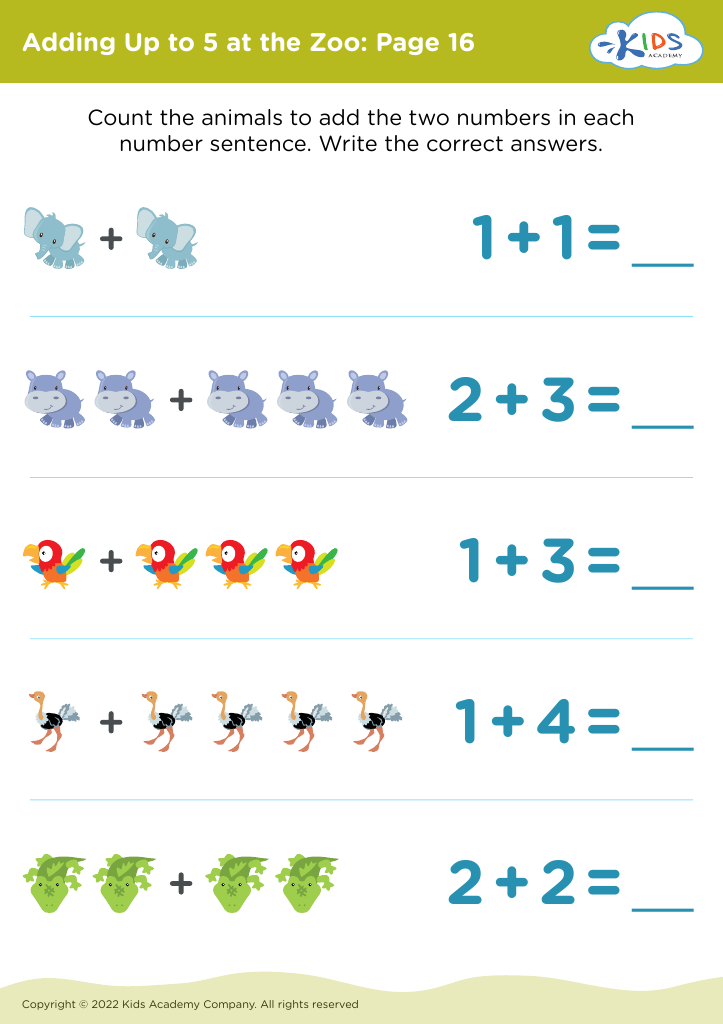
Adding Up to 5 at the Zoo: Page 16
Worksheet
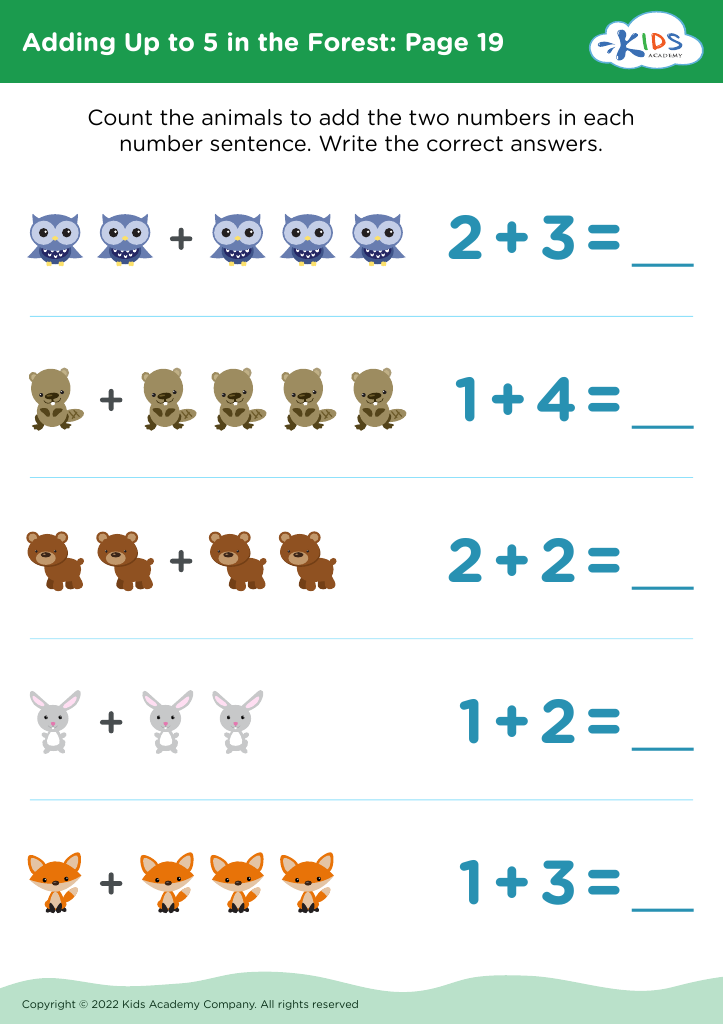
Adding Up to 5 in the Forest: Page 19
Worksheet
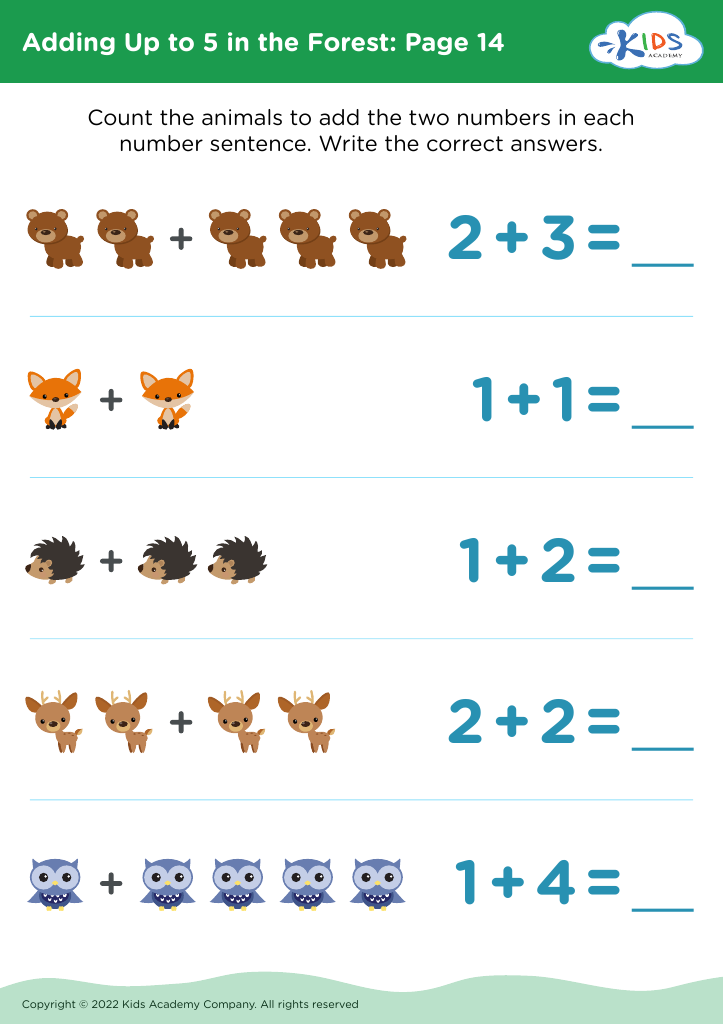
Adding Up to 5 in the Forest: Page 14
Worksheet
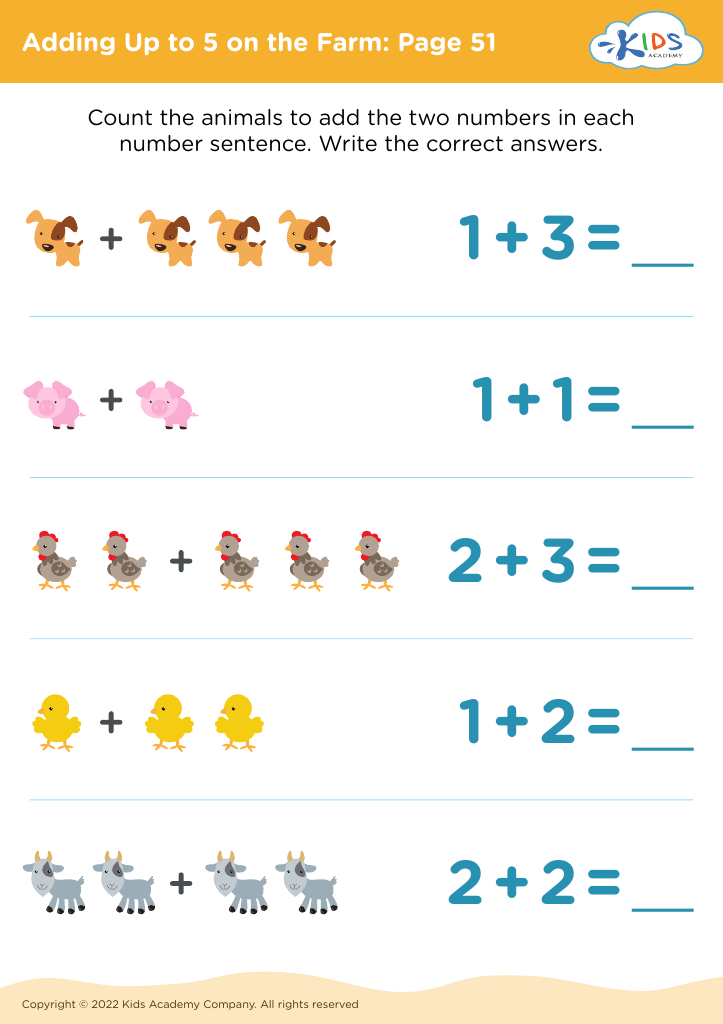
Adding Up to 5 on the Farm: Page 51
Worksheet
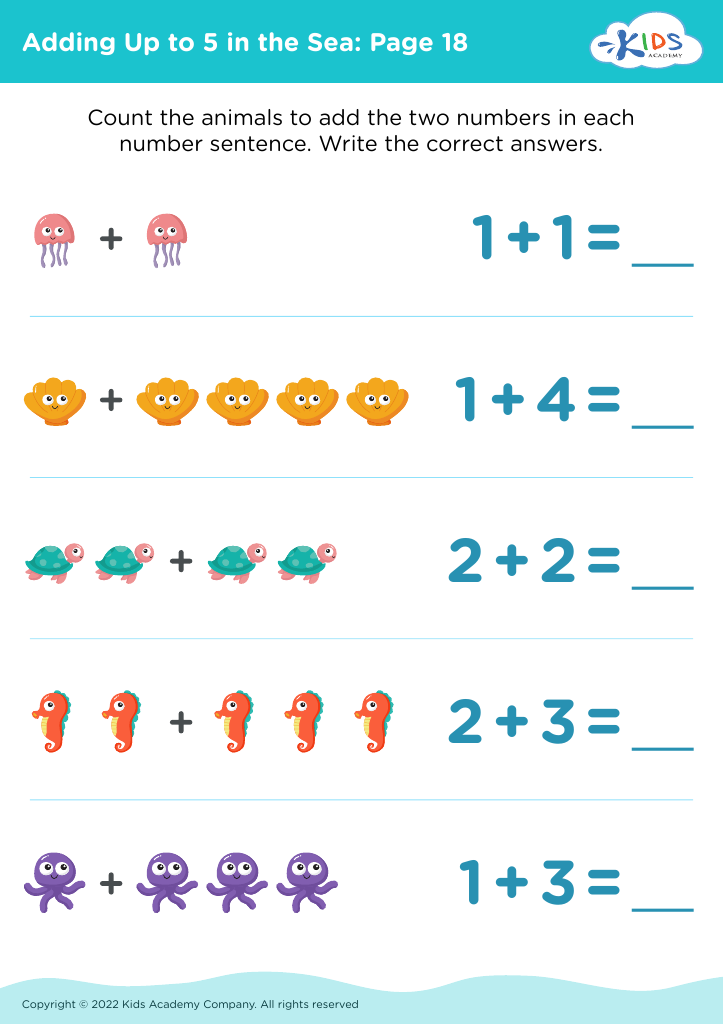
Adding Up to 5 in the Sea: Page 18
Worksheet
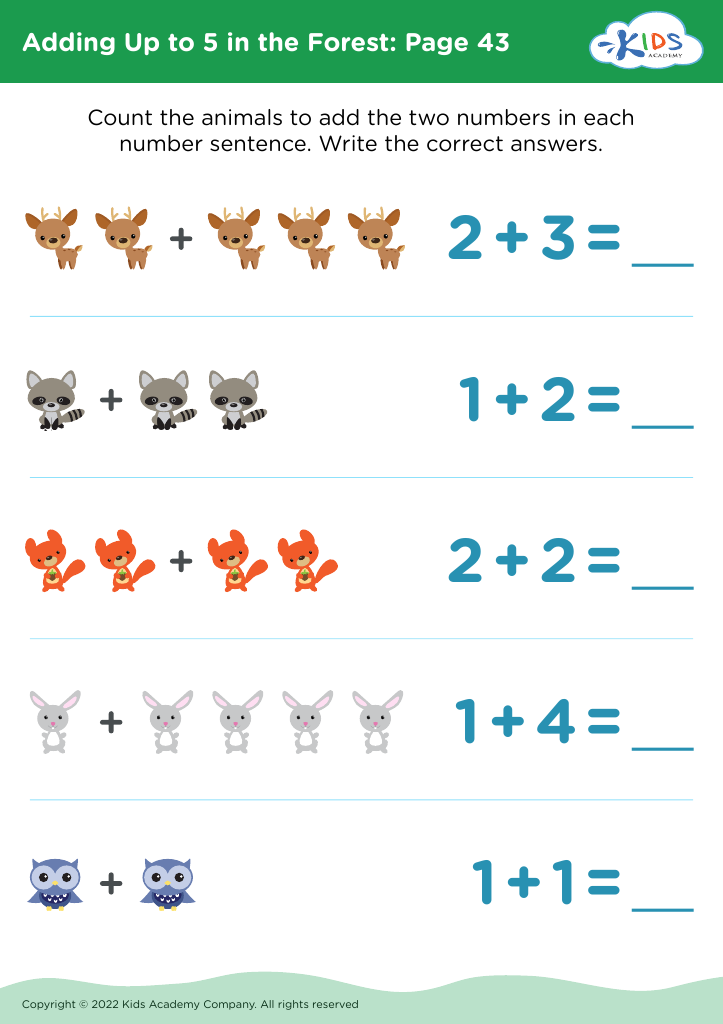
Adding Up to 5 in the Forest: Page 43
Worksheet
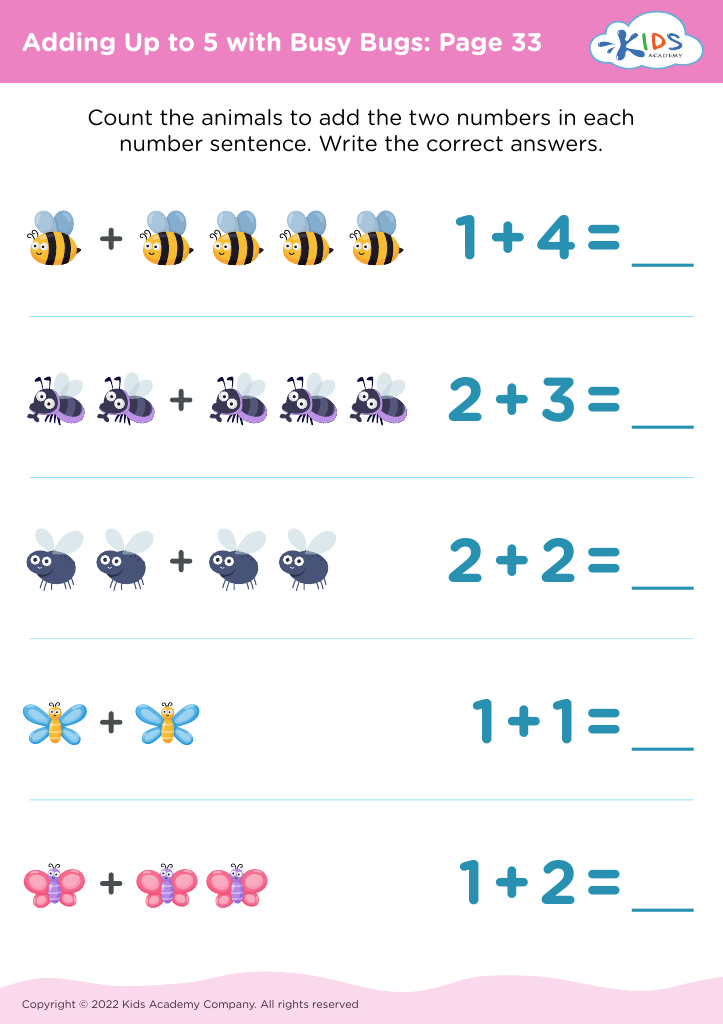
Adding Up to 5 with Busy Bugs: Page 33
Worksheet
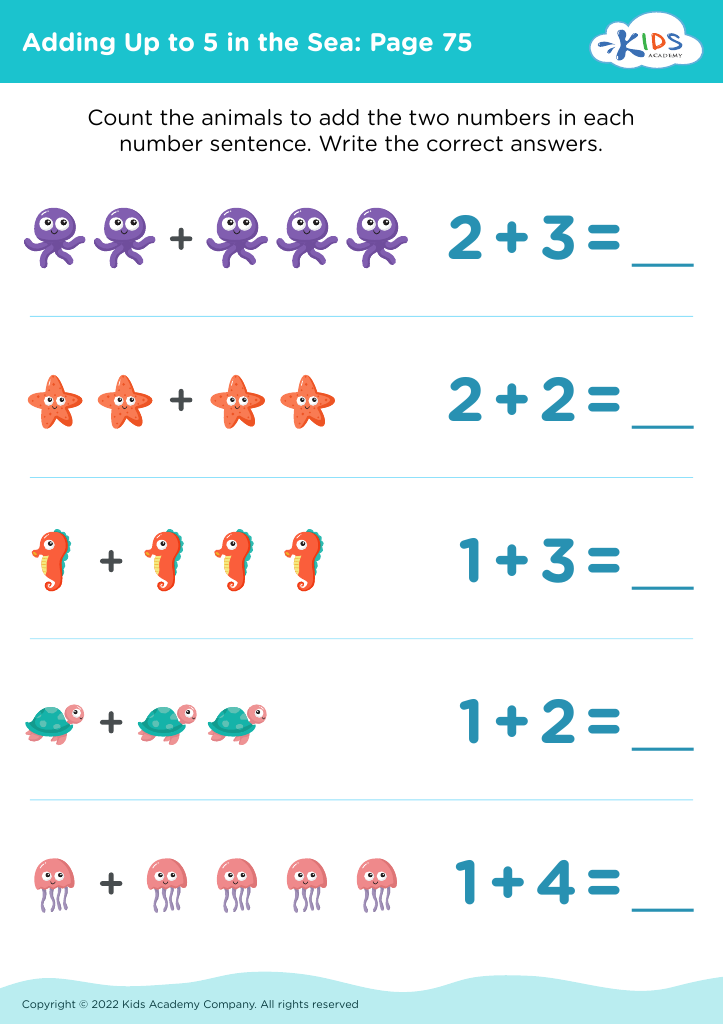
Adding Up to 5 in the Sea: Page 75
Worksheet
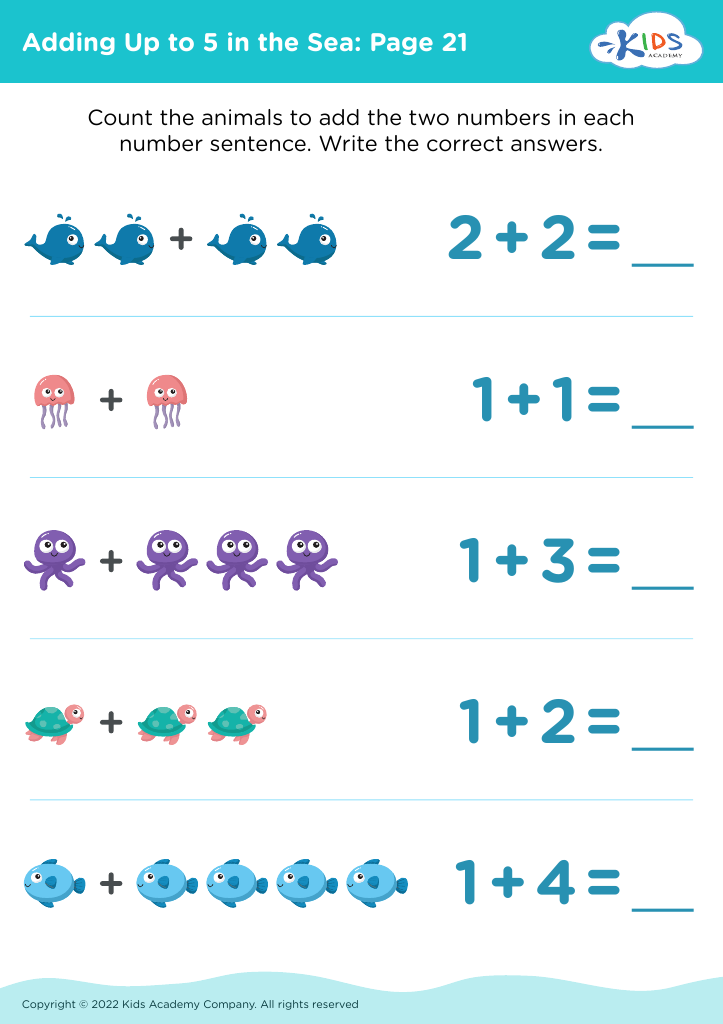
Adding Up to 5 in the Sea: Page 21
Worksheet
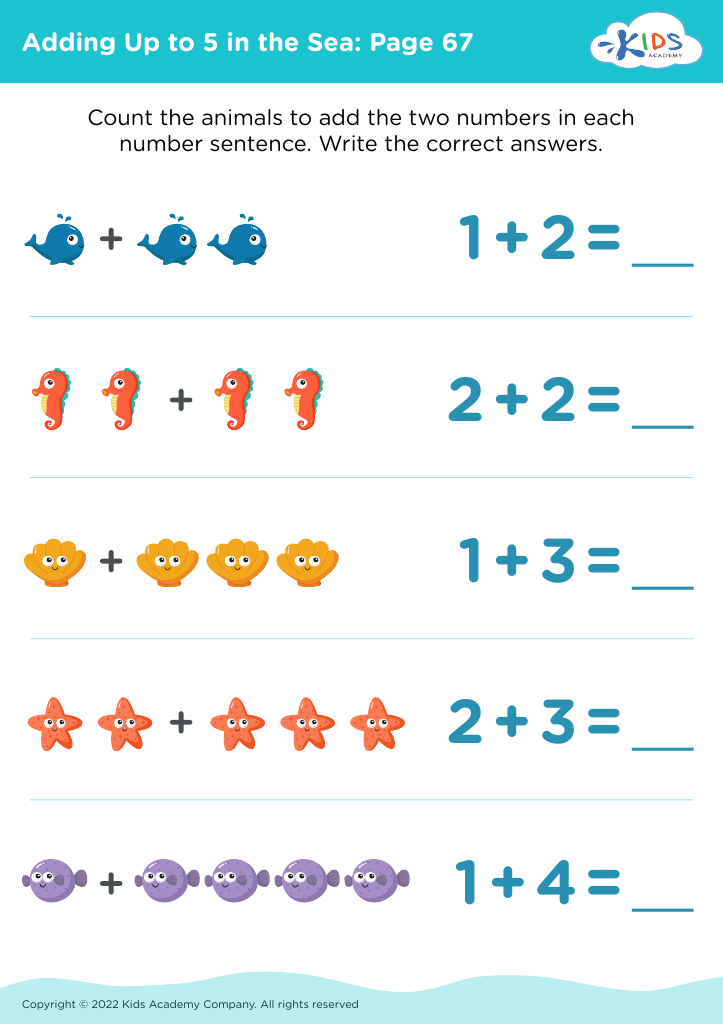
Adding Up to 5 in the Sea: Page 67
Worksheet
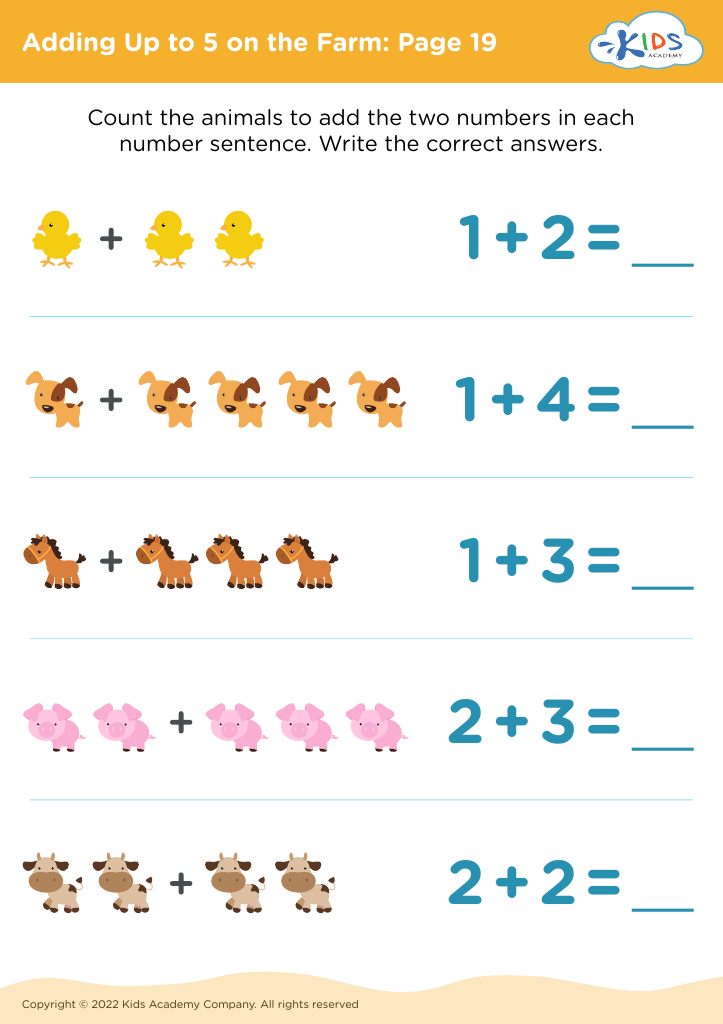
Adding Up to 5 on the Farm: Page 19
Worksheet
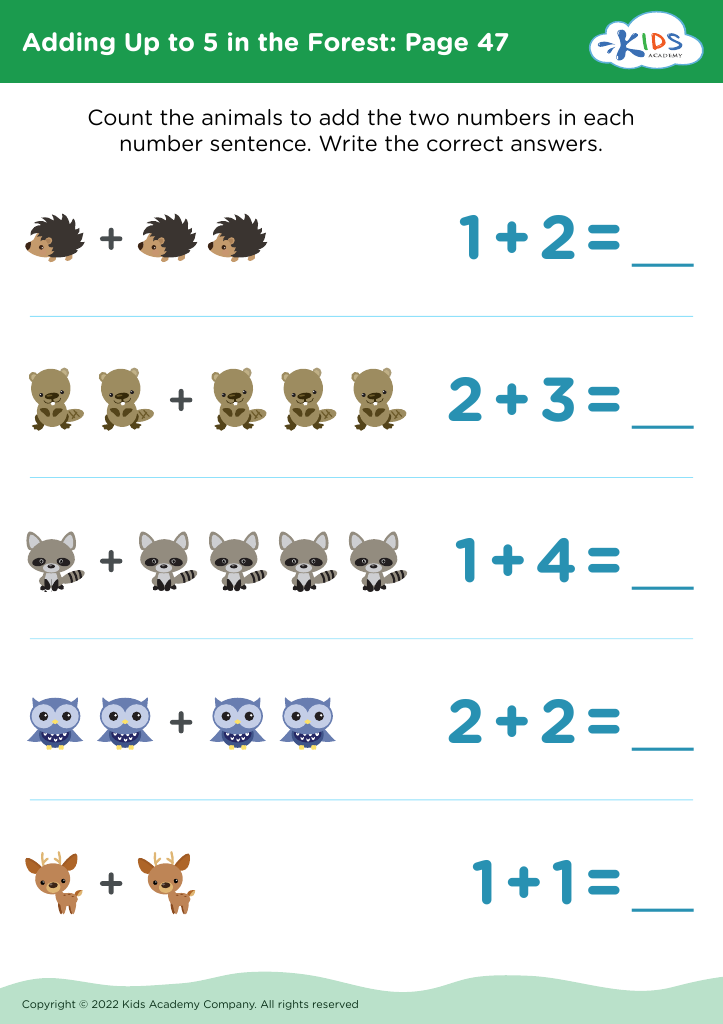
Adding Up to 5 in the Forest: Page 47
Worksheet
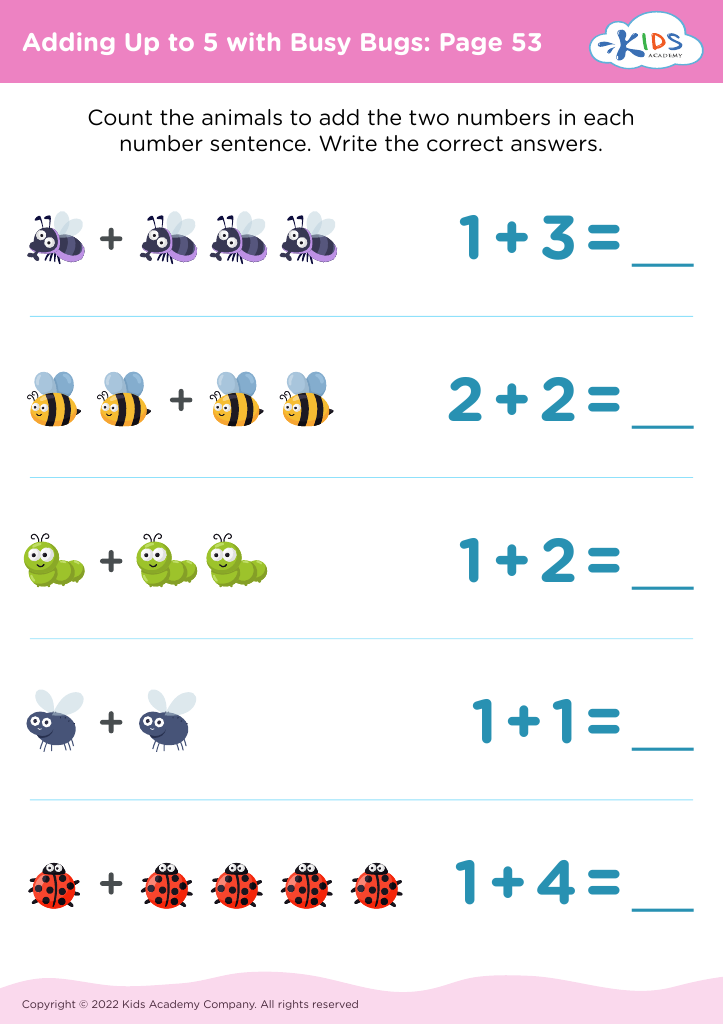
Adding Up to 5 with Busy Bugs: Page 53
Worksheet
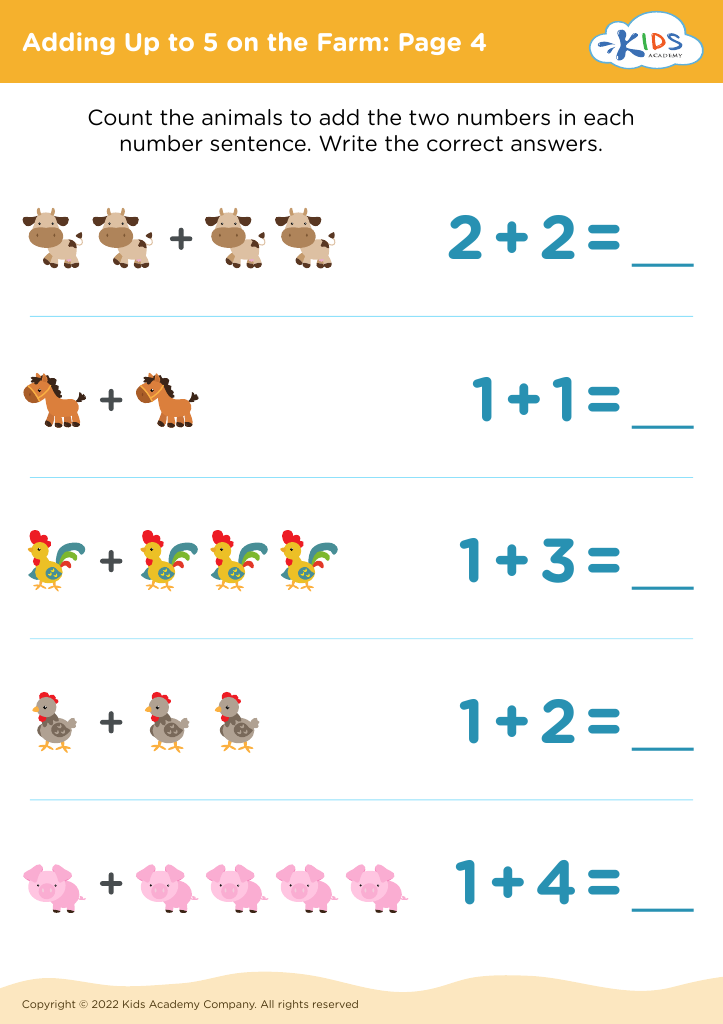
Adding Up to 5 on the Farm: Page 4
Worksheet
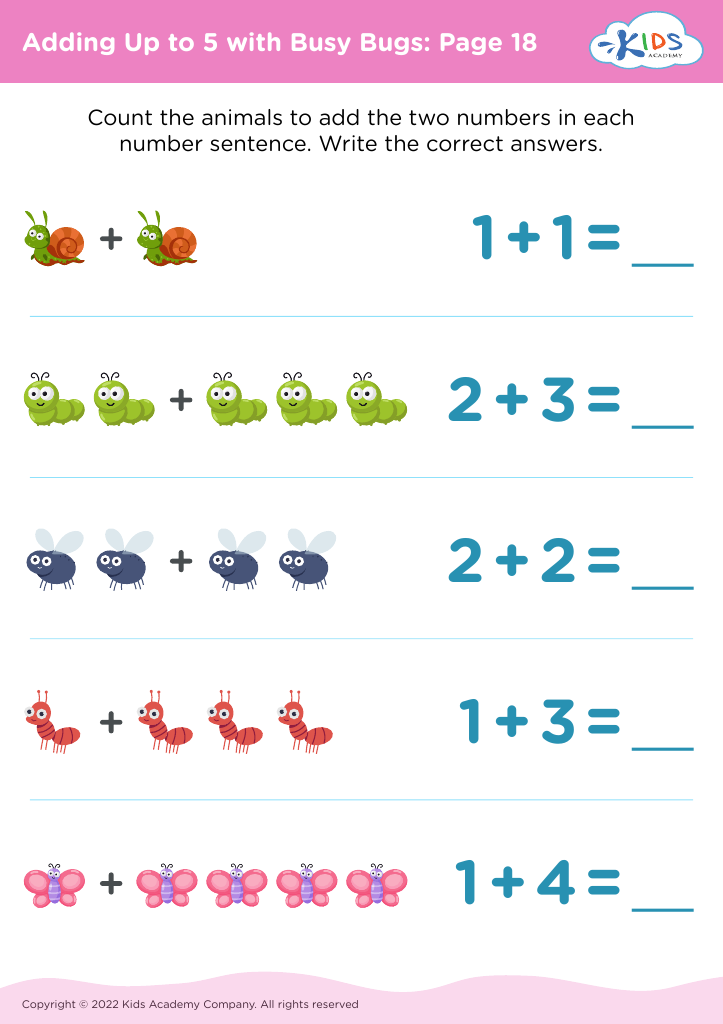
Adding Up to 5 with Busy Bugs: Page 18
Worksheet
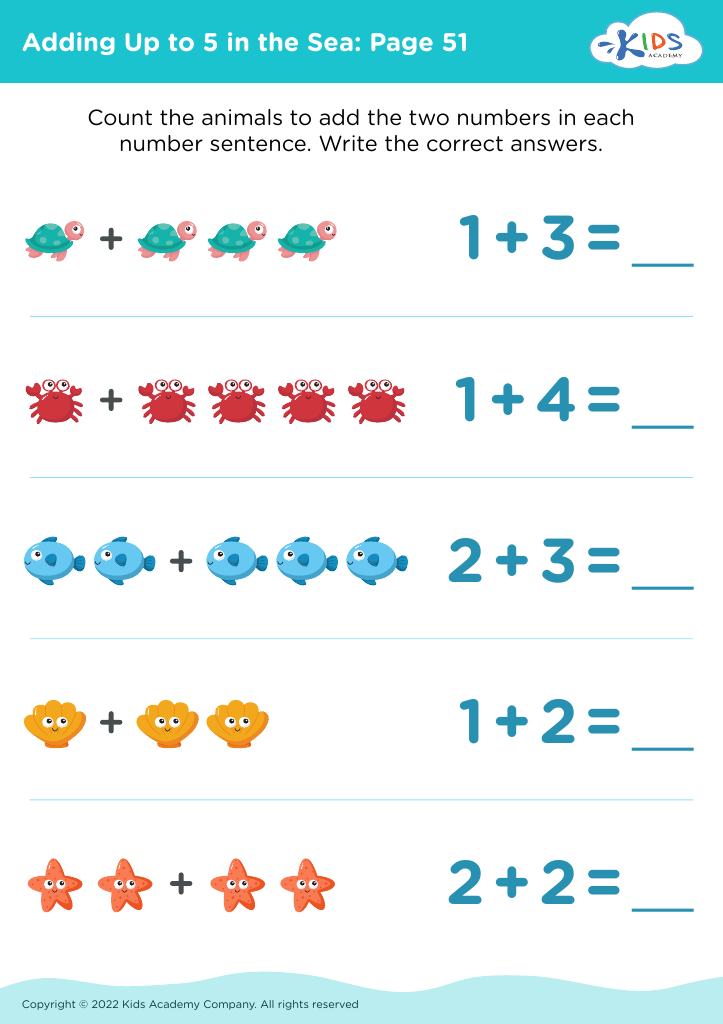
Adding Up to 5 in the Sea: Page 51
Worksheet
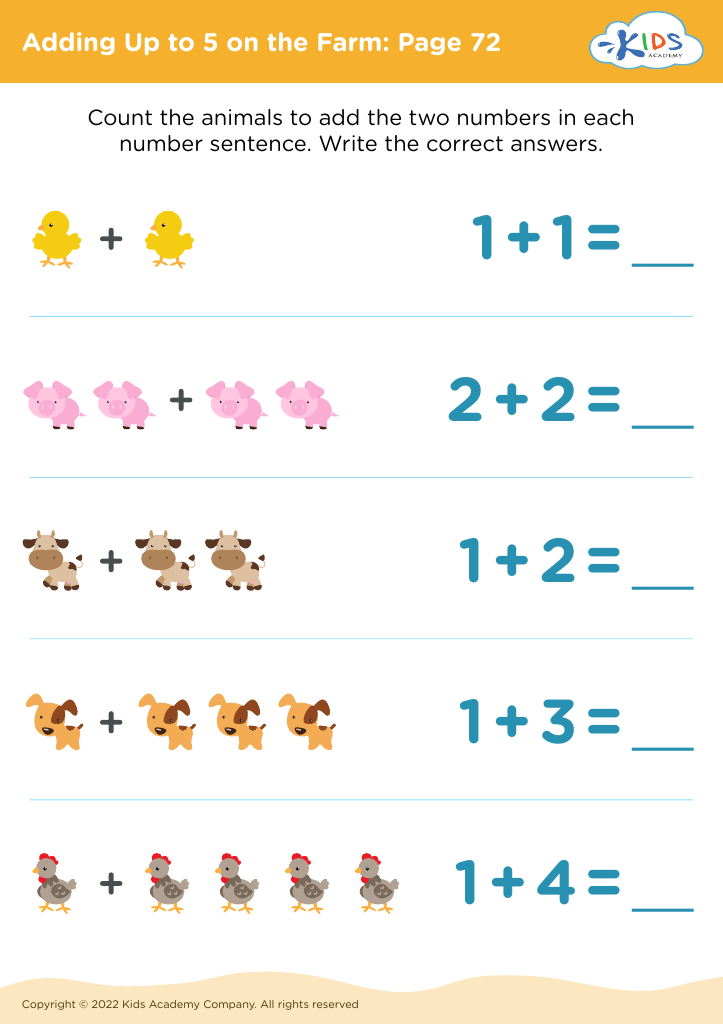
Adding Up to 5 on the Farm: Page 72
Worksheet
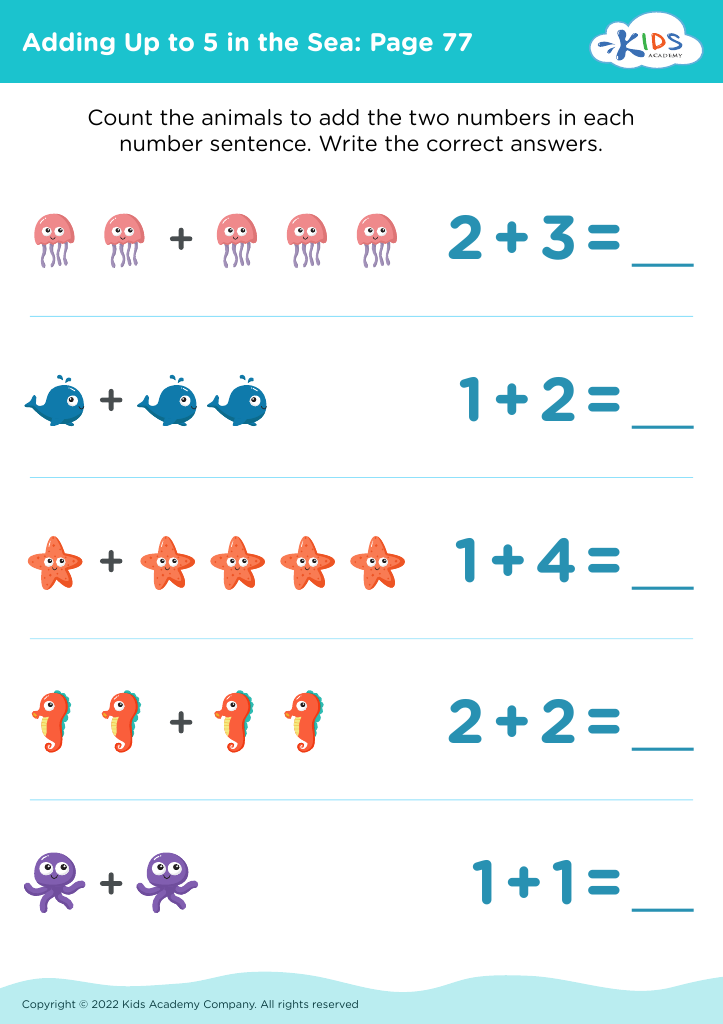
Adding Up to 5 in the Sea: Page 77
Worksheet
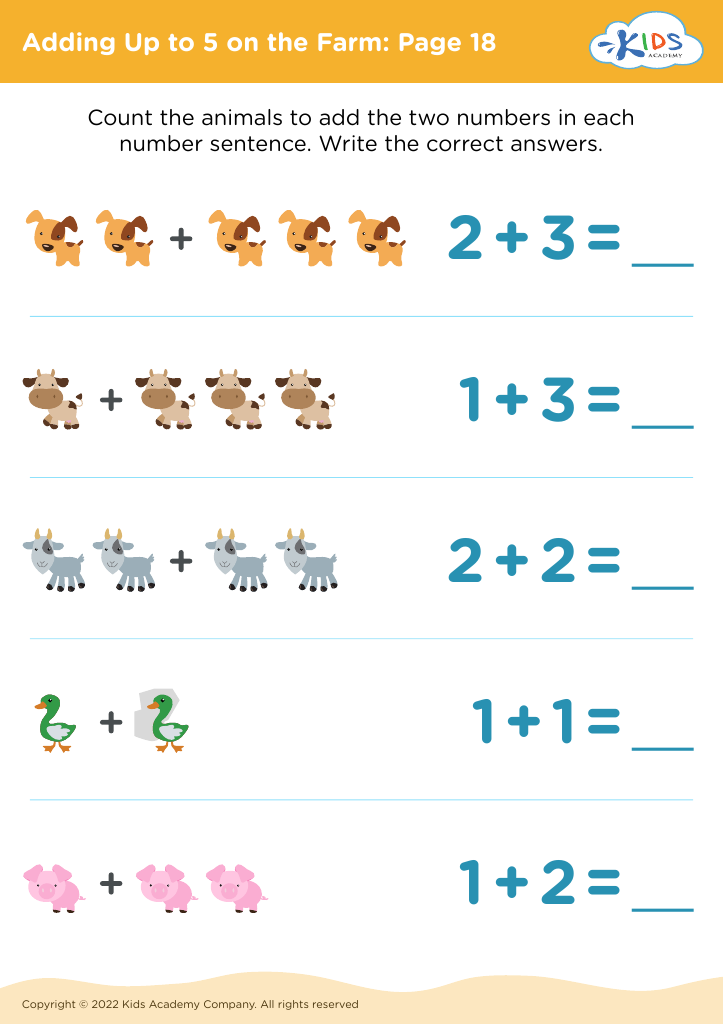
Adding Up to 5 on the Farm: Page 18
Worksheet
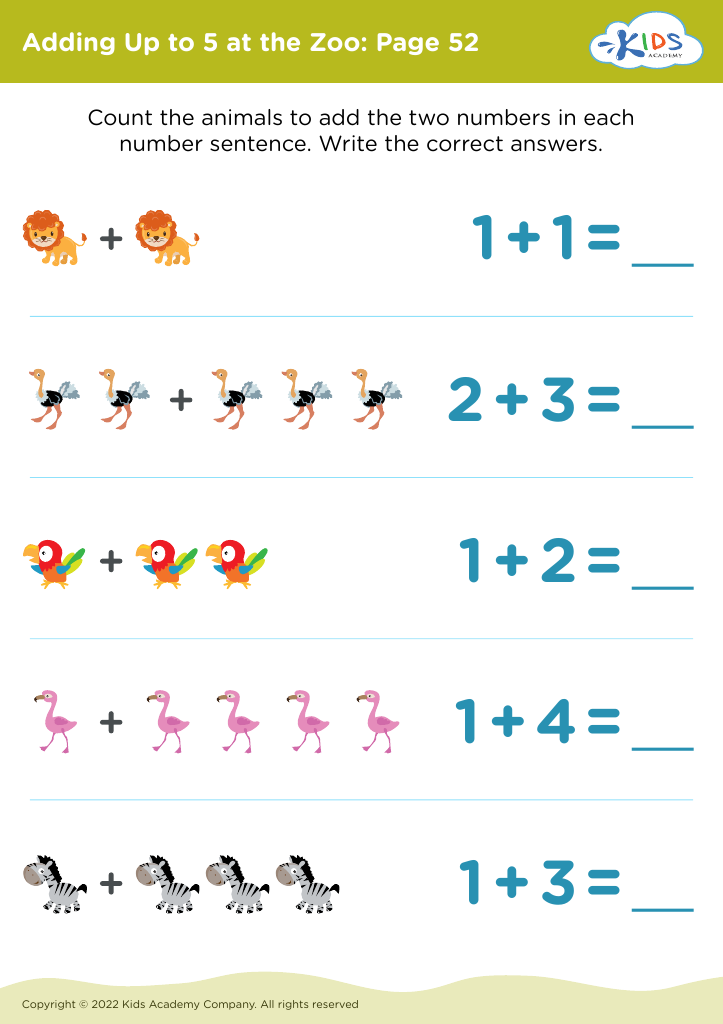
Adding Up to 5 at the Zoo: Page 52
Worksheet
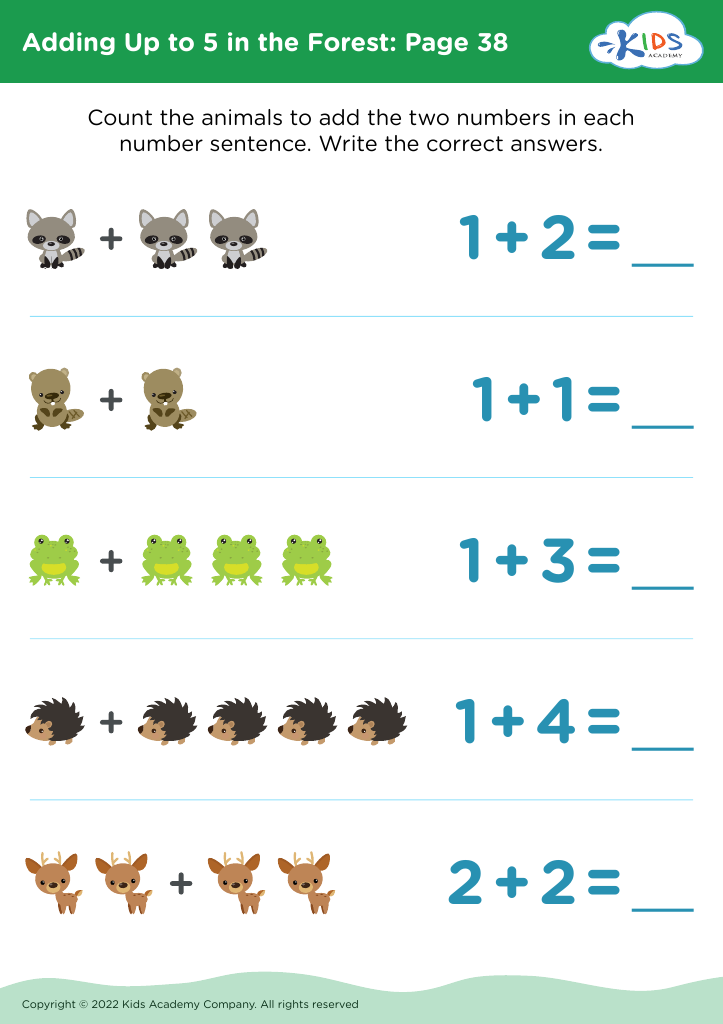
Adding Up to 5 in the Forest: Page 38
Worksheet
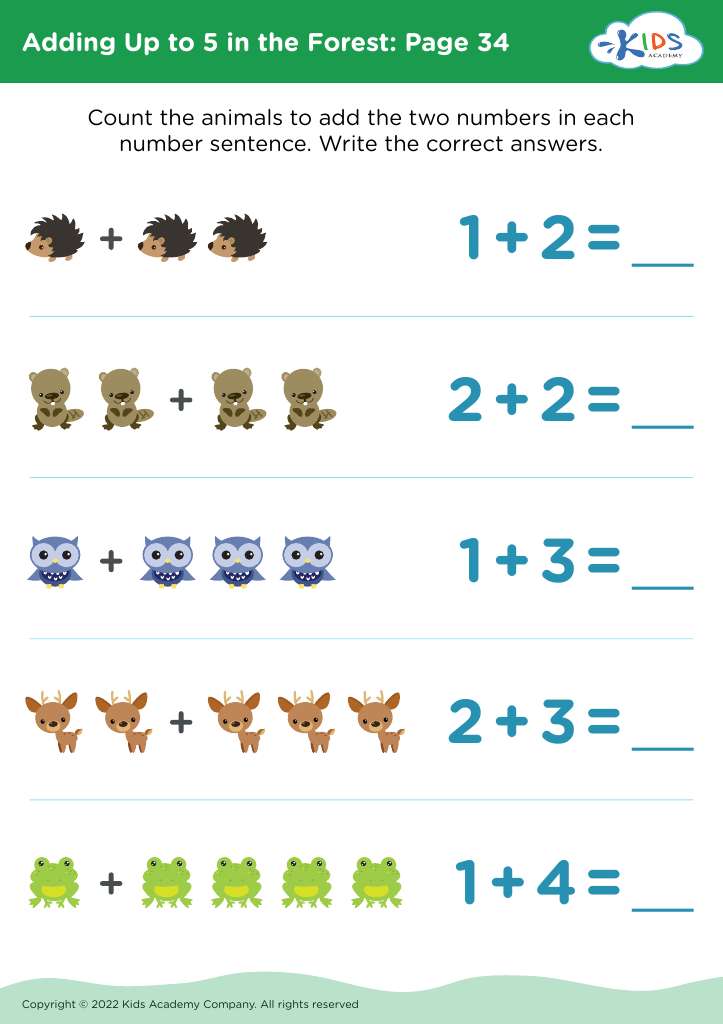
Adding Up to 5 in the Forest: Page 34
Worksheet


Parents and teachers caring about basic addition skills for children ages 3-4 can establish a strong mathematical foundation that supports future learning. At this early age, children's brains are highly receptive and developing rapidly, laying important cognitive groundwork. By introducing basic addition up to 5, we foster number recognition, quantifying abilities, and simple problem-solving skills. These early math experiences can ignite curiosity, build confidence, and encourage a positive attitude toward learning math.

Working on basic addition helps children understand the concept of combining sets and recognizing patterns, essential for higher-level math. Engaging activities, like counting toys or fingers, make learning interactive and enjoyable, solidifying these abilities in a natural context.

Beyond maths, these skills underscore cognitive and developmental benchmarks, aiding children’s overall academic readiness. Children equipped with basic math skills are often better prepared to tackle kindergarten curricula, which now frequently expects some math readiness. Additionally, these skills enhance reasoning and memory, also benefiting reading and comprehension.

Ultimately, nurturing early addition skills sets children up for success by promoting analytical thinking, concentration, and persistence. Parents and teachers who invest attention and resources in this stage contribute significantly to a child’s holistic and lifelong learning journey.