Basic Arithmetic Adding Up to 5 Worksheets for Ages 3-4 - Page 2


%20(1).jpg)





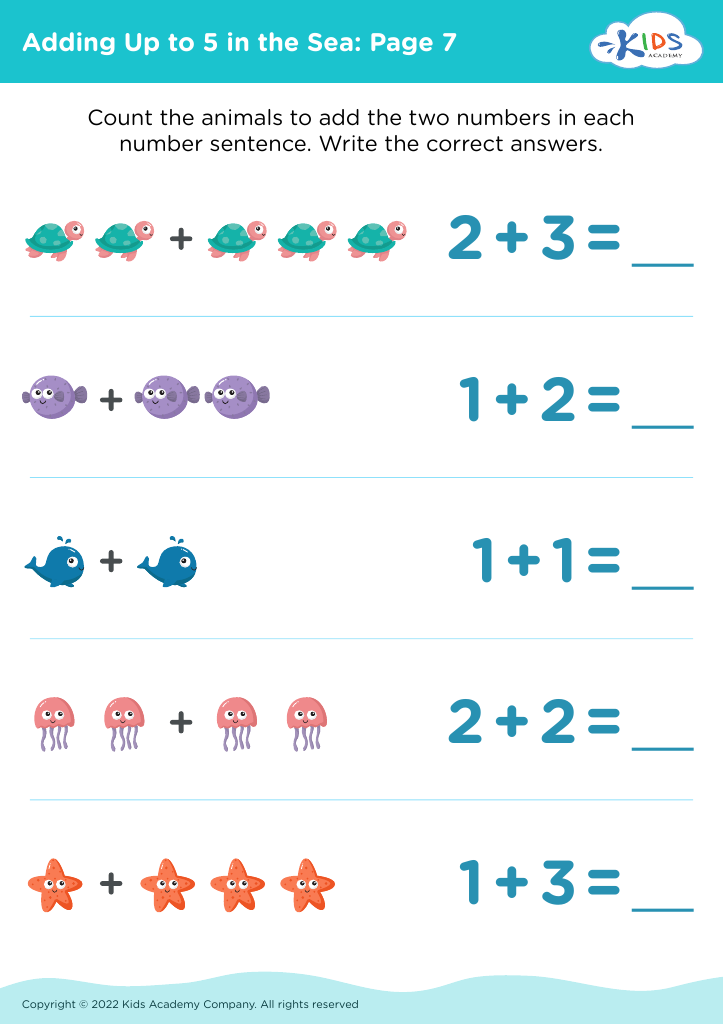
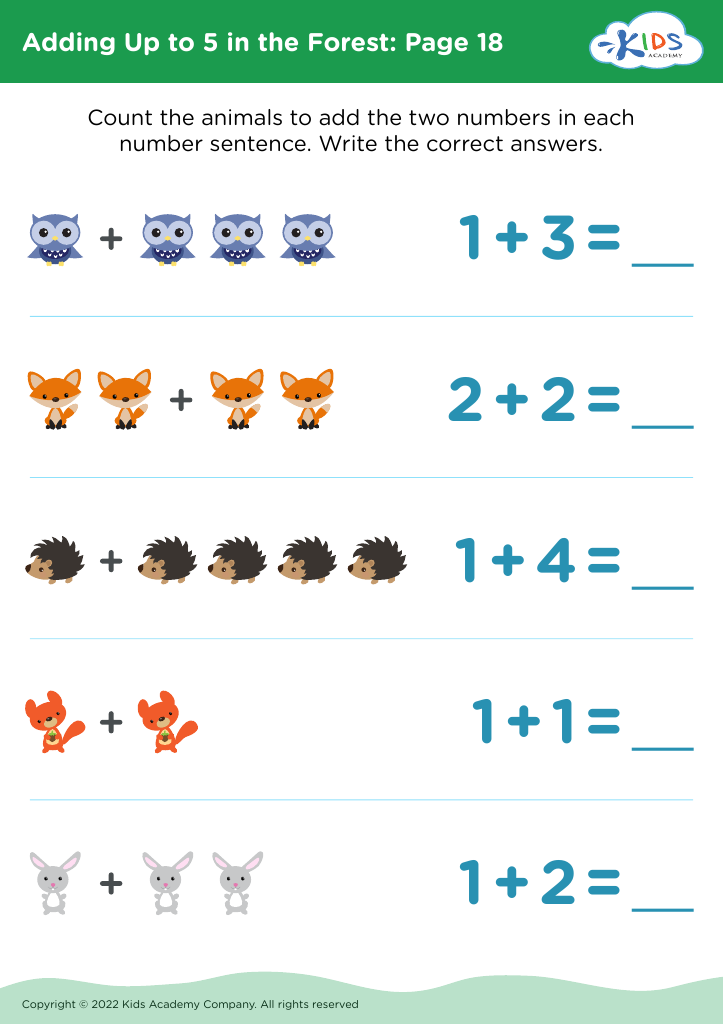
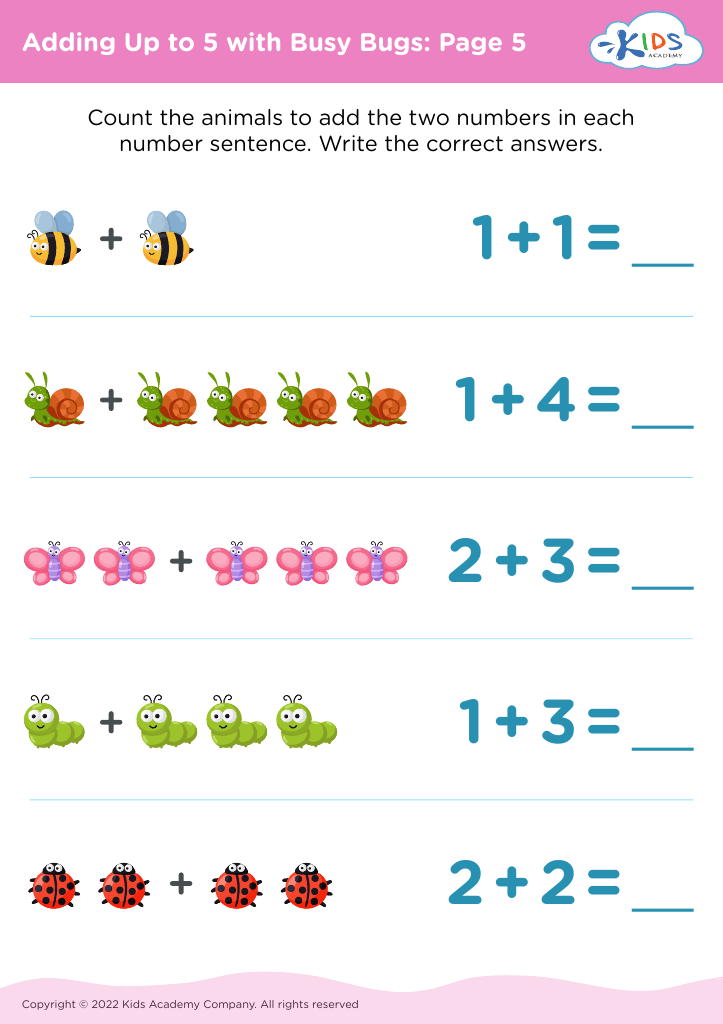
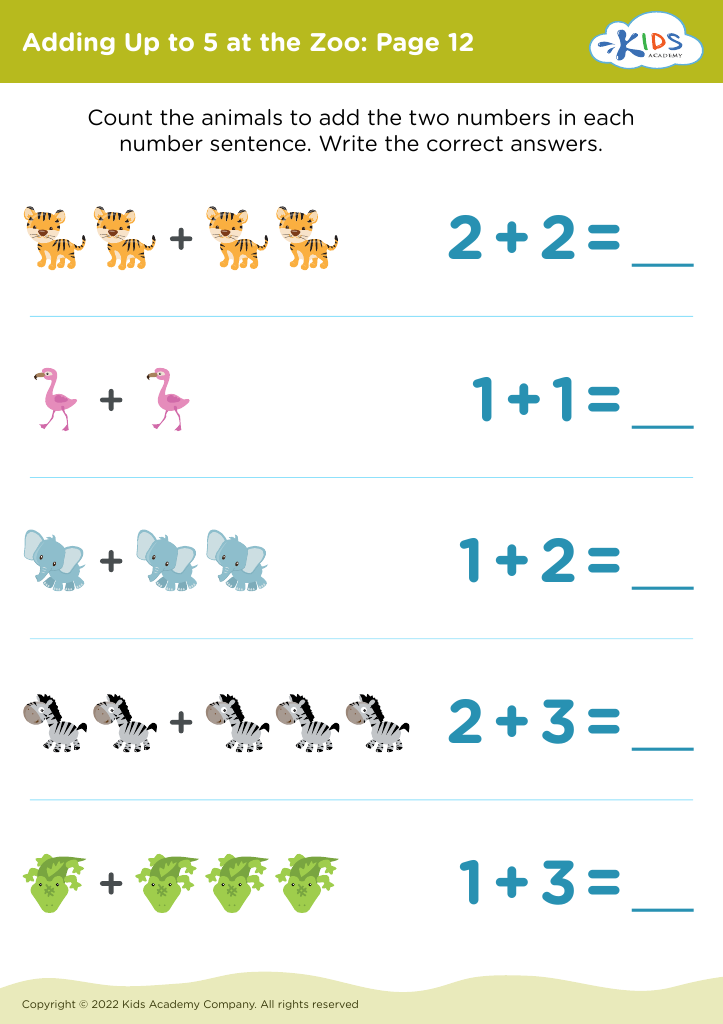
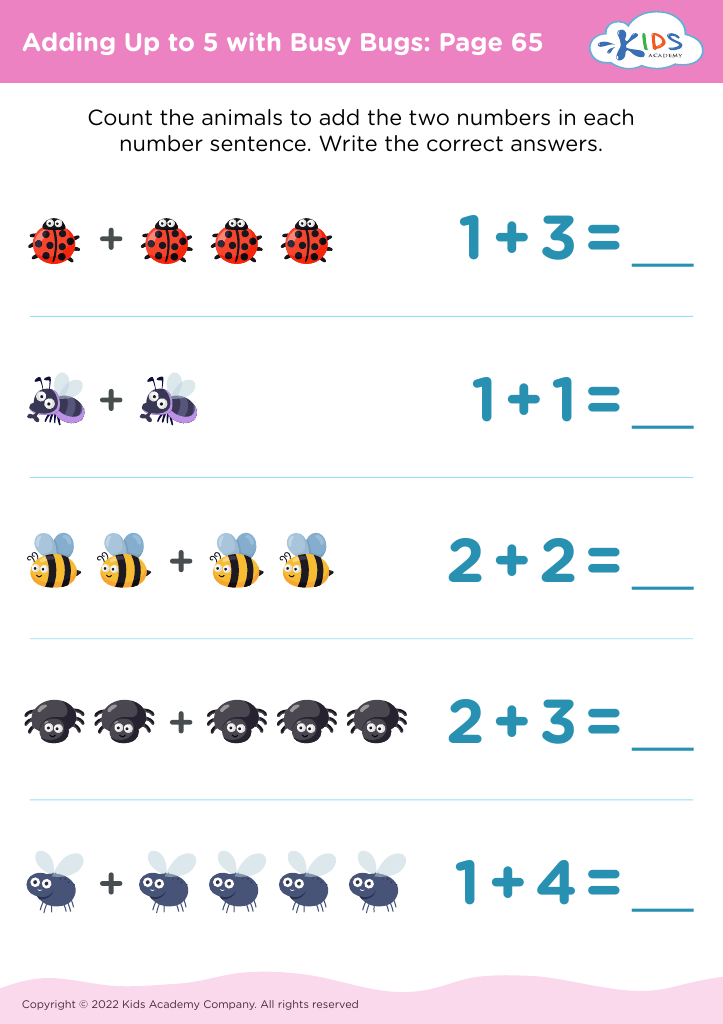
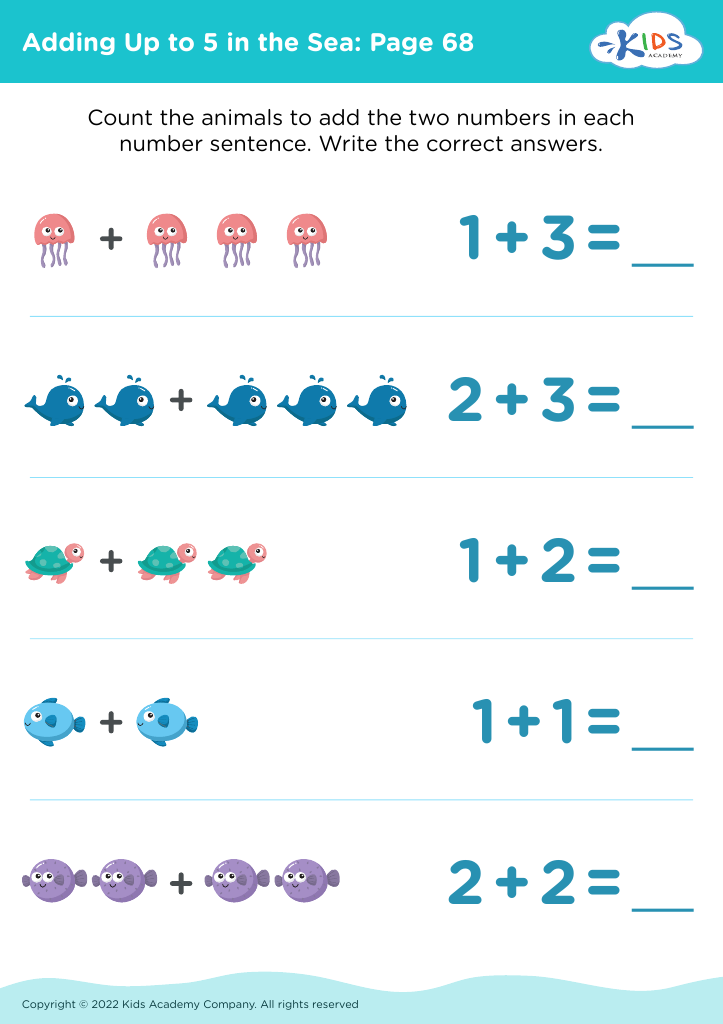
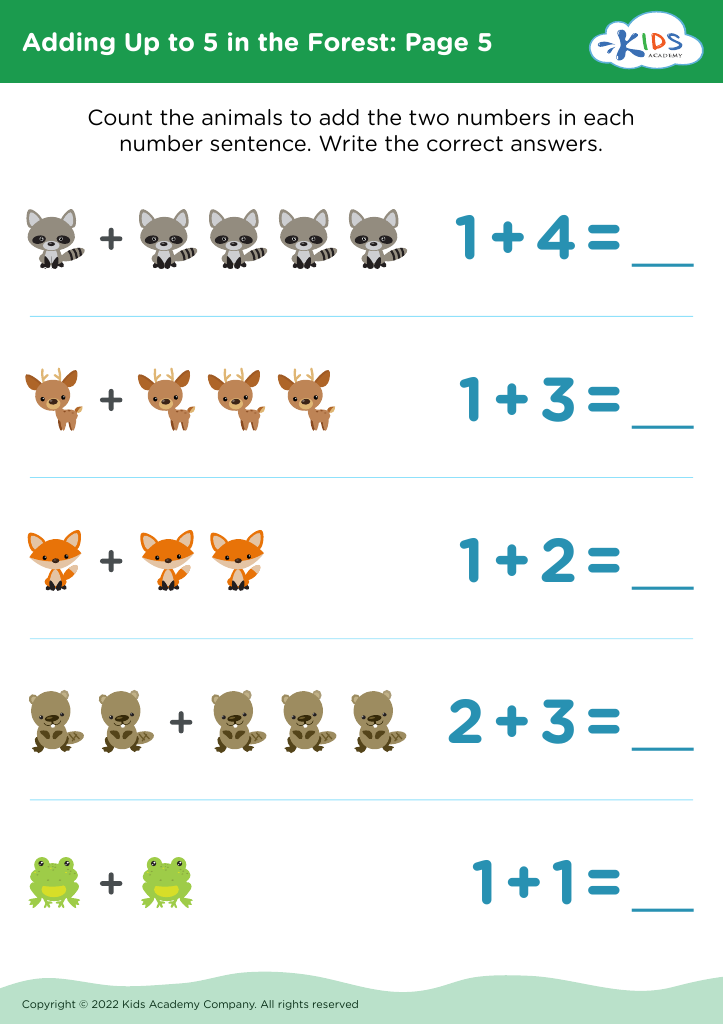
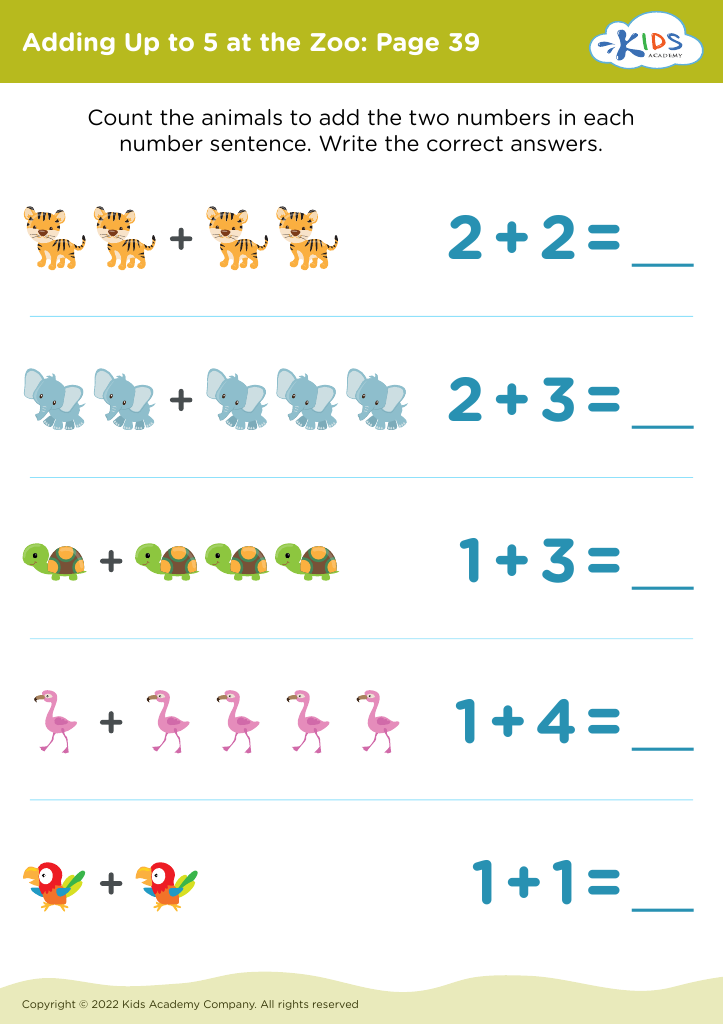
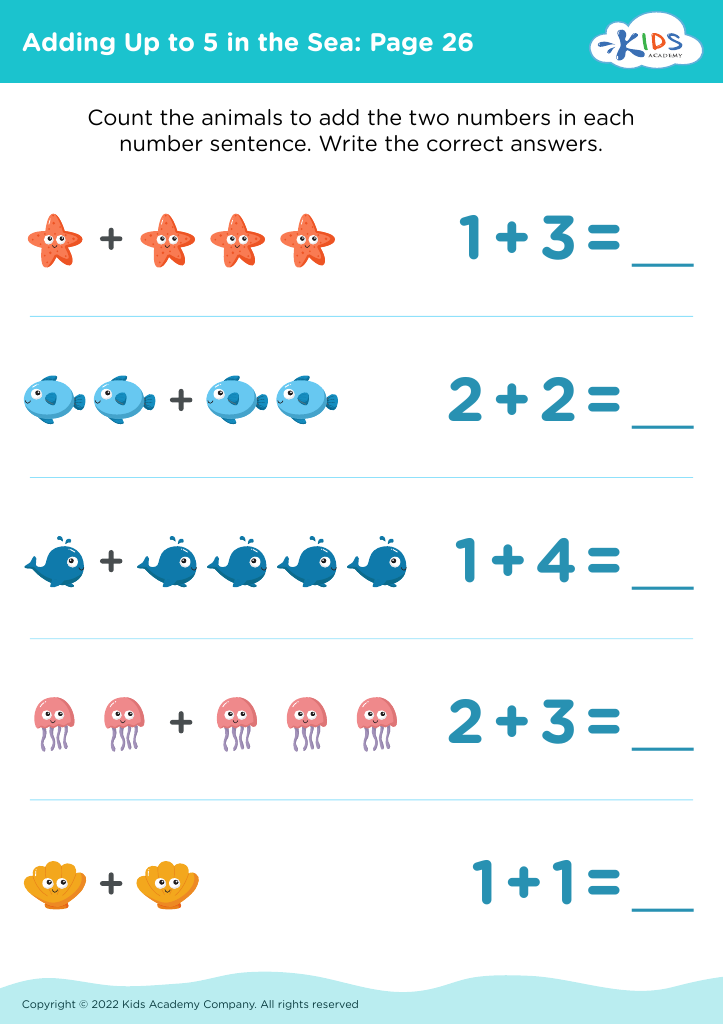
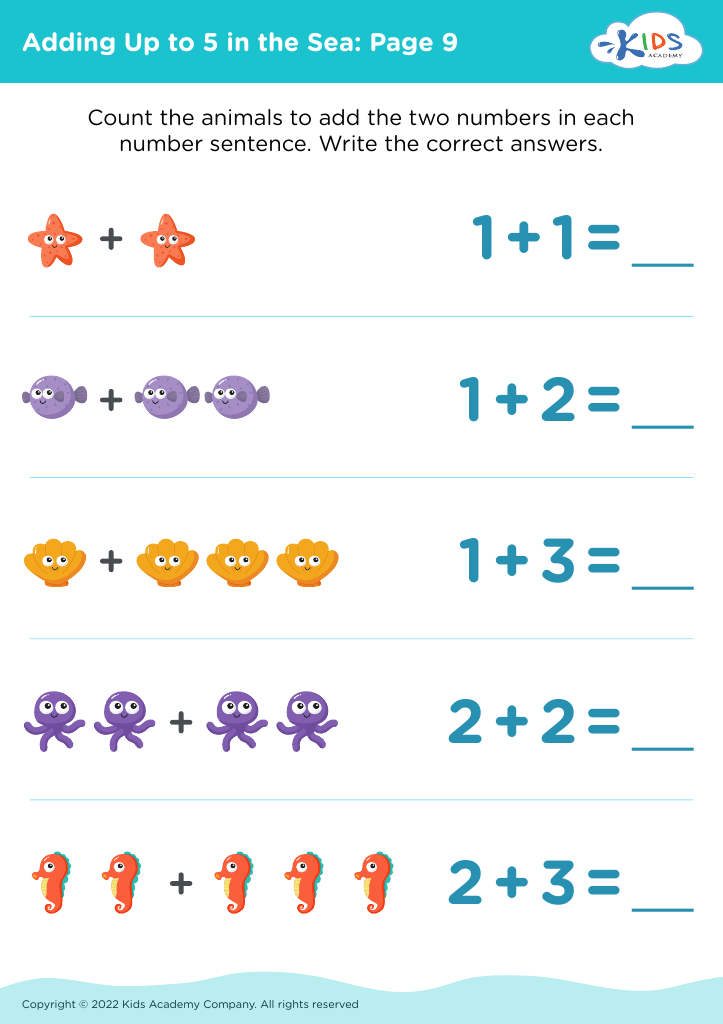
Parents and teachers should prioritize teaching basic arithmetic, specifically adding up to 5, for children aged 3 to 4, as it serves as a foundational skill in a child’s learning journey. At this age, children are naturally curious and eager to explore numbers and simple math concepts, laying the groundwork for future mathematical proficiency.
Learning to add up to 5 promotes cognitive development. It helps enhance a child’s critical thinking, problem-solving abilities, and logical reasoning. When children grasp these basic concepts, they build confidence in their math skills, reducing anxiety for more complex topics in later years.
Moreover, engaging in activities involving addition fosters interactive learning. Parents and teachers can integrate play and hands-on experiences—like counting toys or using fingers—to make learning fun and relevant. This approach not only supports social and emotional development through collaborative activities but also encourages communication skills as children articulate their thought processes.
Finally, early mastery of basic arithmetic reinforces key learning milestones and can influence a child’s attitude towards math moving forward. By nurturing a positive relationship with numbers early on, we help instill a lifelong appreciation for learning and exploration in mathematics.








