Counting objects Adding Up to 5 Worksheets for Ages 3-4
11 filtered results
-
From - To
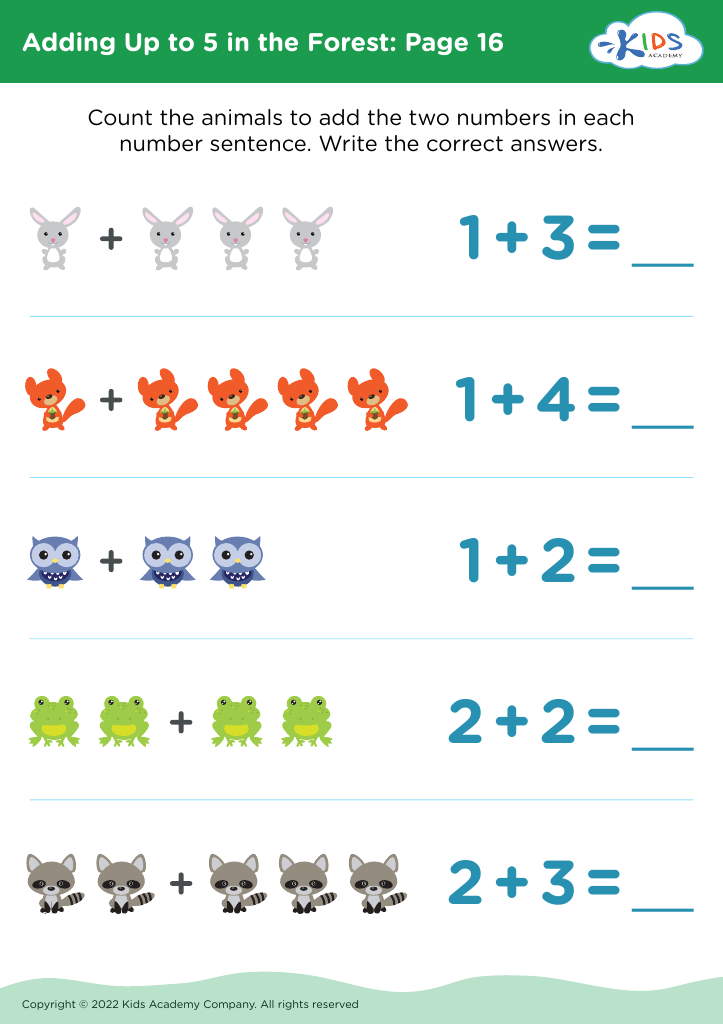
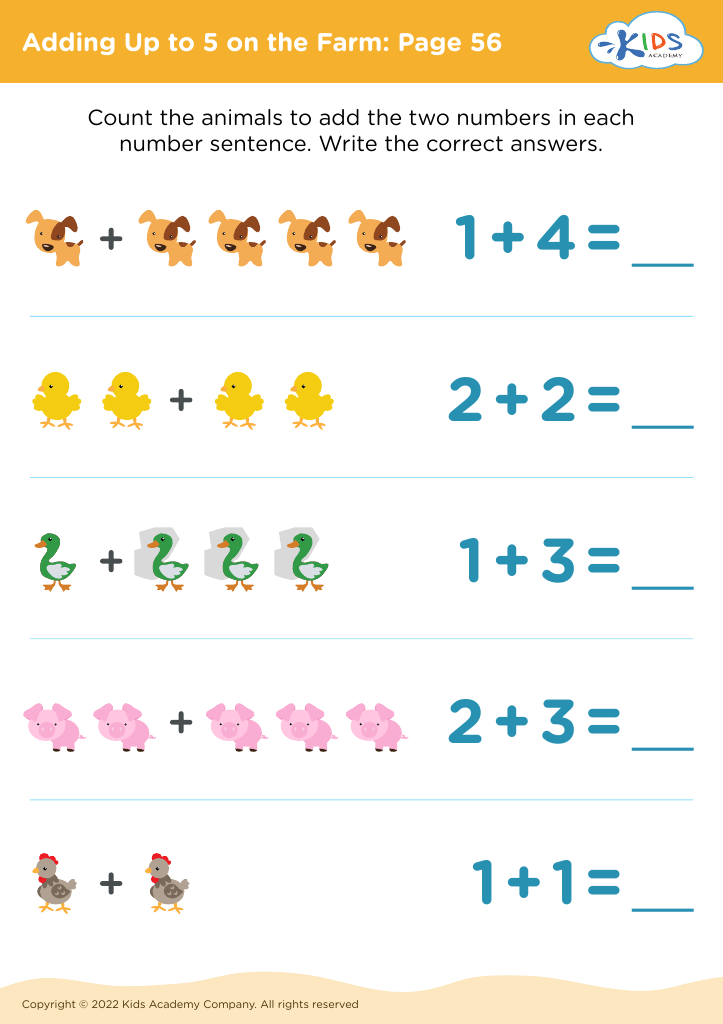
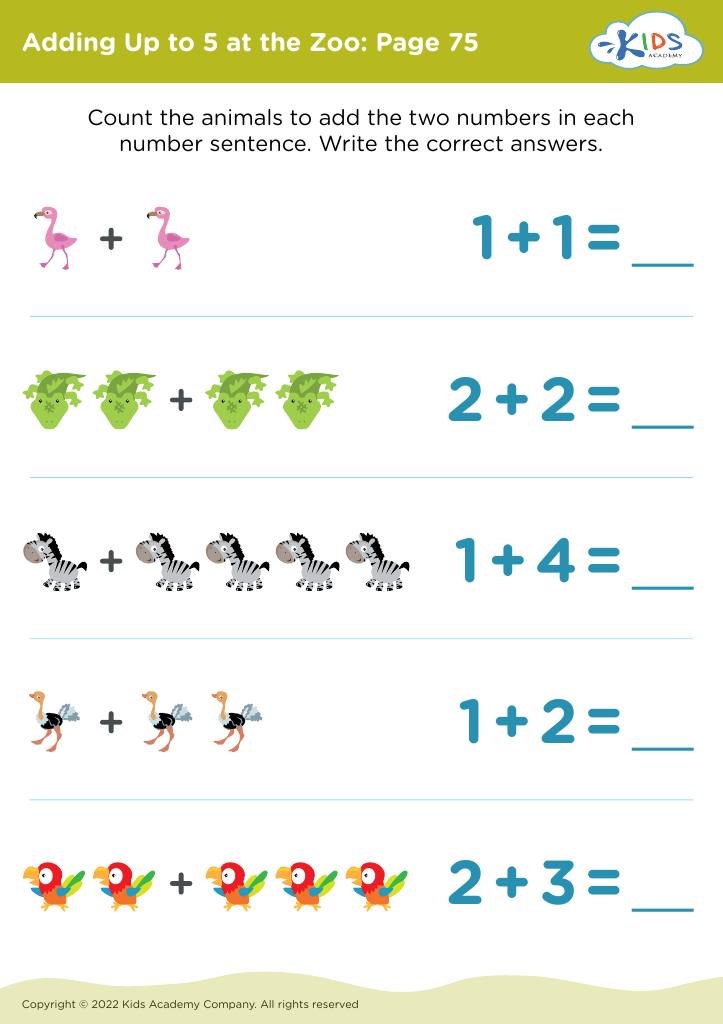
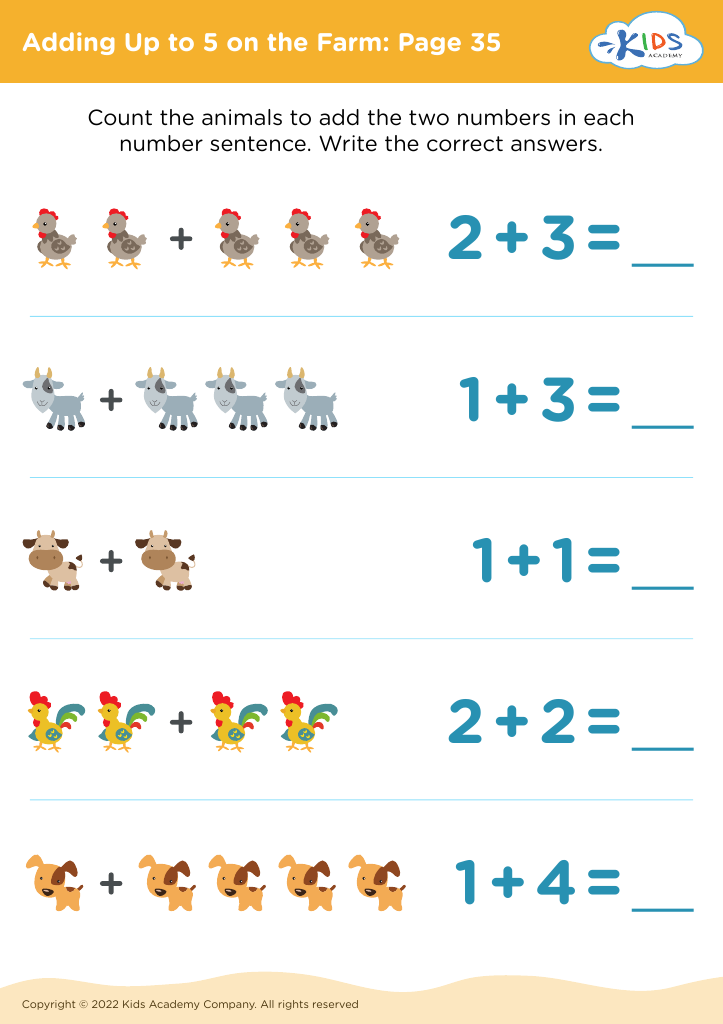
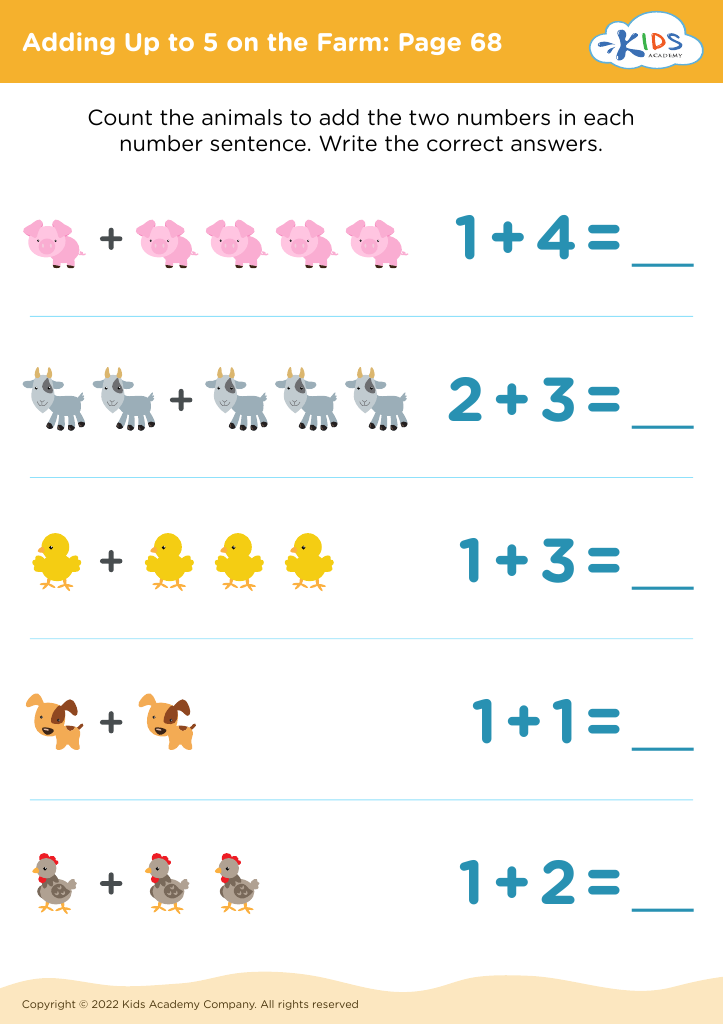
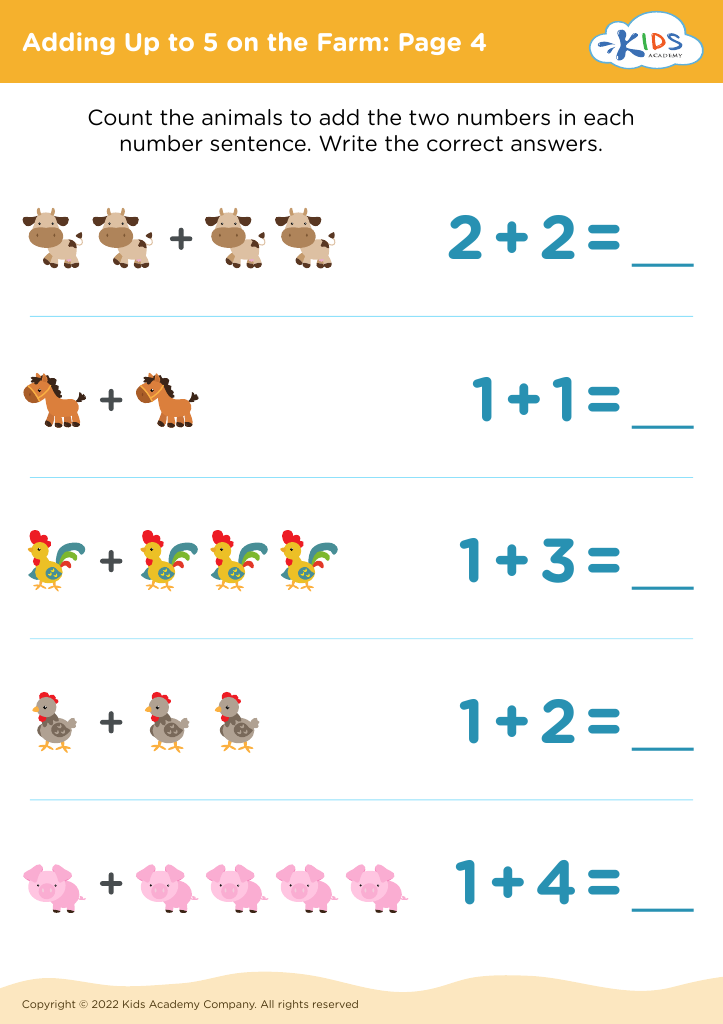
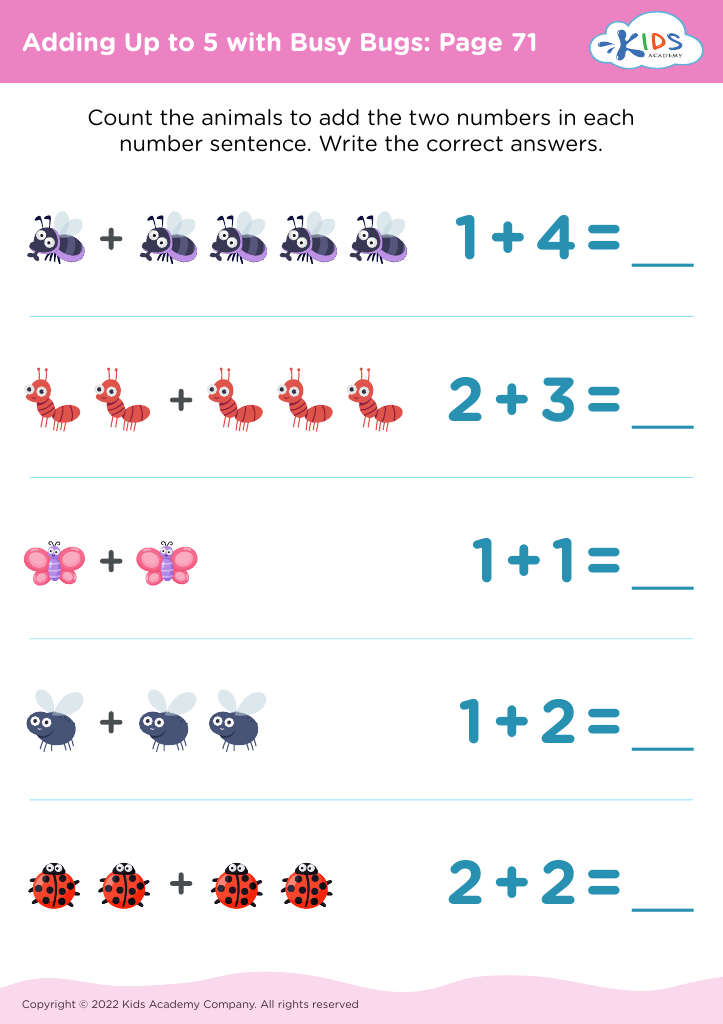
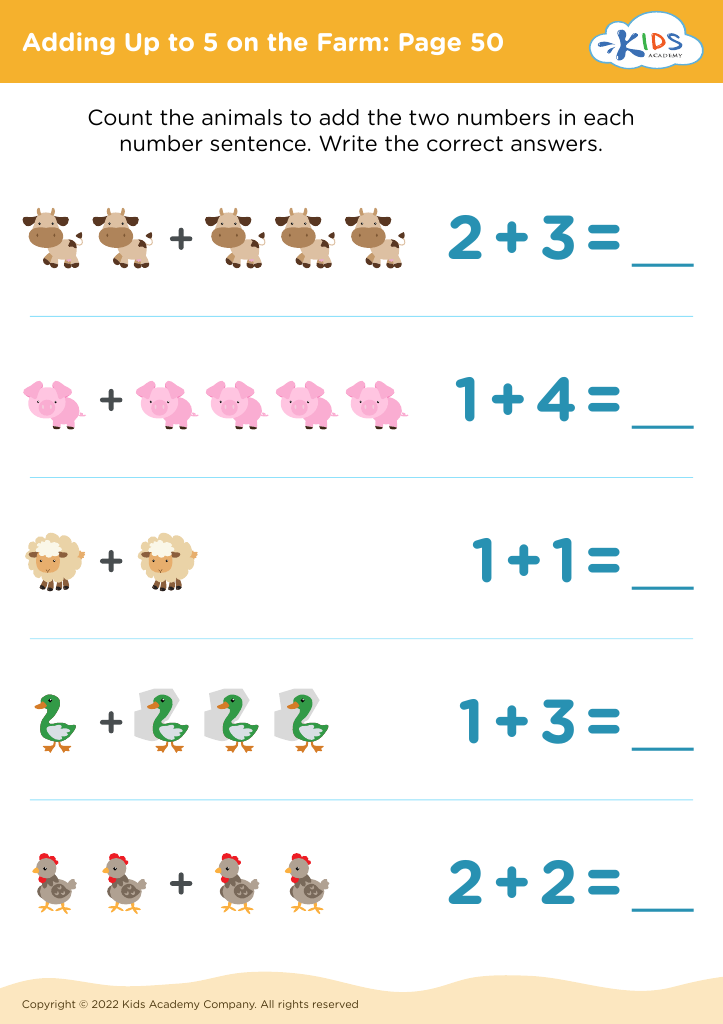
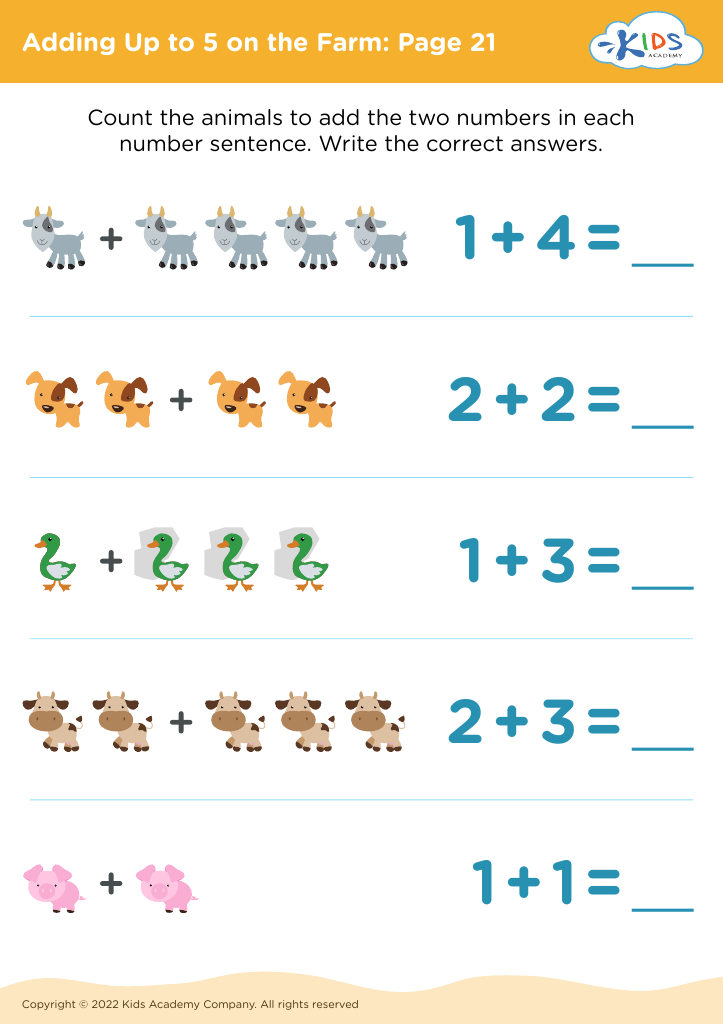
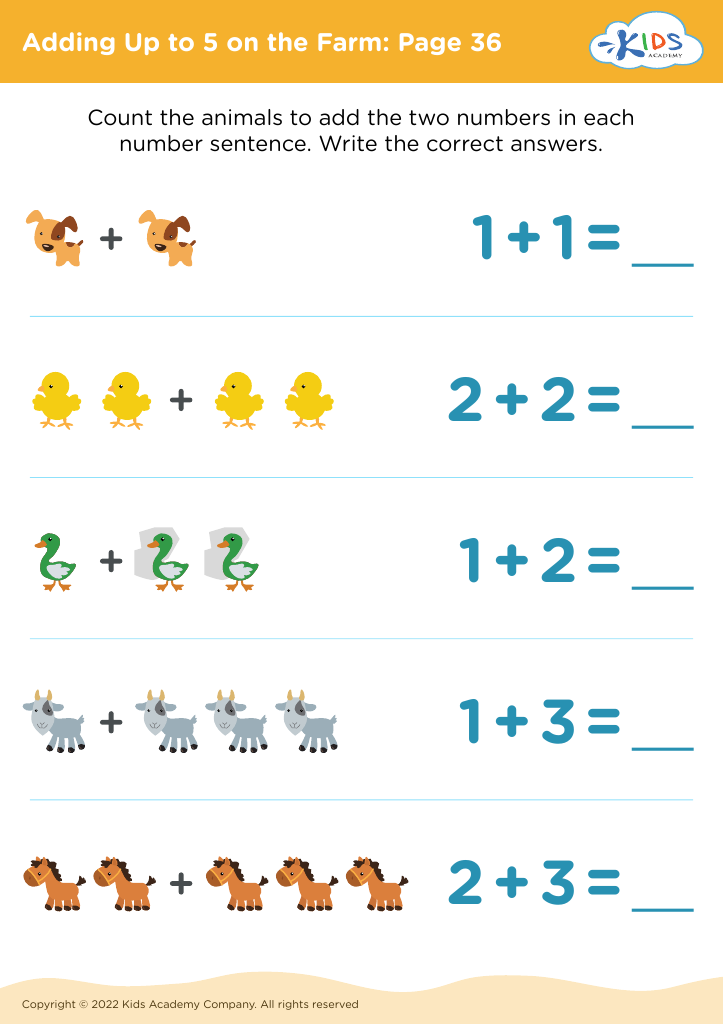
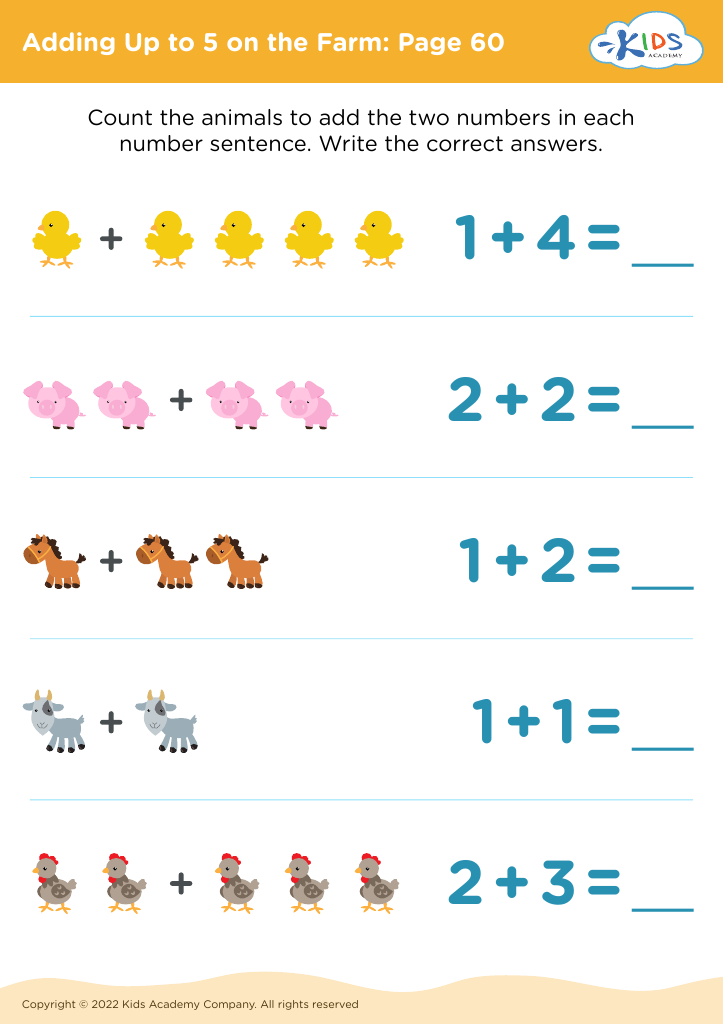
Welcome to our "Counting Objects Adding Up to 5 Worksheets" designed specifically for children ages 3-4! These engaging and interactive worksheets aim to develop your child's early math skills by helping them practice counting objects and understanding the concept of addition up to 5. Each worksheet features colorful images and fun themes that capture young learners' attention, making math enjoyable and stimulating. Perfect for home or classroom use, these resources encourage hands-on learning and foster critical thinking. Get started today and watch your little ones gain confidence in their counting and addition abilities as they engage with numbers in a playful manner!


.jpg)



%20(1).jpg)

Counting objects and understanding addition is a fundamental skill for children aged 3-4, laying the groundwork for future math learning. At this age, children become curious about numbers and begin to develop their cognitive abilities. Engaging them in counting objects teaches not only numerical concepts but also enhances critical thinking and problem-solving skills.
By counting objects and adding up to 5, children can grasp the concept of quantity, which is essential for early numeracy. This activity encourages not just recognition of numbers, but also the understanding of one-to-one correspondence, which is crucial in mathematics. Through playful counting of everyday items like toys, snacks, or nature objects, children can relate math to their daily lives, making learning more meaningful and enjoyable.
Moreover, this skill fosters language development, as children learn to articulate numbers and concepts, strengthening their communication abilities. Parents and teachers play a vital role in nurturing these skills by providing opportunities for counting and simple addition in engaging ways. Early experiences with counting and number concepts set a strong foundation for academic success and lifelong learning. In essence, emphasizing counting and simple addition supports not only math readiness but holistic development in young children.








