







Fine motor skills are essential for young children's overall development, especially at ages 3-4. These skills involve the coordination of small muscles in the hands and fingers, crucial for tasks such as writing, drawing, and manipulating small objects. Developing fine motor skills lays the groundwork for children to engage in more complex activities, enhancing their cognitive, social, and emotional skills.
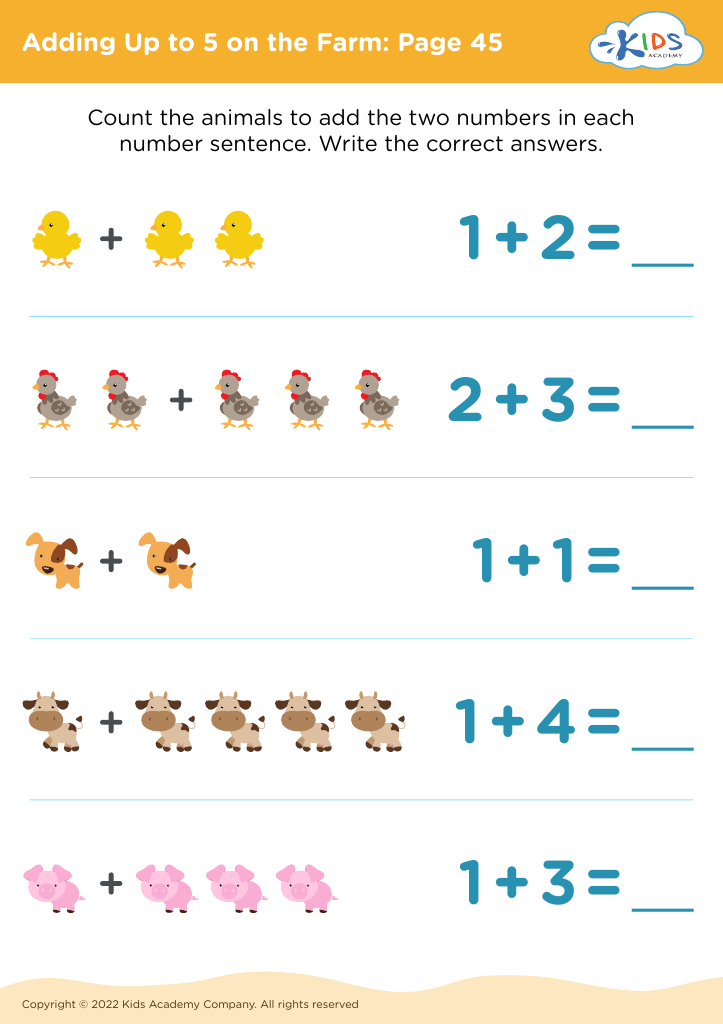
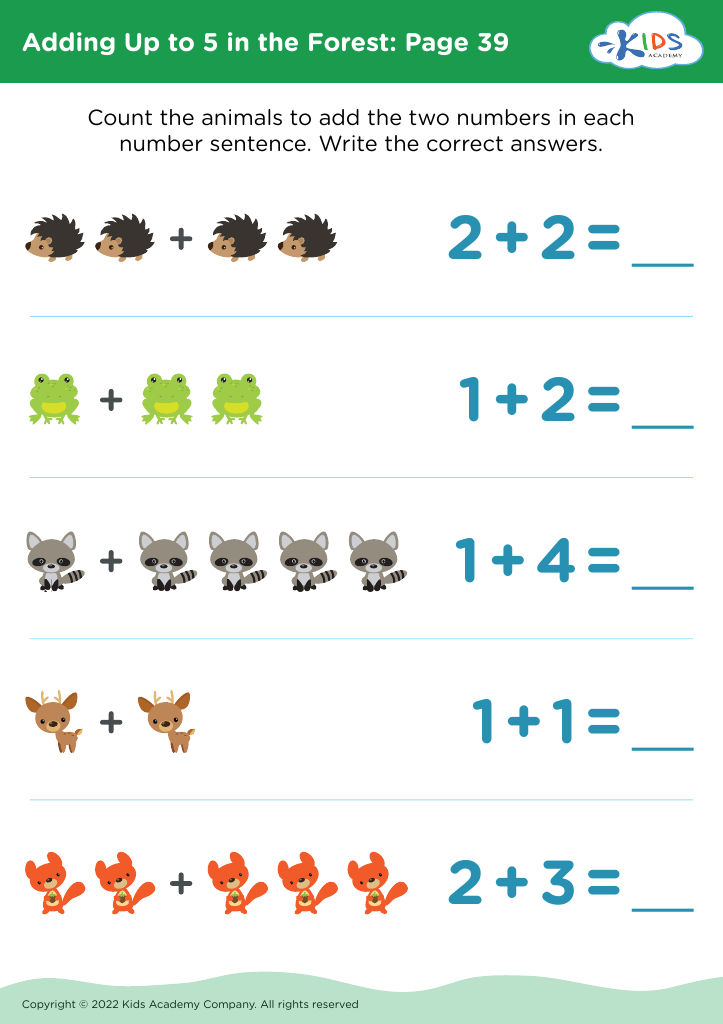
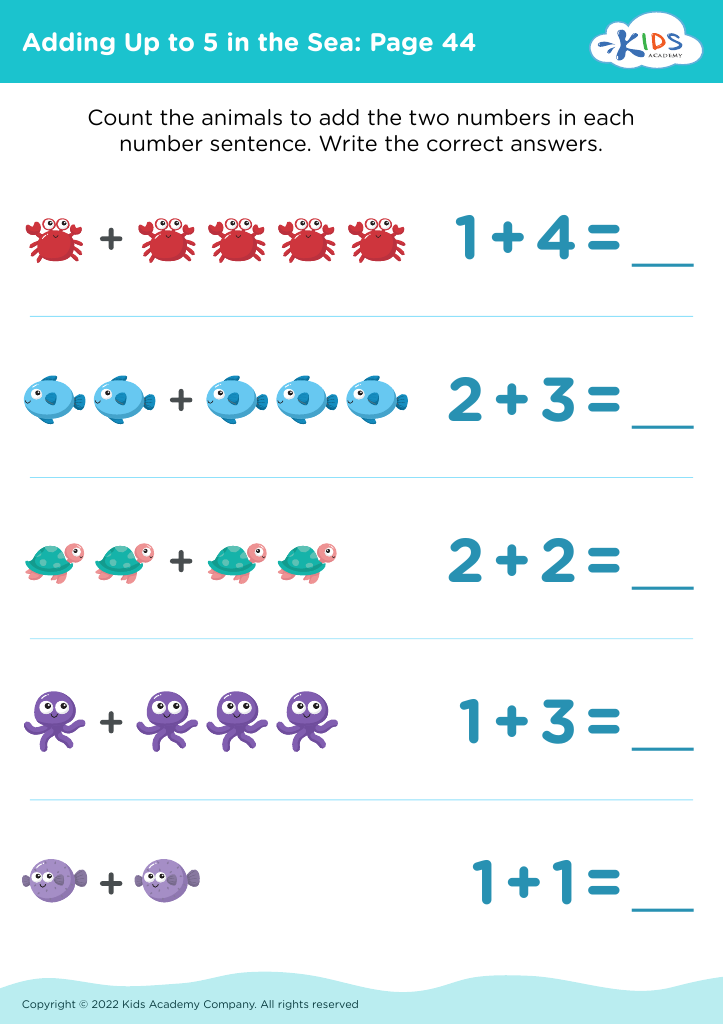
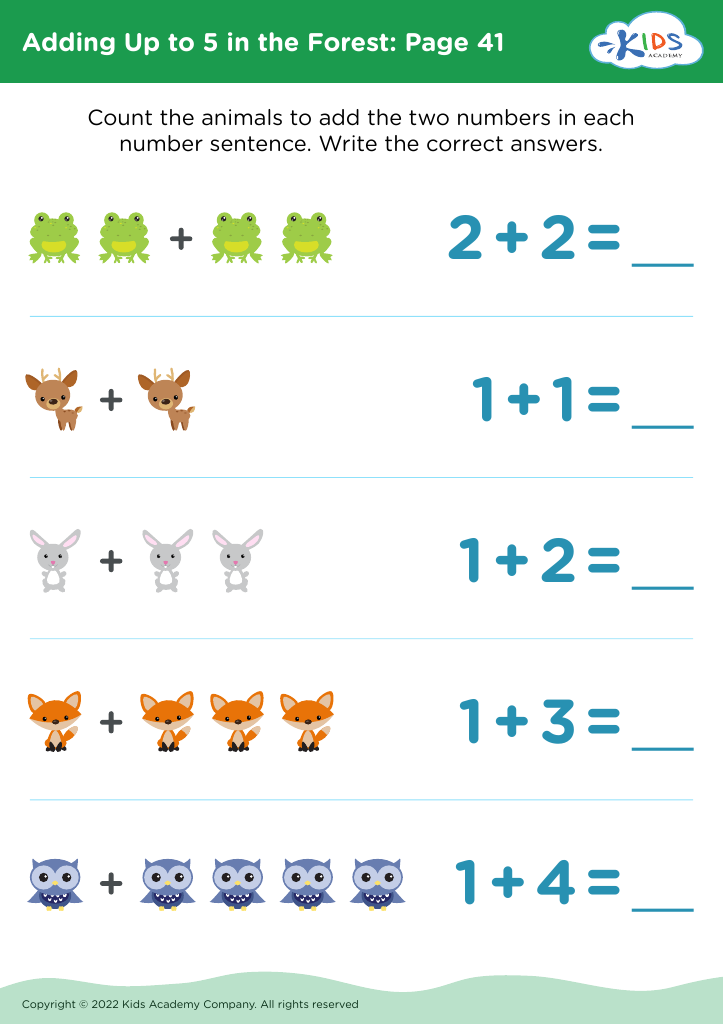
When children learn to add up to 5, they are not just practicing numbers; they are honing their hand-eye coordination and precision. Activities like stringing beads or using clay help reinforce mathematical concepts while simultaneously strengthening fine motor abilities. Furthermore, engaging in these activities fosters problem-solving skills and promotes focused attention, reinforcing a child's ability to concentrate.
Parents and teachers should care about these skills because they are foundational for academic readiness. Fine motor skills support early literacy and numeracy; for instance, children need good grasping skills to hold pencils properly, which directly affects their ability to write and perform basic arithmetic. By investing time in developing fine motor skills and simple addition, parents and teachers empower children to succeed in future learning tasks, cultivating a sense of achievement and confidence in their abilities.








