Hand-eye Coordination Adding Up to 5 Worksheets for Ages 3-4
15 filtered results
-
From - To
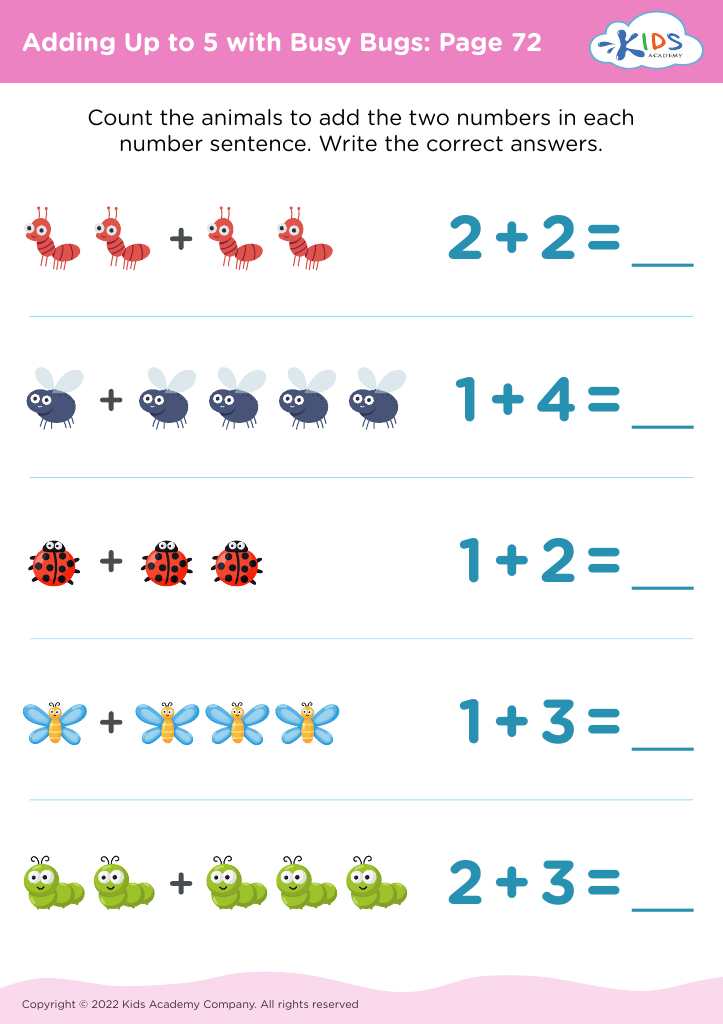
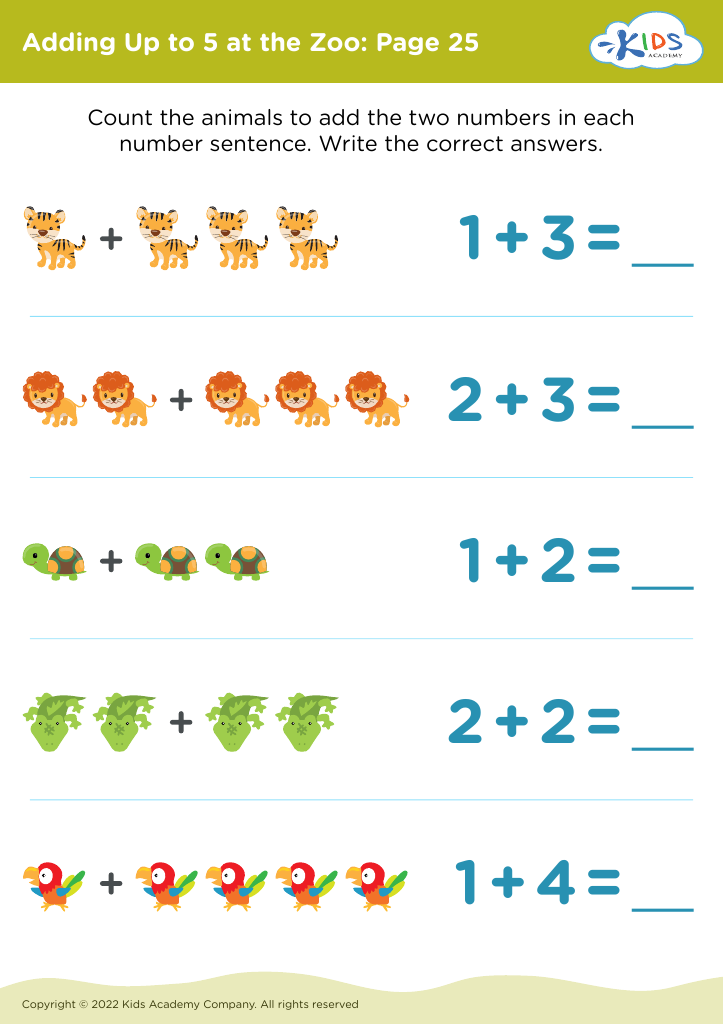
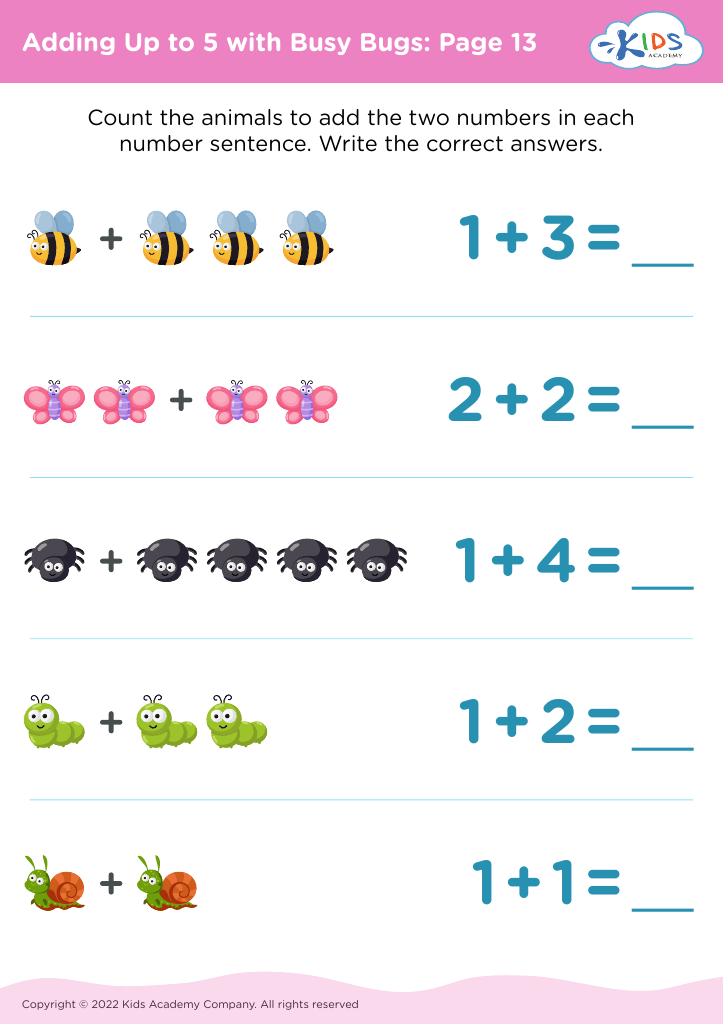
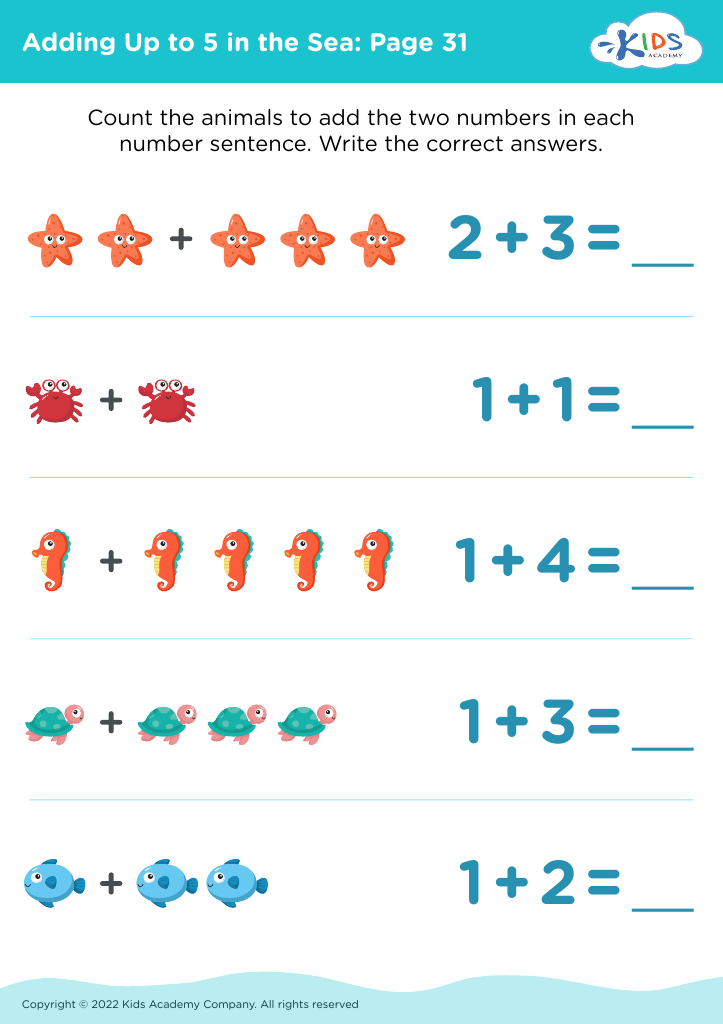
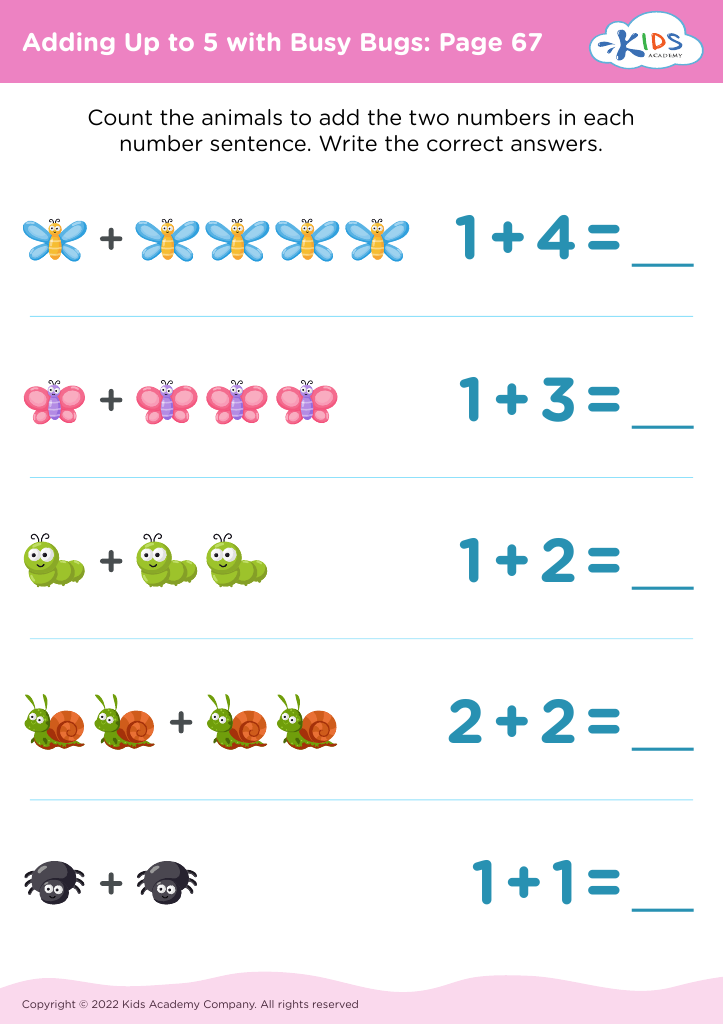
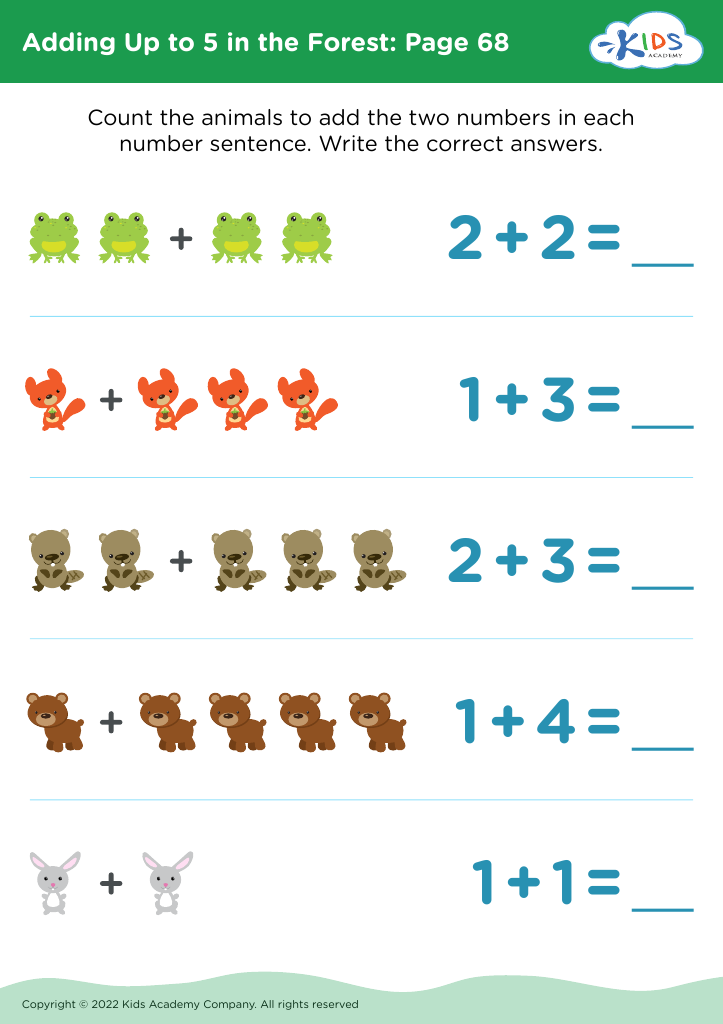
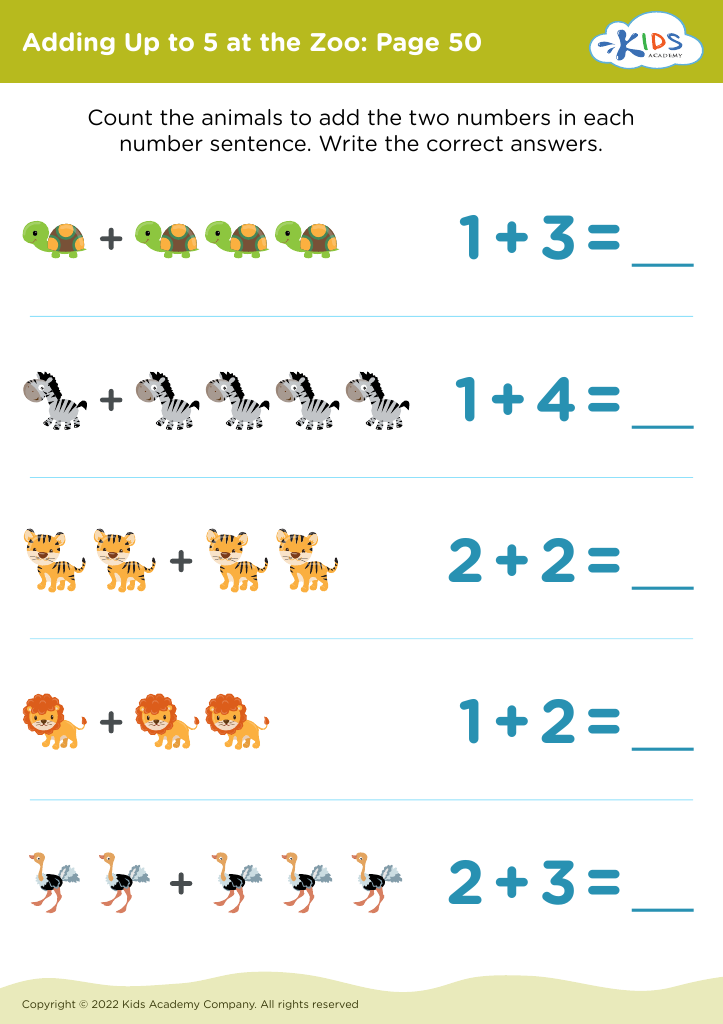
Our "Hand-eye Coordination Adding Up to 5 Worksheets for Ages 3-4" are designed to make learning math fun and engaging for preschoolers. These worksheets not only help children grasp basic addition skills but also enhance their hand-eye coordination. Featuring colorful illustrations, interactive activities, and simple problems, each worksheet motivates young learners to practice adding numbers up to 5. Perfect for little hands just starting their math journey, these printable sheets provide a balanced combination of learning and play, ensuring that your child develops essential early math skills while having fun. Download today and watch your child thrive!
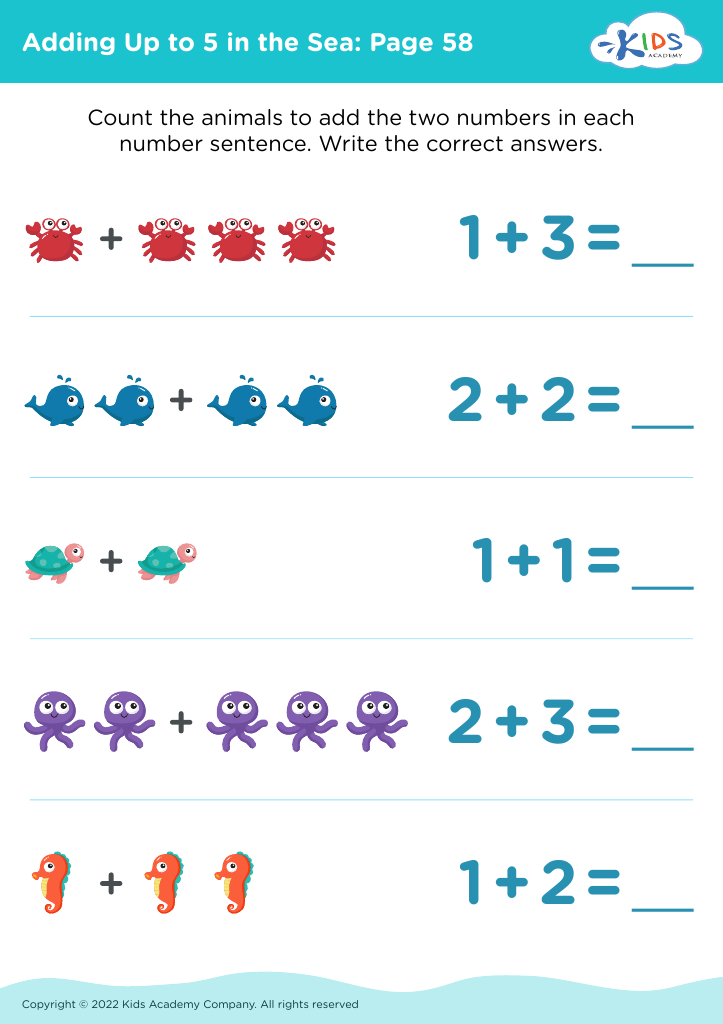
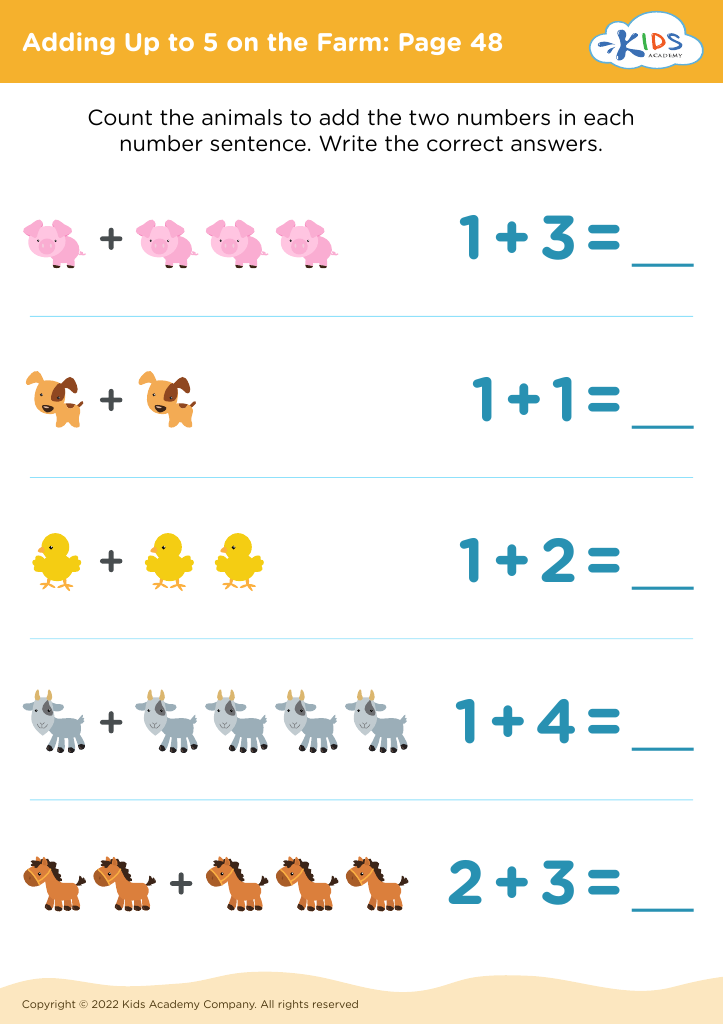
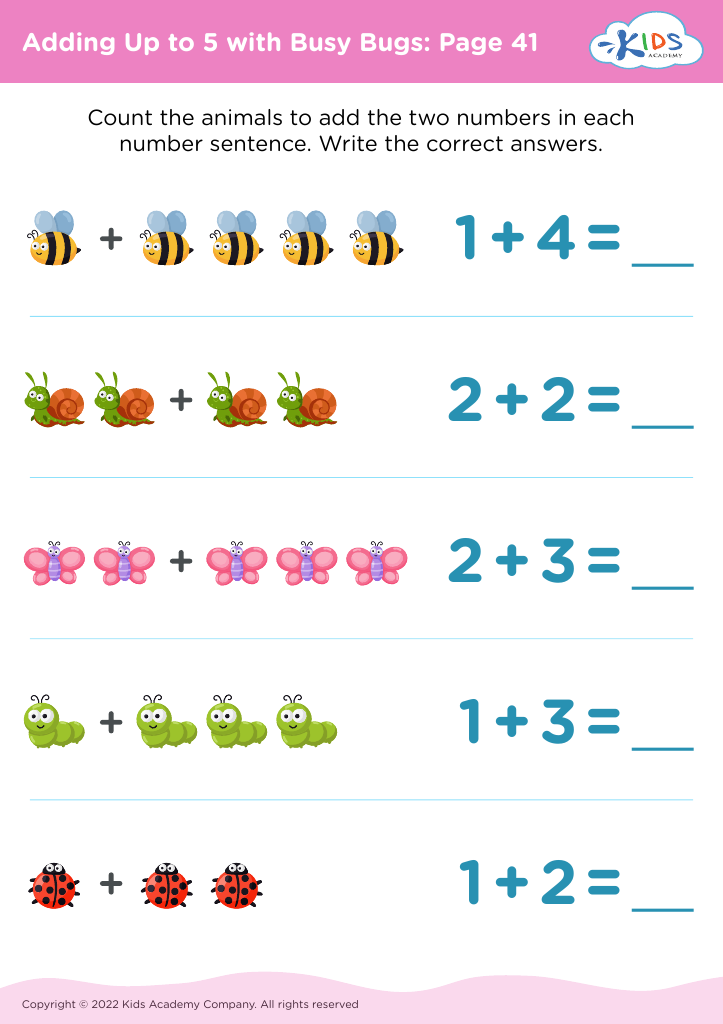
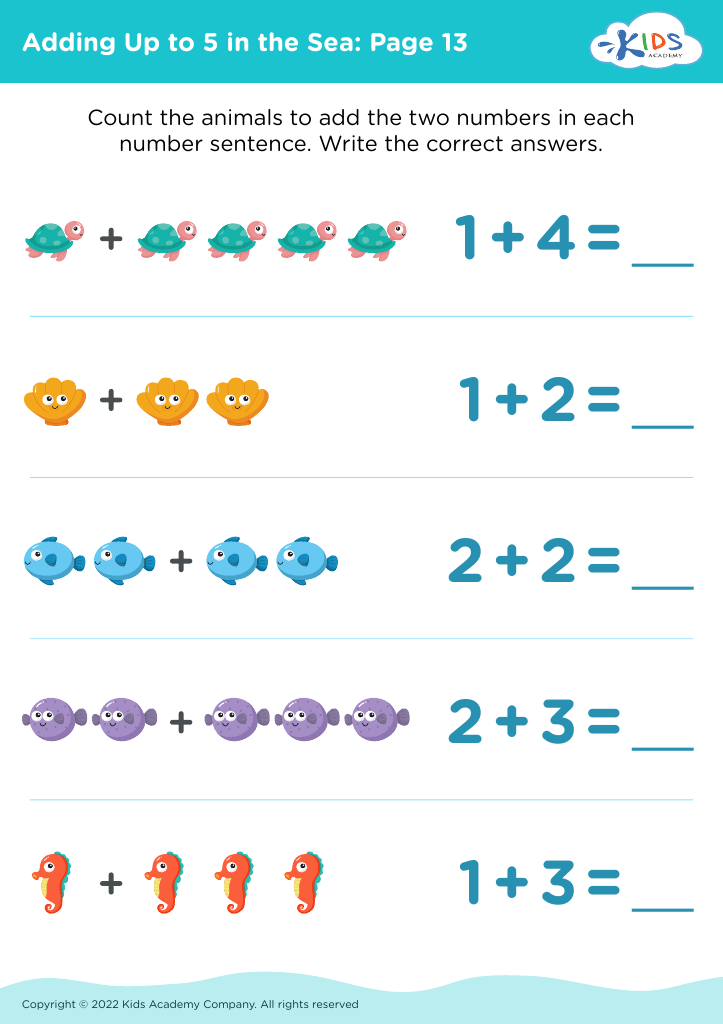
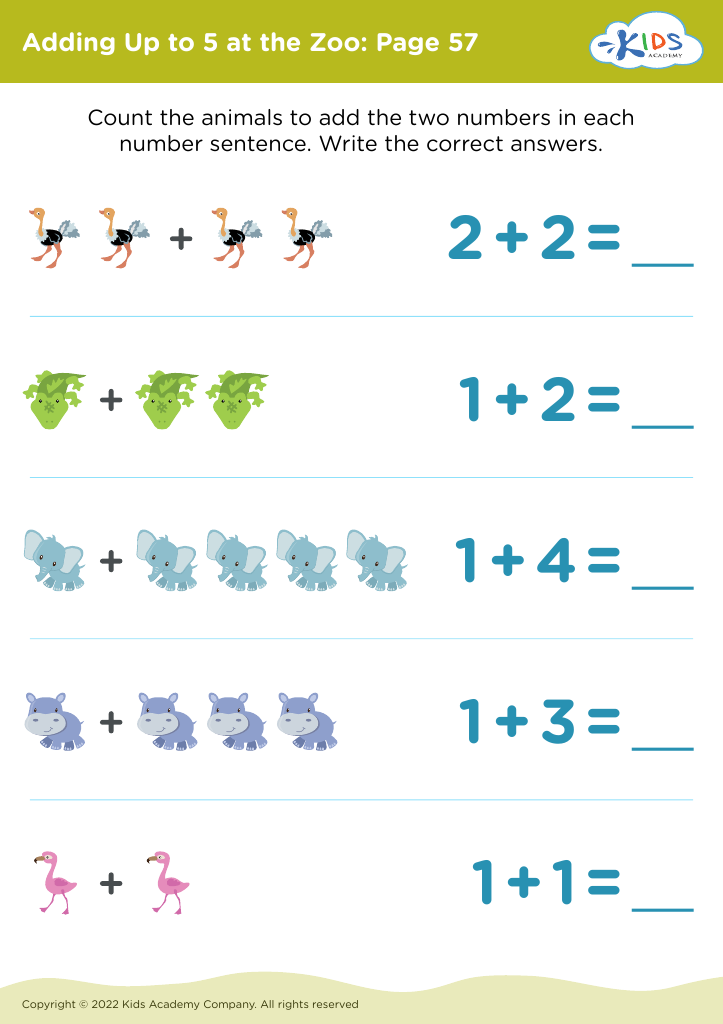
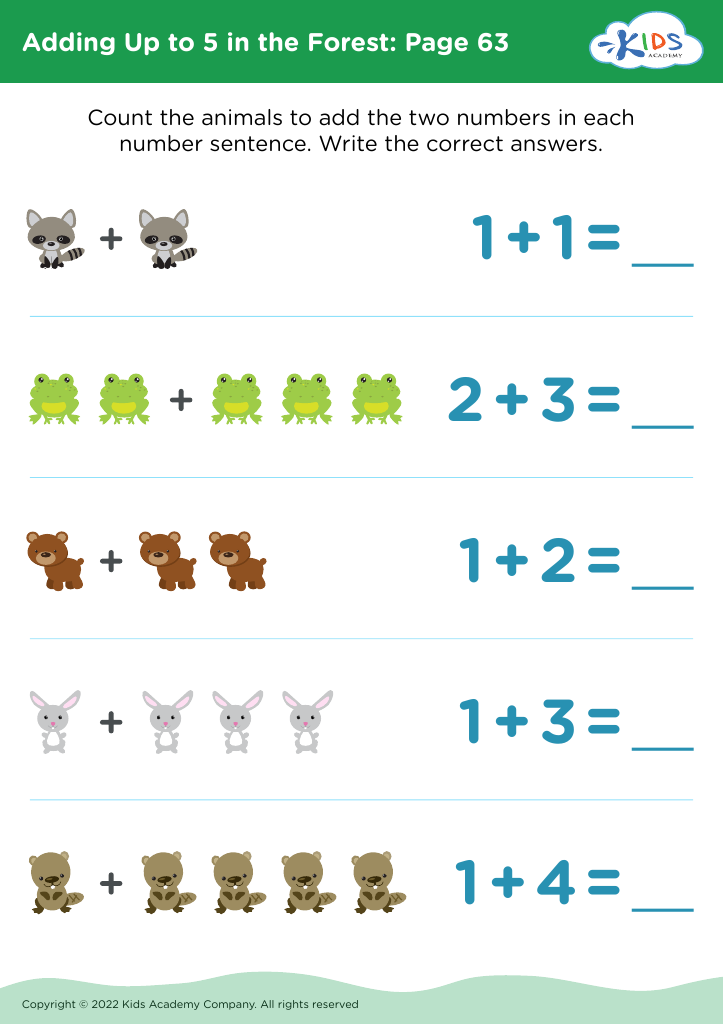
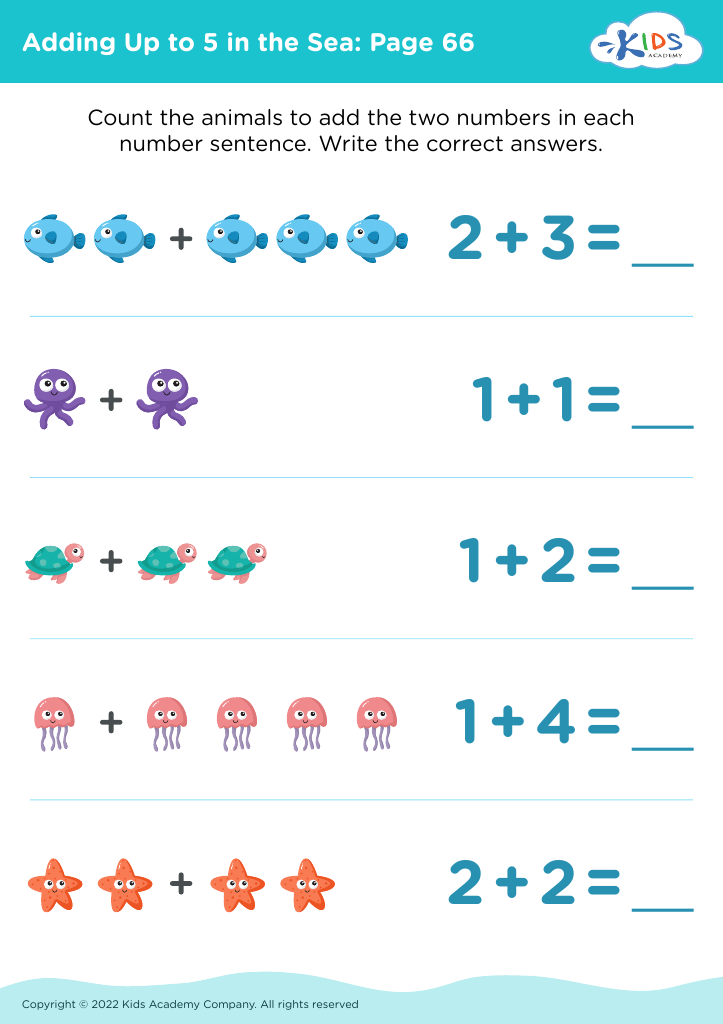
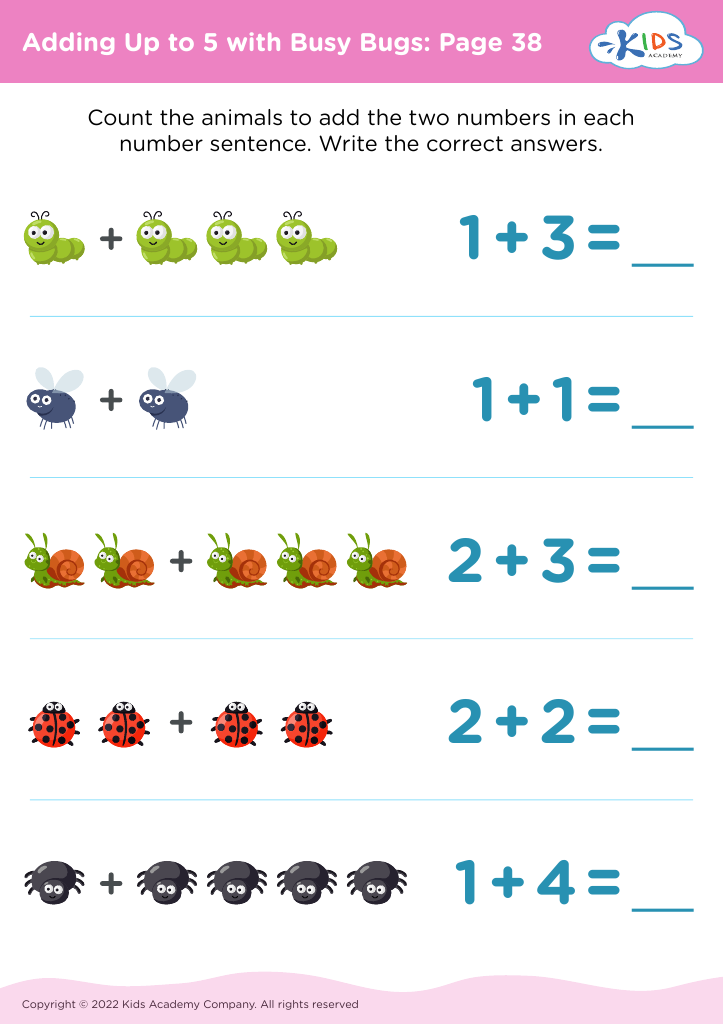





.jpg)


Hand-eye coordination is a crucial developmental skill that significantly impacts a child's overall growth, particularly for young children ages 3-4. This foundational ability enables children to synchronize their vision with their hand movements, which is critical for performing everyday tasks. Focusing on hand-eye coordination through activities that involve adding up to 5 helps enhance basic arithmetic skills, paving the way for future math proficiency.
For parents and teachers, promoting hand-eye coordination by engaging children in counting activities or simple math games aids cognitive development. It supports the child’s ability to manipulate small objects, boosts problem-solving skills, and develops fine motor skills critical for writing. Children aged 3-4 are at an advantageous period for brain development, and nurturing these capabilities can lead to better spatial awareness and faster learning.
Educational activities might involve using blocks, beads, or interactive games where kids can count objects up to five. Such exercises not only cement early math concepts but make learning enjoyable and interactive. By caring about and fostering hand-eye coordination, parents and teachers provide children with essential tools for academic success and everyday skill application later in life. This holistic approach means better prepared, confident, and adept young learners.








