Math problem-solving Adding Up to 5 Worksheets for Ages 3-4
3 filtered results
-
From - To
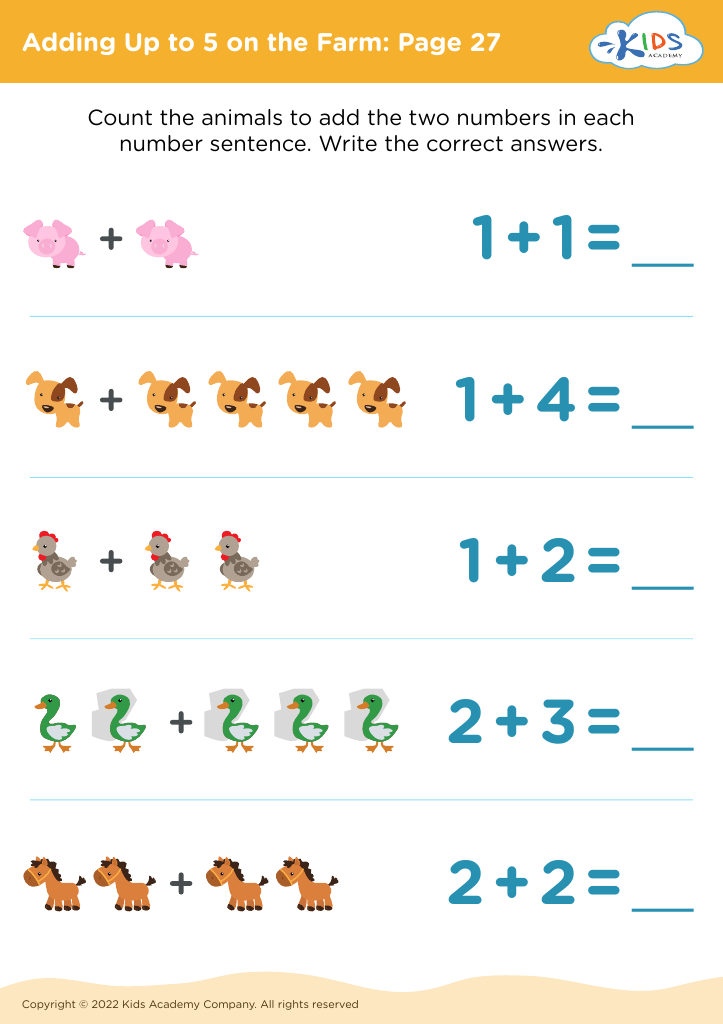
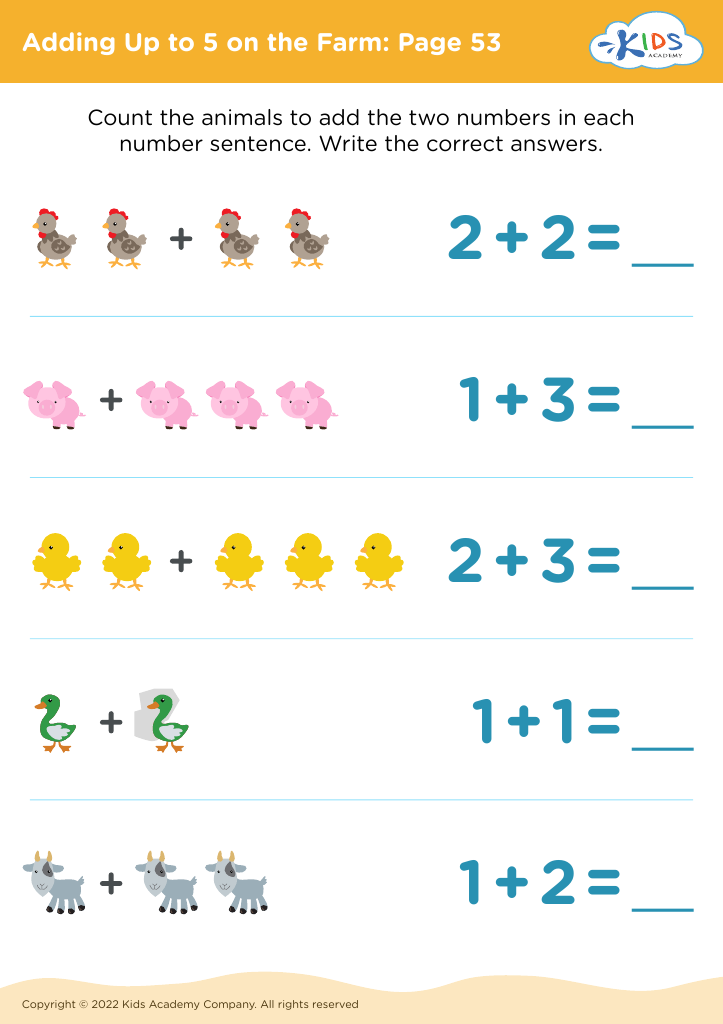
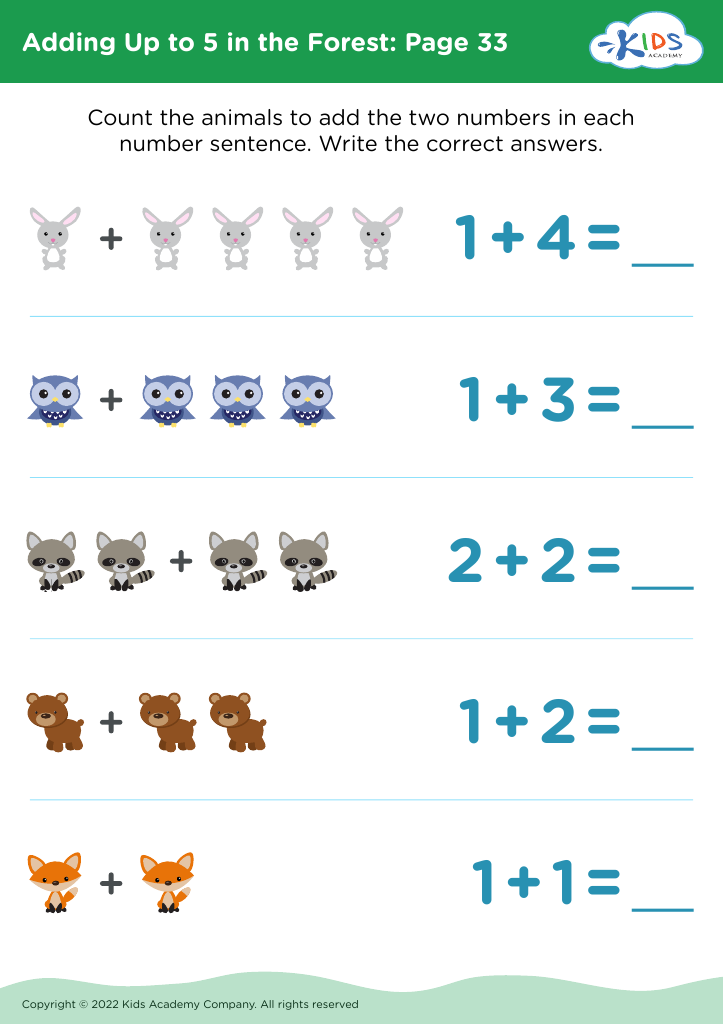
Introducing our "Math Problem-Solving Adding Up to 5 Worksheets" designed for ages 3-4. These engaging, brightly colored worksheets are perfect for young learners beginning their math journey. With fun images and simple instructions, children practice basic addition, enhancing their counting skills and number recognition. Each worksheet encourages critical thinking and problem-solving by integrating enjoyable activities. Perfect for parents and educators, our worksheets provide an excellent foundation for early math proficiency. Spark a love of learning in your child with our expertly crafted resources, helping them build essential math skills through play and exploration. Get started today!


%20(1).jpg)




.jpg)
Parents and teachers should care deeply about fostering math problem-solving skills, particularly simple addition like adding up to 5, for children ages 3-4. This foundational math skill isn't just about learning numbers—it underpins cognitive development and future academic success. At this early developmental stage, children are highly receptive to absorbing basic mathematical concepts through playful interactions and structured activities.
Engaging with math puzzles or games involving sums up to 5 helps toddlers develop critical thinking and problem-solving abilities. These interactions cultivate numerical fluency, setting the stage for more advanced math learning. Additionally, early math experiences build a strong conceptual framework, enhancing children's ability to understand and decompose numbers later on.
Mastering such simple arithmetic also boosts confidence. Children who achieve small successes in math feel more positive and motivated towards learning in general. For parents and teachers, participating in these activities offers invaluable bonding time and provides insight into a child's learning style and progress.
Moreover, research strongly suggests that early proficiency in math is a predictor of later academic performance, not just in mathematics but across subjects. Therefore, investing time in helping young children add up to 5 ensures they develop a robust foundation for lifelong learning, curiosity, and academic potential.








