Understanding Quantities Adding Up to 5 Worksheets for Ages 3-4 - Page 2
36 filtered results
-
From - To
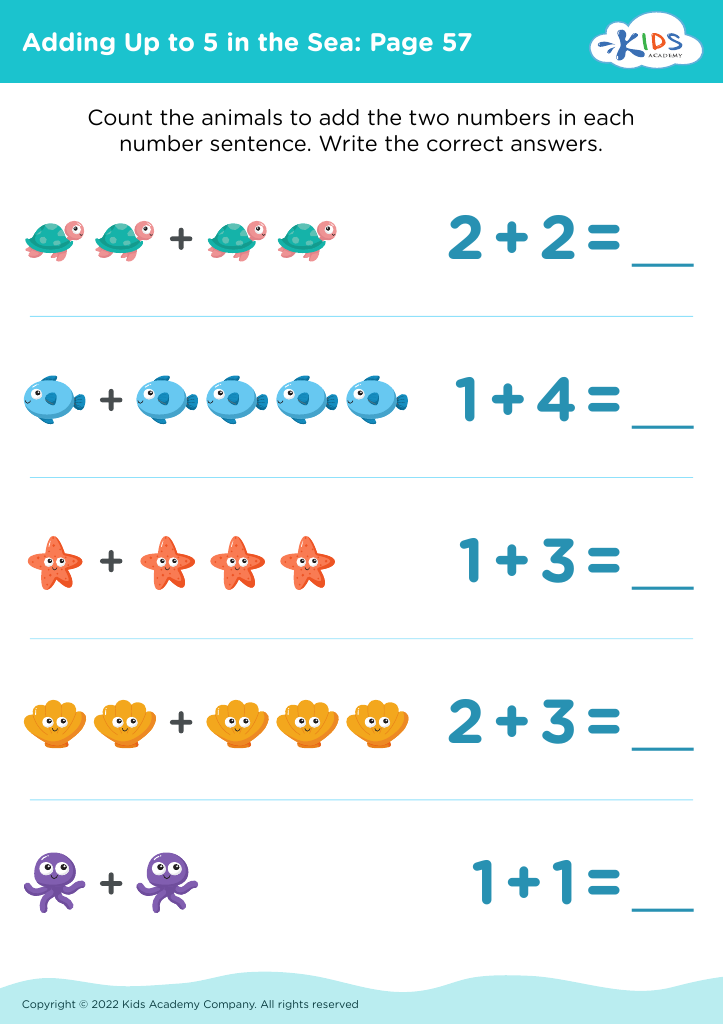
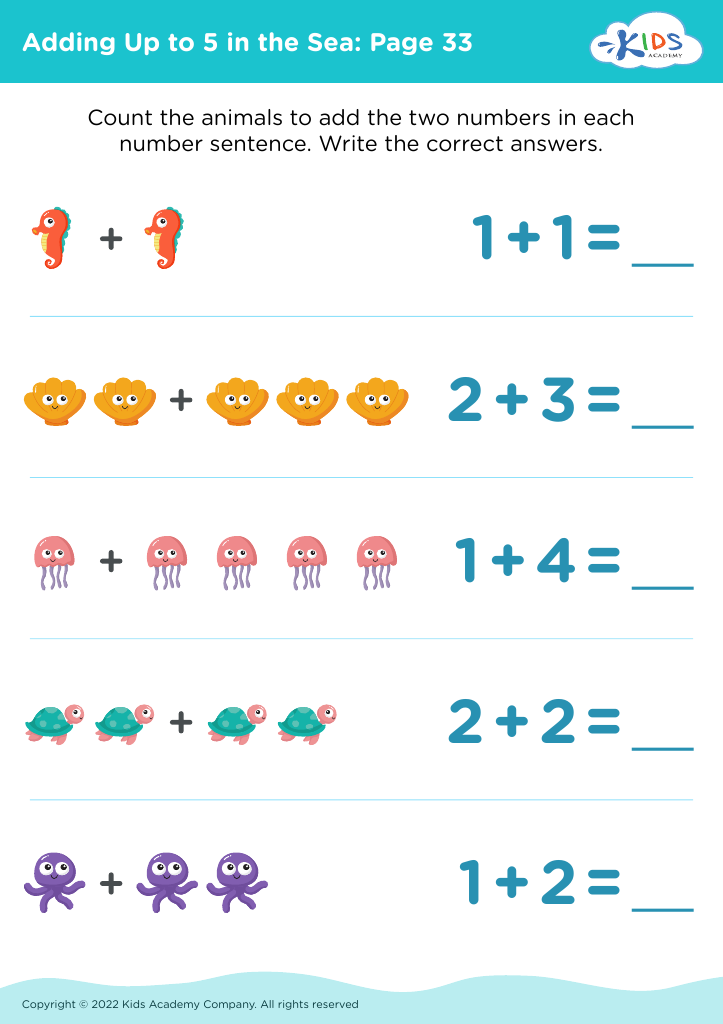
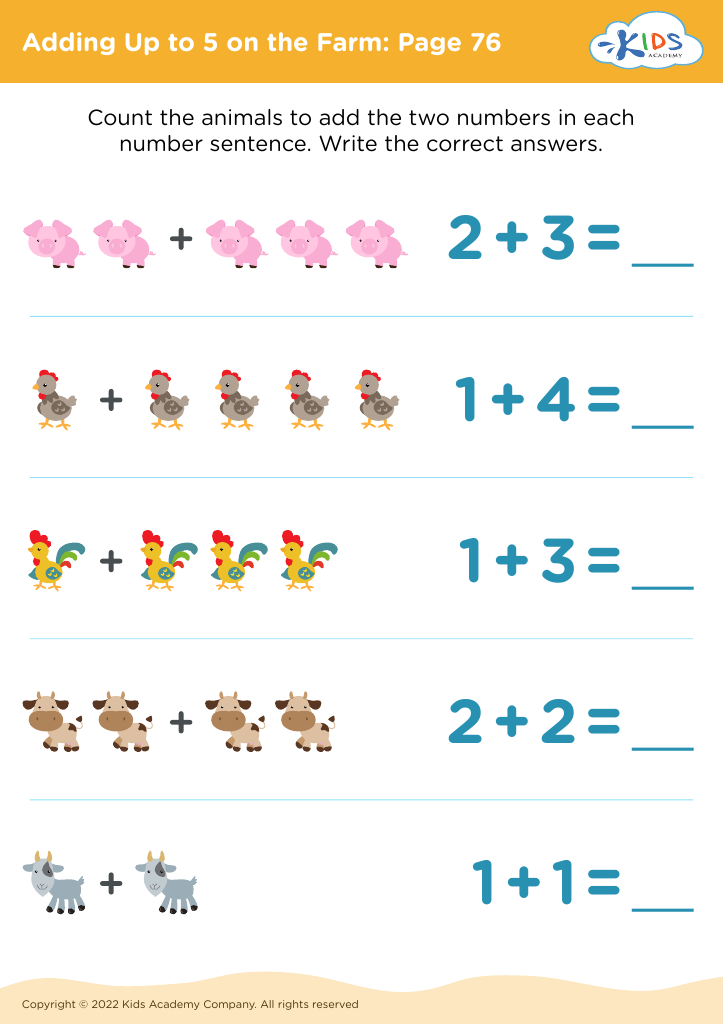
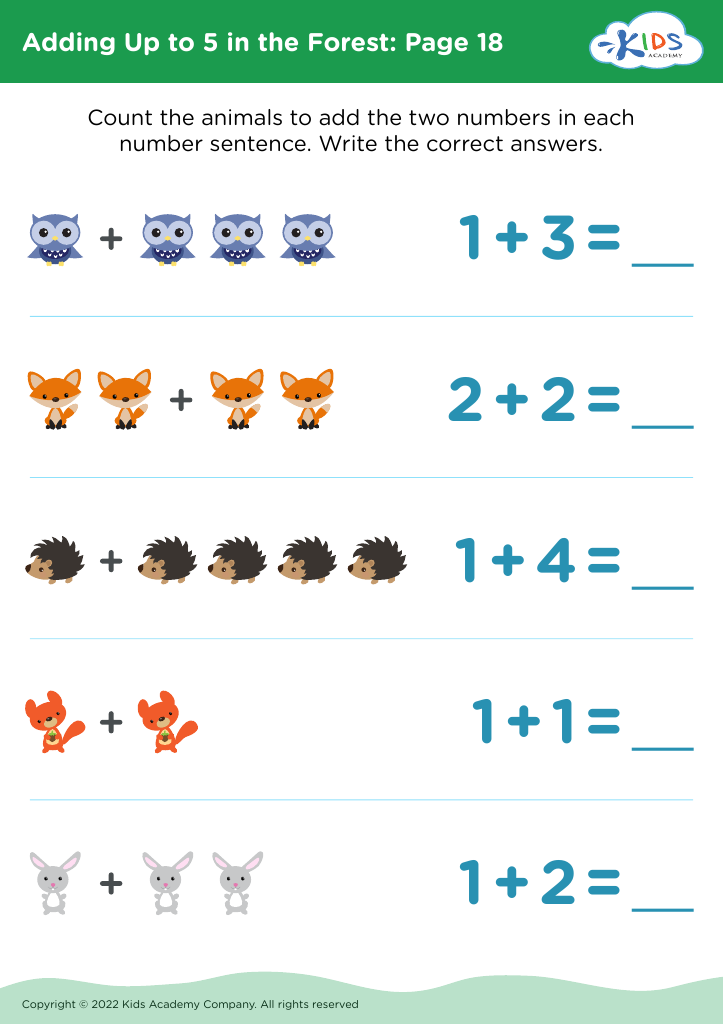
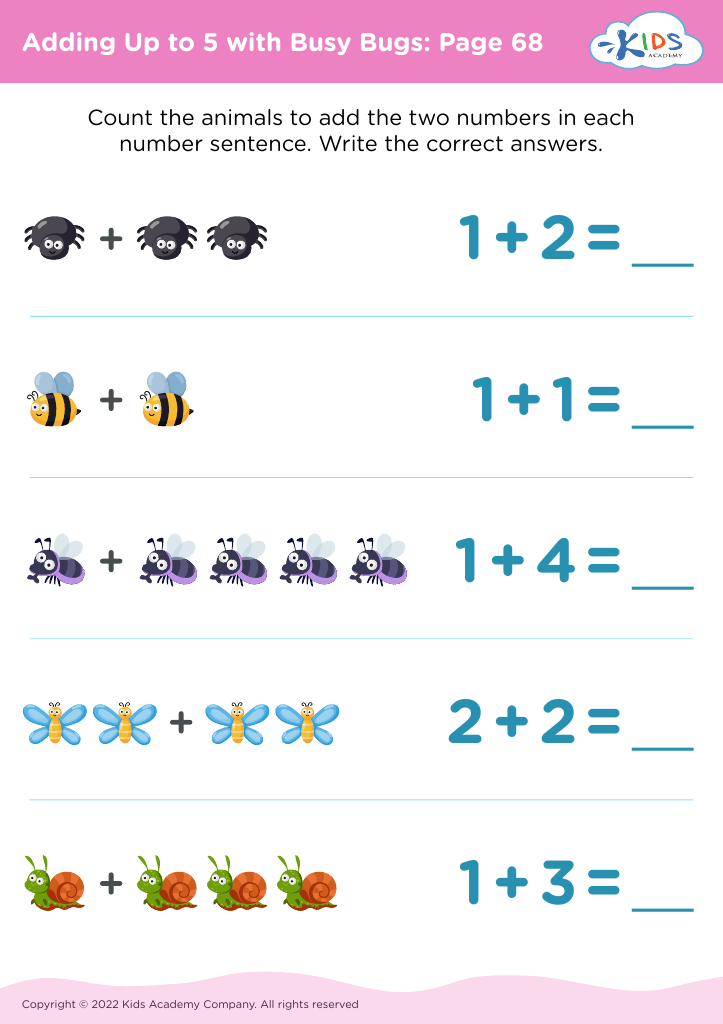
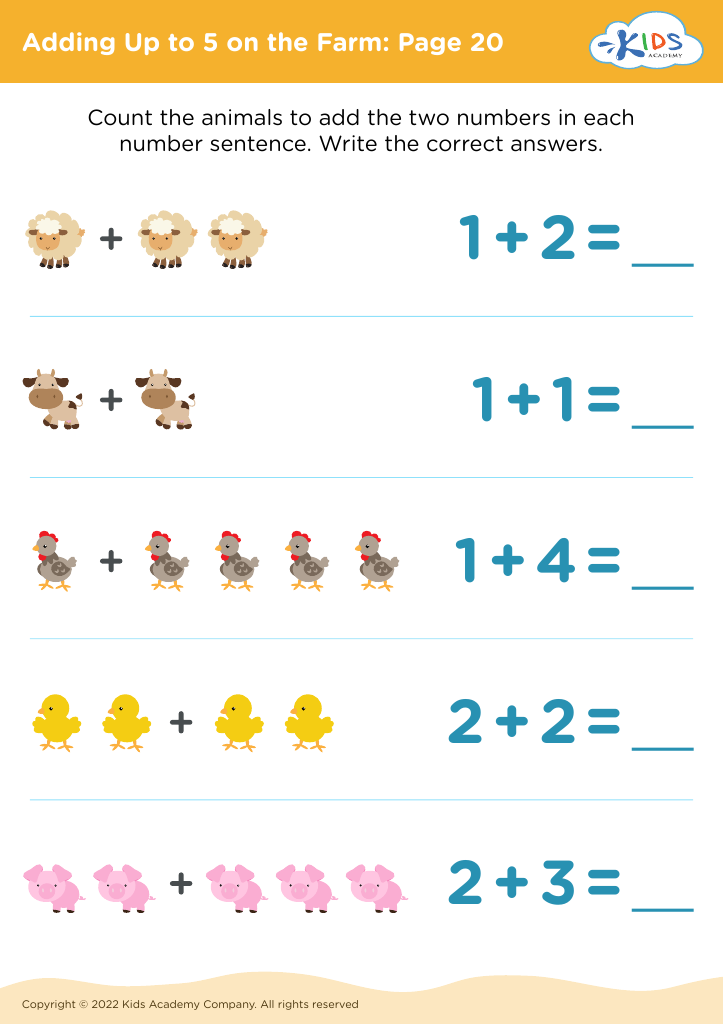
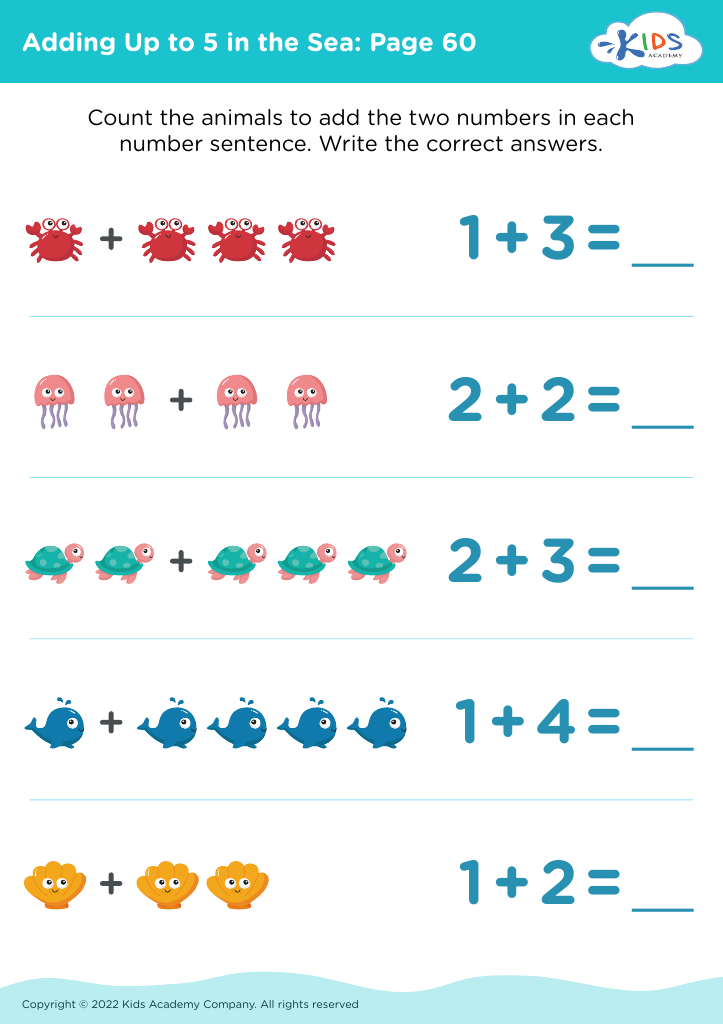
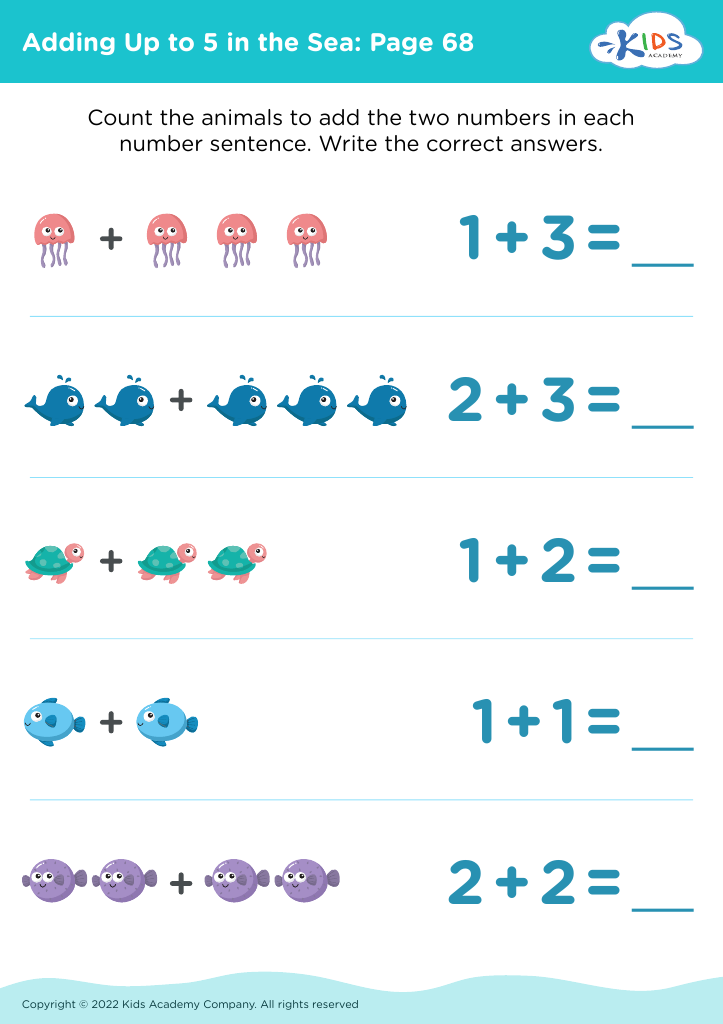




.jpg)



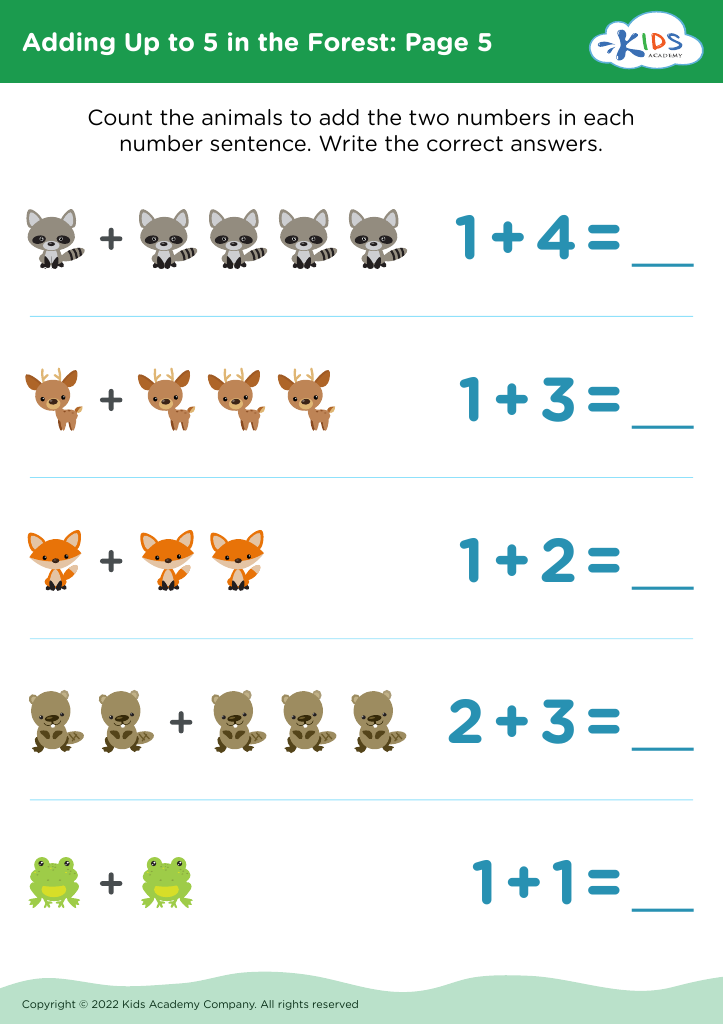
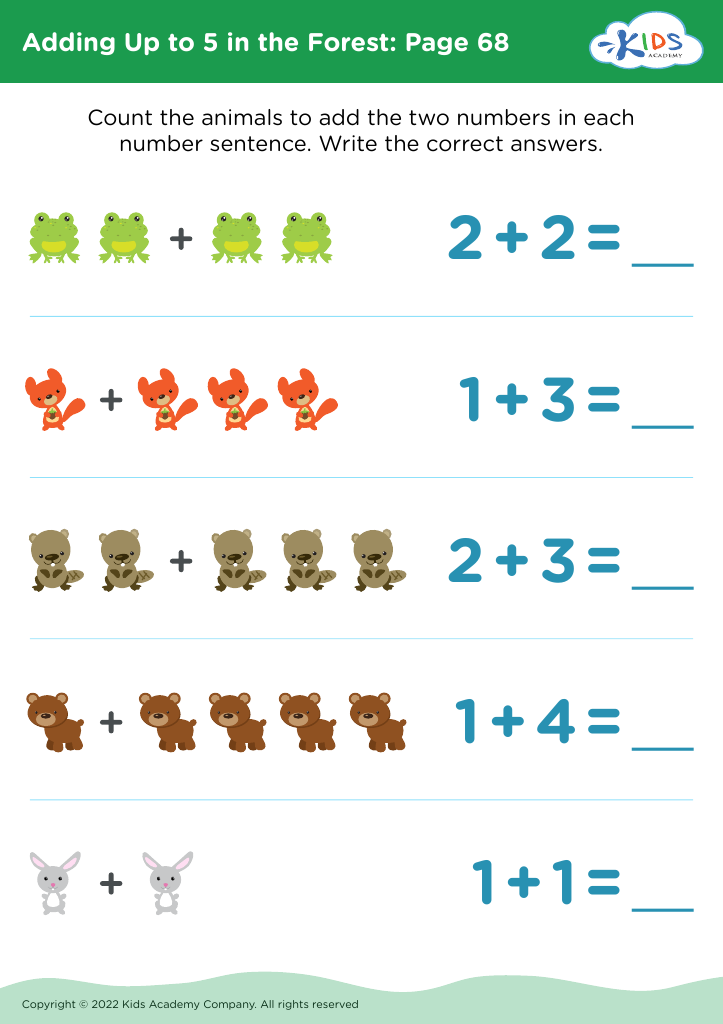
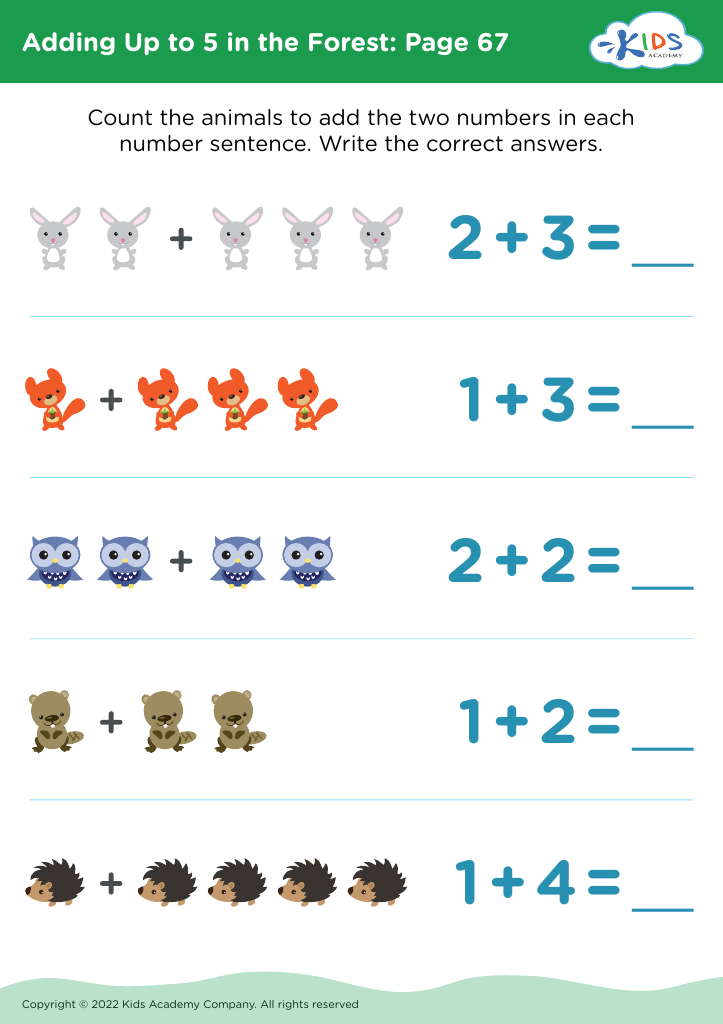
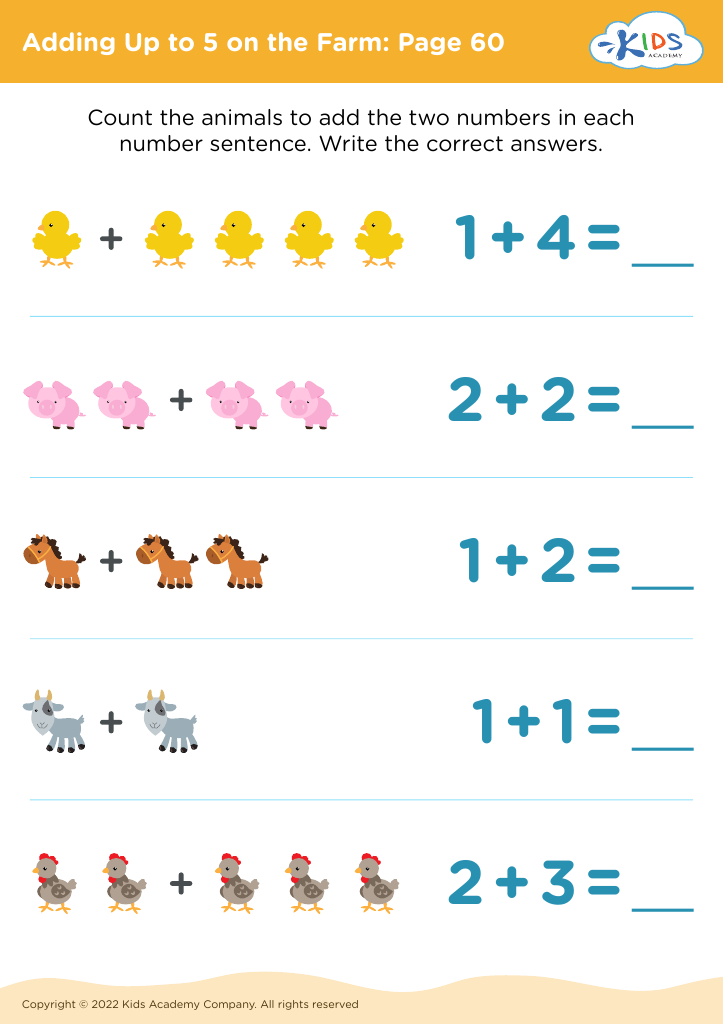
Parents and teachers should care about understanding quantities adding up to 5 for children ages 3-4 because it lays the foundation for essential early math skills and cognitive development. At this age, children are developing their number sense – an intuitive understanding of numbers and their relationships. Mastering basic addition within 5 helps them grasp concepts of counting and quantity, which are critical for more advanced math learning.
Understanding small quantities prepares children for a lifetime of mathematical learning, promoting confidence and enthusiasm for the subject. Activities that involve combining numbers to make 5 can be engaging and fun, making learning feel like play rather than work. This also helps keep children engaged and fosters a positive relationship with learning.
Furthermore, these early math skills are crucial for other aspects of their development. For instance, they contribute to the development of logical thinking, problem-solving abilities, and pattern recognition. These skills are not only useful for math; they are integral to learning across all subjects and in everyday life situations.
Incorporating understanding quantities up to 5 in their learning routine ensures that children are building a strong, robust foundation. Consequently, they can transition smoothly to more complex mathematical concepts and operations as they grow older, setting them up for academic success.








