Check out this FREE Trial Lesson on Adding Up to 5 for age 3-4!

T

Favorites
With answer key
Interactive
  • 3-4
  • Visual Learning
  • Adding Up to 5
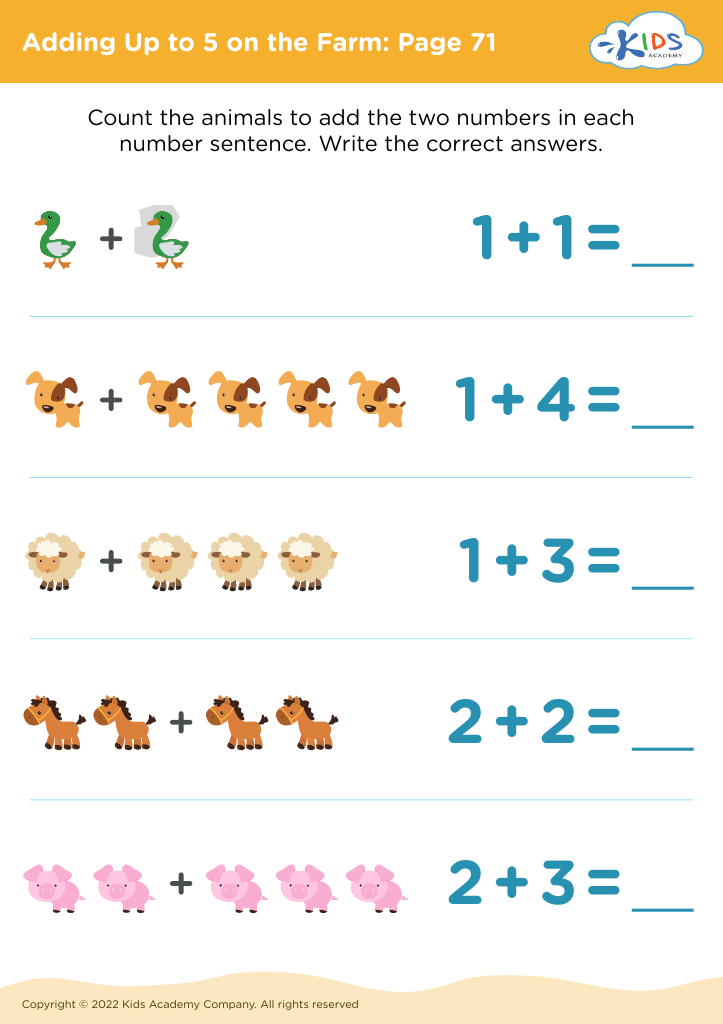
Adding Up to 5 on the Farm: Page 71
Worksheet
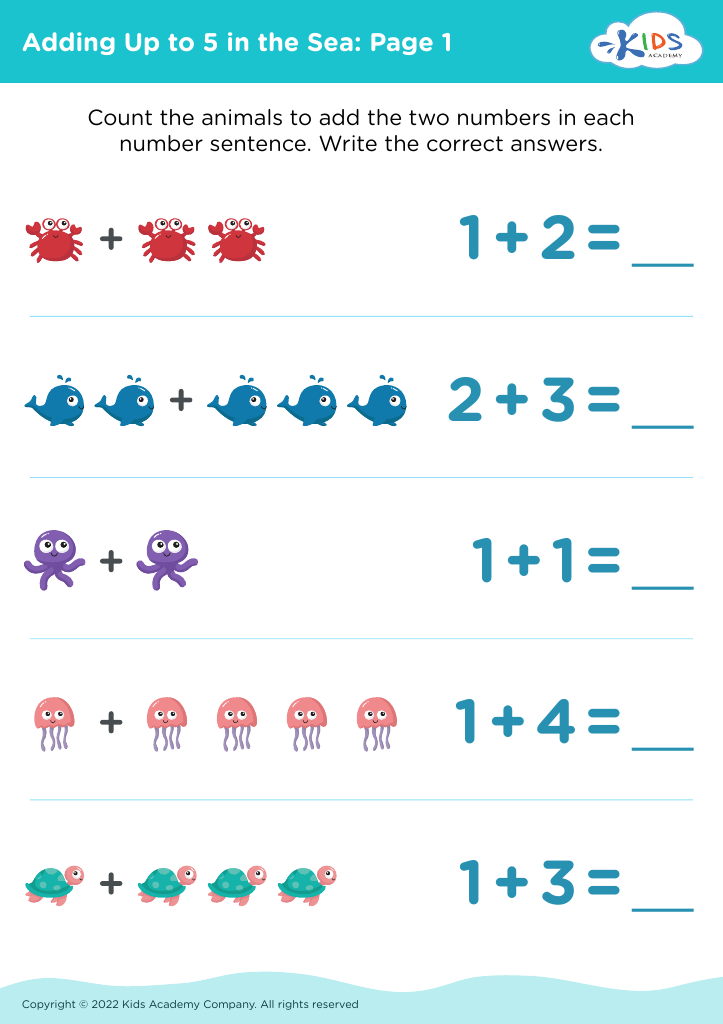
Adding Up to 5 in the Sea: Page 1

Adding Up to 5 in the Sea: Page 1

Adding Up to 5 in the Sea: Page 1
Worksheet
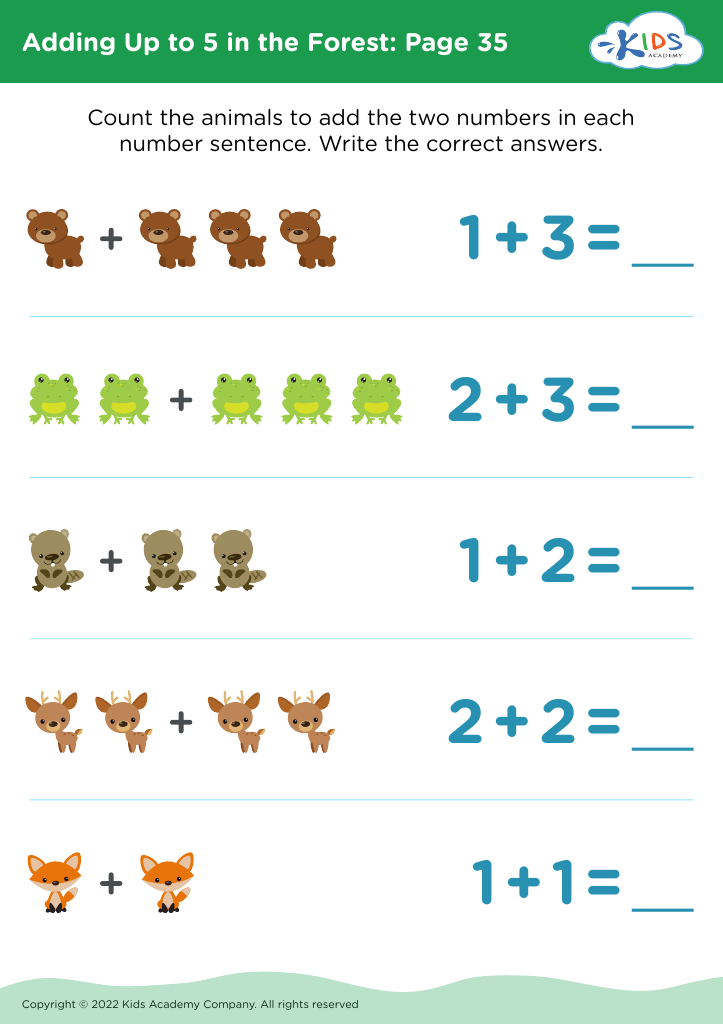
Adding Up to 5 in the Forest: Page 35
Worksheet
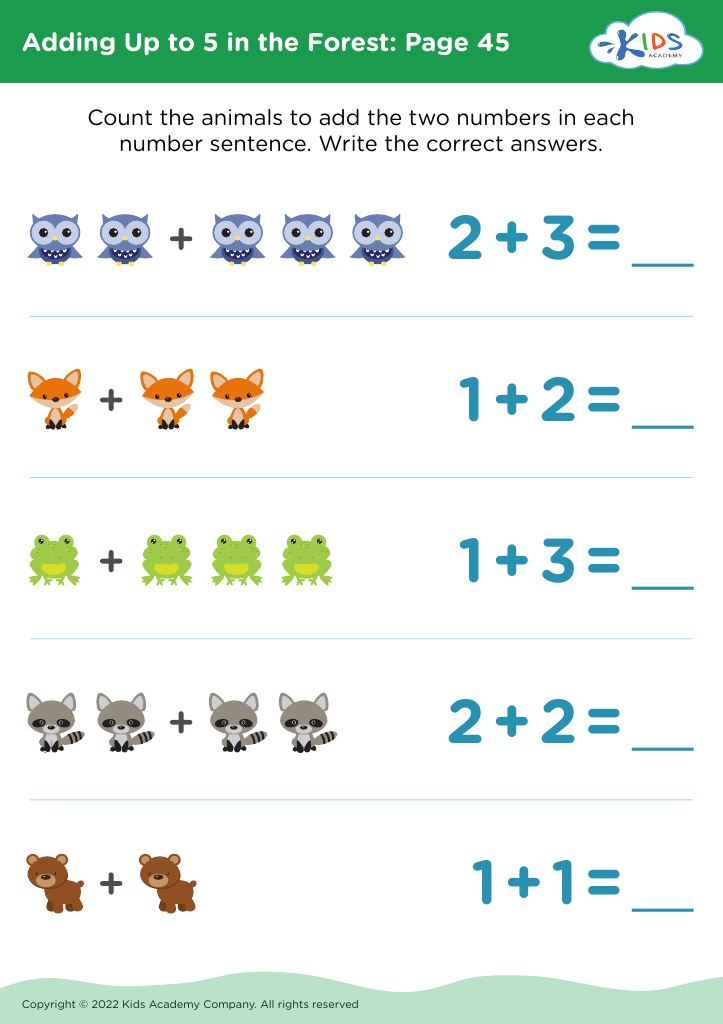
Adding Up to 5 in the Forest: Page 45
Worksheet
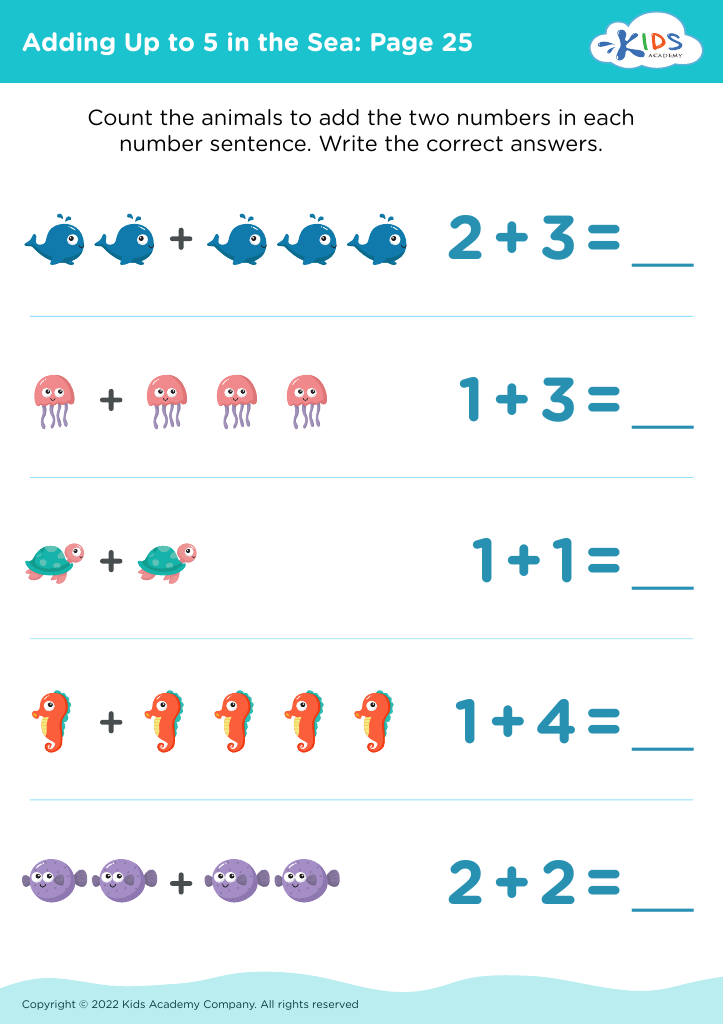
Adding Up to 5 in the Sea: Page 25
Worksheet
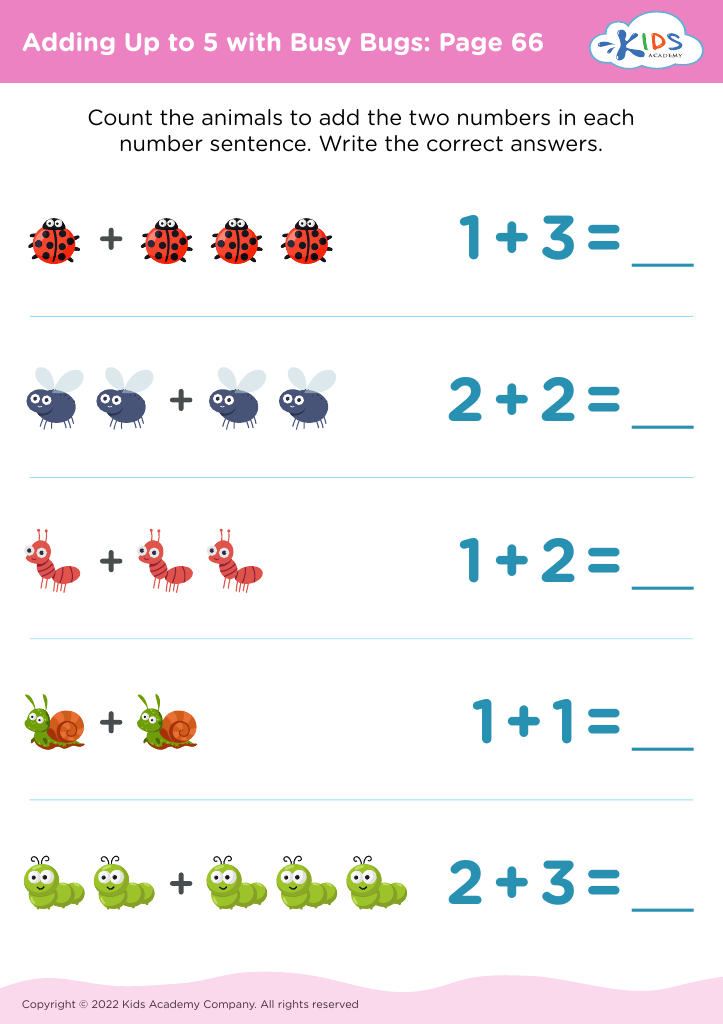
Adding Up to 5 with Busy Bugs: Page 66
Worksheet
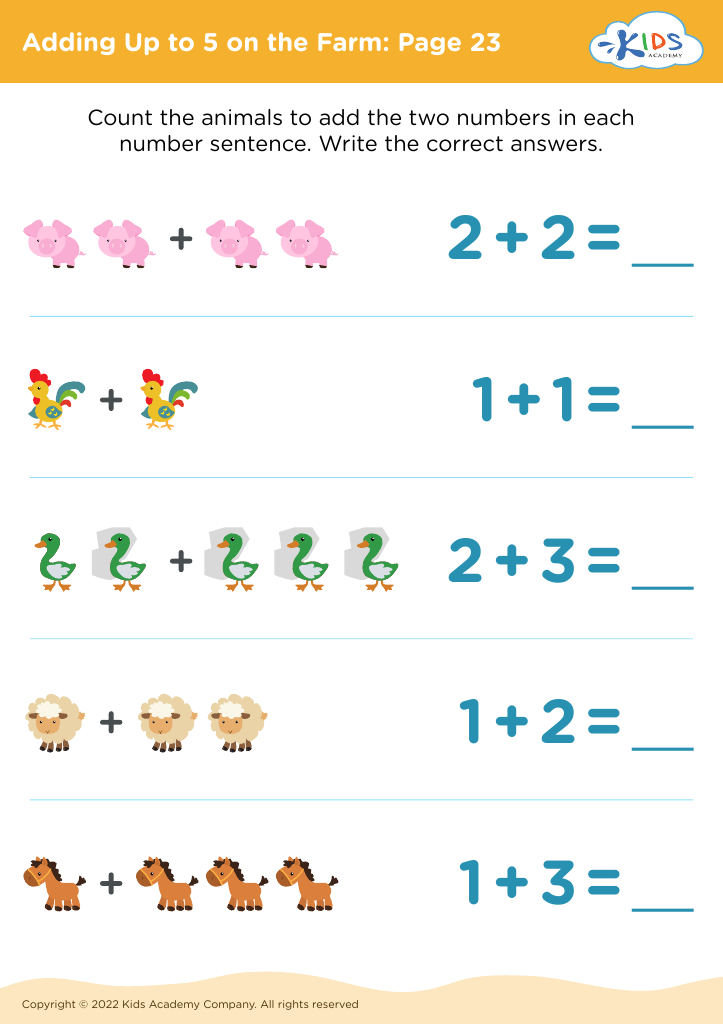
Adding Up to 5 on the Farm: Page 23
Worksheet
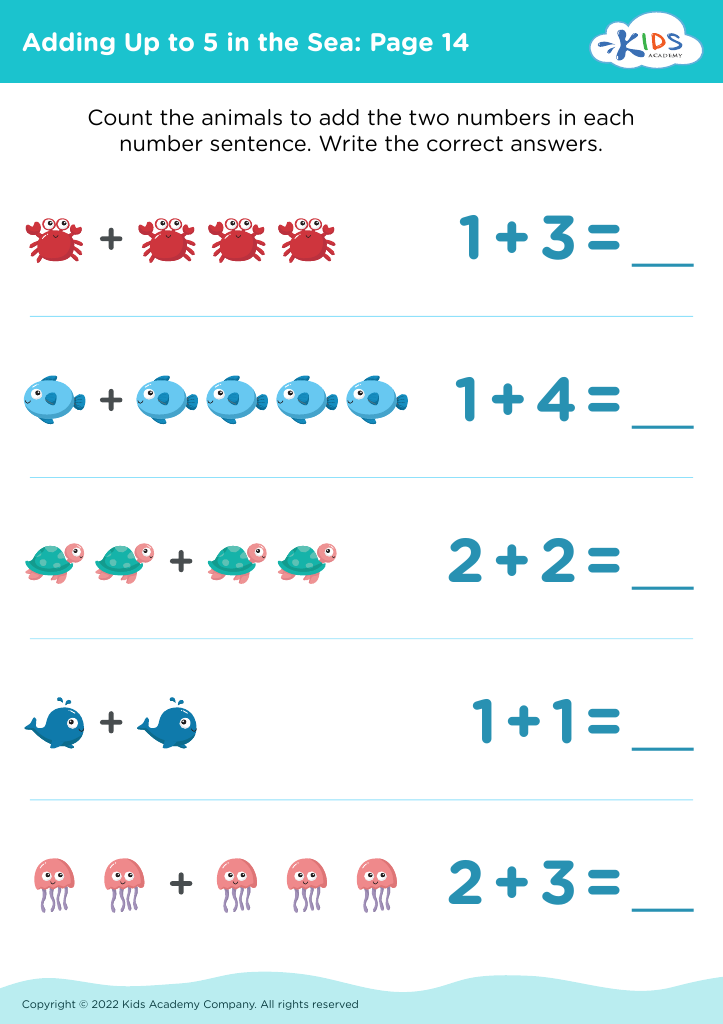
Adding Up to 5 in the Sea: Page 14
Worksheet
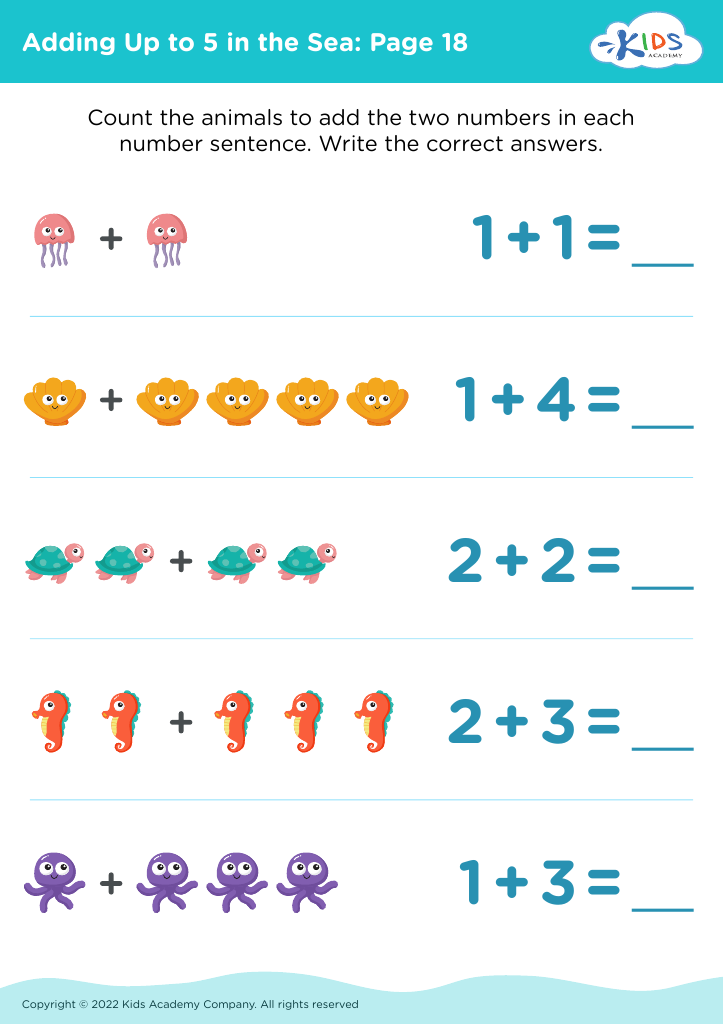
Adding Up to 5 in the Sea: Page 18
Worksheet
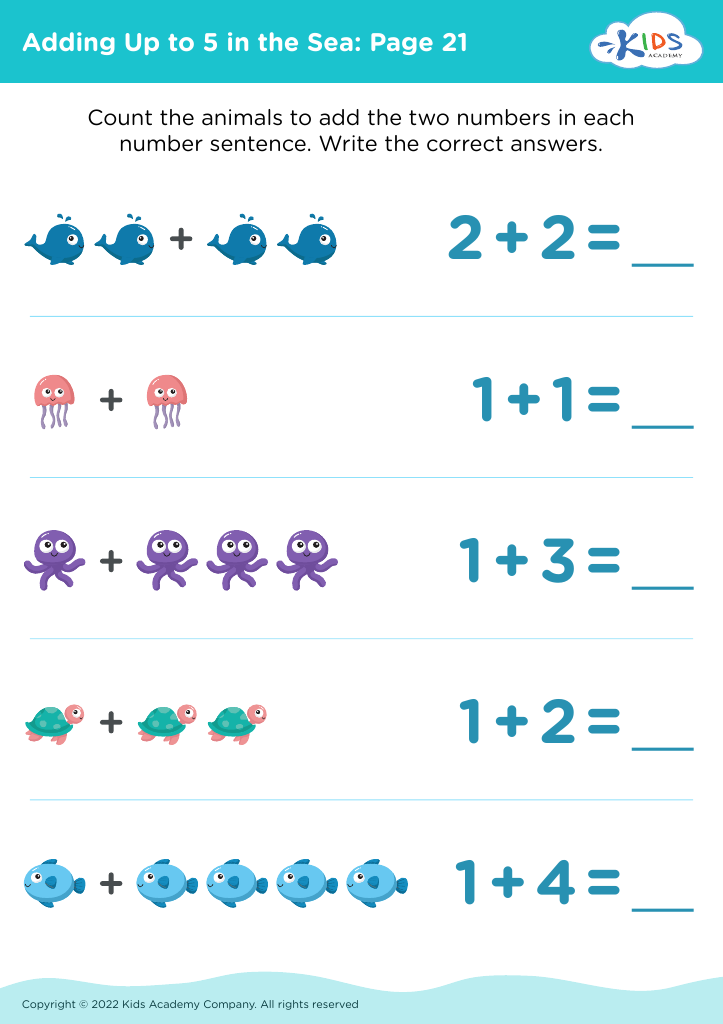
Adding Up to 5 in the Sea: Page 21
Worksheet
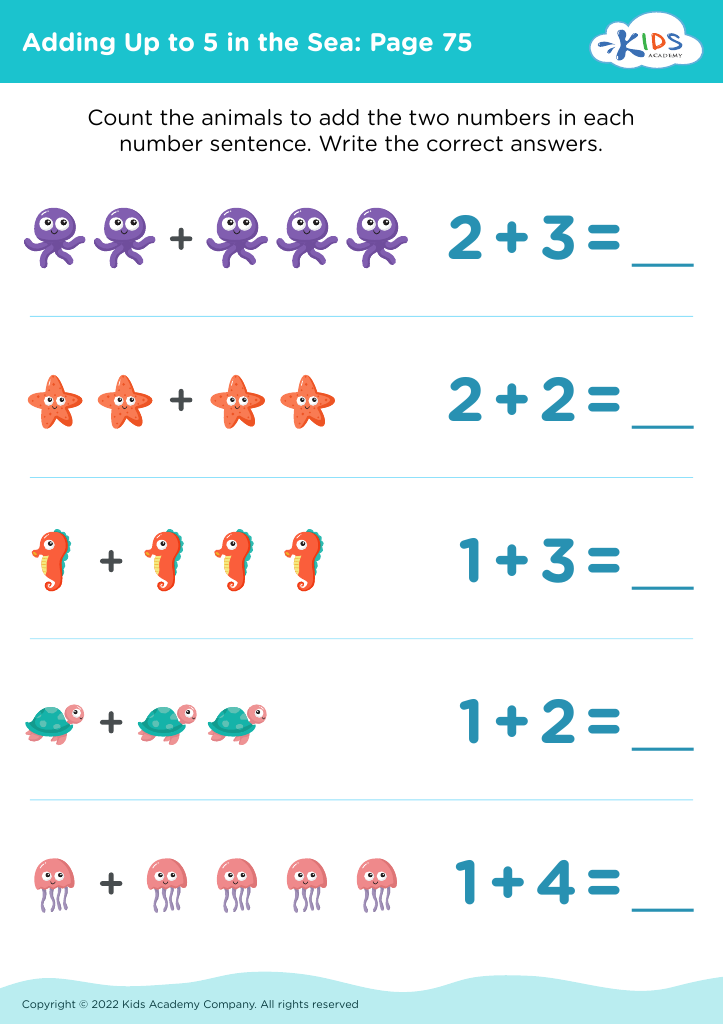
Adding Up to 5 in the Sea: Page 75
Worksheet
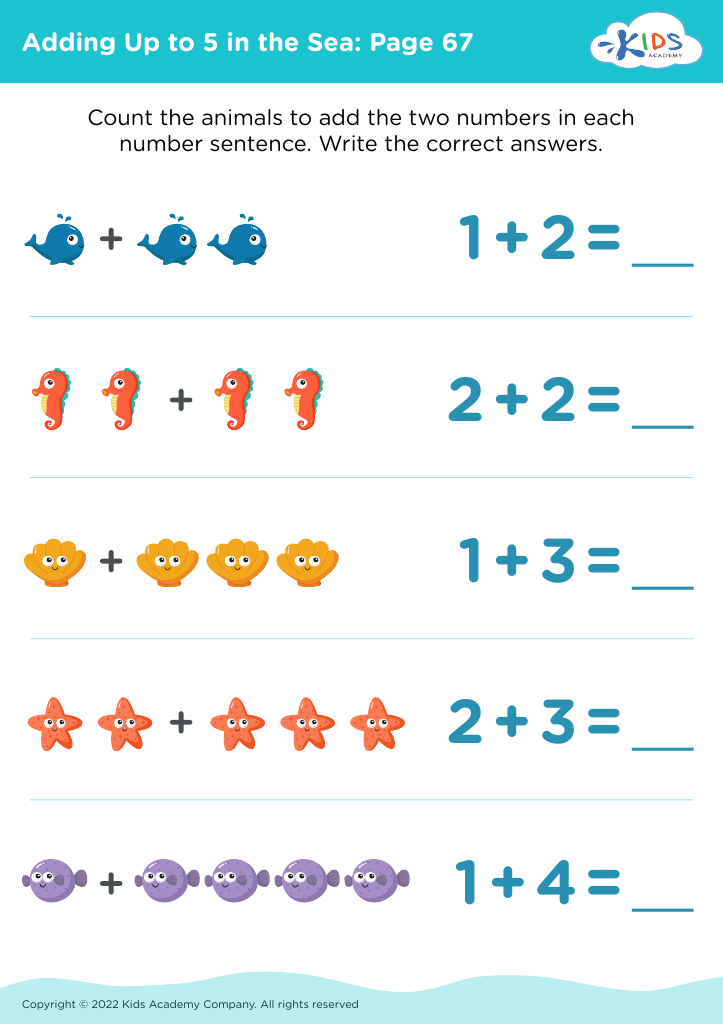
Adding Up to 5 in the Sea: Page 67
Worksheet
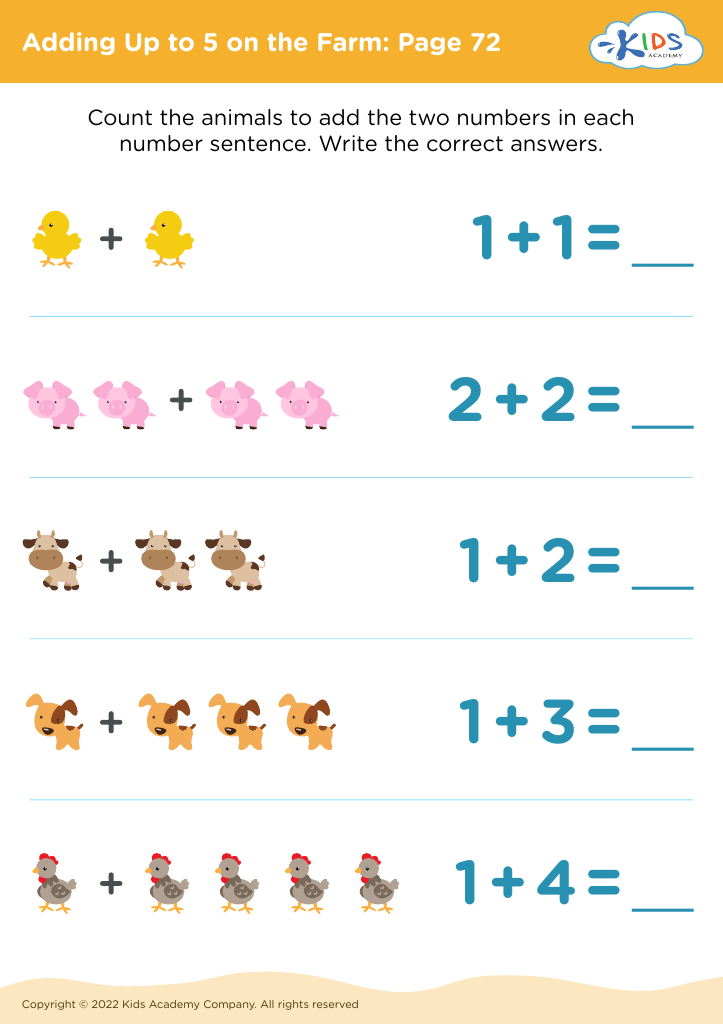
Adding Up to 5 on the Farm: Page 72
Worksheet
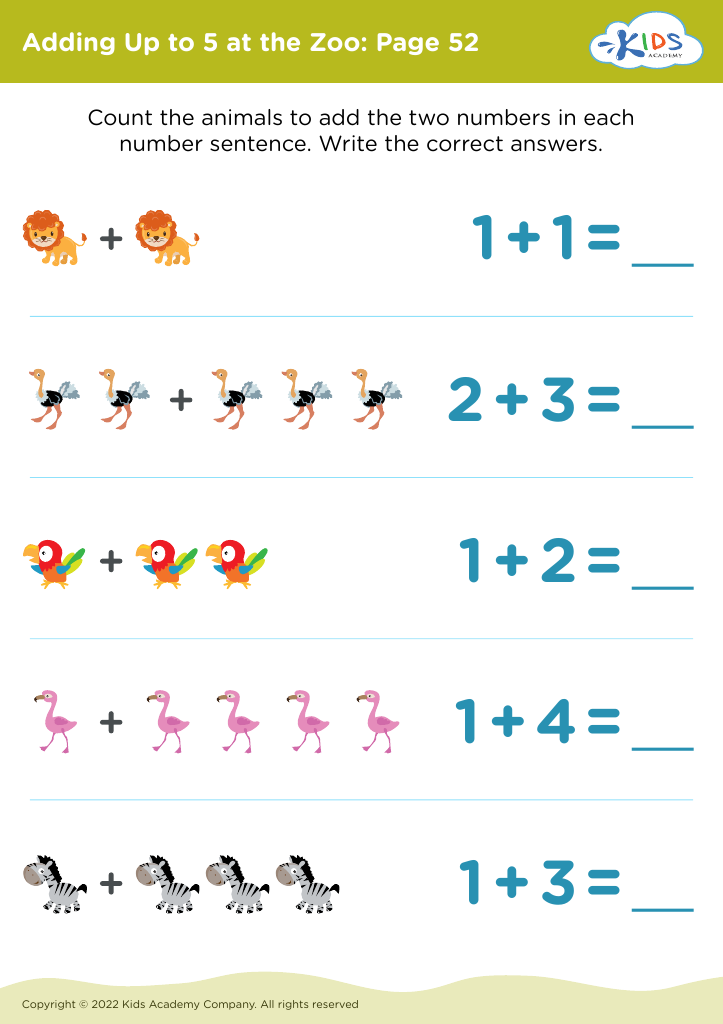
Adding Up to 5 at the Zoo: Page 52
Worksheet
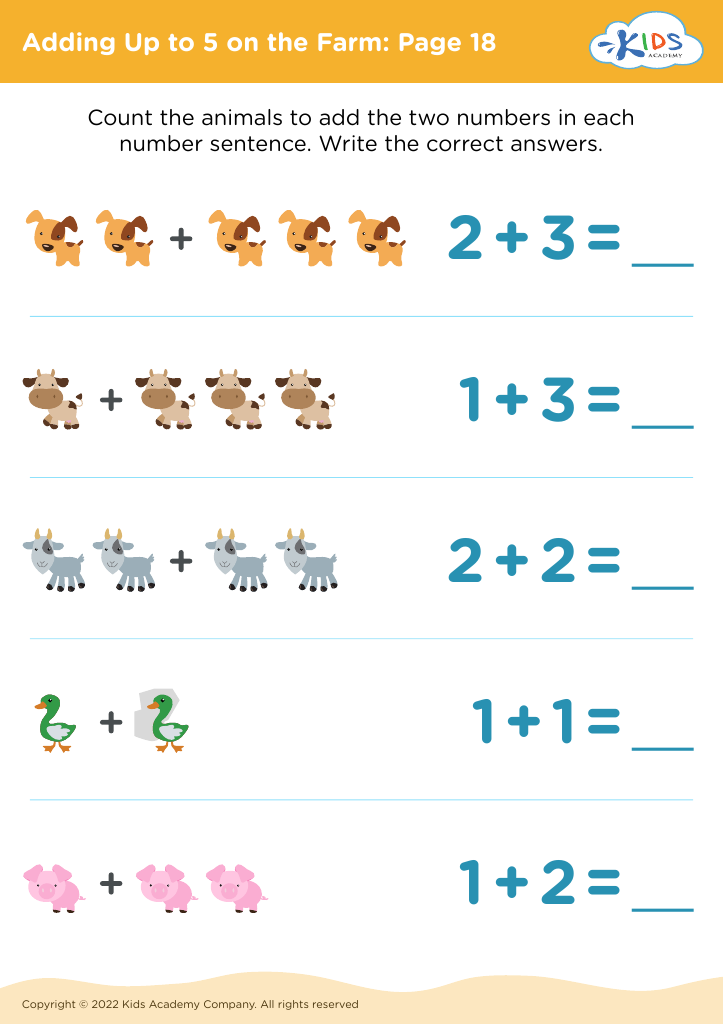
Adding Up to 5 on the Farm: Page 18
Worksheet
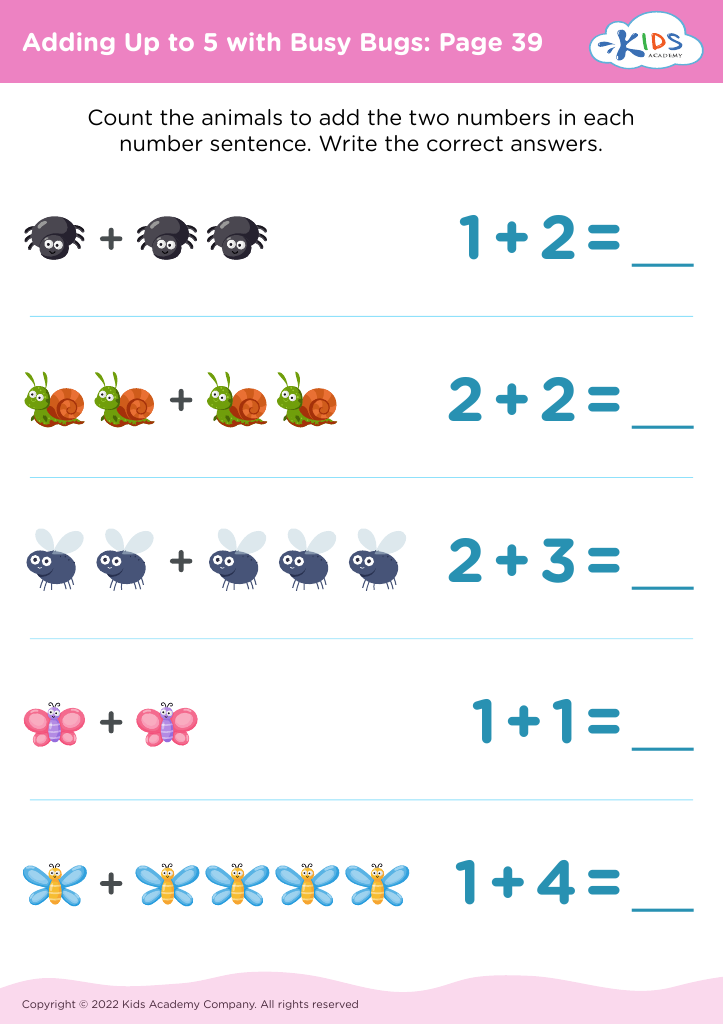
Adding Up to 5 with Busy Bugs: Page 39
Worksheet
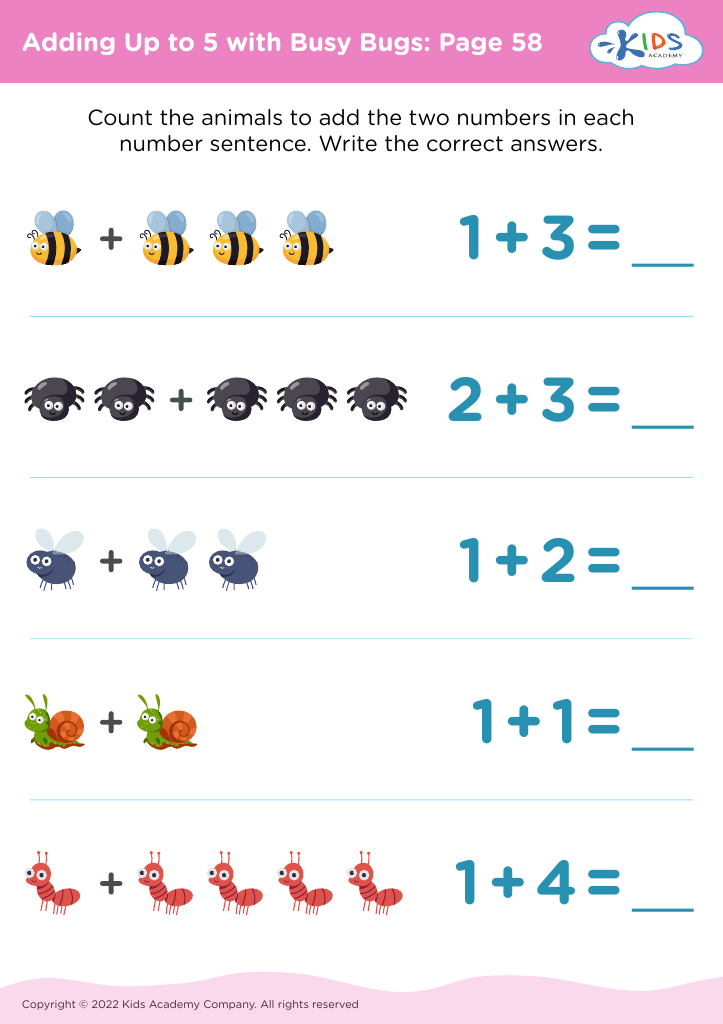
Adding Up to 5 with Busy Bugs: Page 58
Worksheet
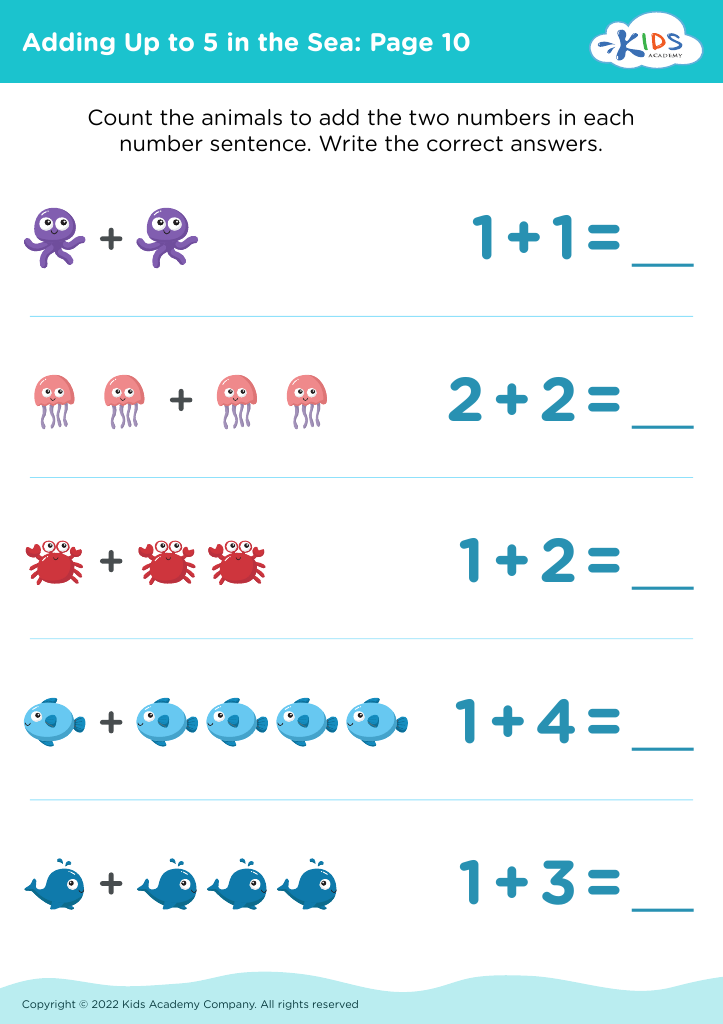
Adding Up to 5 in the Sea: Page 10
Worksheet
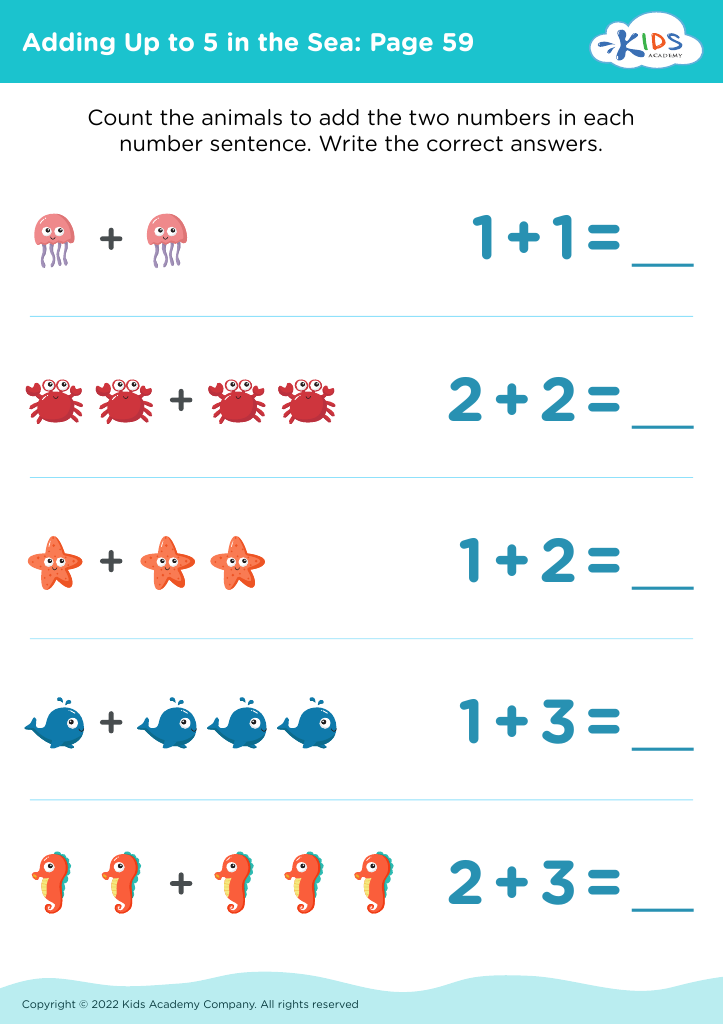
Adding Up to 5 in the Sea: Page 59
Worksheet
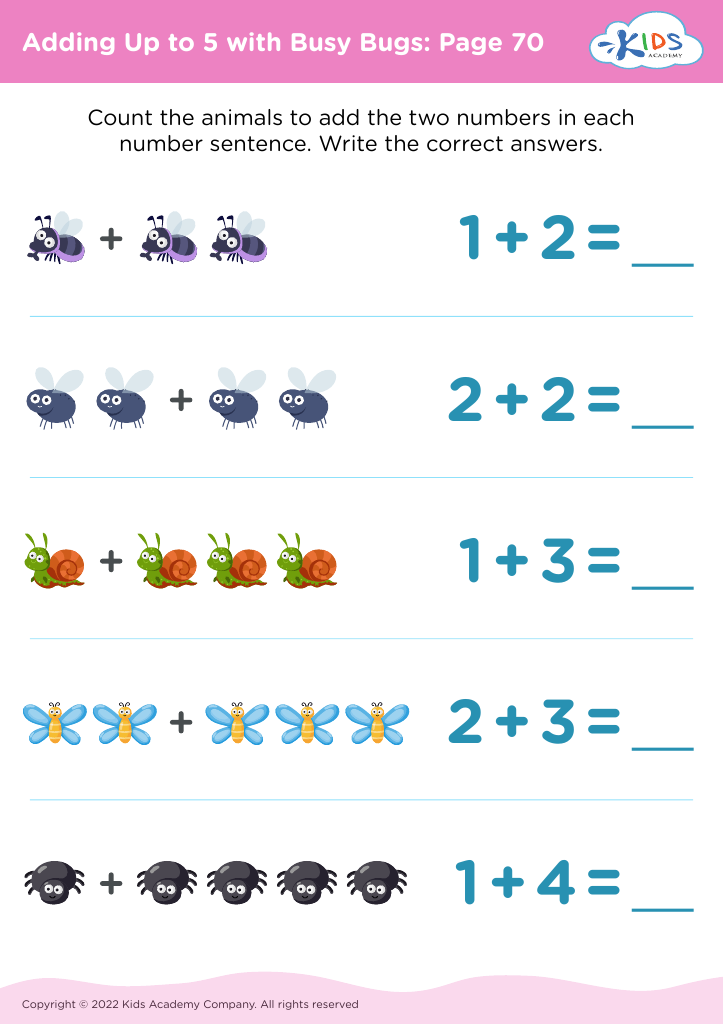
Adding Up to 5 with Busy Bugs: Page 70
Worksheet
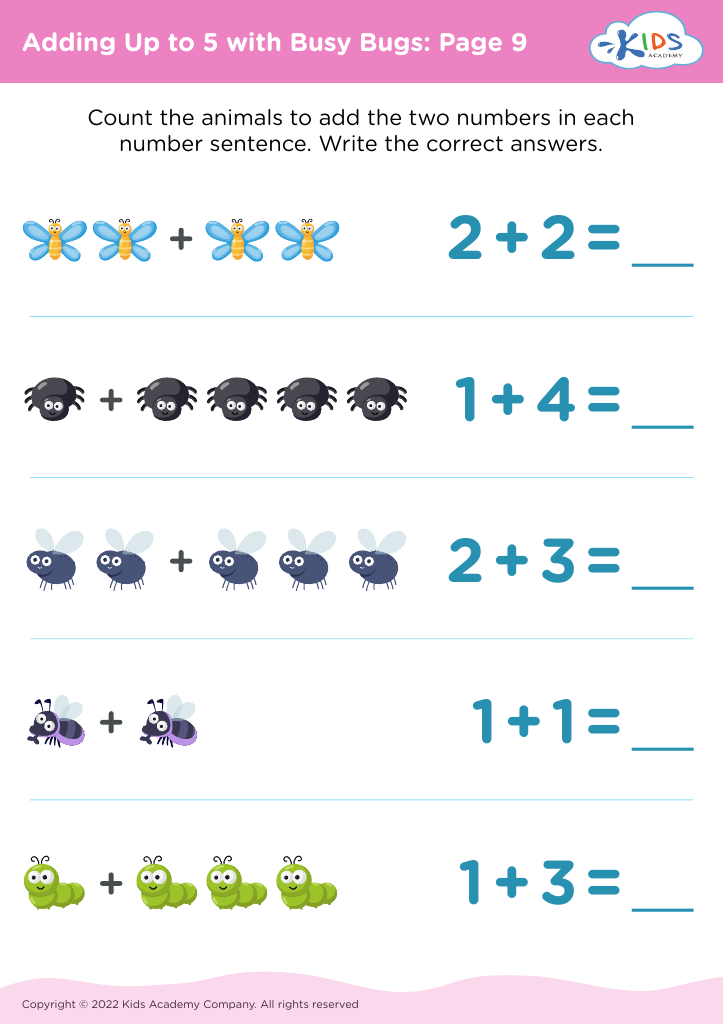
Adding Up to 5 with Busy Bugs: Page 9
Worksheet
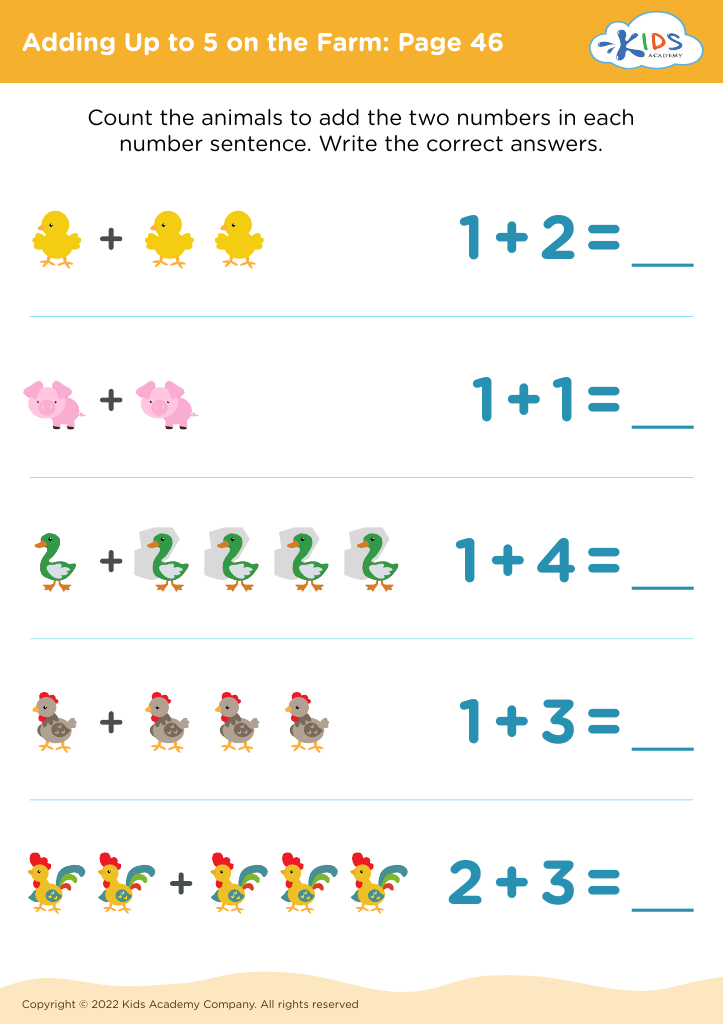
Adding Up to 5 on the Farm: Page 46
Worksheet
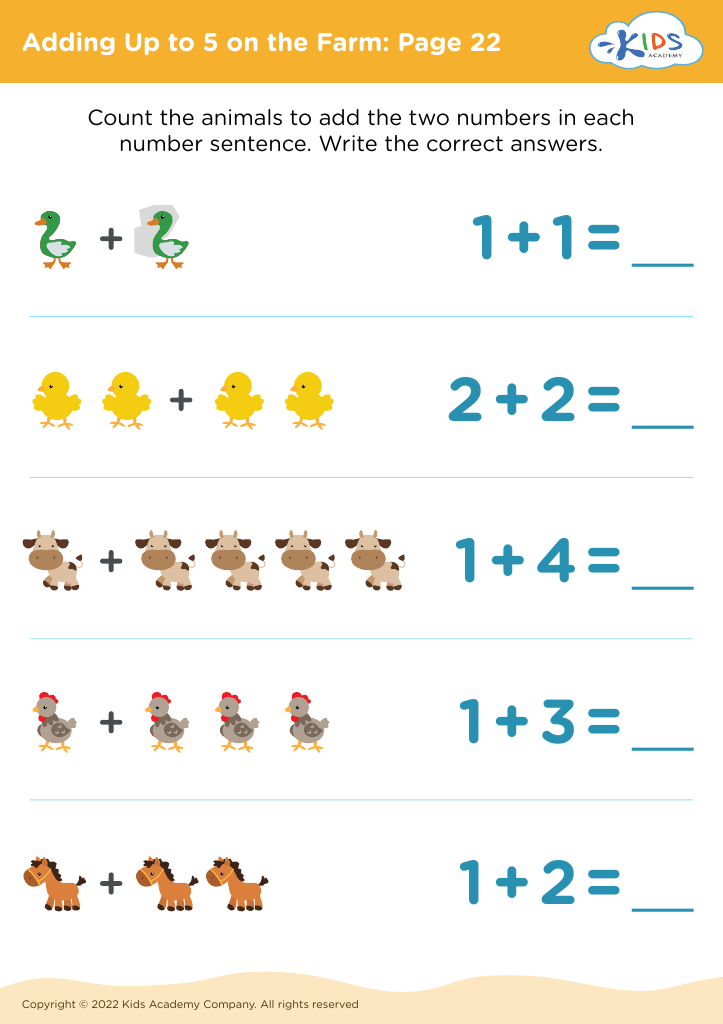
Adding Up to 5 on the Farm: Page 22
Worksheet
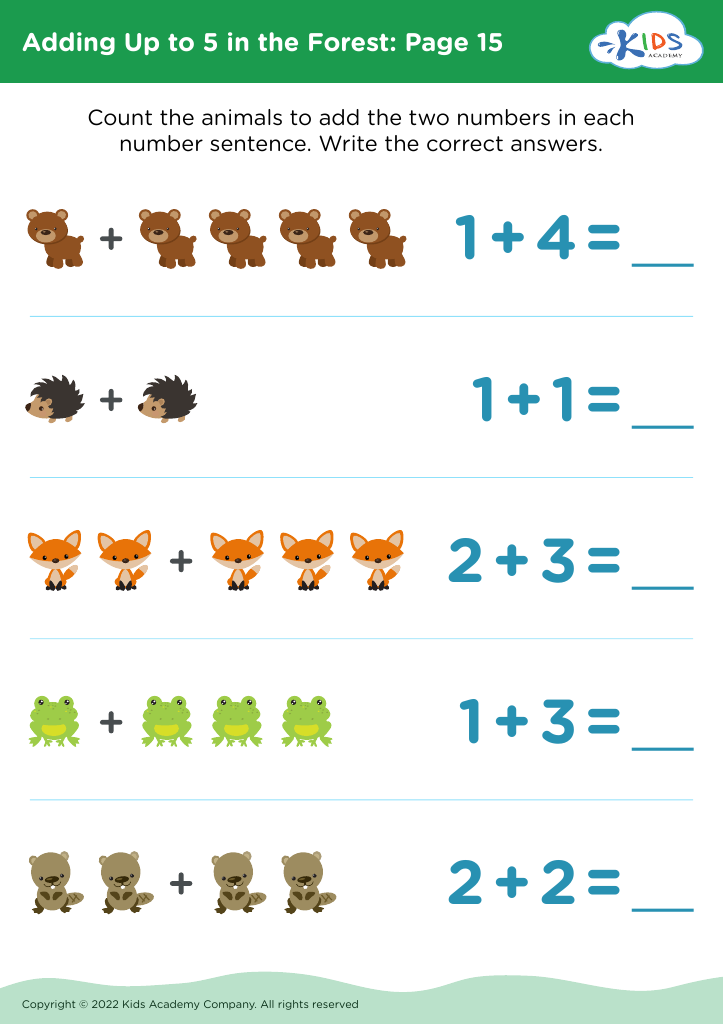
Adding Up to 5 in the Forest: Page 15
Worksheet


Parents and teachers should care about visual learning, particularly when teaching concepts like adding up to 5 for ages 3-4, because it significantly supports early cognitive development. Young children are inherently visual learners, and incorporating visual aids can help solidify abstract mathematical concepts. For instance, using colorful blocks, drawing pictures, or employing visual counting tools allows children to see quantities rather than just hear numbers. This tangible approach fosters better understanding and retention.

Moreover, visual learning engages multiple senses, making math more interactive and enjoyable. When children manipulate objects or visualize sums, they develop critical thinking skills and a love for learning. This also lays a robust foundation for more complex math concepts later in life.

Furthermore, engaging visual routines can foster a sense of accomplishment in young children, promoting confidence in their abilities to tackle math concepts. Parents and teachers can nurture these essential skills by recognizing the importance of visual learning, ensuring that children not only comprehend simple addition but also excel in problem-solving and reasoning as they progress. In short, embracing visual learning strategies greatly enhances early math education, setting the stage for future academic success.