Visual-motor skills Adding Up to 5 Worksheets for Ages 3-4
3 filtered results
-
From - To
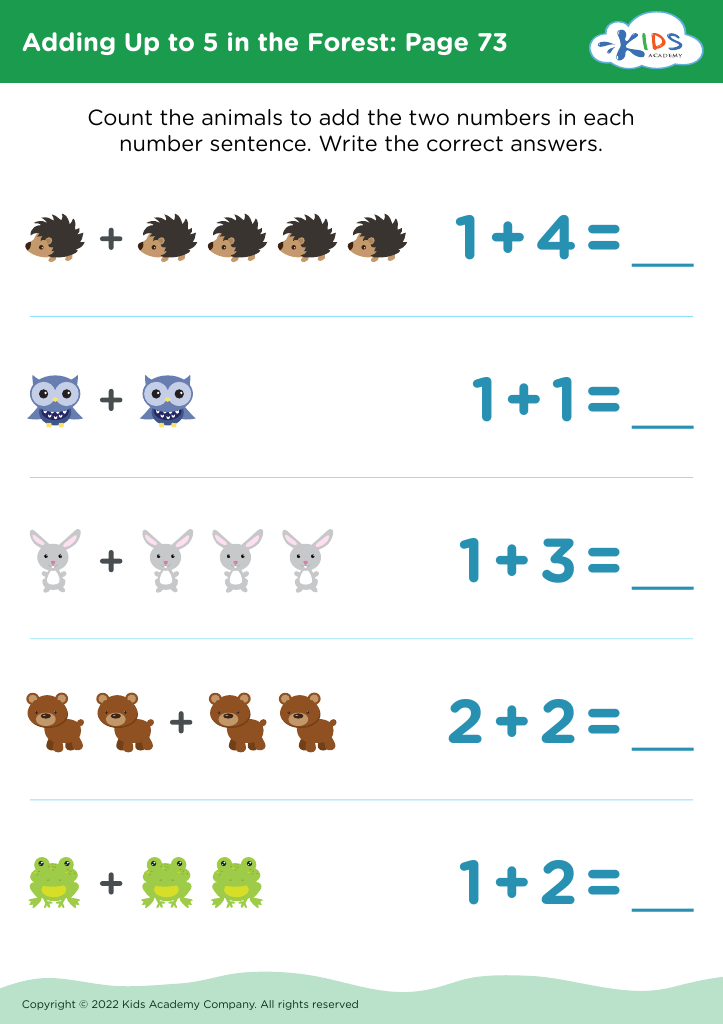
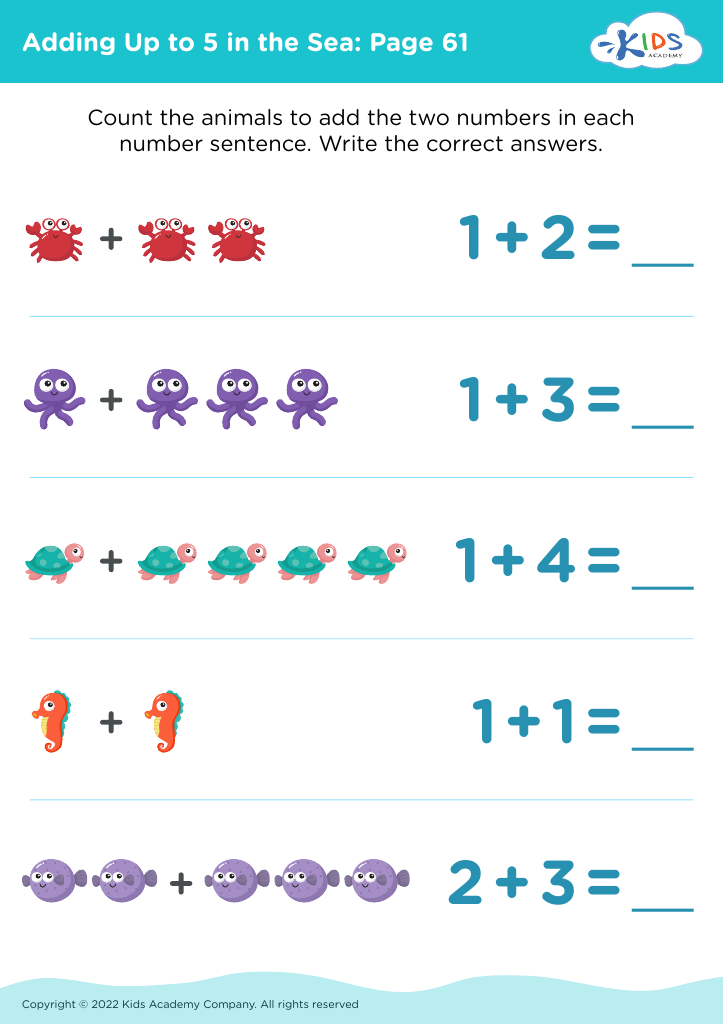
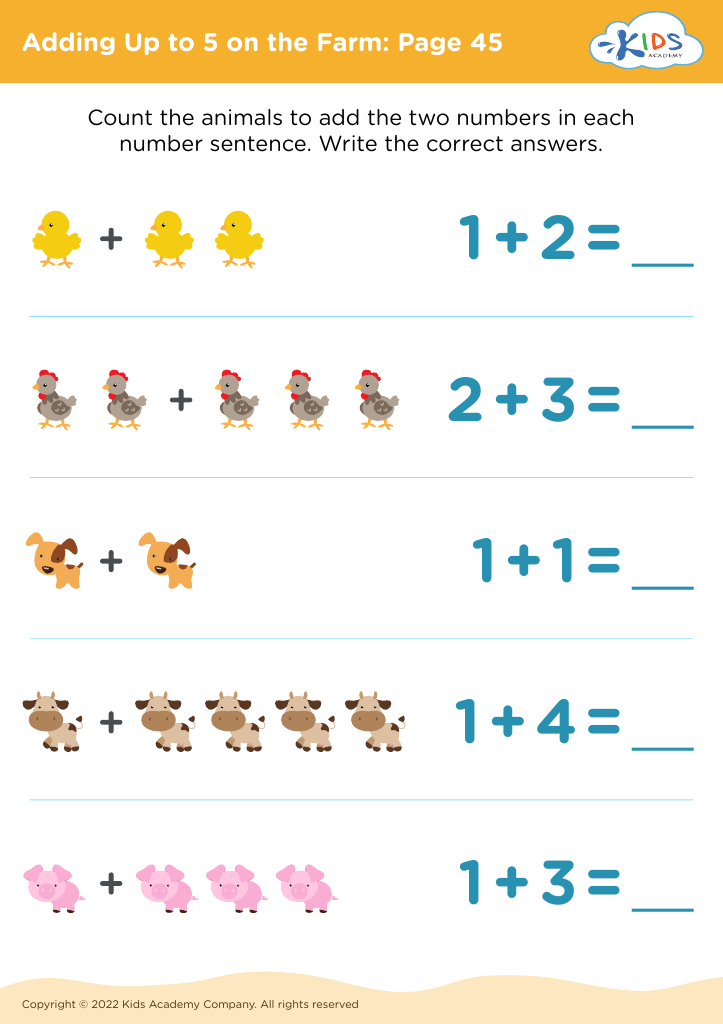
Enhance your child's visual-motor skills with our engaging "Adding Up to 5" worksheets, designed specifically for ages 3-4! These fun, interactive activities focus on counting and simple addition while promoting hand-eye coordination and motor control. Your little learners will enjoy colorful illustrations and age-appropriate exercises that make math exploration enjoyable and effective. Our worksheets provide a perfect balance of learning and play, laying a strong foundation for future math concepts. Help your child build confidence in their abilities while developing key visual-motor skills needed for writing, drawing, and more! Download your set today and watch your child’s skills add up!



%20(1).jpg)




Visual-motor skills are essential for young children's overall development, particularly for those aged 3 to 4. These skills involve the coordination of visual perception and physical movement, enabling children to interact effectively with their environment. One critical aspect of visual-motor skills in this age group is the ability to understand and manipulate numbers when adding up to 5.
Parents and teachers should care about these skills as they lay the foundation for later mathematical understanding and academic success. At this developmental stage, children are exploring number concepts and beginning to learn basic addition. Mastering simple addition up to 5 enhances their mathematical reasoning and problem-solving abilities.
Moreover, strong visual-motor skills contribute to a child’s fine motor development, which is crucial for tasks like writing and drawing. Engaging children in activities that promote these skills, such as counting objects, participating in number games, or using manipulatives, can foster both cognitive and motor development. Additionally, strong visual-motor skills build confidence and encourage a love for learning. By prioritizing these skills, parents and teachers can set the stage for future achievements in mathematics and other academic areas, ultimately supporting the child's lifelong learning journey.








