Visual perception improvement Adding Up to 5 Worksheets for Ages 3-4
5 filtered results
-
From - To
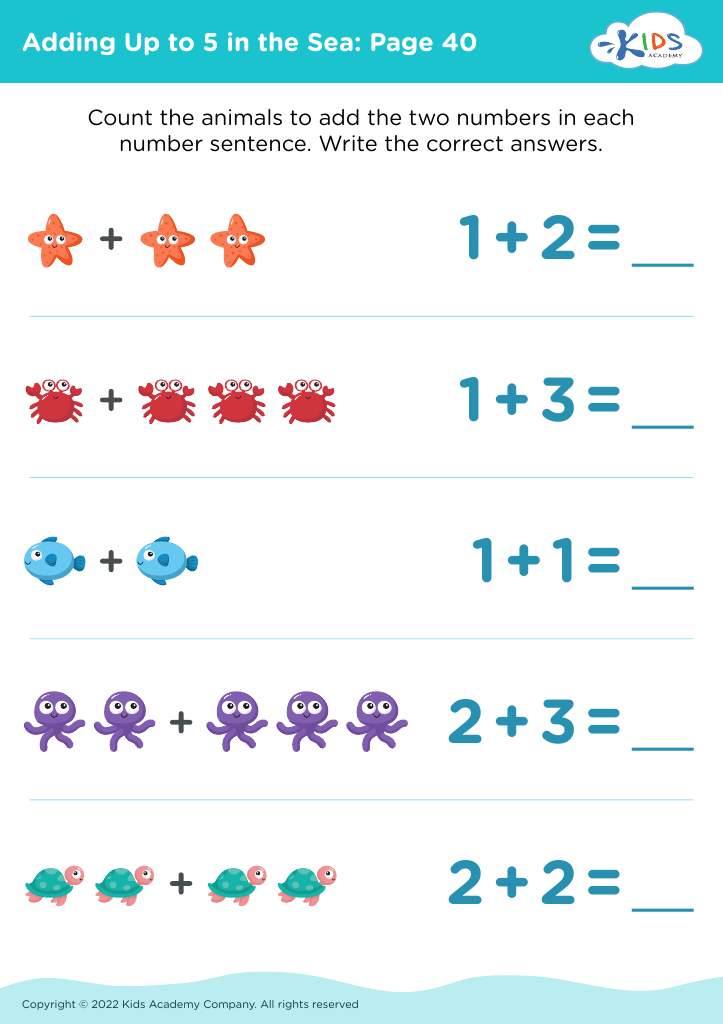
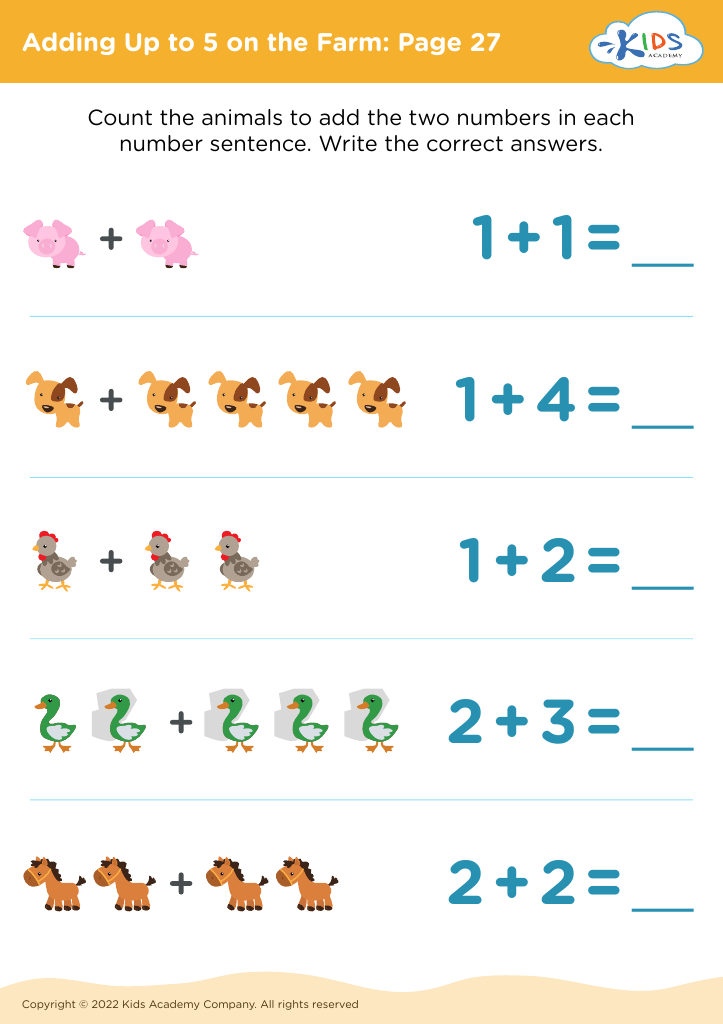
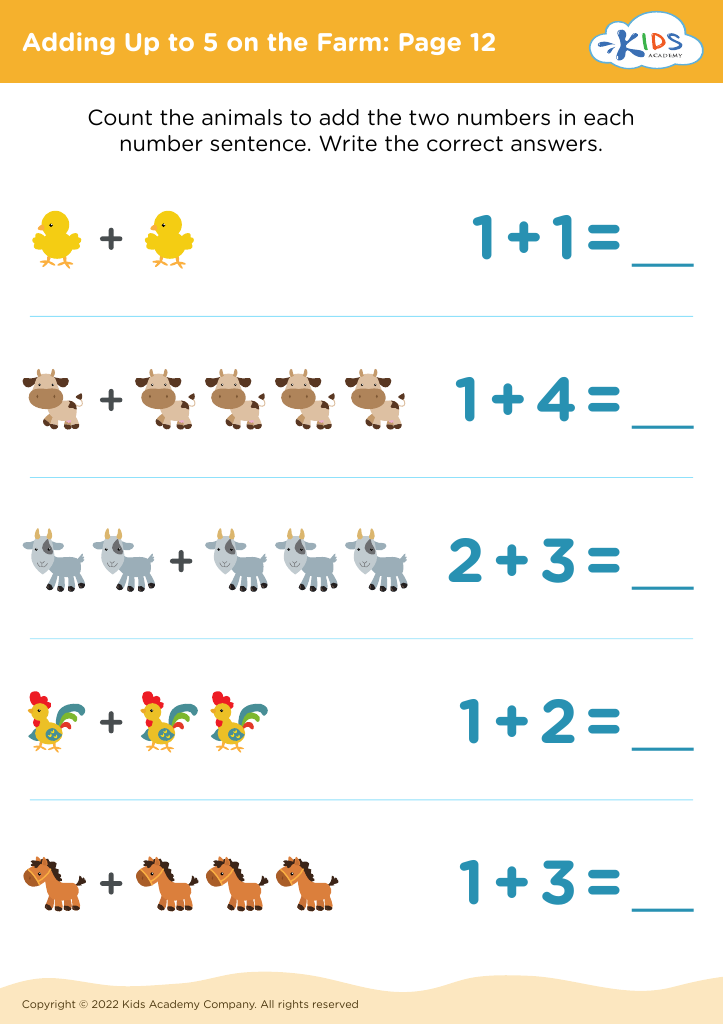
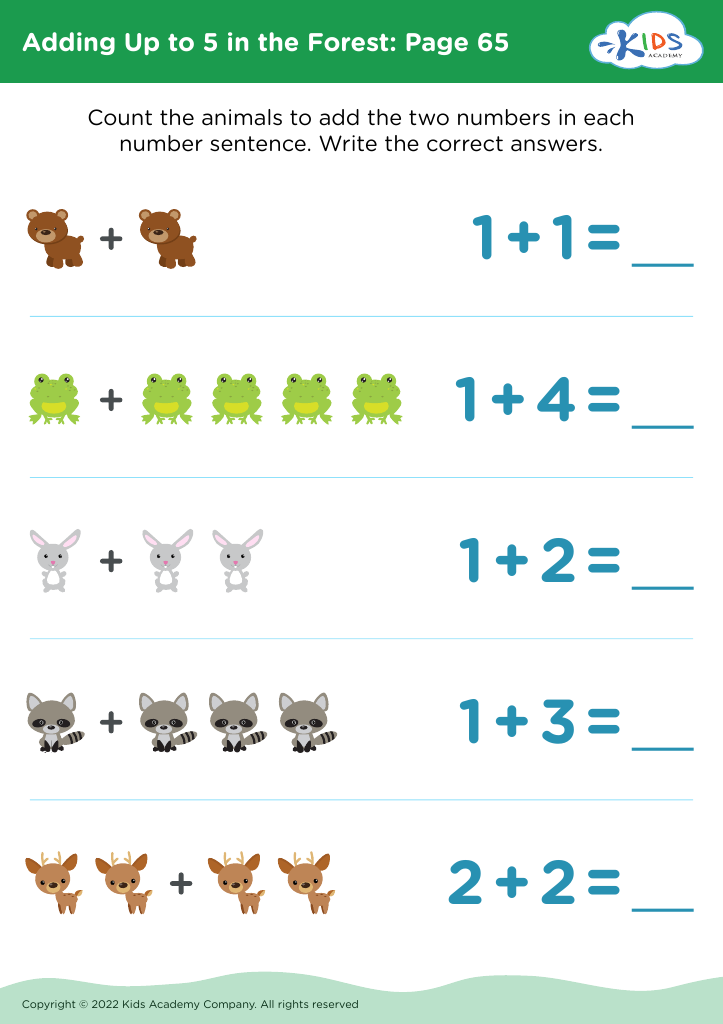
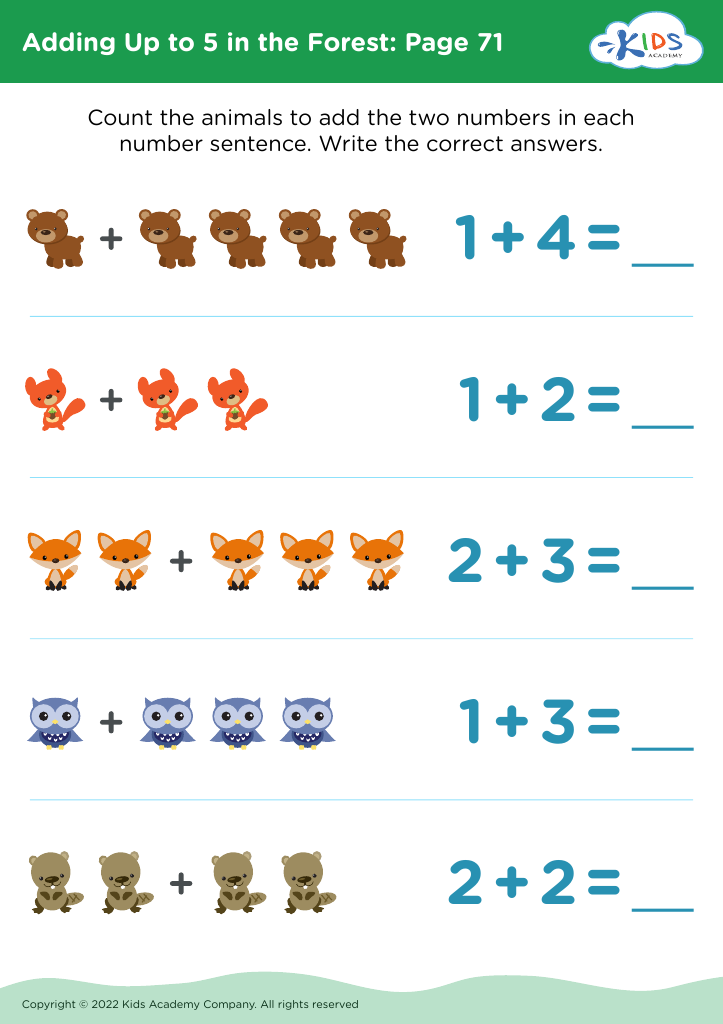
Boost your child’s visual perception skills with our delightful "Adding Up to 5 Worksheets" designed especially for ages 3-4. These engaging activities from Kids Academy help young learners enhance their ability to recognize numbers, patterns, and shapes while practicing simple addition. Our well-crafted exercises not only foster early math skills but also promote cognitive development by improving attention to detail and spatial awareness. Perfectly suited to preschoolers, these printables make learning fun and interactive. Spark your child's curiosity and build a strong mathematical foundation with our appealing and effective worksheets today!





%20(1).jpg)

.jpg)
Visual perception is a crucial cognitive ability that allows children to interpret and understand visual information from the world around them. Improving visual perception skills, particularly in activities such as adding numbers up to 5 for ages 3-4, offers numerous developmental benefits that parents and teachers should not overlook.
Firstly, strong visual perception skills are foundational for early math literacy. When children can effectively recognize and differentiate objects, they are better prepared to grasp basic mathematical concepts such as counting, numerical comparison, and simple addition. Enhancing these skills early sets a solid groundwork for more advanced mathematical thinking in later years.
Secondly, these activities help improve children’s fine motor skills and hand-eye coordination. As they engage with counting objects, sorting shapes, or grouping items, they develop better control over their hand movements, a capability that proves essential for tasks such as writing and drawing.
Moreover, enhancing visual perception supports language development. As children work with numbers and objects, they expand their vocabulary with terms related to quantity, size, and comparison.
Lastly, engaging in these visual perception activities encourages problem-solving abilities and critical thinking. By interpreting visual data, kids learn to make decisions and solve problems, skills crucial for overall intellectual development. Therefore, fostering visual perception through playful, educational exercises in adding up to 5 provides a well-rounded benefit that supports various aspects of a young child’s growth.








