Filters

17 filtered results

Clear all filters
Favorites
With answer key
Interactive

17 filtered results

Difficulty Level

Grade


Introducing "Addition Practice: Adding with Busy Bugs Worksheets" tailored for ages 3-4. Foster your child's early math skills with these fun, engaging worksheets featuring adorable bug-themed activities. Designed to make learning addition enjoyable, these printable exercises help preschoolers grasp basic counting and addition principles through visual stimulation and playful interaction. Watch your little learner thrive as they add and color their way to math mastery. Perfect for home or classroom use, our Busy Bugs worksheets provide a solid foundation in essential math skills, setting the stage for a lifetime of learning success! Download your set today and let the adding begin.
Check out this FREE Trial Lesson on Adding with Busy Bugs for age 3-4!

D

Favorites
With answer key
Interactive
  • 3-4
  • Addition Practice
  • Adding with Busy Bugs
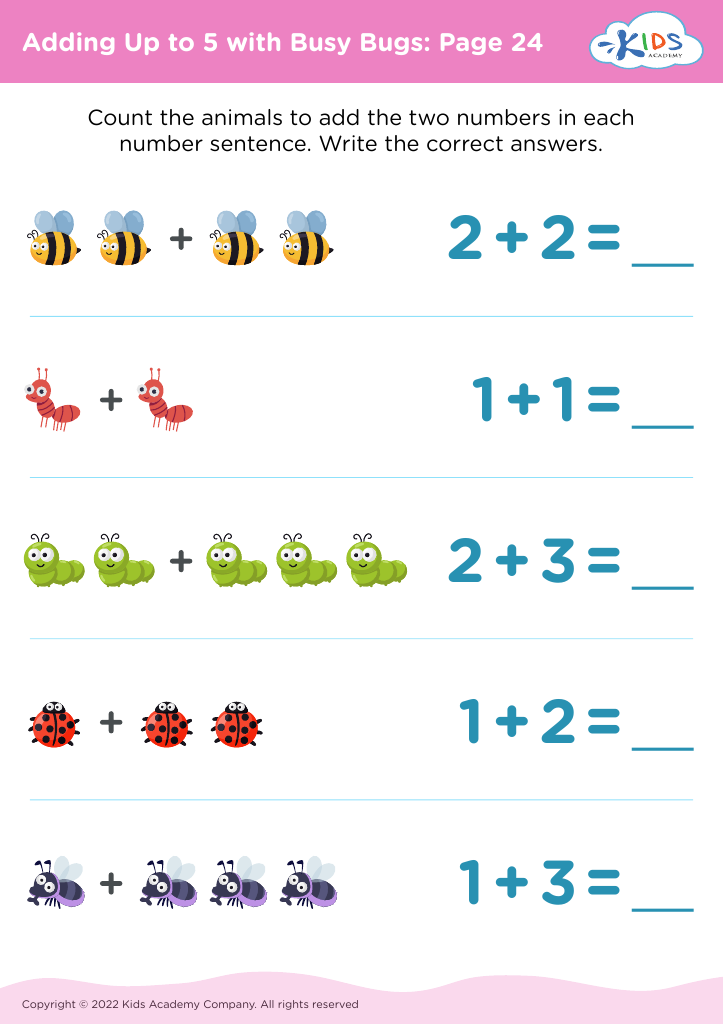
Adding Up to 5 with Busy Bugs: Page 24
Worksheet
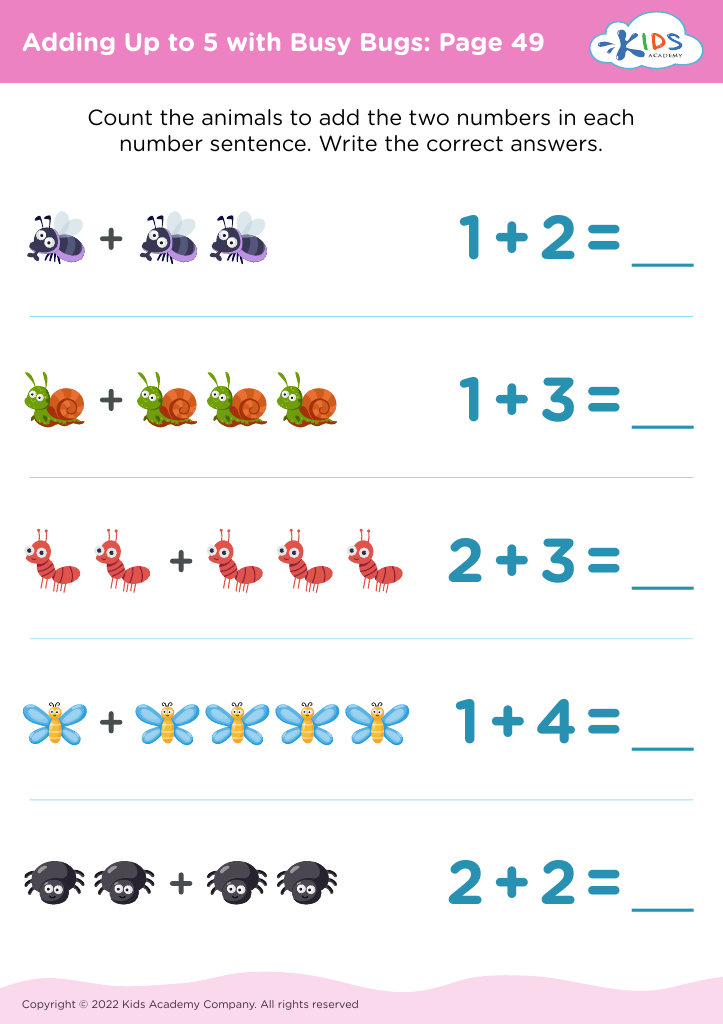
Adding Up to 5 with Busy Bugs: Page 49
Worksheet
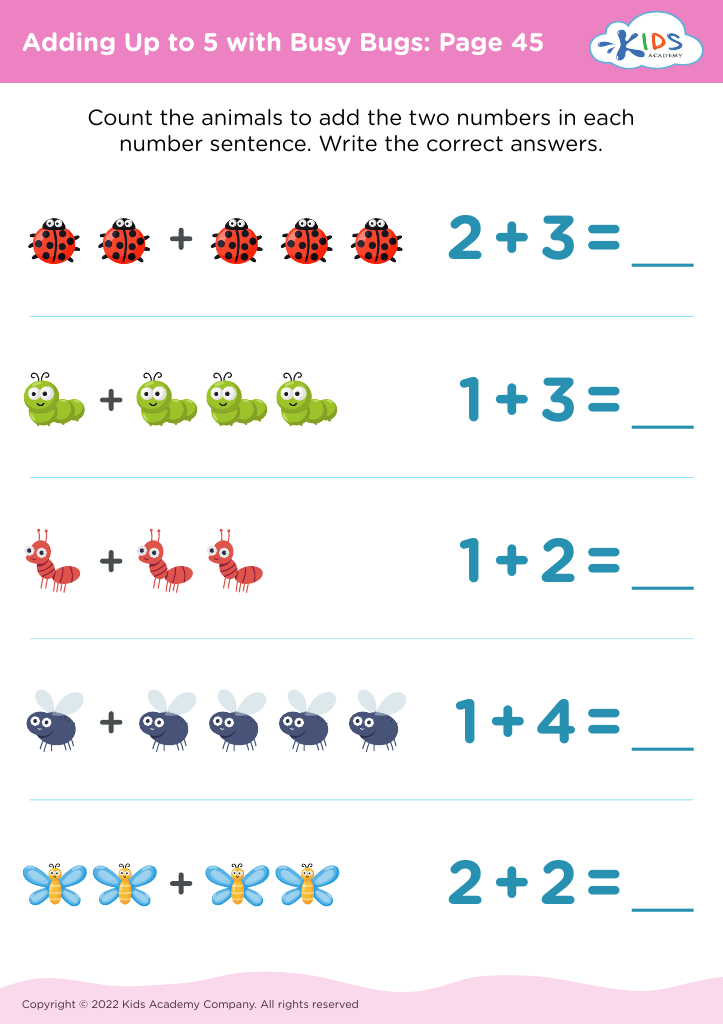
Adding Up to 5 with Busy Bugs: Page 45
Worksheet
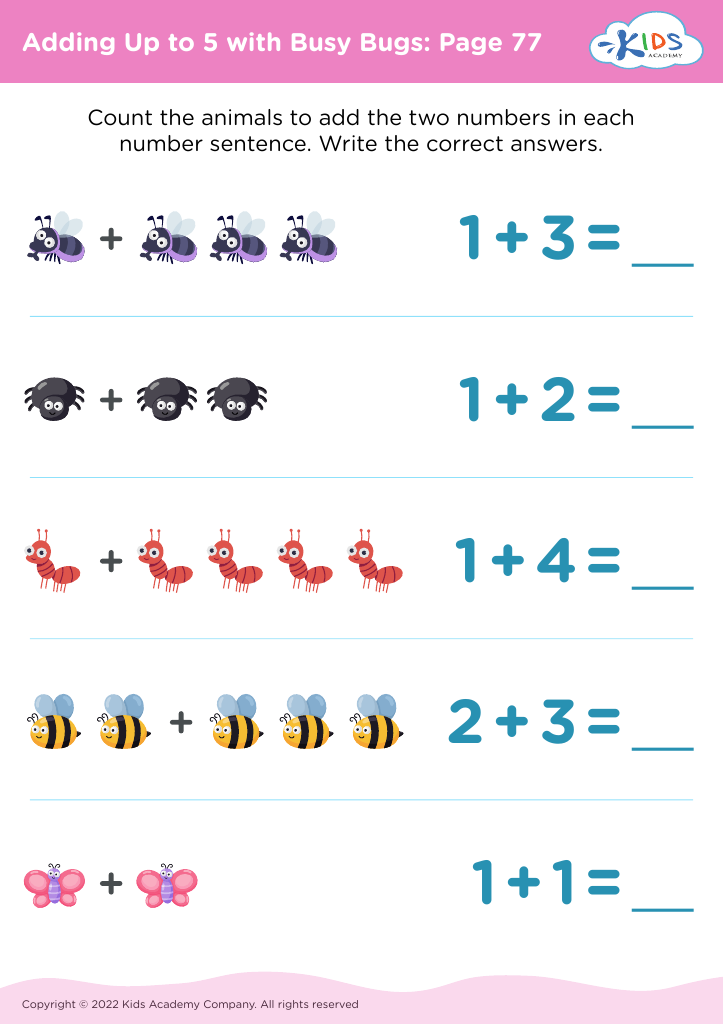
Adding Up to 5 with Busy Bugs: Page 77
Worksheet
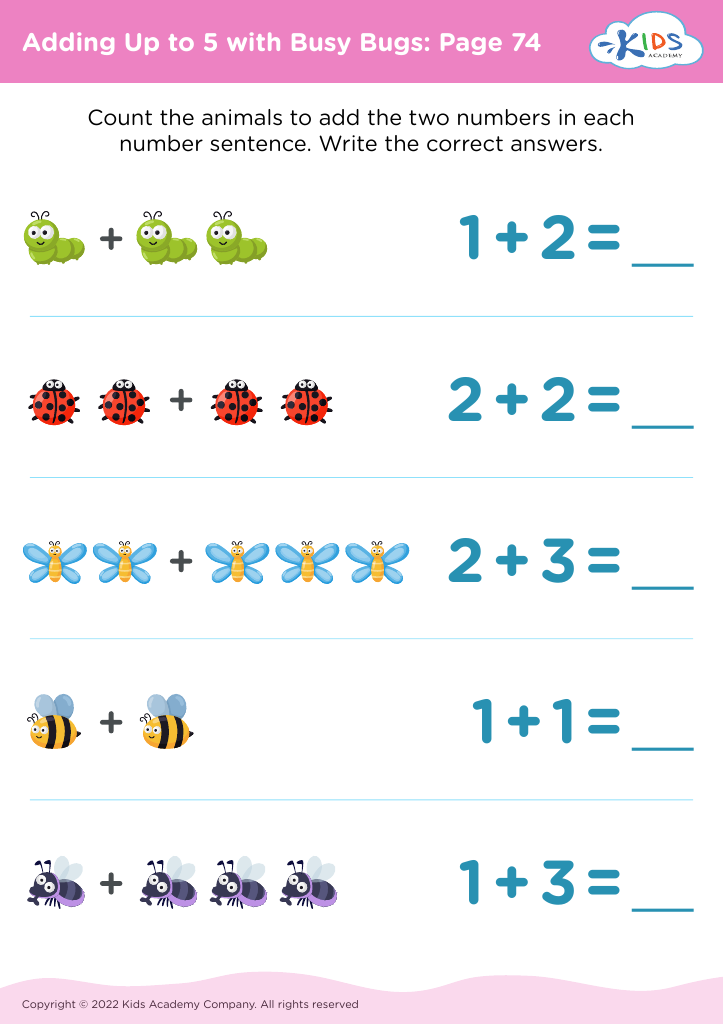
Adding Up to 5 with Busy Bugs: Page 74
Worksheet
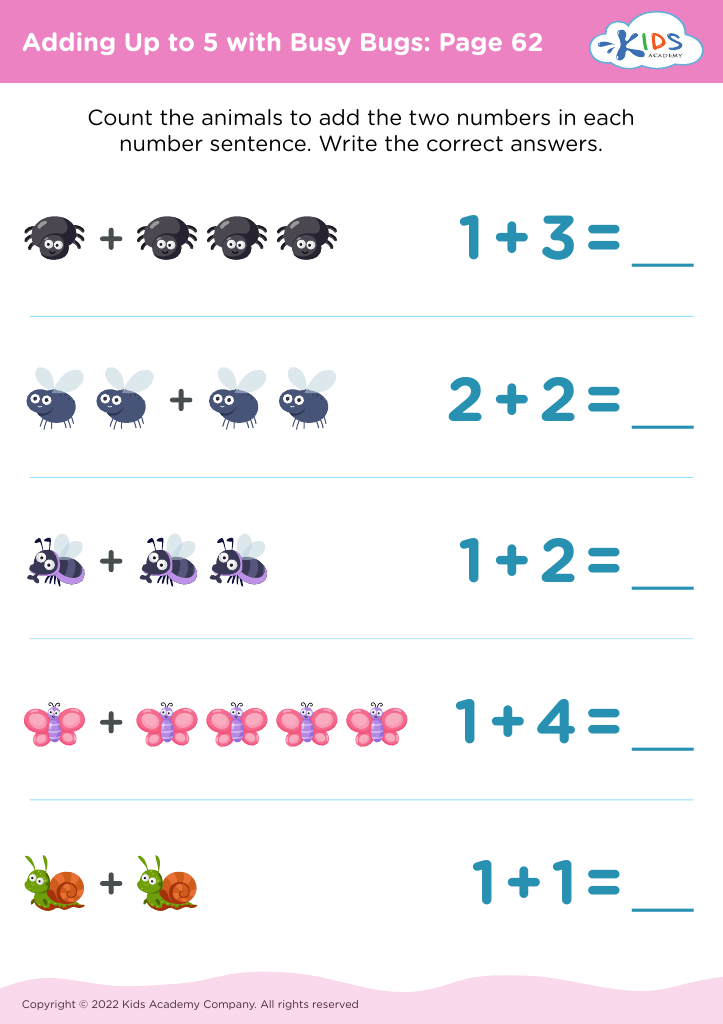
Adding Up to 5 with Busy Bugs: Page 62
Worksheet
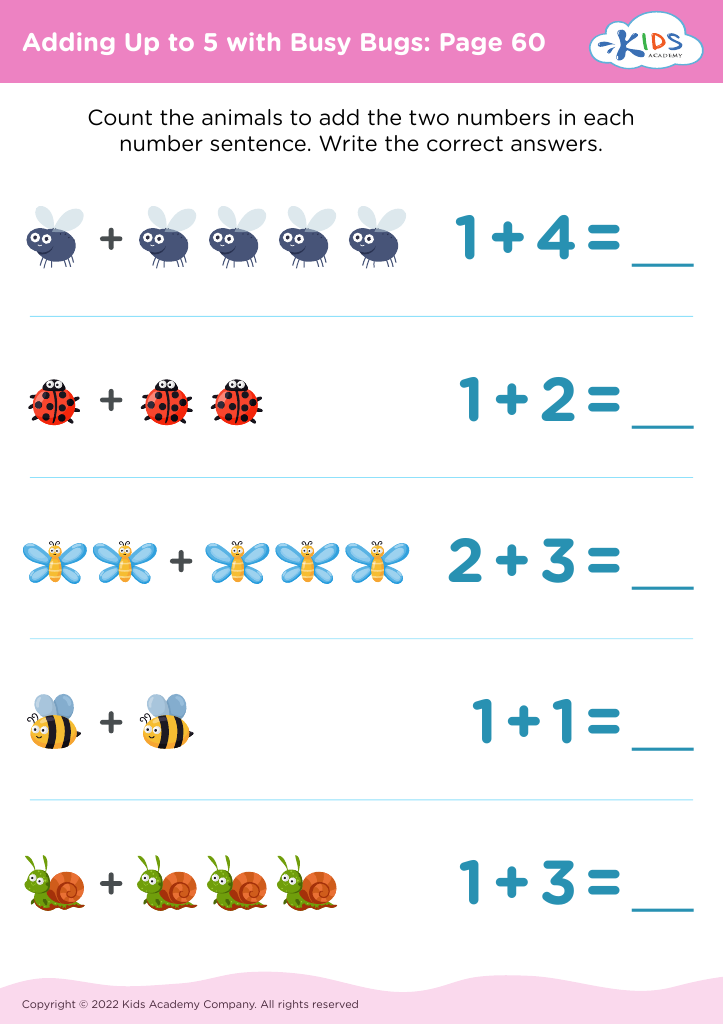
Adding Up to 5 with Busy Bugs: Page 60
Worksheet
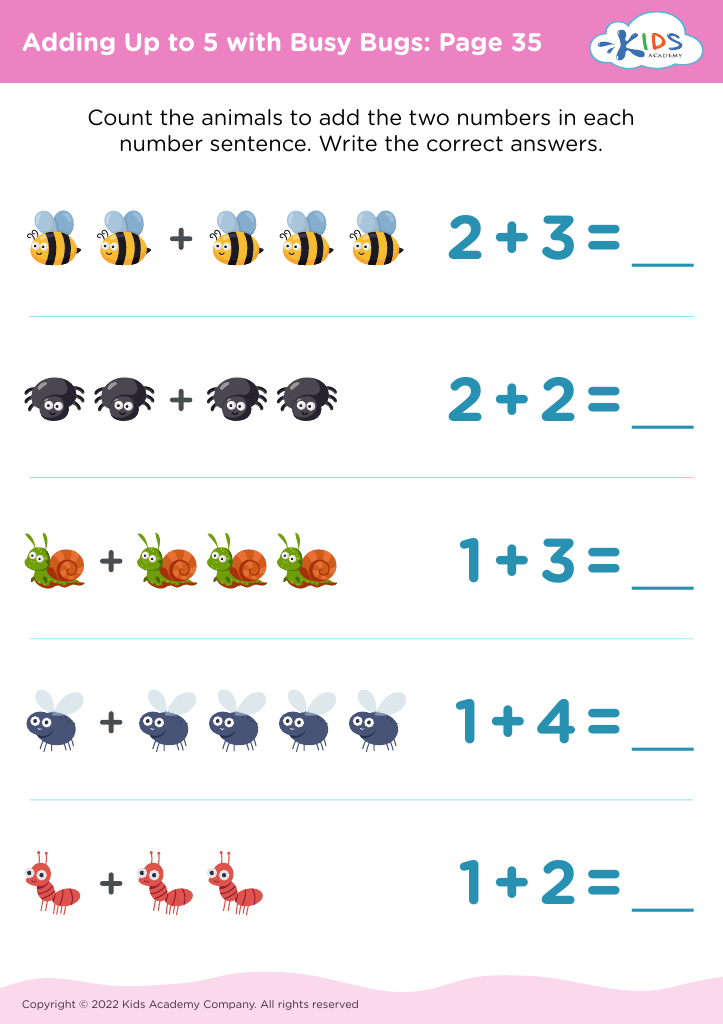
Adding Up to 5 with Busy Bugs: Page 35
Worksheet
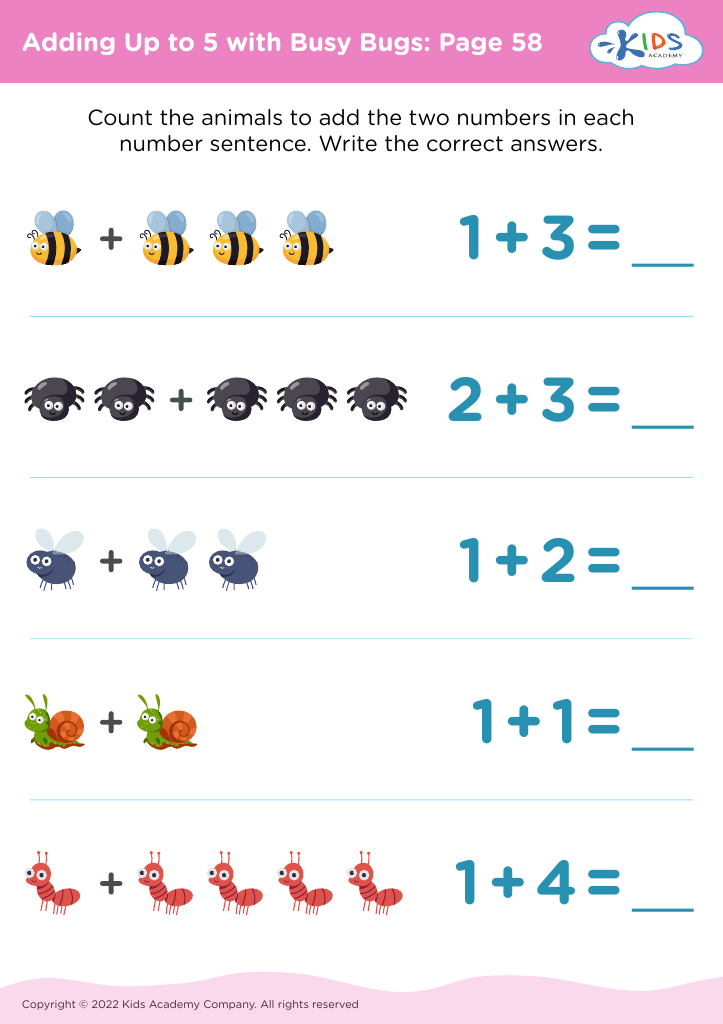
Adding Up to 5 with Busy Bugs: Page 58
Worksheet
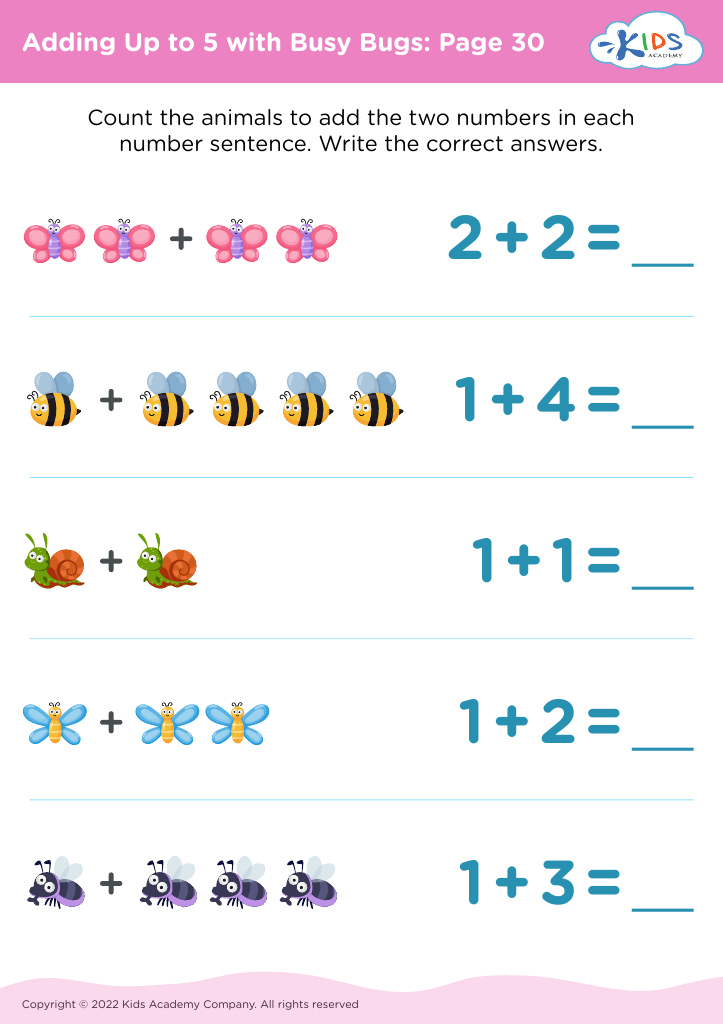
Adding Up to 5 with Busy Bugs: Page 30
Worksheet
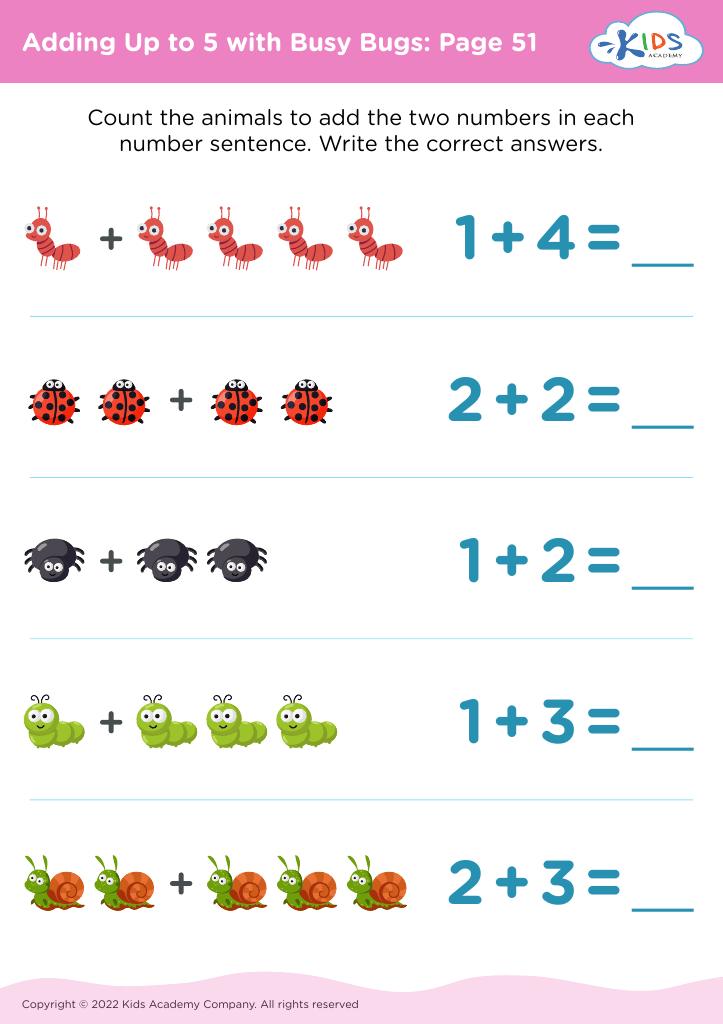
Adding Up to 5 with Busy Bugs: Page 51
Worksheet
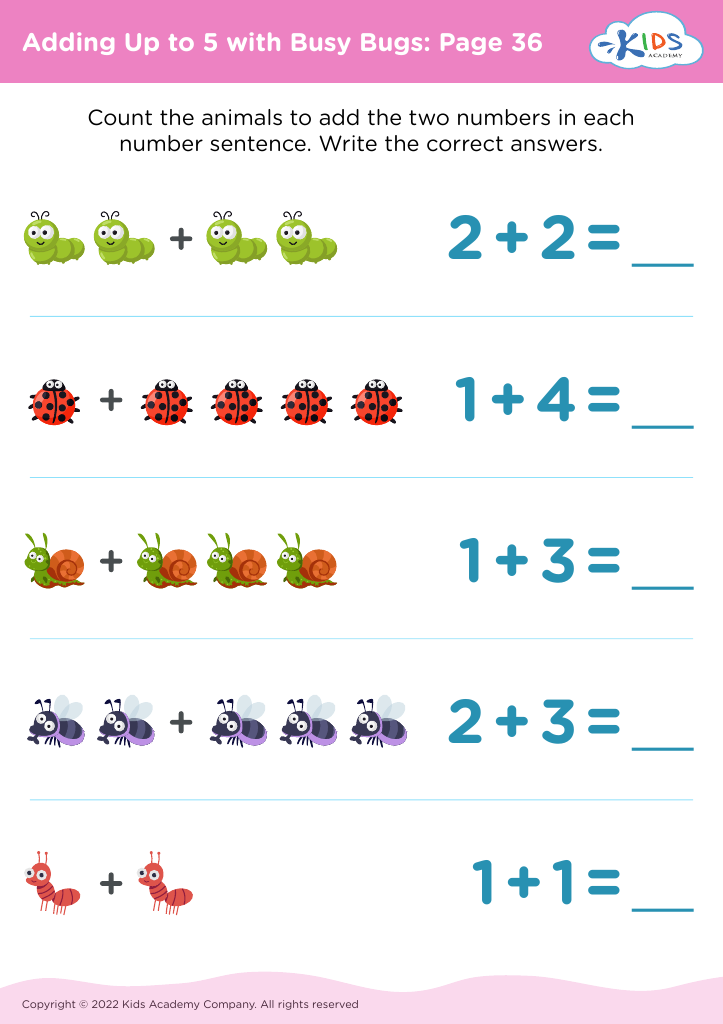
Adding Up to 5 with Busy Bugs: Page 36
Worksheet
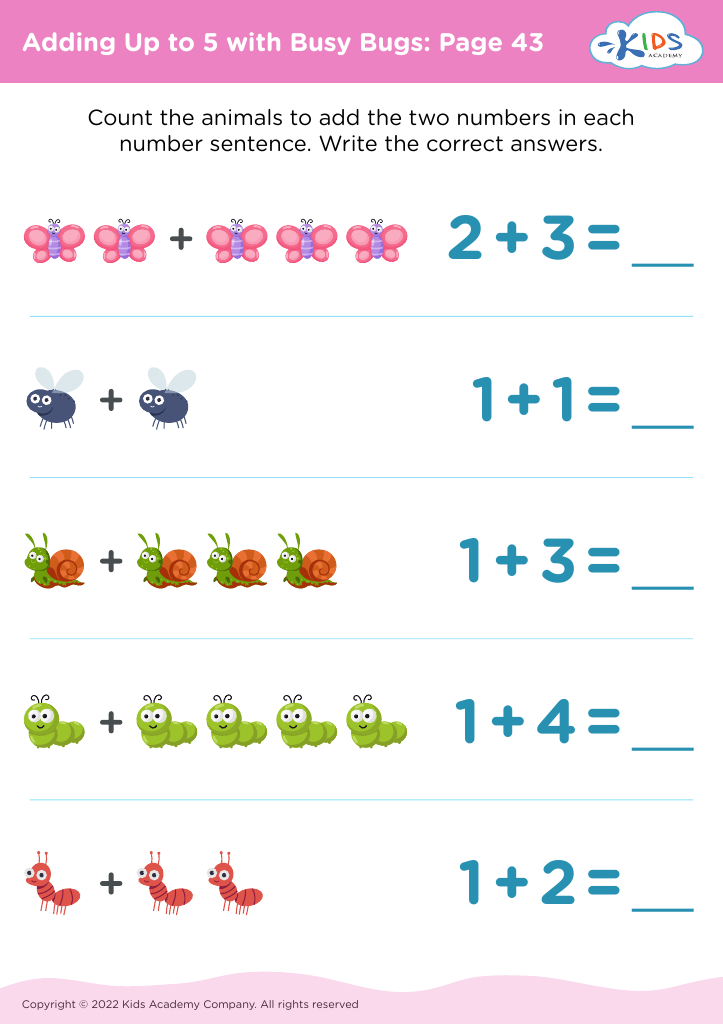
Adding Up to 5 with Busy Bugs: Page 43
Worksheet
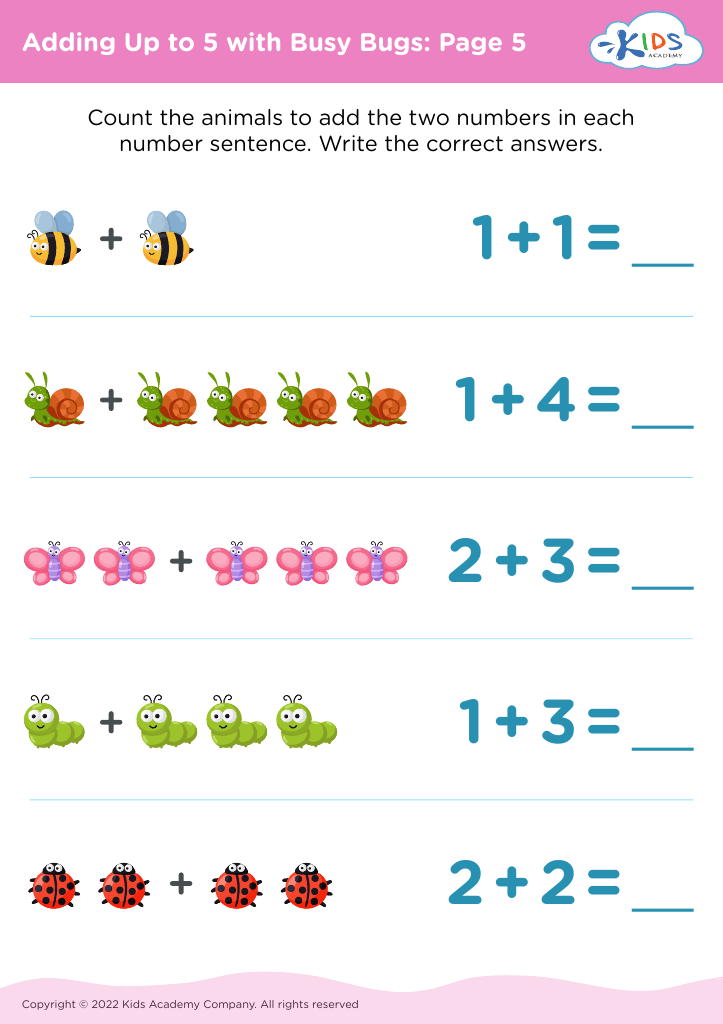
Adding Up to 5 with Busy Bugs: Page 5
Worksheet
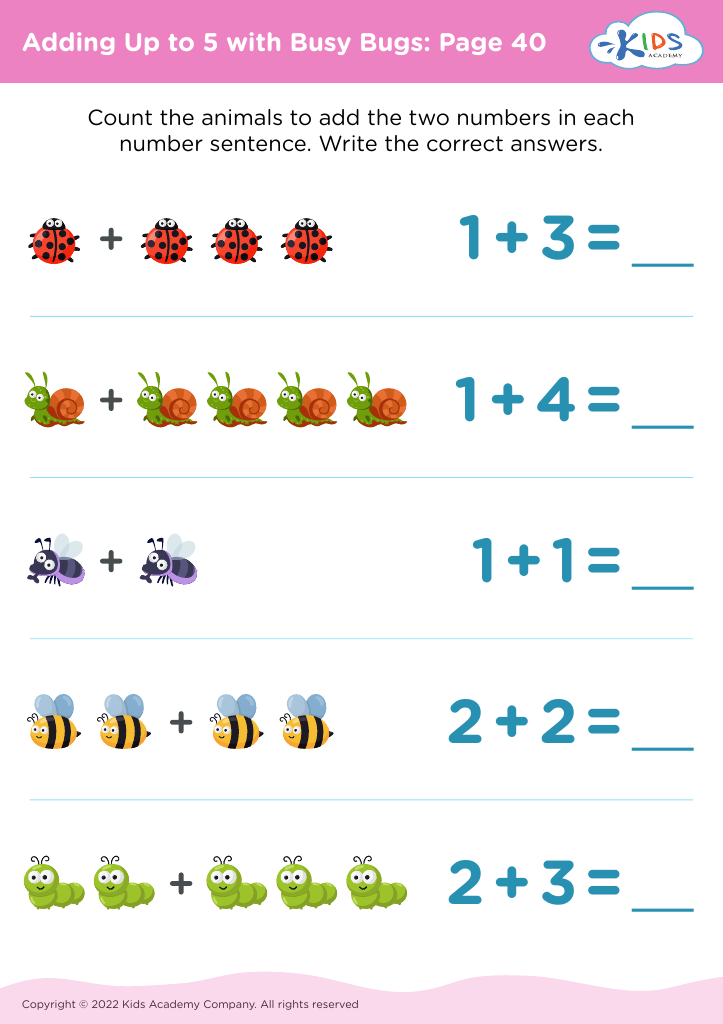
Adding Up to 5 with Busy Bugs: Page 40
Worksheet
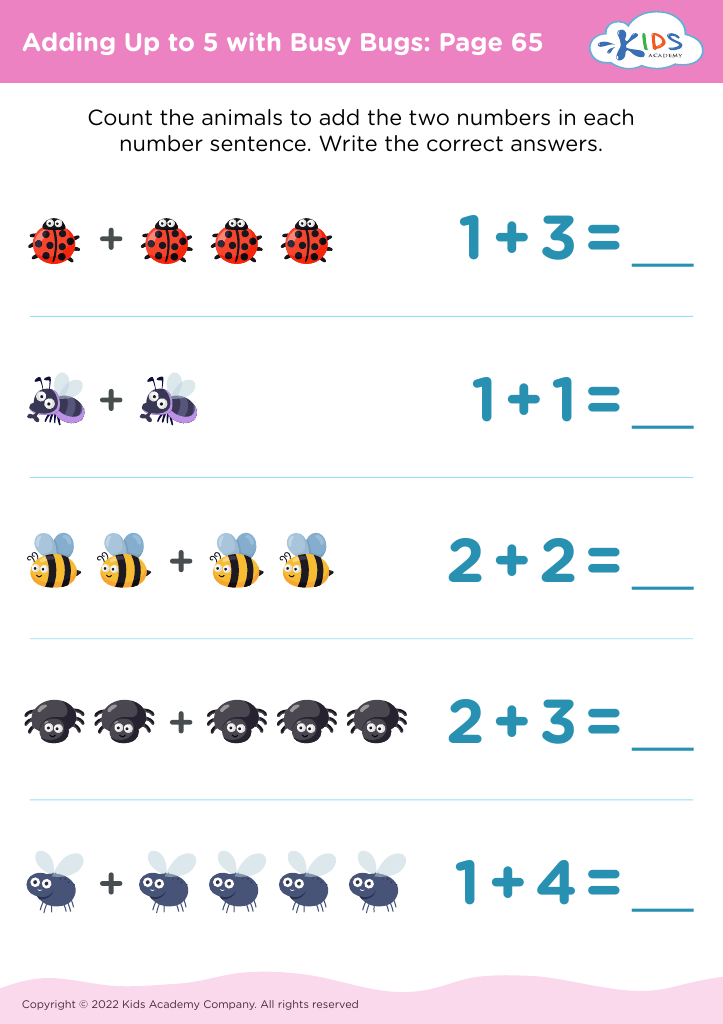
Adding Up to 5 with Busy Bugs: Page 65
Worksheet
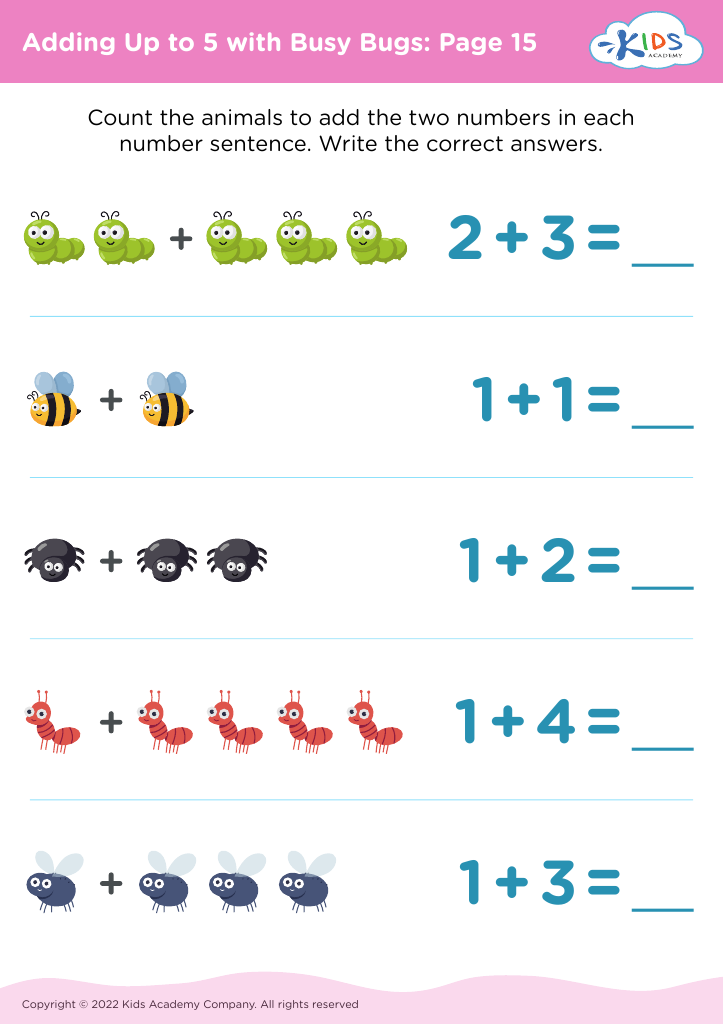
Adding Up to 5 with Busy Bugs: Page 15
Worksheet


Parents and teachers should care about "Addition Practice Adding with Busy Bugs" for ages 3-4 because it offers a foundational and engaging approach to early math skills through play and hands-on learning. At this developmental stage, kids are sponges for new information, and interactive practices using colorful and playful elements like bugs can significantly enhance their interest and engagement.

Introducing addition at a young age sets the groundwork for more complex math skills. This resource can transform abstract concepts into tangible experiences by allowing children to visualize and physically manipulate objects, such as counting and adding bugs. This helps cement their understanding of numbers and basic arithmetic in a way that feels natural and intuitive.

Moreover, early success with fun and simple math challenges fosters confidence and a positive attitude towards learning, reducing anxiety associated with more formal math instruction later on. For parents and teachers, incorporating such tools into daily routines not only reinforces their child’s cognitive development but also builds critical thinking skills and logical reasoning early on. Using such methods makes learning math less of a chore and more of an enjoyable journey, which can lead to lifelong academic success and curiosity. Investing in these early experiences can profoundly impact a child's educational trajectory.