Basic Addition Skills Adding with Busy Bugs Worksheets for Ages 3-4 - Page 2
34 filtered results
-
From - To
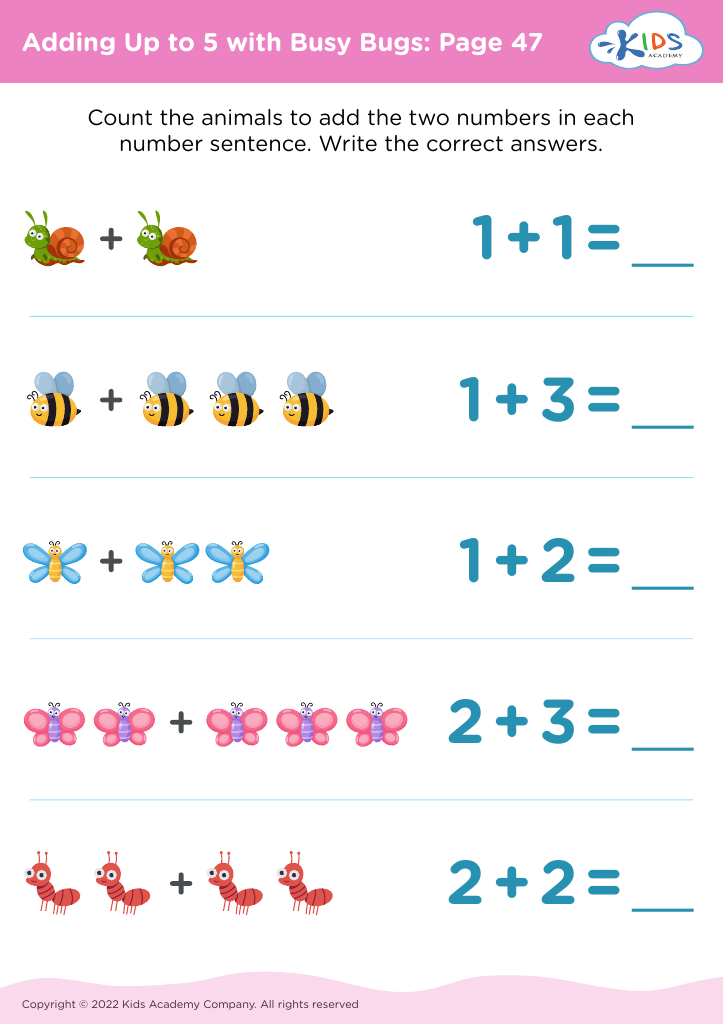
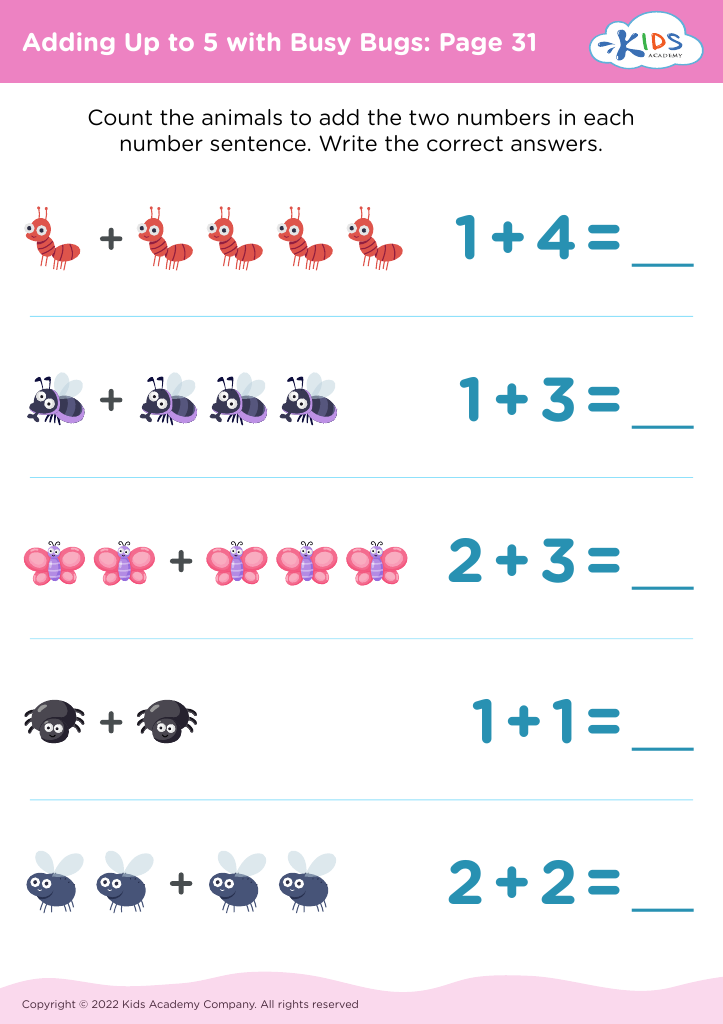
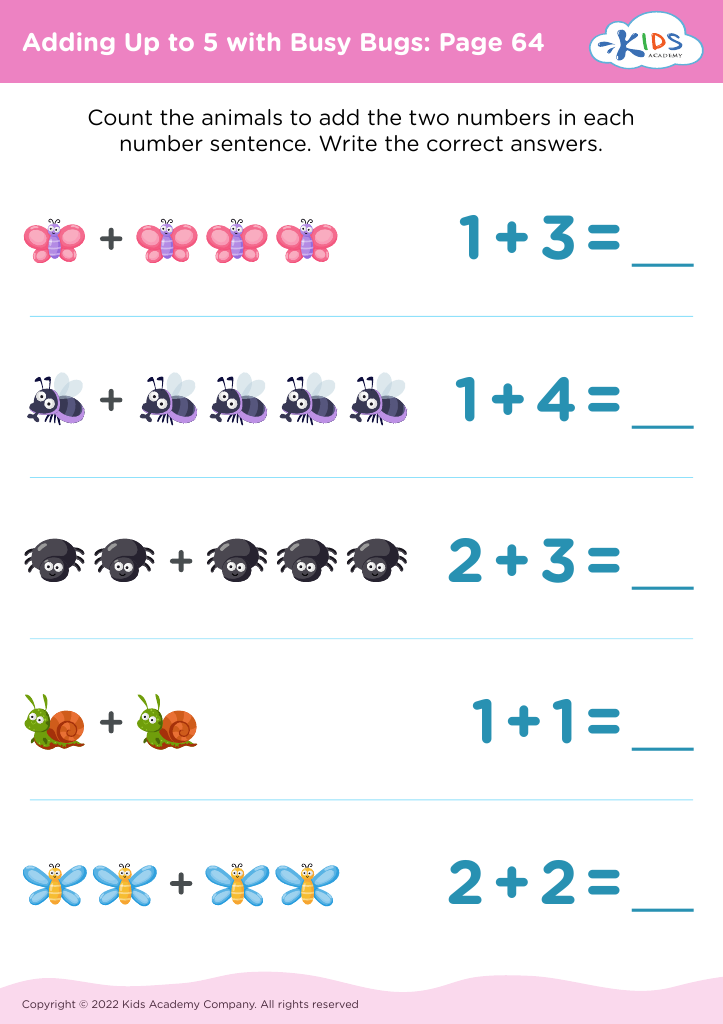
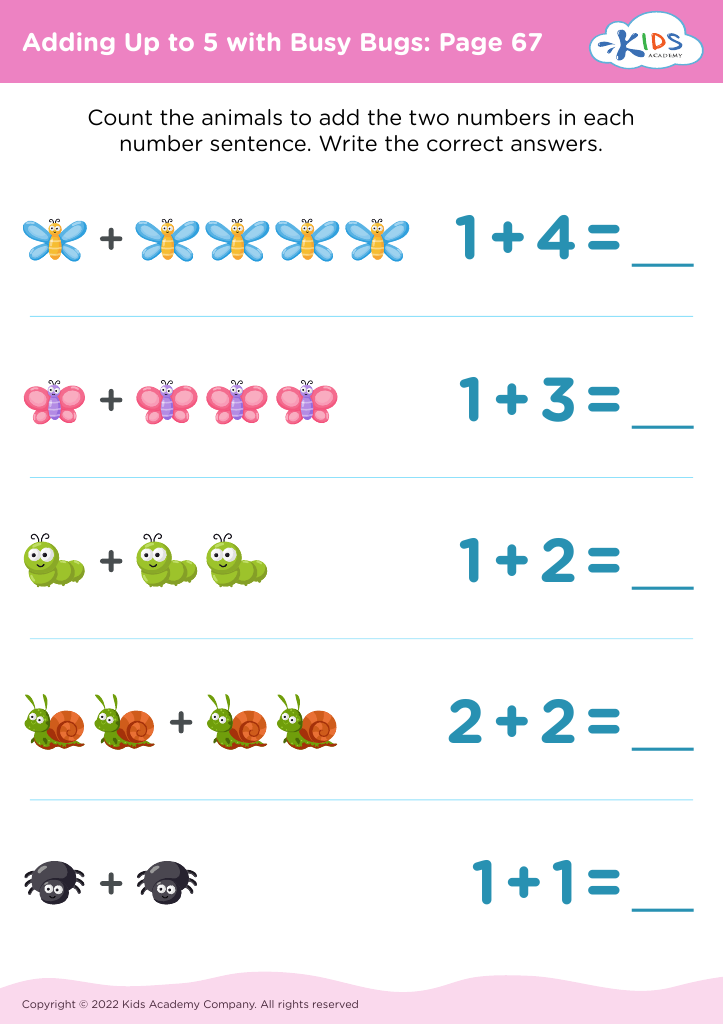
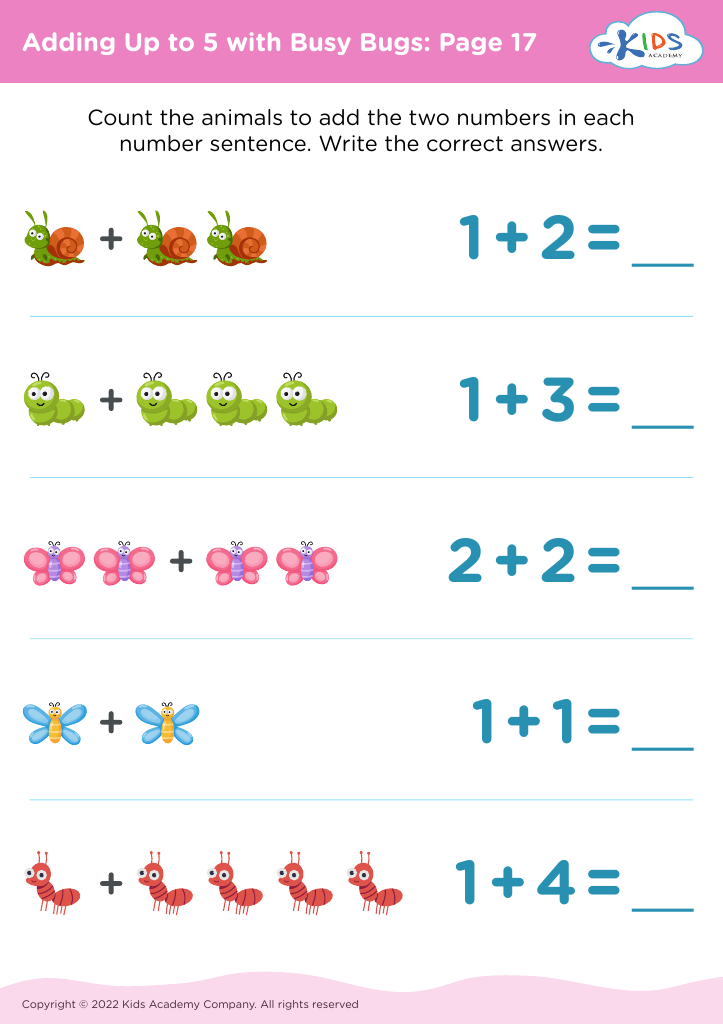
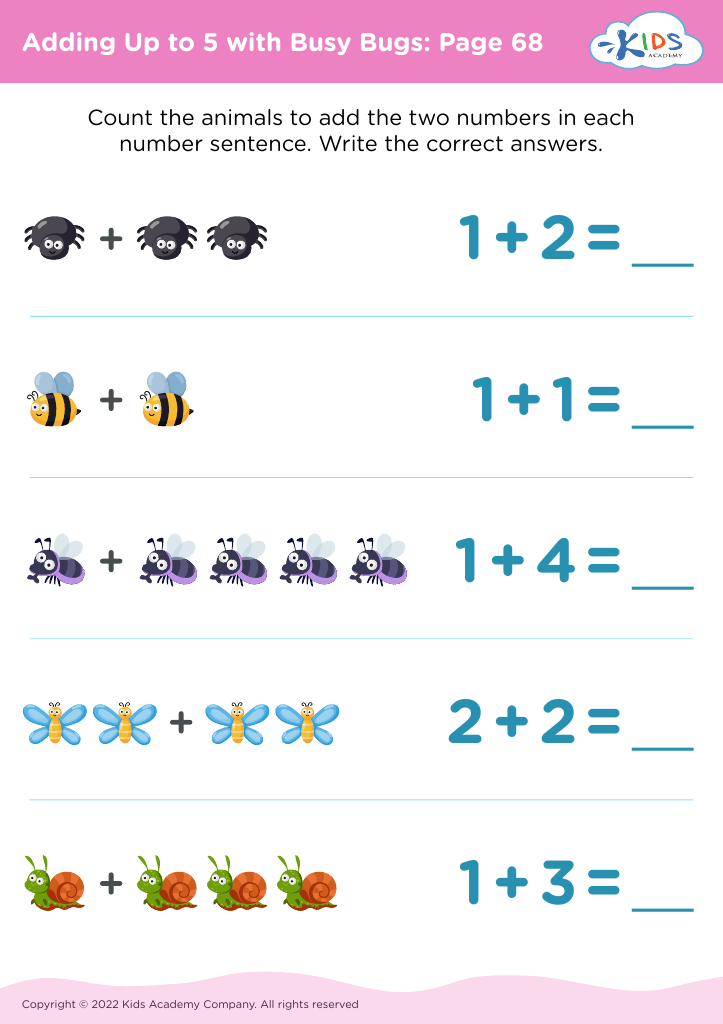
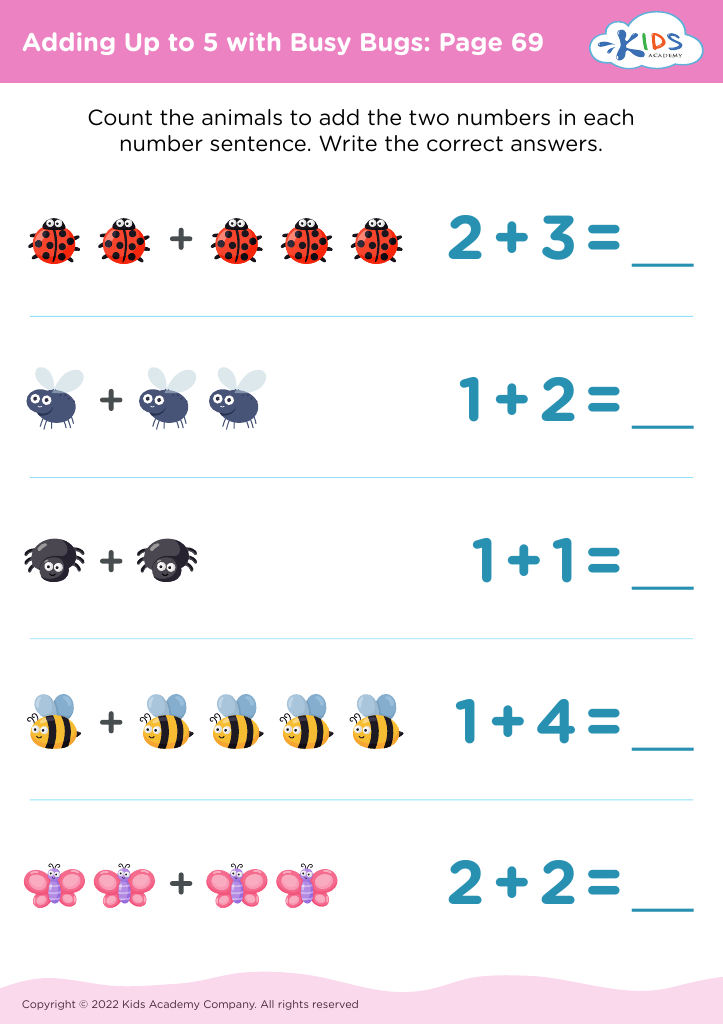
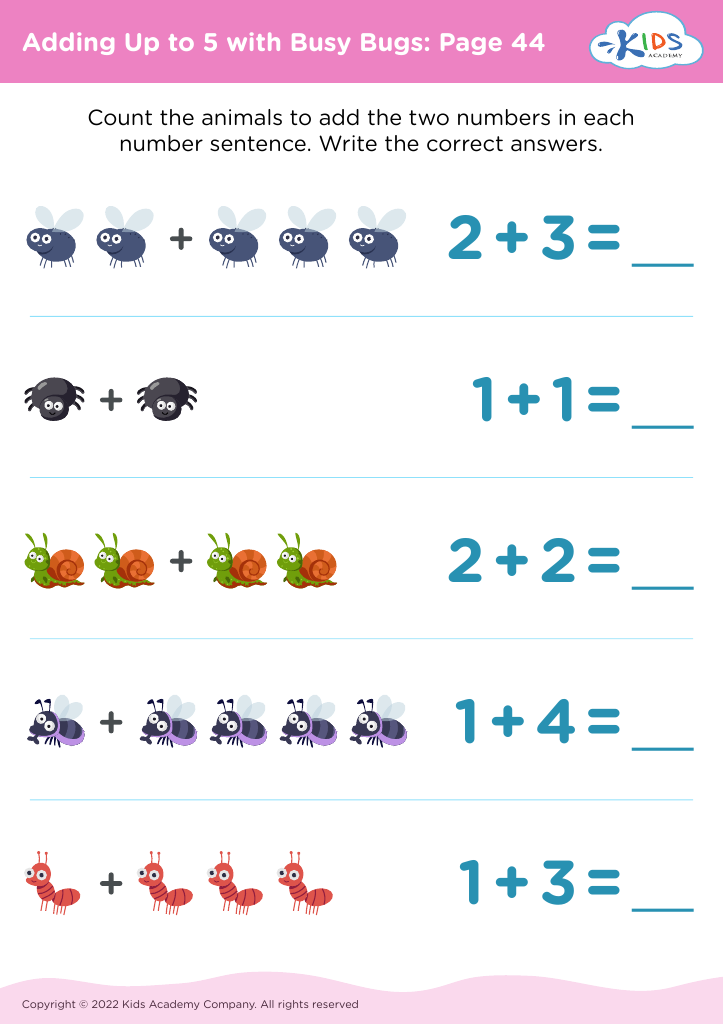
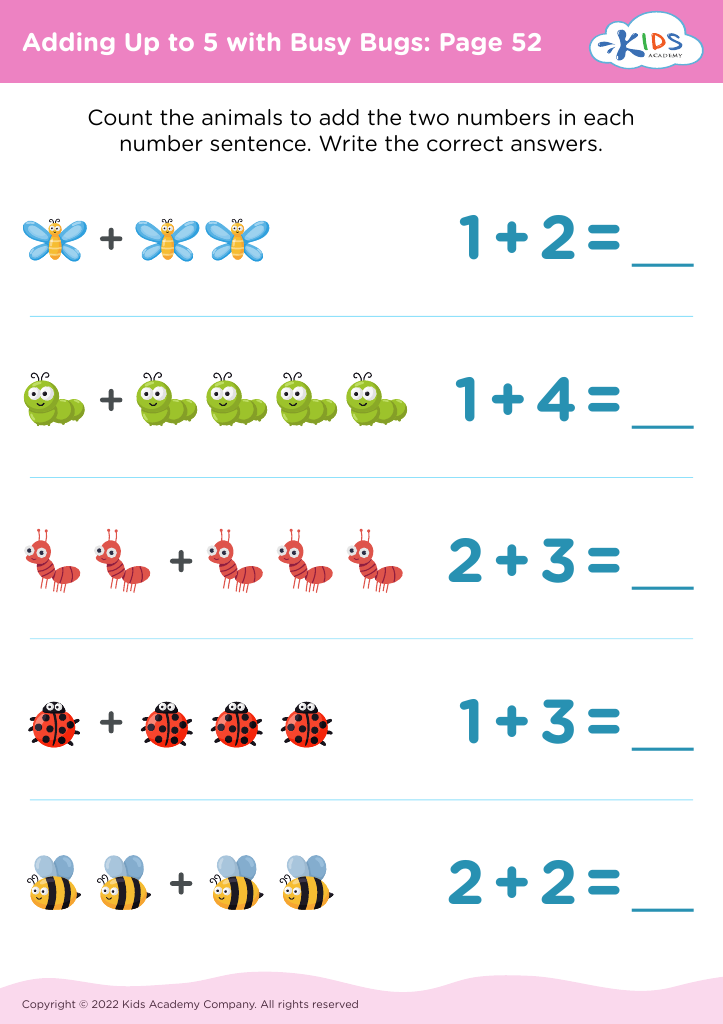
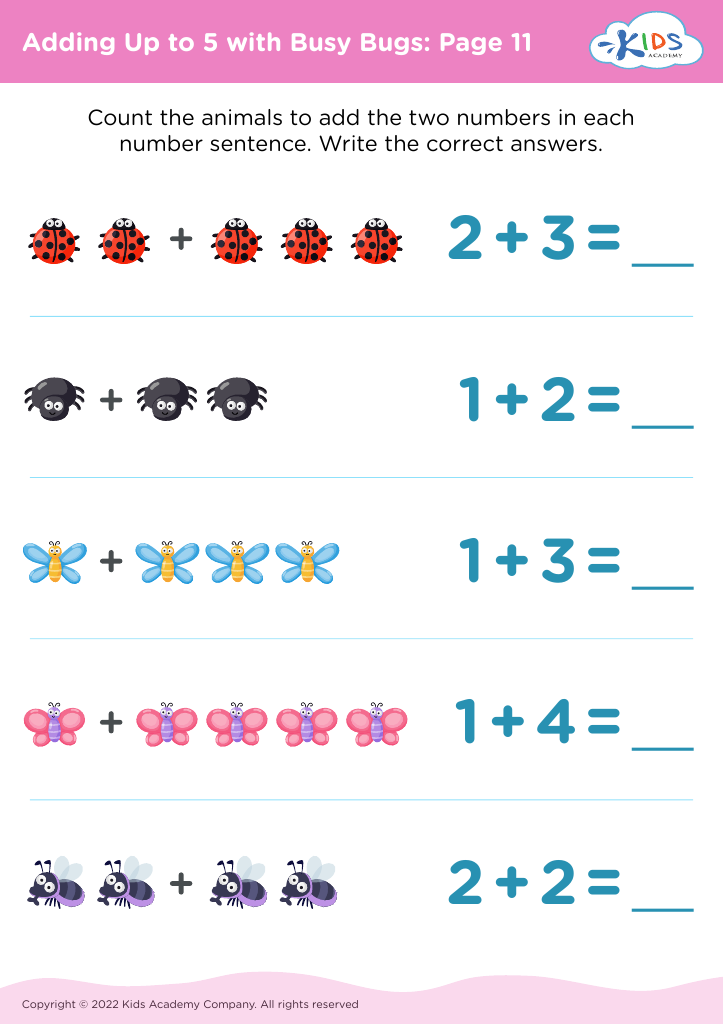



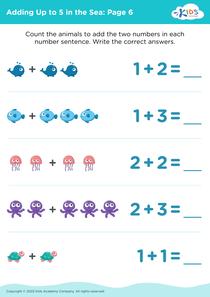
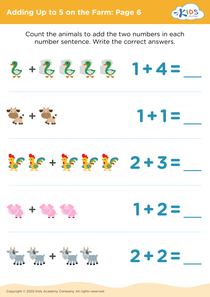
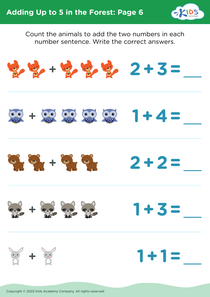
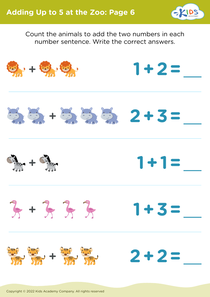
Basic addition skills are foundational for early math development, and programs like "Adding with Busy Bugs" for ages 3-4 offer engaging ways for young learners to grasp these concepts. For parents and teachers, fostering these skills is crucial because they promote critical thinking, problem-solving, and cognitive development in children. Engaging activities, like those featuring Busy Bugs, capture children's attention and make learning playful and enjoyable, facilitating better retention of concepts.
Additionally, strong early math skills correlate with future academic success. Children who master basic addition are better prepared to tackle more complex math concepts in later grades. Moreover, through games and interactive learning experiences, children develop social skills and the ability to work collaboratively with peers, which enhances their overall educational experience.
Investing time in basic addition skills is also an opportunity for parents to bond with their children through fun educational activities. By caring about this learning stage, parents and teachers set the groundwork for a lifelong positive relationship with math, reducing anxiety and building confidence as children grow. Therefore, incorporating resources like "Adding with Busy Bugs" is not just beneficial—it's essential for nurturing a child's mathematical journey.