Counting practice Addition and Subtraction Word Problems Worksheets for Ages 3-4
5 filtered results
-
From - To
Introduce your little learners to the world of numbers with our Counting Practice Addition and Subtraction Word Problems Worksheets, designed specifically for ages 3-4. These engaging worksheets provide a fun and interactive way for preschoolers to develop their counting skills while solving simple word problems. Each worksheet encourages critical thinking as children explore real-life scenarios, making math relatable and enjoyable. With vibrant illustrations and age-appropriate challenges, your child will build a solid foundation in addition and subtraction. Perfect for at-home learning or classroom activities, these worksheets will spark a love for math and boost confidence in young learners. Get started today!
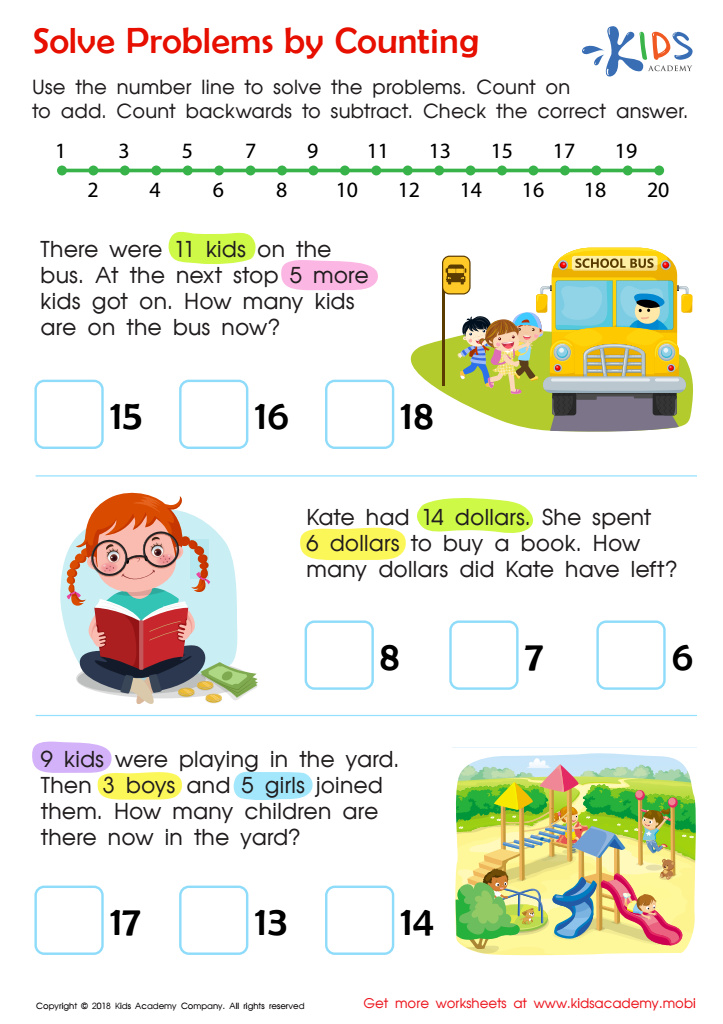
Solve Problems by Counting Worksheet
 Assign to My Students
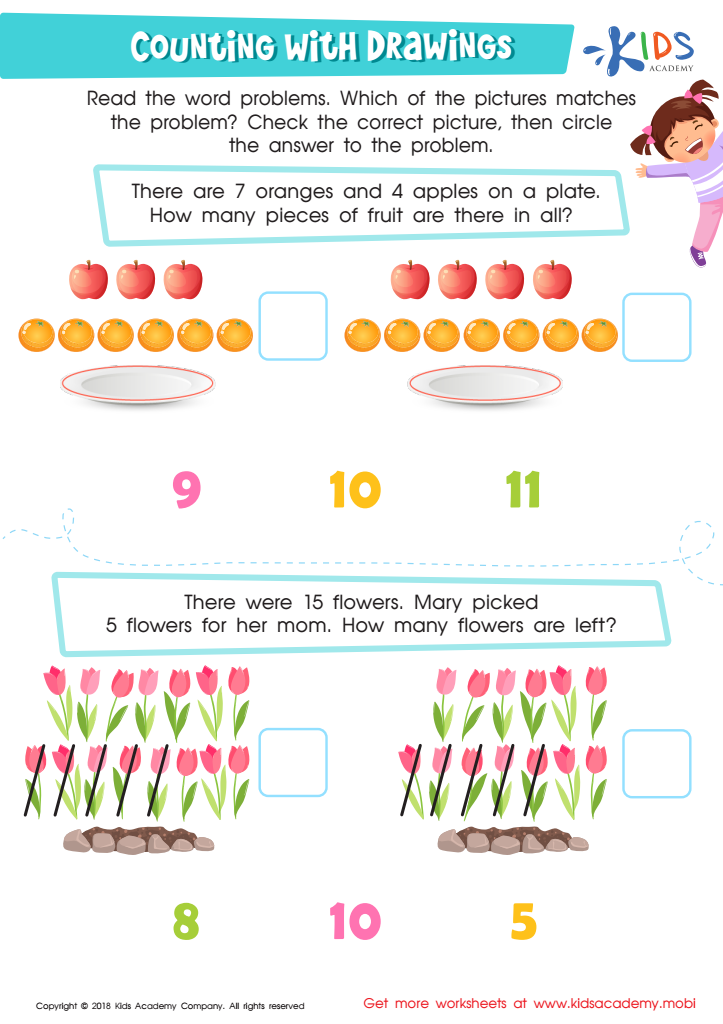
Counting with Drawings: Fruits & Chocolates Worksheet
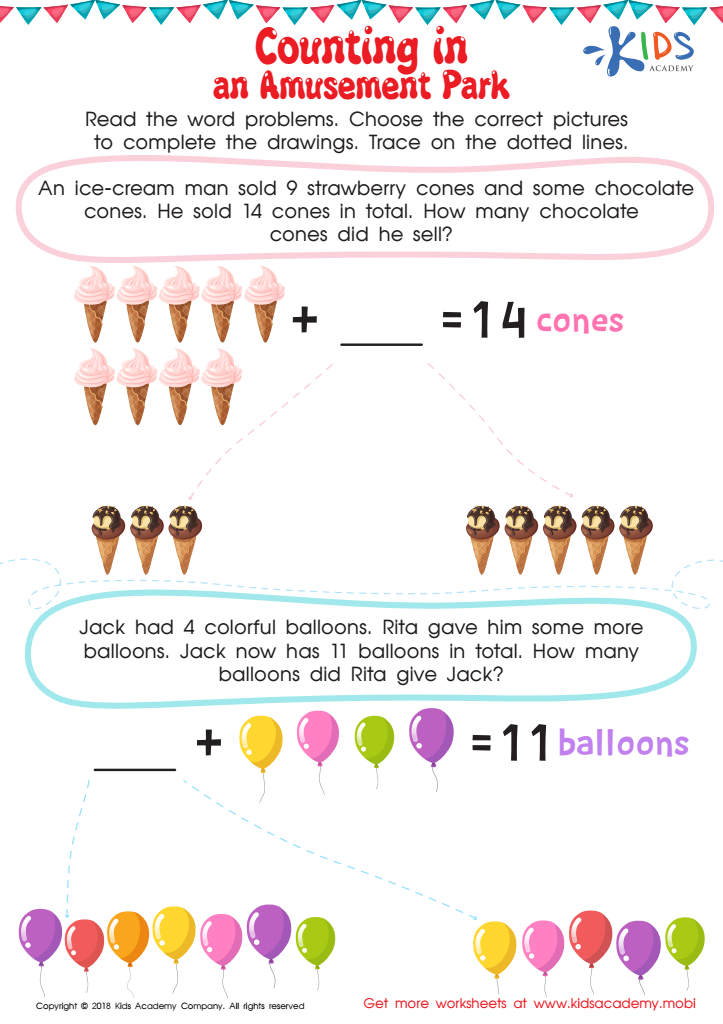
Counting in an Amusement Park Worksheet
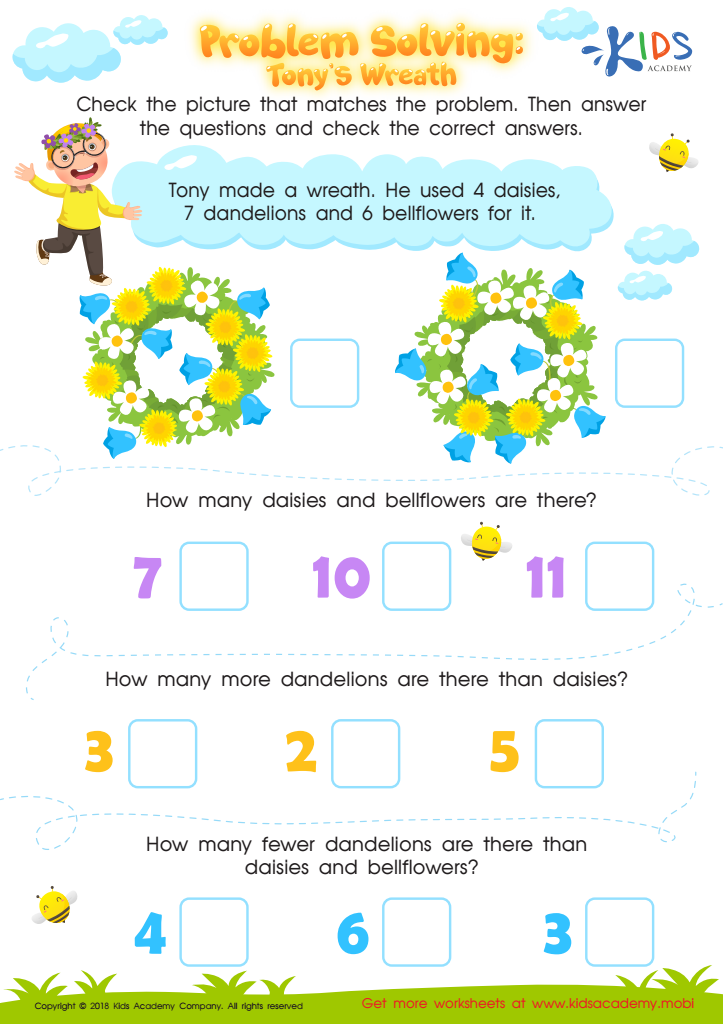
Problem Solving: Tony's Wreath Worksheet
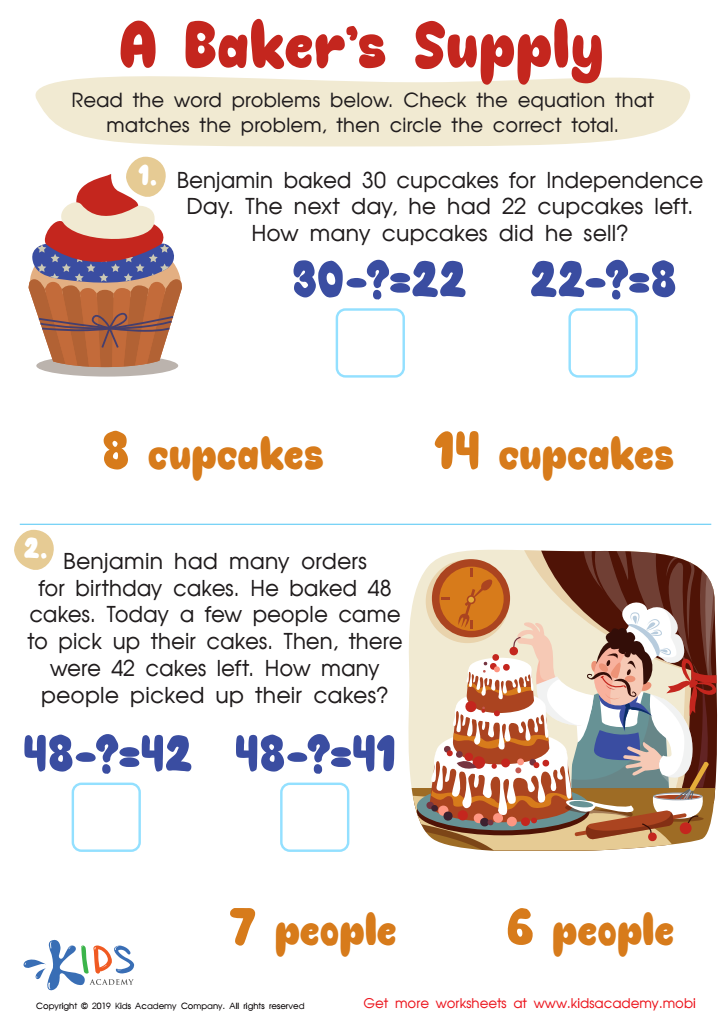
A Baker's Supply Worksheet








Counting practice, along with addition and subtraction word problems for ages 3-4, lays a critical foundation for early mathematical understanding. At this developmental stage, children are naturally curious and eager to learn, making it an ideal time to introduce concepts of numbers and basic arithmetic.
Engaging preschoolers in counting exercises enhances their numerical skills, helping them recognize quantities and understand the relationship between numbers. Word problems, in particular, foster essential cognitive skills as they encourage children to think critically and problem-solve. Hearing and interpreting word problems helps them make real-life connections, turning abstract concepts into relatable scenarios, enhancing their understanding of math in everyday life.
Moreover, these activities support language development, as children learn to express their thoughts and understand instructions. They can develop communication skills, fostering discussion around numbers and math-related concepts. Parental and teacher involvement in these practices promotes a positive attitude towards math, helping to build confidence.
Incorporating counting and problem-solving into early education not only prepares children for future academic success but also lays the groundwork for effective reasoning skills that are crucial throughout their lives. By nurturing these skills early on, adults can significantly impact children's attitudes towards learning and mathematics.