Problem-solving abilities Addition and Subtraction Word Problems Worksheets for Ages 3-4
4 filtered results
-
From - To
Boost your child's mathematical skills with our "Problem-solving Abilities: Addition and Subtraction Word Problems Worksheets for Ages 3-4." These engaging worksheets are meticulously designed to introduce young learners to basic math concepts while enhancing their problem-solving abilities. Filled with playful and visually appealing scenarios, our materials provide an enjoyable learning experience that encourages critical thinking. Ideal for preschoolers, these worksheets help children grasp addition and subtraction through relatable and fun stories. Prepare your child for future academic success with our thoughtfully crafted resources that make early math learning an exciting adventure. Start exploring today and watch your child's confidence soar!
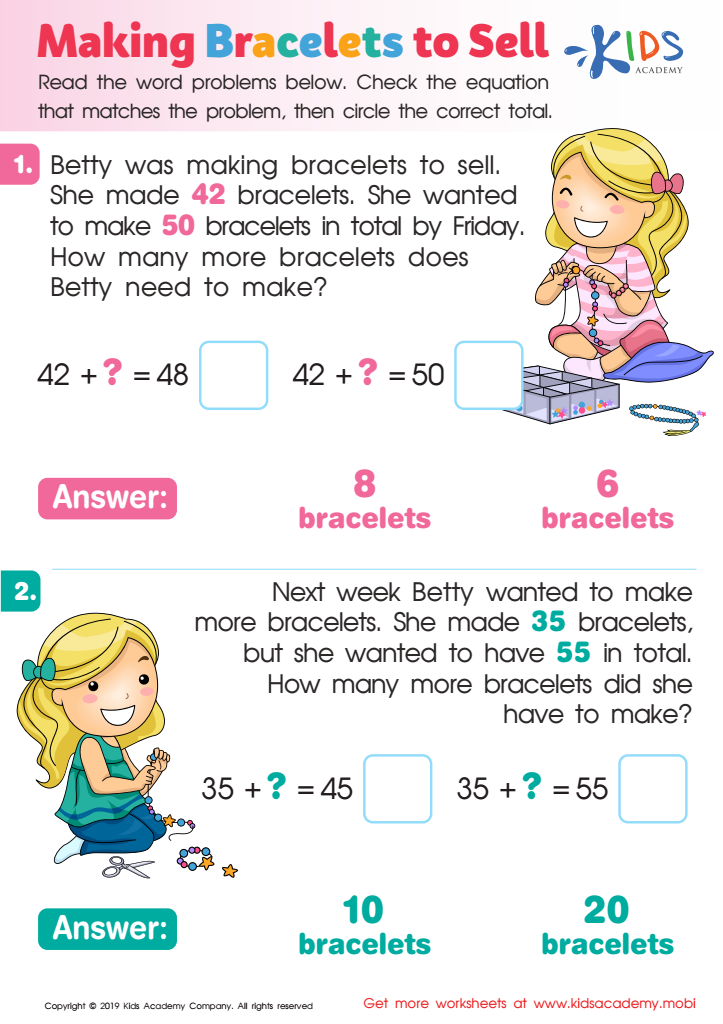
Making Bracelets to Sell Worksheet
 Assign to My Students
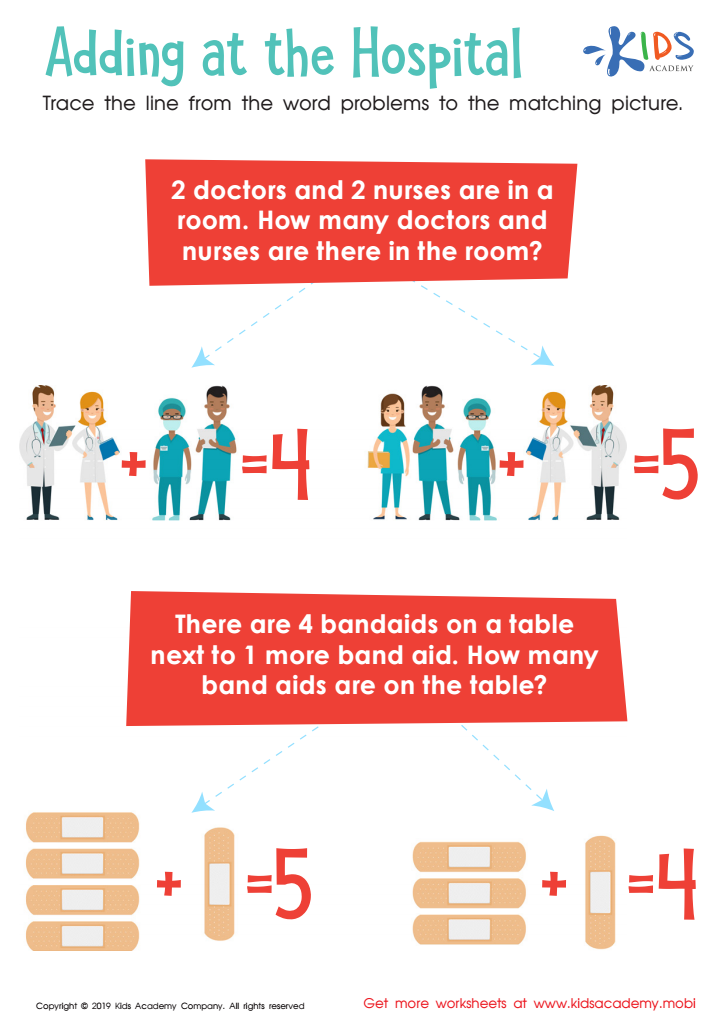
Adding at the Hospital Worksheet
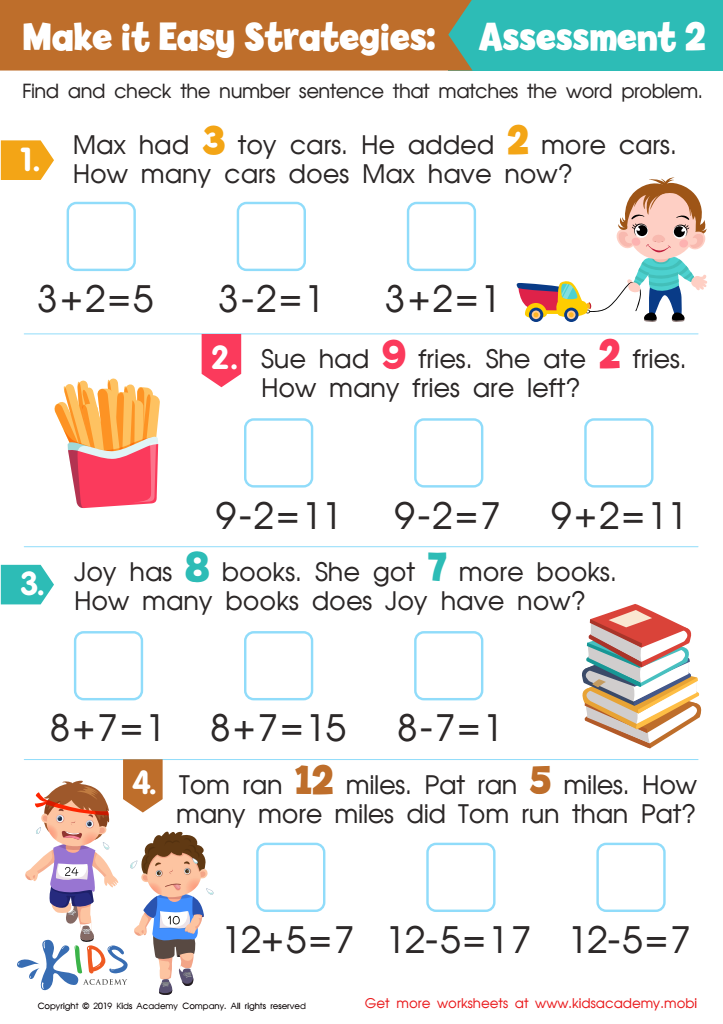
Make it Easy Strategies: Assessment 2 Worksheet
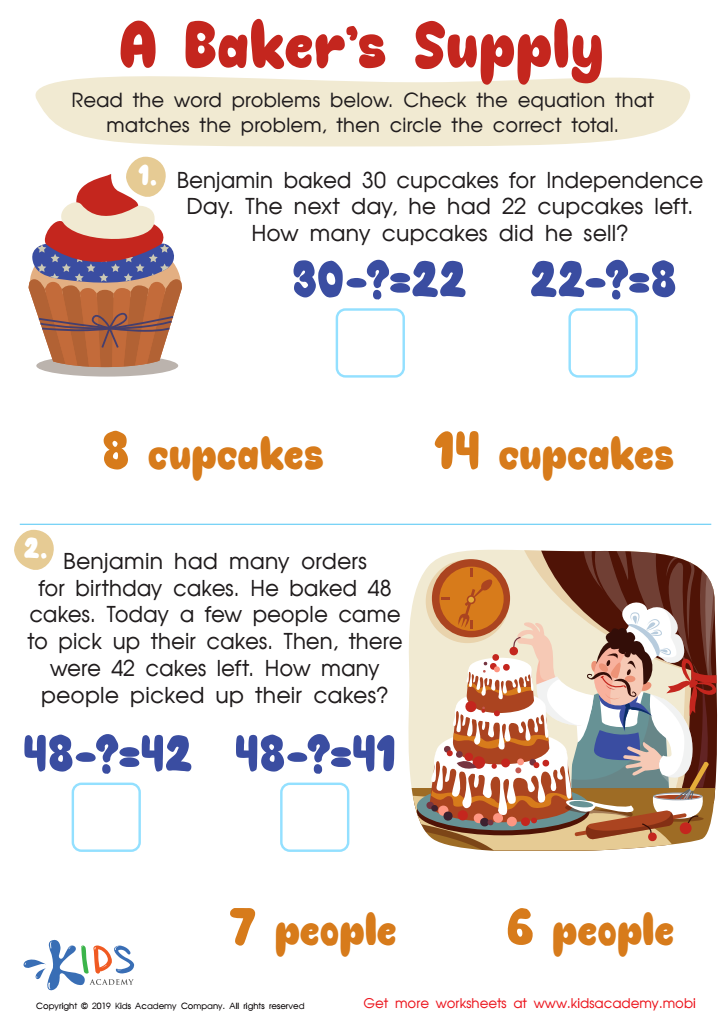
A Baker's Supply Worksheet








Introducing problem-solving abilities, focusing on addition and subtraction word problems, to children aged 3-4 is crucial for several reasons. At this developmental stage, toddlers are rapidly building their cognitive and analytical skills. Nurturing these abilities early can significantly positively impact their academic journey and everyday life.
Firstly, math word problems help young children learn to think critically and approach challenges methodically. By figuring out what is being asked and determining the appropriate arithmetic operation, they enhance their reasoning abilities. This foundational skill transcends math, aiding in successful reading comprehension and scientific inquiry.
Additionally, embedding math in real-world contexts through word problems makes it relatable and engaging. Preschoolers are naturally curious about their environment. Word problems about sharing toys or splitting snacks tie math concepts to their daily lives, fostering both interest and understanding.
Social growth is equally critical at this age. Collaborative problem-solving with parents or peers cultivates communication skills, patience, and the ability to work together. Activities encompassing fun stories around addition and subtraction can turn learning into a implicitly enjoyable game, rather than a chore.
Ultimately, early exposure sets a precedent for positive attitudes towards math. It equips children with not just numerical agility, but also perseverance and critical thinking, skills essential for lifelong problem-solving.