
Animal recognition Addition & Subtraction Worksheets for Ages 3-4
97 filtered results
Difficulty Level
Grade
Age
-
From - To
Subject
Activity
Standards
Introduce your little learner to math with our "Animal Recognition Addition & Subtraction Worksheets" designed for ages 3-4. These fun and educational worksheets integrate adorable animal illustrations to captivate young minds. Children practice essential addition and subtraction skills while enhancing their ability to recognize different animals. These activities foster cognitive development, improve counting abilities, and reinforce fundamental math concepts in an engaging and interactive way. Perfect for preschoolers, these worksheets make learning math an exciting adventure. Download now from our website to give your child a head start in math while enjoying the charm of animal friends!
Favorites
With answer key
Interactive
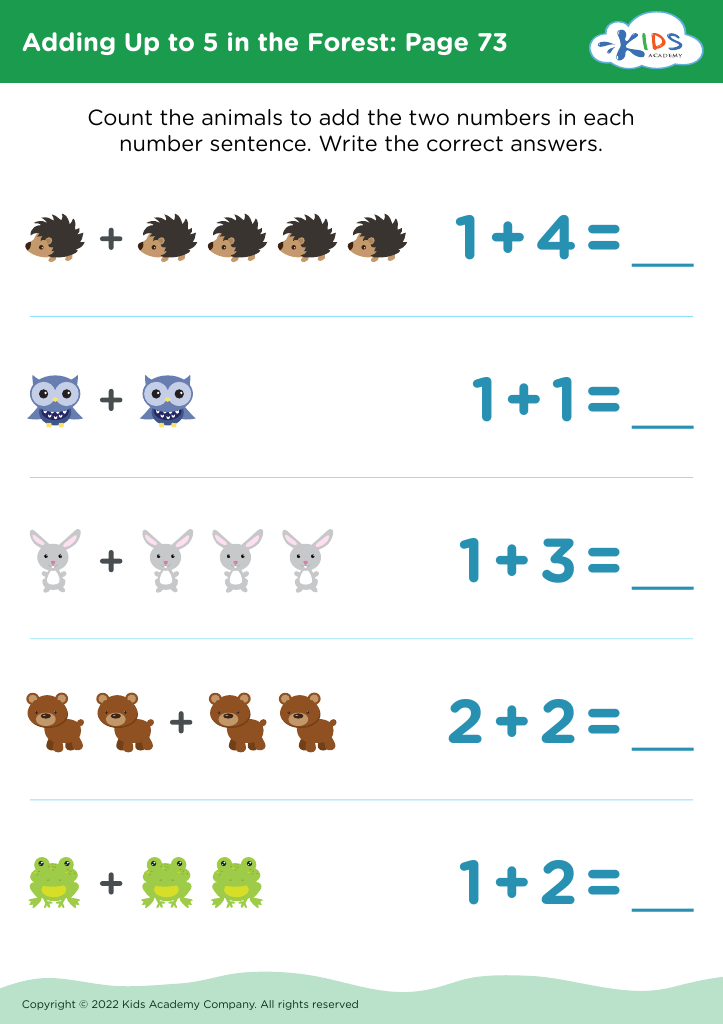
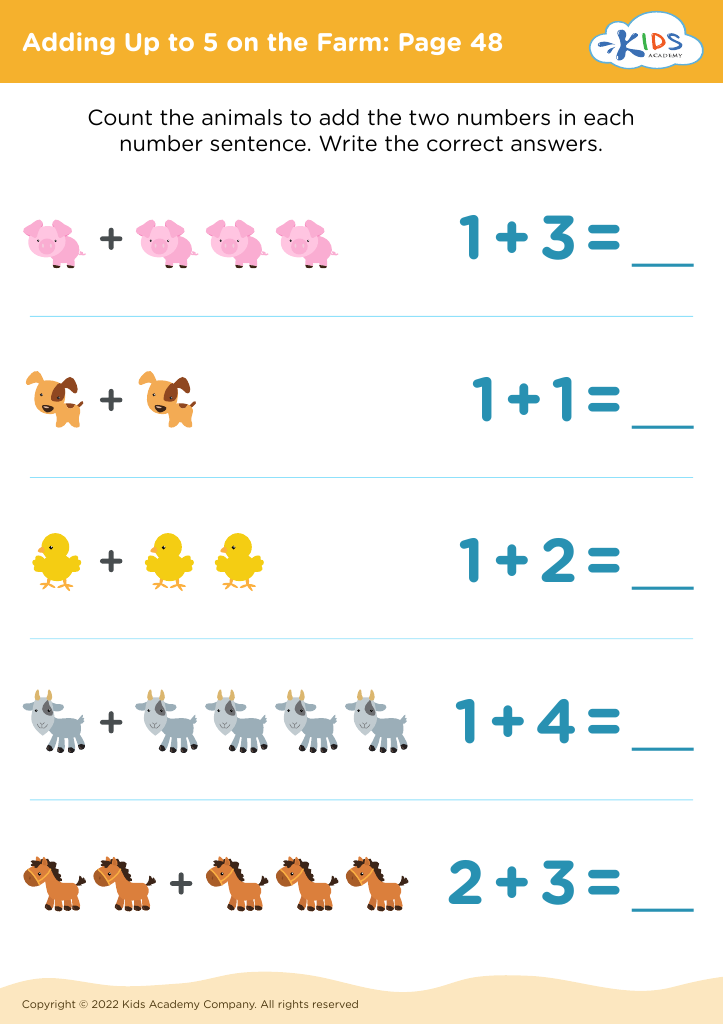
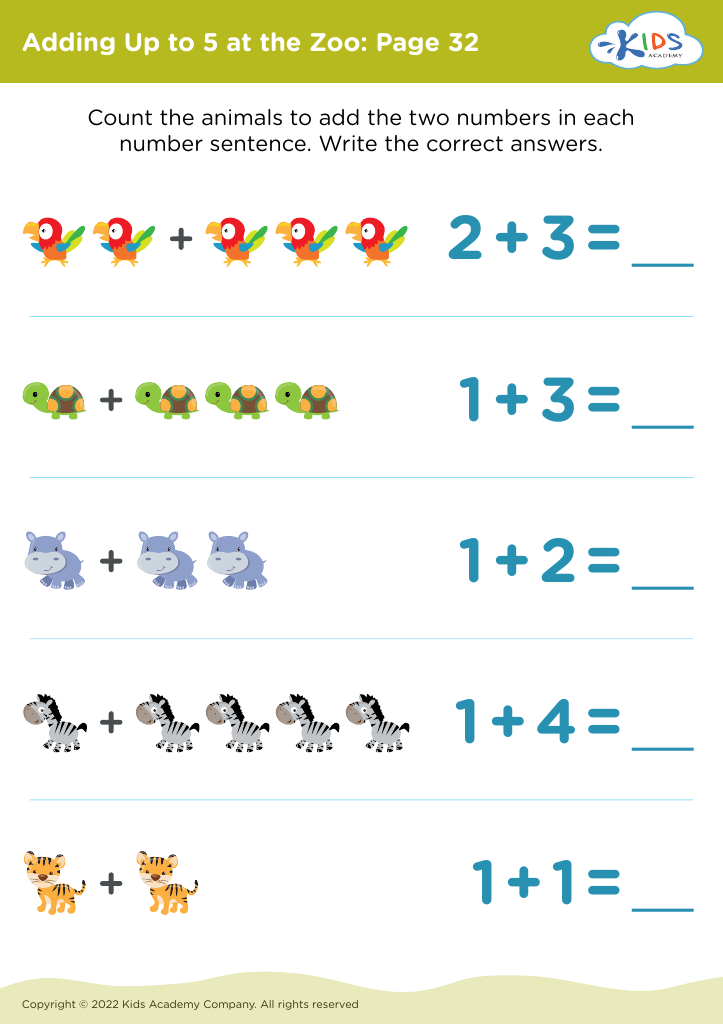
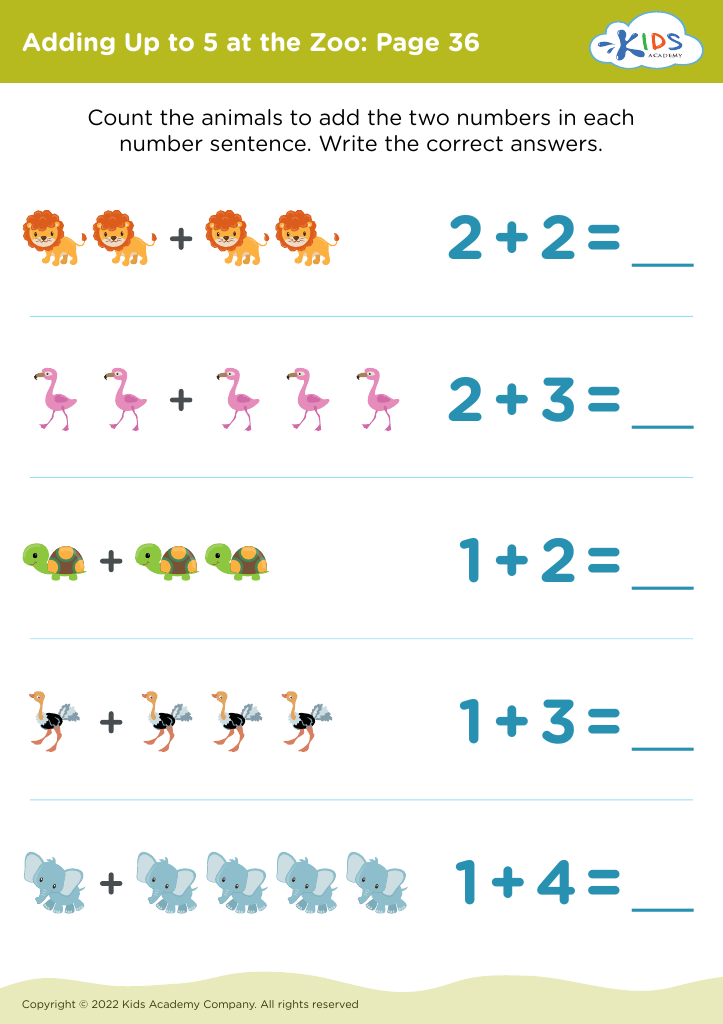
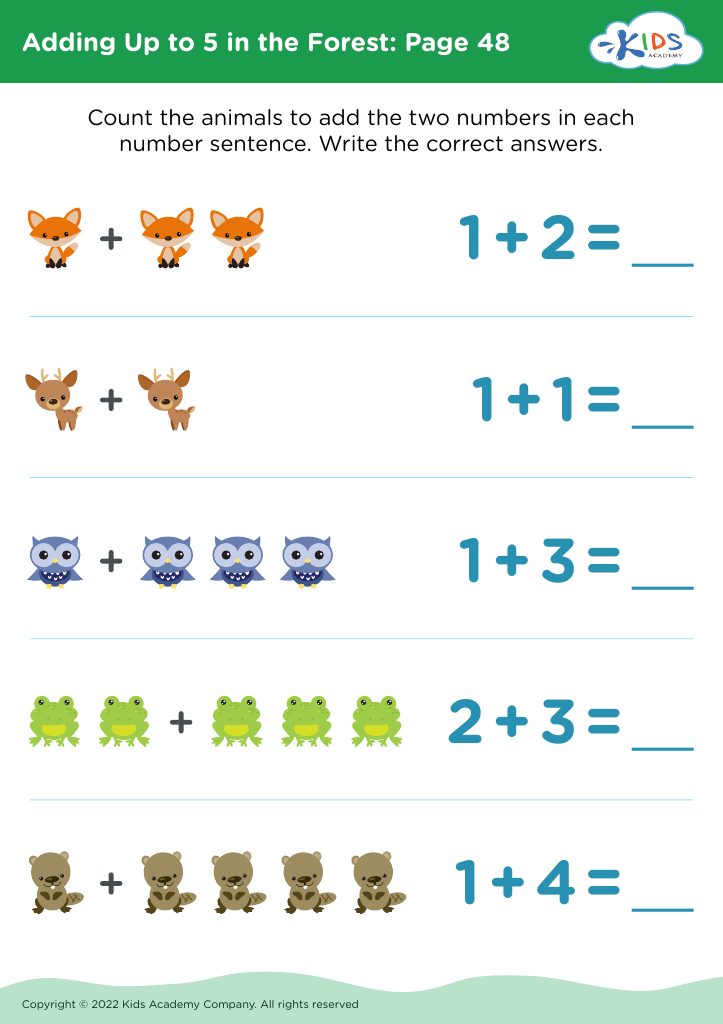
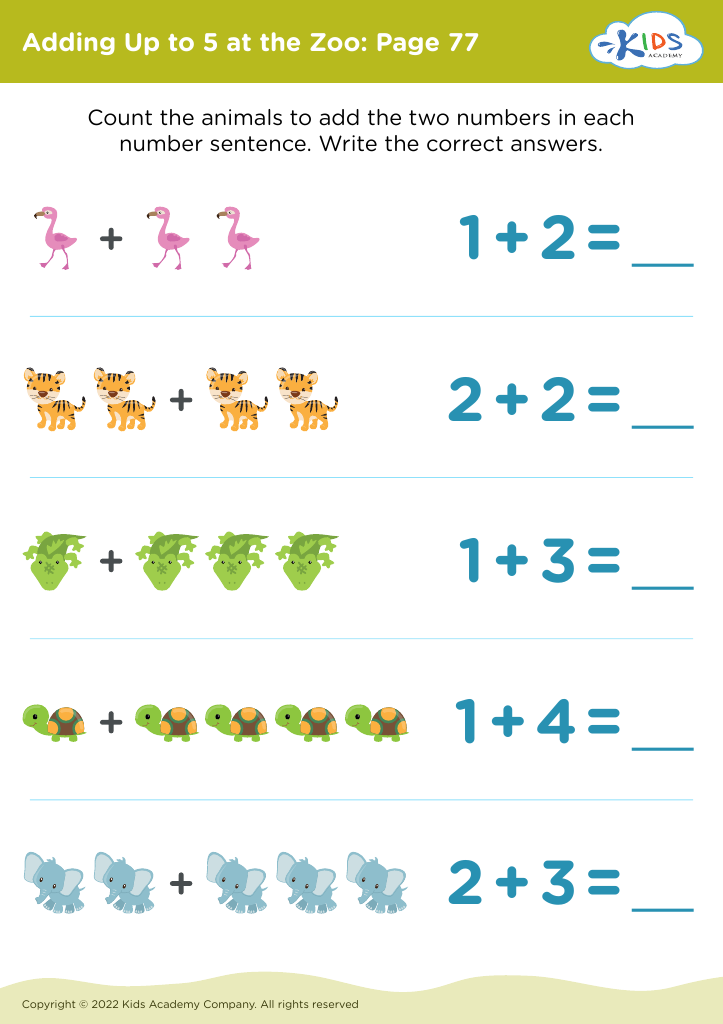
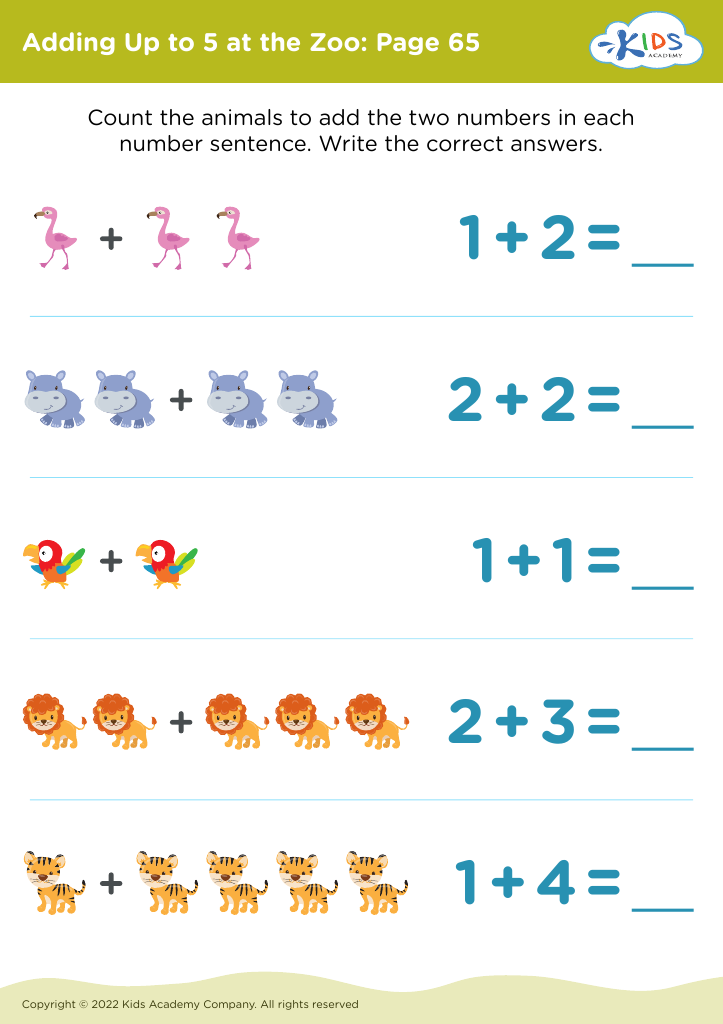
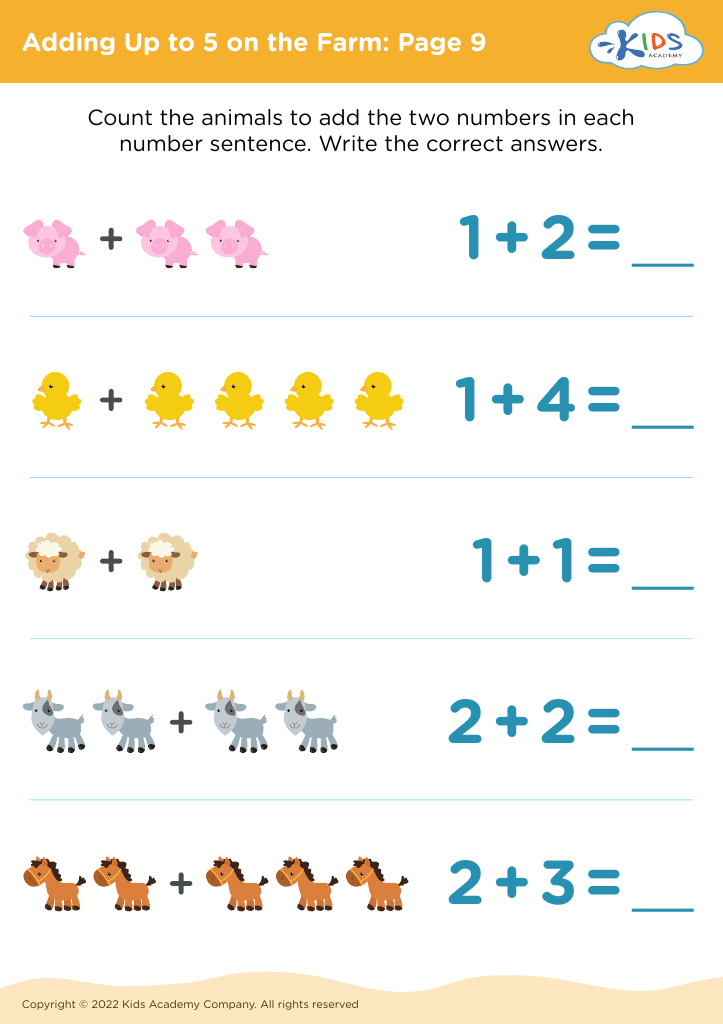
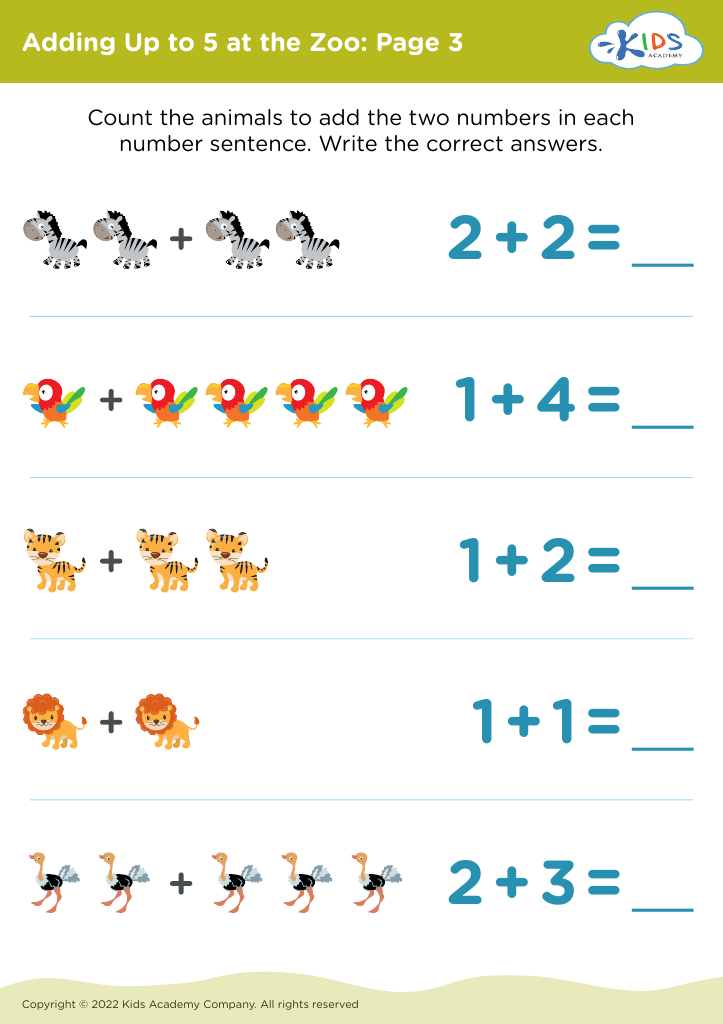
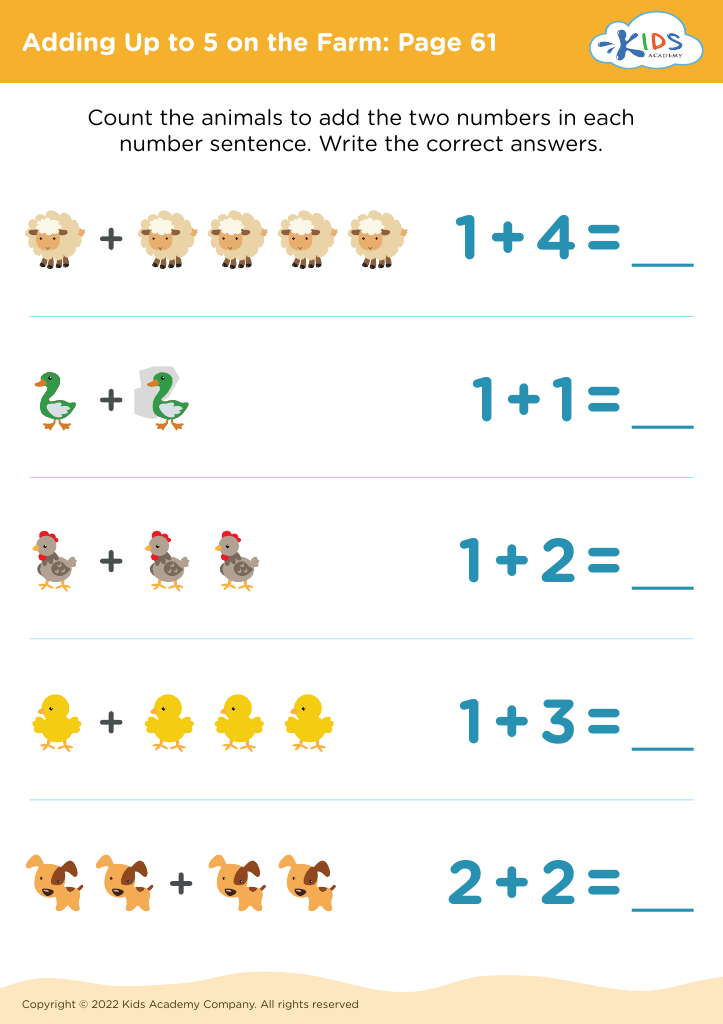
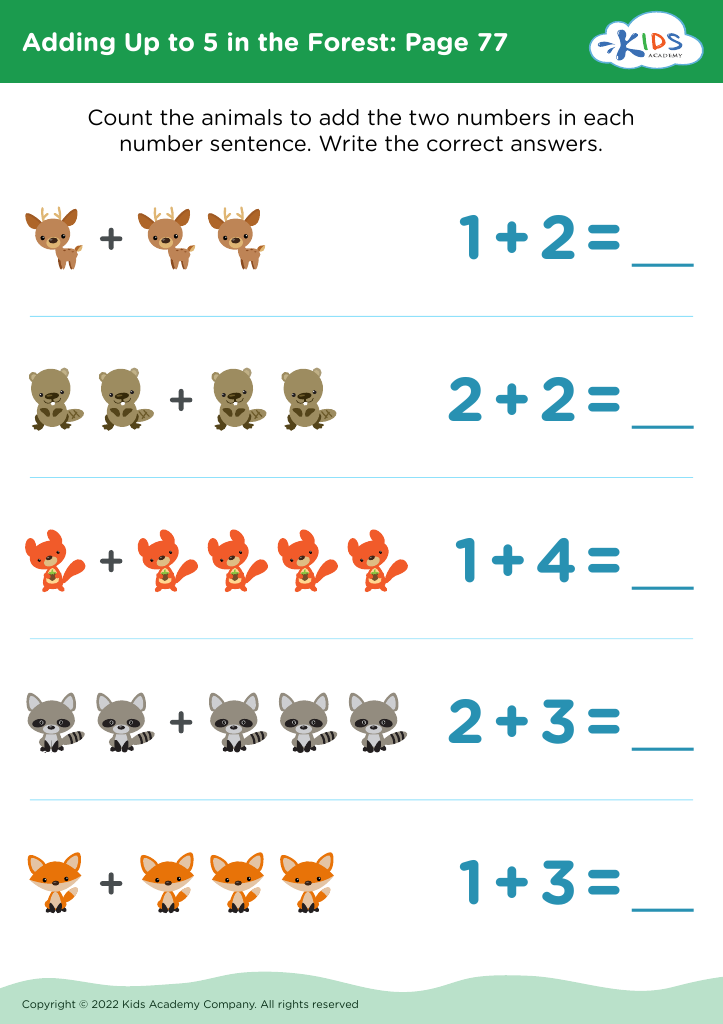
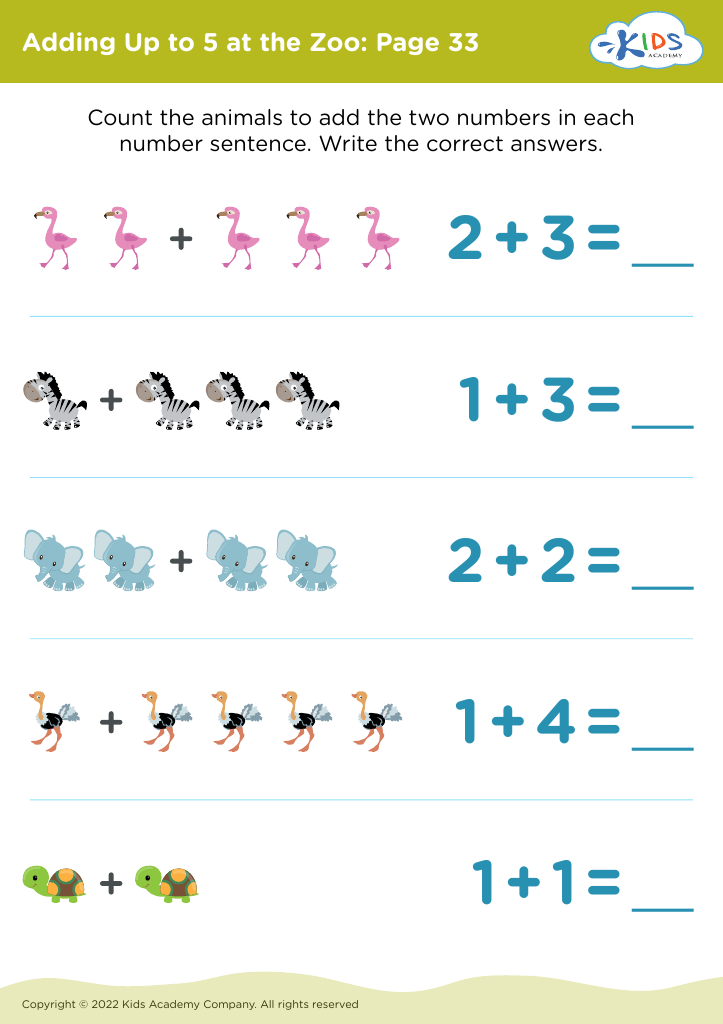
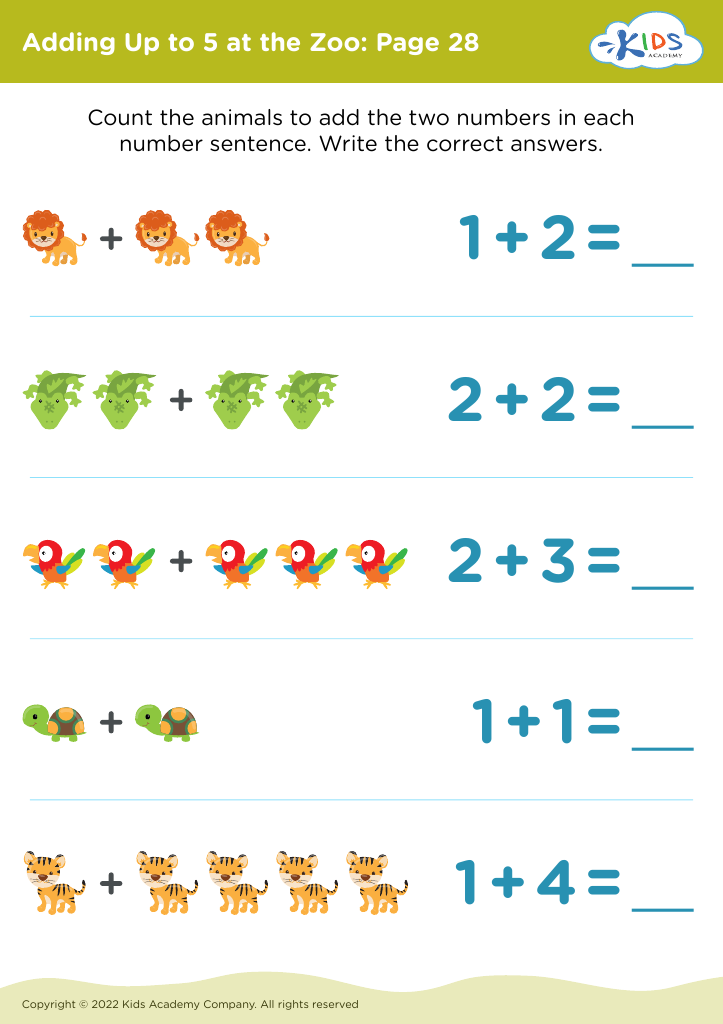
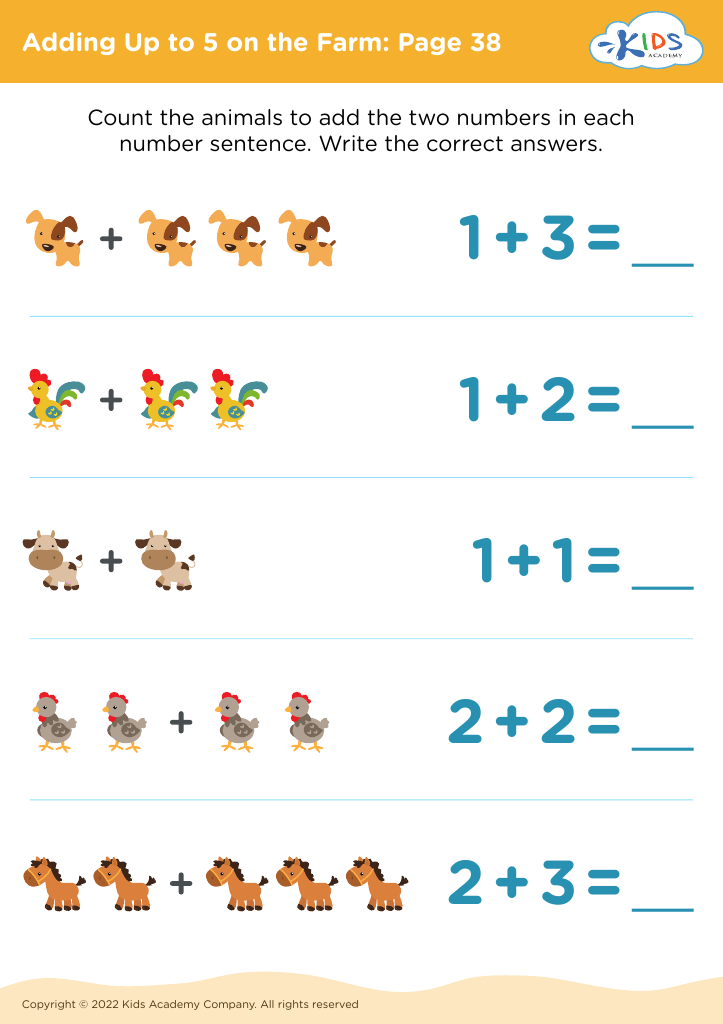
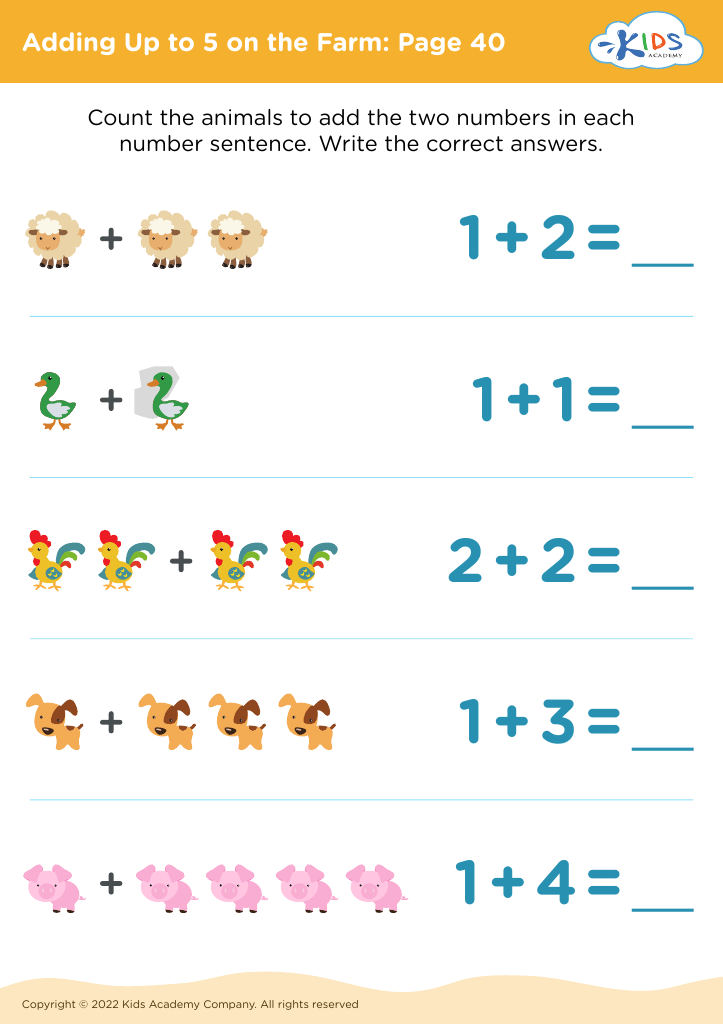
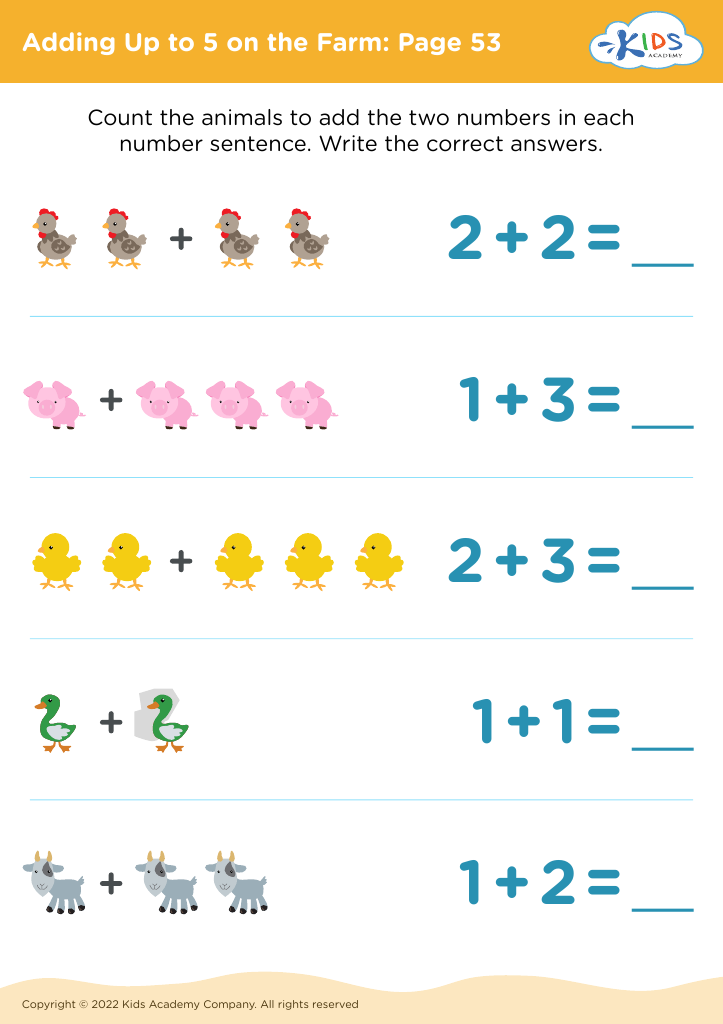
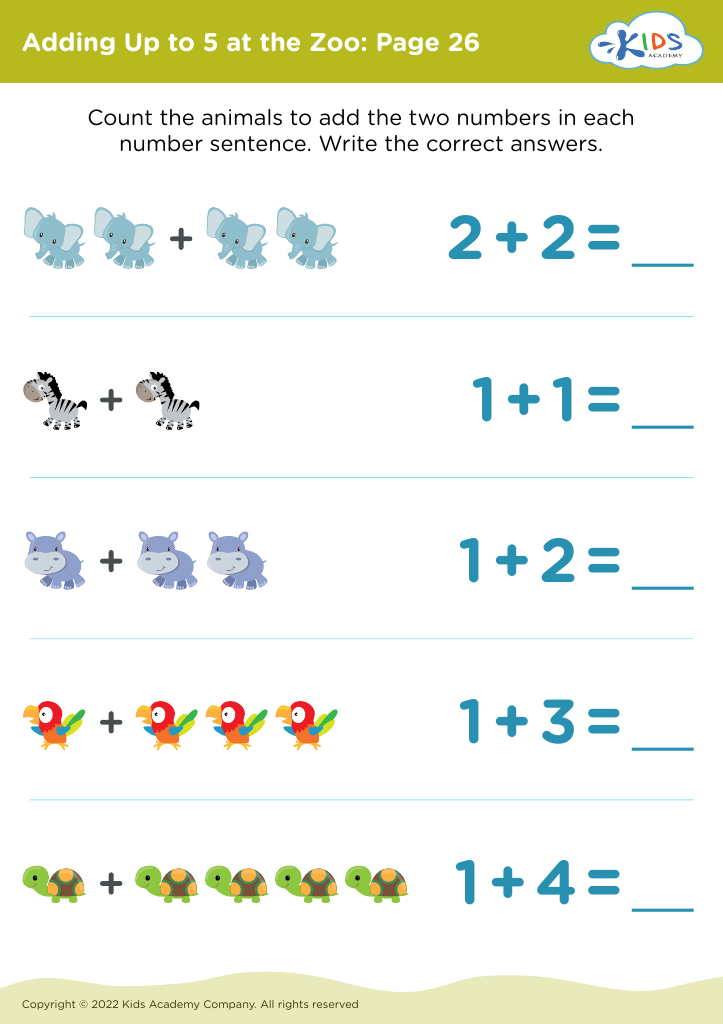
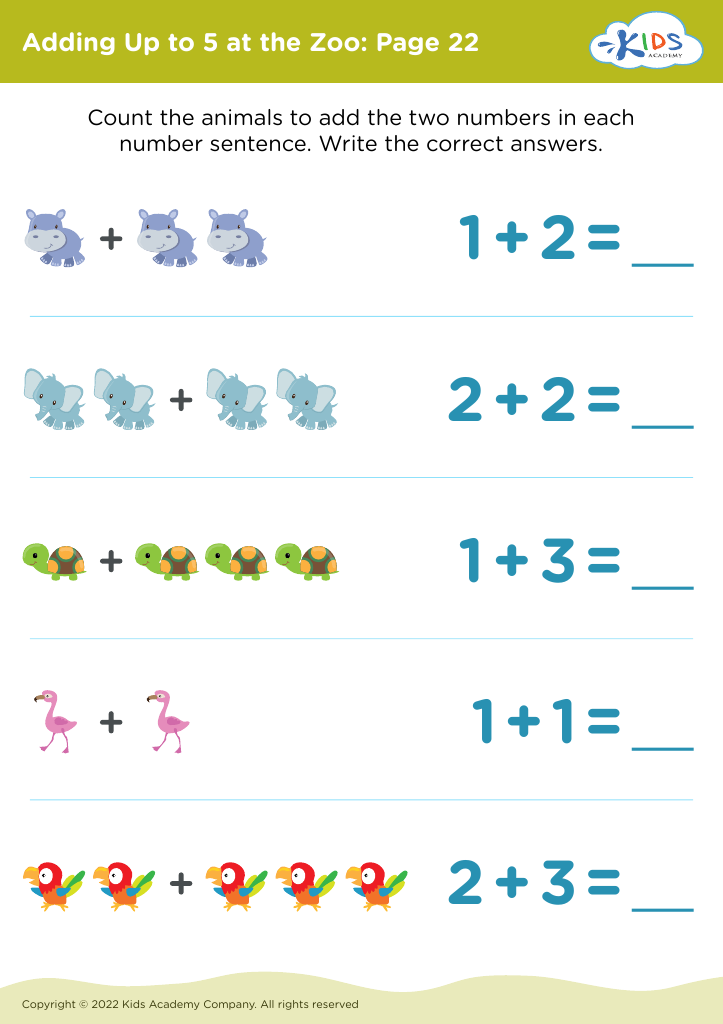
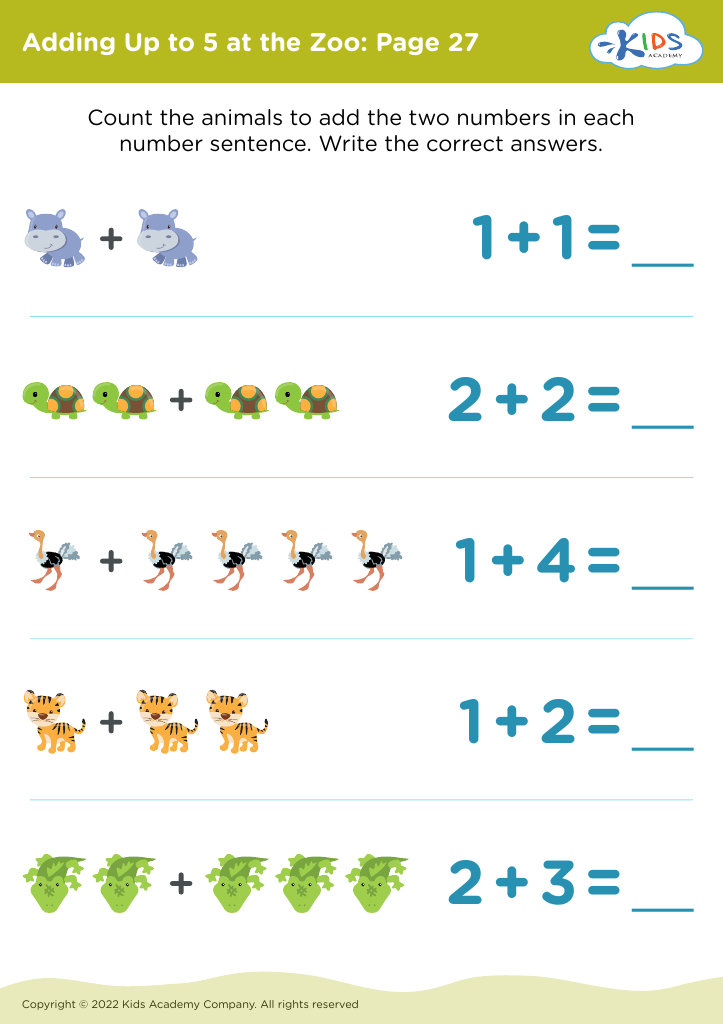
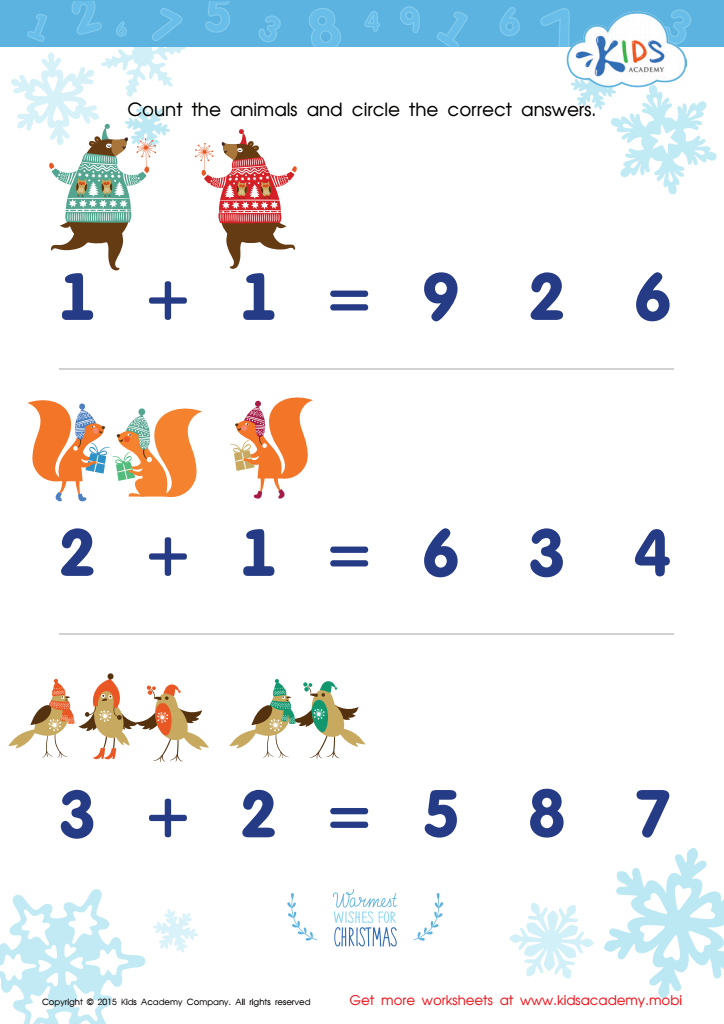
Count Funny Animals Worksheet
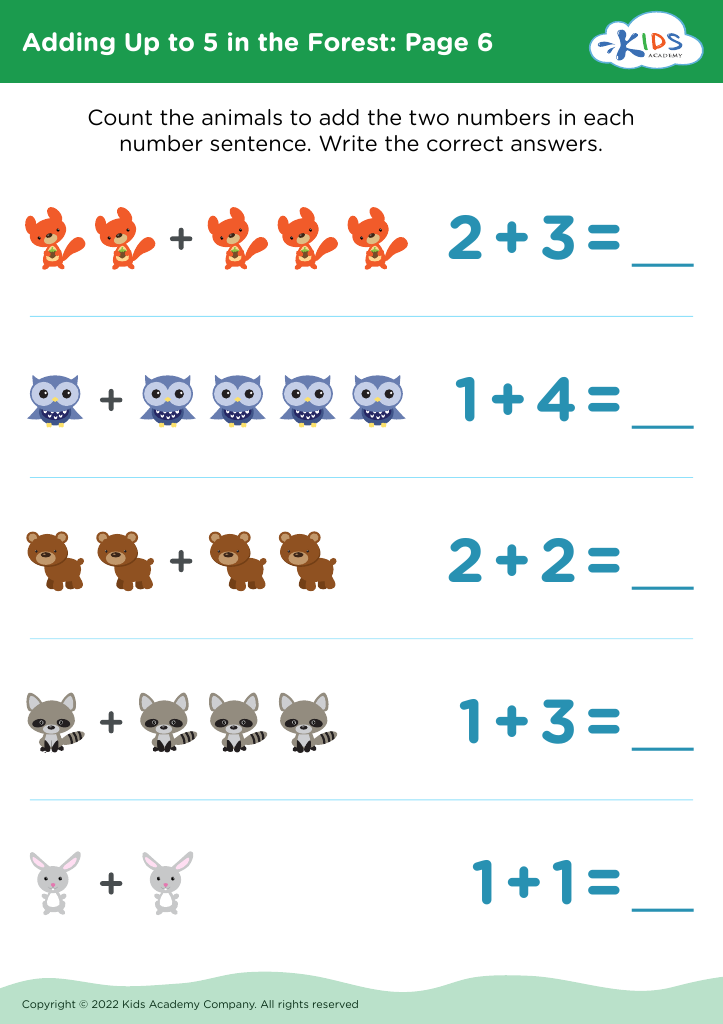
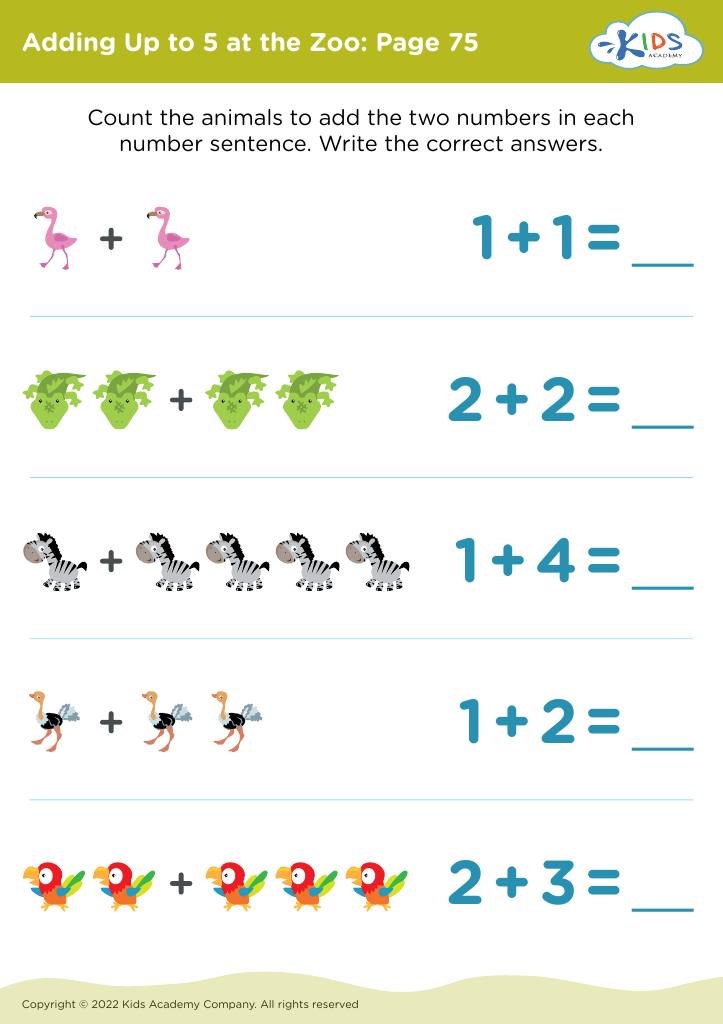
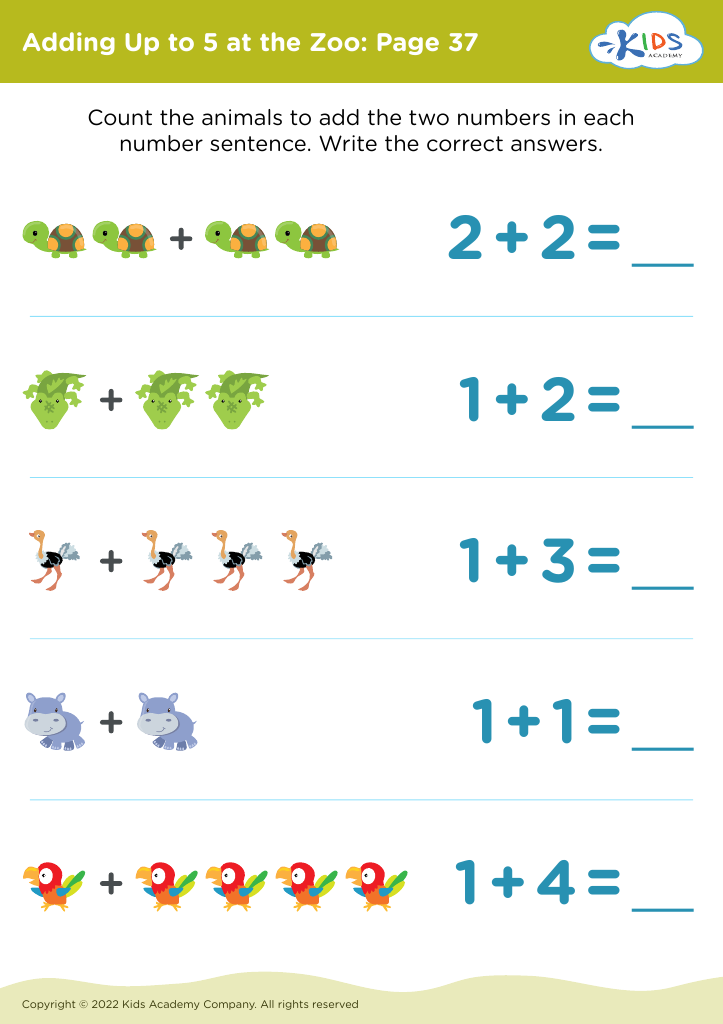
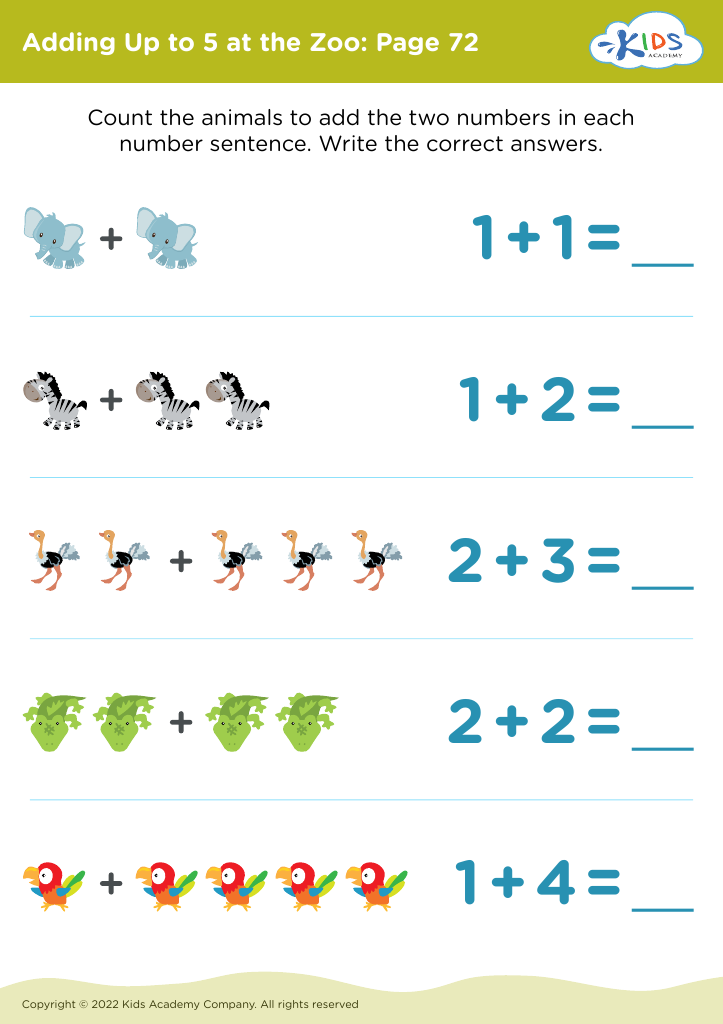
Get your kid in the Christmas spirit with this festive addition worksheet! They'll have fun counting the colorful animals and writing in the numbers. Our graphic layout makes it easy for them to visualize and solve the task. Print it out and help your kid keep their math skills sharp this winter with Kids Academy!
 Assign to My Students
Count Funny Animals Worksheet
Worksheet
Join Kids Academy for Free
Who is primarily going to use this learning content?








Parents and teachers should care about animal recognition, addition, and subtraction for ages 3-4 because these activities support crucial early childhood development. Animal recognition helps young children learn categorization, memory, and vocabulary which are foundational language skills. By recognizing and naming different animals, children strengthen their cognitive processes and expand their understanding of the world, finding joy and curiosity in learning.
Moreover, incorporating basic math concepts such as addition and subtraction into these activities introduces children to numerical literacy in an engaging and accessible way. At ages 3-4, children are naturally inquisitive and can develop an early number sense through playful interactions with objects. Using animals they recognize and adore as tools for counting helps children see math in a fun context, laying groundwork for future mathematical learning.
Finally, engaging in these activities as a family or classroom group also strengthens social skills, patience, and collaborative learning. Parents and teachers contribute to a happy, positive learning environment when they involve children in these playful yet educational activities. Such a foundation not only makes learning enjoyable but also sets children on a path for academic and personal success.
By prioritizing animal recognition and basic math activities, caregivers can foster an atmosphere of playful learning that encourages children’s innate curiosity and prepares them for future educational milestones.








