Basic Addition Addition & Subtraction Worksheets for Ages 3-4
4 filtered results
-
From - To
Welcome to our engaging and educational Basic Addition and Subtraction worksheets designed specifically for children ages 3-4. These printable resources introduce young learners to fundamental math skills through fun, interactive activities. Your child will enjoy practicing simple addition and subtraction with colorful visuals and relatable themes. Each worksheet is tailored to promote early numeracy, enhance cognitive development, and build a solid math foundation. Our worksheets encourage learning through play, making math enjoyable from an early age. Explore our collection today and help your little one develop essential math skills while having fun! Perfect for parents and educators alike.
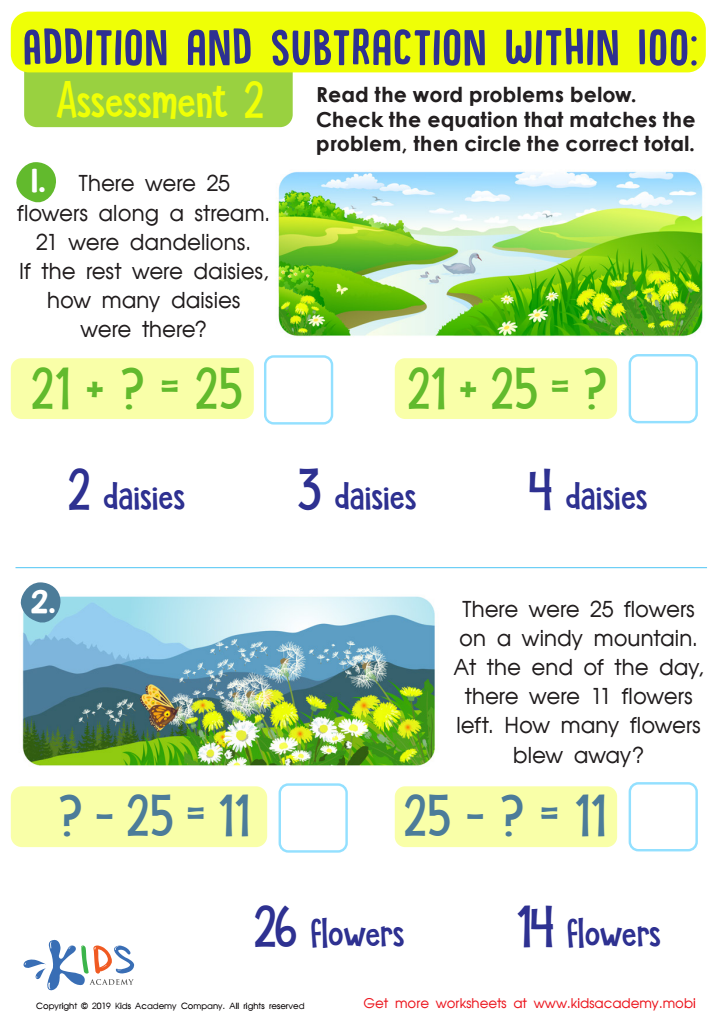
Assessment 2 Math Worksheet
 Assign to My Students
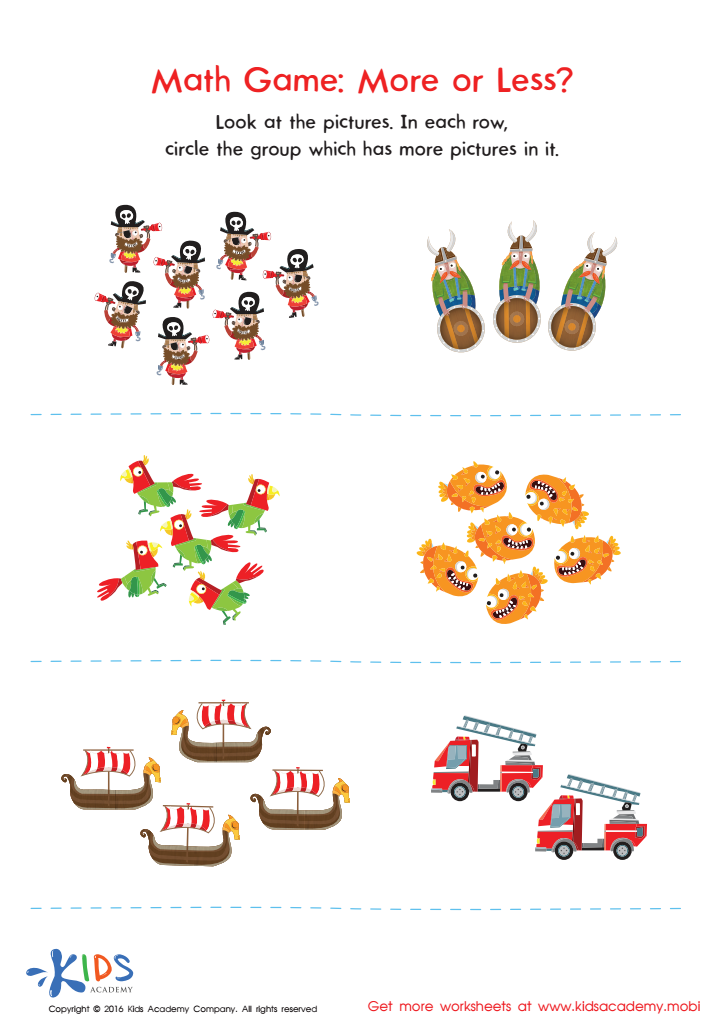
More or Less Worksheet
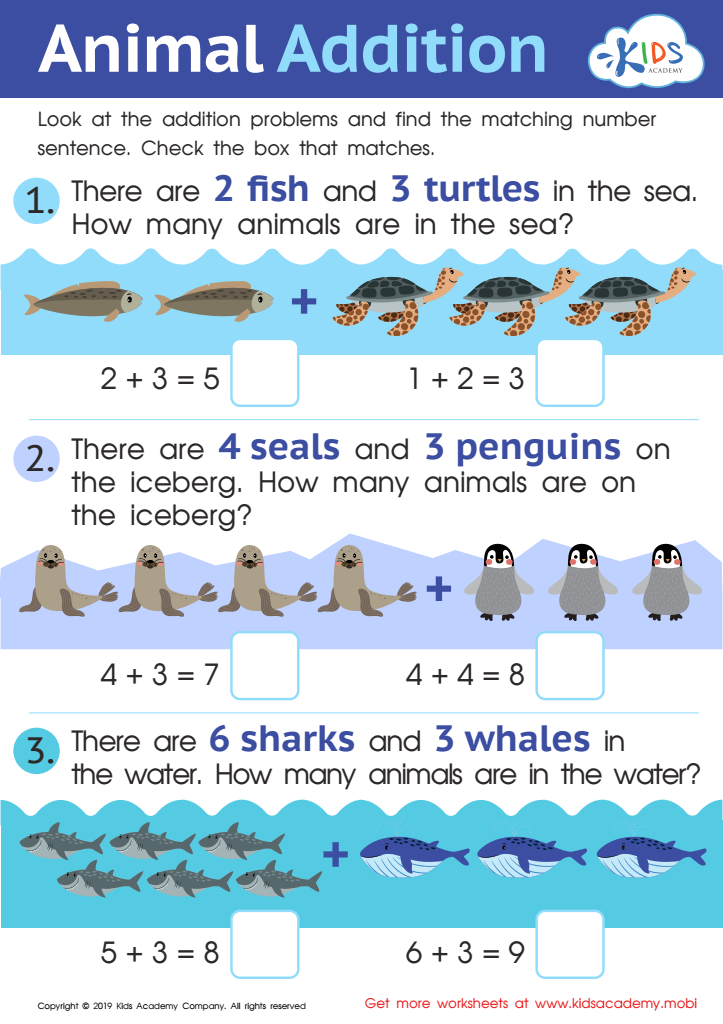
Animal Addition Worksheet








Parents and teachers should prioritize teaching basic addition and subtraction to children aged 3-4 because these skills form the foundation for future mathematical understanding. At this stage, children are naturally curious and eager to explore numbers, making it an ideal time to introduce them to simple mathematical concepts. Engaging young learners in basic addition and subtraction fosters critical thinking and problem-solving abilities, which are essential skills for everyday life.
Building a strong numerical foundation enhances cognitive development, improving their ability to recognize patterns and relationships in mathematics. Early exposure to these concepts also boosts confidence in their mathematical abilities, laying the groundwork for positive attitudes toward math as they progress through school.
Additionally, mastering basic addition and subtraction supports literacy skills and language development by introducing relevant mathematical vocabulary. Learning through engaging activities, such as storytelling or hands-on play, can create enjoyable experiences that cumulatively benefit children’s overall development.
Involving parents and teachers in this learning not only strengthens the child’s mathematical foundation but also promotes family engagement in education. Ultimately, early mastery of these skills prepares children for more complex mathematical concepts they will encounter in later grades, fostering a lifelong enthusiasm for learning.








