Check out this FREE Trial Lesson on Addition & Subtraction for age 3-4!

Match Objects that Fit Together

Favorites
With answer key
Interactive
  • 3-4
  • Basic Addition Skills
  • Addition & Subtraction
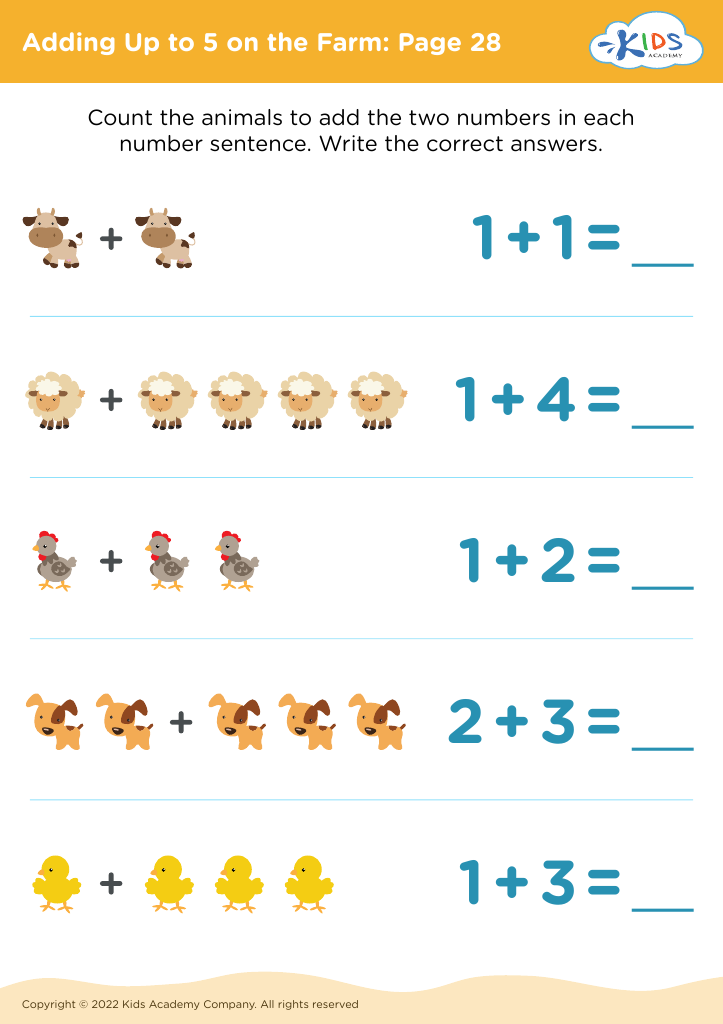
Adding Up to 5 on the Farm: Page 28
Worksheet
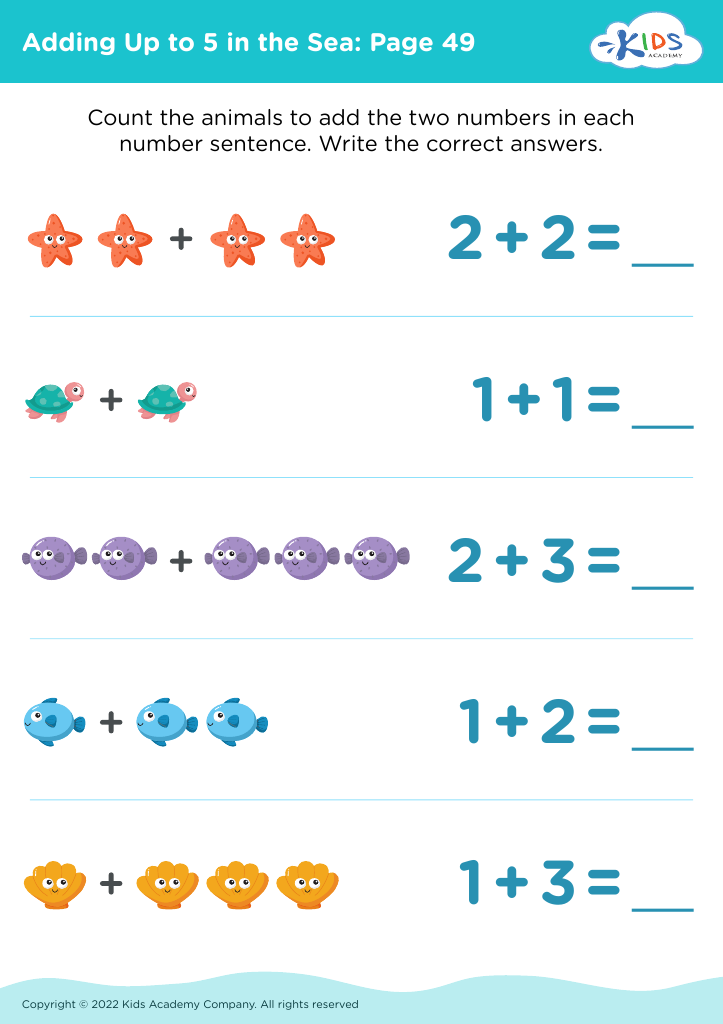
Adding Up to 5 in the Sea: Page 49
Worksheet
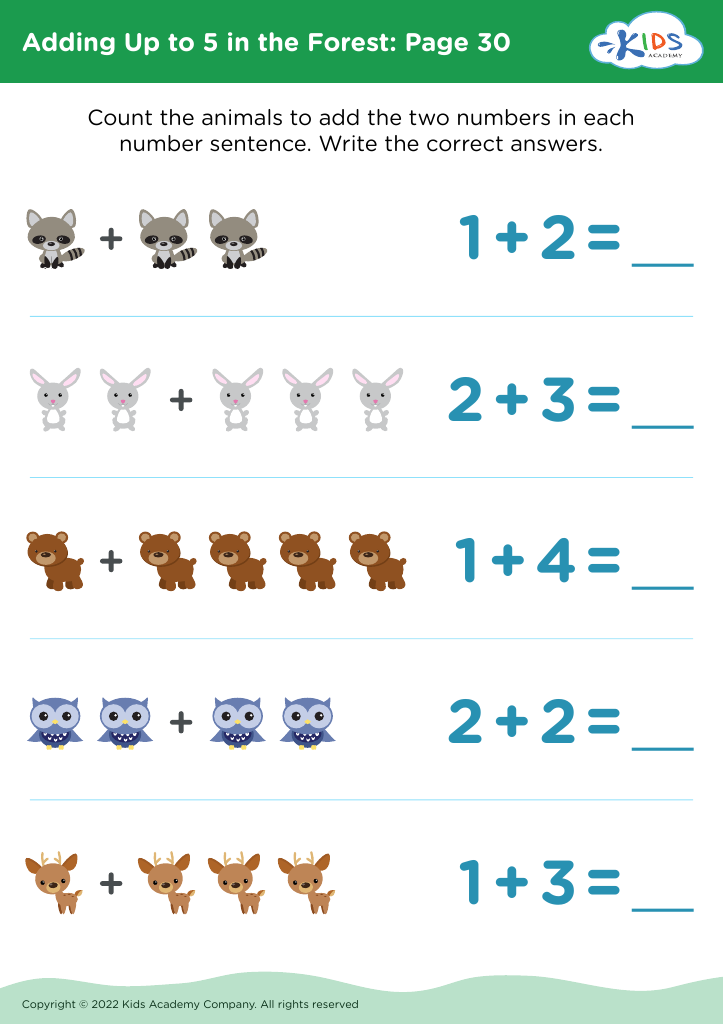
Adding Up to 5 in the Forest: Page 30
Worksheet
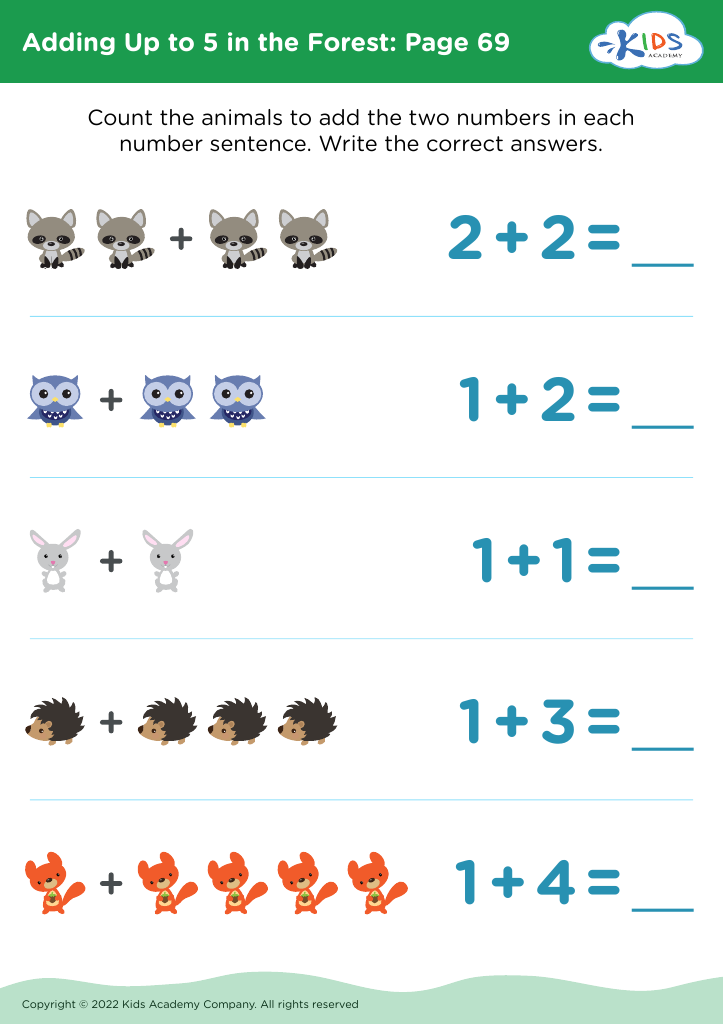
Adding Up to 5 in the Forest: Page 69
Worksheet
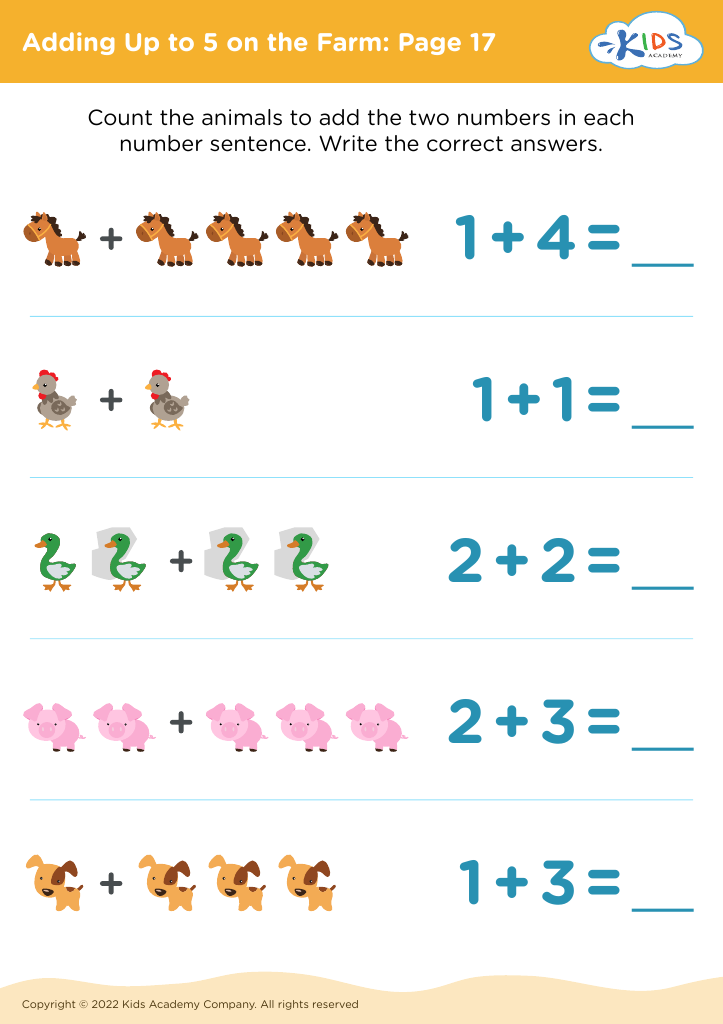
Adding Up to 5 on the Farm: Page 17
Worksheet
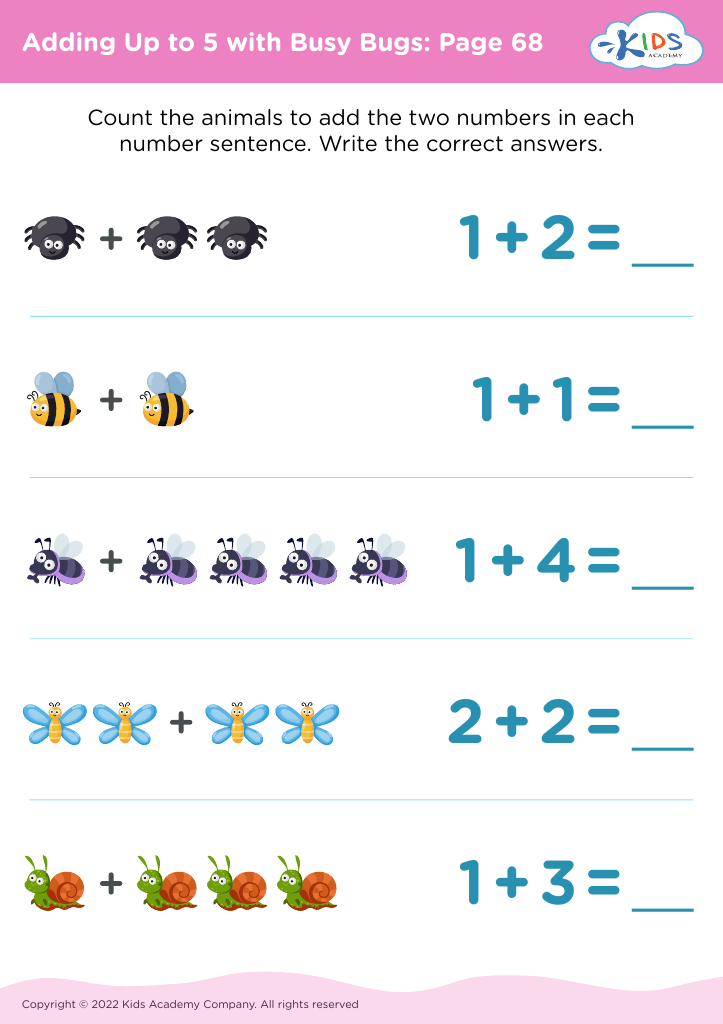
Adding Up to 5 with Busy Bugs: Page 68
Worksheet
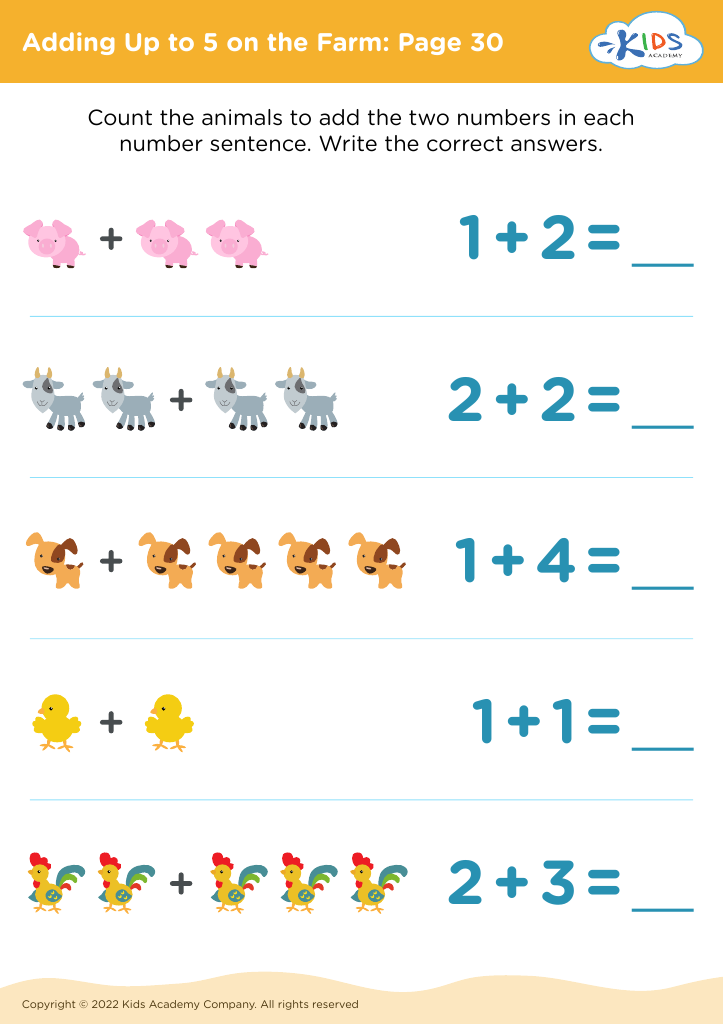
Adding Up to 5 on the Farm: Page 30
Worksheet
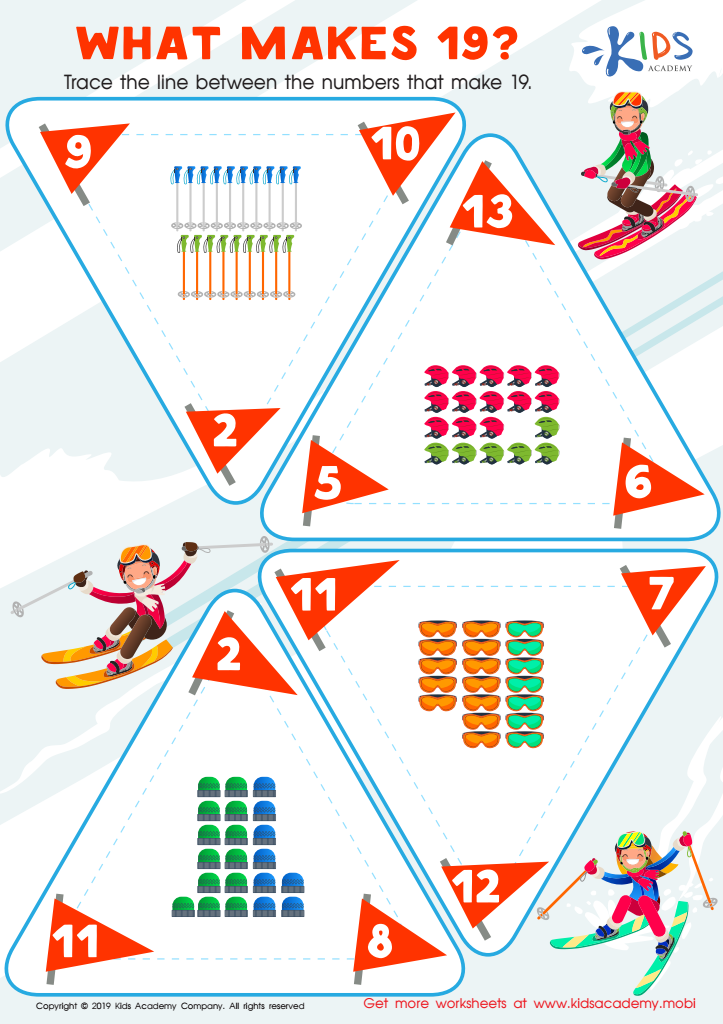
What Makes 19? Worksheet

What Makes 19? Worksheet

As a parent, it's your responsibility to help your kids learn. Put on the teacher hat and use this worksheet to teach them addition tricks. Help them count and add the objects, trace a line between the numbers that make 19, and take their learning a step further.
What Makes 19? Worksheet
Worksheet
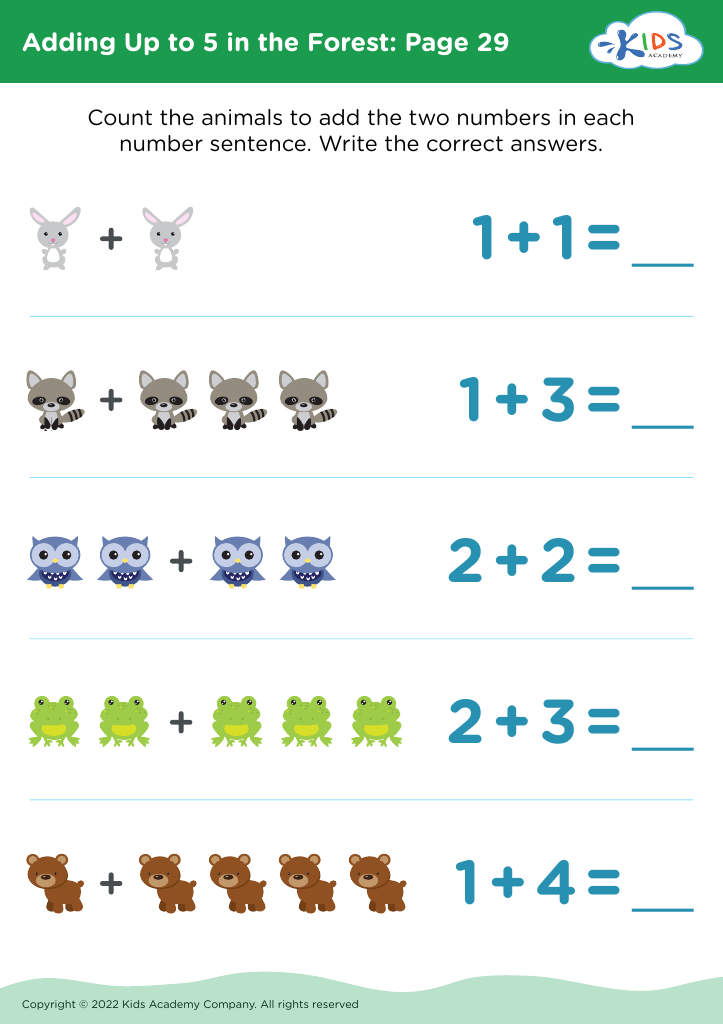
Adding Up to 5 in the Forest: Page 29
Worksheet
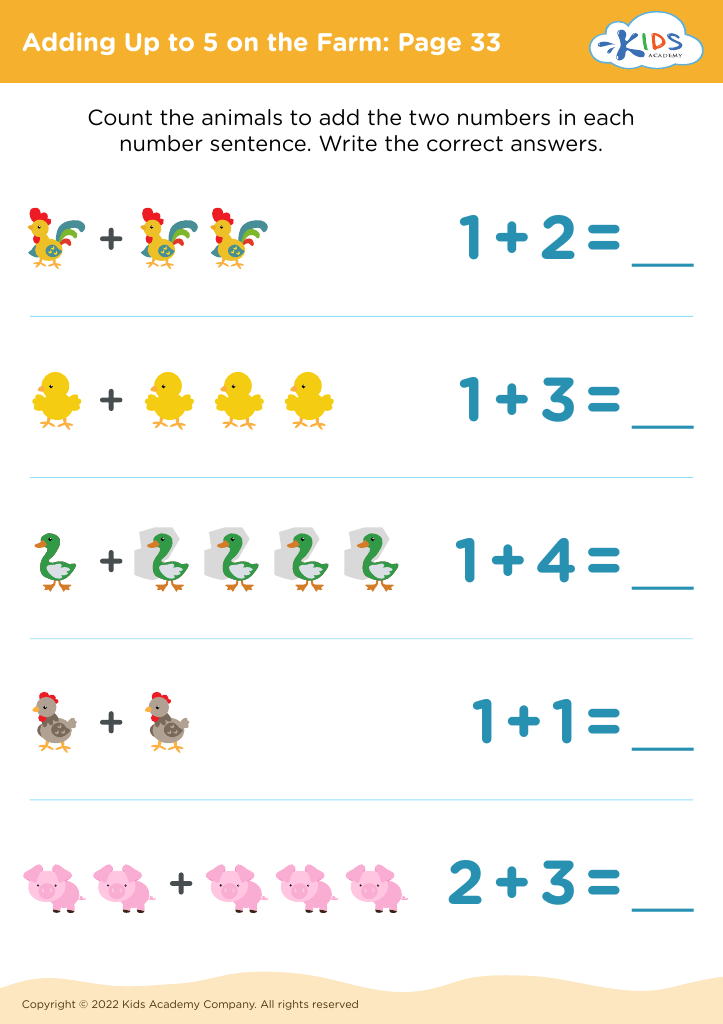
Adding Up to 5 on the Farm: Page 33
Worksheet
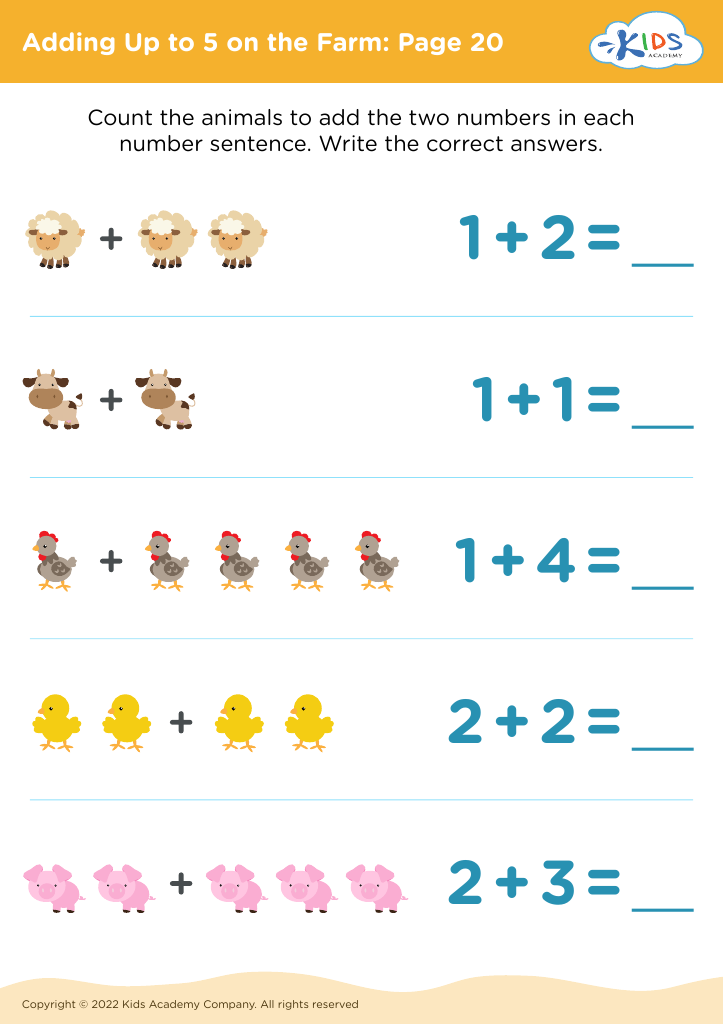
Adding Up to 5 on the Farm: Page 20
Worksheet
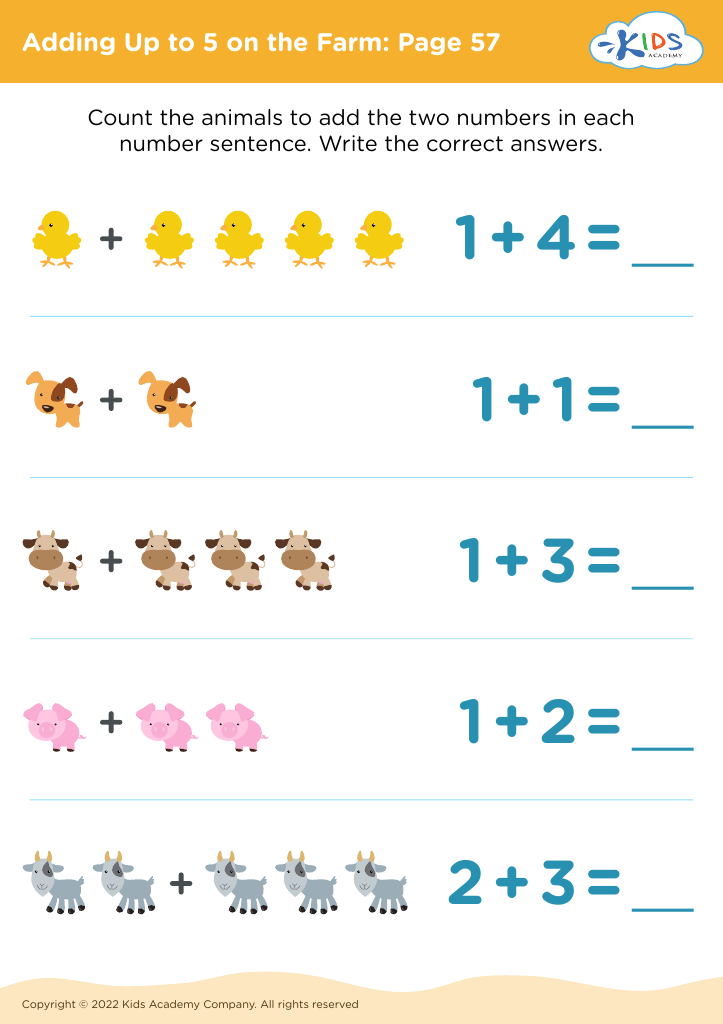
Adding Up to 5 on the Farm: Page 57
Worksheet
Build up to 13 Worksheet
Build up to 13 Worksheet

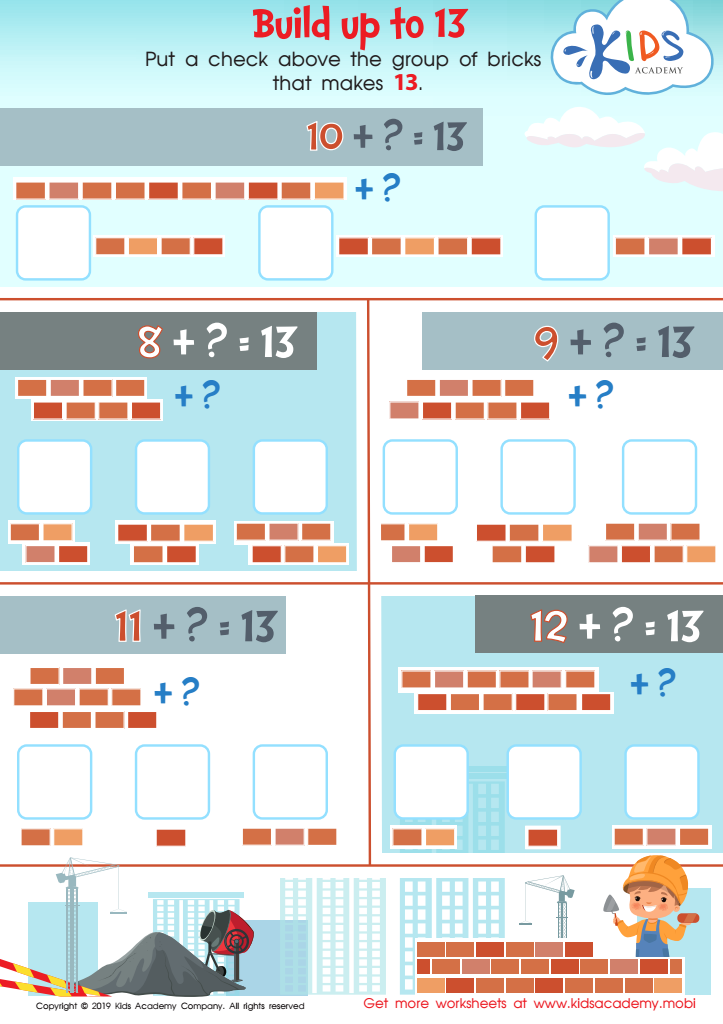
Help your kids master addition and subtraction with this worksheet! It'll help clear up any confusion they may have with adding different numbers. Have them add up the simple equations and mark the group of bricks that makes 13. It's a great way for them to get familiar with the basics.
Build up to 13 Worksheet

Worksheet
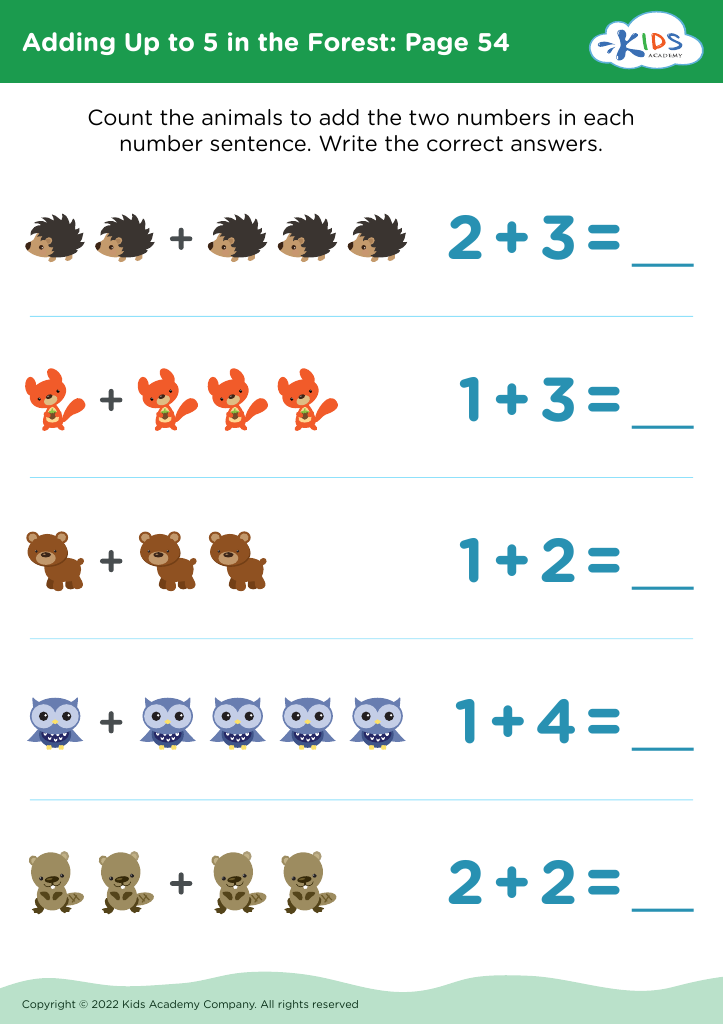
Adding Up to 5 in the Forest: Page 54
Worksheet
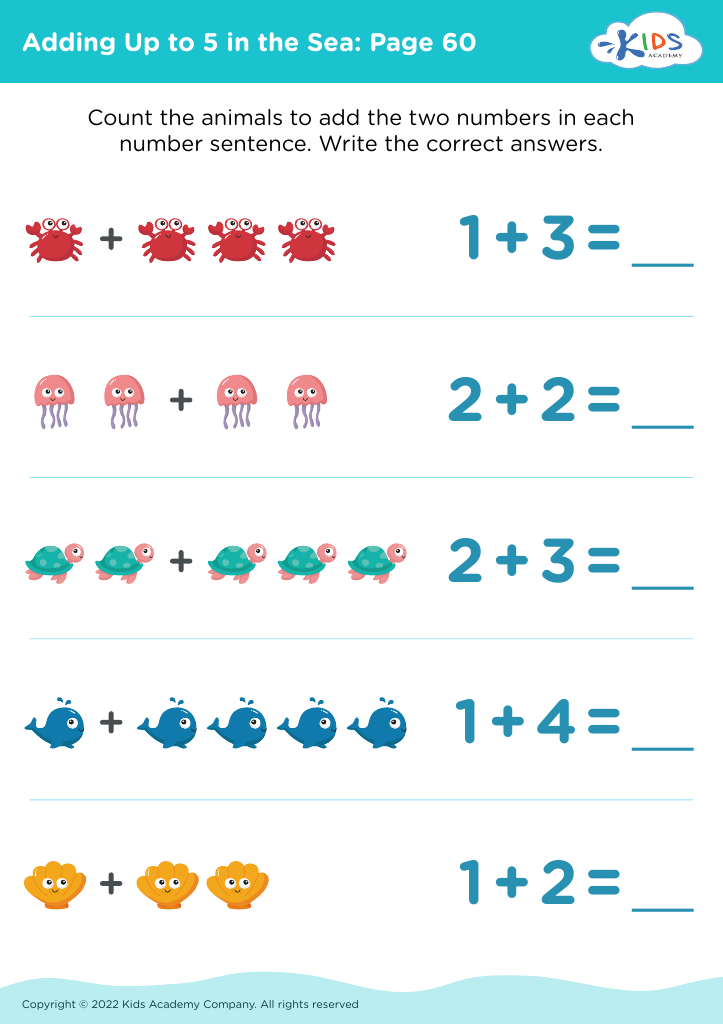
Adding Up to 5 in the Sea: Page 60
Worksheet
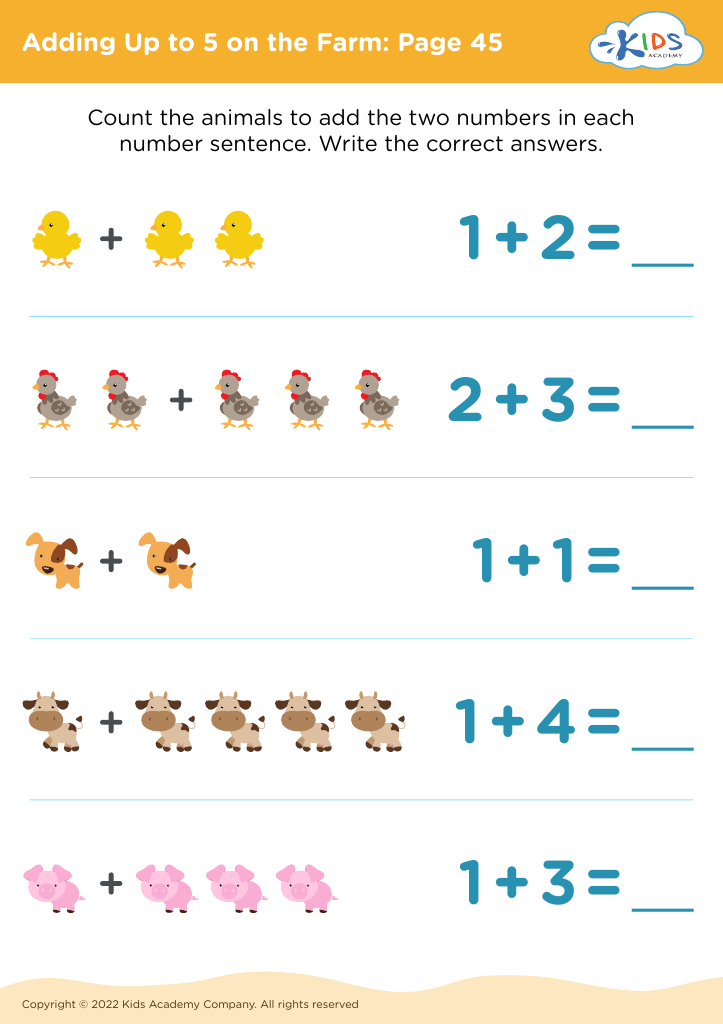
Adding Up to 5 on the Farm: Page 45
Worksheet
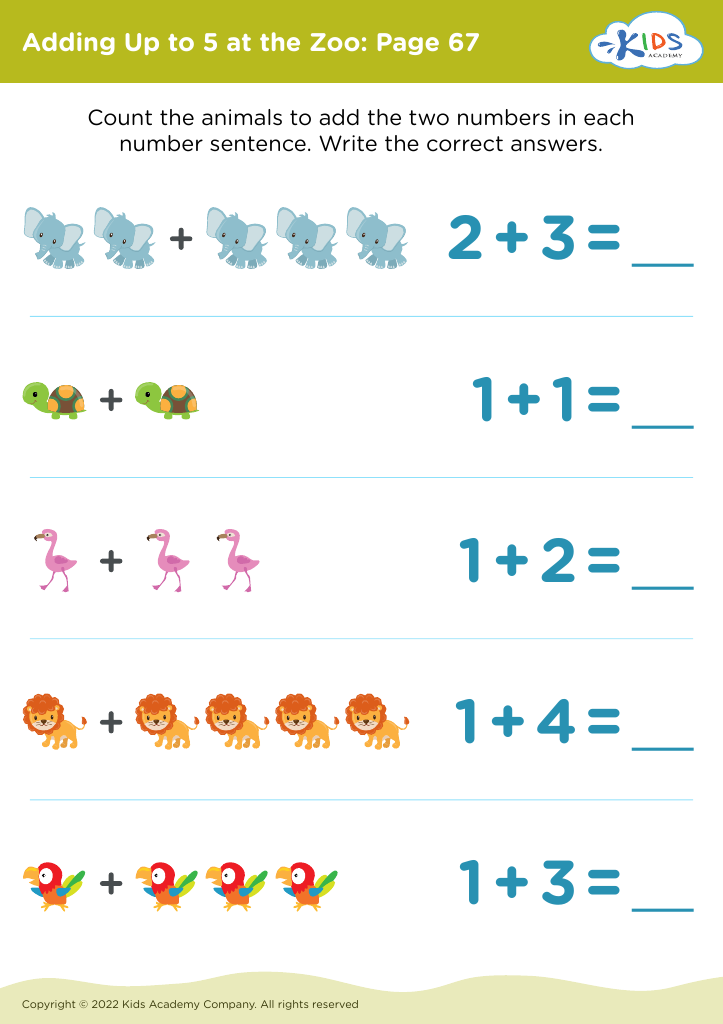
Adding Up to 5 at the Zoo: Page 67
Worksheet
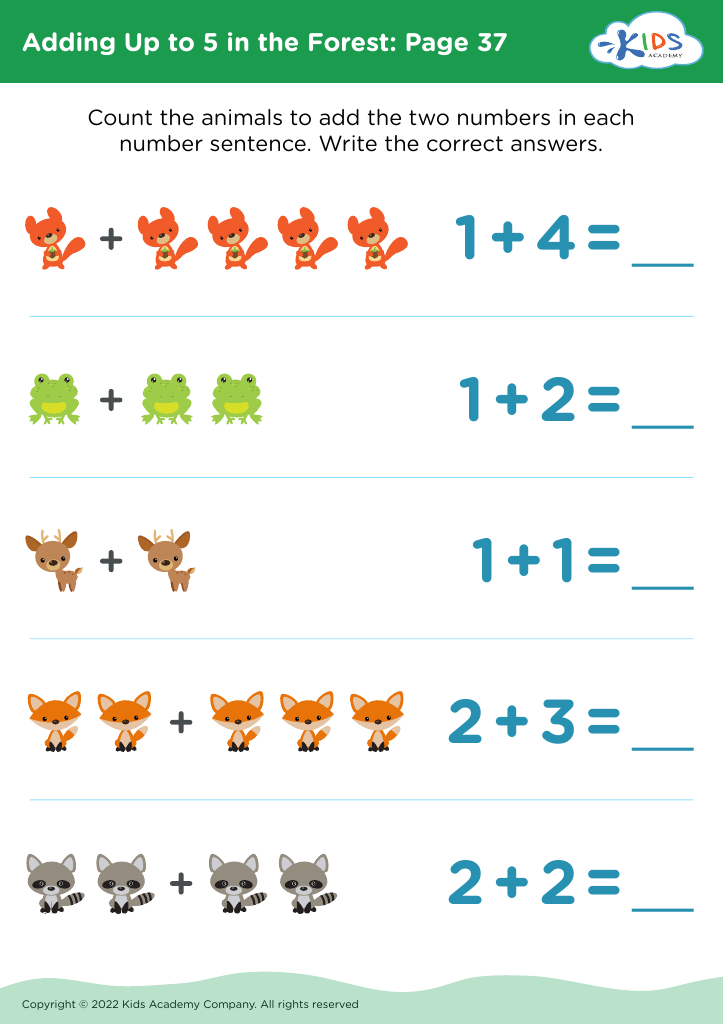
Adding Up to 5 in the Forest: Page 37
Worksheet
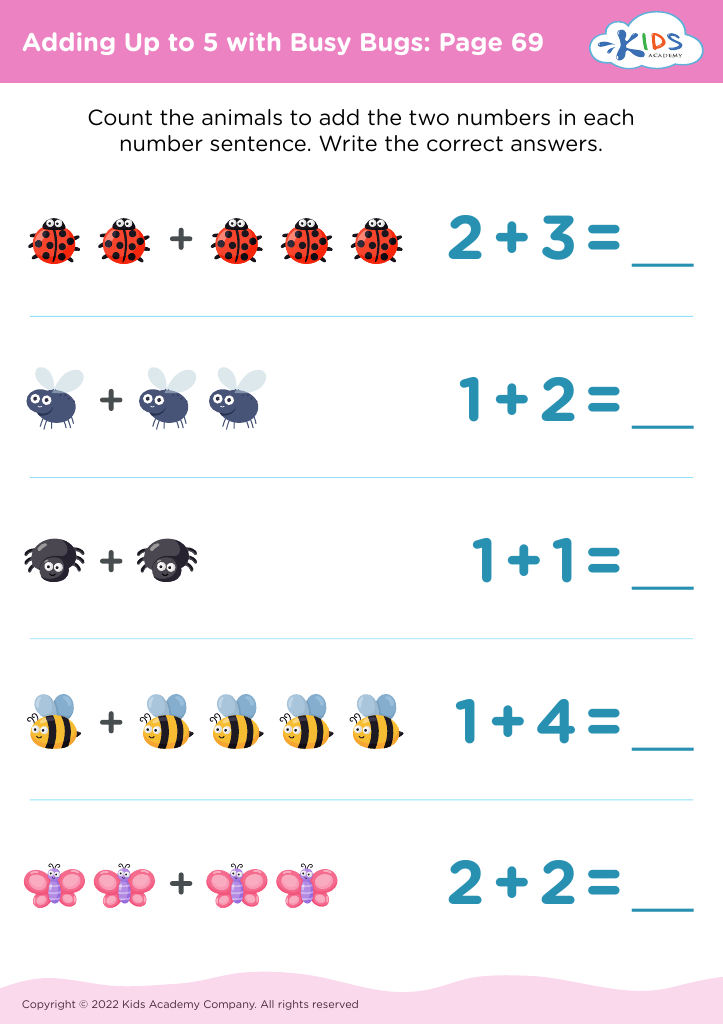
Adding Up to 5 with Busy Bugs: Page 69
Worksheet
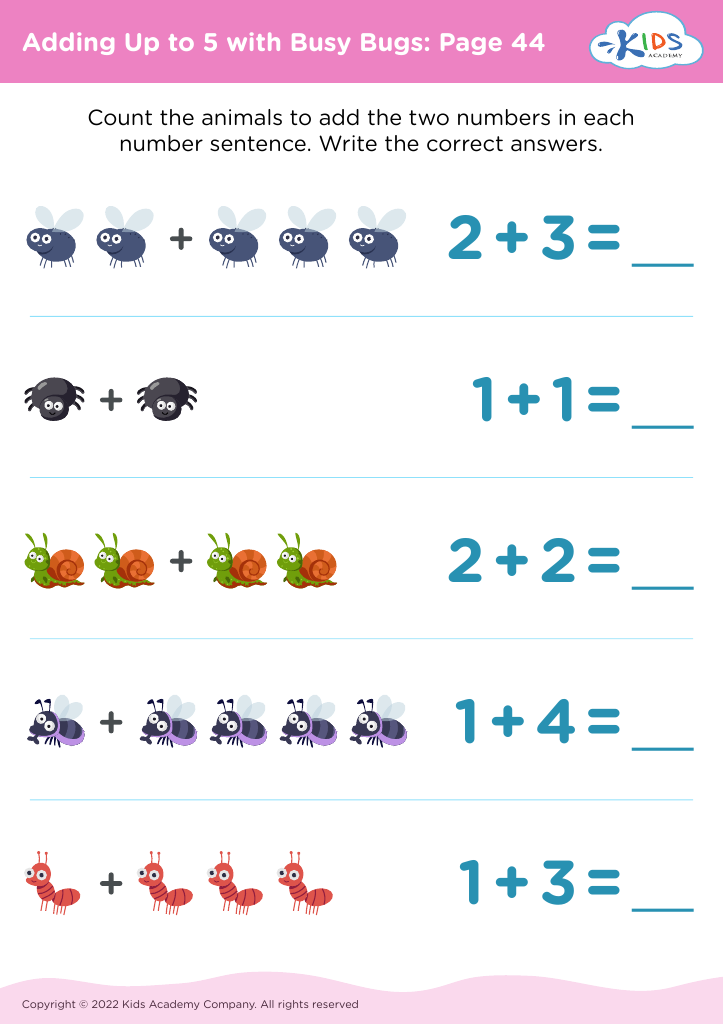
Adding Up to 5 with Busy Bugs: Page 44
Worksheet
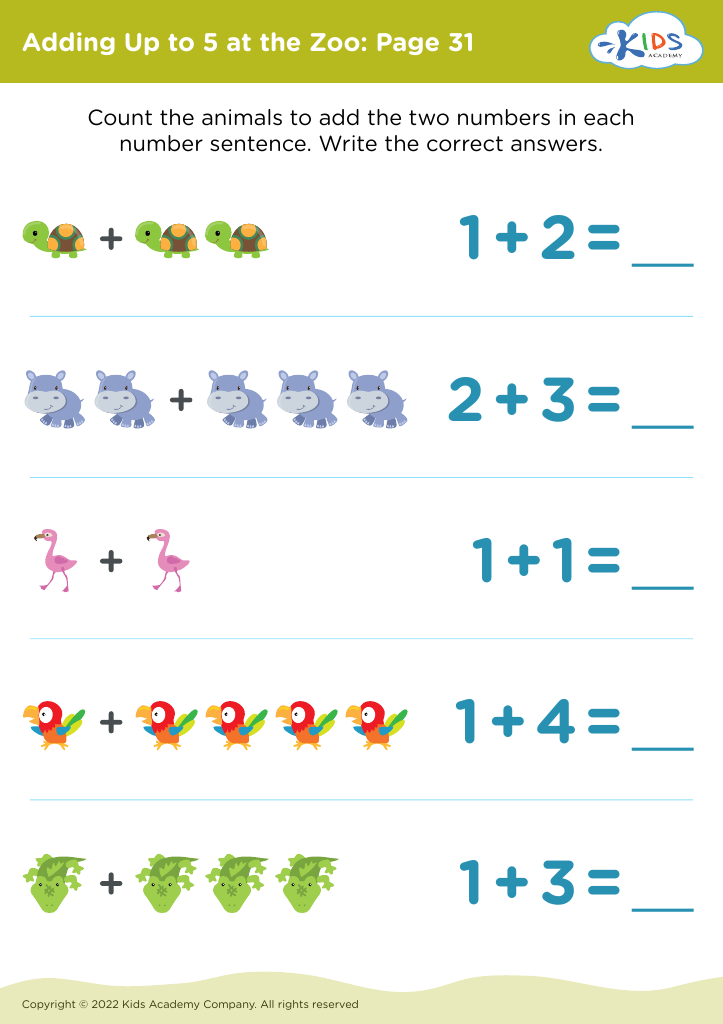
Adding Up to 5 at the Zoo: Page 31
Worksheet
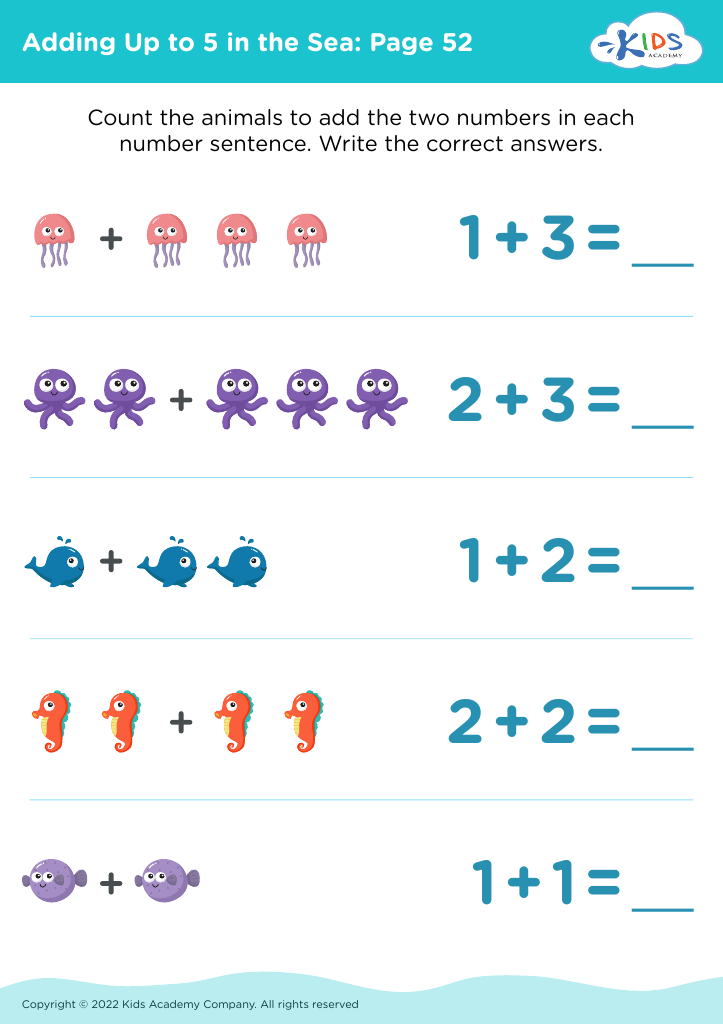
Adding Up to 5 in the Sea: Page 52
Worksheet
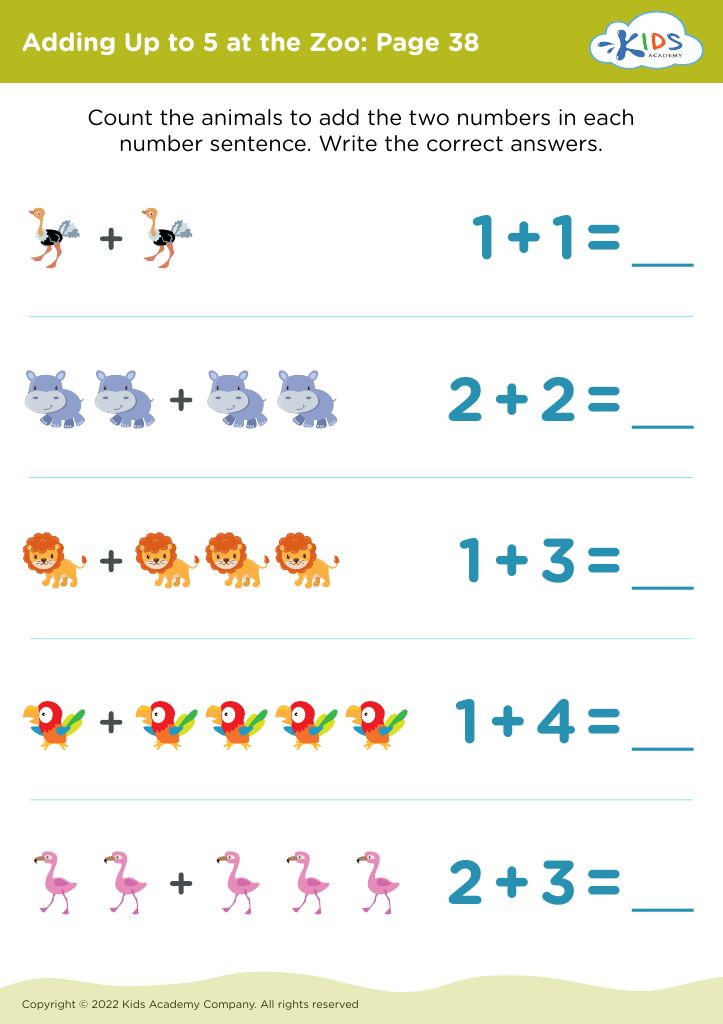
Adding Up to 5 at the Zoo: Page 38
Worksheet
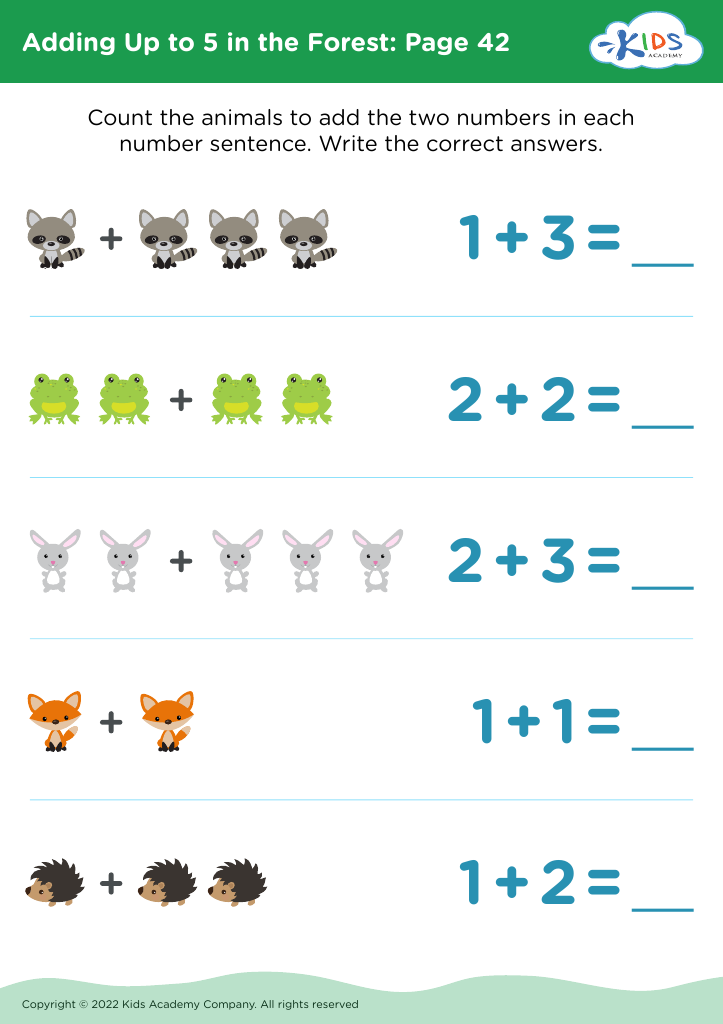
Adding Up to 5 in the Forest: Page 42
Worksheet


Basic addition and subtraction skills are foundational for young children's cognitive development, especially at ages 3-4. At this early stage, children are beginning to understand quantities and numeracy, which are essential for their future learning in mathematics. Mastering these skills enhances their problem-solving abilities and can build a strong sense of accomplishment and self-esteem.

Learning basic addition and subtraction also supports the development of critical thinking skills. Engaging children in activities that involve counting objects, combining sets, or sharing items facilitates hands-on learning and enhances their understanding of mathematical concepts in a fun and accessible way. Furthermore, these skills promote language development as parents and teachers introduce mathematical vocabulary.

Incorporating basic math into everyday situations—such as counting fruit during snack time or sharing toys—makes learning organic and impactful. When kindergarten attendance arrives, these skills will ease their transition and readiness for more complex math concepts.

In essence, fostering basic addition and subtraction skills reinforces foundational math knowledge and promotes holistic cognitive growth, ensuring that children are better prepared for future academic challenges. Parents and teachers must prioritize these skills, as they play a vital role in shaping a child's education and confidence in mathematics.