Nature awareness Addition & Subtraction Worksheets for Ages 3-4
8 filtered results
-
From - To
Explore our engaging Nature Awareness Addition & Subtraction Worksheets designed for children aged 3-4. These interactive worksheets foster early math skills while developing a love for nature. Each activity incorporates delightful images of plants, animals, and natural elements, making learning fun and relatable. Young learners can practice basic addition and subtraction concepts through hands-on exercises that spark curiosity about the environment. Our materials not only help children build foundational math skills but also encourage observation and appreciation of the natural world around them. Perfect for parents and educators, these worksheets are an excellent resource for play-based learning and development!
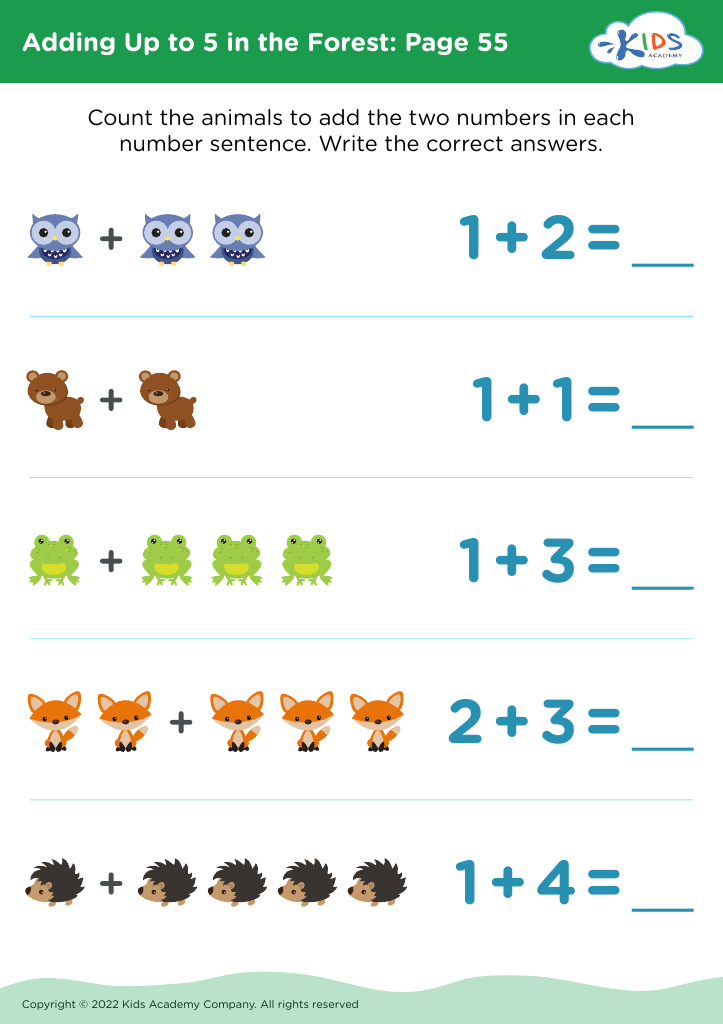
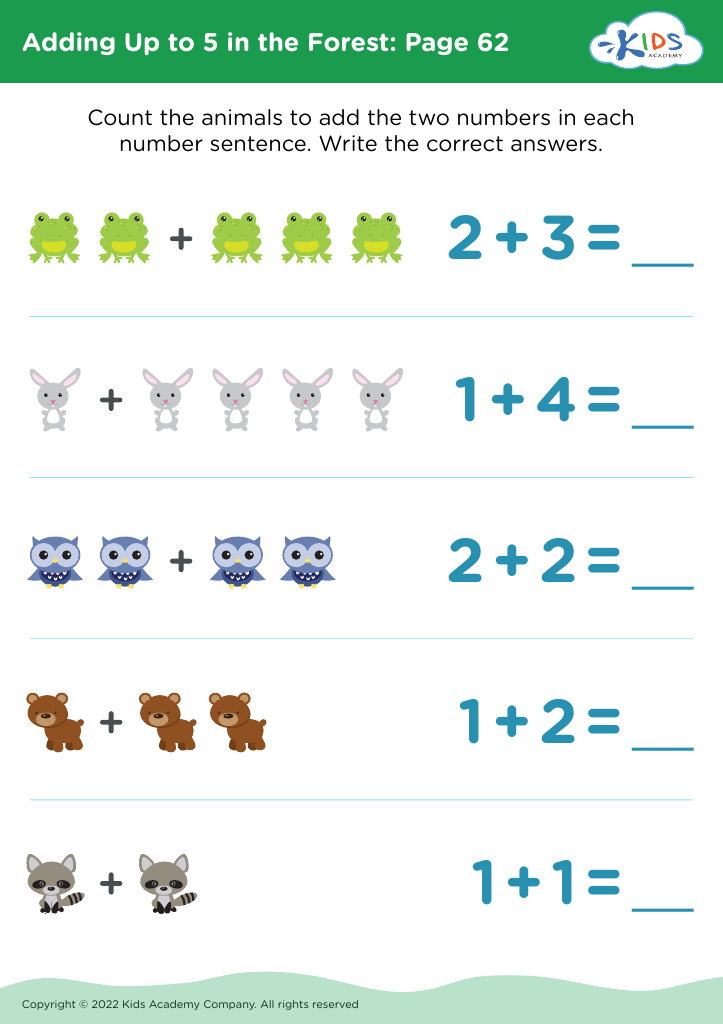
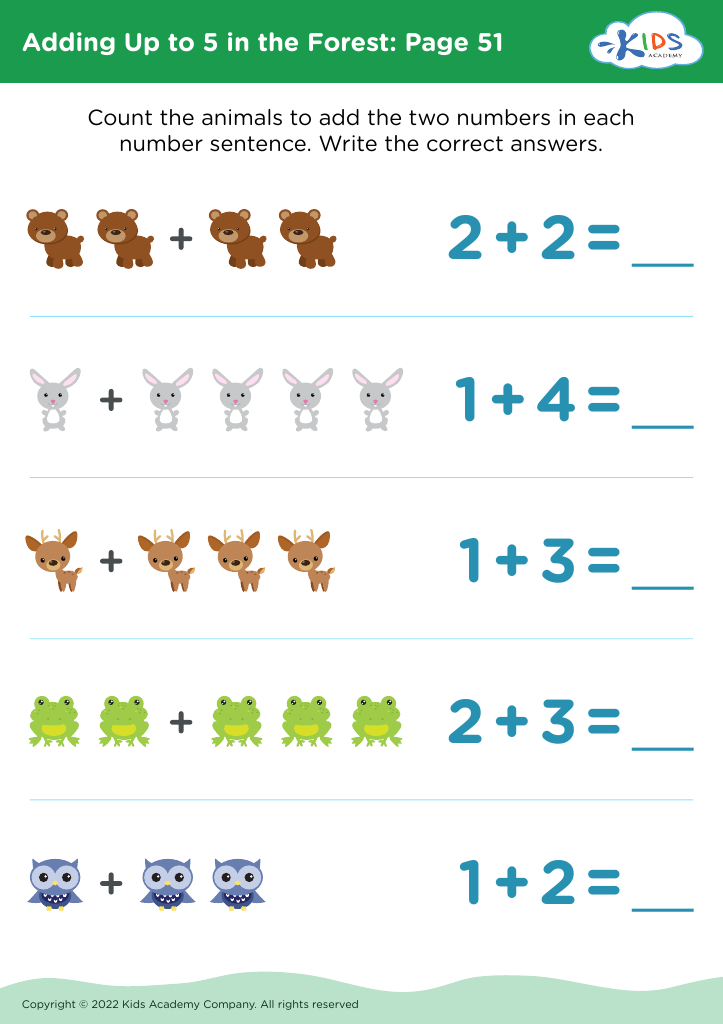
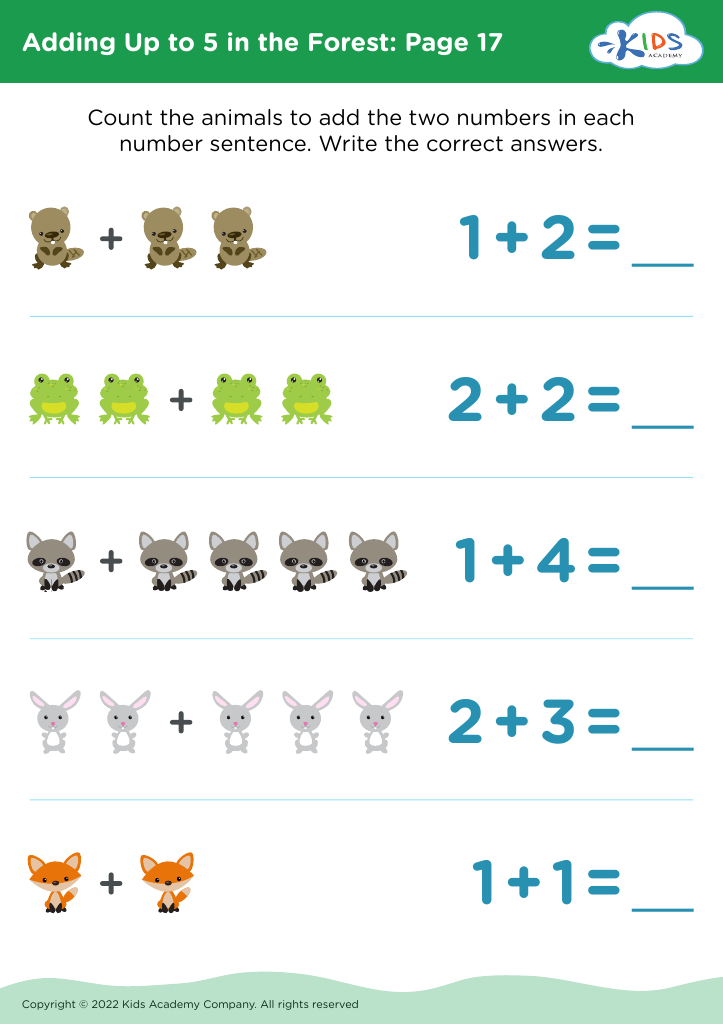
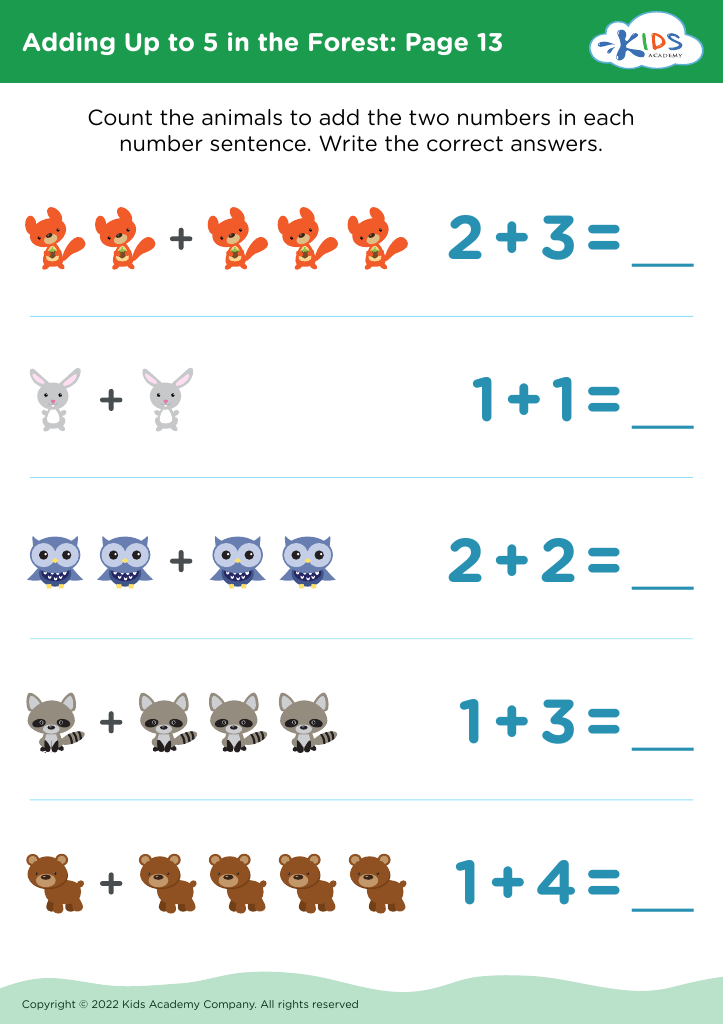
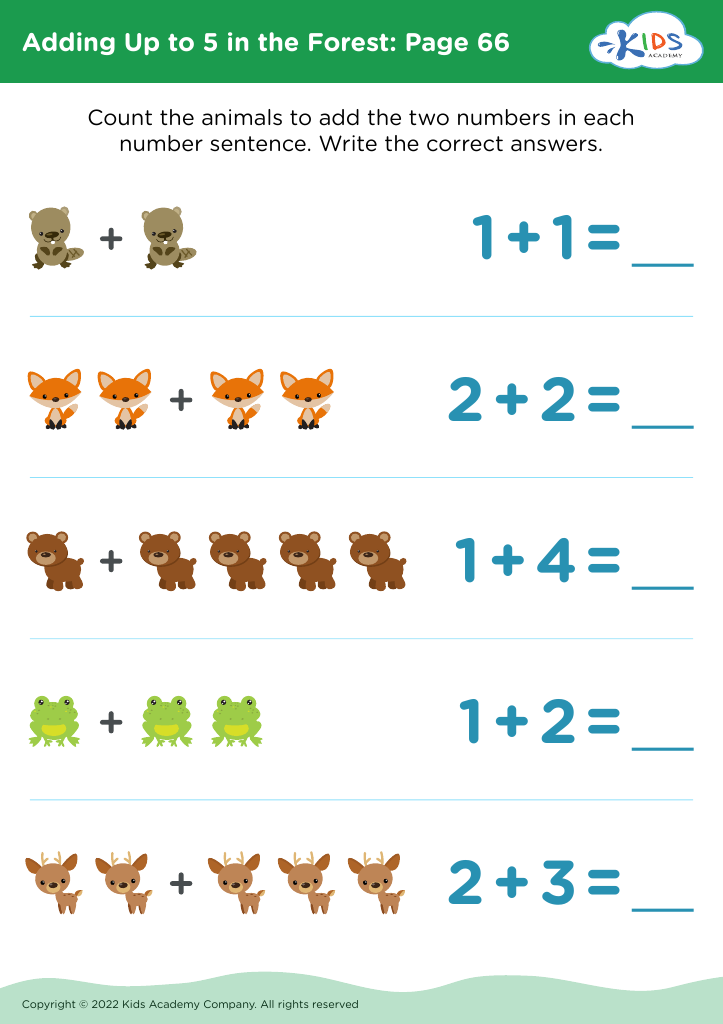
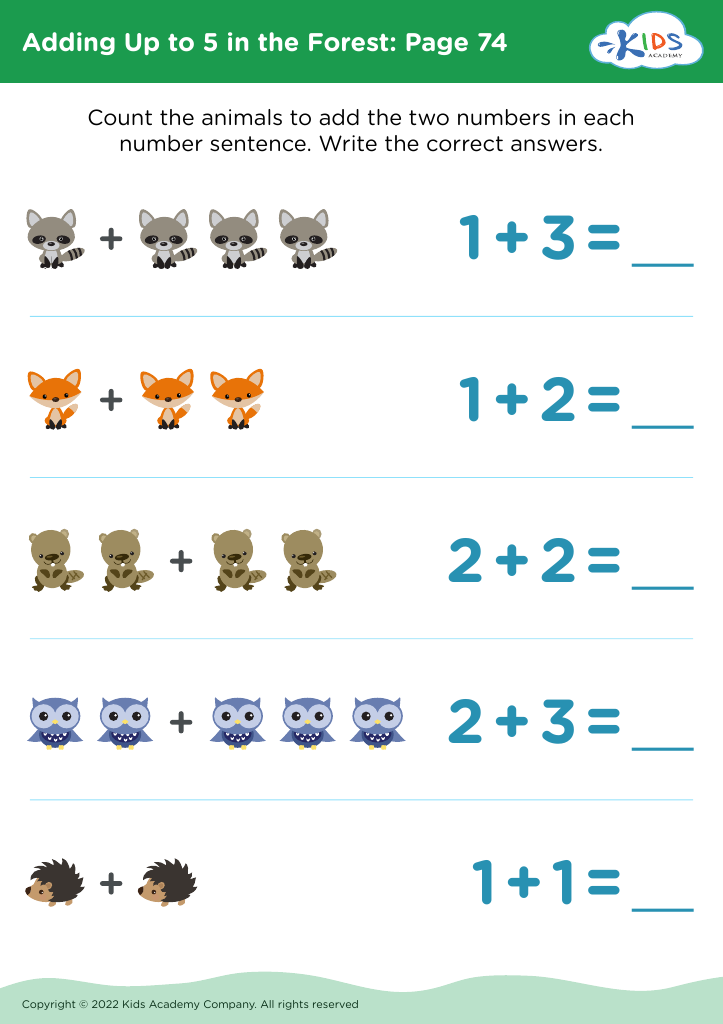
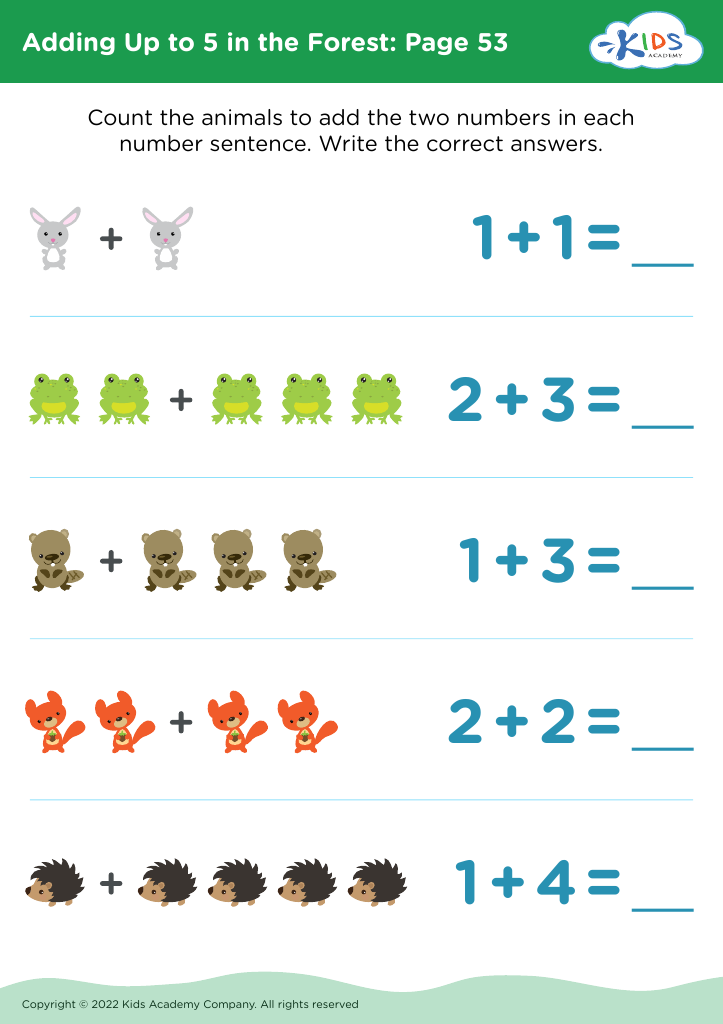








Nature awareness addition and subtraction for ages 3-4 is an essential focus for parents and teachers because it intertwines foundational math skills with environmental education. Engaging young children in math concepts through nature helps foster a sense of curiosity and appreciation for the world around them.
At this tender age, children learn best through hands-on, experiential play. Using natural elements, such as counting leaves, flowers, or stones, allows them to grasp basic addition and subtraction concepts in a meaningful context. This approach not only enhances cognitive skills but also promotes sensory exploration and emotional connections to nature, which are vital for holistic development.
Moreover, nature-based math activities create opportunities for collaborative learning and communication among peers. As children practice counting and simple operations, they also develop social skills, including sharing and taking turns, reinforcing the idea of teamwork within the natural environment.
Ultimately, fostering nature awareness alongside math skills ensures that children not only become proficient in early numeracy but also develop a lifelong interest in ecology and environmental stewardship. By integrating nature into their learning, parents and teachers nurture well-rounded individuals who value both math and the planet.








