Sea creatures identification Addition & Subtraction Worksheets for Ages 3-4
3 filtered results
-
From - To
Dive into a fun learning adventure with our “Sea Creatures Identification Addition & Subtraction Worksheets” designed specifically for children ages 3-4! These engaging worksheets combine basic math skills with colorful illustrations of enchanting sea creatures, making learning enjoyable and interactive. Help your little ones develop their counting abilities while identifying their favorite marine animals. Each worksheet encourages not only mathematical skills but also fosters a love for ocean life, enhancing early cognitive development. Perfect for parents and educators alike, these resources provide a playful way to introduce addition and subtraction concepts to young learners. Explore the wonders of the sea today!
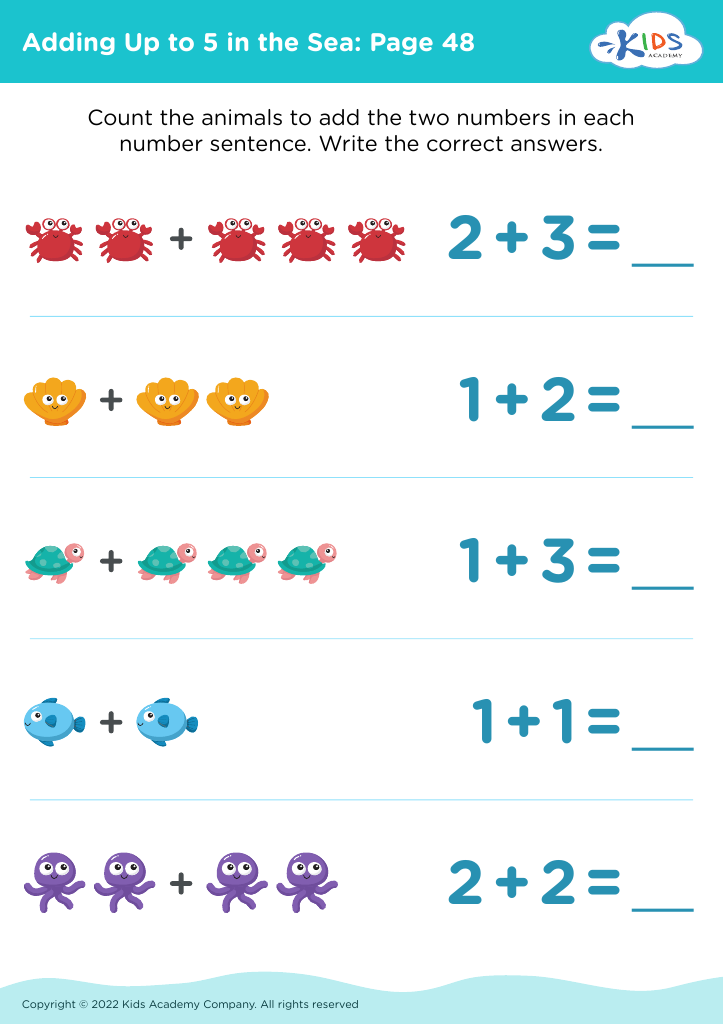
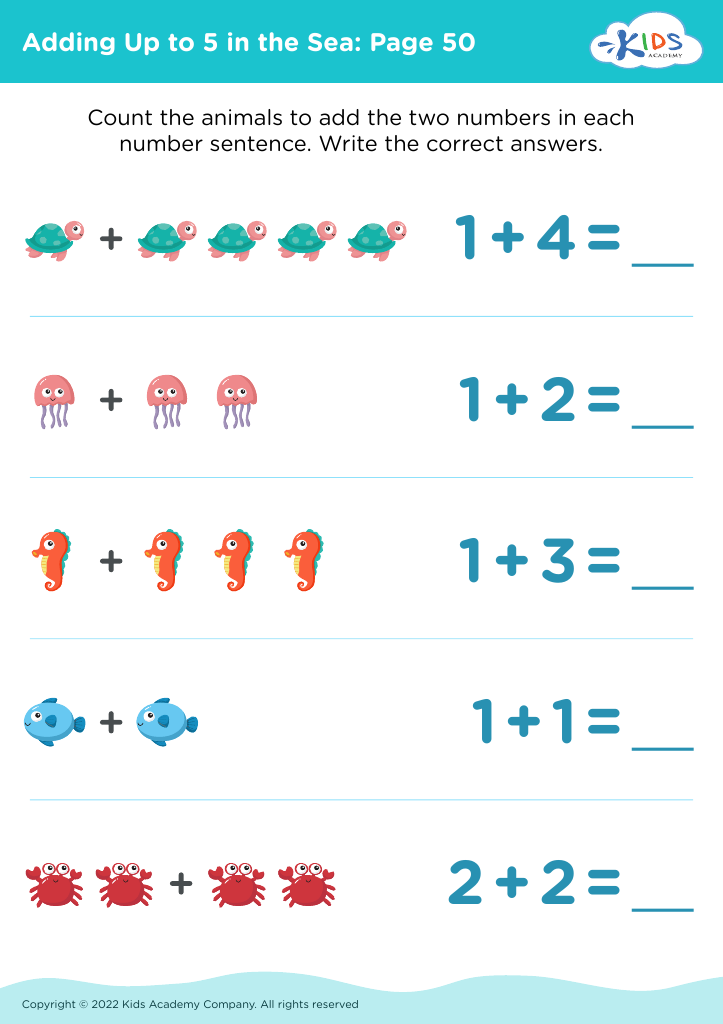
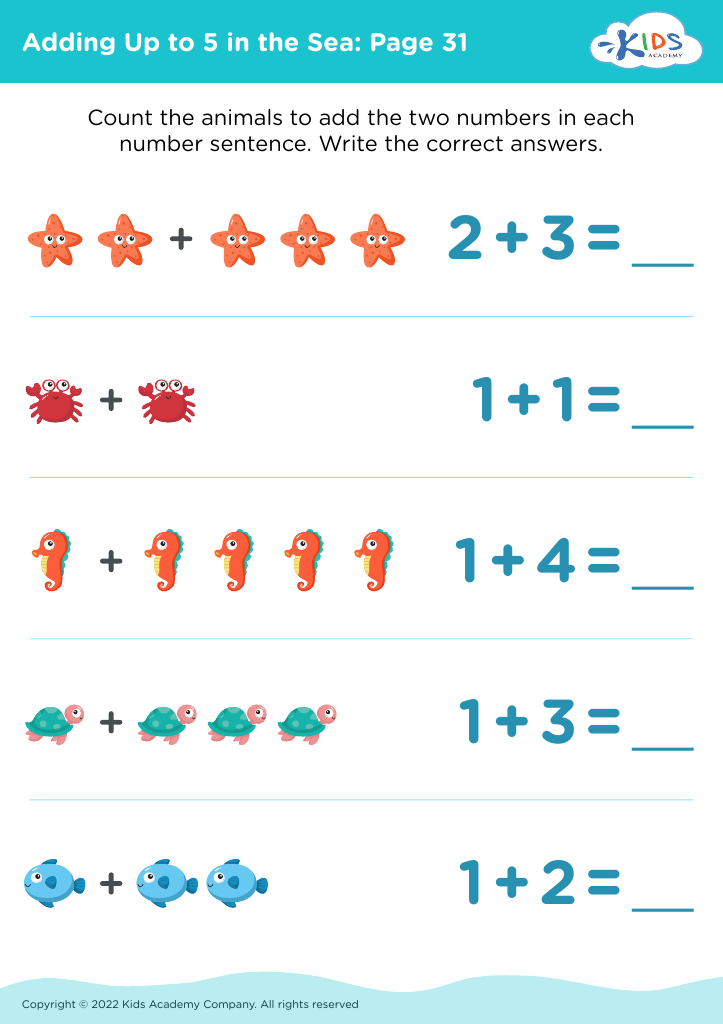








Teaching young children about sea creature identification alongside basic addition and subtraction is vital for several reasons. First, it sparks curiosity and fosters a love for learning. Children at ages 3-4 are naturally inquisitive, and introducing sea life helps them connect with the marine environment, promoting awareness about ecosystem preservation from an early age.
Integrating sea creatures with math helps make abstract concepts more concrete. For example, if children learn to count and add objects like starfish or dolphins, they can visualize and understand numbers better. Simple activities like counting the number of fish or finding the difference in quantities enhance both math skills and vocabulary related to marine animals.
Moreover, this interdisciplinary approach boosts cognitive development. Music, stories, and play centered on sea creatures can stimulate imagination while laying a foundation for early math literacy. It also encourages language skills as children learn to describe and categorize the marine life around them.
Ultimately, making learning fun through engaging themes like sea creatures allows parents and teachers to cultivate essential skills in young learners. This holistic approach not only supports intellectual growth but also nurtures emotional and social development as kids share their discoveries and cooperatively engage in group activities.








