
Visual-motor skills Addition & Subtraction Worksheets for Ages 3-4
3 filtered results
Difficulty Level
Grade
Age
-
From - To
Subject
Activity
Standards
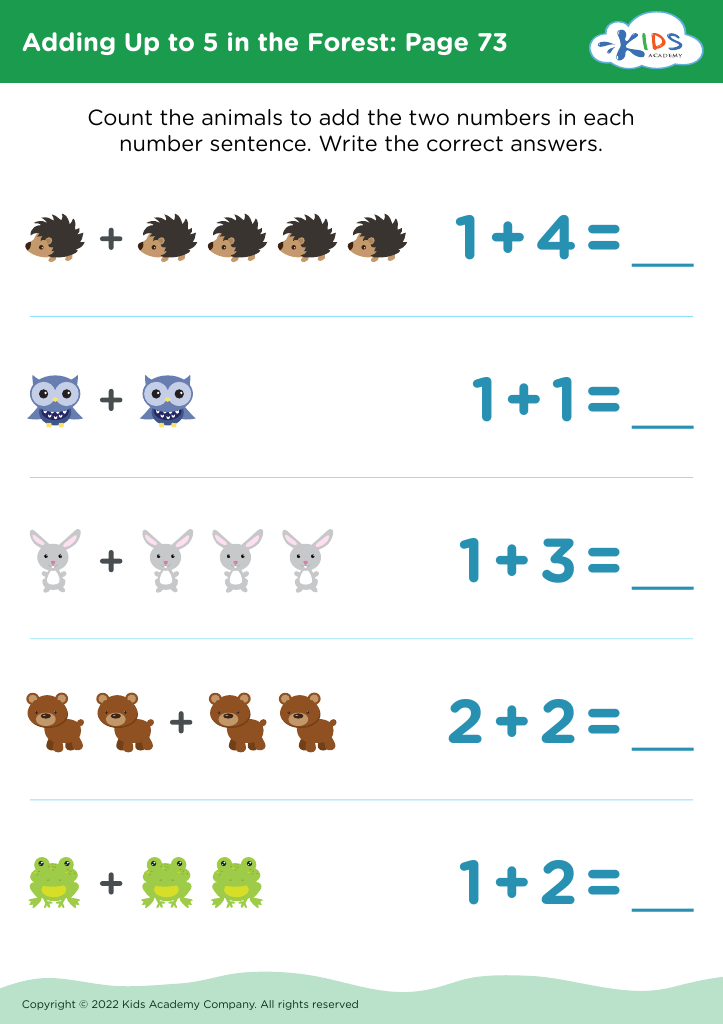
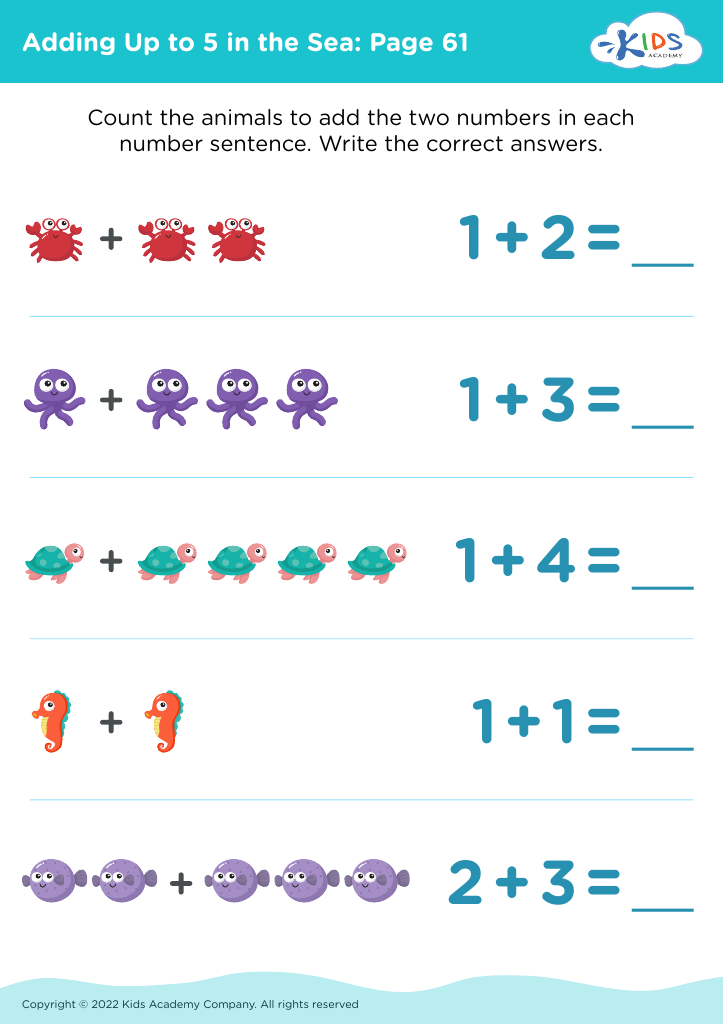
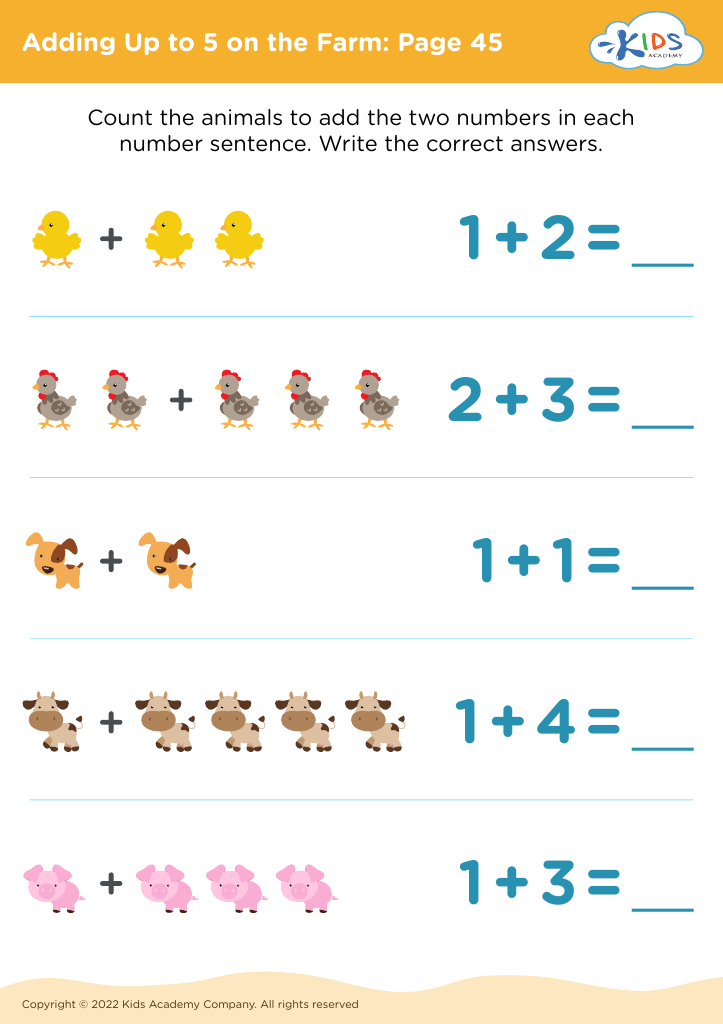
Enhance your child's learning experience with our Visual-Motor Skills Addition & Subtraction Worksheets tailored for ages 3-4. These engaging worksheets combine fundamental math concepts with exciting visual activities, promoting fine motor development alongside number recognition. As your little ones trace, connect, and complete various activities, they’ll master essential addition and subtraction skills while building their hand-eye coordination and concentration. Our carefully designed, age-appropriate materials ensure that learning is both fun and effective, laying a strong foundation for future math success. Perfect for preschool settings or at-home learning, these worksheets are a great tool to instill early math confidence in your child!
Favorites
With answer key
Interactive
Join Kids Academy for Free
Who is primarily going to use this learning content?








Visual-motor skills are crucial for young children's overall development, particularly in math activities like addition and subtraction. For ages 3-4, these skills involve the ability to coordinate what they see with their physical actions—essential for mastering numerical concepts and problem-solving.
Parents and teachers should care about fostering visual-motor skills in this age group because they serve as a foundation for early mathematics. When children engage in activities that require them to match, count, or sort, they enhance their ability to visualize numbers and understand relationships between quantities. Additionally, these skills help with fine motor development, aiding children in writing numbers and shapes—a precursor to more complex mathematics.
Encouraging hands-on activities such as using blocks for counting, drawing shapes, or even simple board games enrich matematic learning while making it enjoyable. Engaging in such activities not only builds skills but also promotes critical thinking and cognitive development.
Moreover, strong visual-motor skills are often linked to greater academic success in later years. By investing time in developing these abilities now, parents and teachers are setting the stage for a confident, capable, and mathematically literate individual in the future.








