
Attention to Detail Addition Worksheets for Ages 3-4
3 filtered results
Difficulty Level
Grade
Age
-
From - To
Subject
Activity
Standards
Unlock the power of precision with our "Attention to Detail Addition Worksheets for Ages 3-4." Specially designed to captivate young learners, these worksheets blend fundamental math skills with engaging exercises that bolster focus and concentration. Each activity encourages children to carefully analyze and solve simple addition problems, fortifying their early numeracy and attention span. Ideal for preschoolers, these educational tools turn learning into a delightful adventure, laying the foundation for future academic success. Foster a love for math and meticulous thinking in your child with these fun, effective worksheets. Perfect for both classroom and at-home practice.
Favorites
With answer key
Interactive
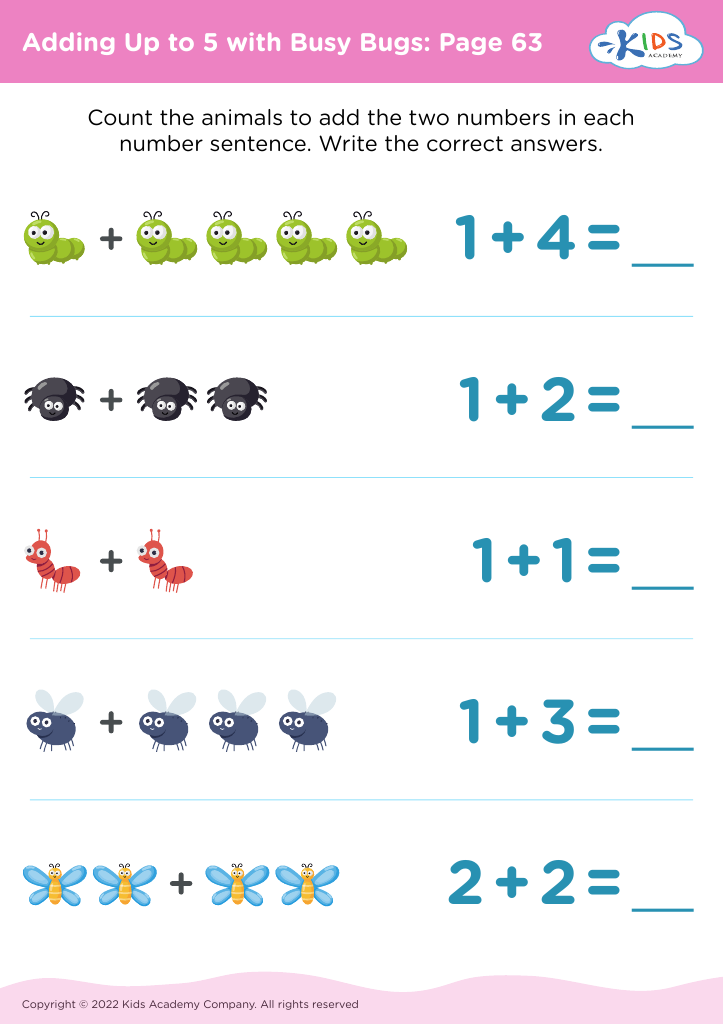
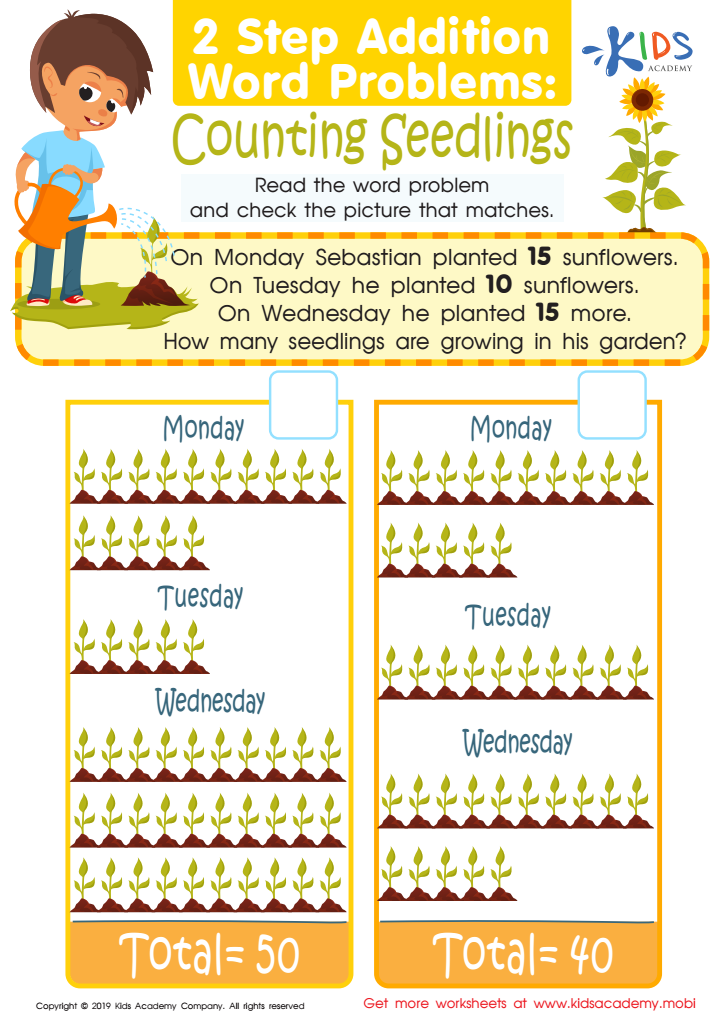
Counting Seedlings Worksheet
Understanding math word problems is key. Multiple steps can prove challenging - this free worksheet provides one-to-one picture representation to help kids solve multi-step addition word problems. Strengthen addition skills by choosing the matching picture to the answer.
 Assign to My Students
Counting Seedlings Worksheet
Worksheet
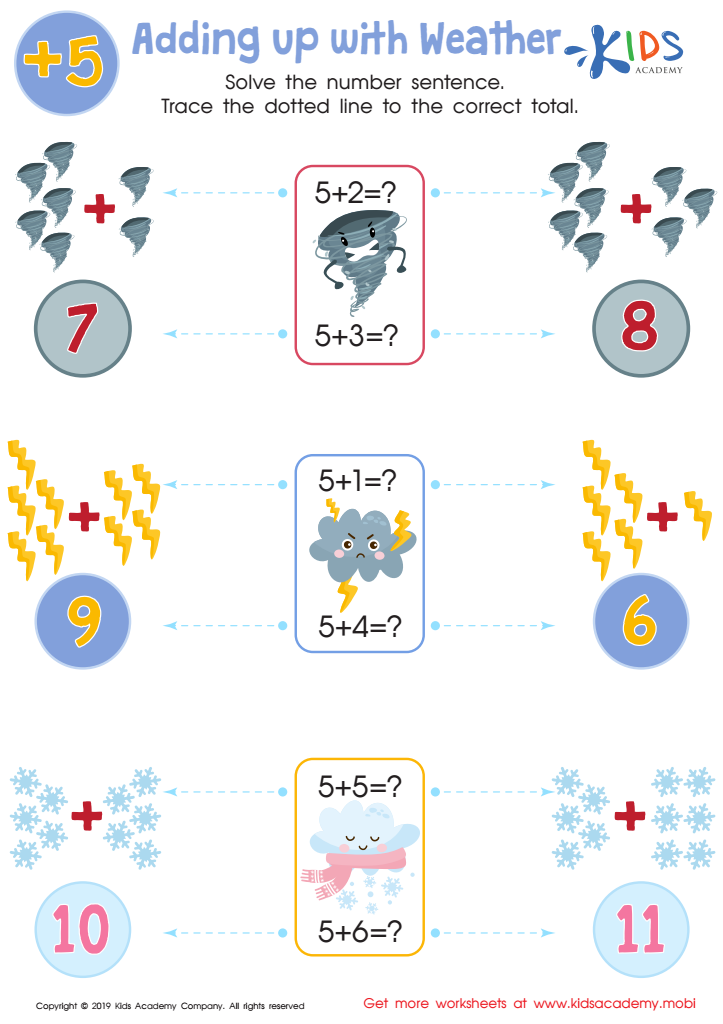
Adding up With Water Worksheet
Ask your kids to name different kinds of weather and what it's like outside now. Then, help them solve the number sentences on the worksheet by tracing the dotted line to the correct total.
Adding up With Water Worksheet
Worksheet
Join Kids Academy for Free
Who is primarily going to use this learning content?








Attention to detail in early addition is crucial for children aged 3-4, as it lays the groundwork for future academic success and cognitive development. At this pivotal stage, young minds are rapidly absorbing information, and fostering an attentive mindset toward mathematical tasks helps instill strong foundational skills. When parents and teachers emphasize attention to detail, children learn to approach problems methodically and develop strong number sense and pattern recognition.
Additionally, practicing detailed attention in simple addition tasks enhances overall cognitive abilities like memory, concentration, and logical reasoning. It allows children to recognize mistakes and understand the importance of accuracy, which can be applied to various aspects of learning and daily life. This careful approach fosters resilience and persistence, encouraging young learners to tackle challenging tasks with confidence.
Furthermore, a child's ability to accurately perform addition at this stage supports language development, as they often articulate counting and numerical relationships, enriching their mathematical vocabulary. Engaging in detailed-oriented math activities also provides valuable bonding opportunities for parents and educators, weaving strong arithmetic foundations within a supportive, nurturing environment.
In summary, attention to detail in addition exercises at ages 3-4 helps children cultivate essential cognitive skills, develop a robust mathematical understanding, and fosters a positive, resilient attitude towards learning complex concepts, benefiting their long-term educational journey.








