Basic addition practice Addition Worksheets for Ages 3-4
9 filtered results
-
From - To
Welcome to our Basic Addition Practice Worksheets for Ages 3-4! Designed to introduce young learners to fundamental math concepts, these interactive worksheets make learning fun and approachable. Your child will enjoy vibrant illustrations while practicing simple addition skills through engaging activities. Each worksheet focuses on helping children recognize numbers and understand the basics of counting and summing. Perfect for preschool and kindergarten settings, these resources encourage hands-on experiences that foster a love for math. Build your child's confidence in their math abilities early on with our carefully crafted addition practice sheets. Get started today and watch them thrive!
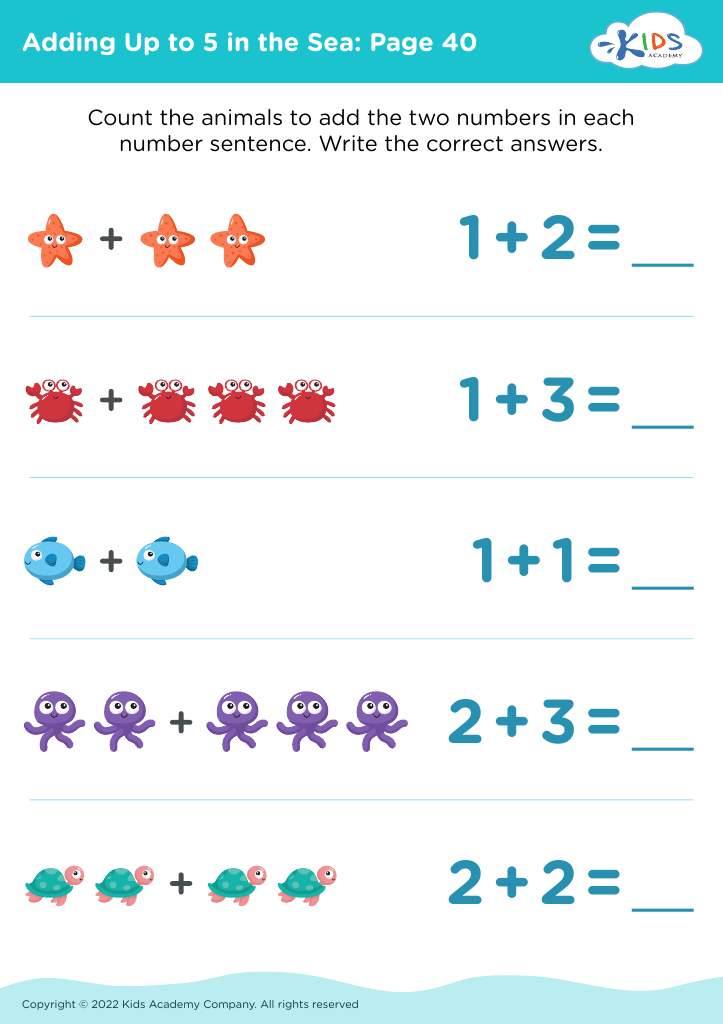
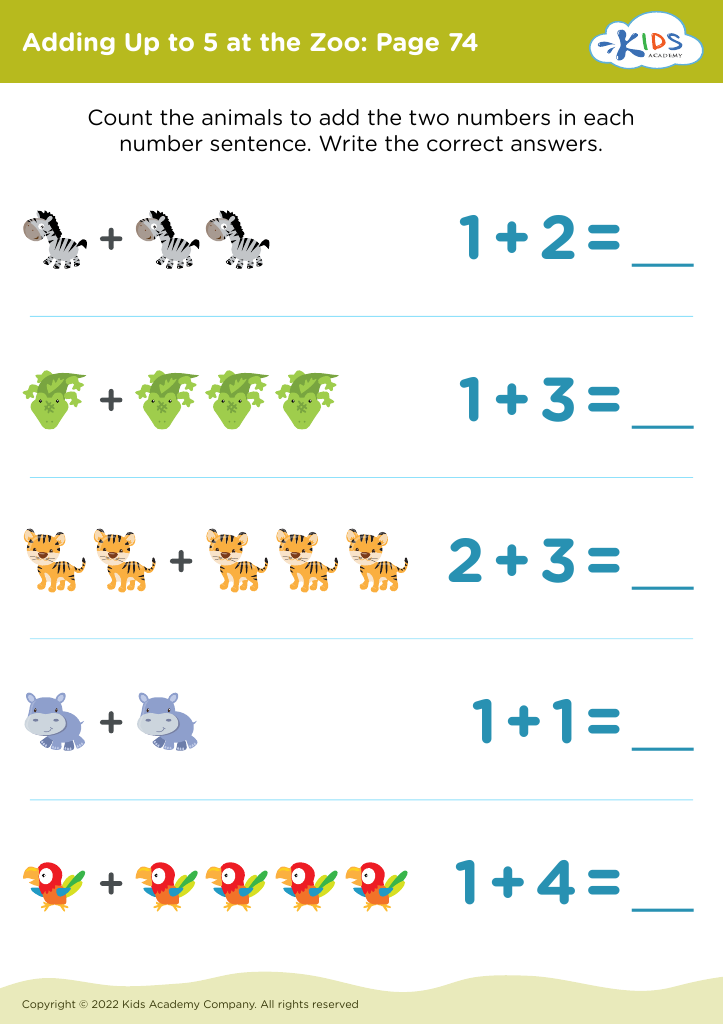
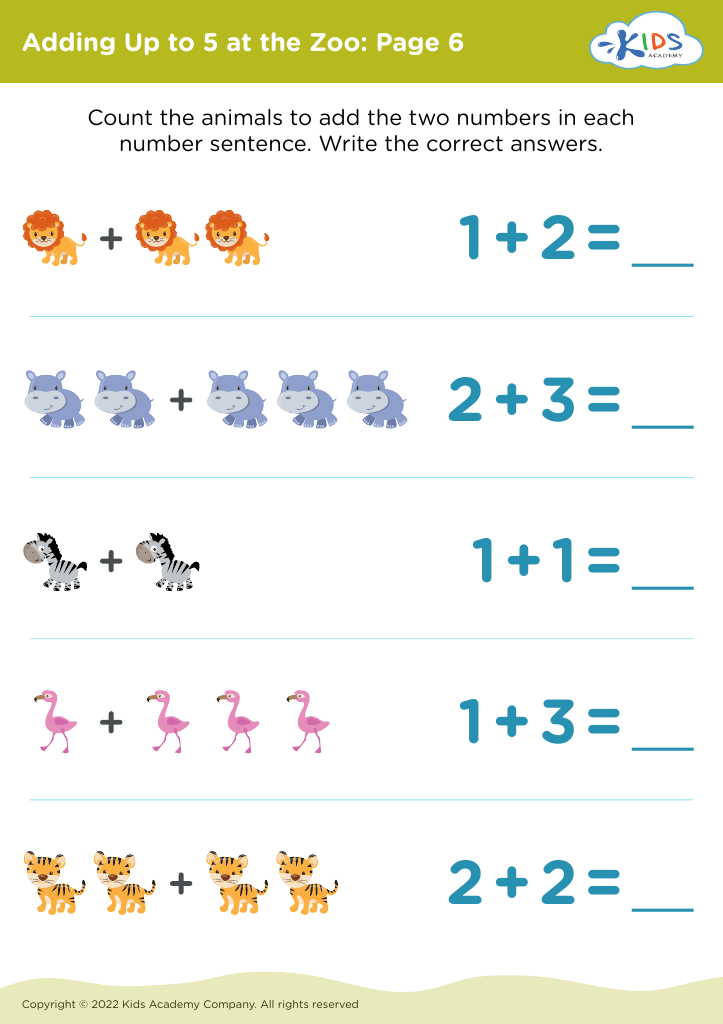
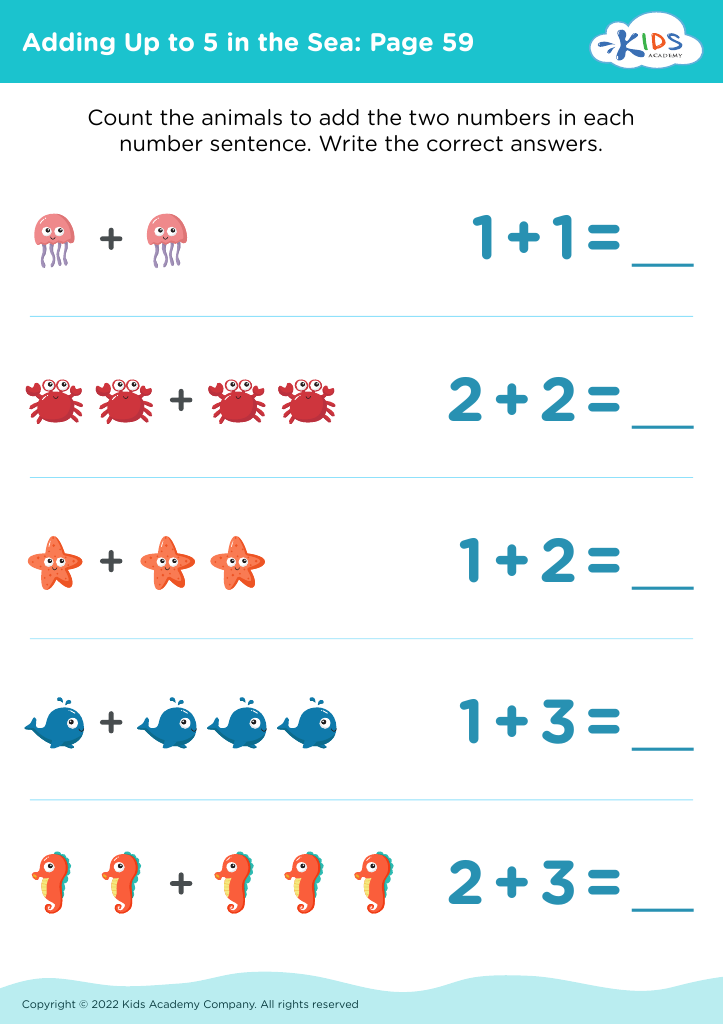
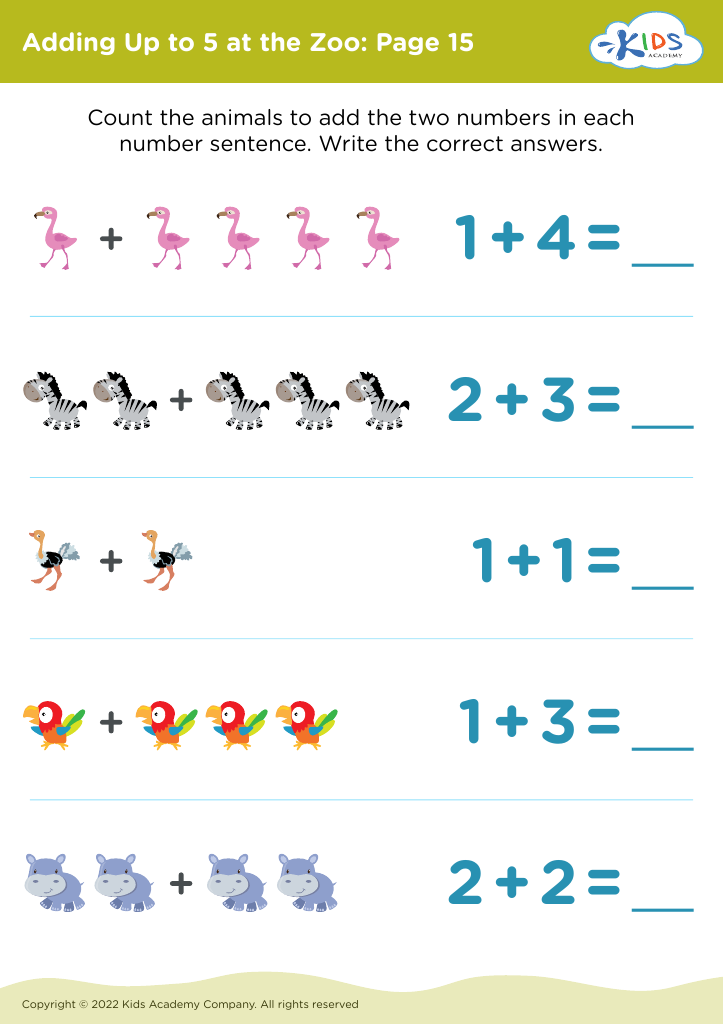
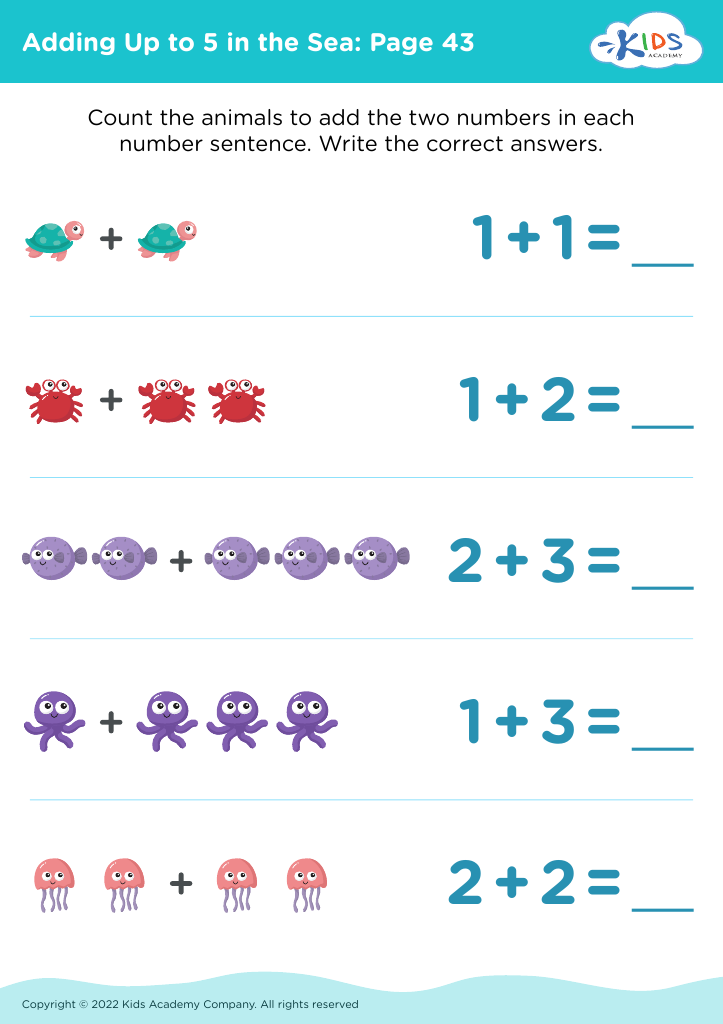
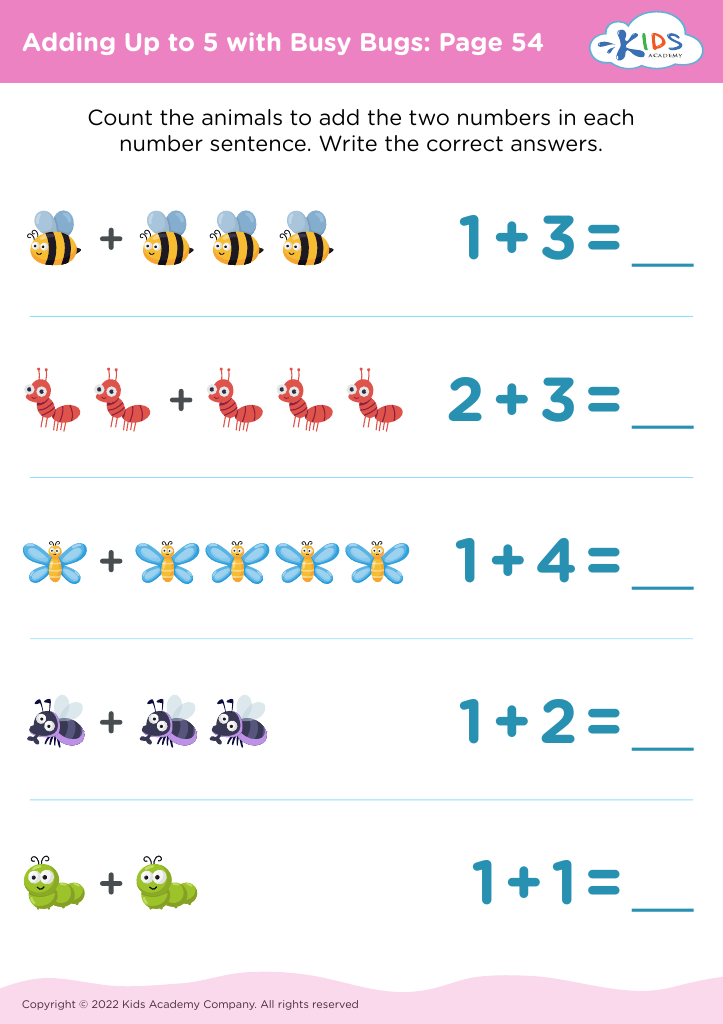
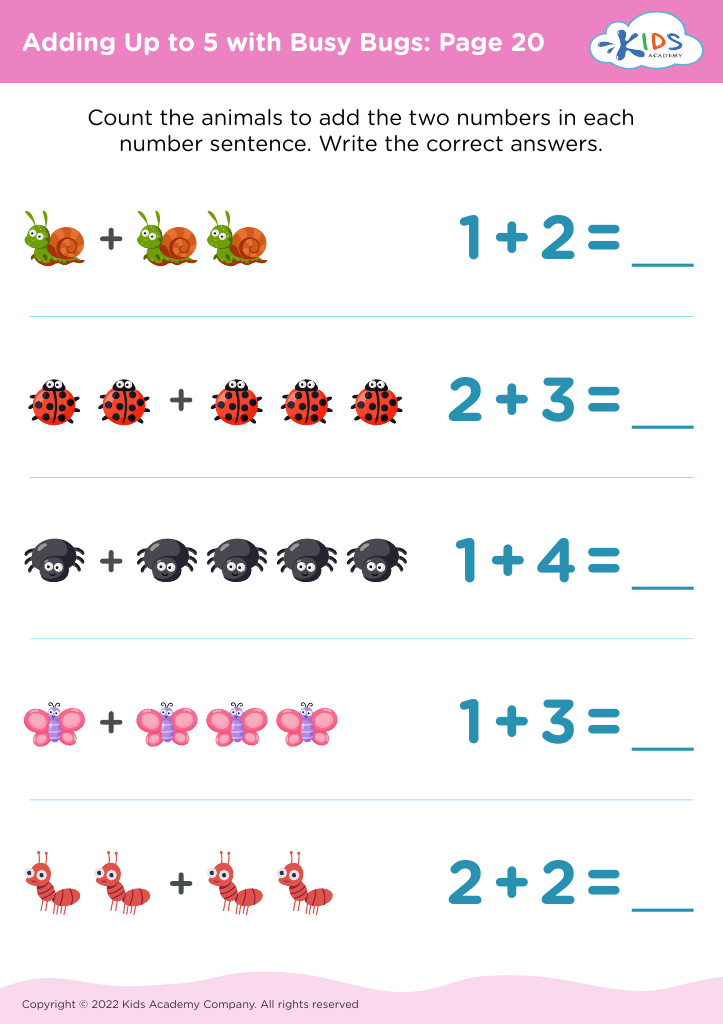
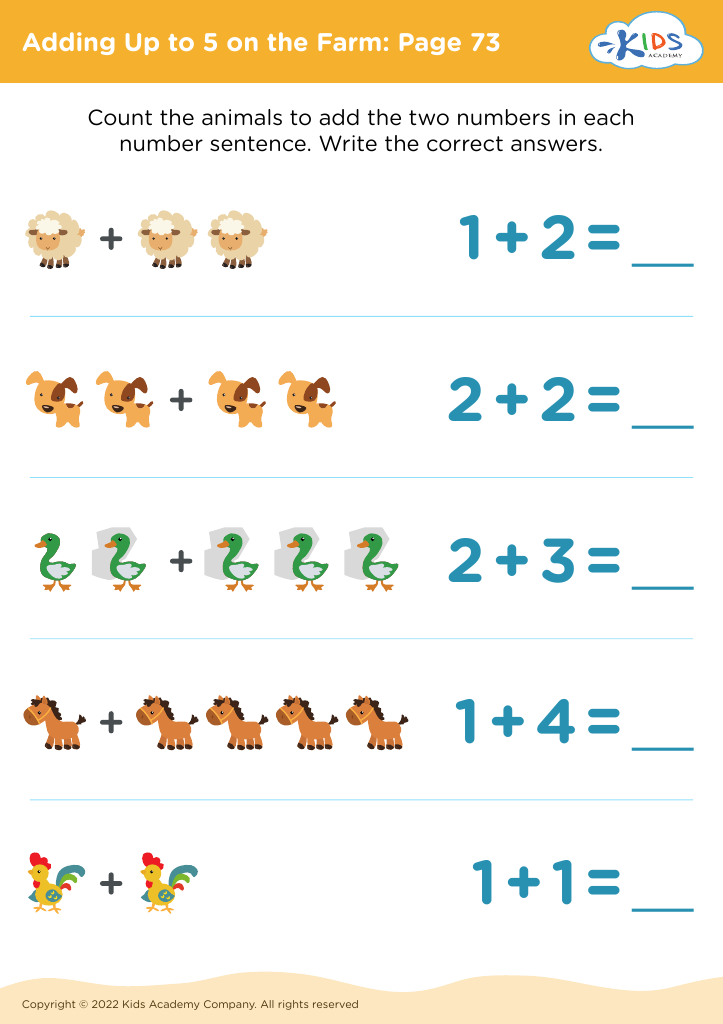








Basic addition practice is essential for children aged 3-4 as it lays the foundation for their mathematical understanding and cognitive development. At this tender age, children are naturally curious and love to explore numbers through play and hands-on activities. Engaging in addition activities fosters critical thinking skills, enhances problem-solving abilities, and encourages logical reasoning.
Parents and teachers should prioritize basic addition practice because it strengthens number recognition, improves counting skills, and promotes a positive attitude toward math. Early exposure to addition creates a strong mathematical base, which is crucial as children move on to more complex concepts in later grades. It builds confidence and helps to alleviate anxiety related to math later on.
Incorporating games, songs, and interactive activities into addition practice makes learning enjoyable and helps children grasp concepts quickly. Furthermore, this practice promotes social interaction and teamwork, as children often work together during these activities.
In summary, investing time in basic addition practice for ages 3-4 not only enhances mathematical skills but also enriches social and cognitive development, preparing children for future academic success while fostering a love for learning.








