Basic math comprehension Addition Worksheets for Ages 3-4
4 filtered results
-
From - To
Discover our engaging Basic Math Comprehension Addition Worksheets designed specifically for children aged 3-4! These printable resources help little learners grasp the fundamentals of addition through fun activities and colorful illustrations. Our worksheets support early math skills, enabling young minds to identify numbers, solve simple problems, and recognize patterns. With a variety of exercises tailored to different learning styles, children can enhance their understanding of basic math concepts in a stress-free environment. Perfect for home or classroom use, these worksheets provide a solid foundation for early mathematical success, fostering a love for learning in the process! Explore now to ignite your child's math journey!
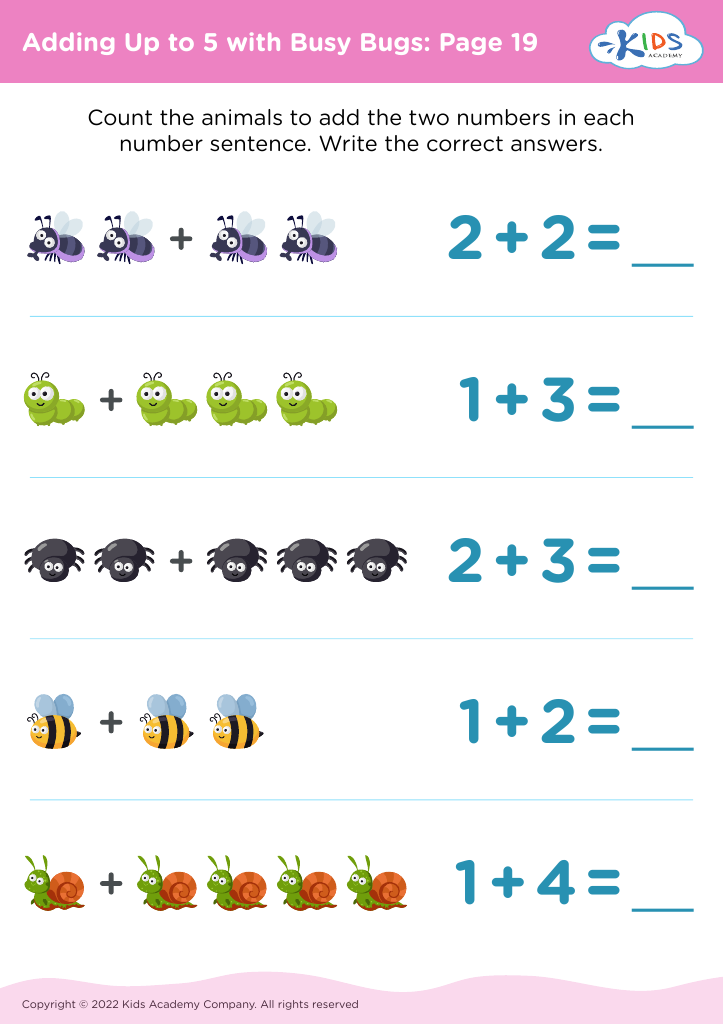
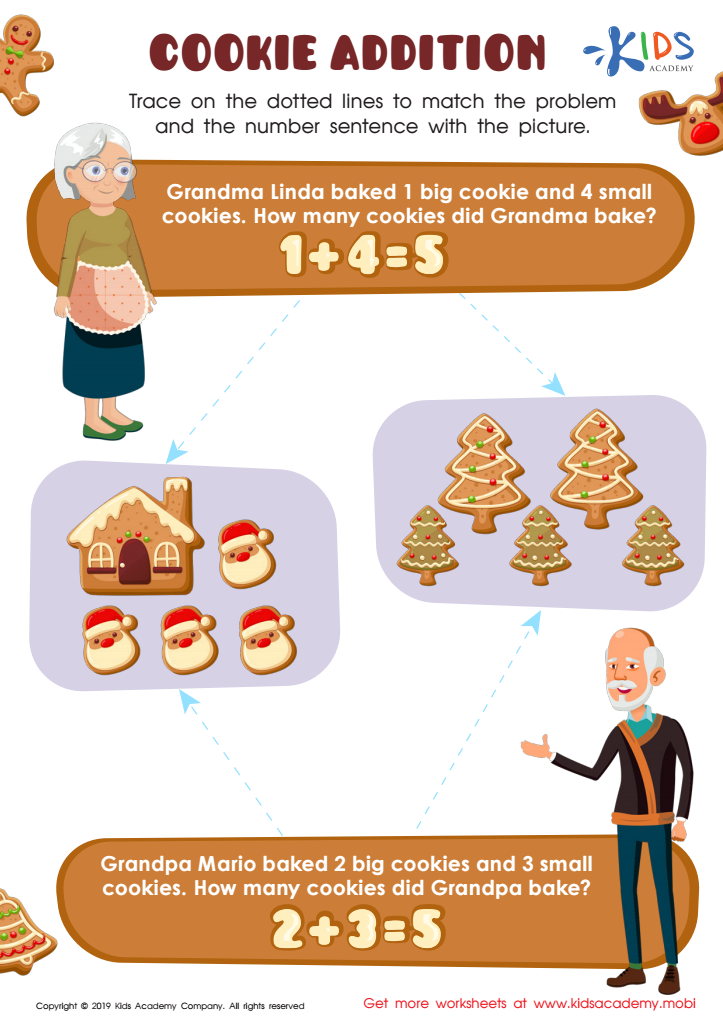
Cookie Addition Worksheet
 Assign to My Students
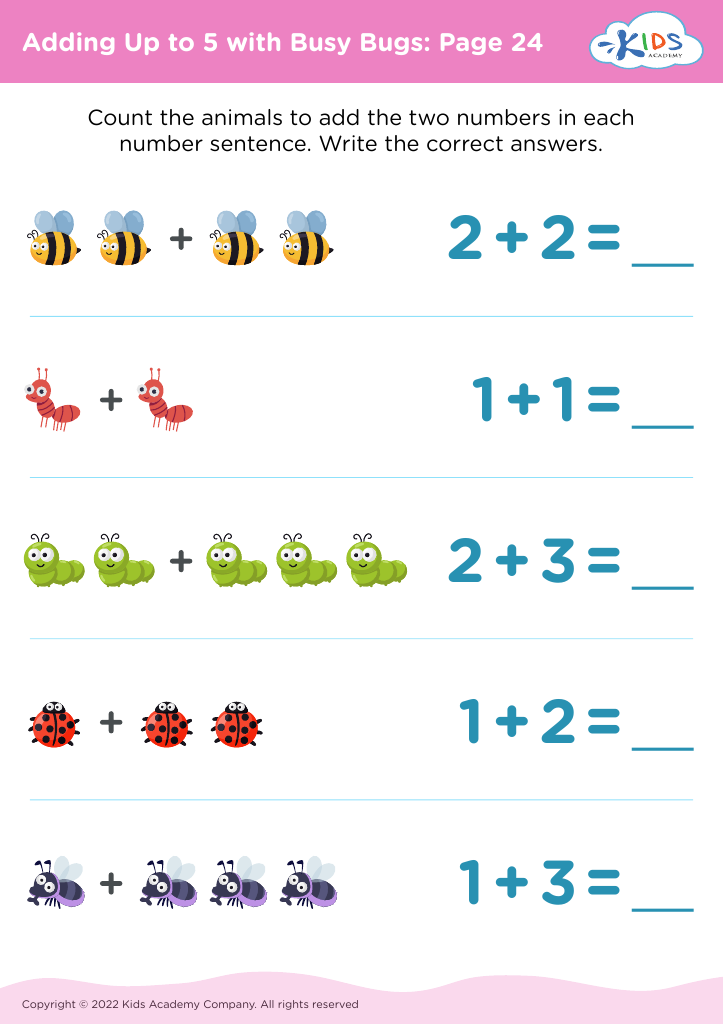
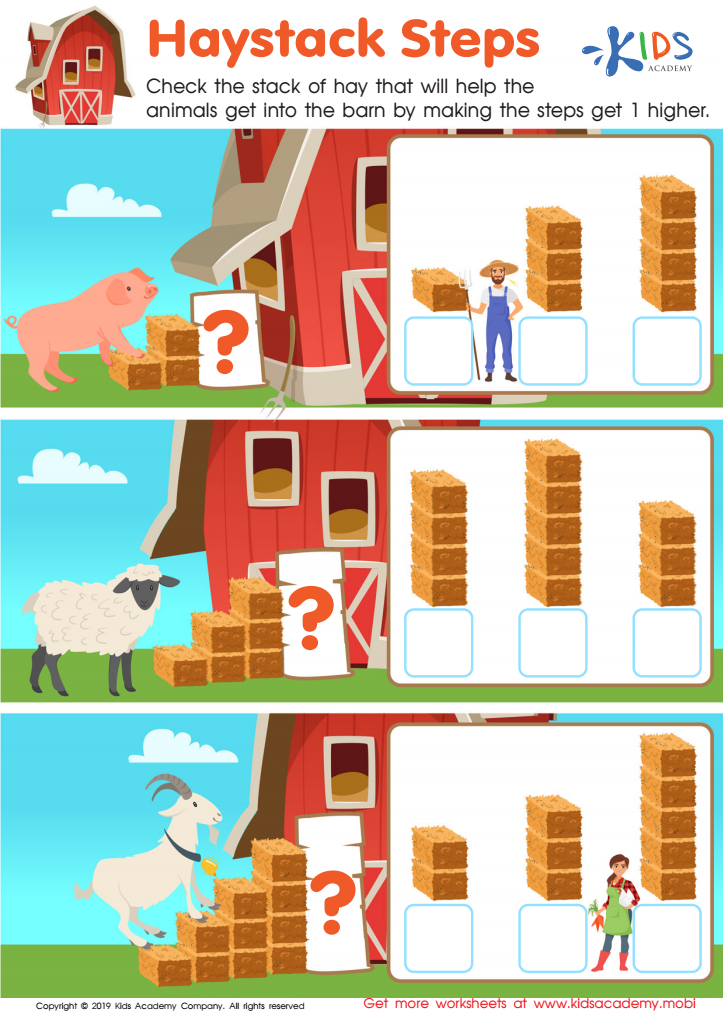
Haystack Steps Worksheet








Basic math comprehension, particularly addition, is a crucial skill for children aged 3-4 as it lays the foundation for their future learning. At this age, children are naturally curious and eager to explore concepts, making it an ideal time to introduce simple math skills through engaging activities. Understanding addition helps develop critical thinking and problem-solving abilities, which are essential for academic success.
Parents and teachers should care about nurturing these skills for several reasons. Firstly, early exposure to math helps to build a positive attitude towards the subject, reducing anxiety around numbers as children grow older. Secondly, learning addition enhances cognitive development—children learn to recognize patterns, categorize information, and understand quantities, skills that are transferrable to other subjects.
Additionally, practicing basic addition through fun games, songs, and hands-on activities promotes social interaction, fine motor skills, and language development. Involving parents in these activities creates a supportive learning environment, reinforcing the idea that mathematics is both valuable and enjoyable. Ultimately, fostering a strong grasp of basic addition at an early age prepares children for more complex mathematical concepts in the future, setting them on a path toward lifelong learning and academic achievement.








