Counting objects Addition Worksheets for Ages 3-4
11 filtered results
-
From - To
Discover our engaging Counting Objects Addition Worksheets designed specifically for children ages 3-4! These worksheets provide a playful approach to early math skills, helping little learners grasp the concept of addition through visual counting. Each activity encourages kids to count different objects, associate numbers with quantities, and develop essential problem-solving skills. With colorful illustrations and fun themes, children will enjoy exploring the world of numbers while building a strong mathematical foundation. Perfect for home or classroom use, our worksheets support early childhood education through hands-on learning and interactive play. Start your child's journey to becoming a confident mathematician today!
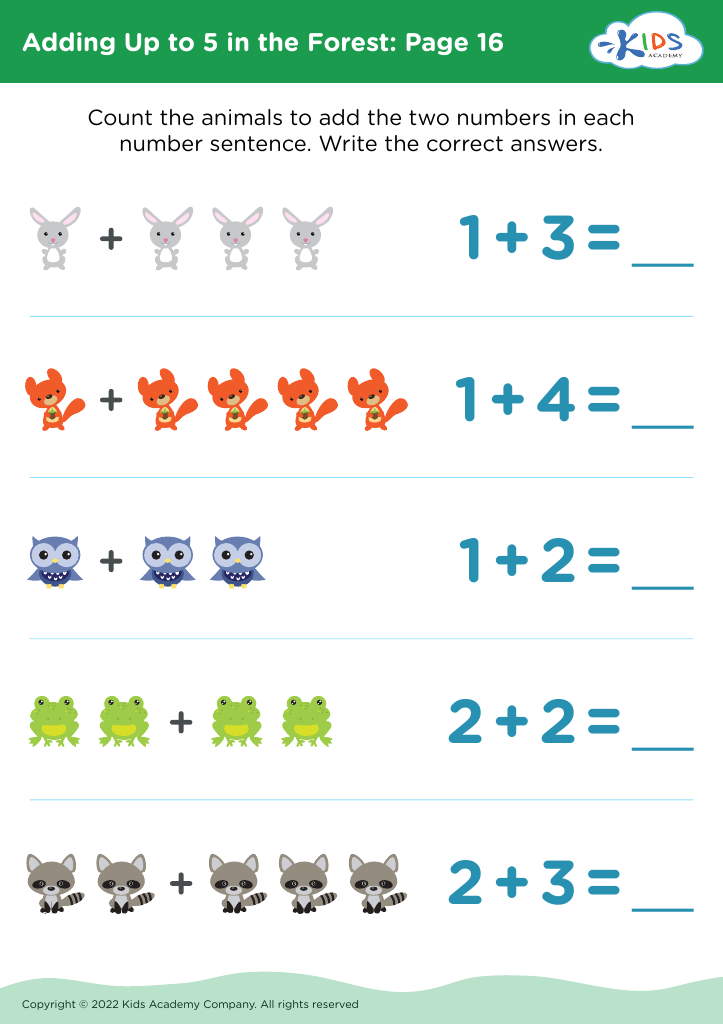
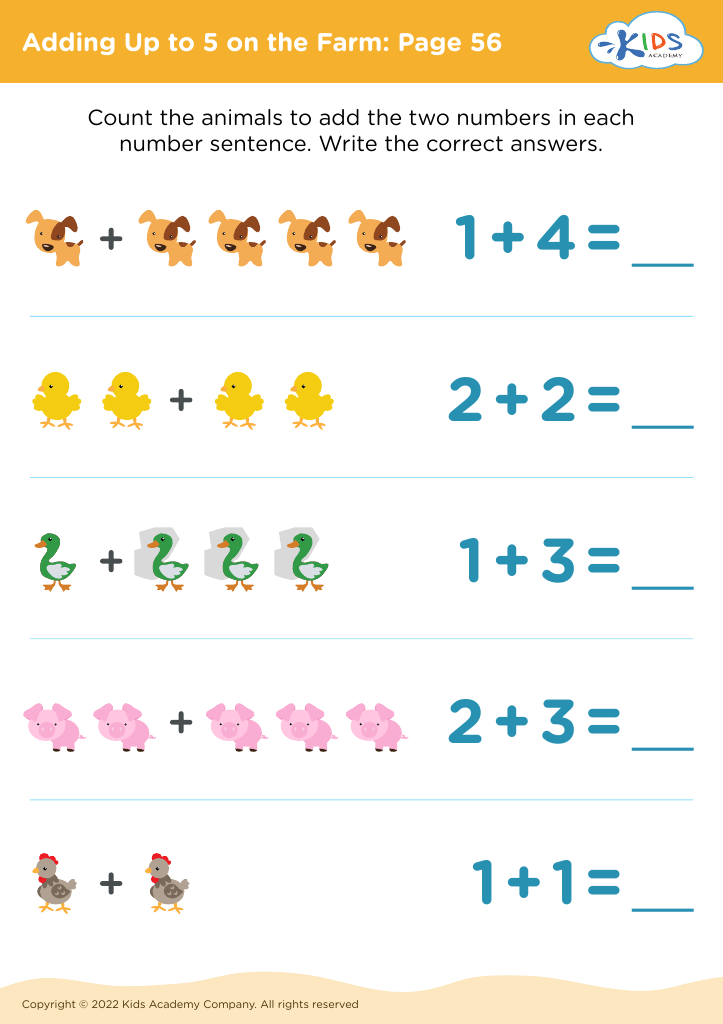
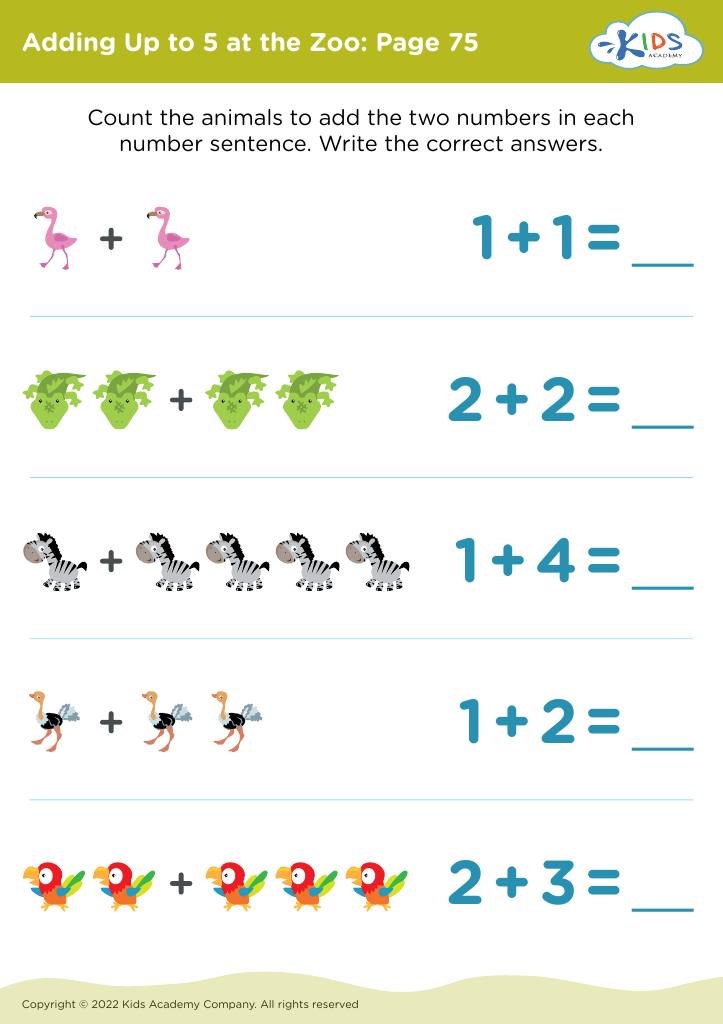
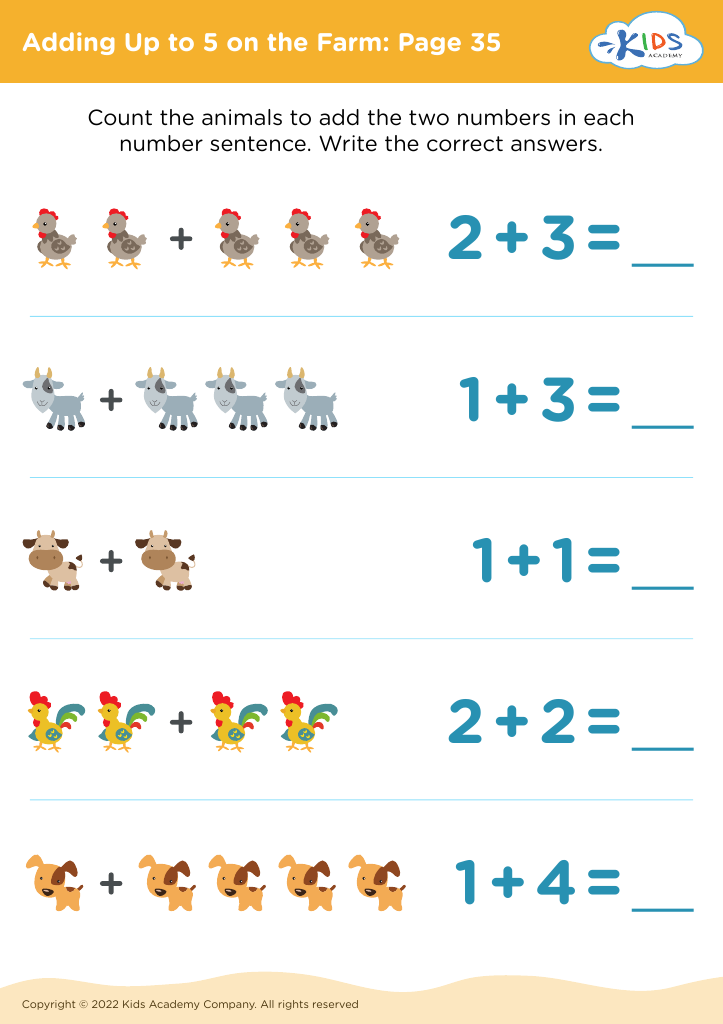
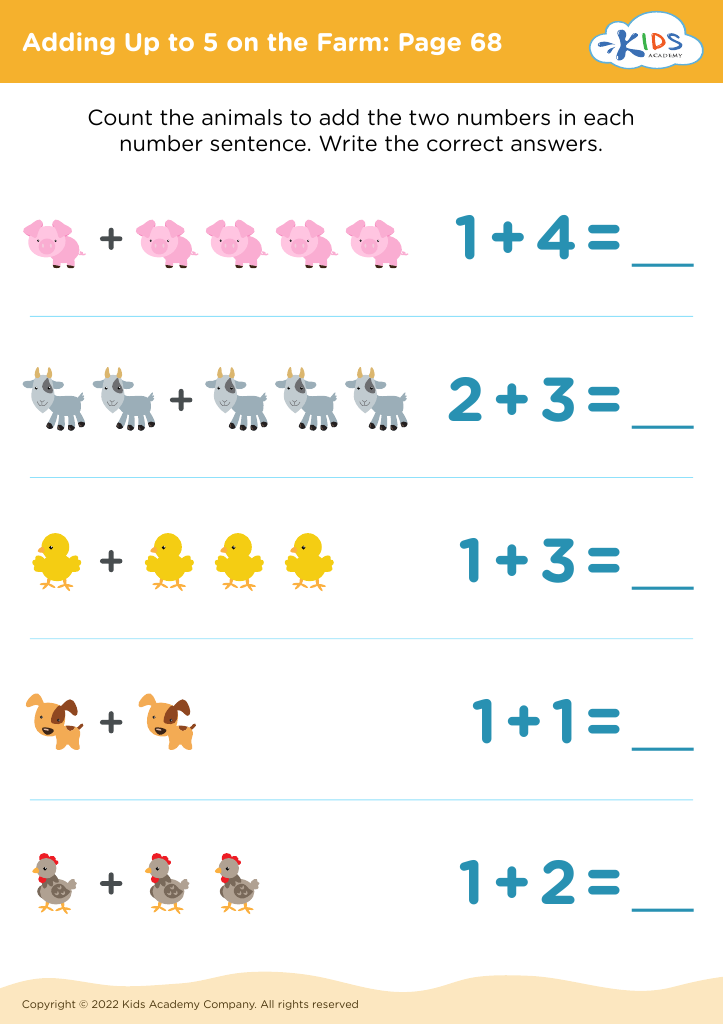
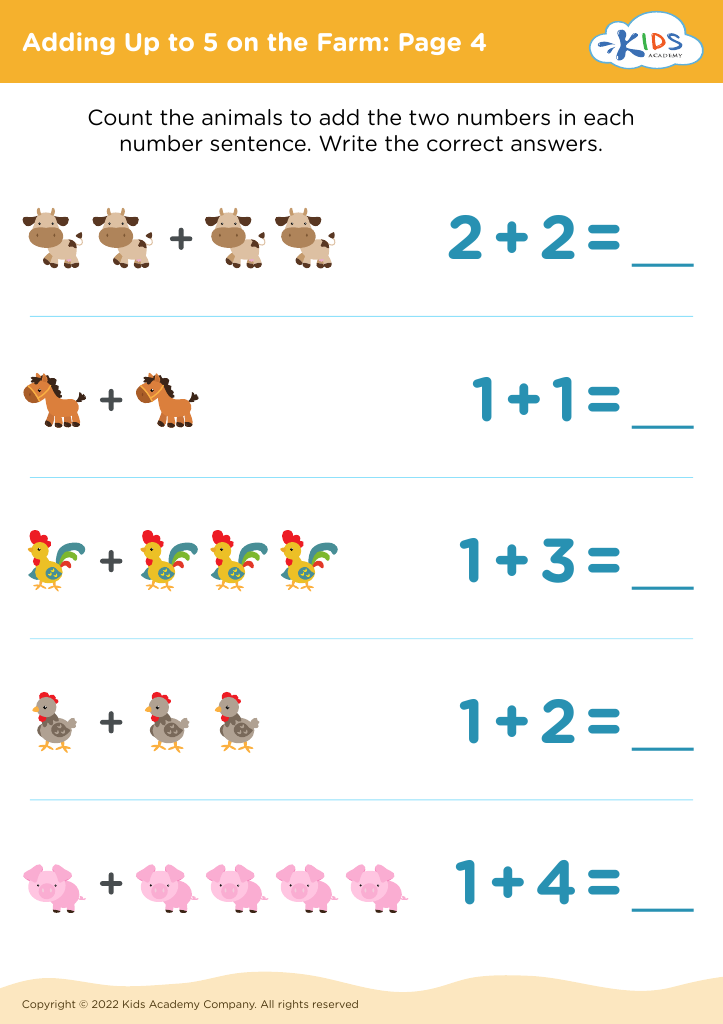
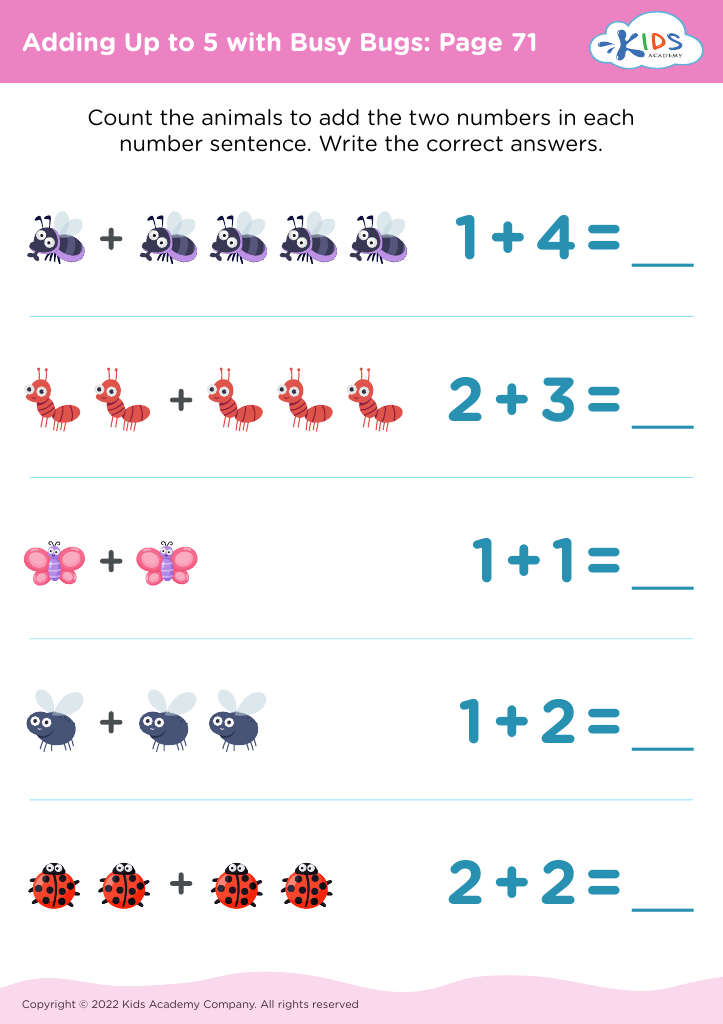
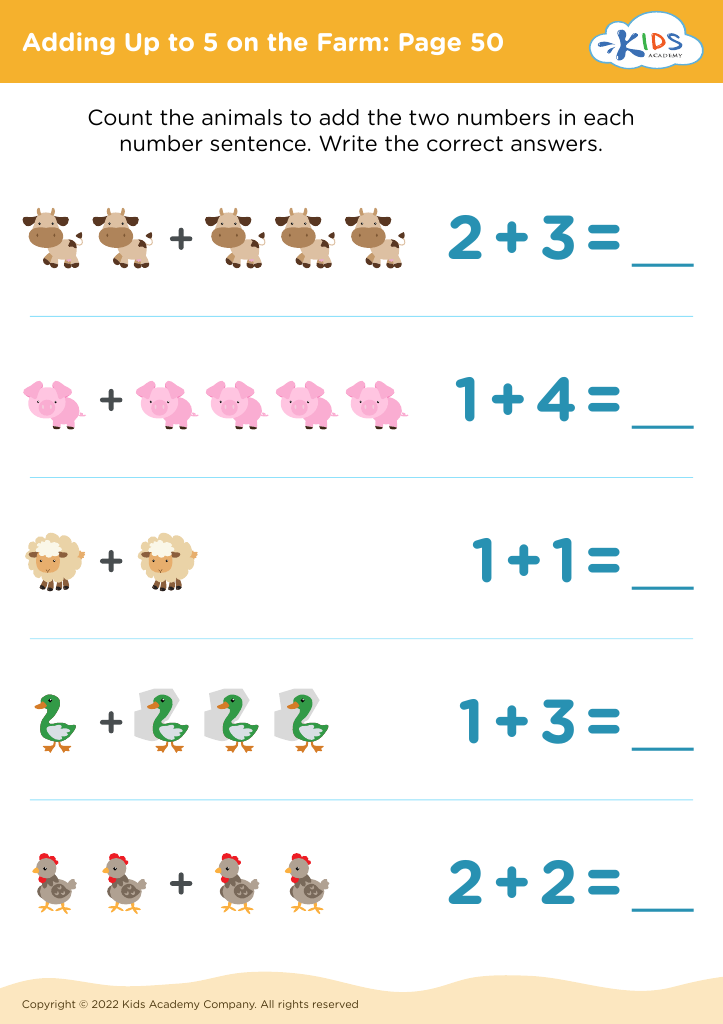
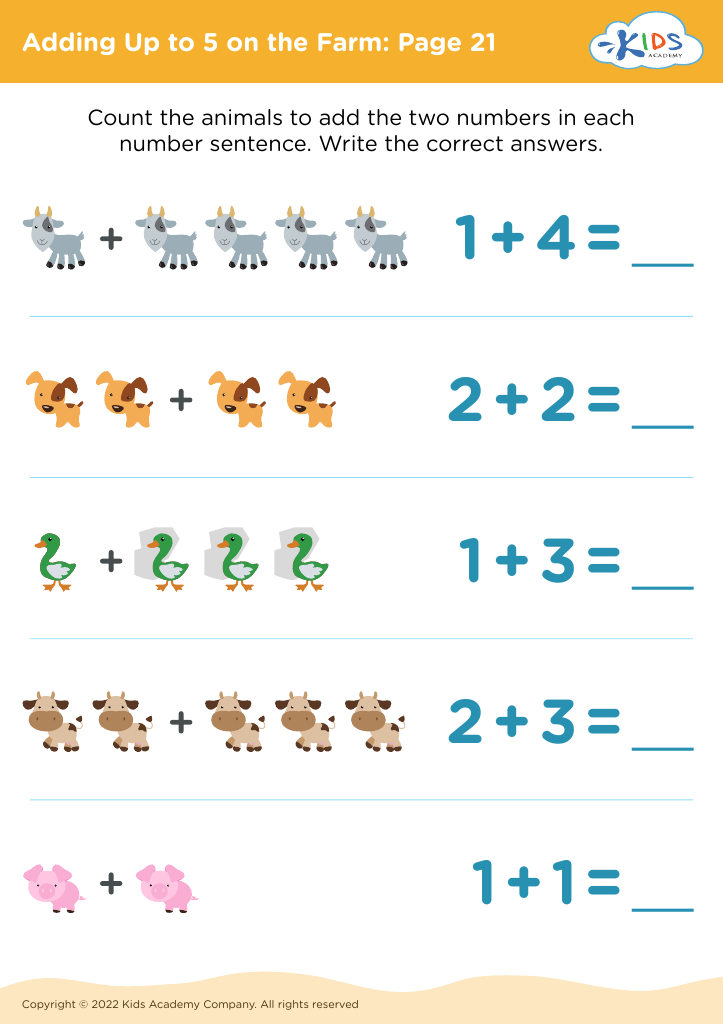
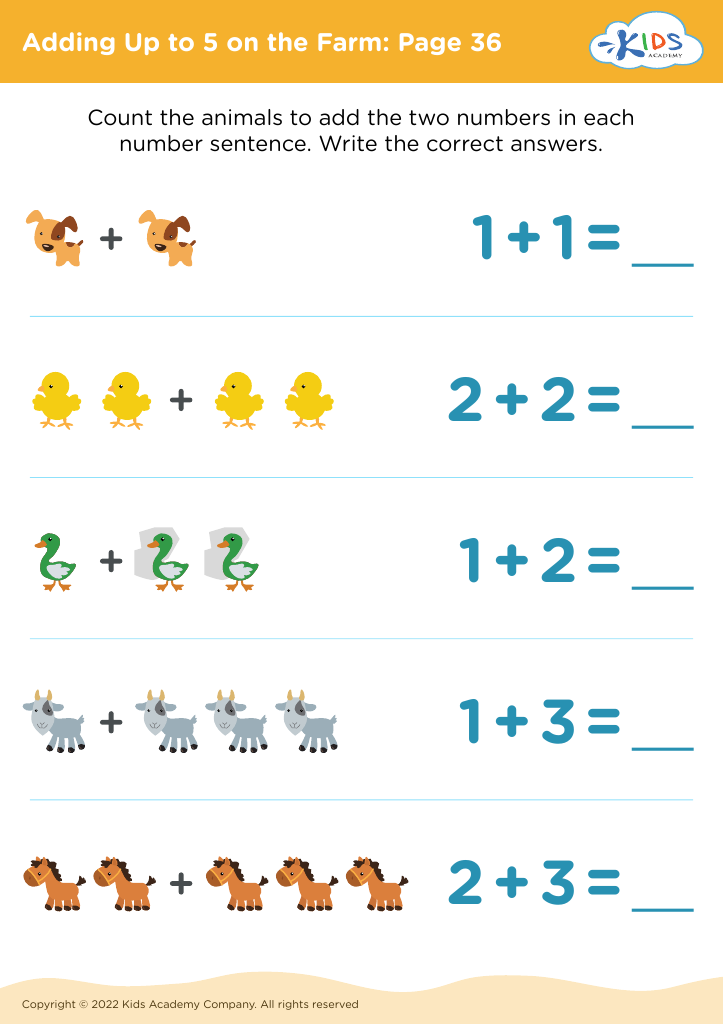
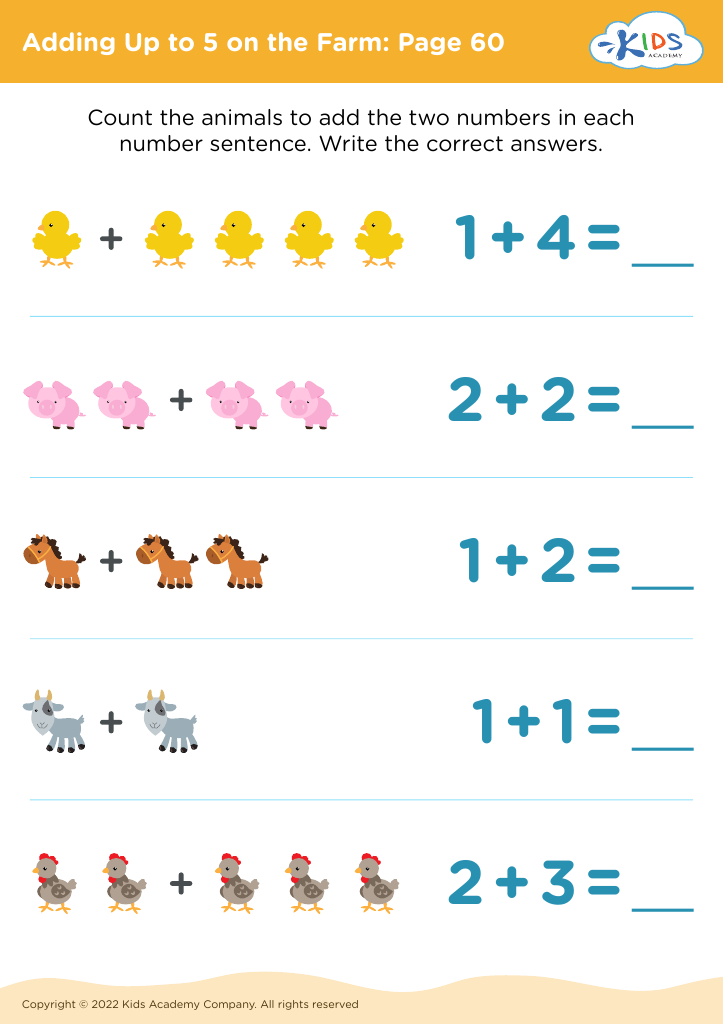








Counting objects and addition for ages 3-4 is critical in early childhood development, laying the foundation for mathematical understanding and cognitive skills. At this age, children are naturally curious and eager to explore their environment. Engaging them in counting objects—such as toys, blocks, or fruits—can enhance their number sense and understanding of quantities.
Practicing counting promotes fine motor skills and language development, as children articulate numbers and quantity while manipulating items. This interactive learning also supports social skills, as children often count and play with peers or family members, fostering teamwork and communication.
Early exposure to basic addition through hands-on activities helps children grasp essential mathematical concepts such as one-to-one correspondence (understanding that each counted object represents one unit) and the concept of "more" and "less." These foundational skills not only pave the way for future academic success in mathematics but also help in developing critical thinking and problem-solving abilities.
Ultimately, by focusing on counting and addition at this young age, parents and teachers are nurturing a love for learning and instilling confidence in children as they begin their mathematical journeys, ensuring they are well-prepared for more complex concepts in later years.








