Counting skills Addition Worksheets for Ages 3-4 - Page 6
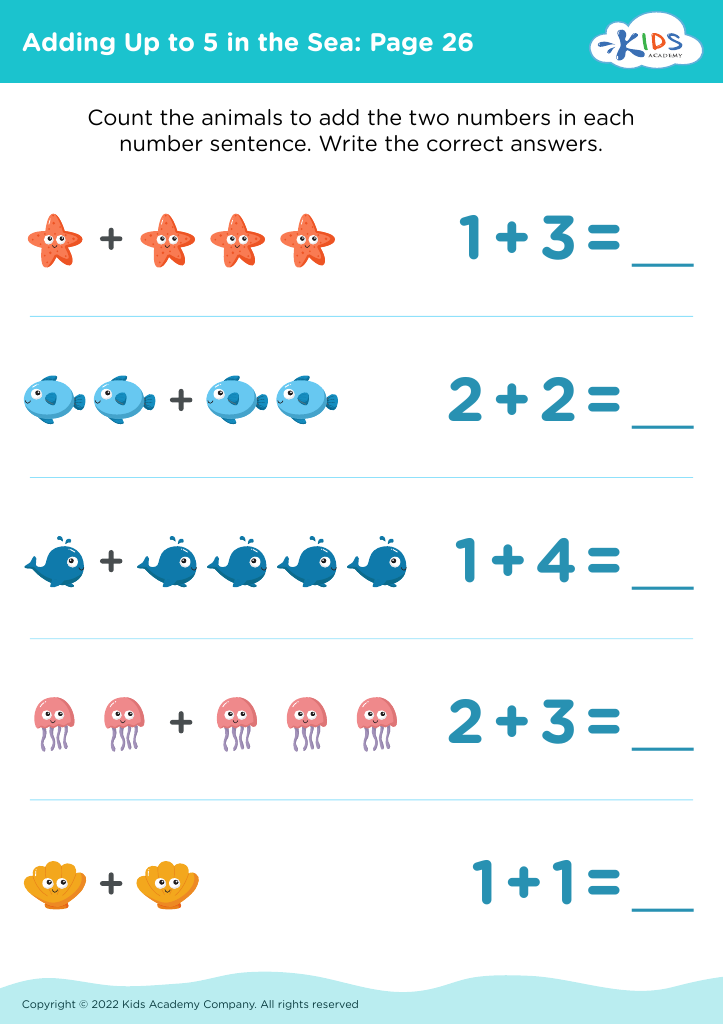
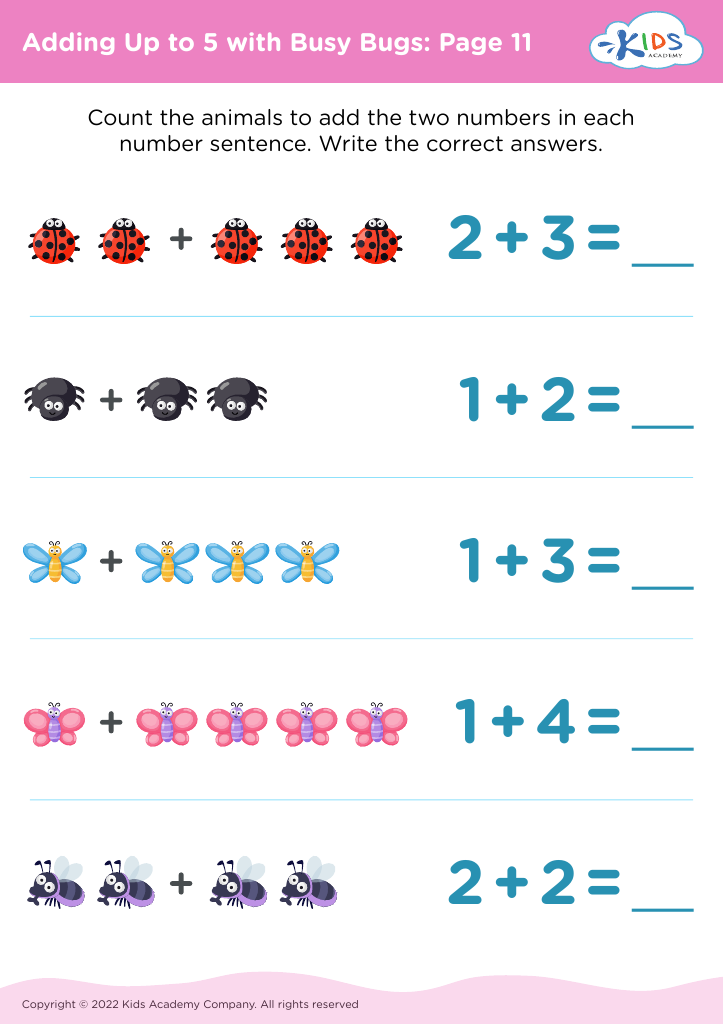
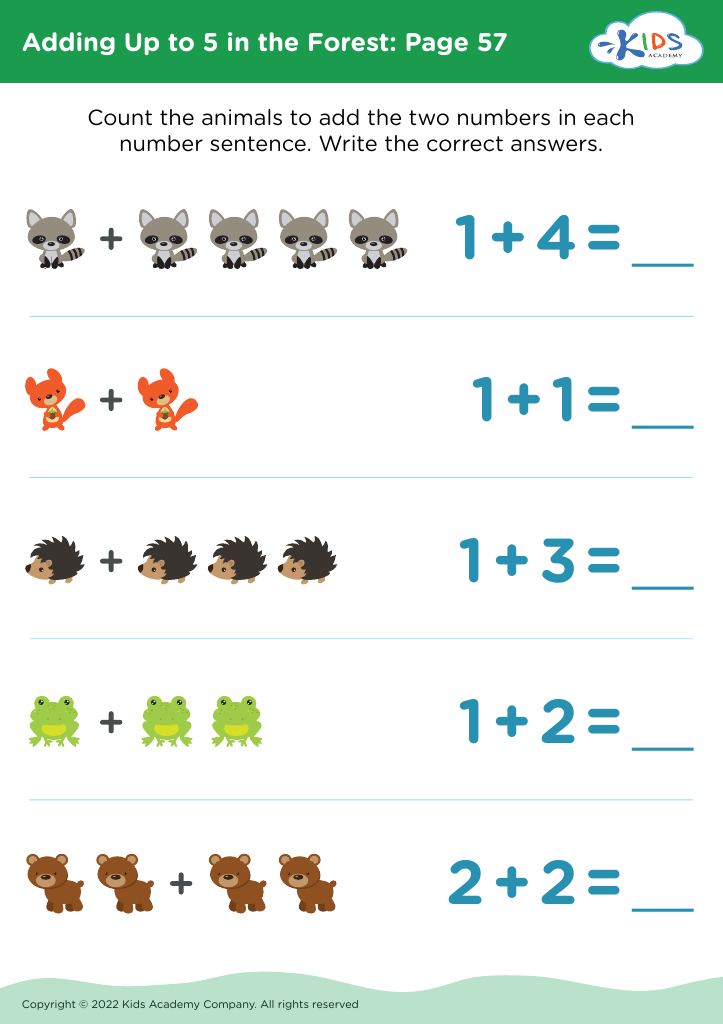
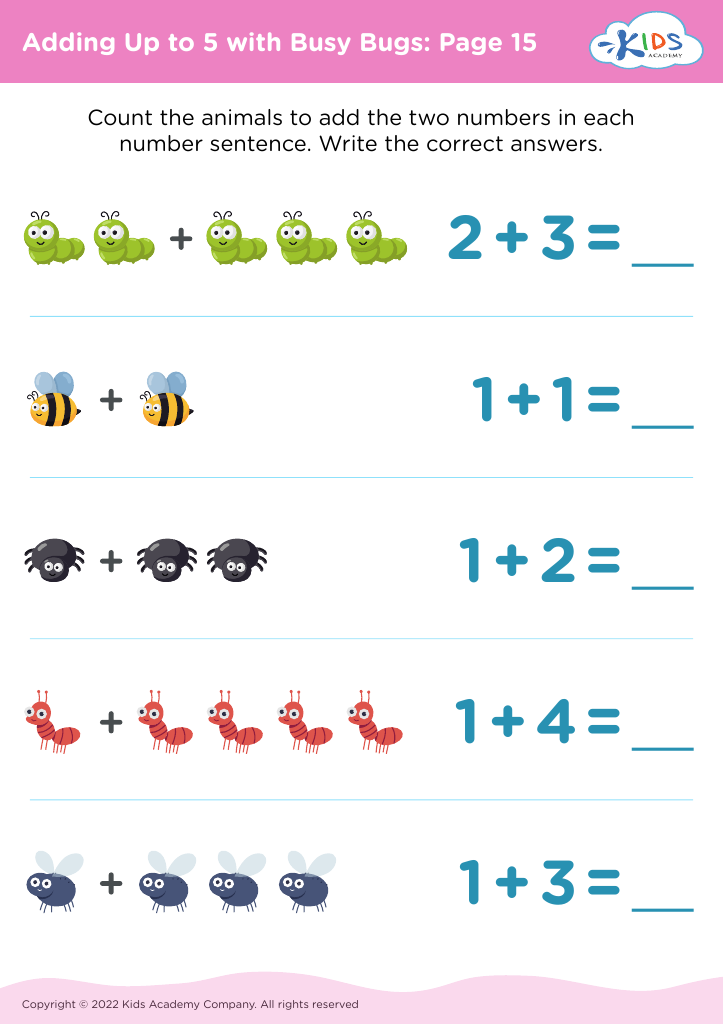







Counting skills and addition are foundational concepts in early childhood education, particularly for children aged 3-4 years. During this critical developmental stage, children are naturally curious and eager to learn, making it an ideal time to introduce basic math concepts.
Firstly, counting serves as the basis for mathematical understanding. Teaching young children to count helps them recognize numbers, understand quantity, and develop one-to-one correspondence, which is essential for future mathematical operations. As they learn to count, they also strengthen their cognitive abilities, including memory and problem-solving skills.
Secondly, early experiences with addition foster a positive attitude toward math. By integrating counting and simple addition through playful activities, such as counting objects or adding pieces during games, teachers and parents can create a stress-free environment that promotes learning. This makes math feel engaging and enjoyable, laying the groundwork for lifelong mathematical skills.
Lastly, counting and addition skills contribute to children's overall academic success. These skills correlate with later achievements in math and related subjects. By focusing on counting and basic addition in the early years, parents and educators help ensure that children build confidence and competence, setting them on a path for future learning and success.








