Math problem-solving Addition Worksheets for Ages 3-4
4 filtered results
-
From - To
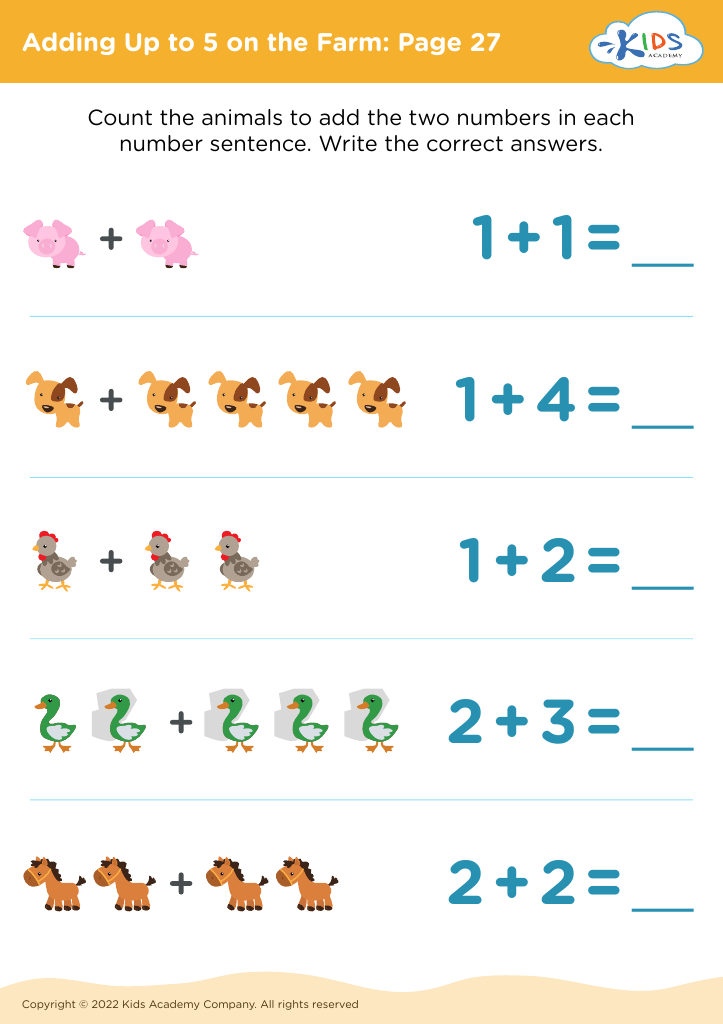
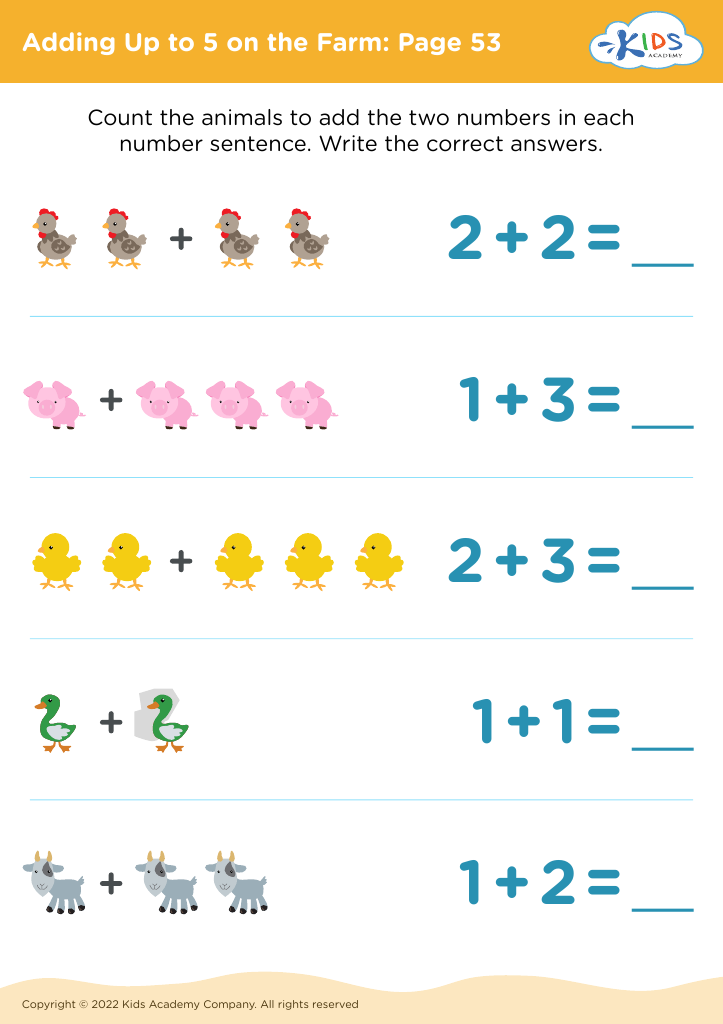
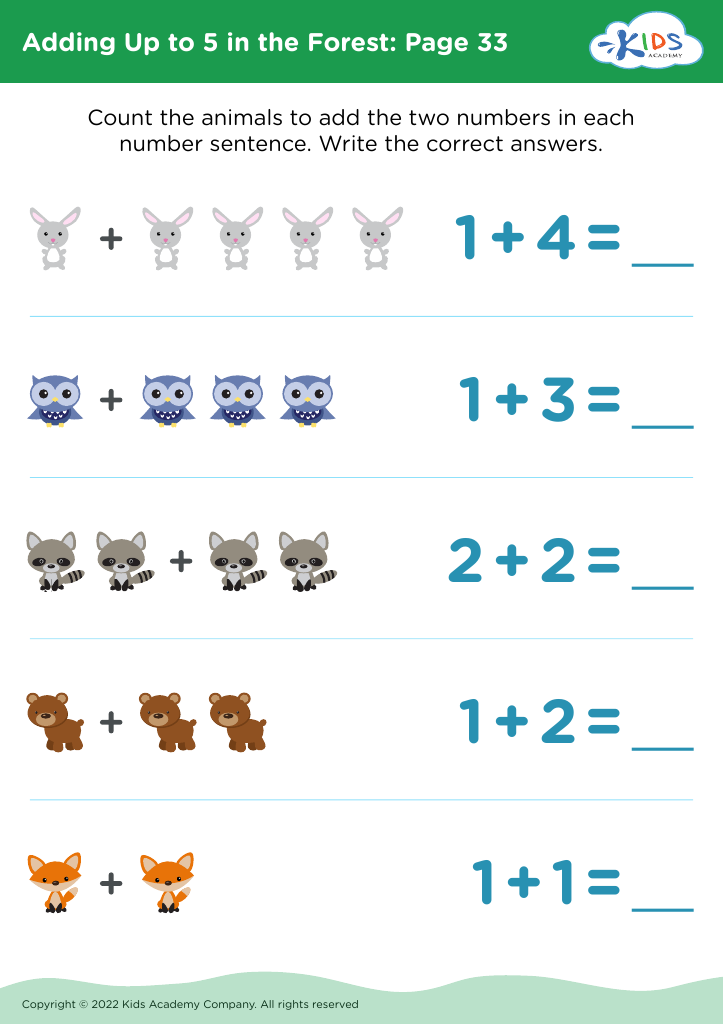
Unlock the joy of learning with Math Problem-Solving Addition Worksheets for Ages 3-4! These engaging worksheets from Kids Academy introduce your little learners to early math concepts through fun addition problems designed just for their age group. Captivating visuals and age-appropriate challenges help develop foundational math skills, critical thinking, and problem-solving abilities. Perfect for at-home practice or classroom use, these worksheets ensure a positive and rewarding educational experience. Boost your child's confidence and foster a love for math with Kids Academy’s expertly crafted resources. Start building a strong mathematical foundation today!
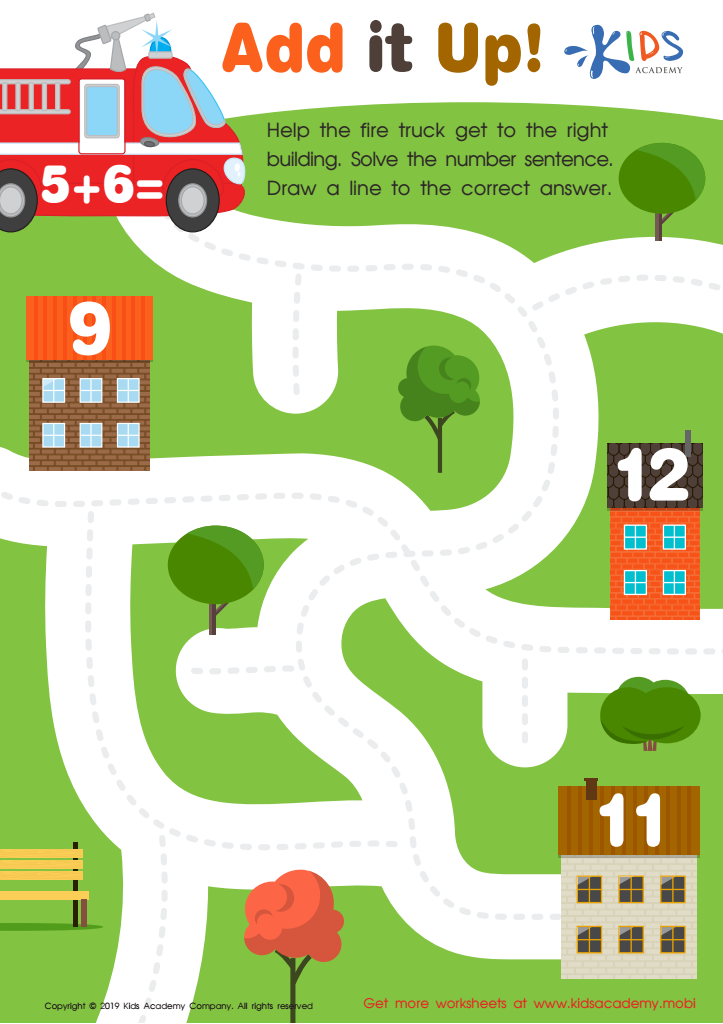
Add it Up Worksheet
 Assign to My Students








Understanding and proficiency in addition at the ages of 3-4 play a vital role in a child's early development. Introducing children to basic math concepts at a young age sets the foundation for more complex problem-solving skills they will encounter in their academic journey. Parents and teachers should prioritize math problem-solving addition because it enhances cognitive development. Early exposure to addition helps develop critical thinking and logical reasoning, which are essential skills for all areas of learning.
Furthermore, mastering basic addition builds confidence in children. When children feel successful in solving simple math problems, their self-esteem and motivation to learn increase. This positive reinforcement helps them approach future learning challenges with a positive attitude.
Socially, engaging in math problem-solving activities helps young children improve their communication skills. Whether they're working with peers, teachers, or parents, discussing math problems and solutions promotes collaborative learning.
Lastly, early math skills are indicative of future academic success. Research consistently shows that children who enter kindergarten with strong foundational math skills are more likely to excel in their continued education. Therefore, introducing children to addition at ages 3-4 not only supports their immediate learning needs but also paves the way for long-term academic achievement.








