Filters

380 filtered results

Clear all filters
Favorites
With answer key
Interactive

380 filtered results

Difficulty Level

Grade


Discover our engaging Number Recognition Addition Worksheets designed specifically for ages 3-4! Our carefully crafted activities help young learners identify numbers and build foundational addition skills in a fun and interactive way. Each worksheet combines colorful visuals and simple exercises to keep preschoolers interested and excited about learning. Perfect for both classroom use and at-home practice, our worksheets provide essential early math skills that pave the way for future academic success. Empower your child to recognize numbers and master basic addition with our expert-designed resources. Start their math journey with confidence and joy today!

Check out this FREE Trial Lesson on Addition for age 3-4!

Adding with 3's

Favorites
With answer key
Interactive
  • 3-4
  • Number Recognition
  • Addition
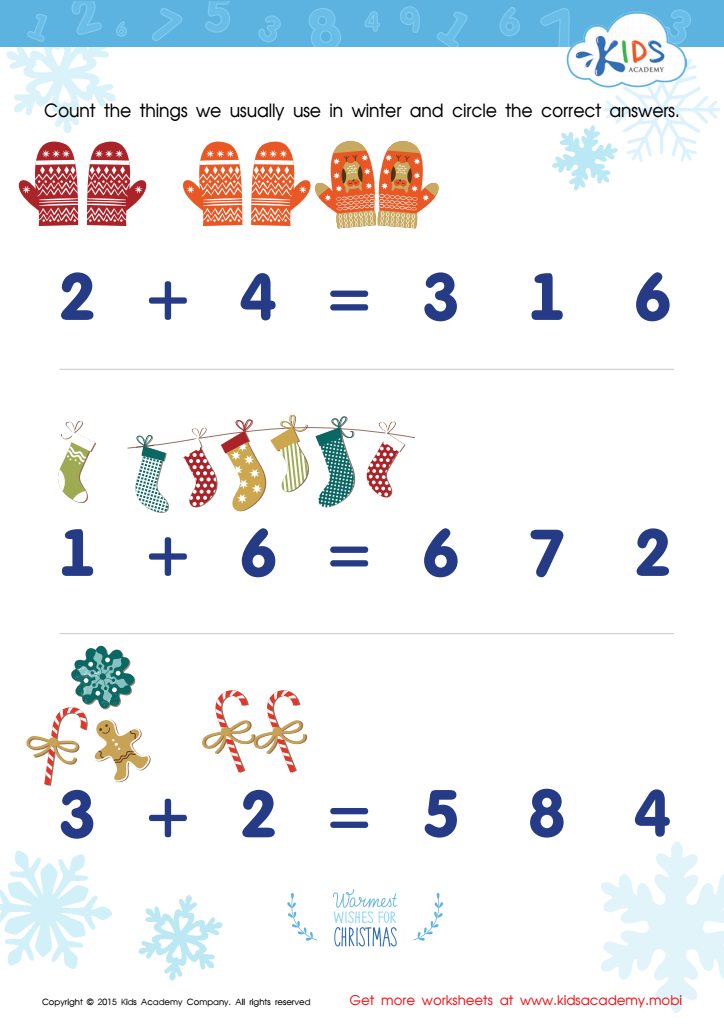
Math PDF Worksheet: Count Winter Things

Count Winter Things Worksheet

This chilly winter afternoon, help your kid warm up with Kids Academy's free math worksheet - full of bright pictures and addition practice. Let them count the things and write in the numbers for a great brain training and math head start. Get more free math worksheets here. (80 words)
Count Winter Things Worksheet
Worksheet
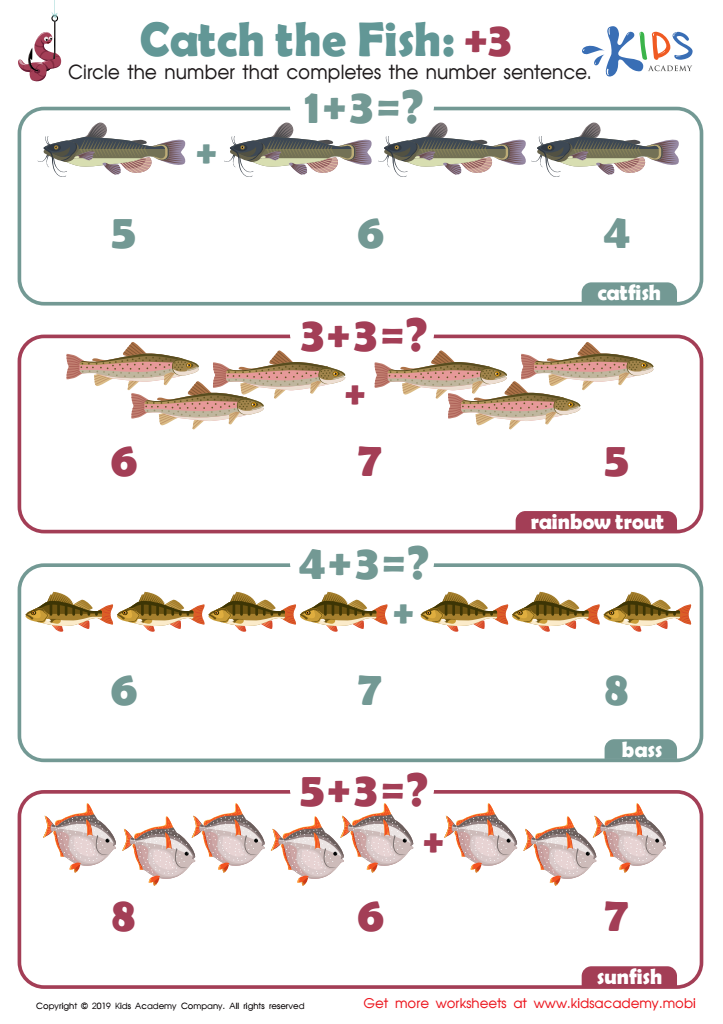
Catch the Fish: +3 Worksheet

Catch the Fish: +3 Worksheet

Math may be tricky for your child, with all the numbers and calculations. This worksheet can help them brush up. Ask them to identify the objects in the picture, then count them and help them circle the right number to complete the sentence. It's a simple and effective way to improve math skills.
Catch the Fish: +3 Worksheet
Worksheet
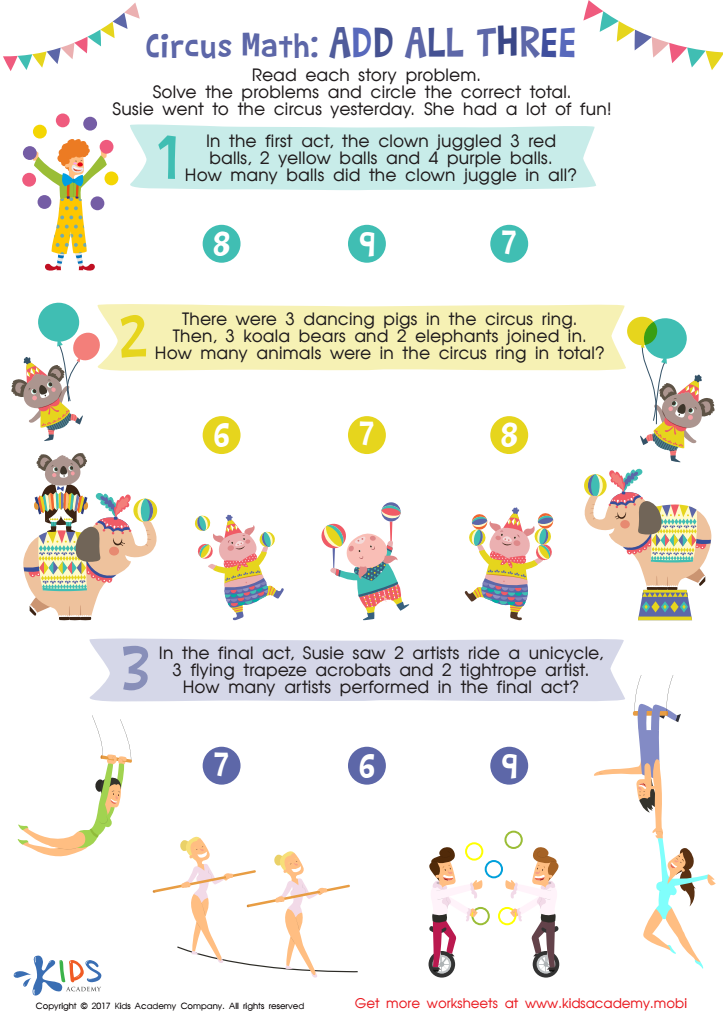
Circus Math Printable Worksheet
Circus Math Printable
Let's take the kids to the circus and combine literacy and numeracy skills! Our circus math printable worksheet will encourage creativity and higher-order thinking by connecting addition to real-life examples. Kids will learn to love math while they explore the fun, real-life applications of math. Ignite their passion today!
Circus Math Printable
Worksheet
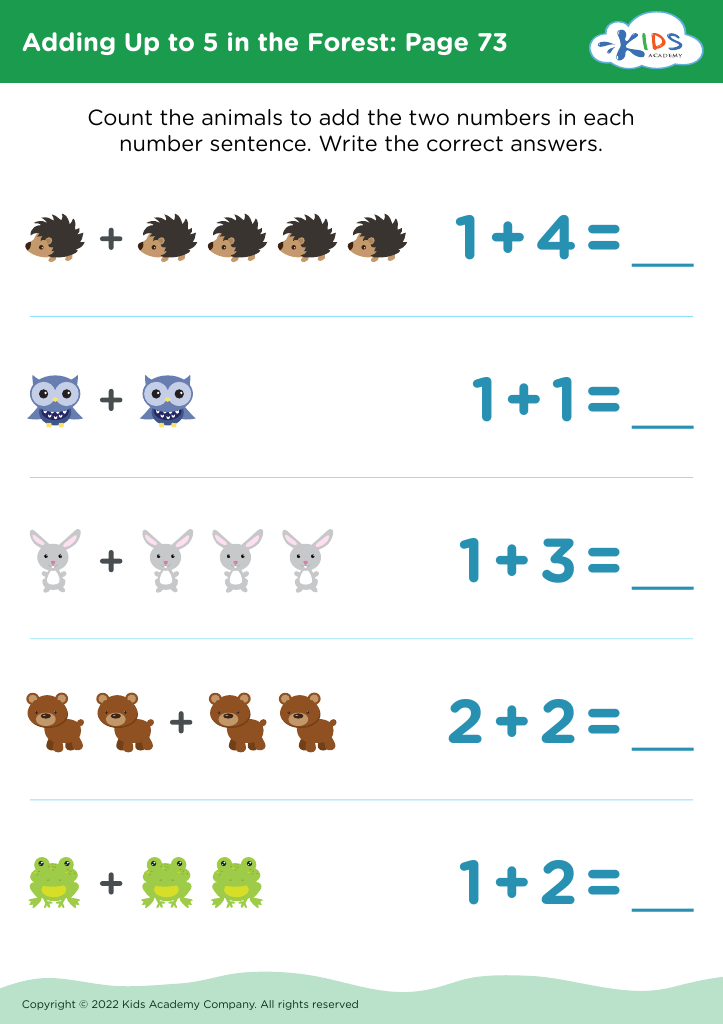
Adding Up to 5 in the Forest: Page 73
Worksheet
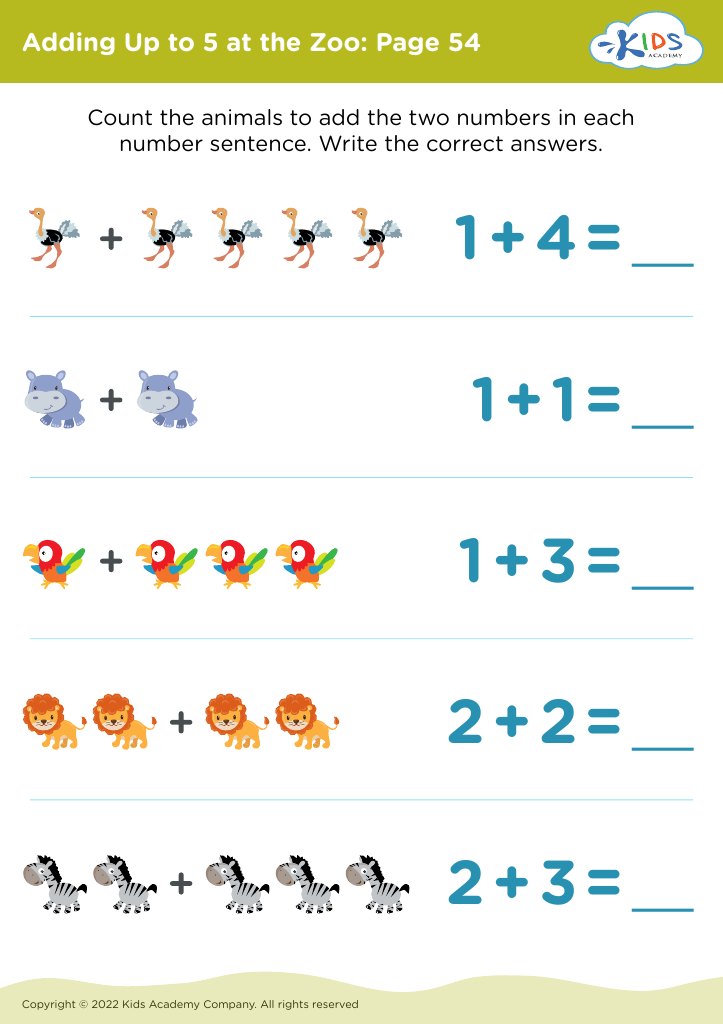
Adding Up to 5 at the Zoo: Page 54
Worksheet
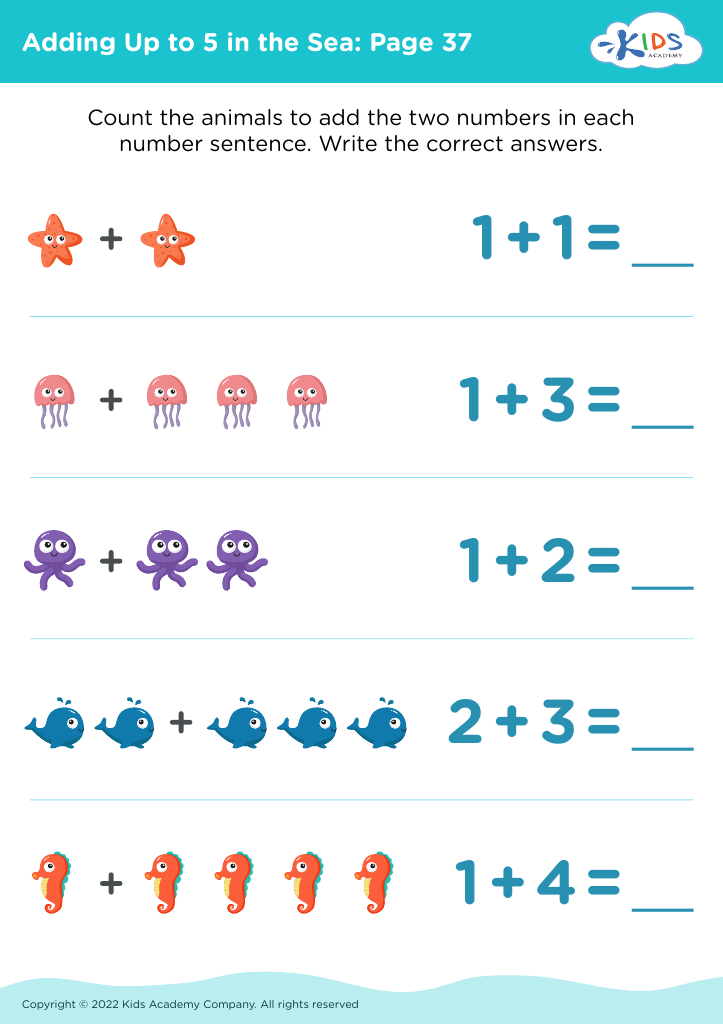
Adding Up to 5 in the Sea: Page 37
Worksheet
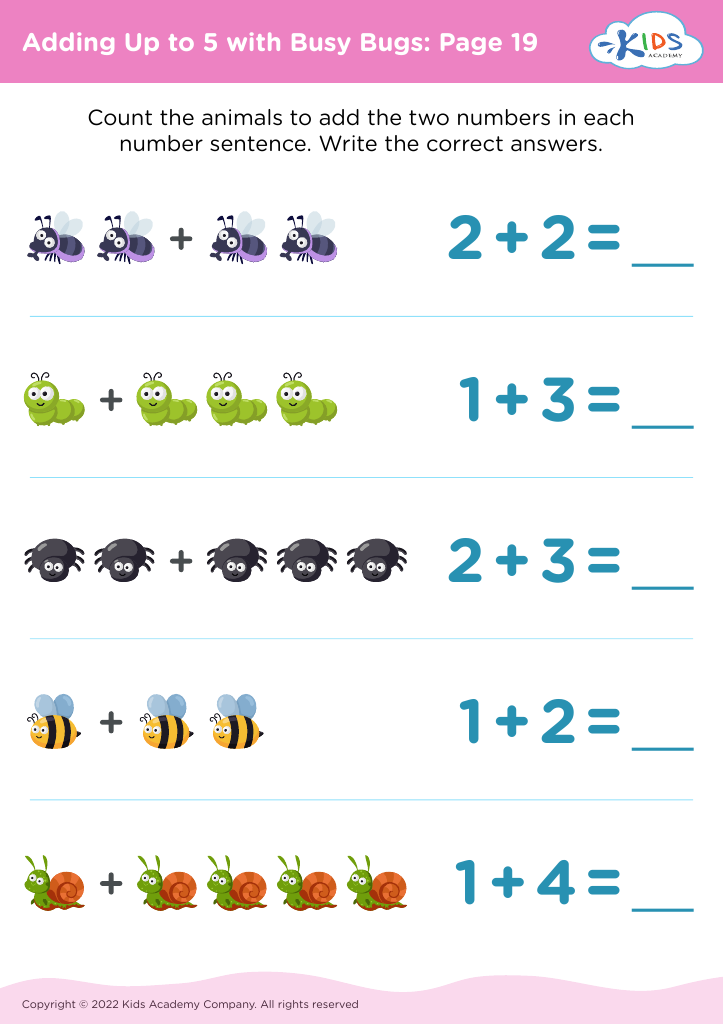
Adding Up to 5 with Busy Bugs: Page 19
Worksheet
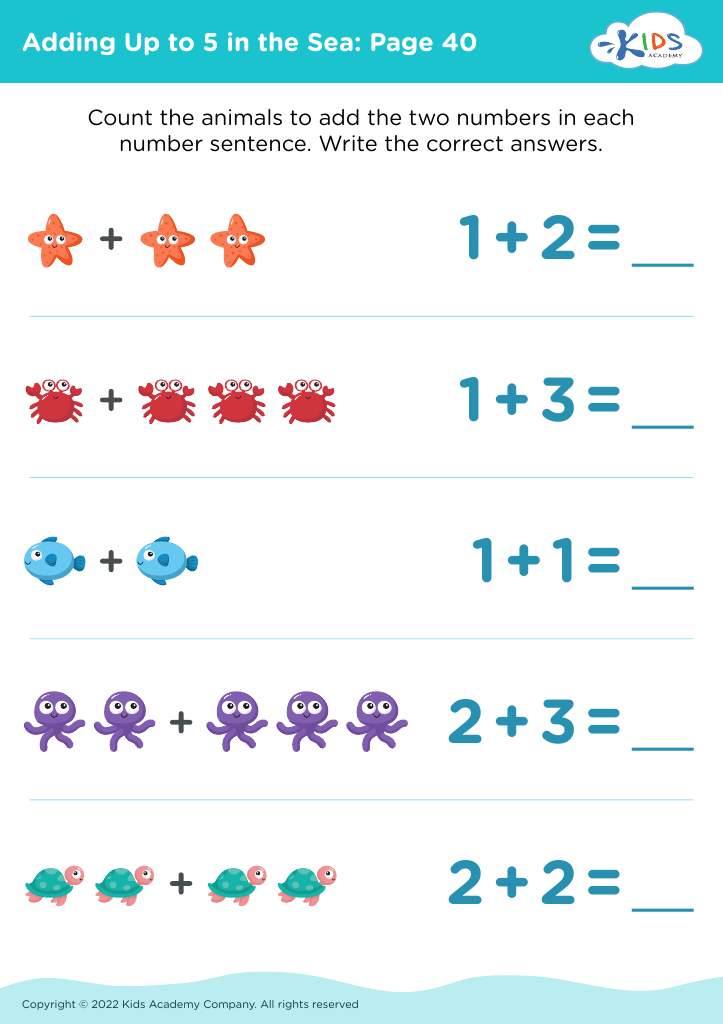
Adding Up to 5 in the Sea: Page 40
Worksheet
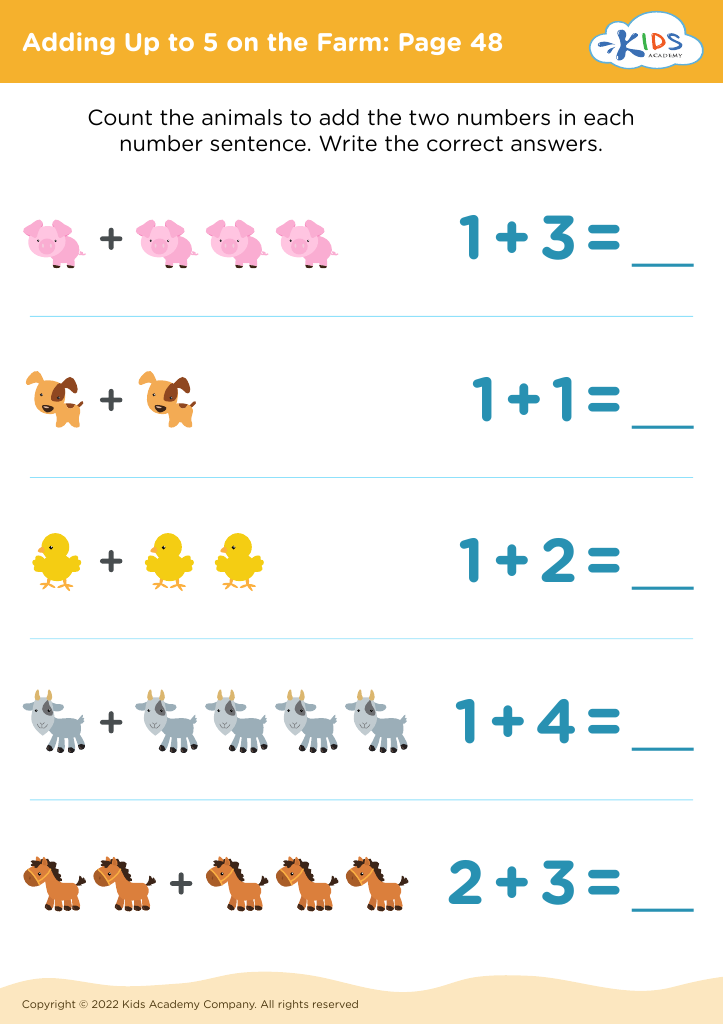
Adding Up to 5 on the Farm: Page 48
Worksheet
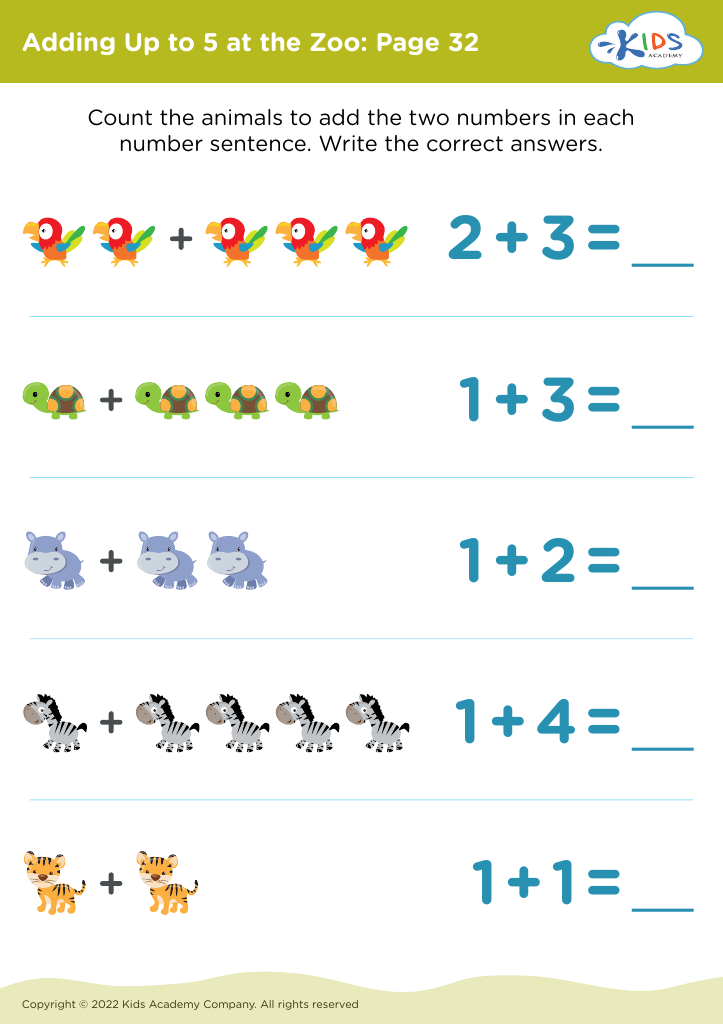
Adding Up to 5 at the Zoo: Page 32
Worksheet
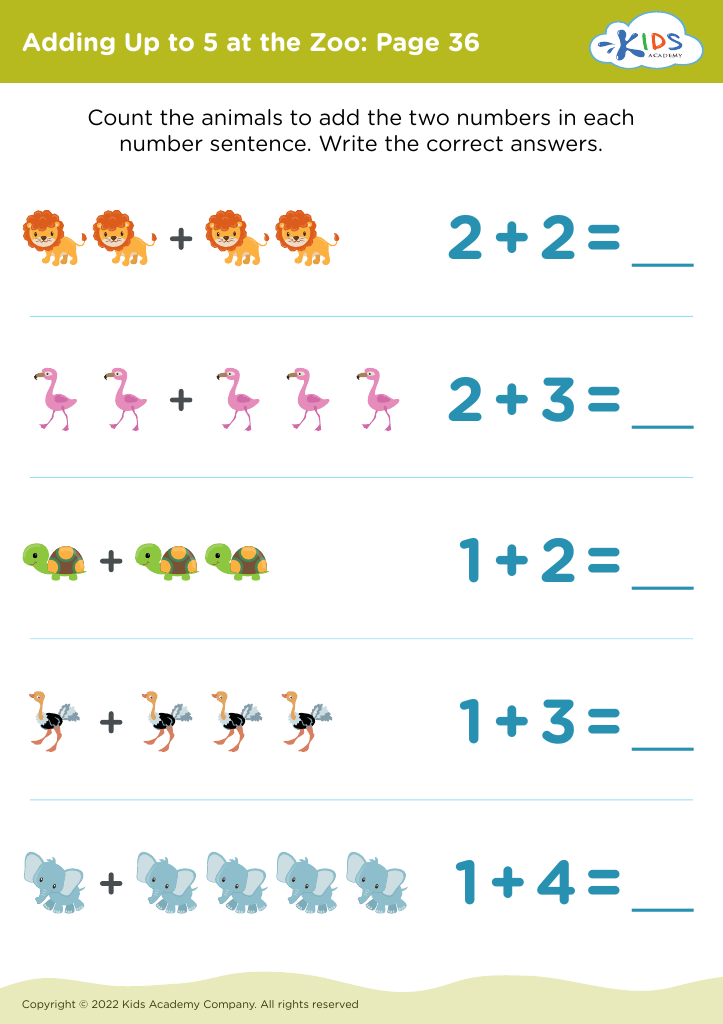
Adding Up to 5 at the Zoo: Page 36
Worksheet
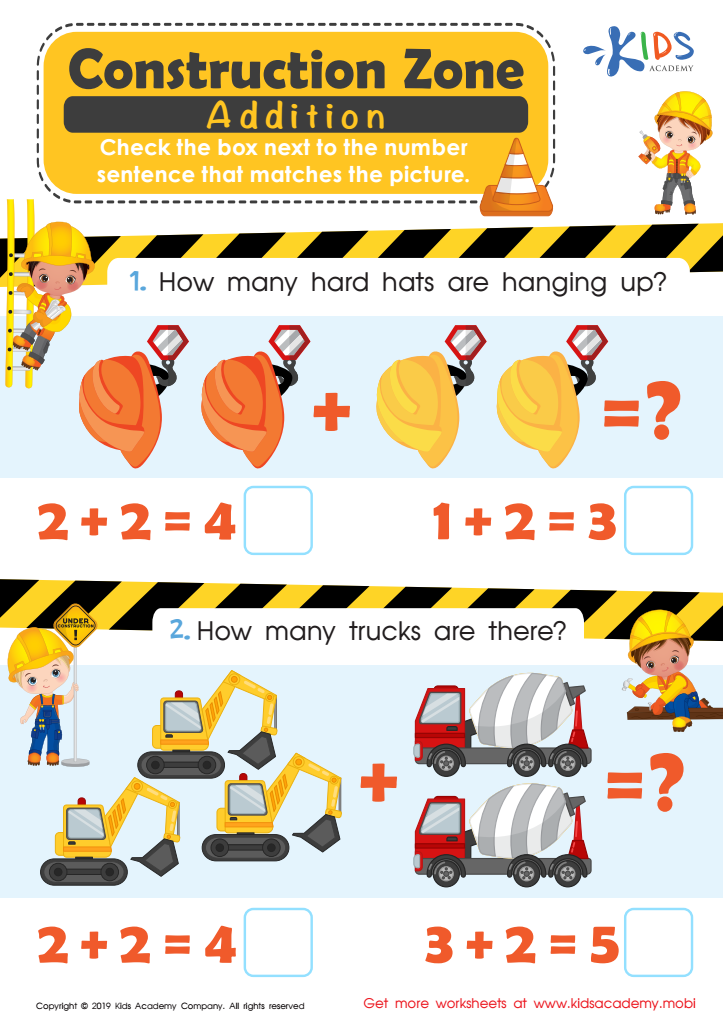
Construction Zone Addition Worksheet
Construction Zone Addition Worksheet
Construction sites are bustling with professionals called construction workers. They use equipment while working, so they must wear protective gear. With kids, look at the pictures and name each object. Then help them check the box next to the number sentence that matches the picture. (80 words)
Construction Zone Addition Worksheet
Worksheet
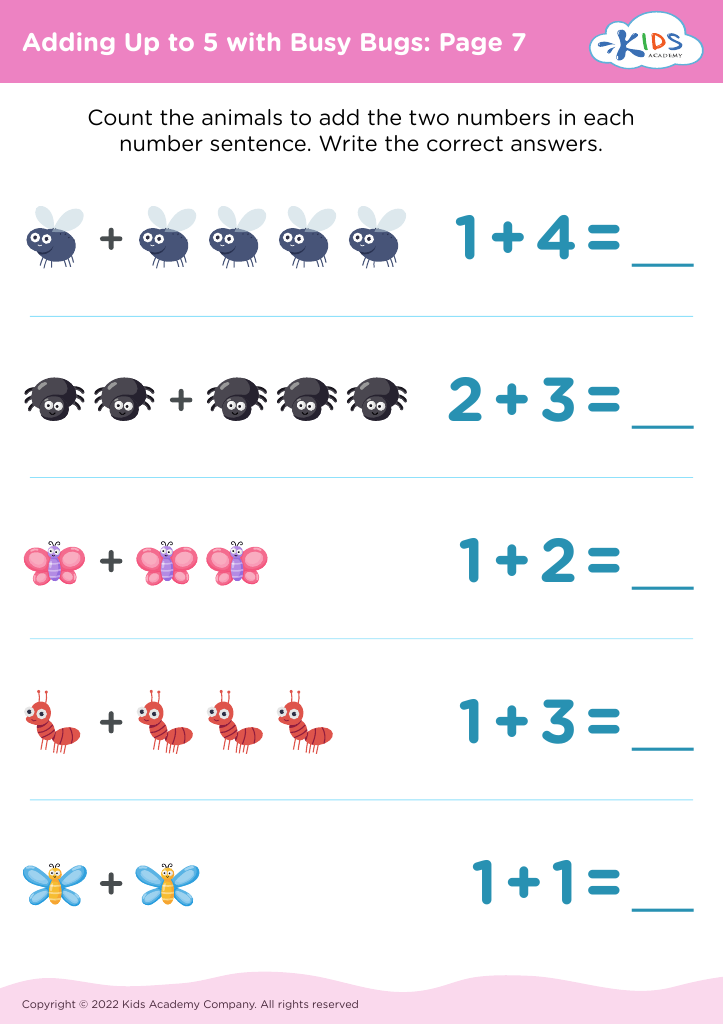
Adding Up to 5 with Busy Bugs: Page 7
Worksheet
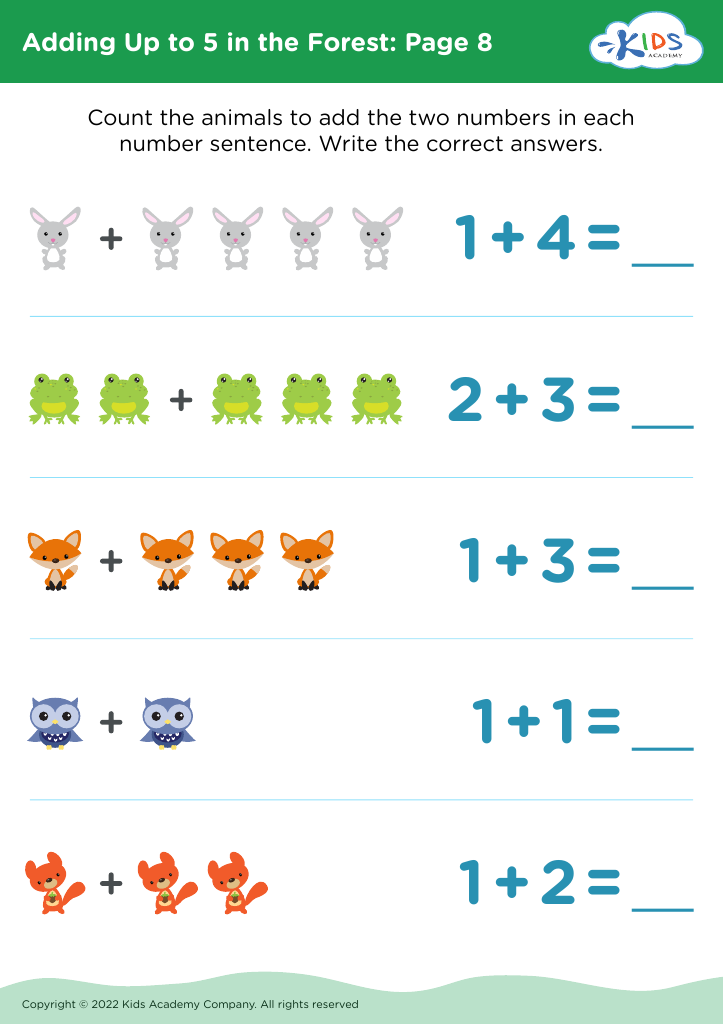
Adding Up to 5 in the Forest: Page 8
Worksheet
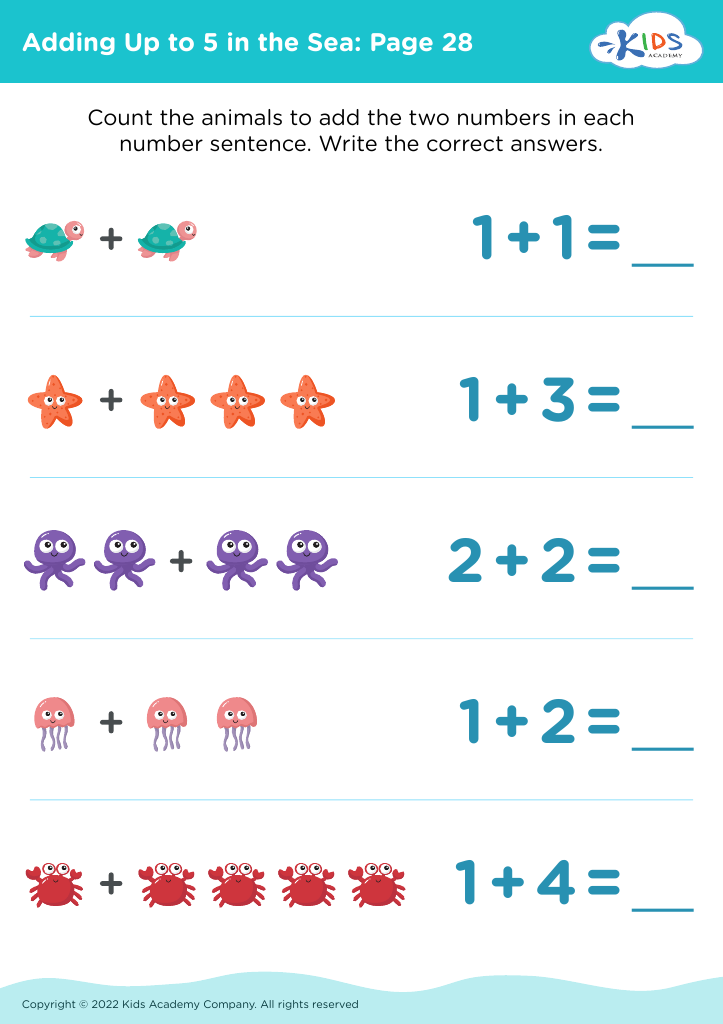
Adding Up to 5 in the Sea: Page 28
Worksheet
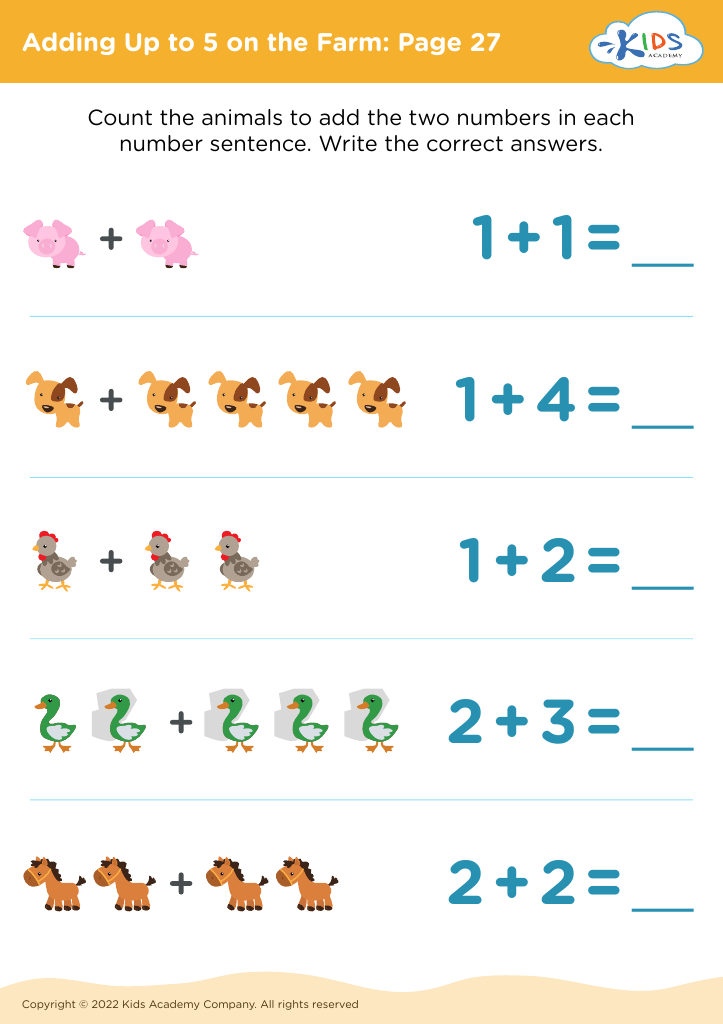
Adding Up to 5 on the Farm: Page 27
Worksheet
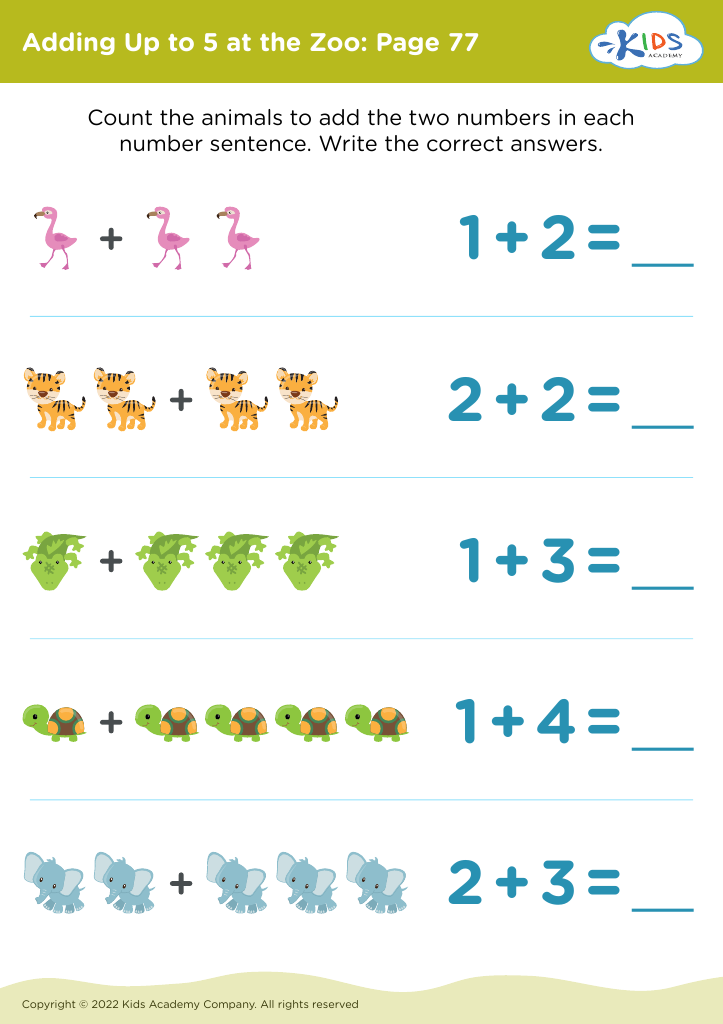
Adding Up to 5 at the Zoo: Page 77
Worksheet
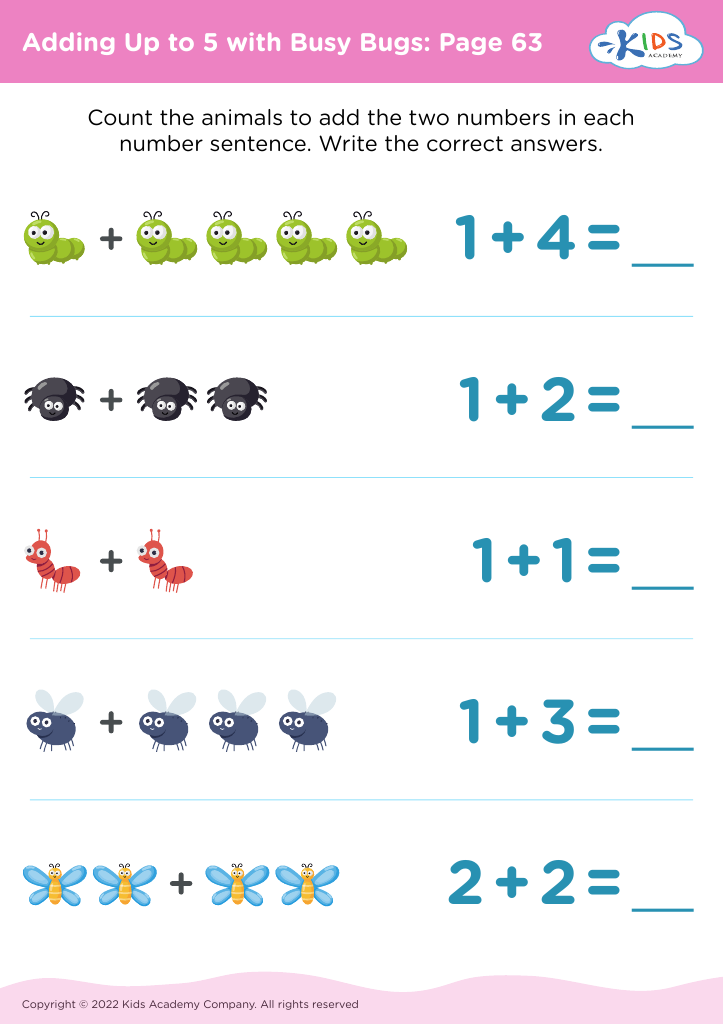
Adding Up to 5 with Busy Bugs: Page 63
Worksheet
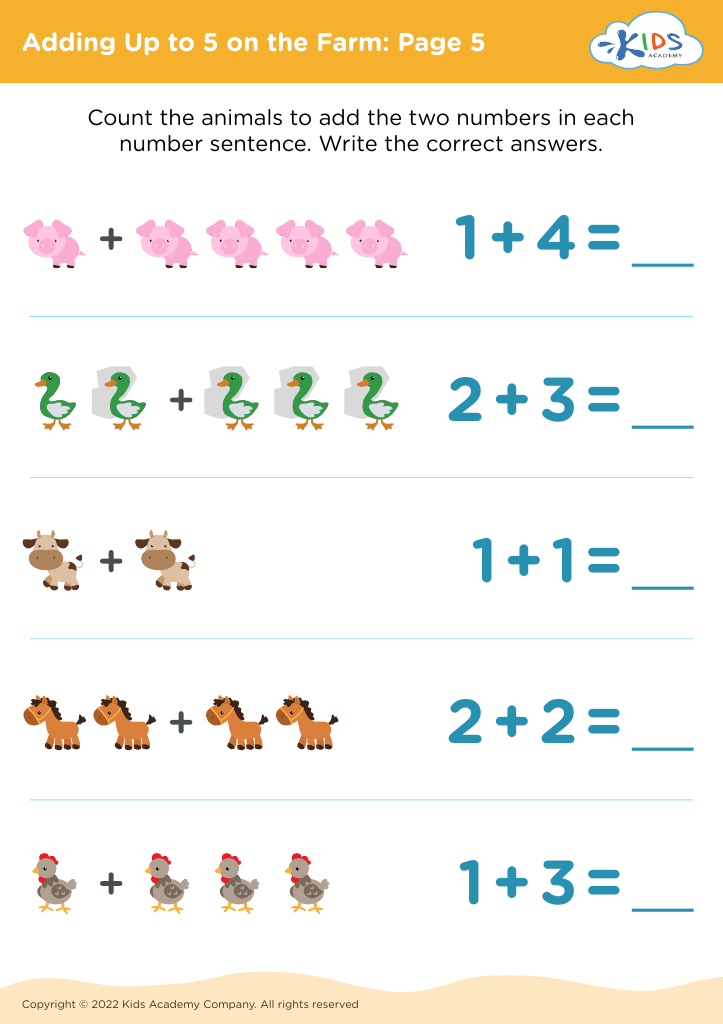
Adding Up to 5 on the Farm: Page 5
Worksheet
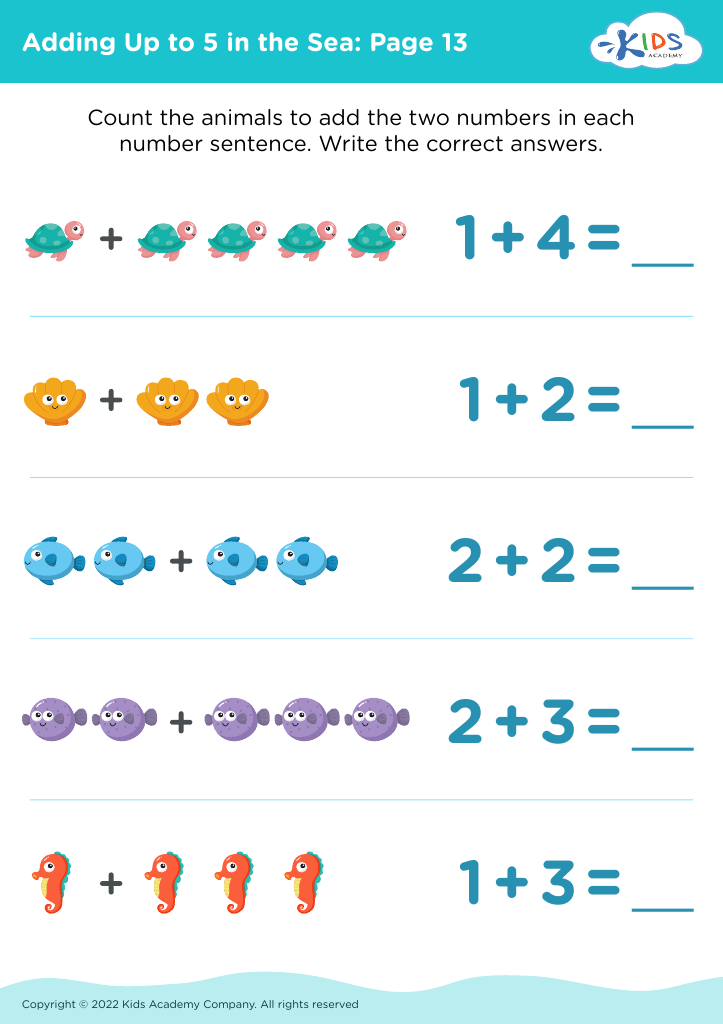
Adding Up to 5 in the Sea: Page 13
Worksheet
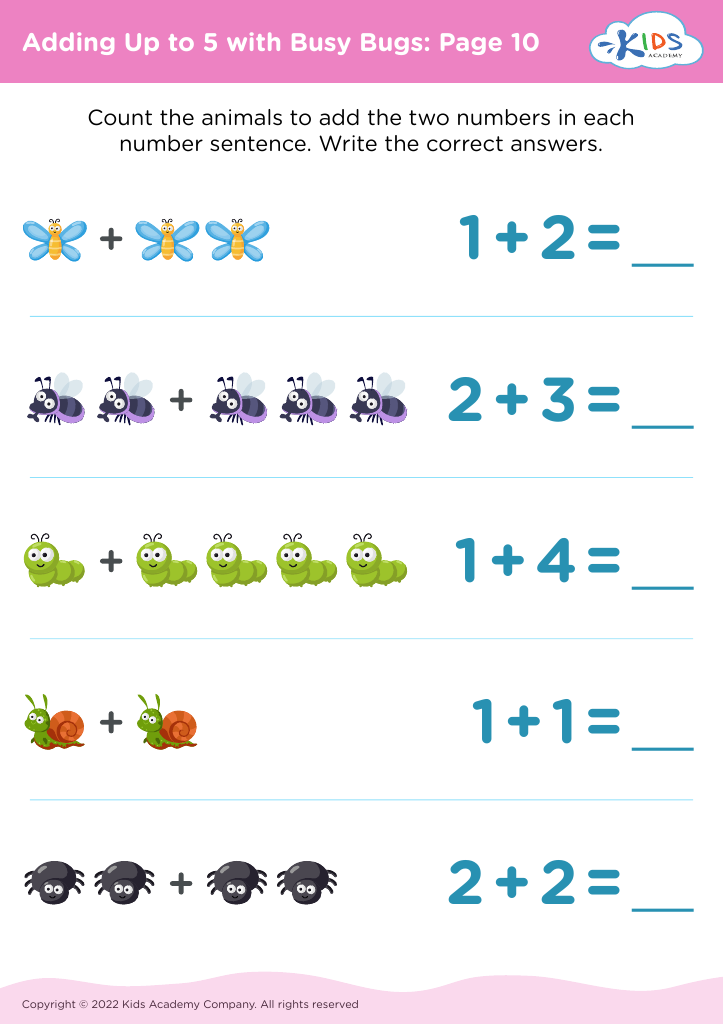
Adding Up to 5 with Busy Bugs: Page 10
Worksheet
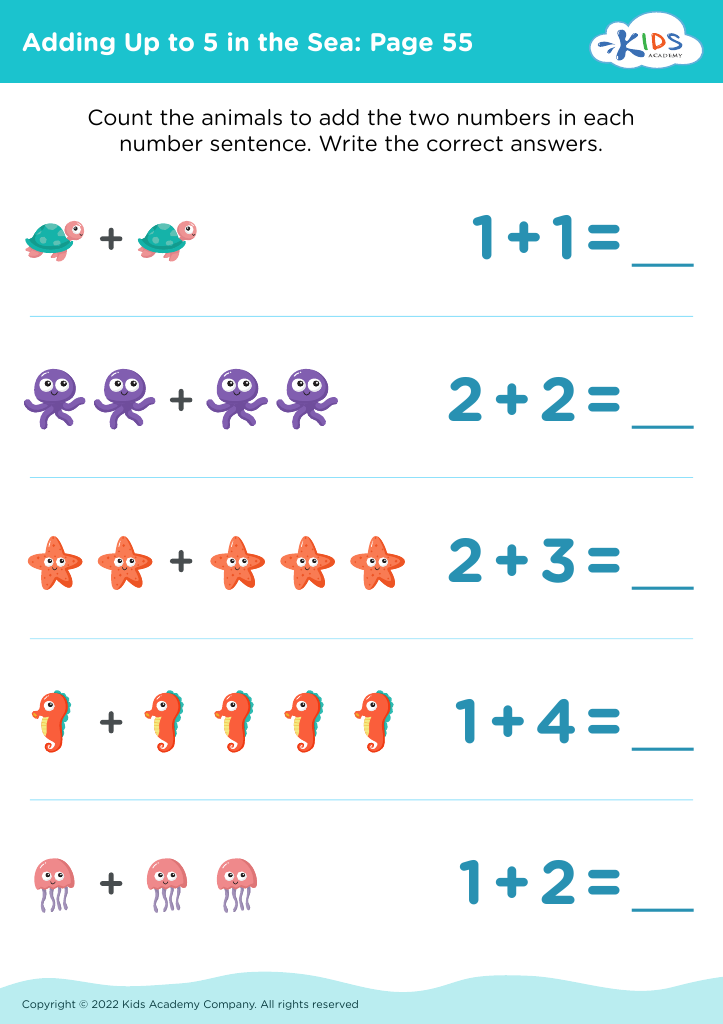
Adding Up to 5 in the Sea: Page 55
Worksheet
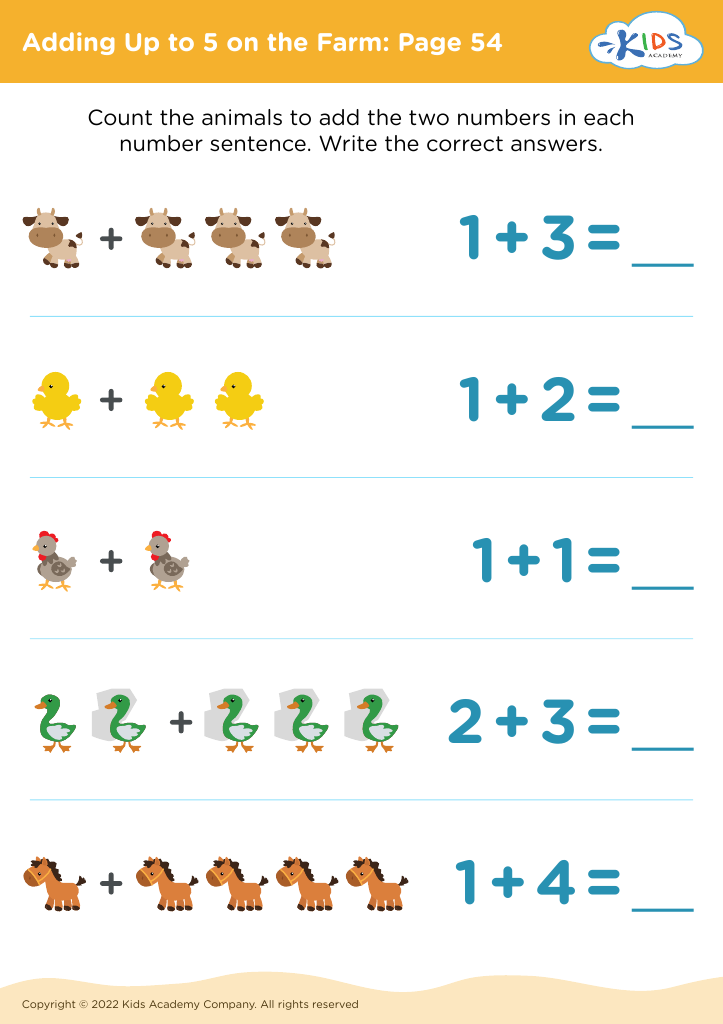
Adding Up to 5 on the Farm: Page 54
Worksheet
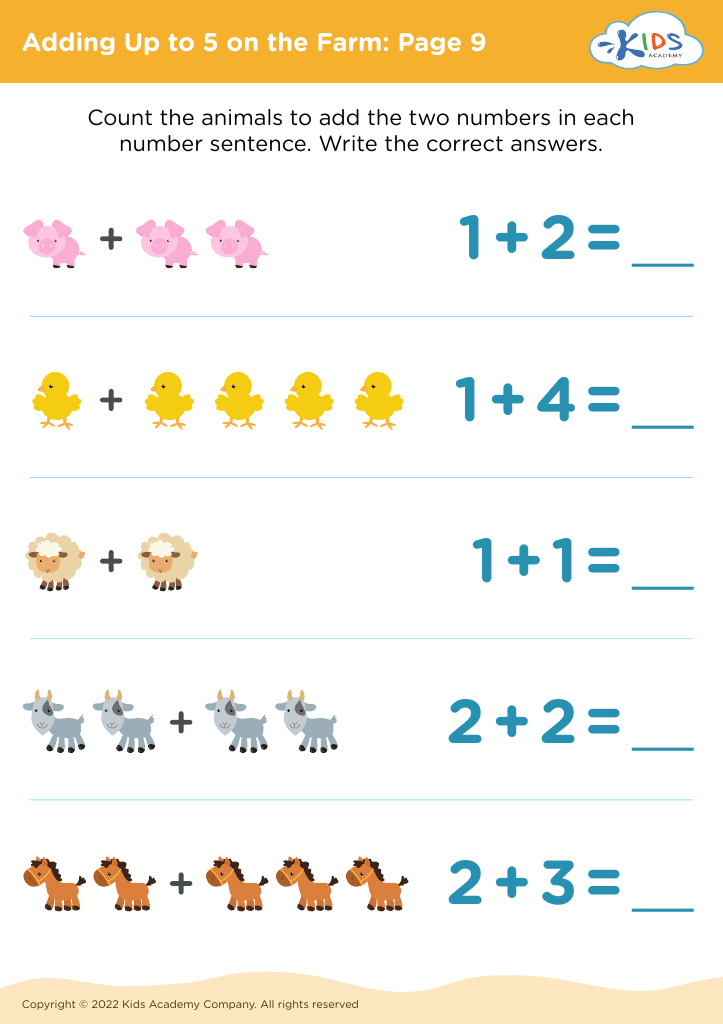
Adding Up to 5 on the Farm: Page 9
Worksheet


Parents and teachers should prioritize number recognition and addition skills for children aged 3-4 as these foundational abilities are crucial for early math development. At this tender age, children's brains are highly adaptable and primed for learning, making it the optimal period to introduce basic numerical concepts. Number recognition is essential as it enables children to identify and understand numbers, forming the bedrock of their math skills. When children recognize numbers, they can begin to make sense of their world through quantifying objects, comparing quantities, and recognizing patterns.

Introducing simple addition alongside number recognition solidifies these concepts, teaching children how to combine groups of objects and conceptualize the total amount. This fundamental skill translates to problem-solving abilities, logical reasoning, and a deeper understanding of how numbers interact, which are pivotal for all future math learning and daily life skills. Moreover, early competency in number recognition and addition boosts children's confidence, fostering a positive attitude toward math that can propel their academic success. Thus, investing time and effort into teaching number recognition and addition to young children can yield significant long-term benefits, nurturing their cognitive development and ensuring they are well-prepared for more complex mathematical tasks in later years.