Filters

380 filtered results

Clear all filters
Favorites
With answer key
Interactive

380 filtered results

Difficulty Level

Grade


Check out this FREE Trial Lesson on Addition for age 3-4!

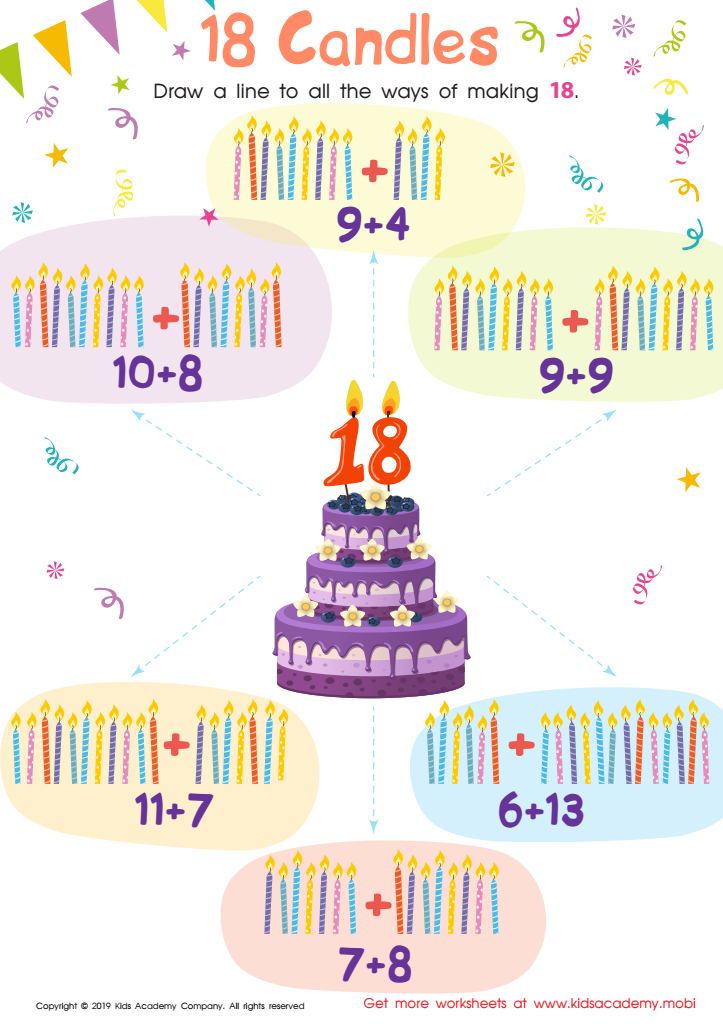
Making 18

Favorites
With answer key
Interactive
  • 3-4
  • Number Recognition
  • Addition
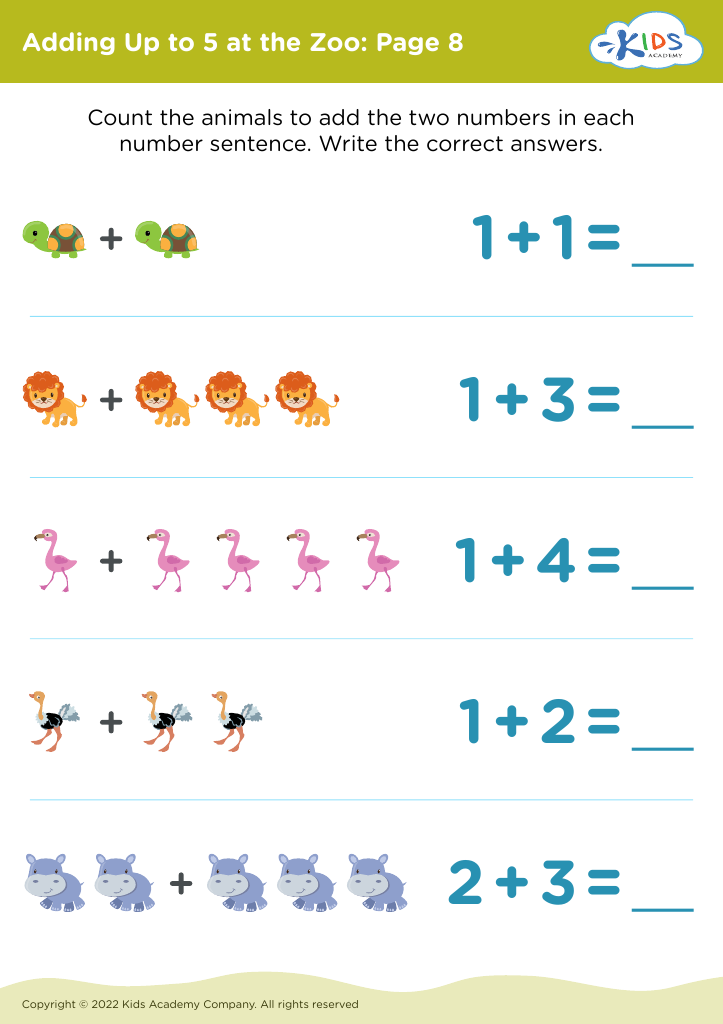
Adding Up to 5 at the Zoo: Page 8

Adding Up to 5 at the Zoo: Page 8

Adding Up to 5 at the Zoo: Page 8
Worksheet
18 Candles Worksheet

18 Candles Worksheet

This worksheet is great for introducing your students to addition and subtraction. Help your kids solve the simple equations on it and draw a line from the birthday cake with 18 on it to all the solutions. Practice like this will prepare them to tackle more complex math problems.
18 Candles Worksheet
Worksheet
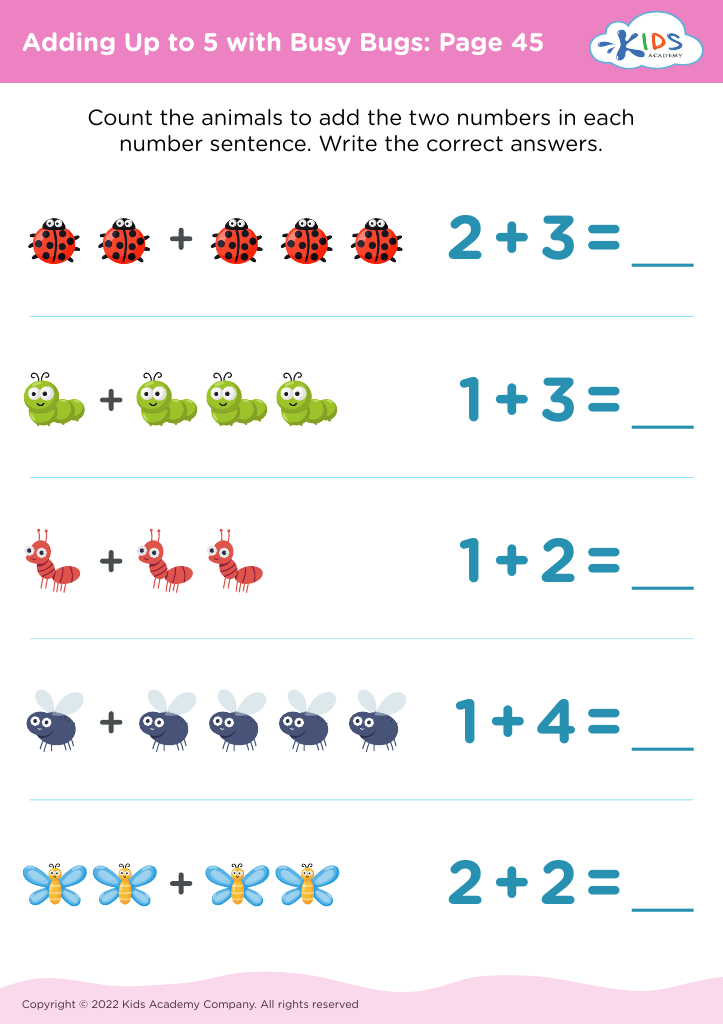
Adding Up to 5 with Busy Bugs: Page 45
Worksheet
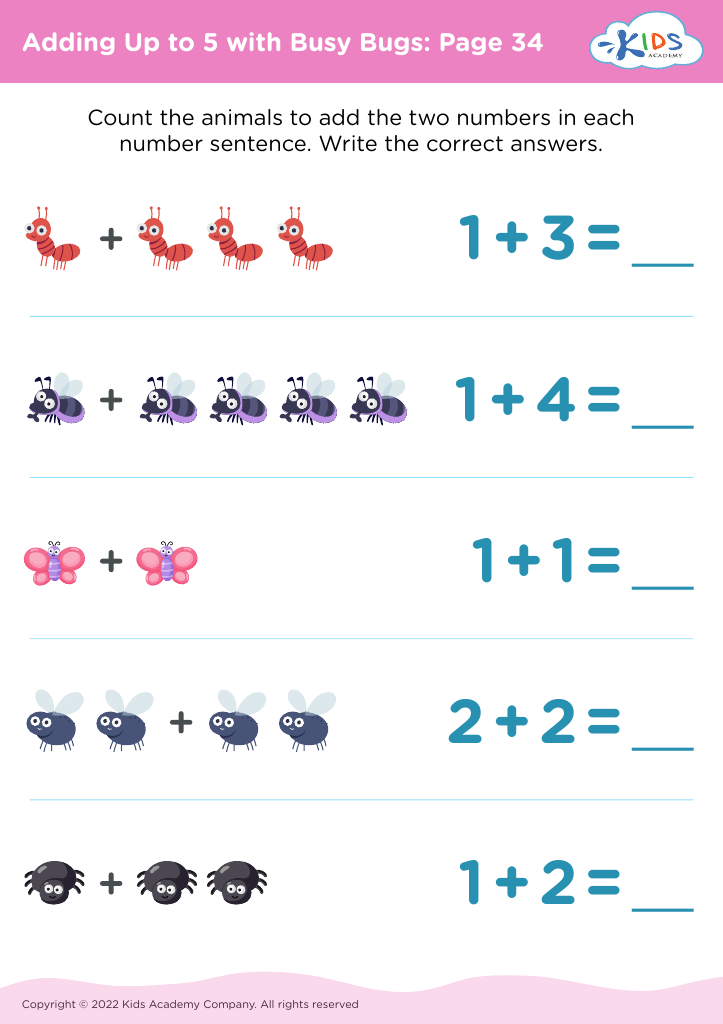
Adding Up to 5 with Busy Bugs: Page 34
Worksheet
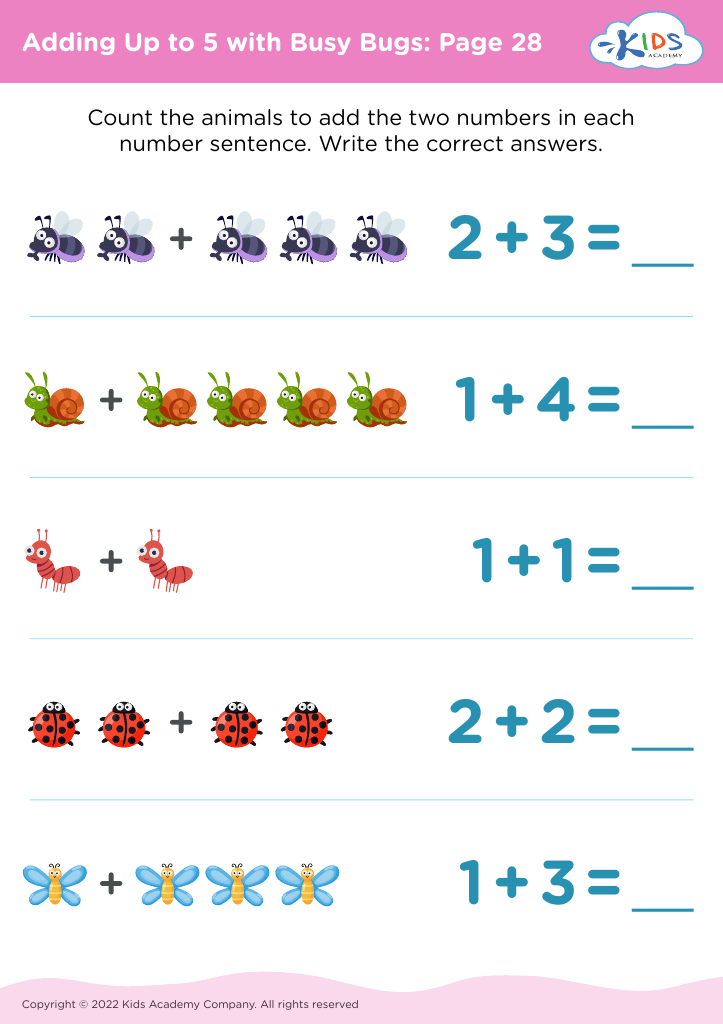
Adding Up to 5 with Busy Bugs: Page 28
Worksheet
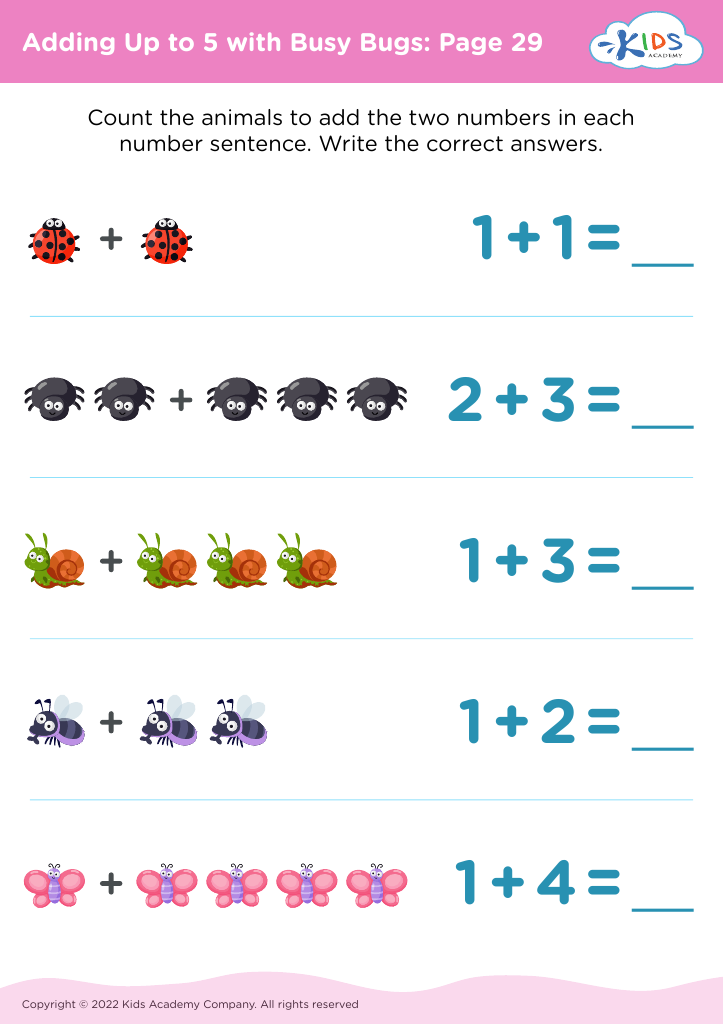
Adding Up to 5 with Busy Bugs: Page 29
Worksheet
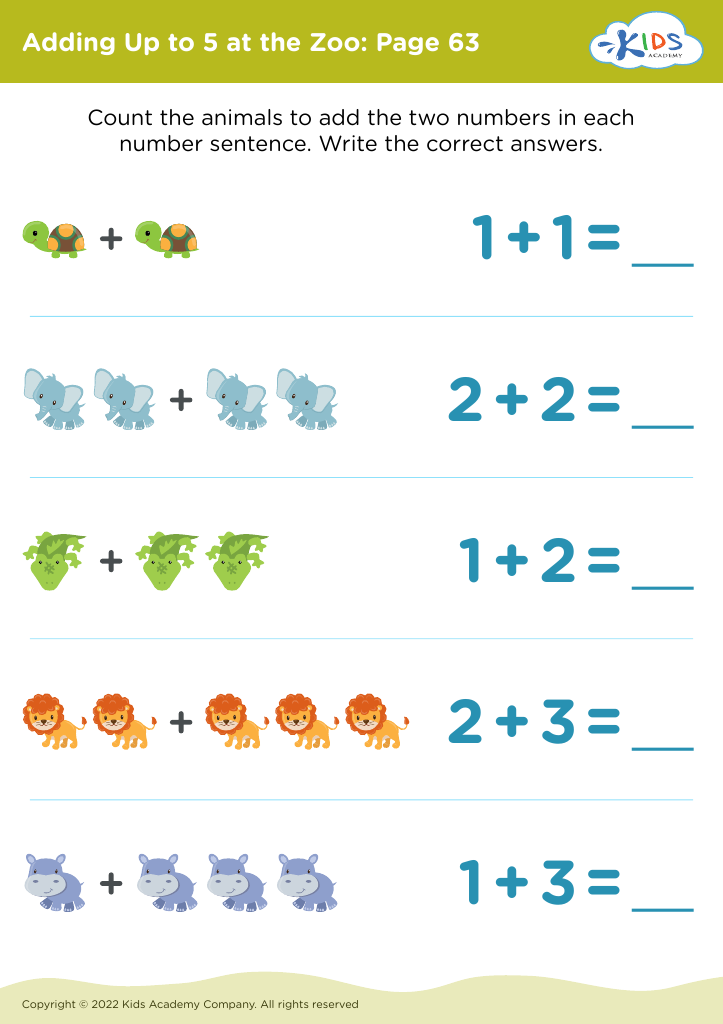
Adding Up to 5 at the Zoo: Page 63
Worksheet
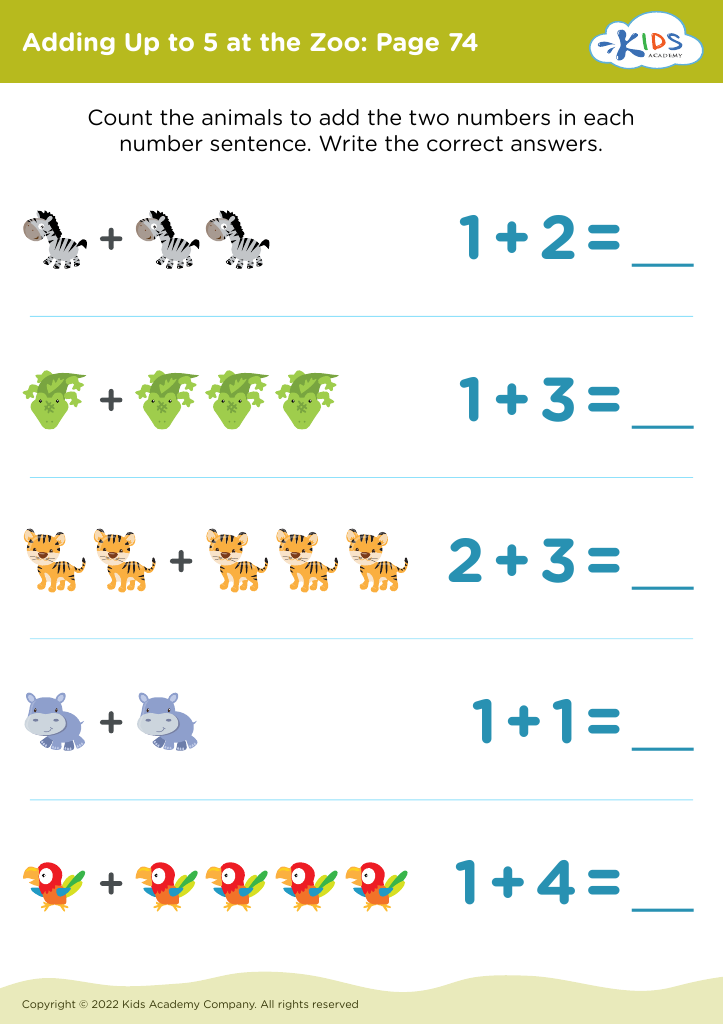
Adding Up to 5 at the Zoo: Page 74
Worksheet
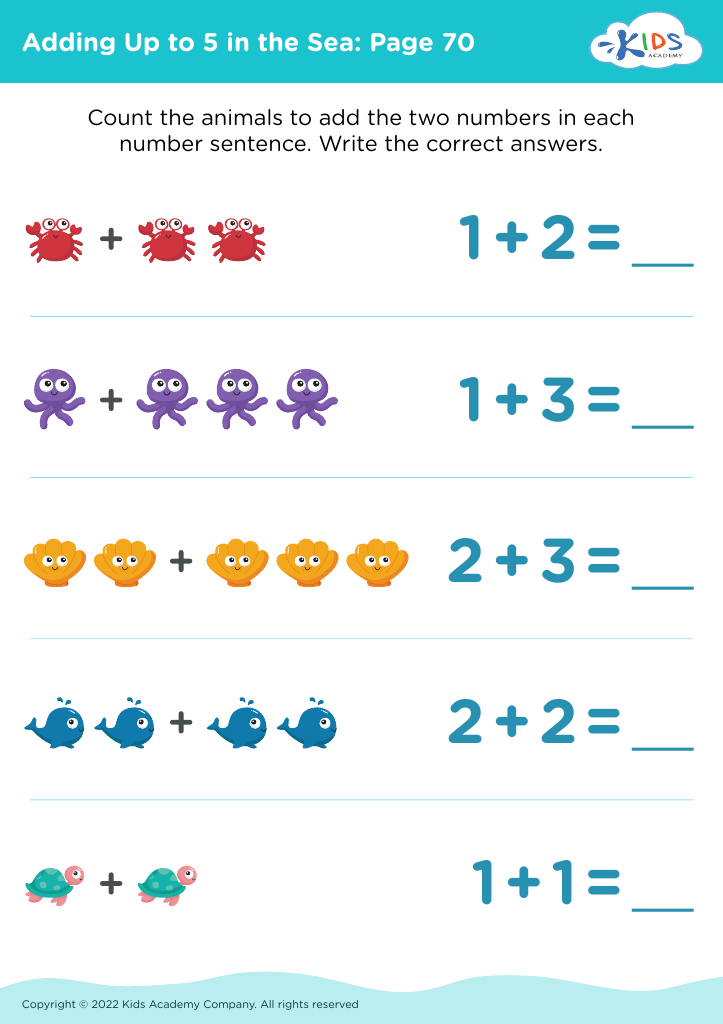
Adding Up to 5 in the Sea: Page 70
Worksheet
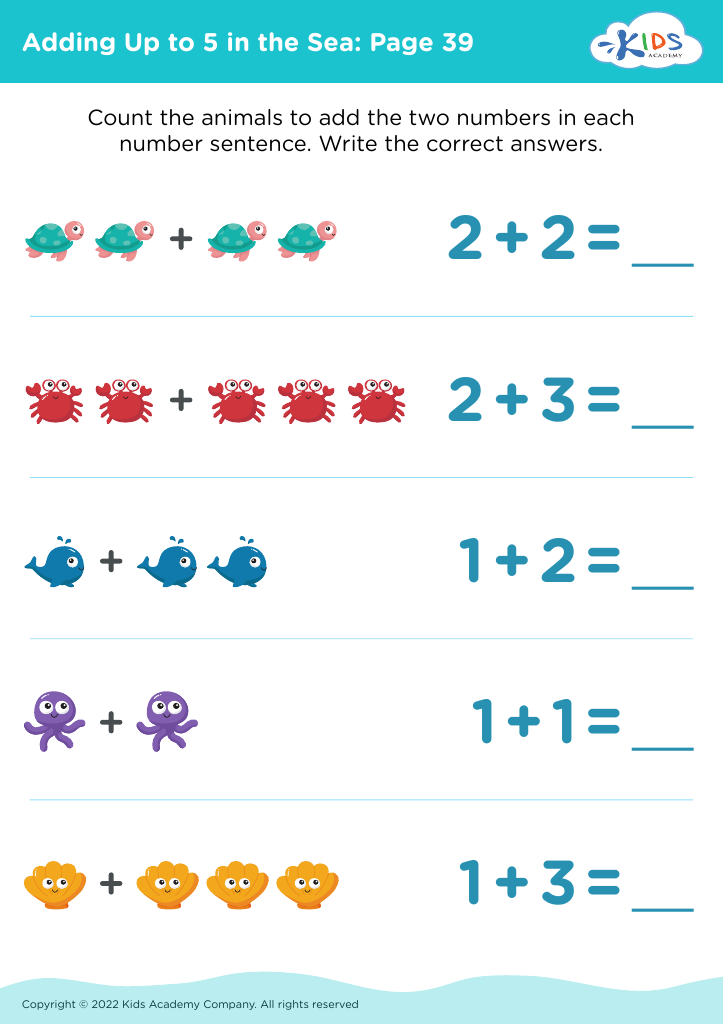
Adding Up to 5 in the Sea: Page 39
Worksheet
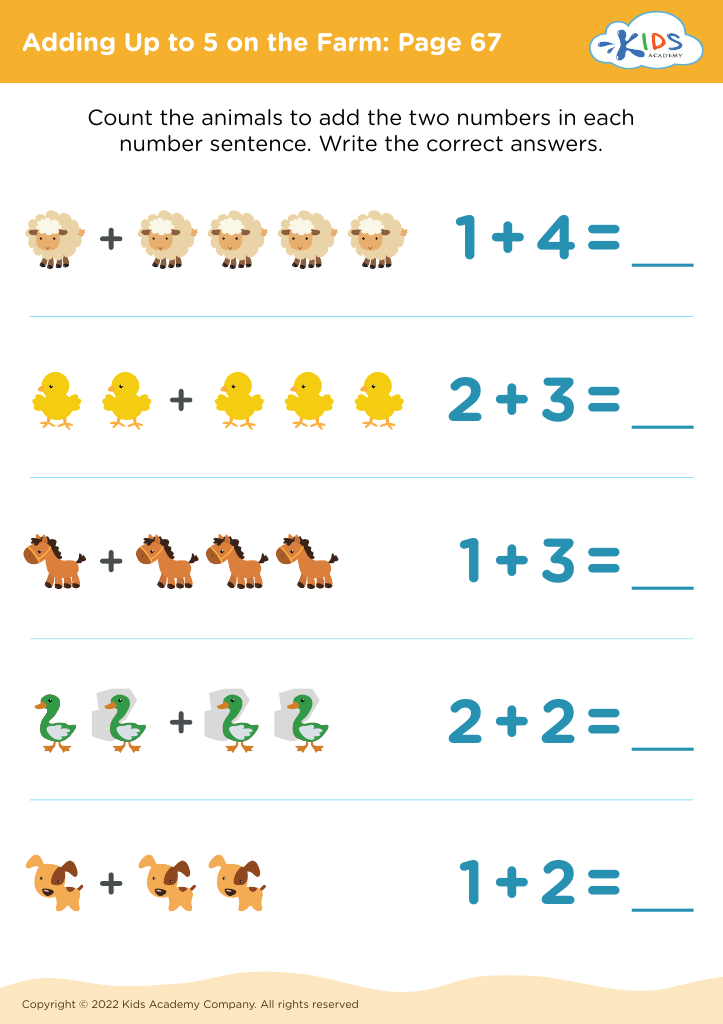
Adding Up to 5 on the Farm: Page 67
Worksheet
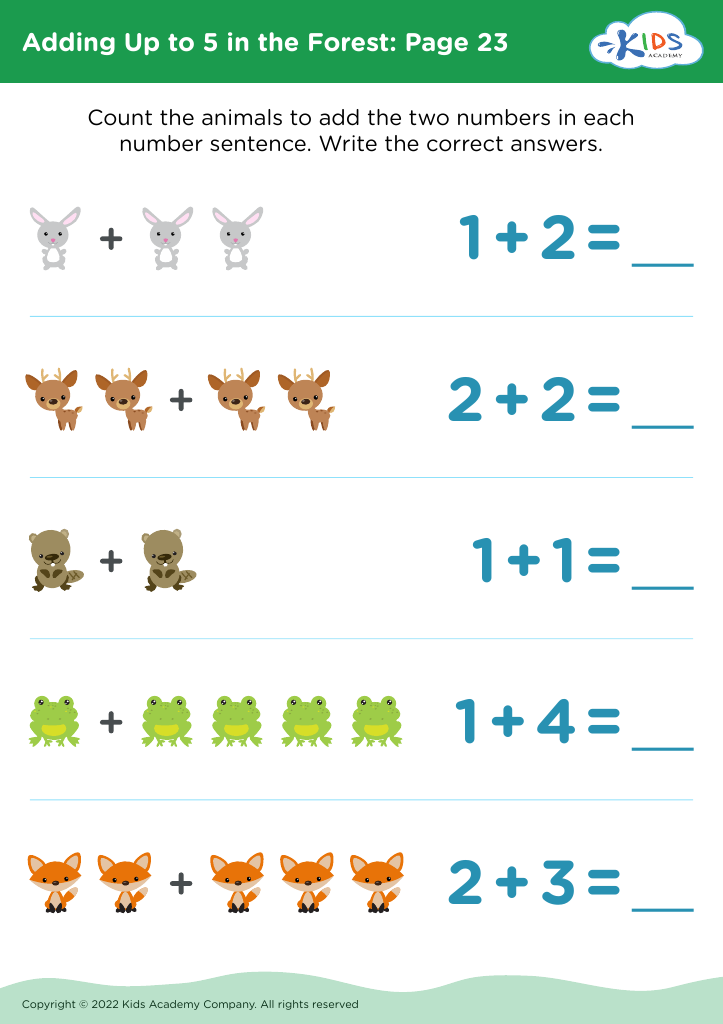
Adding Up to 5 in the Forest: Page 23
Worksheet
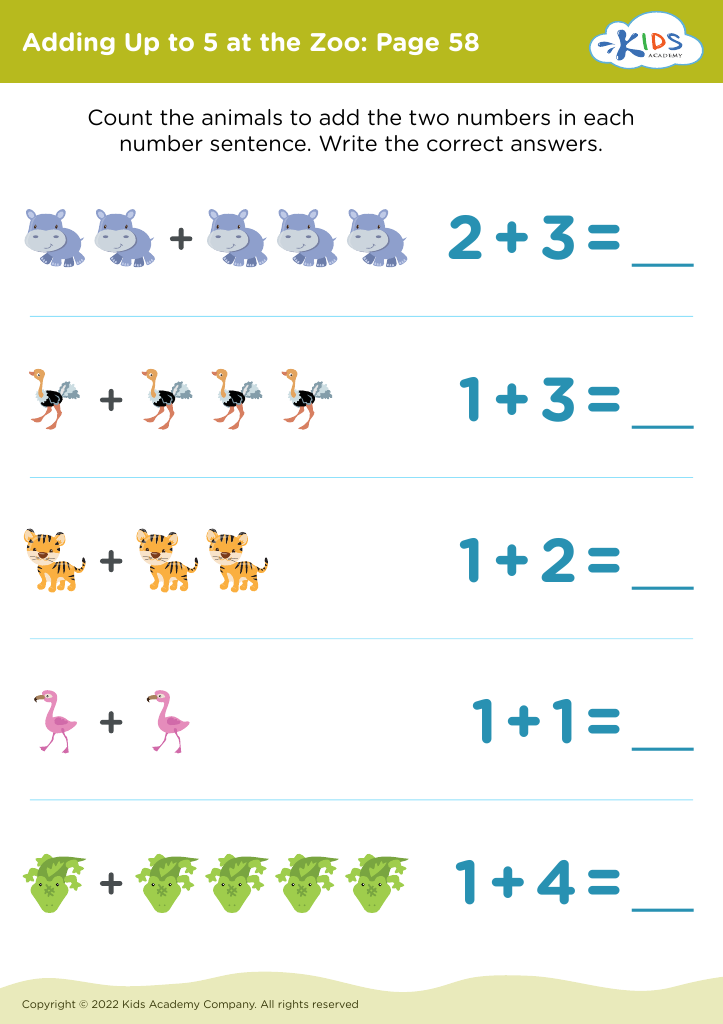
Adding Up to 5 at the Zoo: Page 58
Worksheet
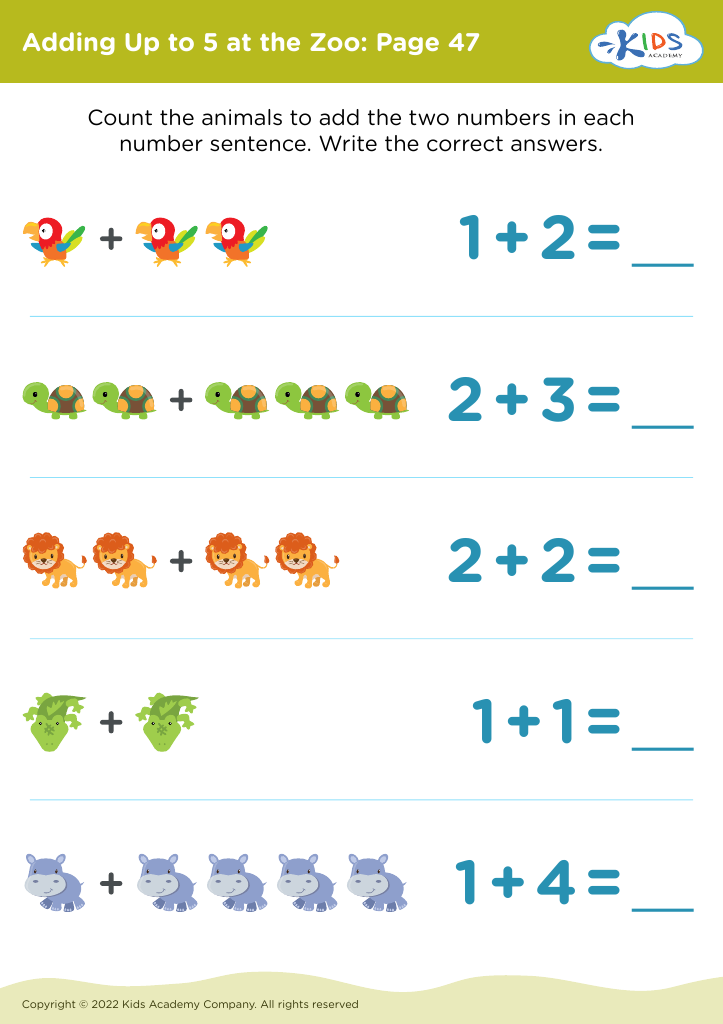
Adding Up to 5 at the Zoo: Page 47
Worksheet
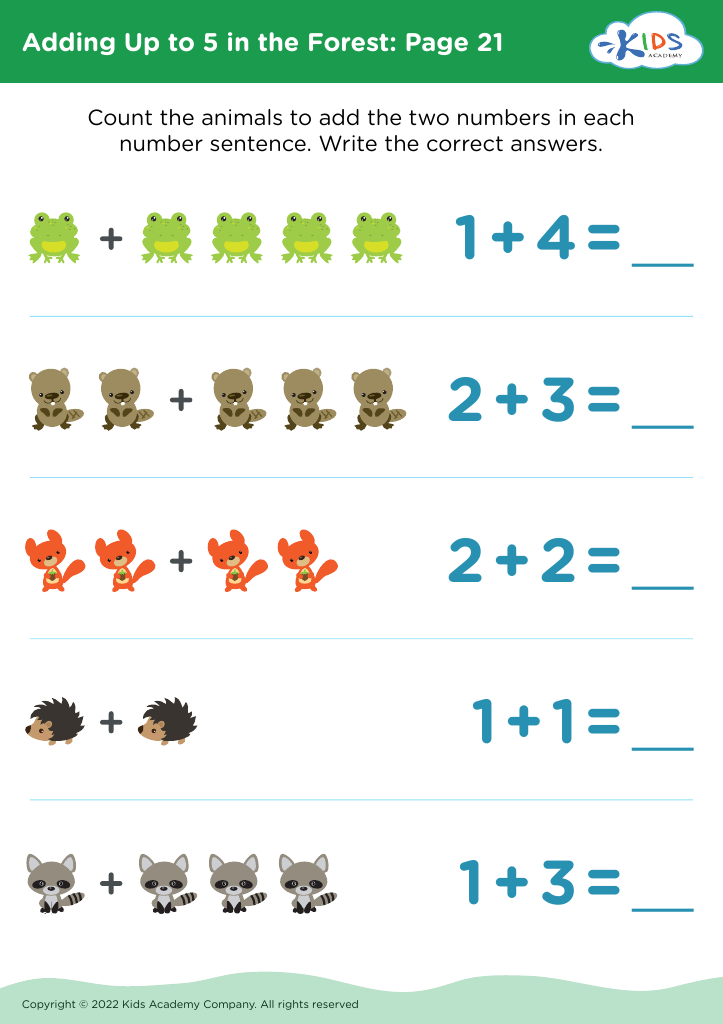
Adding Up to 5 in the Forest: Page 21
Worksheet
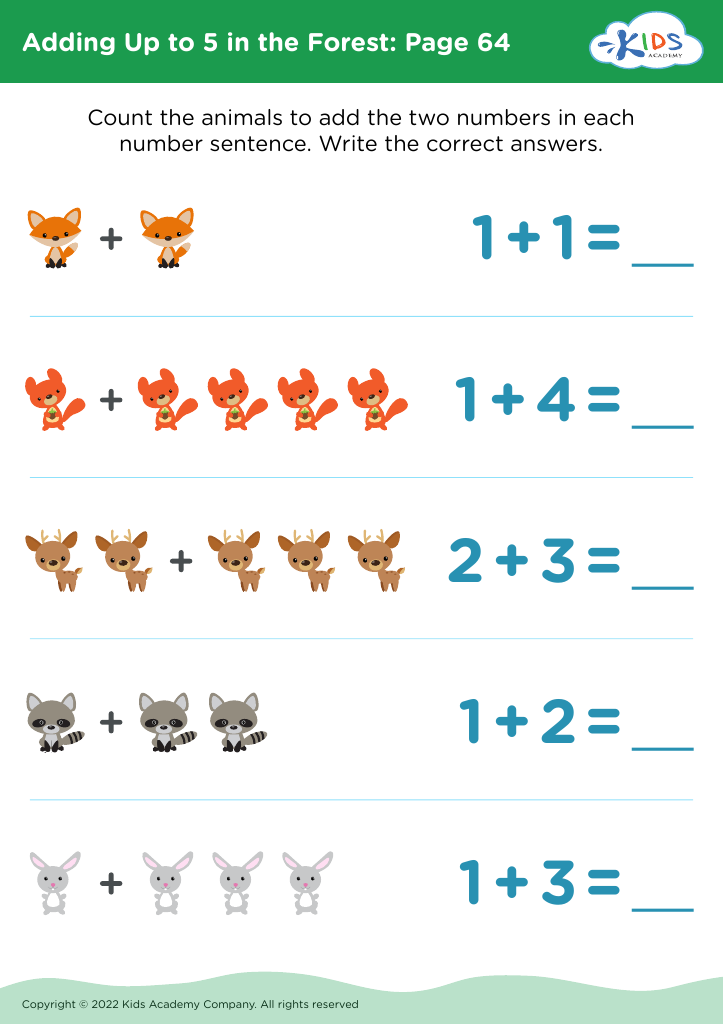
Adding Up to 5 in the Forest: Page 64
Worksheet
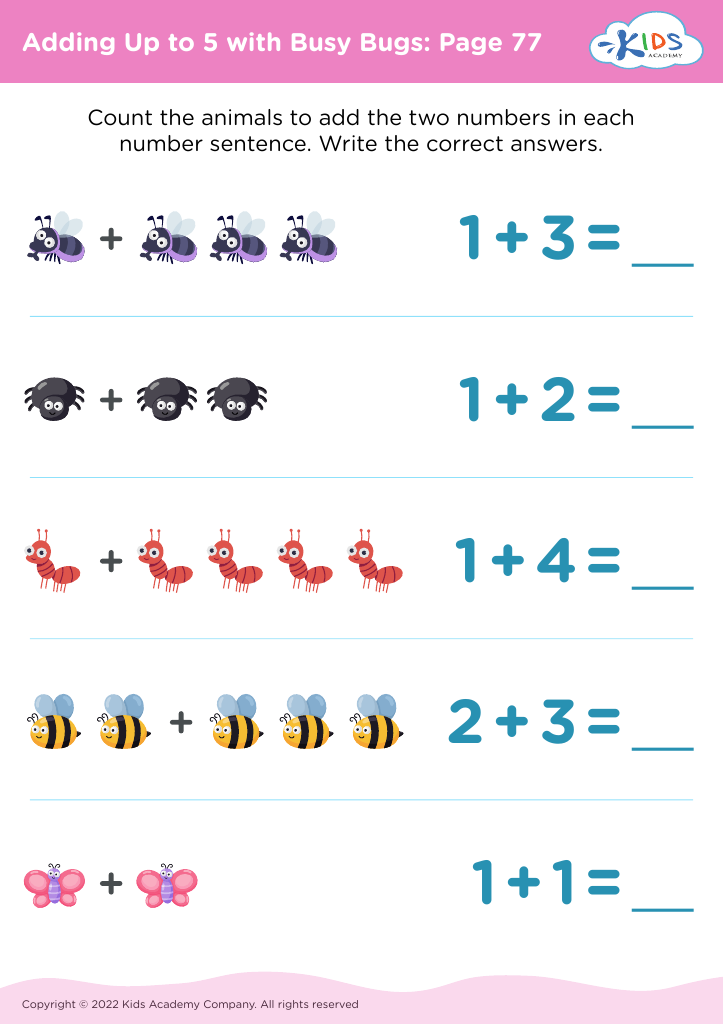
Adding Up to 5 with Busy Bugs: Page 77
Worksheet
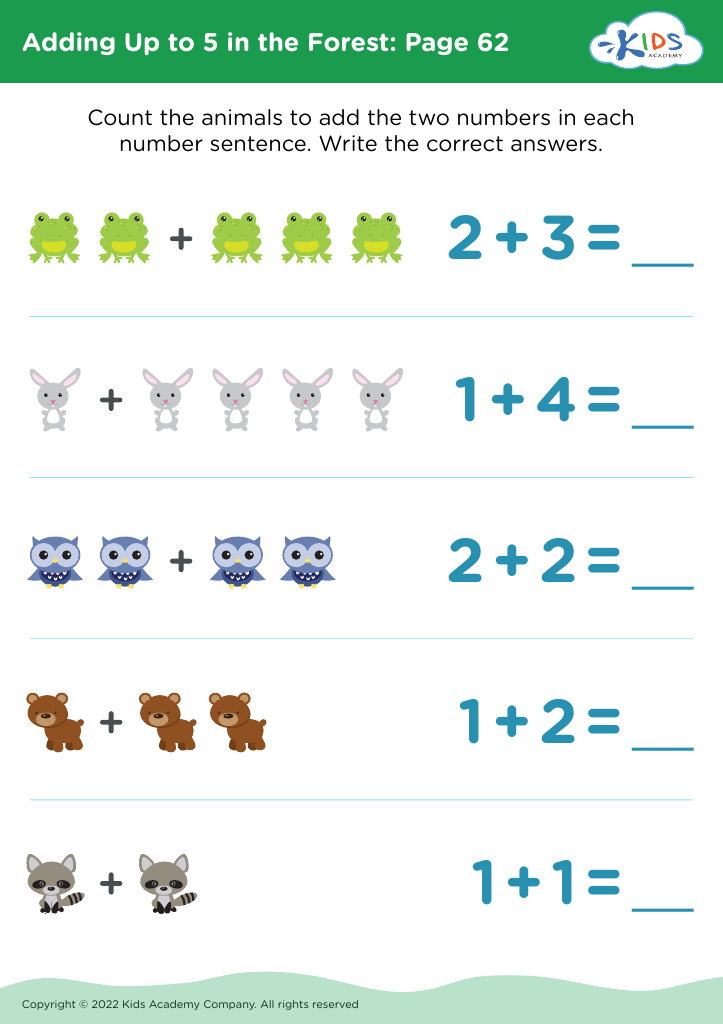
Adding Up to 5 in the Forest: Page 62
Worksheet
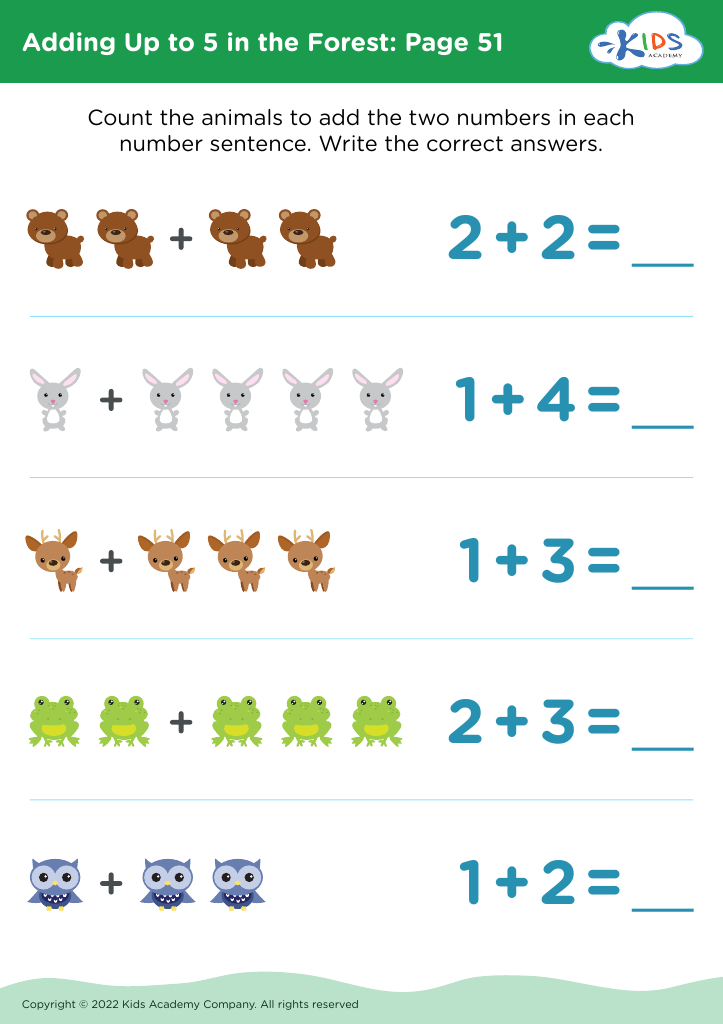
Adding Up to 5 in the Forest: Page 51
Worksheet
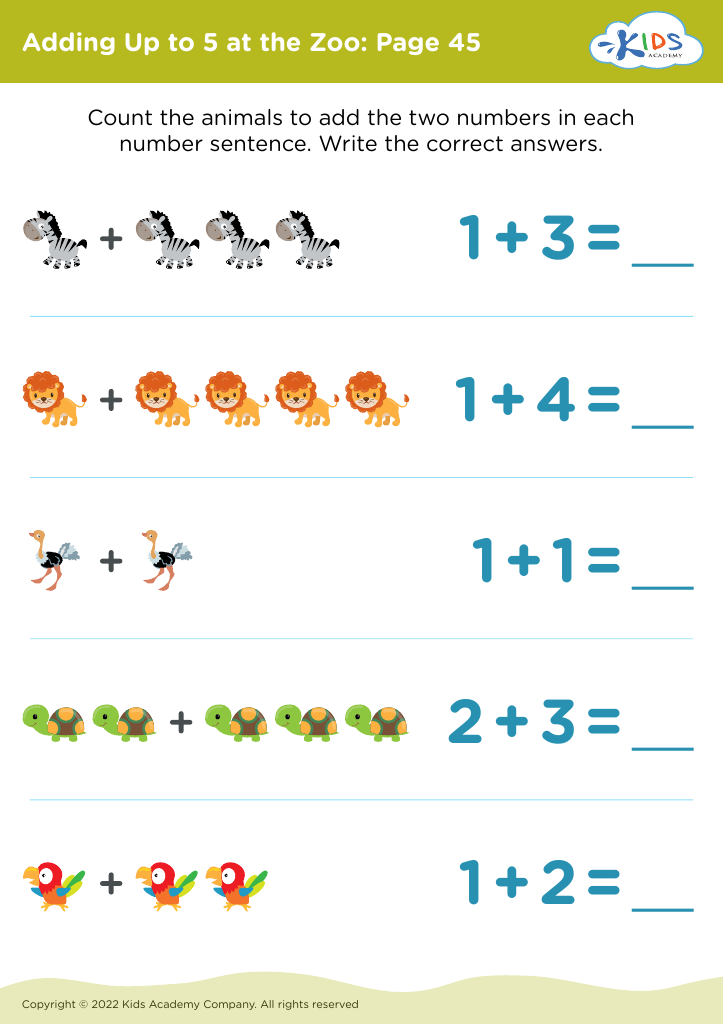
Adding Up to 5 at the Zoo: Page 45
Worksheet
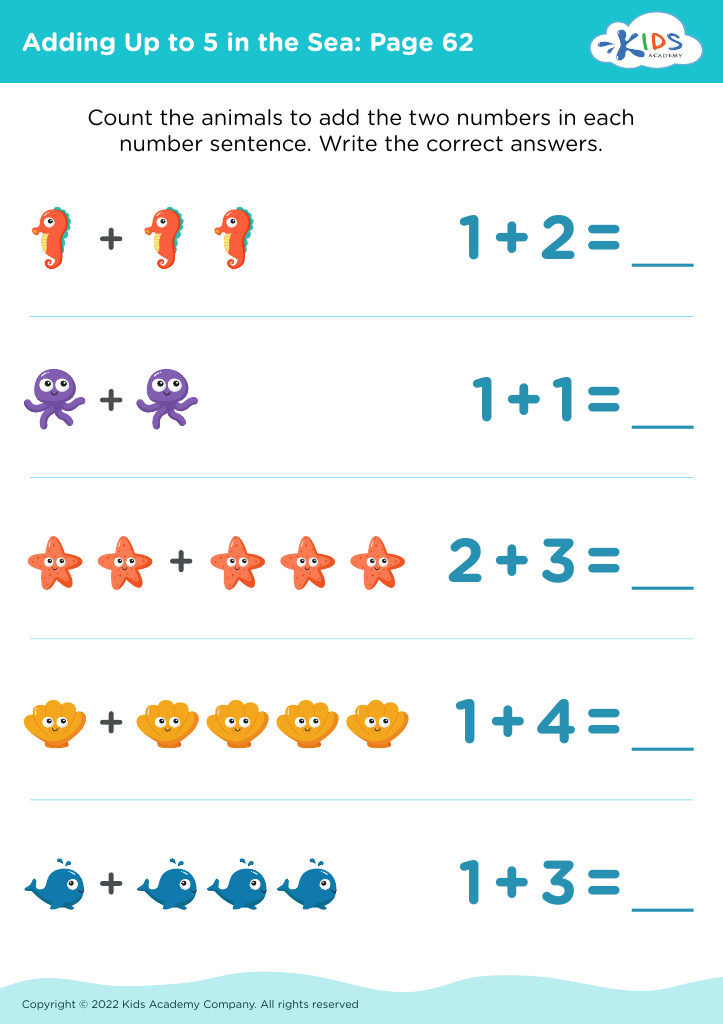
Adding Up to 5 in the Sea: Page 62
Worksheet
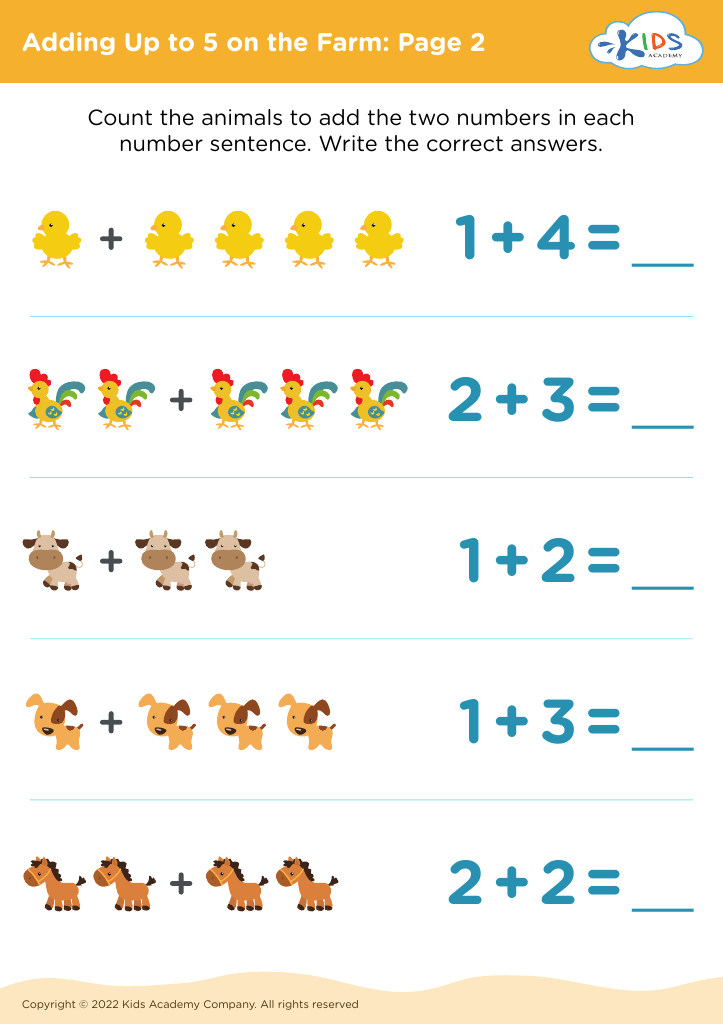
Adding Up to 5 on the Farm: Page 2
Worksheet
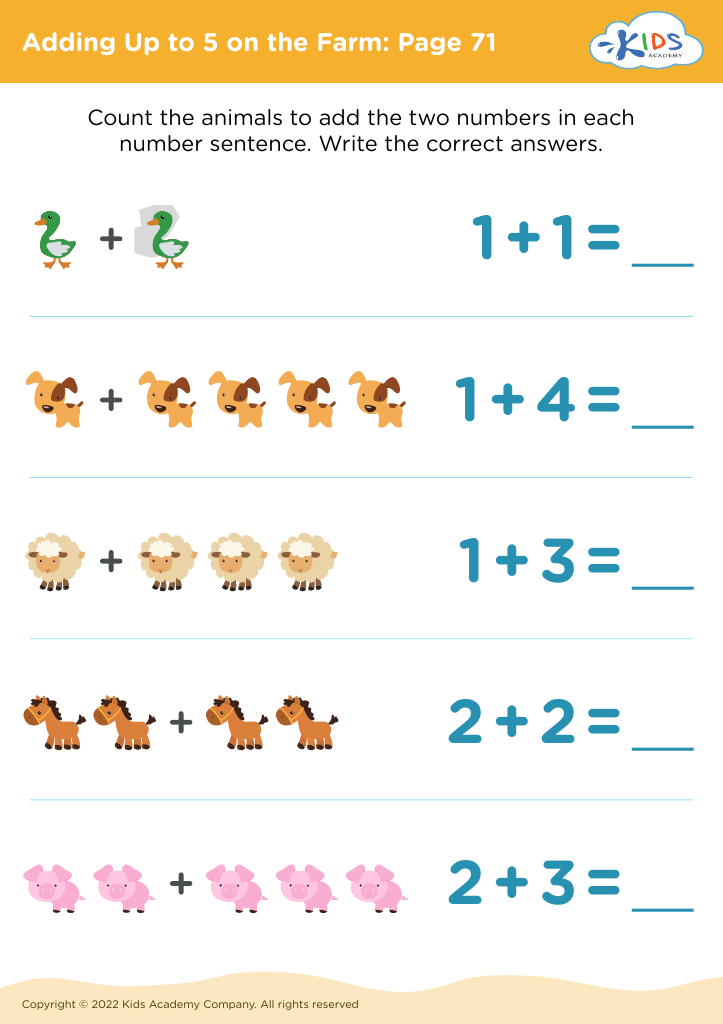
Adding Up to 5 on the Farm: Page 71
Worksheet
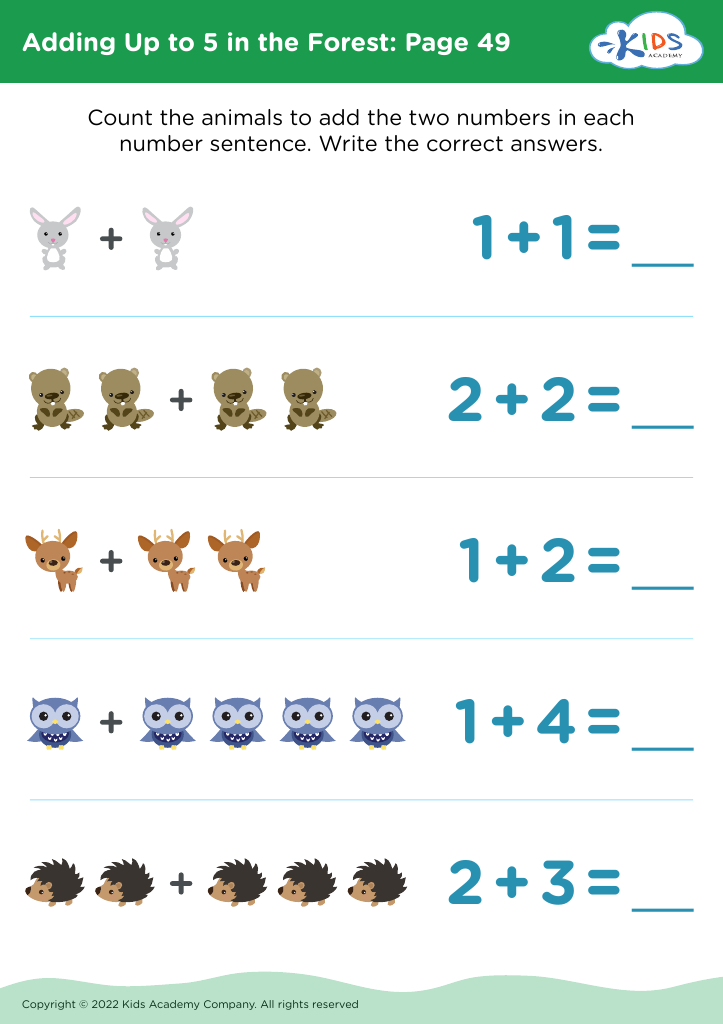
Adding Up to 5 in the Forest: Page 49
Worksheet


Parents and teachers should prioritize number recognition and addition skills for children aged 3-4 as these foundational abilities are crucial for early math development. At this tender age, children's brains are highly adaptable and primed for learning, making it the optimal period to introduce basic numerical concepts. Number recognition is essential as it enables children to identify and understand numbers, forming the bedrock of their math skills. When children recognize numbers, they can begin to make sense of their world through quantifying objects, comparing quantities, and recognizing patterns.

Introducing simple addition alongside number recognition solidifies these concepts, teaching children how to combine groups of objects and conceptualize the total amount. This fundamental skill translates to problem-solving abilities, logical reasoning, and a deeper understanding of how numbers interact, which are pivotal for all future math learning and daily life skills. Moreover, early competency in number recognition and addition boosts children's confidence, fostering a positive attitude toward math that can propel their academic success. Thus, investing time and effort into teaching number recognition and addition to young children can yield significant long-term benefits, nurturing their cognitive development and ensuring they are well-prepared for more complex mathematical tasks in later years.