Problem-solving practice Addition Worksheets for Ages 3-4
3 filtered results
-
From - To
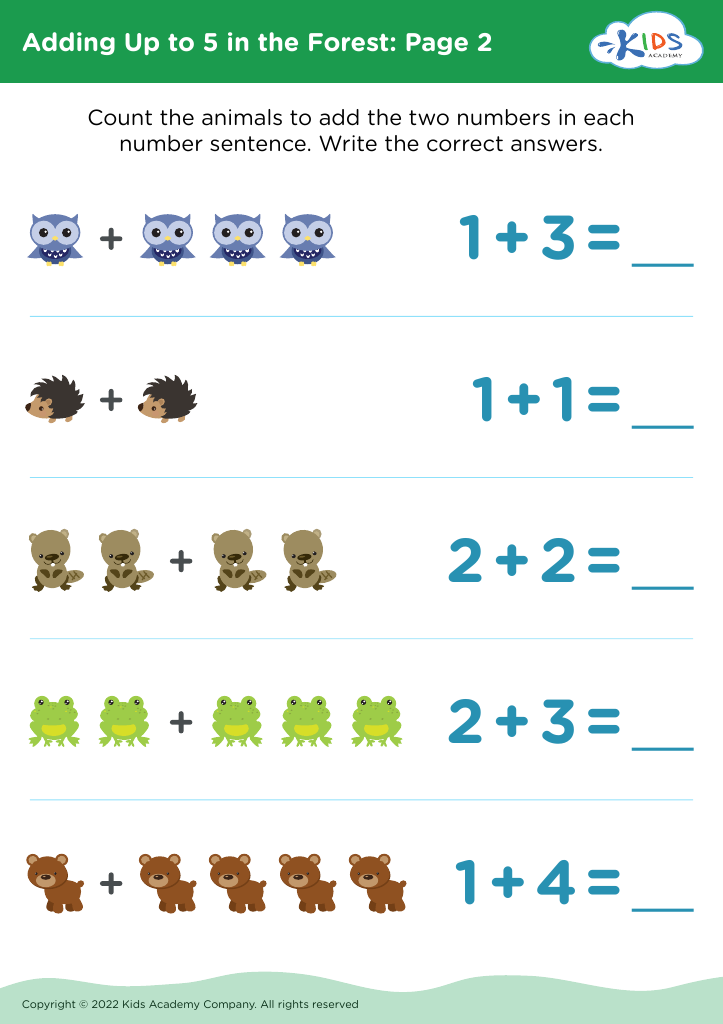
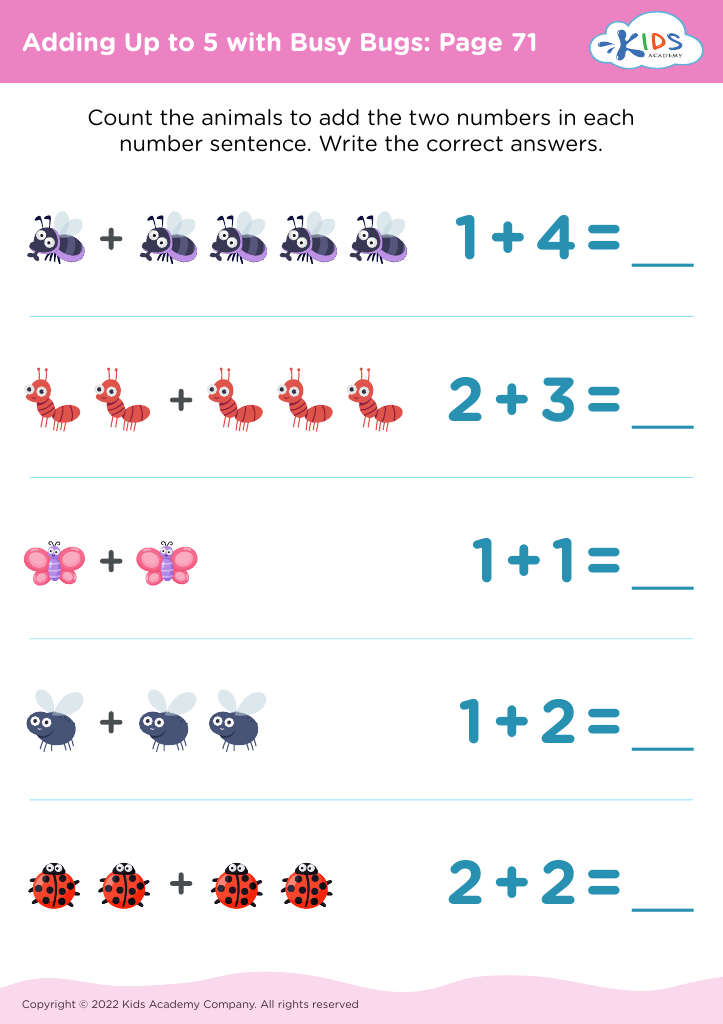
Discover our engaging Problem-Solving Practice Addition Worksheets designed specifically for children aged 3-4. These interactive worksheets provide a fun and effective way for young learners to develop foundational math skills through playful problem-solving scenarios. Each activity encourages critical thinking and helps children understand basic addition concepts using colorful visuals and relatable situations. Our worksheets promote cognitive development while allowing kids to explore numbers and solve simple addition problems at their own pace. Perfect for parents and educators, these resources are tailored to make learning enjoyable and engaging so your child can build confidence in their math abilities early on!
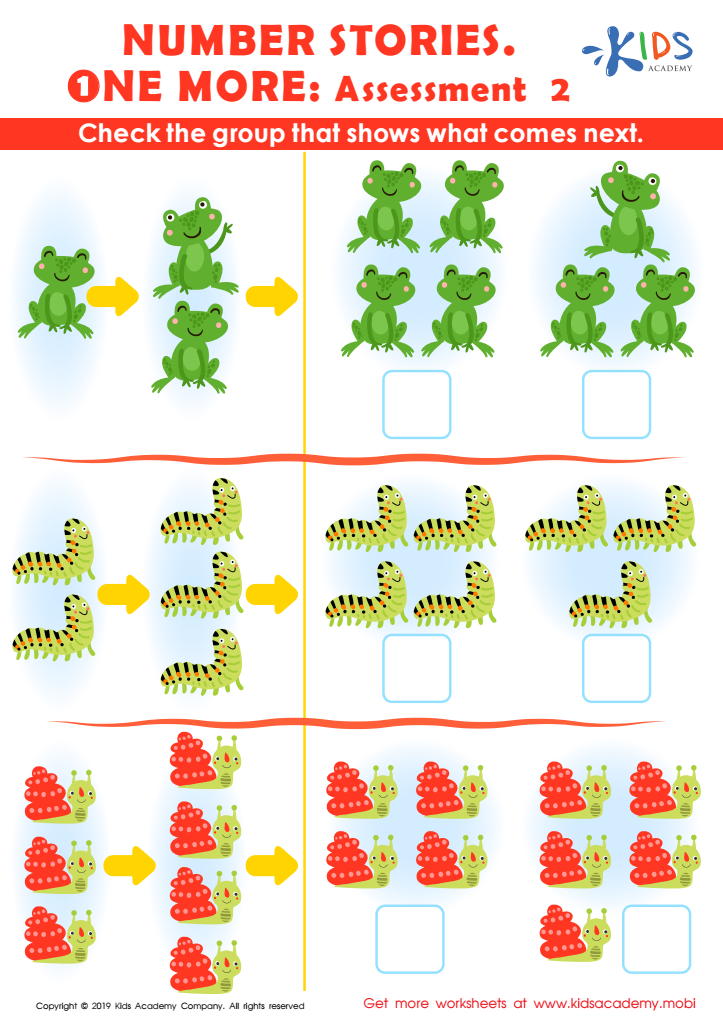
Number Stories One More – Assessment 2 Worksheet
 Assign to My Students








Parents and teachers should care about problem-solving practice in addition for children aged 3-4 because it lays the foundation for critical thinking and cognitive development. At this age, children are naturally curious and eager to explore mathematical concepts, making it an ideal time to introduce simple addition skills through engaging, hands-on activities.
Practicing addition helps children develop essential skills such as counting, number recognition, and understanding relationships between quantities. Encouraging problem-solving fosters independence and perseverance as they learn to approach challenges with confidence. This early exposure not only promotes mathematical understanding but also strengthens their overall problem-solving abilities, which are crucial across all areas of learning.
Moreover, engaging in addition activities can enhance language development, as children learn to express their thought processes and communicate about numbers and quantities. This interactive learning also supports social skills when done in group settings, encouraging cooperation and collaborative problem-solving.
Ultimately, focusing on addition at this formative age prepares children for future mathematical success and builds a positive attitude towards learning. By prioritizing structured yet playful problem-solving practice, parents and teachers can contribute to a child's lasting curiosity and enthusiasm for mathematics throughout their educational journey.








