Check out this FREE Trial Lesson on Addition for age 3-4!

X

Favorites
With answer key
Interactive
  • 3-4
  • Understanding Quantities
  • Addition
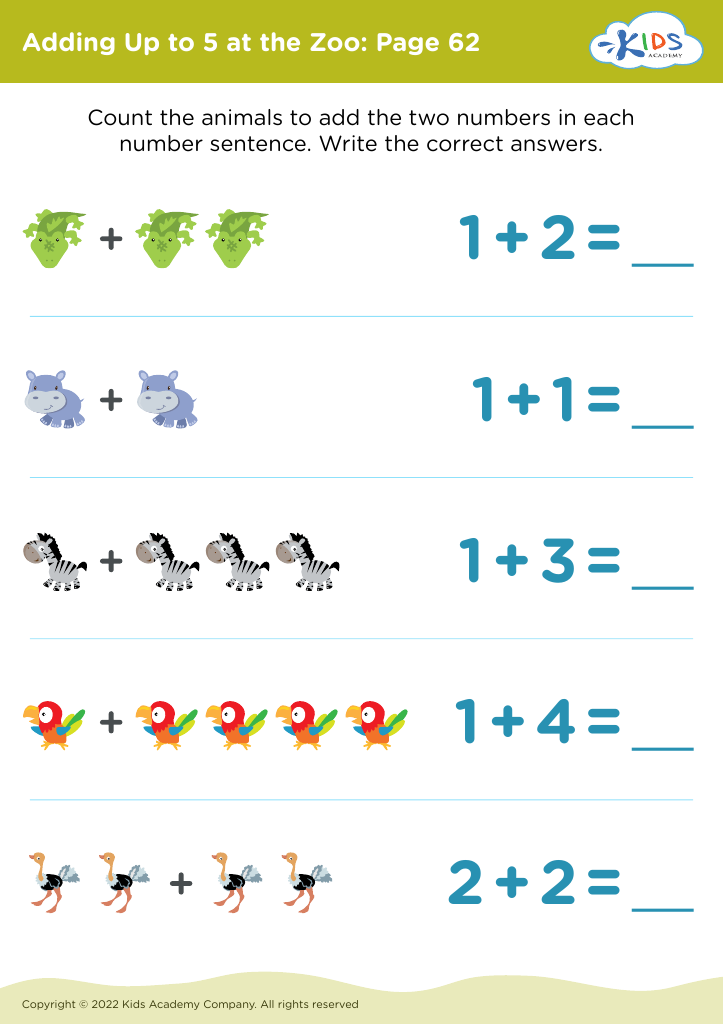
Adding Up to 5 at the Zoo: Page 62
Worksheet
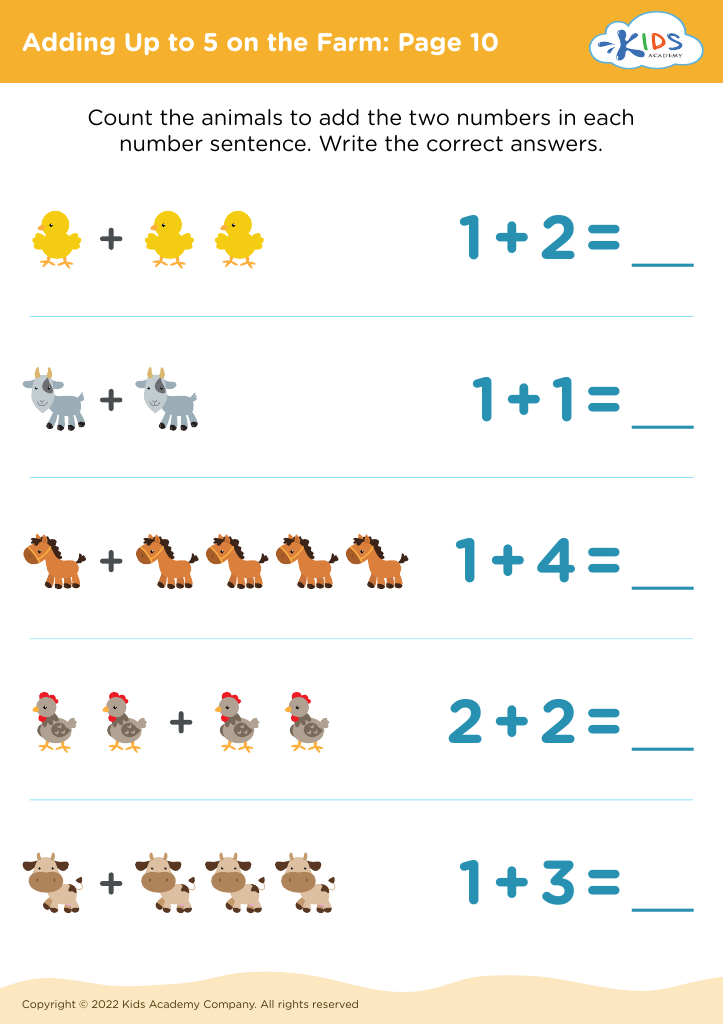
Adding Up to 5 on the Farm: Page 10
Worksheet
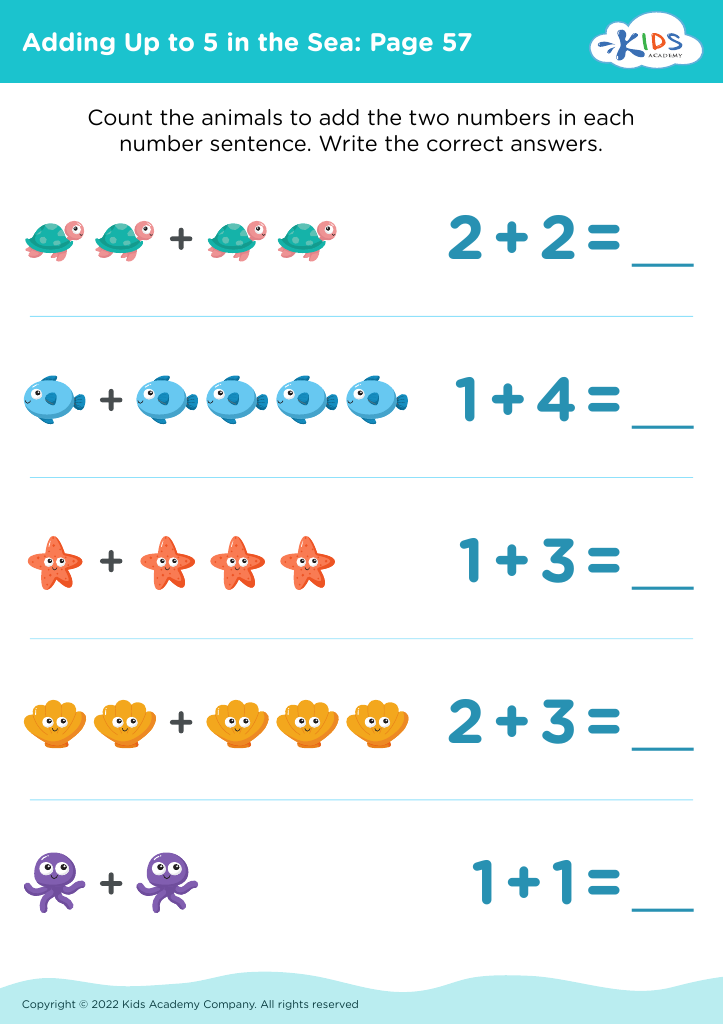
Adding Up to 5 in the Sea: Page 57
Worksheet
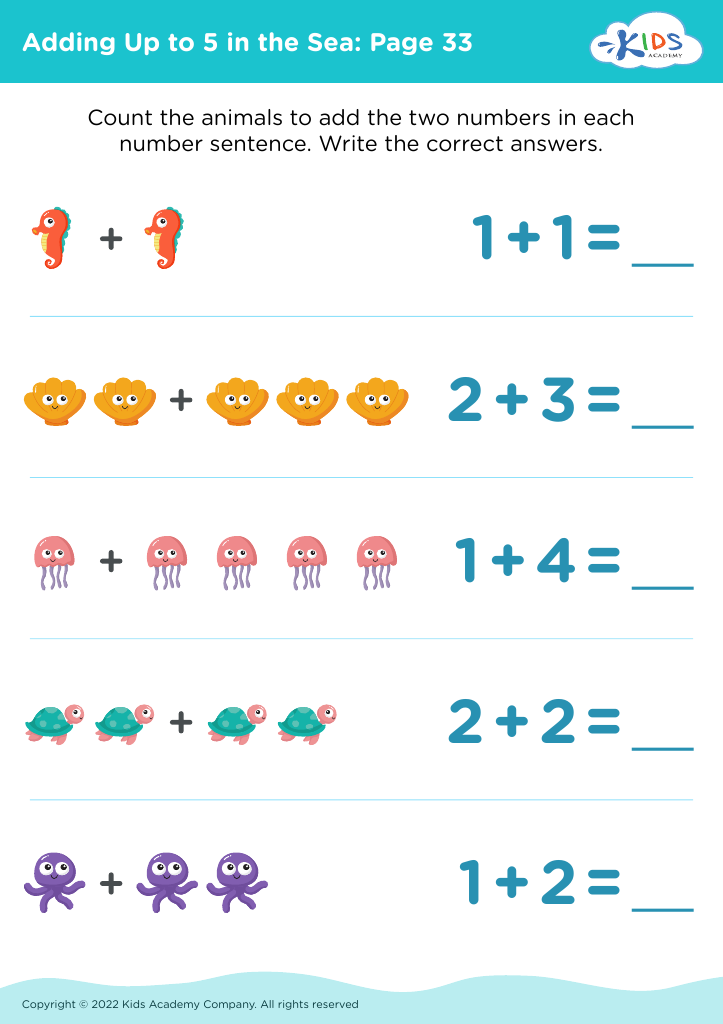
Adding Up to 5 in the Sea: Page 33
Worksheet
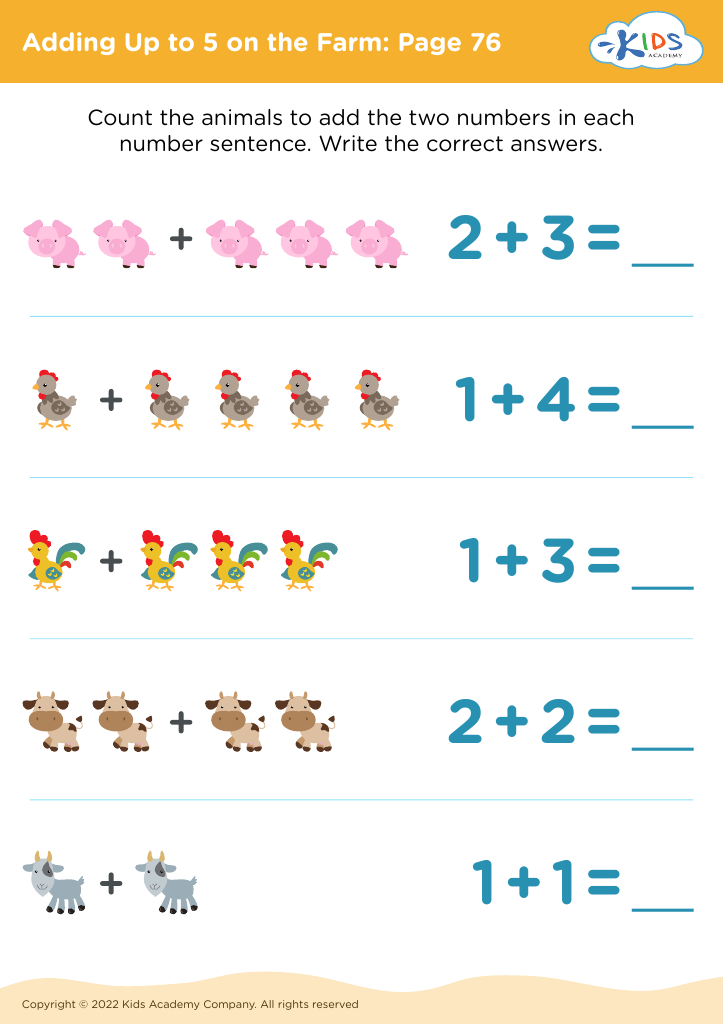
Adding Up to 5 on the Farm: Page 76
Worksheet
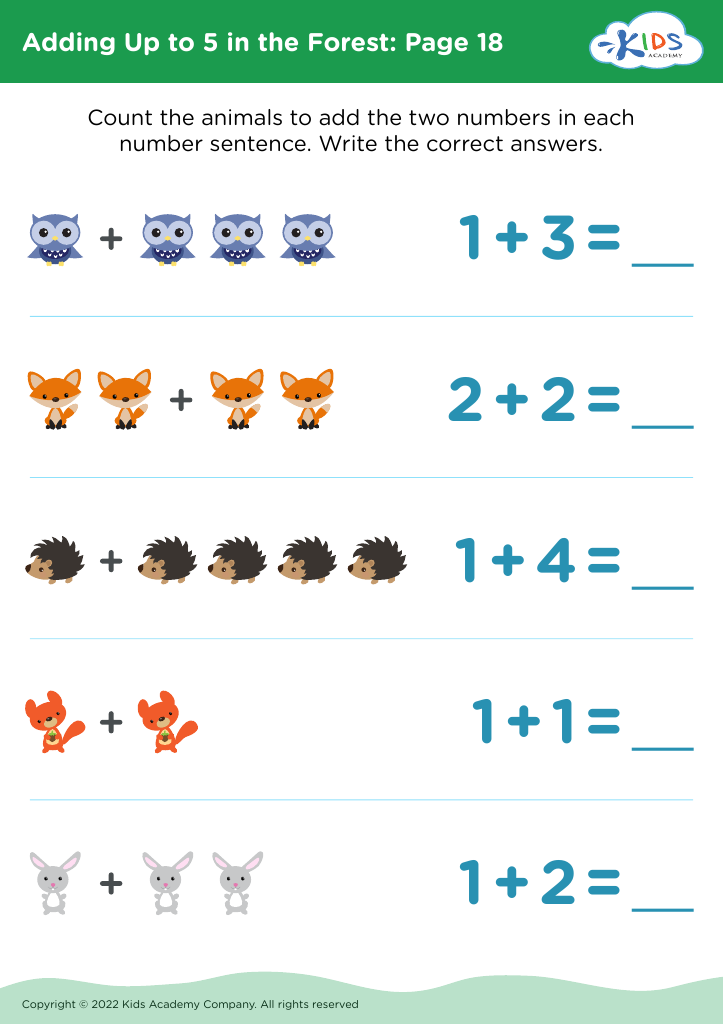
Adding Up to 5 in the Forest: Page 18
Worksheet
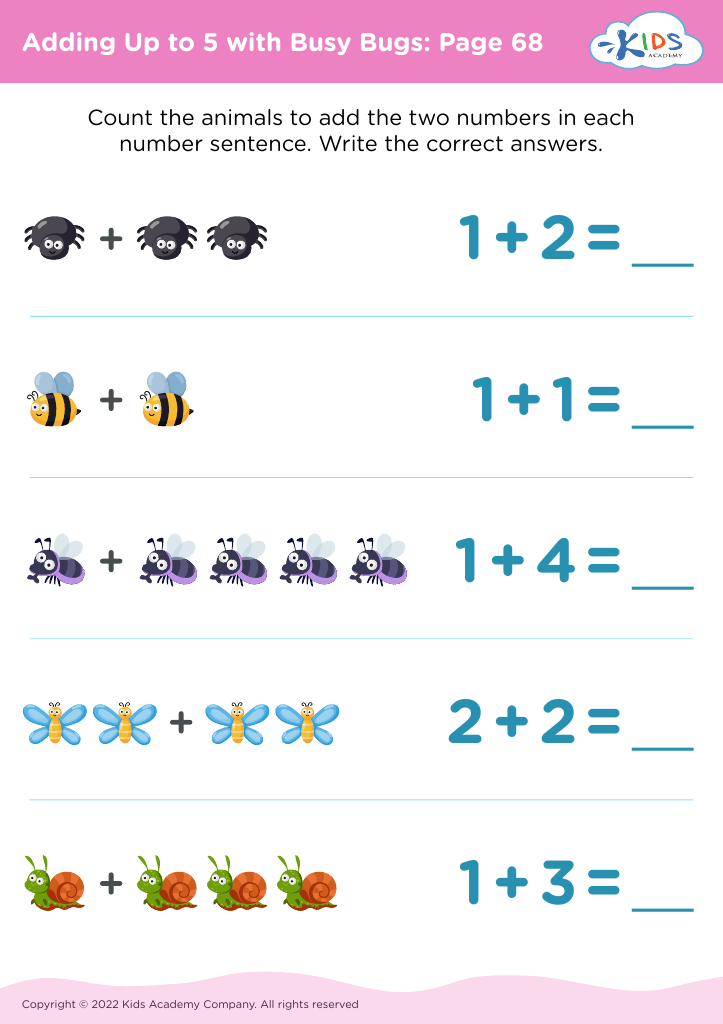
Adding Up to 5 with Busy Bugs: Page 68
Worksheet
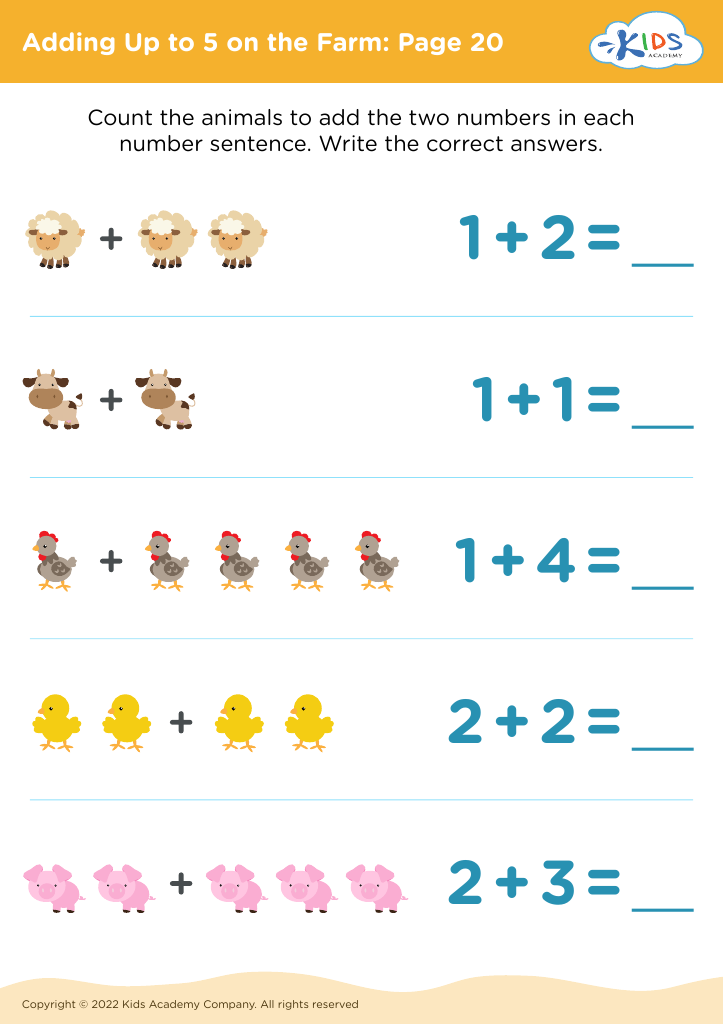
Adding Up to 5 on the Farm: Page 20
Worksheet
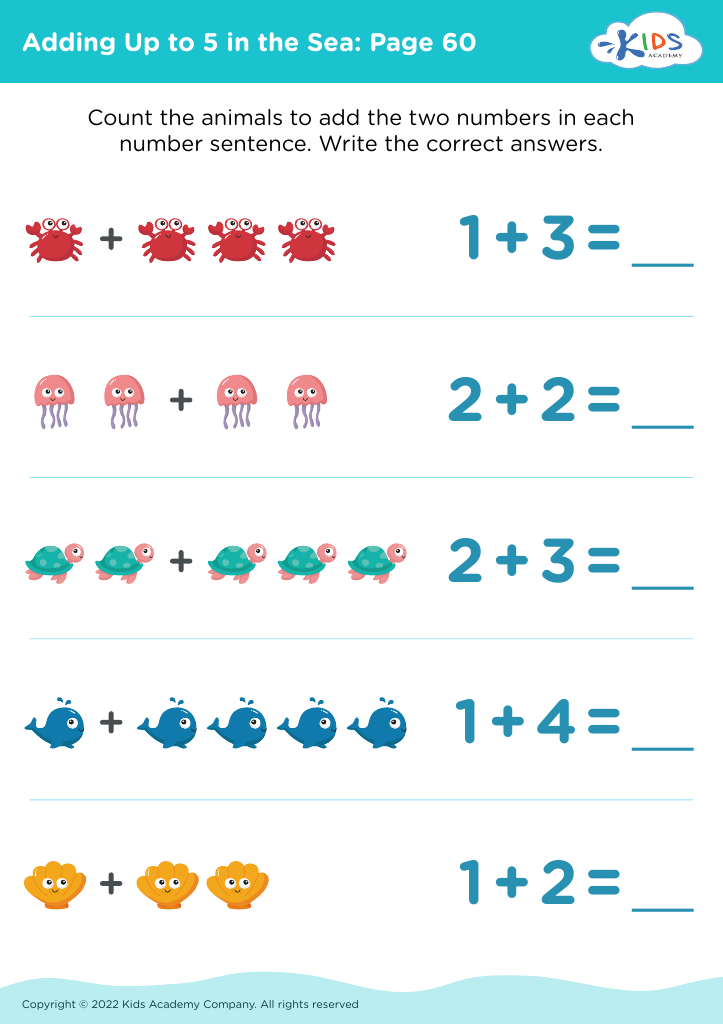
Adding Up to 5 in the Sea: Page 60
Worksheet
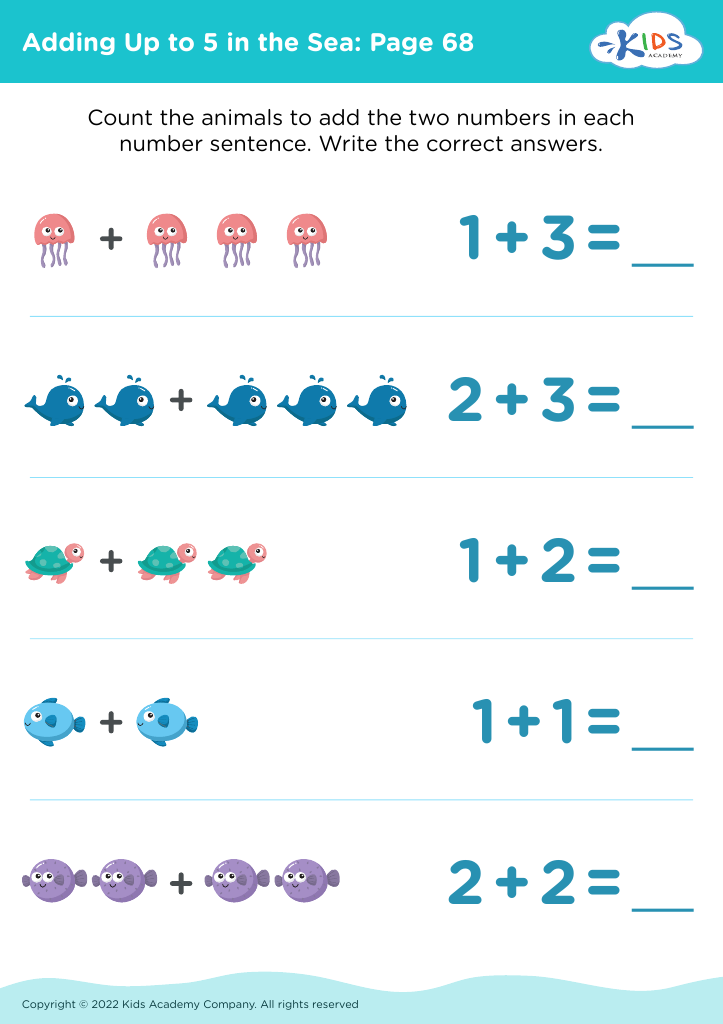
Adding Up to 5 in the Sea: Page 68
Worksheet
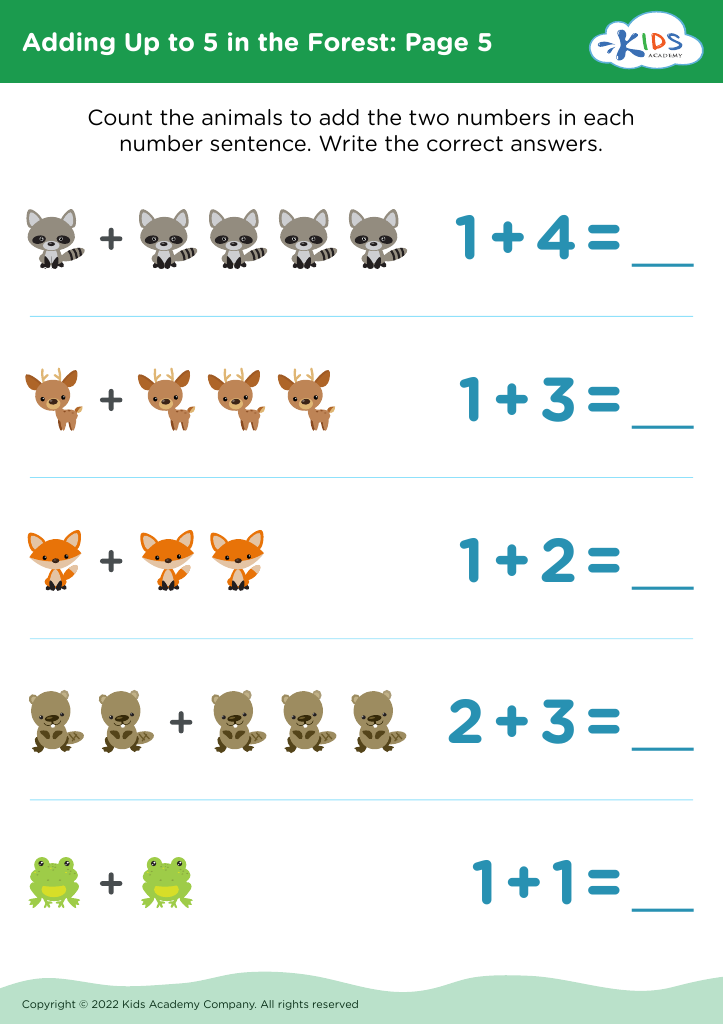
Adding Up to 5 in the Forest: Page 5
Worksheet
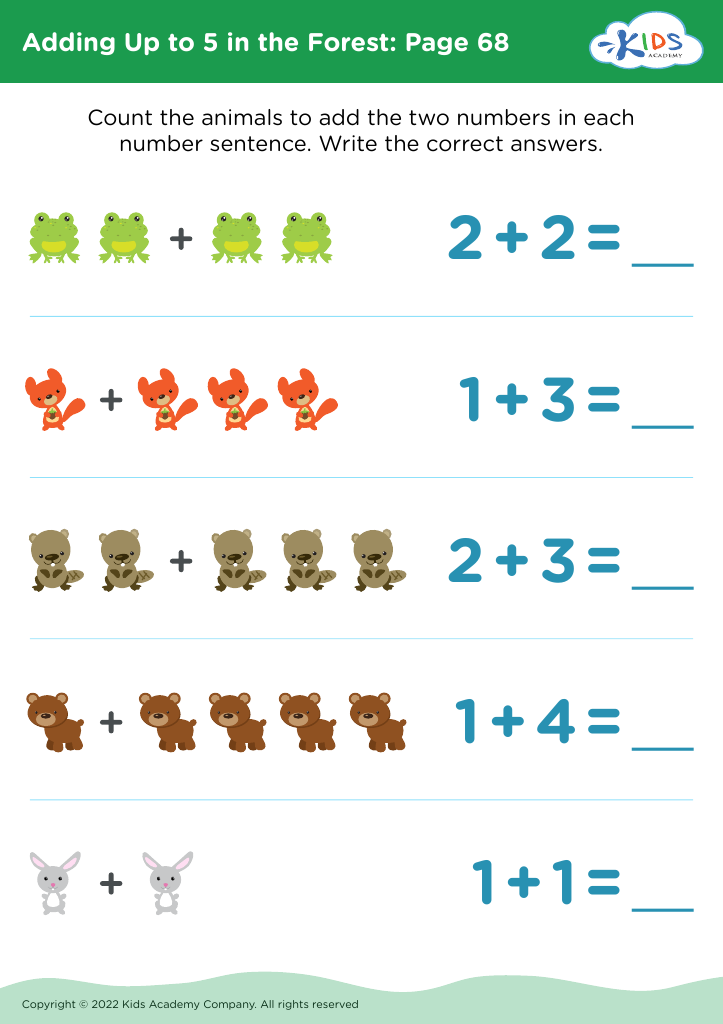
Adding Up to 5 in the Forest: Page 68
Worksheet
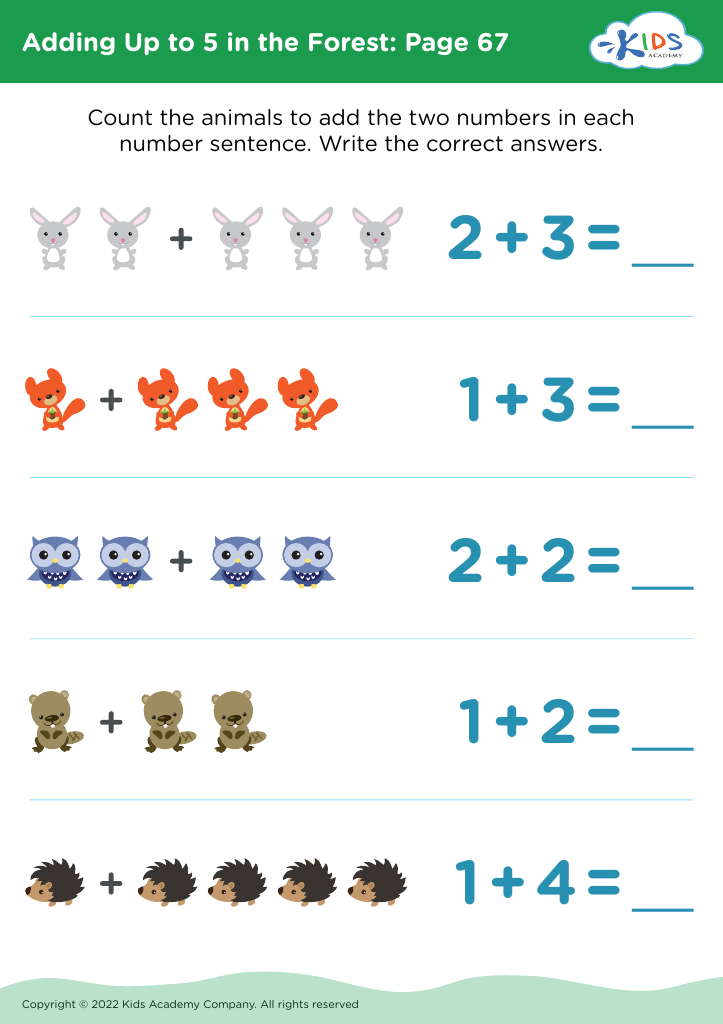
Adding Up to 5 in the Forest: Page 67
Worksheet
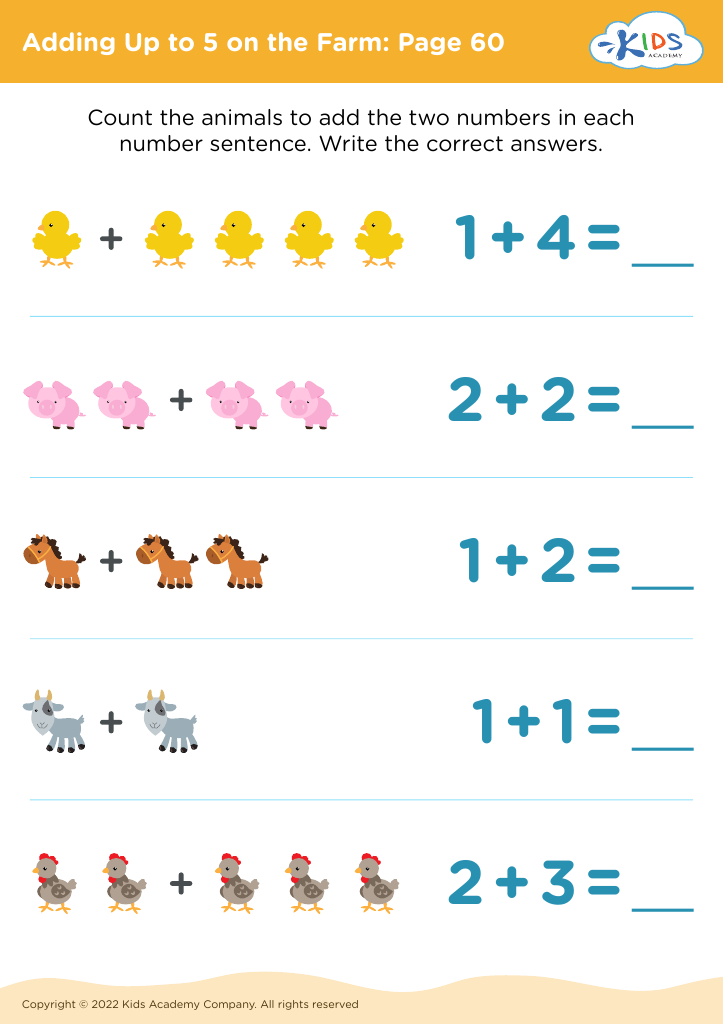
Adding Up to 5 on the Farm: Page 60
Worksheet


Understanding quantities and basic addition at the ages of 3-4 is essential because these skills lay the foundation for a child's future mathematical learning and cognitive development. At this stage, children are developing their number sense, which is the ability to connect numbers to actual quantities and understand their value within the world around them. Grasping these concepts early aids significantly in their comprehension of more complex mathematical principles they will encounter in school.

When children learn to add quantities, even in simple forms, they begin to develop critical thinking and problem-solving skills. Activities like counting objects, combining groups, or recognizing patterns stimulate brain development and support logical reasoning abilities. These fundamental skills are not only relevant for math-related tasks but also for daily decision-making and general learning processes.

Secondly, introducing children to addition fosters a positive attitude toward mathematics. Engaging, hands-on activities and visual aids create a fun and stimulating learning environment that shows math as enjoyable and accessible. Positive early experiences with numbers can enhance a child’s confidence in their abilities, and help to prevent the development of anxiety around math as they grow older.

In summary, understanding quantities and basic addition in early childhood nurtures essential cognitive skills, supports future academic success, and cultivates a lifelong positive relationship with mathematics.