
Visual perception Addition Worksheets for Ages 3-4
13 filtered results
Difficulty Level
Grade
Age
-
From - To
Subject
Activity
Standards
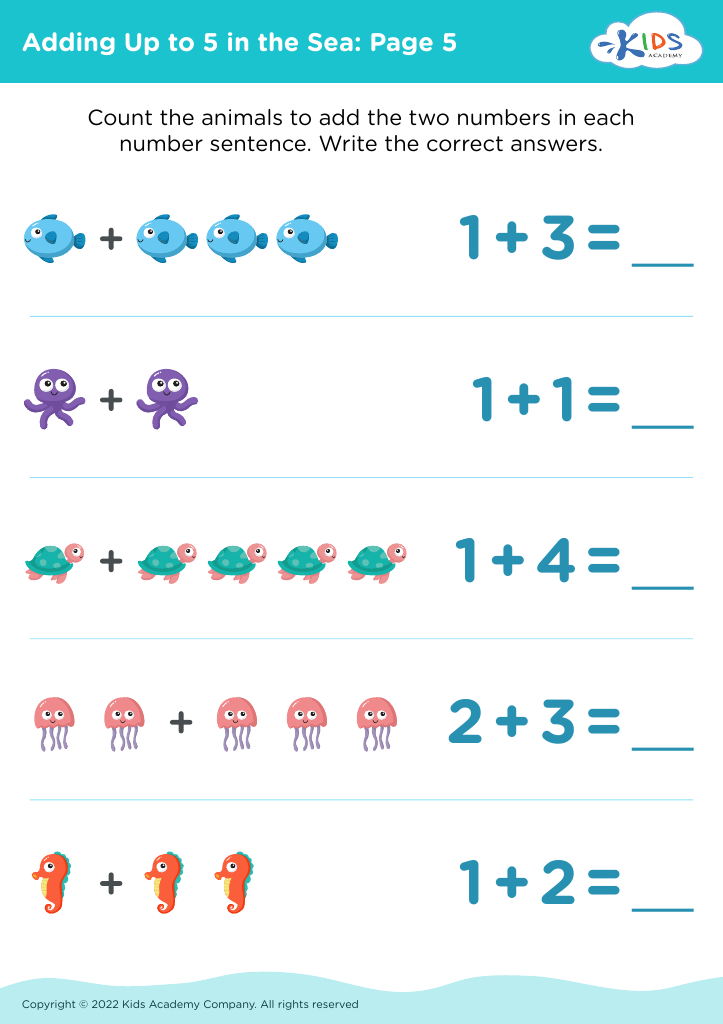
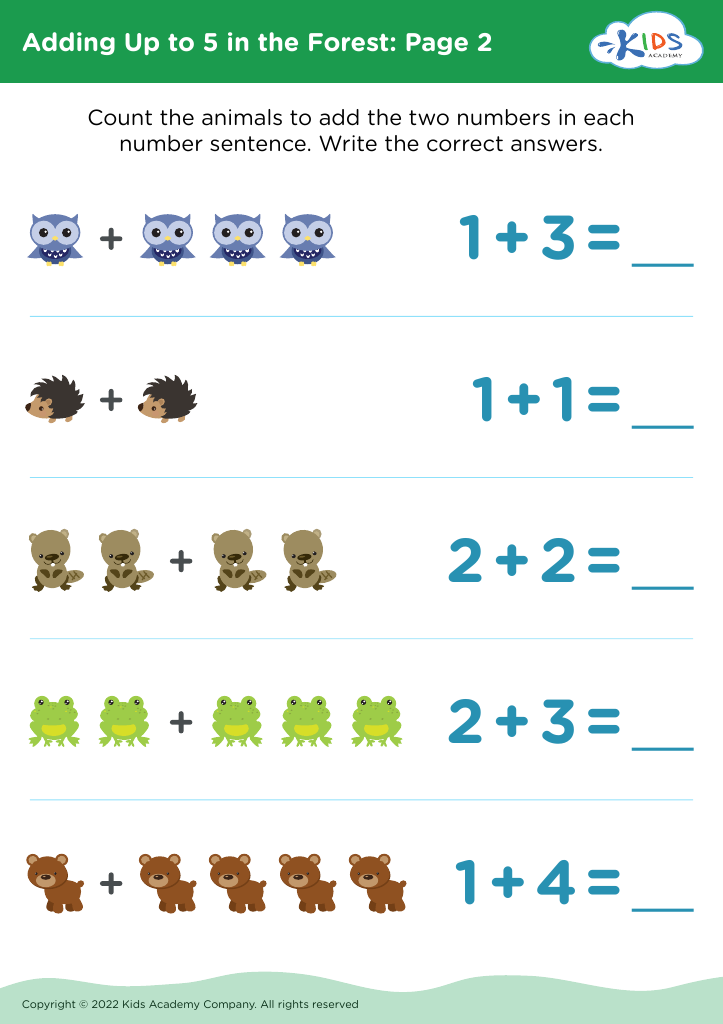
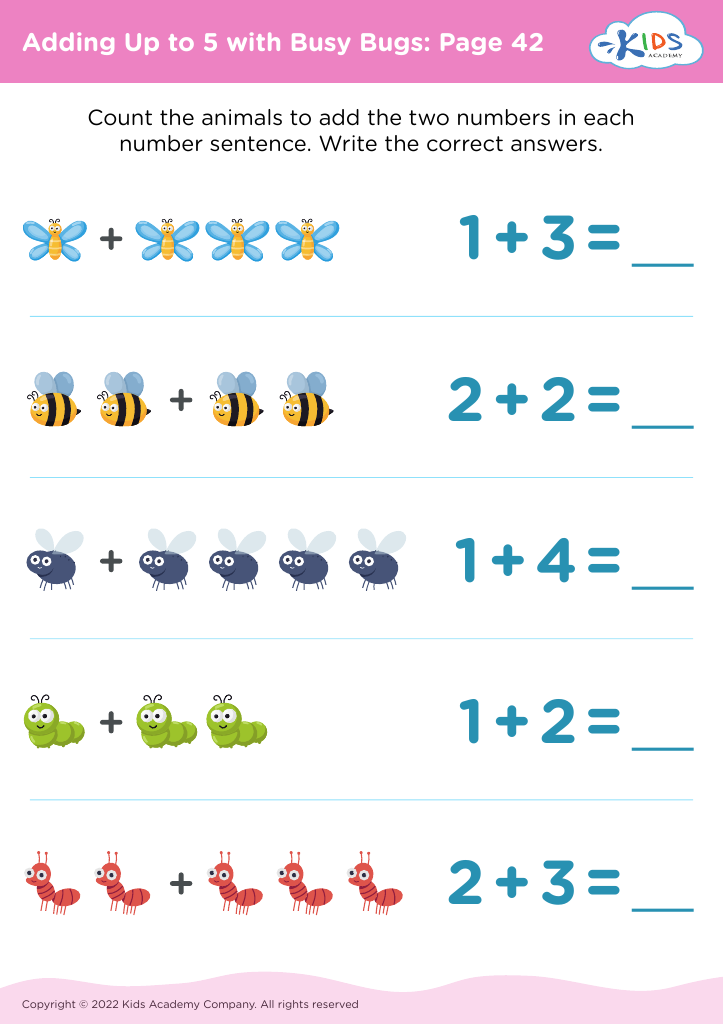
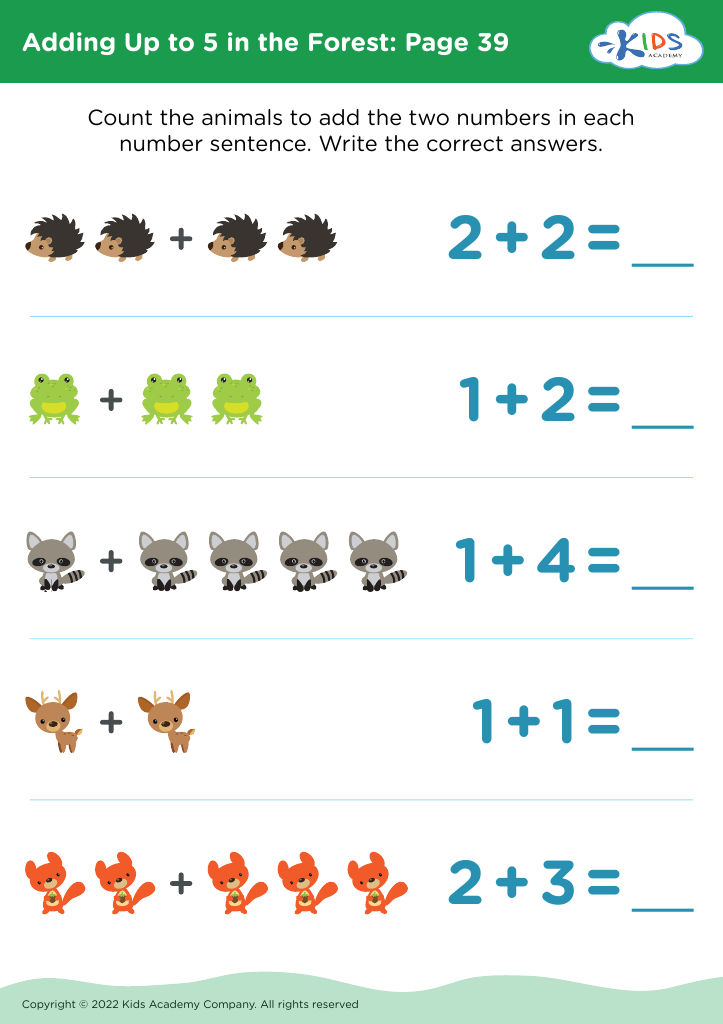
Discover our Visual Perception Addition Worksheets designed for children ages 3-4! Specially crafted to enhance early math skills, these engaging worksheets combine colorful illustrations with simple addition exercises. By fostering visual perception, they help kids understand numbers and develop essential problem-solving skills. Perfect for preschoolers, each worksheet offers a fun and educational experience that stimulates the mind while building confidence in early arithmetic. Ideal for at-home practice or classroom use, these worksheets are a great resource for parents and teachers aiming to give kids a head start in math. Start the learning adventure today!
Favorites
With answer key
Interactive
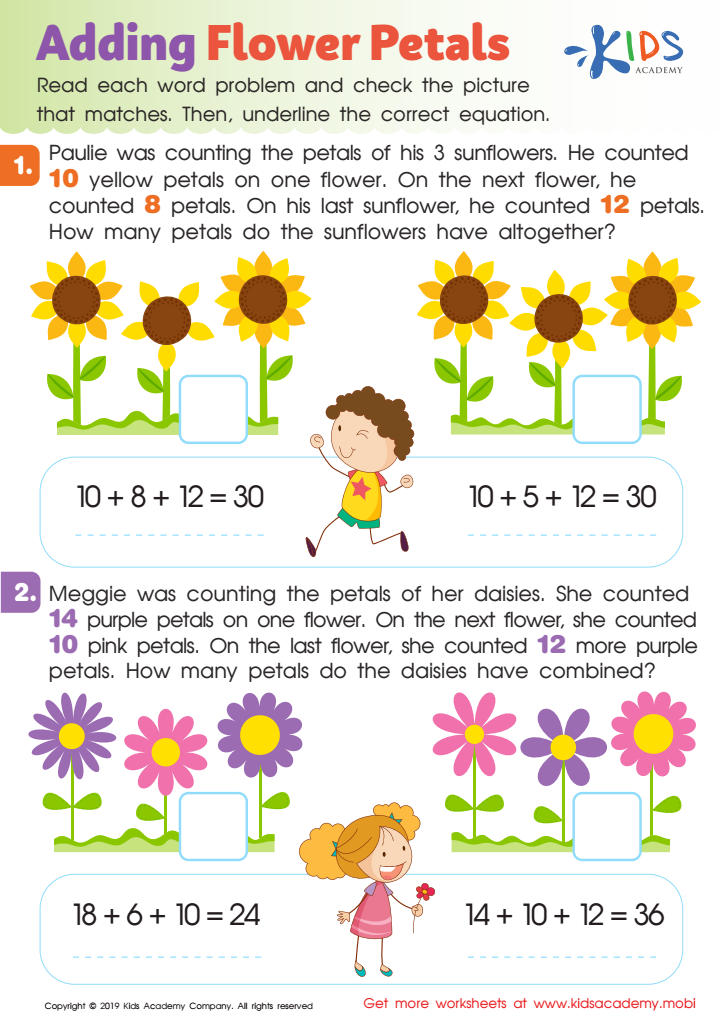
Adding Flower Petals Worksheet
This free worksheet helps little mathematicians learn to understand word problems. They'll read each one and match it to the corresponding picture. Important info is highlighted, teaching kids to look for key info when solving problems. Then they'll underline the correct number equation that matches the picture. A great way to practice problem-solving skills!
 Assign to My Students
Adding Flower Petals Worksheet
Worksheet
Join Kids Academy for Free
Who is primarily going to use this learning content?








Visual perception addition involves the ability to see and interpret visual information directly in tasks like simple addition. At ages 3-4, children's brains are rapidly developing, and this period is critical for nurturing key cognitive skills. Parents and teachers should care about visual perception addition because it lays the groundwork for fundamental math skills and cognitive development.
Incorporating visual perception addition through engaging and age-appropriate activities can help children understand math concepts in a concrete manner. For example, using colorful objects or pictures to illustrate them achieves this understanding. These activities help improve their number sense, the ability to recognize patterns, and build early problem-solving skills.
More importantly, embedding visual aids in learning captures children’s attention and makes learning enjoyable, fostering a positive attitude toward math. Early development in these areas reduces future anxieties around math, boosts confidence, and sets a strong foundation for academic success.
Additionally, visual perception activities improve hand-eye coordination, concentration, and fine motor skills, which are essential for their everyday tasks and later learning stages. Thus, prioritizing visual perception addition is not about teaching complex equations early but about nurturing an encouraging environment where math is a natural, fun part of learning and development.








