Counting practice Geometry Worksheets for Ages 3-4
5 filtered results
-
From - To
Discover the perfect starting point for your toddler's mathematical journey with our Counting Practice Geometry Worksheets for Ages 3-4. These engaging and colorful worksheets are designed to introduce young children to the basics of geometry through fun counting activities. Each worksheet offers simple, hands-on exercises that develop early counting skills while familiarizing kids with fundamental geometric shapes. Ideal for preschoolers, these activities will spark a love for learning and build a strong foundation in math. Help your little ones explore the world of numbers and shapes with our expertly crafted learning tools!
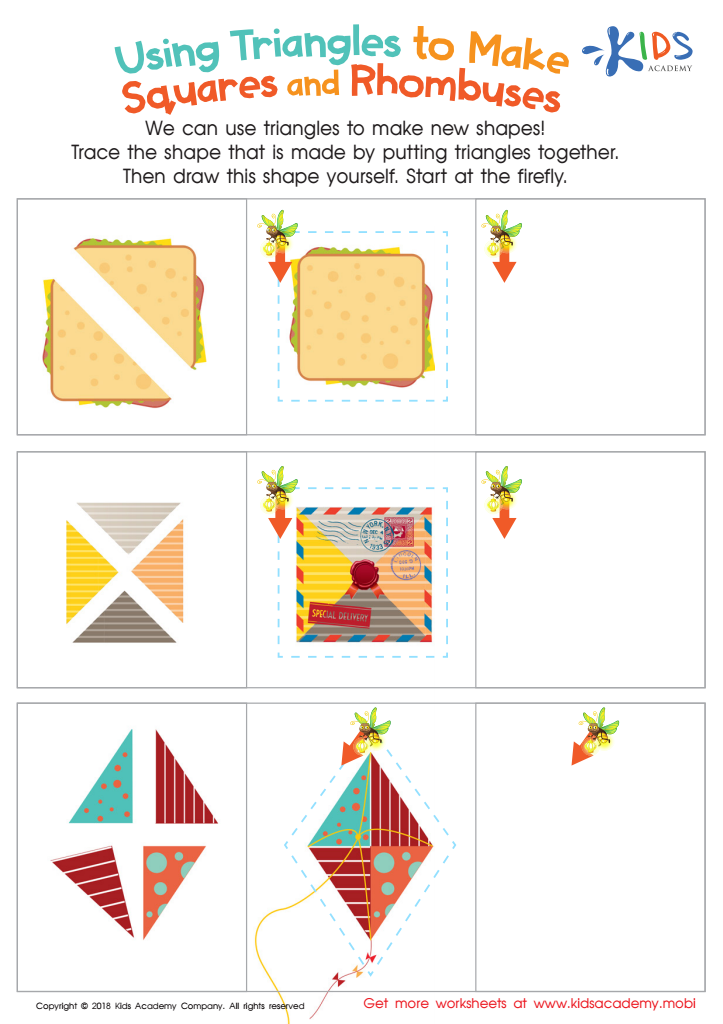
Using Triangles to Make Squares and Rhombuses Worksheet











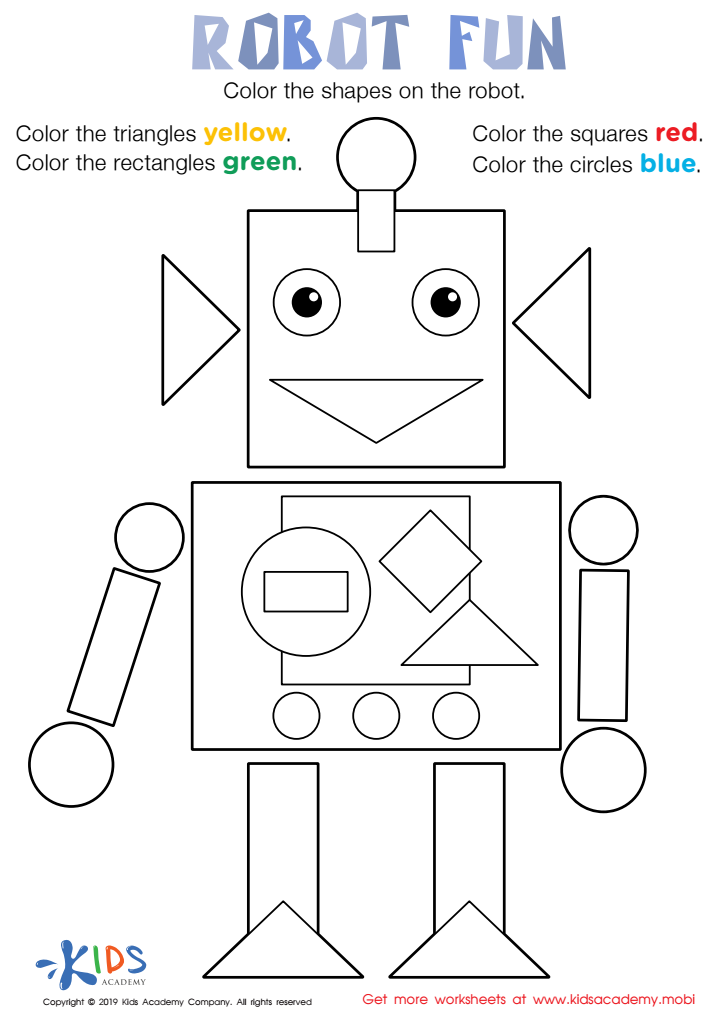
Robot Fun Worksheet
 Assign to My Students
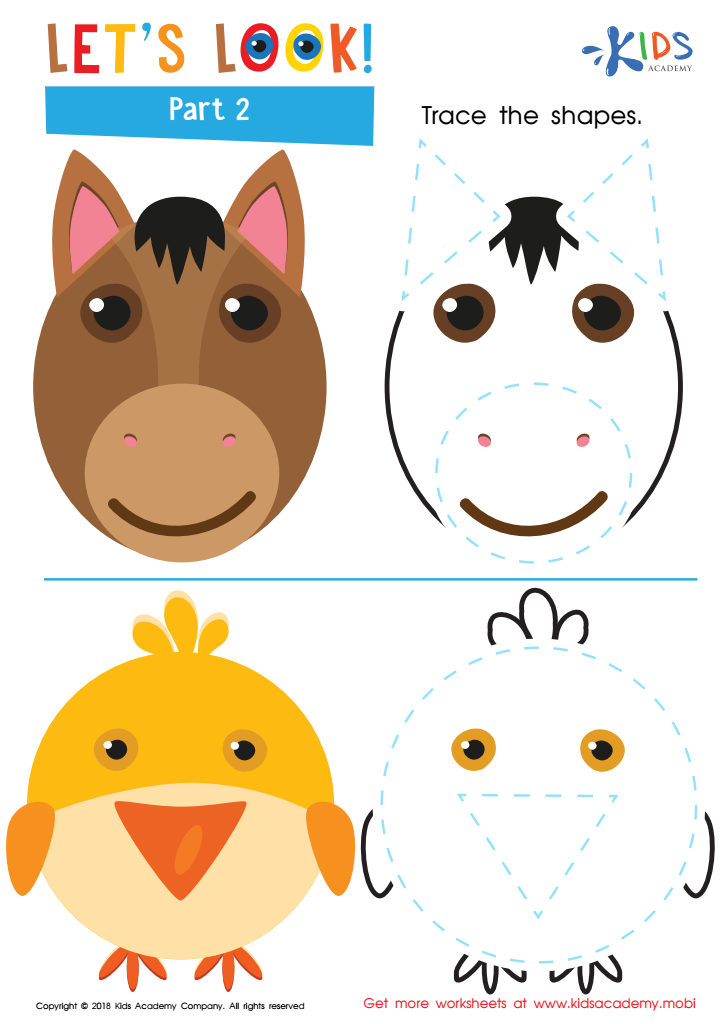
Let's Look! Part 2 Worksheet
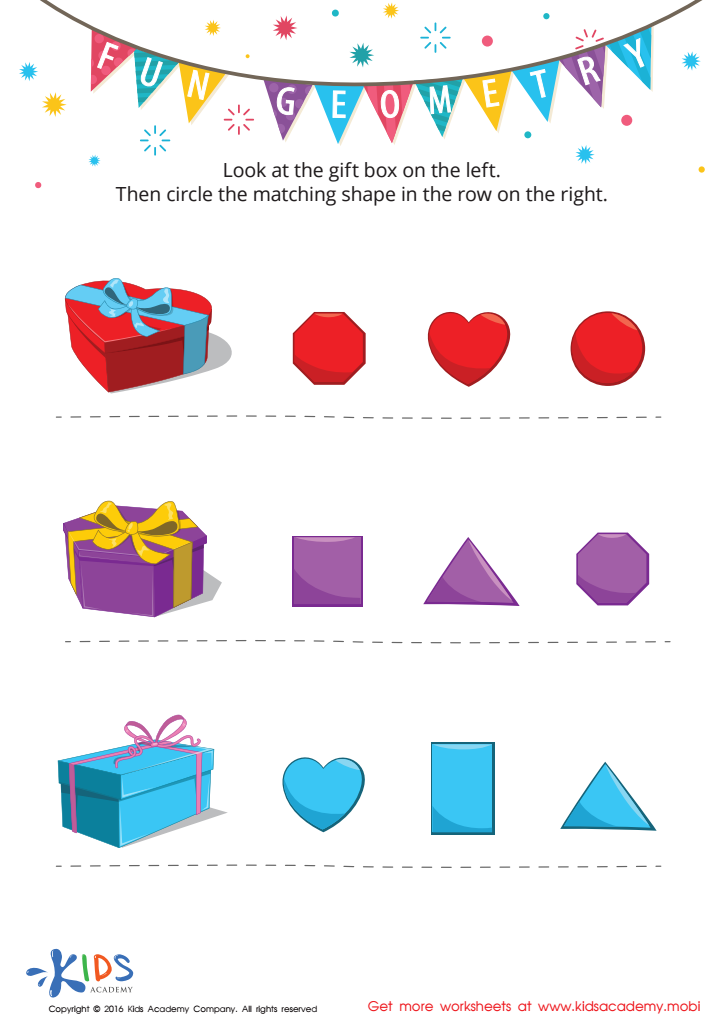
Fun Geometry Worksheet
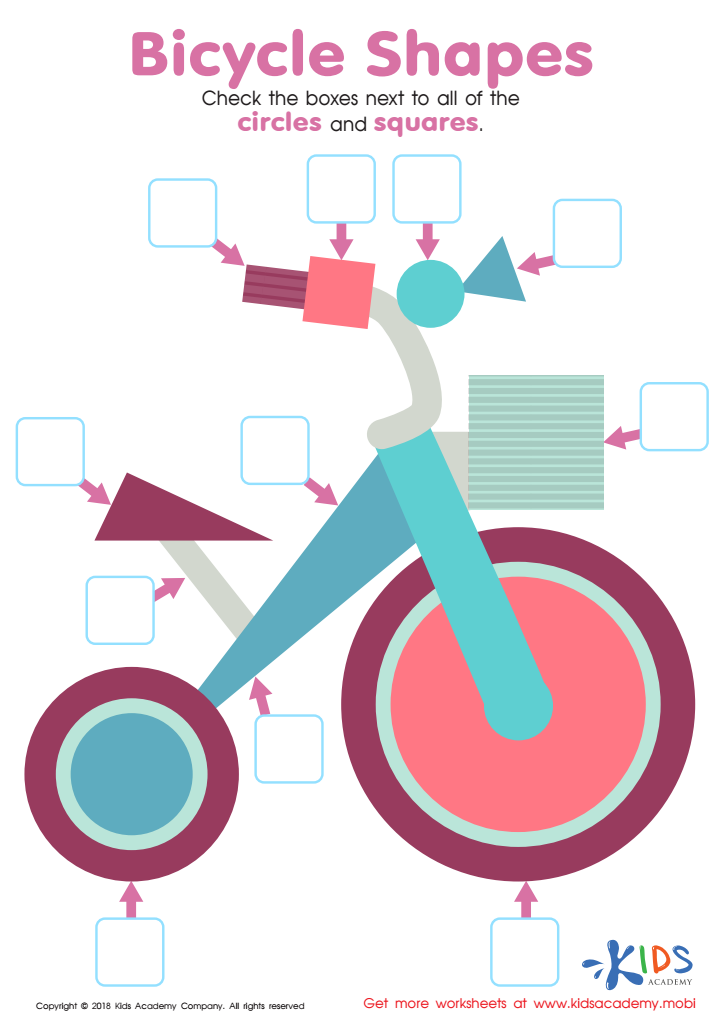
Bicycle Shapes Worksheet








Counting practice and early geometry for children ages 3-4 form the foundational steps for their cognitive and academic development. At this tender age, young minds are highly receptive to new concepts, laying the groundwork for more complex skills in the future.
Counting teaches children numerical order, value, and the concept of quantity. By learning to count, kids begin to understand the relationship between numbers, which is essential for later mathematical problem-solving and everyday tasks, like measuring or handling money. Counting also enhances their memory and attention span.
Early geometry introduces children to shapes and spatial awareness. Recognizing shapes like circles, squares, and triangles not only helps children identify objects in their environment but also stimulates their visual-spatial skills and fine motor skills. These skills are crucial for tasks like writing, kit arranging, and puzzle solving. Understanding shapes further paves the way for grasping more advanced geometric concepts, such as symmetry and geometry in art and design.
Engaging children in counting practice and geometry hones their analytical thinking and problem-solving abilities. Encouraging this playful learning fosters a love for mathematics and shapes a positive attitude towards schooling. Parents and teachers embracing these educational activities provide children with critical tools that contribute not just to their academic achievements, but also their everyday functional skills.








