Differentiating shapes Geometry Worksheets for Ages 3-4
3 filtered results
-
From - To
Introduce your little learners to the world of geometry with our "Differentiating Shapes Geometry Worksheets" tailored for ages 3-4. These engaging and fun worksheets help kids identify, match, and differentiate between basic shapes, boosting early math and critical thinking skills. Featuring colorful illustrations and simple instructions, these activities are perfect for preschoolers to practice shape recognition and improve fine motor coordination. Make learning shapes an enjoyable experience as your child navigates through our expertly designed printables, laying a strong foundation for future geometry skills. Download now to ignite your child's interest in math through play!
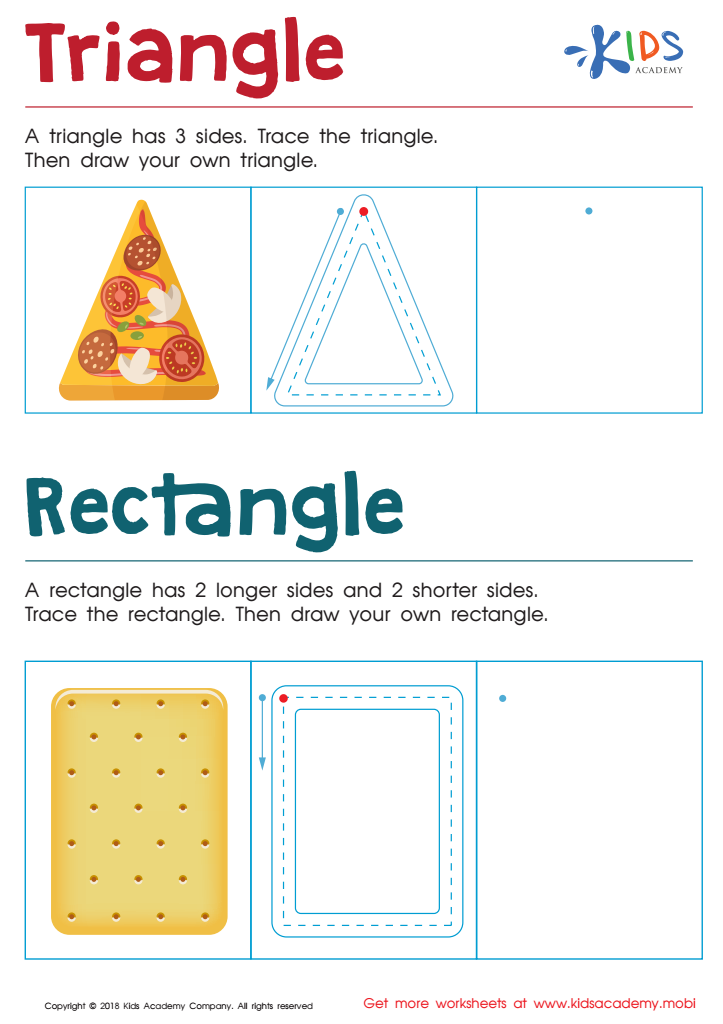
Triangle Rectangle Worksheet
 Assign to My Students











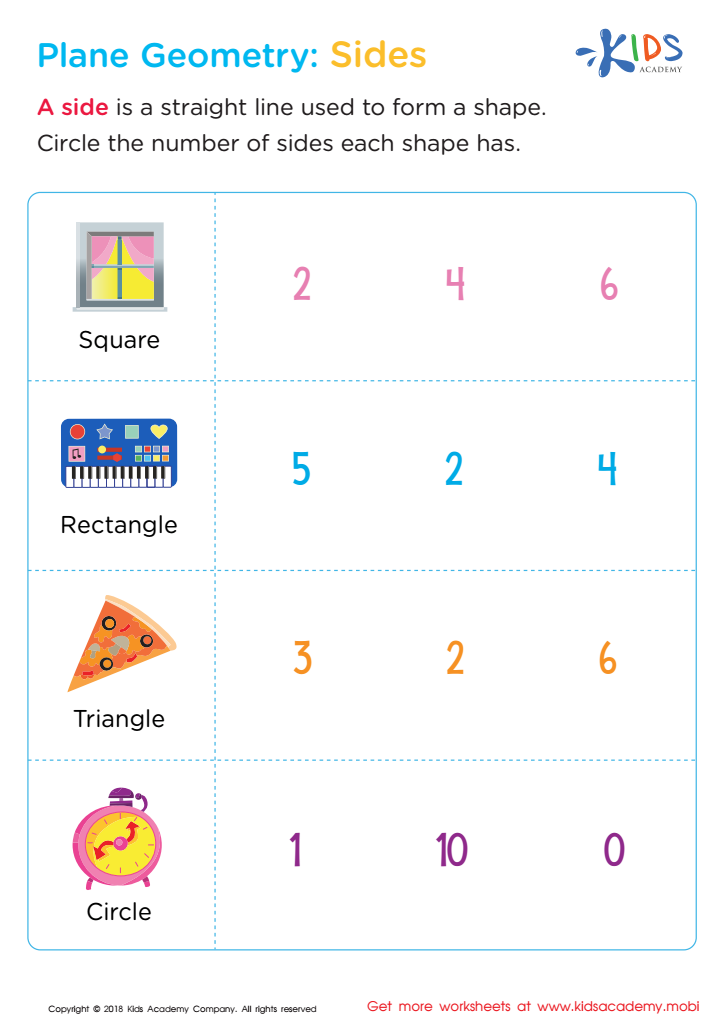
Plane Geometry: Sides Worksheet
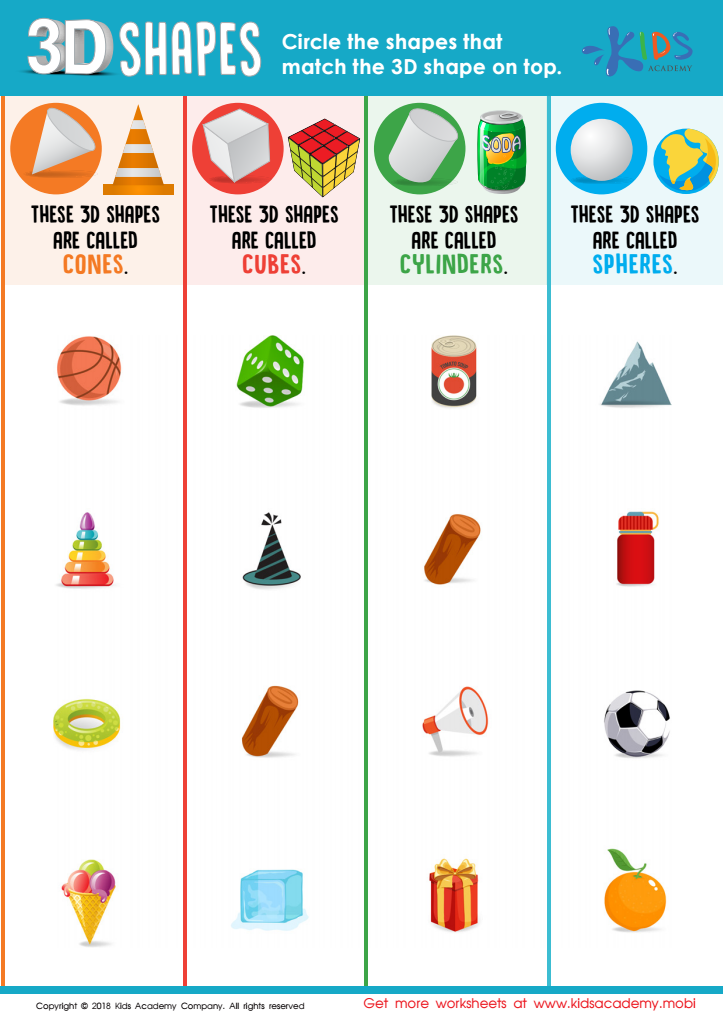
3D Shapes Worksheet








Parents and teachers should deeply care about differentiating shapes in geometry for ages 3-4 because this foundational skill supports broader cognitive and perceptual development crucial in early years. At this young age, children are highly receptive to new information - their brains are developing rapidly, making early learning impactful.
Firstly, recognizing and naming shapes enhances children's ability to categorize and systematize information, a critical aspect of cognitive development. Shapes are everywhere in the environment, and understanding them helps children make sense of the world around them. For example, identifying a square versus a circle is fundamental for later math skills, such as recognizing patterns or shapes in complex operations.
Secondly, by differentiating shapes, children improve their spatial awareness and reasoning skills. These abilities are not only essential for later math success but also for everyday tasks like reading (understanding the shapes of letters) and problem-solving, which are vital life skills.
Moreover, engaging in shape differentiation activities hones fine motor skills through drawing, tracing, and manipulating objects. This kind of hands-on learning is engaging and supports other developmental areas like coordination and muscle control.
Ultimately, instilling a strong grasp of shapes in early childhood builds a solid groundwork for more advanced mathematical and analytical skills, fostering a child's overall intellectual growth and readiness for school.








