
Improving concentration Geometry Worksheets for Ages 3-4
3 filtered results
Difficulty Level
Grade
Age
-
From - To
Subject
Activity
Standards
Boost your child’s focus and concentration with our engaging Geometry Worksheets designed specifically for ages 3-4. These fun and interactive activities help young learners explore shapes while developing essential concentration skills. Each worksheet features vibrant illustrations and age-appropriate challenges that captivate young minds. As children connect shapes, solve puzzles, and complete patterns, they enhance their cognitive abilities and spatial awareness. Our carefully crafted materials provide a solid foundation in geometry while fostering a love for learning. Perfect for home or classroom use, these worksheets make practicing concentration skills enjoyable and effective. Explore our collection today to support your child's educational journey!
Favorites
With answer key
Interactive
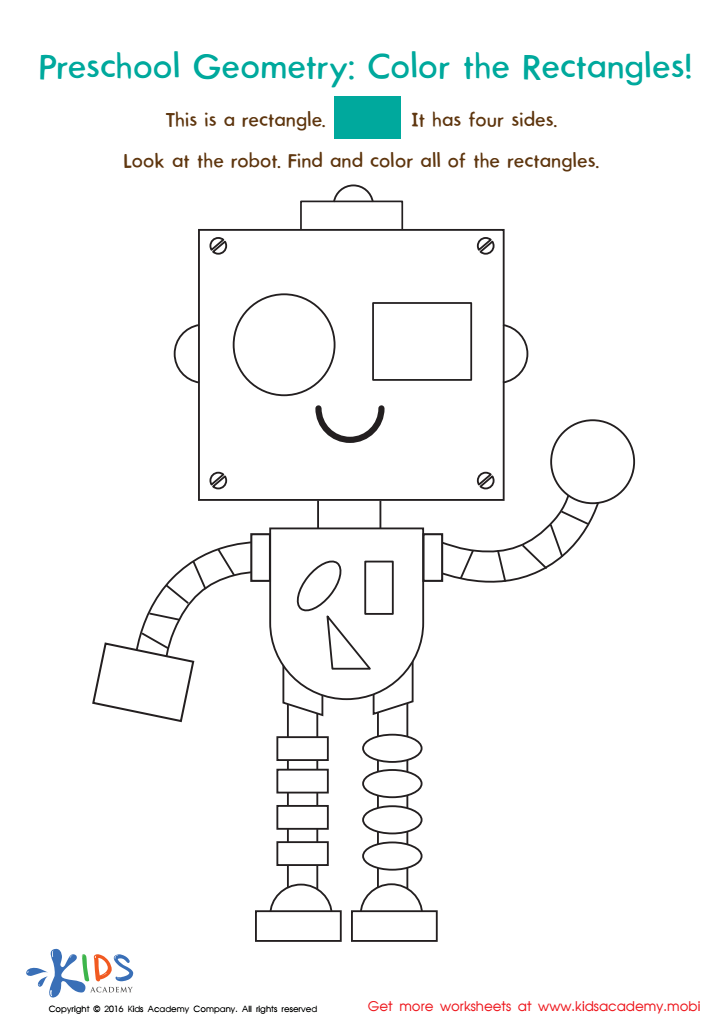
Geometry Worksheet
Geometry can be fun for kids! They explore shapes that create their favorite pics and objects. This preschool worksheet explains that rectangles have four sides, then kids color rectangles on a funny robot!
Geometry Worksheet
Worksheet











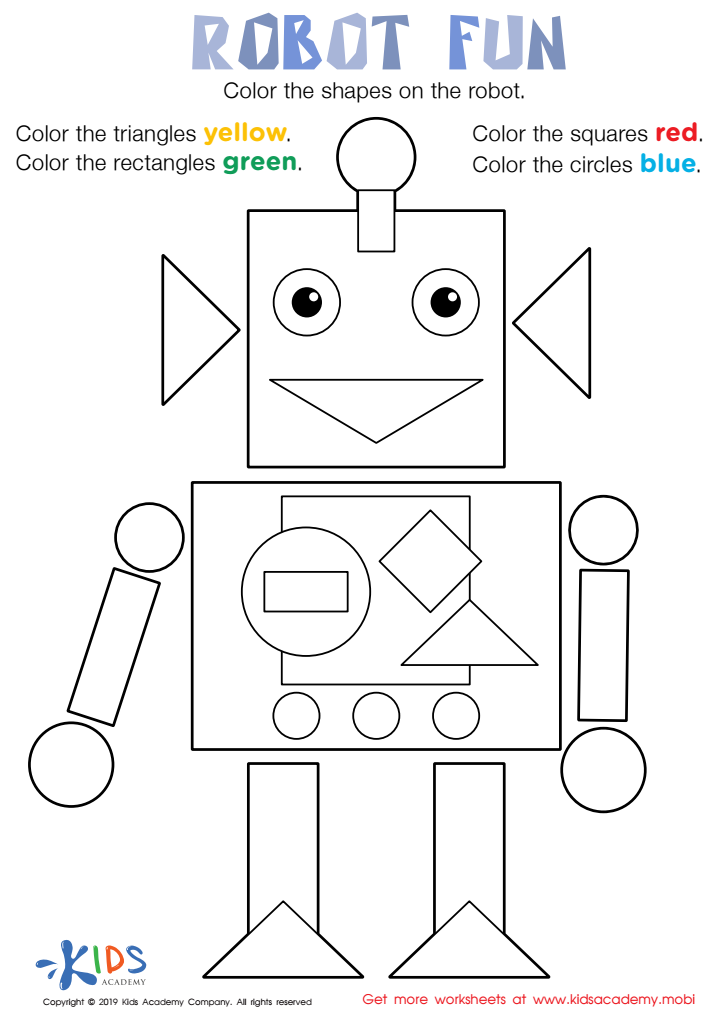
Robot Fun Worksheet
Help your child learn about basic shapes with this fun robot worksheet! Kids practice identifying circles, squares, rectangles and triangles, then color each shape according to directions. Make math practice enjoyable with this coloring page that teaches all four basic shapes - it's an important math skill!
Download (PDF)
 Assign to My Students
Assign to My Students
Robot Fun Worksheet
Worksheet
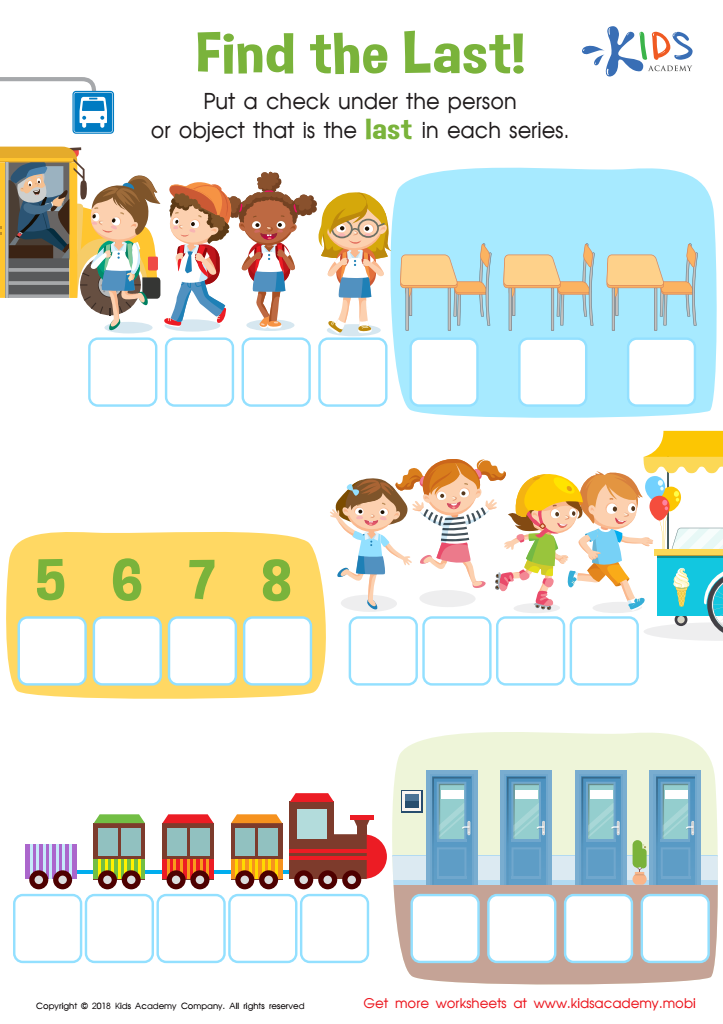
Find the Last! Worksheet
Teach young students about sequence words with this free worksheet. Have them look at sets of people or objects and choose the one that is last. Engage them further by having them describe or act out their day, and what happens last? Enjoy this printout and have fun!
Find the Last! Worksheet
Worksheet
Join Kids Academy for Free
Who is primarily going to use this learning content?








Improving concentration in geometry for ages 3-4 is essential as early childhood is a critical period for cognitive development. During these formative years, children are naturally curious and eager to explore the world around them. Engaging with basic geometric concepts—such as shapes, sizes, and spatial relationships—helps to sharpen their focus and enhances their ability to concentrate on tasks.
Teachers and parents should care because developing concentration skills lays a strong foundation for future learning. Children who can concentrate are better equipped to grasp more complex ideas later on, as these skills transfer to mathematics and other academic areas. By introducing geometry early, caregivers can provide stimulating environments where children explore shapes through hands-on activities, games, and building exercises, thus actively promoting engagement and sustained focus.
Moreover, incorporating geometry into play builds essential problem-solving skills and stimulates creativity, which are vital for overall development. As children learn to recognize and differentiate shapes, they also foster critical thinking, which will benefit them throughout their educational journey. Investing time in improving concentration in geometric activities during these early years can lead to greater academic success and a love for learning in later stages of education.








